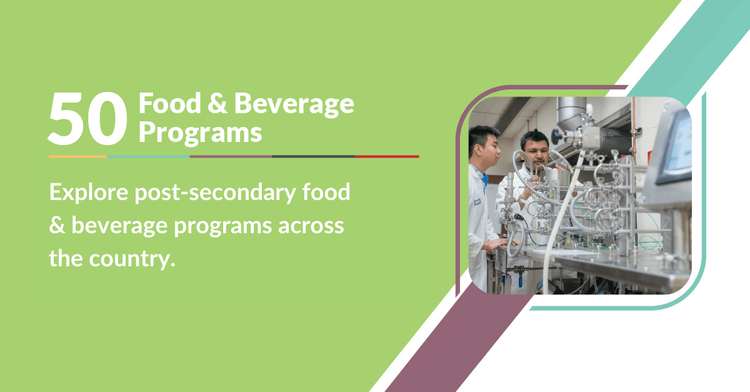
Canada is home to a diverse and dynamic food and beverage industry, supported by educational programs that train the next generation of chefs, brewers, entrepreneurs, and innovators. This roundup highlights 50 standout programs across the country, from top culinary schools and hospitality management courses to cutting-edge research initiatives and sustainability-focused training. Whether you're an aspiring professional, educator, or industry enthusiast, these programs provide valuable insights into the evolving world of food and drink in Canada. BC & Yukon Vancouver Community College UBC BCIT LaSalle College (Vancouver) UBC: Food, Nutrition, and Health Okanagan College Vancouver Island University University of Fraser Valley Northern Lights College North Island College Yukon University Selkirk College Thompson Rivers University Kwantlen Polytechnic University Prairies Saskatchewan Polytechnic University of Alberta University of Saskatchewan University of Manitoba SAIT NAIT Manitoba Institute of Trades & Technology International College of Manitoba Ontario Niagara College Humber College Le Cordon Bleu Ottawa George Brown College Fanshawe College Brock University University of Guelph Toronto Metropolitan University Loyalist College Georgian College Conestoga College Durham College Centennial College Canadore College Algonquin College Trent University St. Lawrence College St. Clair College Sault College Lambton College Confederation College Quebec McGill University LaSalle College Bishop's University Atlantic Canada University of PEI Memorial University Cape Breton University
Community Manager-
50 Food & Beverage Programs - Vancouver Island University
Crafting a Career in BC ’ s Wine Industry: VIU ’ s Wine Business Program The Wine Business program at Vancouver Island University is a comprehensive one-year certificate course designed for those passionate about pursuing a career in the BC wine industry. The program combines practical experience with academic learning in viticulture, wine business practices, marketing, and tourism. Program Highlights: As a student, you ’ ll have the chance to immerse yourself in hands-on experiences at local vineyards and wineries, gaining insights into the entire winemaking process. This practical foundation is then complemented by academic courses in viticulture, wine business practices, marketing, and tourism. A standout feature of this program is its flexibility. Whether you ’ re looking to study full-time for a year or prefer a part-time option spread over two years, VIU has you covered. Located in picturesque Nanaimo, BC, VIU provides an ideal setting for your wine education journey. With a curriculum designed to integrate viticulture essentials with business acumen, VIU ’ s Wine Business program offers a holistic understanding of the wine industry. Students can also earn credits that can be applied toward a Bachelor of Business or a Hospitality and Tourism Management program, opening doors to a wide range of future career prospects. The program includes seven courses and focuses on the broader aspects of the wine industry. In addition to viticulture and winemaking, students delve into wine marketing, exporting, and the vital role of wine tourism. C ourses cover a wide spectrum, from wine marketing and appreciation to beverage theory and the management of wine tourism. The program also offers elective courses in consumer behavio u r, entrepreneurship, and festival management . What You’ll Leave With: Upon graduation, a world of opportunities awaits you in BC ’ s wine industry. Whether you dream of managing a vineyard, excelling in wine s ales and marketing, or even opening your own restaurant, VIU ’ s Wine Business program provides the knowledge and skills to make your wine-related ambitions come true. Career options span winery/vineyard management, retail sales, wine marketing representation, hotel management, culinary arts, a gri - tourism development, and s pecial events coordination. V ideo/Social / Media : VIU YouTube Video
Community Manager-
Cellular Food in Canada
The past few years have proven how susceptible Canada’s food industry is to world events, supply chain disruptions and climate changes. New food production technology, such as cellular agriculture, has the potential to alleviate some of these challenges, while creating commercial opportunities and building a more sustainable, resilient food system. What is it? Cellular food – also known as engineering biology, synthetic biology or cell-cultivated products – is the production of food and textile products without using animals or land. Cell cultures harvested from animals, plants or micro-organisms are grown in the lab through tissue engineering or precision fermentation to produce: Cultivated proteins such as chicken, beef and seafood Fermented products like dairy, eggs, honey and chocolate Ingredients to add to products to create hybrid foods including proteins, enzymes, flavour molecules, vitamins, pigments and fats Textiles such as leather, silk and wool Why you should care As global population continues to grow, so does demand for protein, while access to land and other resource inputs become more scarce. Alternative agriculture could be an answer to food scarcity, concerns about animal and environmental welfare, cost inflation and resource challenges due to climate change. Compared to conventional agriculture, cellular agriculture production, is much less energy intensive, produces less greenhouse gas emissions, and has a much lower overall carbon footprint. With our strong food infrastructure, reputation for food safety, biotechnical expertise, and federal support for alternative protein production, Canada is well positioned to become a leader in cellular agriculture. The 2021 report Cellular Agriculture: Canada’s $12.5 Billion Opportunity in Food Innovation from Ontario Genomics and the Food and Agriculture Institute at the University of the Fraser Valley found that the international cellular agriculture market will reach US$100 billion by 2032. Canada’s food industry has the potential to take $12.5 billion that market, while creating up to 142,000 high-paying jobs. Opportunities in Canada Engineered plant proteins are already in the Canadian market, and by all estimates, precision fermented products are expected to appear before cultured meat products. Current Canadian regulations consider food produced through cellular agriculture as a novel food, and products are approved on a case-by-case basis. Here are a few Canadian start-ups making headlines: Because Animals – This Toronto-based pet food company uses cultured ingredients such as probiotics and nutritional yeast to create nutrient-rich cat and dog food designed to help digestive issues. Future Fields – Edmonton, AB-based Future Fields is a R&D producing growth media products that can be used to create commercialized cultivated proteins in a safe and sustainable manner. Cell-Ag Tech – Toronto’s Cell-Ag Tech is doing R&D on cell-cultured fish and seafood. New Harvest International non-profit research institute New Harvest , which promotes the science behind cultured meat through research, funding and a conference , now has a Canadian branch.
Community Manager-
Other Articles
In 30: Ghost Kitchens
Sometimes, all it takes is 30 minutes to learn the ins and outs of new food technologies and trends that are transforming the food and beverage industry. In this series, we’ll dig into a food innovation topic and link you to content and resources so you can become a master on the topic in 30 minutes (or less!). This week, we’re looking at ghost kitchens, a commercial foodservice operation without a traditional storefront or restaurant. Also known as virtual restaurants or dark kitchens, in many of these establishments food is ordered online and prepared for delivery only, via cashless transactions The Overview Canadian Institute of Food Safety - What is A Ghost Kitchen? Learn the key differences between a ghost kitchen and a traditional foodservice operation. Kickfin - What Are Ghost Kitchens: Everything You Need to Know More about the pros and cons of using or setting up a ghost kitchen. Medium - Cloud Kitchens: The Underdogs Of The Food Industry Statista says the cloud kitchen format is expected to grow 12% through 2024. The Restaurant Times - 7 Pitfalls to Avoid when Running a Cloud Kitchen Business in 2023 Some common mistakes operators may face when running a ghost kitchen. The Canadian Connection Ghost Kitchens Network is a company that partners with fast food brands to create scalable, multi-tenant ghost kitchen concepts across North America for third-party delivery, as well as offering standalone, mall and big box store locations for walk-in customers and customer pick up. Wandereater - 9 Best Ghost Kitchens in Canada Nine independent Canadian brands which rely on ghost kitchens. Social Media @virtualdiningco (Facebook) Virtual Dining Concepts works with existing restaurants and startups to establish delivery-only brands around the world. Nextbite (LinkedIn) Nextbite Brands matches companies with under-utilized kitchens to help them enter the virtual restaurant space. @freshmenu (Instagram) Ghost kitchens are thriving in India, where FreshMenu is based. The company offers an extensive menu of international cuisine prepared fresh daily. Overtime If you’ve got more than 30 minutes, these are for you: Spotify – Ghost Kitchen Trends This podcast looks at the business trends and concepts driving the ghost kitchen phenomenon. YouTube – CloudKitchens : How it Works
Community Manager-
Meet Some of the Rising Stars in Canadian Foodtech
Since our founding in 2021, CFIN has funded nearly 100 Canadian foodtech projects. We've been privileged to work with and support of Canada's most innovative foodtech companies, helping advance the sector into an unparalleled era of growth. In CFIN’s new Foodtech in Canada 2025 Ecosystem Report , we share everything we’ve learned along the way about Canada’s foodtech startup scene, now 200+ companies strong. Here, we highlight just a few of the fast-rising foodtech star tups featured in the report who are developing creative and necessary solutions to our industry's most pressing challenges. Knead Technologies Calgary-based Knead Technologies is building crucial digital infrastructure that enables surplus food to be put to work, not to waste . Their "Uber for food waste" smart logistics platform connects donors — like grocery stores and wholesalers — to food rescue organizations . Since their founding in 2022 , Knead’s platform has diverted potential food waste into 1.67 million meals while dramatically reducing carbon emissions . The company only continues to build momentum, h aving recently secured funding from CFIN’s Innovation Booster program and closed an $800,000 CAD pre-seed round . New School Foods T he days of “Quorn” and plain blocks of tofu being the only plant-based protein alternatives are now long behind us. Yet, even amidst the recent explosion of sustainable, animal-free meat analogue option s, New School Foods' whole-cut seafood alternative feels revolutionary. The Toronto-based startup’s cold-structuring scaffolding technology represents a monumental step forward in solving texture challenges, a major sticking point that continues to limit mainstream acceptance of plant-based protein alternatives . As f isheries becom e increasingly strained under an ever-growing global demand for animal protein , New School’s ability to convincingly replicate the texture and cooking experience o f salmon positions them to capture a massive market opportunity , while addressing one of the food industry’s most urgent sustainability challenges . In 2024, t he company secured an $8-million CAD seed extension and began piloting its plant-based salmon fillets with a group of chefs. You can now find New School salmon on the menu at select restaurants —it really is something you must try to believe . Opalia Foods Founded in 2020, Montreal-based Opalia Foods has made rapid progress in using cell cultivated bovine mammary cells to produce real dairy milk — without a single cow being milked. Their breakthrough technology aims to address both environmental and ethical concerns in traditional dairy farming, while producing milk that retains the exact complexity and taste of conventional dairy. Last year, the company closed a $2 - million CAD investment round led by Hoogwegt Group, a Netherlands-based dairy ingredient provider. The funding, along with industry expertise and global network of Hoogwegt , is helping Opalia accelerate product development a nd prepare to bring their cell-cultivated dairy milk to market. Relocalize Montreal-based startup Relocalize recently secur ed $5.8 - million CAD in seed funding to accelerate the deployment of their micro-factory systems . This follows a successful partnership with Southeastern Grocers — producing carbon -negative packaged ice on-demand at a Florida distribution center — that helped validate the company’s hyper-local, decentralized , and autonomous production technologies . By eliminating middle-mile transportation and enabling hyper-local production of value-added products , Relocalize is fundamentally reimagining how food and beverages can be manufactured to mak e supply chains more efficient , resilient, and sustainable. You can learn more about these innovators, along with the rest of Canada’s most influential foodtech companies, in CFIN’s new Foodtech in Canada 2025 Ecosystem Report. Check out the full report here to discover all the movers and shakers currently transforming Canad a’s food sector .
Community Manager-
Meet 5 Incredible Ingredient Suppliers from Across the Country
Across Canada’s food sector, innovative suppliers are playing a key role in transforming how food is sourced, processed, and delivered. Whether through cutting-edge technolog y solutions , innovative ingredient development, or customer-centric support and expertise , these 5 forward-thinking suppliers empower Canada’s food manufacturers and retailers to enhance product performance and optimize their operations . Dempsey Dempsey is a full‐service functional food ingredient distributor dedicated to connecting food manufacturers with innovative, global ingredient solutions. By partnering with suppliers around the world, Dempsey helps clients overcome technical challenges—from controlling syneresis and enhancing flavor to extending shelf life and boosting nutritional profiles. Their account team of trained food scientists and product developers works closely with manufacturers, offering shorter lead times and lower minimum order quantities for in-stock ingredients. Notably, Dempsey supports the distribution of novel solutions like Inne o —a clean-label anti‑listeria ingredient developed by CFIN-funded company Innoda l . Key Solutions : Customized ingredient sourcing to address technical challenges in texture, flavor, and shelf life Support from expert account managers who all come from food science and product development backgrounds Streamlined supply with reduced lead times and flexible order quantities Learn more about Dempsey . Fresh Start Foods Fresh Start Foods is a national specialty produce supplier known for its commitment to quality, consistency, and food safety. Sourcing a full range of produce both locally and globally, they transform whole fruits and vegetables into fresh-cut products and custom blends. Their SQF-certified facilities and expert produce management enable foodservice operators, retailers, and healthcare providers to enjoy reliable, high-quality produce solutions that meet diverse operational needs. Key Solutions: Nationwide sourcing of both whole and fresh-cut produce with an emphasis on quality and safety Custom-blended and prepared foods designed to match specific customer requirements Robust supply chain management ensuring consistency across multiple provinces Learn more about Fresh Start Foods . Botaneco Botaneco is a novel ingredient s olutions provide r that is redefining how oilseeds are used. Their novel water-based processing technology separates intact oleosomes and proteins from oilseeds such as canola, hemp, and sunflower. This approach unlocks additional value from these crops—creating high-value protein concentrates for aquaculture feed, plant-based foods, and even personal care products. By preserving the natural structures within the seed, Botaneco offers clean-label, sustainable ingredients that enable food processors and formulators to meet modern consumer demands. Key Solutions: Advanced water-based processing to isolate oleosomes and proteins without denaturing them Creation of sustainable, nutritious , and clean-label ingredients for diverse plant-based food applications Learn more about Botaneco . Local Line Local Line is a farm-to-fork commerce platform that connects local food suppliers with restaurants, grocers, and distributors. This digital solution streamlines the ordering process through features such as supplier discovery, order management, and integrated payments. By enabling more precise ordering and better inventory management via the platform’s user-friendly interface and robust analytics , Local Line makes it easy for businesses to track orders, manage supplier relationships, and adapt quickly to market demands. Key Solutions: Comprehensive e-commerce platform that simplifies local food sourcing and order management Tools to improve inventory accuracy and reduce food waste through precise ordering Seamless integration with existing supply chain tools, enabling faster and more efficient operations Learn more about Local Line . Marsia Foods Marsia Foods is a Canadian distributor and wholesaler specializing in essential food ingredients and additives. With a broad portfolio that includes products like dried fruits, nuts, and other specialty food components, Marsia Foods ensures that food manufacturers have access to high-quality, consistent ingredients. Their expansive market reach and commitment to quality make them a trusted partner for companies seeking to enhance product formulations and meet consumer expectations. Key Solutions: Extensive range of high-quality , globally sourced ingredients and additives for diverse food applications Reliable distribution and market reach across Canada Focus on ingredient consistency and quality to support food processors in achieving superior product performance Learn more about Marsia Foods . Eager to explore more about the many innovative ingredient suppliers operating throughout Canada? CFIN’s Resource Finder can h elp you do exactly that . This streamlined self-service tool features a curated database of suppliers and customized search options to help you quickly identify and collaborate with partners who are equipped to support your unique manufacturing or product development needs.
Community Manager-
Visualizing the Economics of Canada’s Foodtech Sector
I nvestment in Canad ian agrifoodtech has grown tremendously in the past decade , attracting over CAD $4 .1B sinc e 2014 . Agrifoodtech is a broad c lassification , referring to everything from precision fertilization systems to food delivery robots, but it can be broken down into two general categories: agtech — technology innovation that occ urs on the farm, and foodtech — technology innovation at every other step in the food value chain , which includes processing /manufacturing , retail, wholesale, and foodservice. Investment Dynamics: Foodtech vs. Agtech (2014-2024) Canada’s agrifood sector generates $150 billion (around 7%) of Canada’s gross domestic product (GDP). For context, that’s more than the Information and Communications Technologies (ICT) Auto Manufacturing sectors combined . The potential for tech nology to inspire widespread sector growth in Canadian agrifood is profound. In the past decade, investors have noticed this potential—at least on the “ag” side of the agrifood sector. Relative to global investing norms, Canadian agtech punches above its weight while foodtech lags behind . These charts illustrate that , despite the distribution of Canadian companies classified as either agtech or foodtech track ing closely to global averages , distribution of investment across the two categories does not : Rather than reflecting an over indexing of agtech innovation at the expense of foodtech , these figures illustrate an overall foodtech investment gap . As one of the world’s leading agricultural producers, Canada can and should be investing heavily in on-farm innovation to drive advances in production efficiency , sustainable land management, and climate resiliency. But our relative underinvestment in the post-farmgate or “value-adding” segments of the agrifood sector is considerably slowing the growth potential for one of the country’s largest, most consequential industries . Where Foodtech Funding is Flowing Although this gap in investment capital continu es to limit the overall maturation of Canada’s foodtech ecosystem, there are certain innovation areas where Canada i s emergi ng as a global leader. Note: Sustainable Packaging & Plastic Alternatives is mostly driven by publicly listed outlier company Good Natured with $133M raised to date. Above are Canada’s top 10 foodtech domains, ranked by the number of companies operating in each domain. L ooking at the compound annual growth rate s (CAGR) from 2018-2023 , Canada is outpacing global averages in a few key categories : P lant- B ased, B iotech/ S ynthetization, and Upcycled Ingredients . What is Canada doing to succeed in these foodtech domains? And what is needed to sustain and build on that success across the entire ecosystem? You will find answers to those questions, and even more insight into the economics of Canadian foodtech , in CFIN’s new Foodtech in Canada 2025 Ecosystem Report. R ead the full report here .
Community Manager-
Friday Food Innovation Roundup – February 7, 2025
It’s been a nother hectic (and exciting) two weeks for food innovators ! From groundbreaking industry reports and funding announcements to a fresh batch of eye-catching j ob postings , here is everything you need to know about . H ighlights from this edition include: 💡 CFIN’s inaugural Foodtech in Canada 2025 Ecosystem Report 💰 Nova Scotia expands its precision fermentation hub with $1M investment 🛠️ New food innovation job s at Maple Leaf Food s, Loblaw , and Earth’s Own 🧠 The fascinating story of how refrigeration reshaped our entire food system Let’s dive in ! 💡 Food Innovation News CFIN Publishes Foodtech in Canada 2025 Ecosystem Report It has arrived! This week, CFIN released our inaugural Foodtech in Canada 2025 Ecosystem Report , offering the most comprehensive overview of Canada’s foodtech ecosystem to date. The report outlines the Canadian foodtech sector’s growth and investments between 2014 and 2024, as well as its key challenges and opportunities ahead. Nova Scotia expands precision fermentation hub with $1M investment – Vegconomist The Government of Nova Scotia is investing $1M CAD to expand The Verschuren Centre’s fermentation plant — enhancing automation, increasing capacity , and creating skilled jobs. This move strengthens Canada’s position in precision fermentation and will support a new training program in partnership with local colleges. How Calgary-based startup Knead tackled the NFL draft’s food waste with software – BetaKit Discover how Calgary-based Knead Technologies helped redistribute 100,000 pounds of surplus food at the 2024 NFL Draft and recently closed an $800K pre-seed round. Knead’s platform connects food donors with food rescue organizations and has already rerouted over 2 million pounds of surplus food to those in need. 💰 Upcoming Opportunities Program Info Sessions for CFIN ’s Innovation Booster and Foodtech Next Programs – Applications open late February Join Alex Barlow, CFIN VP of Programs for two Info Sessions, one for the Innovation Booster on Feb 24 and another for Foodtech Next on Feb 25 , to learn about our latest funding call s and have your application questions answered. Discover all the F&B industry opportunities and events on the horizon over on CFIN’s Events Page ! 🛠️ Job Openings Here’s a few cool new food innovation jobs that caught our eye: New Platform Innovation Manager – Maple Leaf Foods – Mississauga , ON Food Scientist - Agri-Food Innovation – Loblaw Companies Limited – Brampton , ON Director of Food Technology – Earth's Own Food Company – New Westminster , B.C. Have an open position you’re looking to fill ? Be sure to post it on the Food Innovator Career Hub ! 🌟 Highlights from YODL Catch up on some of this week’s top YODL highlights … Product Development Experts - Please reach out! Seeking plant-based protein powder manufacturer Intellectual Property Essentials for Food Innovators – Webinar Recap 🧠 Brain Food If you’re hungry for some additional food for thought , here are some podcasts, books, and videos that we've been enjo y ing lately . 🎙️ Forever Fresh – Radiolab This Radiolab episode features Nicola Twilley, author of 📖 Frostbite: How Refrigeration Changed Our Food, Our Planet, and Ourselves , for a fascinating conversation on the science of cold, the secret to fruit’s "eternal youth," and why the humble salad bag might be the unsung hero of modern grocery stores. 📺 Is Canada’s food system broken? – TVO Featuring Food Cycle Science CEO, Bradley Crepeau, t his short TVO documentary explores Ontario’s food waste problem, and profiles the community organizations, local businesses, researchers, and municipalities that are working to tackle food waste while improving food access. Do you h ave something worth including in our next Friday Food Innovation Roundup ? R eply to this post to let us know about your news, even ts, or job openings ! Thanks for reading!
Community Manager-
What the Experts are Saying About the State of Canadian Foodtech
CFIN’s just-published Foodtech in Canada 2025 Ecosystem Report was informed by interviews with the top investors, researchers, entrepreneurs, and executive s shaping the rapidly evolving foodtech landscape in Canada. Here, we ’ve collected some of t he ir most compelling insights on the transformations and challenges within the sector, as well their prognostications on what the future will hold for Canadian foodtech . Canad ian Foodtech is Rapidly Growing "Pre- C ovid, if you asked me about the Canadian foodtech industry I would have replied 'what foodtech industry'? I was literally travelling everywhere else around the globe to find technology, labs, startups and even some universities. Now, 5 years later I see a much more dynamic and active space . " Joseph Lake, VP Applied Technology & Innovation, McCain Foods Limited Despite Growth, Investment Gap is Limiting Canada’s Global Competitiveness “ For Canada to truly become a foodtech hub, we need more early-stage investors who are ready to take big risks on bold ideas. There’s incredible talent and innovation here, but startups often struggle to find investors willing to back them at the earliest stages when the risks—and the potential rewards—are highest. If we can build a stronger community of risk-tolerant investors, it’ll unlock so much potential in Canada’s foodtech scene and help turn great ideas into global breakthroughs. ” Cam Crowder, General Partner, Redstick Ventures "Access to industry, processors, and investors who can help startups scale and connect globally are critical. Investment capital from Corporate Venture strategics or established VC firms for scaling companies is continuing to mature in Canada but we still fall behind nationally when compared to other leading markets . " Lindsay Smylie, Director of Alberta, Plug and Play Tech Center Industry Fragmentation is Still a Key Barrier to Innovation “ W e really need to foster a strong culture of collaboration among all stakeholders. While we’re great at kicking off innovative projects and ideas in the food sector, we often stumble when it comes to following through and scaling these innovations effectively. This gap between coming up with brilliant ideas and bringing them to market is a challenge we need to tackle head-on. Creating an ecosystem where startups, academia, established food companies, and government at all levels can work together seamlessly is key. ” Bradley Crepeau, CEO, Food Cycle Science “To be a successful innovation hub, we have to have a strong growth mindset, take risks, and execute our initiatives well. More practically , some things we can do to position Canada as a hub for food innovation and foodtech include a continued focus on growing regional strengths while increasing industry collaboration. This includes ensuring post-secondary institutional research has value for industry, supporting work integrated learning opportunities to address labour force challenges, supporting knowledge transfer, and improving diversity in the sector.” Michele Evans, Assistant Deputy Minister, Alberta Region, Prairies Economic Development Canada Elevating Foodtech is a National Strategic Imperative “Over the past 5 years, Canada's foodtech industry has undergone a remarkable evolution, marked by growth and diversification of innovation. But we need to do more. Canadian productivity is at an all-time low and the food industry is the slowest to adopt technology. I'm preaching to the choir here, but I truly believe that any innovation aimed at increasing productivity and improving sustainable development should receive the most attention. We can't go on like this and technology is here to help us change things for the better in this area . ” David Desjardins , Co- Founder & Managing Partner, Food Tech Factory Discover More Insights in the Full Report Canada’s foodtech ecosystem is at a critical juncture in its evolution. T he insights shared here are just the beginning . To understand where we are and where we are heading, c heck out the full Foodtech in Canada 2025 Ecosystem Report here !
Community Manager-
5 Things We Learned About Foodtech in Canada: Highlights from CFIN’s Groundbreaking New Report
CFIN’s just-released Foodtech in Canada 2025 Ecosystem Report is a first-of-its kind analysis o f the state of Canadian foodtech . By comprehensively mapping the investors, support organizations, and the 200+ foodtech companies o perating across the country, this report reveal s where our foodtech sector is excelling , where it is being challenged, and how these challenges can be overcome to build Canada into a global food innovation leader . Here are five key thing s we learn ed about Candian foodtech in creating this report . Foodtech Has Immense Untapped Potential to Supercharge Canada’s Economy Canada’s agrifood sector is a powerhouse, contributing $150 billion to the national GDP and employing over 2.3 million people . But here’s the paradox: while food processing and manufacturing account for the lion’s share of this economic activity, investment in foodtech signif icantl y lags behind agtech . Since 20 14, 44% of C anada’s agrifoodtech inves tments have gone to agtech , compared to just 56% for foodtech —far below the global average of 83%. This relative underinvestment in off-farm innovation is problematic, especially considering the value-added nature of foodtech . Food manufacturing is Canada’s largest manufacturing subsector, representing 16.5% of manufacturing GDP . Investments in foodtech can act as an economic force multiplier. Unlike primary agriculture, which focuses on raw commodity production, foodtech creates higher-value products that drive greater economic returns and export opportunities. By directing more capital into foodtech , Canada’s agri f ood sector can better leverage the country’s natural agricultural strengths to transform into a dynamic engine of economic growth. Canada’s Plant-Based Sector is Leading the Pack Canada’s plant-based protein sector is outpacing global growth, with 2 6 % of our foodtech companies focused on plant-based innovation—nearly double the global average of 14%. What’s driving this growth? Strategic investments , innovative product development, and Canada’s position as leading global producer of protein-packed plants . Ambitious new projects like Roquette’s $600M pea protein facility in Manitoba — the largest of its kind in the world — and revolutionary startups like New School Foods and Smallfoo d are transforming Canada into a hub of plant-based innovation . I t’s not all smooth sailing , however . Challenges like high production costs and consumer concerns around taste and texture still need solving. But the sector’s potential is undeniable, with plant-based foods already a $1.7B industry in Canada. Solutions to the Food Waste Crisis Have Broad Cross-Sectoral Support Food waste is a crisis hiding in plain sight, with nearly half of all food produced in Canada ending up in the trash. That’s over $58 billion of lost value every year— further compounded by the environmental toll of food waste-related methane emissions . Food waste continues to be one of the thorniest economic and environmental problems to solve. Thankfully, support for food waste innovation is broad , with governments, investors, and food recovery organizations all championing the cause. Canadian innovators are also stepping up. LOOP Mission has turned millions of kilograms of rejected fruits and vegetables into juices, snacks, and other products, while upcycling leaders like Crush Dynamics are finding ways to transform agricultural byproducts into high-value food ingredients. Watch this Space: “Food-Biotech” Emerging as Canadian Innovation Strength Biotechnology is quietly becoming a driving force of Canada’s foodtech ecosystem , and functional foods—products designed to offer specific health benefits—are at the heart of this transformation. The Canadian functional food and beverage market is projected to reach $19.2 billion by 2026, growing at a healthy compound annual growth rate (CAGR) of 6.3%. Despite food biotech’s promise as an emerging sector , our interviews with industry experts identified r egulatory timelines for new biotech ingredients as on ongoing barrier to growth for Canad ian innovators. S caling production facilities is also capital and time-intensive, making it difficult to attract investors . But w ith strategic investment s in R&D infrastructure and smart regulatory changes , Canada could become a leader in biotech-enabled functional foods that address the growing consumer demand for health-focused, sustainable products. Public Funding Supports Growth, But Private Investment is Lagging Canada’s foodtech sector is heavily supported by public grants, which account for 30% of total funding. While this is a testament to government commitment, it also highlights a glaring gap: private investment. By comparison, the US and UK have private venture capital driving 60% of foodtech funding rounds. In Canada, that number is just 40%. This reliance on public funding is a double-edged sword—startups often have the necessary support to get off the ground but are left struggling when they need private capital to scale . Without efforts to encourage the flow of more venture capital into foodtech , Canada risks losing its competitive edge in the innovation domains detailed above. Discover More Insights in the Full Report Canada’s foodtech ecosystem is on the brink of incredible transformation, and the insights shared here are just the beginning. Check out the full Foodtech in Canada 2025 Ecosystem Report here !
Community Manager-
In 30: Cobots
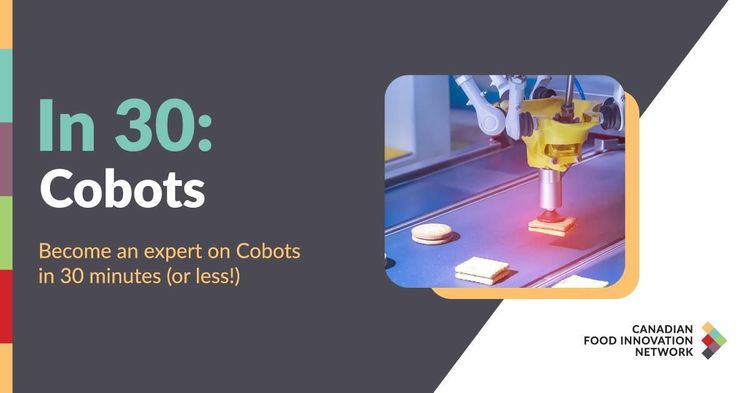
Sometimes, all it takes is 30 minutes to learn the ins and outs of new food technologies and trends that are transforming the food and beverage industry. In this series, we’ll dig into a food innovation topic and link you to content and resources so you can become a master on the topic in 30 minutes (or less!). This week, we’re looking at the use of cobots — collaborative robotic systems that work alongside human workers — and their use in the food industry . The Overview WiredWorkers - What is a cobot? The ultimate collaborative robot guide Learn how cobots differ from robots, and how their use can benefit any manufacturing operation. WiredWorkers - Cobots in the foo d industry A deeper dive into the ways cobots are being used in the food and beverage industry to solve common challenges such as labour shortages and safety concerns. Collaborative Robotics - 7 reasons why manufacturers should invest in cobots Even more reasons why food companies are looking at cobots to boost efficiency and ensure product consistency. The Canadian Connection Cyberworks Robotics provides autonomous self-driving technology for material handling forklifts and tow-tuggers as well as industrial floor scrubbers. Kinova produces robotics including the Link 6, a collaborative robot designed to work with grippers, vacuum applications, weld tips and other cobot tools. Social Medi a C o b o t T e a m ( L i n k e d I n ) offers and represents automation solutions that help expand their clients’ human workforce potential. They provide a unique approach to collaborative robots, including the identification of best applications, application engineering, operator training, and on-going service and support. Cobotnation (Instagram) Cobot Nation creates custom designed automation systems for a range of industries. Overtime If you’ve got more than 30 minutes, these are for you: YouTube – What are Cobots?
Community Manager-
Intellectual Property Essentials for Food Innovators
L ast week , we hosted our inaugural Unpuzzling webinar on Intellectual Property (IP) Essentials for Food Innovators . CFIN’s Hubba Khatoon and Julie Daigle were joined by IP professionals for an engaging session that covered the importance of IP in food innovation, practical strategies for IP management, and resources available to help food and beverage companies protect their intellectual assets. Here are a few of the key takeaways that the food industry's top IP experts shared throughout the webinar . Why IP is the Secret Sauce for Food Innovation Success I P is a key asset for food and beverage companies aiming to secure a competitive edge in the market. “Ninety-two percent of the valuation of companies in the S&P 500 comes from intangible assets,” s ai d Alla Darwish, Director of Commercialization & IP Mobilization at Conestoga College . “It shows how vital IP is for any business's success, especially in innovation-driven markets . ” Darwish explored why protecting unique recipes, processes, or branding is essential to ensuring long-term business success. Despite the potential benefits, v ery few Canadian companies possess an IP strategy, presenting a significant opportunity for innovators to get ahead. Tips on Mastering the Art of IP Strategy Dumitru Olariu, IP Advisor at the Canadian Intellectual Property Office (CIPO) , stressed the importance of a robust IP strategy for food and beverage companies. "An IP strategy involves decisions and methods designed to maximize the contribution of your IP assets to achieve your business goals," Olariu explained. He outlined the key types of IP, from patents to trade secrets, and detailed a strategic approach to managing these assets. Olariu emphasized the necessity of integrating IP considerations into every phase of business planning and execution. This includes conducting regular IP audits to identify and protect valuable assets, understanding competitive IP landscapes, and ensuring that IP strategies adapt to changing business conditions. By doing so, companies can fully l everage innovations and m aintain a competitive edge in the market. Where to Find IP Funding Opportunities L ayla Lahiji , Venture Manager at ElevateIP Alberta , share d advice for innovators looking for support in initiat ing IP implementation processes like patent drafting and registration. “ ElevateIP has a number of different funding recipients that are region-based,” she said. Lahiji explored the servi ces offered by some of those regional funding recipients like Innovate Calgary , Springboard Atlantic , momentumPI , and N ew Ventures BC — and how innovators across Canada can work with those organizations to access IP funding opportunities. A Solid IP Foundation Begins with Smart Contracts Ally Bharmal, Partner at Fasken and Co-Lead of the firm’s national food and beverage group , emphasized that thorough, well-articulated contracts are the first line of defense when protecting IP. He highlighted three critical areas for companies to focus on: internal team agreements, non-disclosure agreements (NDAs) for business discussions, and IP ownership clauses in external contracts. "Having proper IP assignment clauses ensures that any innovation developed by employees or consultants is owned by the company ,” Bharmal explained. “ Without these, businesses risk losing control of their most valuable assets." He also covered the importance of including confidentiality and ownership provisions in contracts with suppliers, co-manufacturers, and collaborators to safeguard trade secrets and other IP assets. Food Cycle Science: A Case Study in Foodtech IP Success Lesley Thompson, VP of Sustainability and Communications at Food Cycle Science , provided an inspiring example of the importance of IP in food innovation . F unding support from CFIN enabled the company to accelerate its R&D and commercialization efforts, leading to a necessary expansion of its IP portfolio. By leveraging both external IP lawyers and internal teams, Food Cycle developed a strategic , customized approach to managing patents, trade secrets, and trademarks . Thomspon emphasized th at any successful strategy requires flexibility and constant fine-tuning. "An IP strategy is more like a rose bush—you need to keep deadheading and pruning so that it stays healthy ,” she said. This proactive approach has been critical to Food Cycle’s ability to maintain a competitive edge and unique valu e proposition as other companies flood into the food recycling space. “IP has become an incredibly valuable asset for our company,” Thompson continued . W hile IP strategies can be complex, time consuming, and expensive, she c onsider s it an essential investment and encourag ed all food innovators to explor e the IP support organizations and resources covered throughout the webinar .
Community Manager-
Working Smarter: 5 Ways to Make Recruitment and Training Easier in 2025
For many food manufacturers, maintaining a skilled workforce can feel like a never-ending uphill battle. And, as a tidal wave of manufacturing workers hit retirement age, the industry will need to hire and retain 142,000 new workers by 2030, making the path ahead appear only steeper still. But it does not have to be this way. By understanding where traditional talent management approaches are falling short, food manufacturers are finding innovative ways to adapt and forge a better path forward, building stable teams and reducing the constant drain of recruitment and retraining. Here are five strategies that successful food manufacturers are using to transform their approach to talent management, making both recruitment and training more efficient and effective in 2025. Partner with Workforce Development Organizations As manufacturing evolves, so do the skills required for many manufacturing positions. Digital skills and soft skills—like critical thinking, problem solving, and creativity—are more important than ever as manufacturing processes become increasingly digitized and automated. To adapt, food manufacturers can build strategic partnerships with industry programs and organizations that can help accelerate workforce development. For instance, Food Processing Skills Canada often partners with employers for work placement programs and can help manufacturers access funded training and upskilling opportunities for existing staff. Employer participation in FPSC programs like Succeeding at Work and the Student Work Placement Program can unlock grant funding for staff retraining and upskilling programs, along with wage subsidies to help you build a robust talent pipeline and help your team to adapt to the rapidly evolving nature of manufacturing work. Build a Formal Retention Strategy Most Canadian food manufacturers are small businesses (less than 100 employees). Many struggle to match the training, onboarding and compensation packages, and career advancement opportunities that workers can find at larger corporations and find themselves locked in a constant cycle of recruitment, training, and turnover. Fortunately, there are still actions that smaller manufacturers can take to improve their recruitment efforts, and this begins with building a formal employee retention strategy. This strategy should be informed by market data along with insights from your existing workforce. Conducting stay interviews can help you understand what your team values, giving you the ability to make highly desirable changes (like flexible shift patterns and schedules) that will boost employee retention rates. Go Where the Talent Is: The “Nichification” of Job Boards The days of relying solely on generic job boards are over. Food manufacturers looking to recruit effectively in 2025 should leverage the proliferation of niche recruitment platforms that align with their specific industry needs. Focusing recruitment efforts on specialized job boards can help you identify candidates with the exact skills and interests required for your roles, saving time and resources while improving hiring outcomes. For instance, CFIN's Food Innovator Career Hub (FICH) is tailored specifically to employers and jobseekers in the food sector. Job posting can be shared directly via the discussion forum , and FICH also hosts a repository of the top food industry-specific job boards , including Careers in Food , which focuses exclusively on food and beverage manufacturing. While they may not have the massive pool of applicants you’ll find on the big job boards, these platforms are like fishing in a small pond packed with big fish . Instead of competing with unrelated industries, your postings stand out to the right audience. It’s the “quality over quantity” approach: your recruitment team can spend less time vetting a flood of applications and more time engaging with talent that fits your needs. Bridging the Labour Gap With Augmented Reality-Enhanced Onboarding One of the most exciting—and practical—emerging use cases for augmented reality (AR) technology is as a training and onboarding tool in complex manufacturing environments. By overlaying digital instructions onto real-world tasks, AR systems provide instant guidance that reduces errors and accelerates training completion. With one third of the manufacturing workforce over the age of 55 , AR is poised to fill a critical gap in retaining the knowledge of skilled retirees and training the next generation of workers. Solutions like DeepSight's autonomous AR training platform offer modular options that can scale with business needs to make them accessible for smaller operations, but the upfront investment of novel technologies often proves to be a major barrier. However, it is possible for manufacturers to find financial support through initiatives like the SCAP AgriInnovate Program , which helps food businesses adopt innovative, productivity-enhancing technologies like AR. Make a Strategic Embrace of AI AI-based solutions have incredible potential to supercharge all the recruiting and training solutions covered above. Wherever quality data exists in your training and recruitment processes, AI can be leveraged to drive substantial efficiency gains . One notable example would be the AI-based management of a workforce skill and abilities database to identify current or future talent gaps. Such a program would help optimize employee retention and internal recruiting efforts, while identifying current or future talent gaps that could be addressed through upskilling initiatives. As unbridled enthusiasm over the potential of AI has been tempered, discussions of its benefits to food manufacturers have become more nuanced and realistic. Fully autonomous AI manufacturing facilities are not coming anytime soon, but its short-term impact will still be profoundly transformative. For every food manufacturer, large and small, now is the time to develop a well-considered AI adoption strategy.
Community Manager-
The Network Effect: Innovation Without Borders - Connecting Canada’s Bilingual Food Sector
How CFIN Facilitates New Opportunities for its Members When CFIN’s Julie Daigle invited David Singer, Co-Founder of Index Biosystems to attend the Future of Food Symposium in Montreal, he did not hesitate to accept. The event would be an exceptional opportunity for David to connect with key industry decision makers and introduce them to Index’s groundbreaking BioTags ®—microscopic yeast-based “barcodes” that can be incorporated directly into agricultural products, enabling unparalleled traceability throughout the entire food supply chain. Despite the potential food safety and traceability benefits of BioTags , getting buy-in from the food sector on new technology is a complex and arduous process. For an industry with a conservative approach to technological innovation, personal relationships trump product value propositions in getting that buy-in. “For foodtech startups, building the right relationships and getting industry support is a huge barrier to growth,” says David. “You need to know who to engage with, and you need to prioritize relationship-building if you ever hope to stand out in a competitive industry with an often-cautious approach to change. Julie has been critical in helping Index do that.” Facilitating Key Connections As CFIN's Regional Innovation Director for Quebec, Julie brings over two decades of experience working for and supporting the growth of innovative food businesses. She knows firsthand how connection acts as an innovation force multiplier. With her singular blend of industry savvy and a broad bilingual network, Julie helps CFIN members leverage that force by sparking new relationships and opportunities they may otherwise never find. “CFIN is all about bringing people together to create solutions,” says Julie. “When I see companies like Index Biosystems working to make our food system safer and more sustainable, I’m dedicated to making sure they have access to the resources and connections they need to succeed.” In 2024, Julie and David reconnected at SIAL Canada in Montreal, one of the largest food industry events on the continent. After chatting about the pain points he was navigating in scaling up Index and establishing larger industry partnerships, Julie invited David to join her the Future of Food Symposium that same week, where she knew she could facilitate an introduction to some of Quebec’s leading food innovators, ranging from likeminded startups to some of the largest and most influential food sector companies in Canada. “The connections that Julie has facilitated for Index have been transformative,” says David. “She has helped us accelerate business relationships and unlock potential collaborations with Quebec companies far faster than we would’ve otherwise.” Join the Community! Bridging the Gaps in Canada’s Food Innovation Ecosystem One of Julie’s most impactful skills is her ability to navigate linguistic and cultural boundaries in Canada’s diverse food sector. Fluent in French, English, and Spanish, Julie plays a critical role in fostering collaboration between innovators located in other provinces —like the Ontario-based Index Biosystems—and Quebec’s major food sector players. “Quebec has such a massive food sector, but language can be a barrier, especially for SMEs from other provinces,” says Julie. “Being multilingual allows me to bridge that gap and help entrepreneurs forge connections and scale necessary industry innovations more rapidly.” Julie’s deep knowledge of the food industry, paired with her multilingual abilities and global perspective, makes her uniquely suited to the role uniquely positions her to foster cross-provincial relationships. “Innovation is impossible in isolation,” says Julie. “Creating new outputs demands the constant introduction of new inputs— new ideas , new technologies , new partnerships. Ultimately, innovation comes from connecting those inputs to one another in every way we can.” Paving the Way for Canada’s Food Innovators Julie’s work with Index exemplifies the broader impact of CFIN’s Regional Innovation Directors. By creating opportunities and fostering cross-provincial connections, Julie helps members like Index overcome barriers and unlock new possibilities. “CFIN and Julie have been essential partners in our journey,” David says. “We’re excited about the path ahead and the connections yet to come.” For Index, the path ahead includes scaling their collaborations with industry leaders and researchers, raising capital, and expanding their reach. With countless more connections being forged by CFIN’s RID’s every day, the future of Canadian food innovation has never been more exciting. Join the Community
Community Manager-
Friday Food Innovation Roundup - January 24, 2025
Food i nnovation news was coming in fast and furious this week. We’ve got a ton of exciting updates for you in this Friday’s Roundup, so let’s dive right in. H ighlights from this edition include: 💡 Canada is getting a new training platform to spur agri -food innovation 🛠️ Local Line is hiring for a Product Researcher 💰 New CFIN funding round s opening next month 🧠 A postmortem of the year that was in agrifoodtech Let’s dive in ! 💡 Food Innovation News University of Guelph gets $16M over five years for agri-food training platform – GuelphToday The federal funding will support Sustainable Food Systems for Canada (SF4C), a new platform co-chaired by Dr. Evan Fraser and Dr. Lenore Newman, with the goal of creating “one of the world’s largest food system innovation training networks focused on agri-food.” The51 holds $51-million final close for Food and AgTech Fund amid challenging venture market – Betakit Alberta’s women-led investment firm T he51 closed their first sector-specific fund ing call. It intends to invest between $350,000 to $2 million in different food and agtech companies, with a particular focus on AI, robotics, and biotechnology. Precision fermentation: the next food revolution – The Western Producer Precision f ermentation is “going to be a three to four trillion-dollar industry in a couple of years, globally,” says Mehmet Tulbek , president of the Saskatchewan Food Industry Development Centre in Saskatoon , in this article explaining why Canada needs to prioritize investment and research into precision fermentation to keep pace with global leaders . Foodtech Quarterly: Alt. proteins & robotics lead the way – Food in Canada In CFIN’s quarterly article for Food in Canada, we looked back at some of the biggest stories in Canadian foodtech from last three months. 💰 Upcoming Opportunities New Funding Round s Coming for CFIN ’s Innovation Booster and Foodtech Next Programs – Applications open late February Join Alex Barlow, CFIN VP of Programs for two Info Sessions, one for the Innovation Booster on Feb 24 and another for Foodtech Next on Feb 25 , to learn about these funding call s and have your application questions answered. The Global Food Tech Awards – Applications Open Companies can a pply for free for a chance to be named a winner of the 2025 Global Food T e ch Awards. Finalists will be announced at Future Food-Tech in San Francisco, March 13-14, 2025. Award applications for the Americas region close on February 28, 2025. Discover all the F&B industry opportunities and events on the horizon over on CFIN’s Events Page ! 🛠️ Job Openings Here’s a few cool new food innovation jobs that caught our eye: Product Researcher – Local Line – Kitchener, ON Innovation Specialist – Keurig Dr Pepper Canada – Mississauga, ON Director of Brand Marketing – Earth's Own Food Company – Burnaby, B.C. Have an open position you’re looking to fill ? Be sure to post it on the Food Innovator Career Hub ! 🌟 Highlights from YODL Catch up on some of this week’s top YODL conversations … New Year, New Talent: Hire Waterloo Co-op Students to support your 2025 growth! Securing Venture Capital for CPG Companies Clarity on lower sugar nutrient content claim 🧠 Brain Food If you’re hungry for some additional food for thought , here are the top longform articles, podcasts, and books that we've been enjo y ing lately . 📰 10 AgriFoodTech Battles of 2024: Hard Lessons Learned and Insights for the Industry – Forward Fooding 🎙️ Dr. Sylvain Charlebois Talks F ood Innovation and More – Aisle 42 Podcast 📖 Master of Change: How to Excel When Everything Is Changing —Including You – by Brad Stulberg Do you h ave something worth including in our next Friday Food Innovation Roundup ? R eply to this post to let us know about your news, even ts, or job openings ! Thanks for reading!