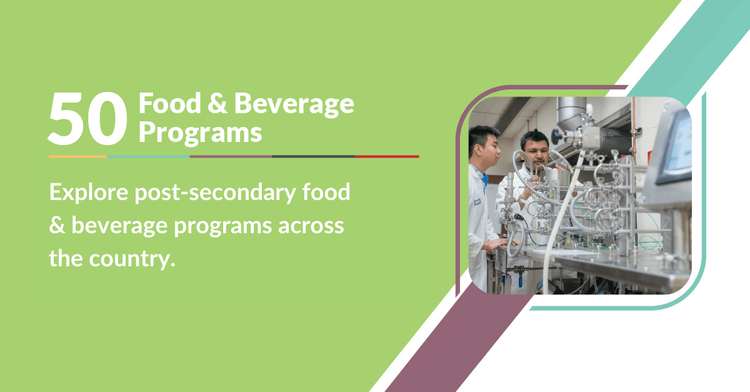
Canada is home to a diverse and dynamic food and beverage industry, supported by educational programs that train the next generation of chefs, brewers, entrepreneurs, and innovators. This roundup highlights 50 standout programs across the country, from top culinary schools and hospitality management courses to cutting-edge research initiatives and sustainability-focused training. Whether you're an aspiring professional, educator, or industry enthusiast, these programs provide valuable insights into the evolving world of food and drink in Canada. BC & Yukon Vancouver Community College UBC BCIT LaSalle College (Vancouver) UBC: Food, Nutrition, and Health Okanagan College Vancouver Island University University of Fraser Valley Northern Lights College North Island College Yukon University Selkirk College Thompson Rivers University Kwantlen Polytechnic University Prairies Saskatchewan Polytechnic University of Alberta University of Saskatchewan University of Manitoba SAIT NAIT Manitoba Institute of Trades & Technology International College of Manitoba Ontario Niagara College Humber College Le Cordon Bleu Ottawa George Brown College Fanshawe College Brock University University of Guelph Toronto Metropolitan University Loyalist College Georgian College Conestoga College Durham College Centennial College Canadore College Algonquin College Trent University St. Lawrence College St. Clair College Sault College Lambton College Confederation College Quebec McGill University LaSalle College Bishop's University Atlantic Canada University of PEI Memorial University Cape Breton University
Community Manager-
50 Food & Beverage Programs - Vancouver Island University
Crafting a Career in BC ’ s Wine Industry: VIU ’ s Wine Business Program The Wine Business program at Vancouver Island University is a comprehensive one-year certificate course designed for those passionate about pursuing a career in the BC wine industry. The program combines practical experience with academic learning in viticulture, wine business practices, marketing, and tourism. Program Highlights: As a student, you ’ ll have the chance to immerse yourself in hands-on experiences at local vineyards and wineries, gaining insights into the entire winemaking process. This practical foundation is then complemented by academic courses in viticulture, wine business practices, marketing, and tourism. A standout feature of this program is its flexibility. Whether you ’ re looking to study full-time for a year or prefer a part-time option spread over two years, VIU has you covered. Located in picturesque Nanaimo, BC, VIU provides an ideal setting for your wine education journey. With a curriculum designed to integrate viticulture essentials with business acumen, VIU ’ s Wine Business program offers a holistic understanding of the wine industry. Students can also earn credits that can be applied toward a Bachelor of Business or a Hospitality and Tourism Management program, opening doors to a wide range of future career prospects. The program includes seven courses and focuses on the broader aspects of the wine industry. In addition to viticulture and winemaking, students delve into wine marketing, exporting, and the vital role of wine tourism. C ourses cover a wide spectrum, from wine marketing and appreciation to beverage theory and the management of wine tourism. The program also offers elective courses in consumer behavio u r, entrepreneurship, and festival management . What You’ll Leave With: Upon graduation, a world of opportunities awaits you in BC ’ s wine industry. Whether you dream of managing a vineyard, excelling in wine s ales and marketing, or even opening your own restaurant, VIU ’ s Wine Business program provides the knowledge and skills to make your wine-related ambitions come true. Career options span winery/vineyard management, retail sales, wine marketing representation, hotel management, culinary arts, a gri - tourism development, and s pecial events coordination. V ideo/Social / Media : VIU YouTube Video
Community Manager-
Cellular Food in Canada
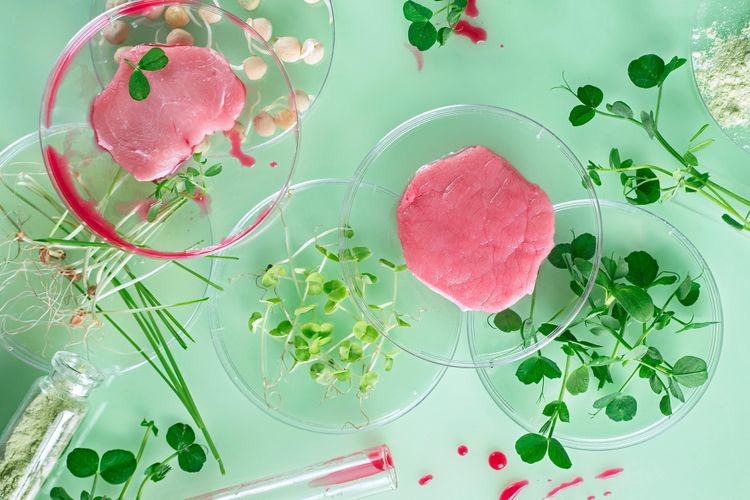
The past few years have proven how susceptible Canada’s food industry is to world events, supply chain disruptions and climate changes. New food production technology, such as cellular agriculture, has the potential to alleviate some of these challenges, while creating commercial opportunities and building a more sustainable, resilient food system. What is it? Cellular food – also known as engineering biology, synthetic biology or cell-cultivated products – is the production of food and textile products without using animals or land. Cell cultures harvested from animals, plants or micro-organisms are grown in the lab through tissue engineering or precision fermentation to produce: Cultivated proteins such as chicken, beef and seafood Fermented products like dairy, eggs, honey and chocolate Ingredients to add to products to create hybrid foods including proteins, enzymes, flavour molecules, vitamins, pigments and fats Textiles such as leather, silk and wool Why you should care As global population continues to grow, so does demand for protein, while access to land and other resource inputs become more scarce. Alternative agriculture could be an answer to food scarcity, concerns about animal and environmental welfare, cost inflation and resource challenges due to climate change. Compared to conventional agriculture, cellular agriculture production, is much less energy intensive, produces less greenhouse gas emissions, and has a much lower overall carbon footprint. With our strong food infrastructure, reputation for food safety, biotechnical expertise, and federal support for alternative protein production, Canada is well positioned to become a leader in cellular agriculture. The 2021 report Cellular Agriculture: Canada’s $12.5 Billion Opportunity in Food Innovation from Ontario Genomics and the Food and Agriculture Institute at the University of the Fraser Valley found that the international cellular agriculture market will reach US$100 billion by 2032. Canada’s food industry has the potential to take $12.5 billion that market, while creating up to 142,000 high-paying jobs. Opportunities in Canada Engineered plant proteins are already in the Canadian market, and by all estimates, precision fermented products are expected to appear before cultured meat products. Current Canadian regulations consider food produced through cellular agriculture as a novel food, and products are approved on a case-by-case basis. Here are a few Canadian start-ups making headlines: Because Animals – This Toronto-based pet food company uses cultured ingredients such as probiotics and nutritional yeast to create nutrient-rich cat and dog food designed to help digestive issues. Future Fields – Edmonton, AB-based Future Fields is a R&D producing growth media products that can be used to create commercialized cultivated proteins in a safe and sustainable manner. Cell-Ag Tech – Toronto’s Cell-Ag Tech is doing R&D on cell-cultured fish and seafood. New Harvest International non-profit research institute New Harvest , which promotes the science behind cultured meat through research, funding and a conference , now has a Canadian branch.
Community Manager-
Other Articles
50 Food & Beverage Programs - Fanshawe College
Culinary Excellence and Industry Mastery: A Comprehensive Journey through the Culinary Arts Program at Fanshawe College The Culinary Management program at Fanshawe College is a dynamic two-year diploma course designed to develop diverse culinary skills and professionalism. It offers an opportunity to master culinary arts and succeed in various industry sectors. Program Highlights: This program is a perfect blend of practical culinary labs and theoretical learning, designed to equip you with a comprehensive understanding of food and bake theory, nutrition, entrepreneurship, and kitchen management. As part of your education, you ’ ll earn certifications in Safe Food Handling and Smartserve , and lay the groundwork to obtain WSET and Prud’homme Beer certifications upon graduation. The heart of your learning experience lies in the state-of-the-art culinary and baking lab facilities. You'll refine your skills and creativity in The Chef's Table at Fanshawe College, located in downtown London , ON . This hands-on approach is further enhanced by a five-week field placement in the industry, where you'll apply your classroom knowledge in a real-world setting. Extracurricular and charitable events offer additional platforms to showcase your skills, while international field trips open doors to global culinary perspectives. The program ’ s curriculum is designed to cover all aspects of the culinary arts. In Level 1, you’ll dive into Food Preparation 1 and Bake Practical 1 , laying the groundwork for your culinary journey. B ake Theory delves into the science behind baking, while Career Preparation equips you with essential skills for the workforce. Reason & Writing 1-Tourism/Hospitality sharpens your communication skills, and Basic Culinary Knowledge ensures you have a solid understanding of culinary fundamentals. Restaurant Production 1 is where you ’ ll apply these skills in a practical setting. What You’ll Leave With: Upon completion, graduates of this program are well-equipped to excel in various facets of the culinary industry. You ’ ll be proficient in fundamental culinary planning, preparation, and presentation, and adept at applying both basic and advanced food and bake theories. Your training ensures you can maintain a healthy, safe, and efficient kitchen environment. You ’ ll have honed your kitchen management techniques and learned to use resources responsibly, while also applying nutritional principles to food production. Graduates are skilled in working effectively within food and beverage preparation and service teams and are adept at implementing cost-control techniques in foodservice operations. Moreover, you ’ ll leave with a personalized professional development strategy to continually refine your culinary skills within the hospitality environment. C ontact Information: Phone: 519-452-4430 Contact Fanshawe College V ideo/Social/Media : Course Youtube Video Instagram
Community Manager-
Guest Blog: Food Packaging Life Cycle Challenges
Editor's Note: This article was originally published on 09-06-2022. By Carol Zweep (Packaging Researcher, Conestoga College) Over three million tonnes of plastic waste end up in Canada’s landfills each year. To address plastic waste nationwide, the Canadian Council of Ministers of the Environment (CCME) introduced t he Canada-Wide Strategy on Zero Plastic Waste in November 2018. This strategy, built on the Ocean Plastics Charter, takes a circular economy approach to plastics. This approach aims to keep plastic products and materials in use for as long as possible, closing the loop through reducing, reusing, repairing, remanufacturing, recycling, and composting materials, and by recovering energy at a material’s end of life. While this approach supports a circular versus linear flow, some challenges must still be mitigated throughout a food package’s life cycle. Front-end Design: This involves taking a design approach to packaging that eliminates problematic or unnecessary plastic packaging. Materials and components, such as labels, closures, sleeves, and more, can be selected to ensure that the package can be reused, recycled, or composted. The Consumer Goods Forum’s Golden Design Rules offer guidelines on which plastics to use to maximize the recovery of recyclable materials and increase the value of plastics in the marketplace. Collection: Plastics collection can be challenging, especially in rural and remote communities and residential buildings and businesses. Collection systems based on Extender Producer Responsibility (EPR) programs assist in the convenient and necessary recovery of plastic waste. EPR is recognized as an effective model as it places responsibility on the producer (e.g. brand owners, first importers, or manufacturers) for waste management costs of packaging (vs. on municipalities and taxpayers). This incentivizes producers to make appropriate packaging design changes to support waste reduction, reuse, and recycling. Participation: By raising consumer awareness, the industry can inspire participation in sustainable practices and influence behavioral changes. Examples include providing educational information on recycling to teachers and schools, as well as leading initiatives and waste management campaigns in businesses, organizations and institutions. Sorting and Processing: Technology is evolving to better sort and process recyclable plastics efficiently. Advancements include robotic sorting using artificial intelligence, expansion of facilities for easy-to-recycle products, and scaling solutions including both mechanical and chemical recycling. End Markets: Finding markets for contaminated or hard-to-recycle plastics can be challenging, especially when virgin materials incur lower costs than recycled materials. Diverse measures are required to increase the supply, demand, and quality of recycled plastics. New packaging must meet municipalities’ infrastructure for recyclability and compostability, which varies from region to region across the country. Food and beverage companies must also consider how user-friendly and acceptable the new packaging is, as well as how adjusting the packaging materials or design will impact their product, especially when it comes to food contact safety, the taste or odour the material could impart, and the product shelf-life and package integrity during thermal processing, handling, transportation, and storage.
Community Manager-
AI + Food – Mycionics
This series showcases Canadian foodtech companies that are using AI to solve a wide variety of industry challenges, including improving efficiency, pricing analysis, inventory management, quality control, food safety assurance and more. In this installment , we’re featuring Putnam, ON -based Mycionics. What T hey D o Mycionics has developed a fully automated mushroom harvesting system using novel advanced robotics and automation. The entire harvesting process is optimized through the application of data analytics, machine learning and artificial intelligence. The system , which is highly modular and structured in a way that can be easily applied to other crops and industries , offers mushroom farms a competitive edge against the global labour shortage afflicting the industry. Mycionics is the first company in the world to successfully automate the end-to-end mushroom harvesting process for the fresh market. How T he y’re U sing AI Stefan Glibetic , lead engineer and CTO for Mycionics , says the company’s machine vision system applies a combination of algorithms, including AI, to process the vision data to determine mushroom properties, and how to pick those mushrooms effectively and without damage. The system also capture s environmental microclimate data, such us temperature, humidity and C O 2 , which helps the farmer visualize their growing environment and grow higher - quality mushrooms. In the Media YODL – Robotics in Action
Community Manager-
50 Food & Beverage Programs - Durham College
Culinary Mastery at Its Best: A Deep Dive into the Culinary Arts Program at Durham College The Culinary Management program at Durham College offers a comprehensive approach to mastering the art of food and flavo u r. This program focuses on exploring locally grown food while preparing both ethnic and contemporary cuisine. Emphasis is placed on hands-on lab/kitchen time in small class settings under the guidance of expert faculty. Students develop a broad range of culinary techniques and skills, such as butchery, cheese making, baking, pastry arts, and more. Additionally, students learn essential hospitality and business skills, gaining insights into planning, promoting, and managing a food business. Graduates are equipped with unique skills, including artisan meat cutting, cheese production, and preserving, making them highly desirable to employers in various sectors of the culinary industry. Program Highlights: The program is hosted at the W. Galen Weston Centre for Food (WC), which operates under a field-to-fork philosophy and sustainable practices. Facilities include a demonstration theatre, state-of-the-art labs, Bistro ’67, and an urban farm classroom. The first semester offers a diverse range of courses designed to lay a solid foundation. Communications for Business 1 sharpens communication skills tailored for the culinary industry, while Computers for Hospitality merges technology with hospitality management. Culinary Theory I delves into the principles of culinary arts, accompanied by practical Culinary and Baking Techniques . Safety and hygiene are paramount in the culinary world, topics thoroughly explored in Food Safety and Sanitation . The Field Placement Workshop – CSK prepares students for real-world experiences, and I ntroduction to Global Cuisine takes them on a culinary journey around the world. C ulinary Nutrition focuses on the health aspects of food, and Professional Development Strategies I equips students with the skills needed for career advancement. The program is enriched with experiential learning opportunities, including a first-year field placement in the culinary industry, allowing students to apply their classroom knowledge in a professional setting. Students can showcase their skills and gain broader exposure through participation in conferences, competitions, and international gastronomy tours. The fourth semester culminates in a capstone project where students create unique recipes for a program cookbook, contributing to their professional portfolio. T he on-campus restaurant Bistr o ’67 offers various events and employment opportunities, further enhancing the hands-on experience. What You’ll Leave With: Graduates of this program leave with a wealth of opportunities at their fingertips. The program opens doors to a variety of roles in the culinary sector, including Baker, Butcher, Cook, Sous Chef, and Food Sales Representative. Those aspiring to higher managerial positions can aim for roles such as Executive Chef, Kitchen Manager, Pastry/Personal/Restaurant Chef, or Restaurant Manager. Moreover, the program equips budding entrepreneurs with the skills to venture into self-employment, turning their culinary passion into a thriving business. Contact Information : Canadian Applicants : Contact recruitment at 905 - 721 - 3126 or via Live Chat International Applicants : Contact at 905 - 721 - 2000 ext. 7697 or via Live Chat V ideo/Social/Media : YouTube Video 1 YouTube Video 2
Community Manager-
#AskLavina - How Innovation Centres can Help Food Businesses Grow (July 2024)
In addition to being CFIN’s Regional Innovation Director for BC and Yukon, Lavina Gully is a food scientist and product developer with almost two decades of experience helping food and beverage companies innovate. In this series, Lavina answers questions from CFIN members on everything from product development, R&D, food industry careers, manufacturing best practices, and co-packing — just to name a few! If you have questions for Lavina, you can reach out to her directly and we can answer your question in next month’s mailbag. This month, Lavina answers your questions about identifying the right ingredient suppliers and what innovation centres can do to help food businesses develop new products and bring them to market successfully . Q: What strategies can food businesses use to narrow down their ingredient supplier options to find the best fit for their specific needs and values? There are many — o ften con flict ing— variables to consider when sourcing ingredients , including food safety, nutrition, quality, price, location, minimum order quantities, and much more . While there is no shortage of ingredient suppliers out there to choose from , identifying the ones that will genuinely meet your uni que operational needs and complement your brand identity requires some legwork. To narrow the list of potential suppliers into something more manageable , start off by identifying the ones that share your brand’s core values. For exampl e, if sustainability is core to your brand, it should also be core to your supplier , in both the characteristics of the ingredients themselves and how the supplier conducts their own operations . C o llaborating with suppliers adhering to the same certification programs as you ( i.e. Organic, Fair Trade, or B Corp certified) is a logical first step to ensure the ingredients going into your products are aligned with your brand values. Once you have a shortlist of value-aligned suppliers, it’s time to assess their operations to see if they will be a good match . Details you will want to learn more about include: M inimum O rder Q uantities (MOQs) : A mismatch between the scale of your operation and that of your suppliers can create unnecessary headaches. For example, a large, global ingredient supplier might have MOQs far above what your business requires , while a small regional supplier may struggle to fulfill orders if you’re working with larger ingredient quantities. Doing some initial calculations about your quantity needs can help inform these discussions and ensure compatibility. Lead Times: This goes hand in hand with MOQs. Lead time s for processing and deliv ering ingredients needs to line up with your own production schedule so you are not constantly managin g shortages or a surplus of perishable ingredients. Flexibility: Some suppliers ar e willing to customize sizes or specifications to fit your unique needs . But many take a what is essentially a “ my way or the highway ” approach — you will have to adapt to their processes and standards, not the other way around . Flexibility can co rrelate to higher cos t s , but often results in reduce d waste , improve d operational efficiency , and higher-quality products . W eigh these trade-offs carefully. Retailer or Client Specification s : Your clients may have specific procurement requirements that ultimately dictate what you need from your suppliers. This includes any ingredient restrictions or sourcing limitations. Be sure that your suppliers are aligned with any re quirement s from your clients or intended place of sale . After considering these factors, your shor tlist of viable suppliers will be whittled down to th e real contenders — this is where you should acquire samples and evaluate ingredient performance firsthand. You can u se spec sheets to guide you here, but don’t rely on them entirely. I’ve seen businesses create problems f or themselves because they made ingredient decision s going solely off spec sh eet s without scrutinizing the details closely enough. You often need to see, taste, and work with an ingredient yourself to confirm that it will be a good match. Try to c onfirm with each supplier whether the ir sample is from a production batch or a lab sample . I t can be worthwhile to request a sample most representative of the production batches you would be receiving i f you do pursue a partnership . When you arrive at your top one or two potential suppliers, it’s time to really dig in and complete your due diligence. Conduct a site visit to e valuate the supplier's facilities and request recent audit scores. This documentation will provide insights into their operational standards and quality control measures , limit ing the potential for unpleasant surprises down the road . Putting in the work to find alignment with your ingredient suppliers not only sets you up for short term success , it also la ys the foundation for your business partnerships to flourish over years, or even decades, of worki n g together . This is another reason to strive to find value-aligned suppliers—they will understand your vision and be more receptive to joint development , collaborative projects , and flexible , mutually beneficial partnership agreements as you grow your business. Q: I heard about the upcoming opening of the Food and Beverage Innovation Centre in Vancouver. How can innovation centres support food entrepreneurs like me with new product development and market entry? I had the opportunity to co-host a tour of the new FBIC facilities earlier this month, and I’m excited that BC finally h as its ow n food focused innovation centre . Innovation centres are an incredible resource for food entrepreneurs. Many operate on a sandbox concept — they are essentially a big playground where you can experiment with state-of-the-art equipment without making huge capital investment s yourself . This setup is perfect for testing concepts and validating product ideas before committing to full-scale production. But pairing cutting - edge equipment and facilities with food science expertise is what makes centres like the FBIC truly invaluable . Staff r esearchers and technicians can offer support and advice on formulation, product ion techniques, and market trends. They will act as a sounding board for your ideas and help refine them into market-ready products. Innovation centre staff can also provide crucial insight in to food safety and will guid e you through potential risks and regulatory requirements. This support is particularly helpful when responding to new opportunities or external requests, allowing you to develop and market new products quickly. Access to sophisticated equipment and industry experts is a game-changer , especially for food businesses working to establish themselves or scale their operations . While shared-use kitchens are excellent resources for fulfilling small-scale production needs, innovation centres are equipped to push product development and consumer experiences forward , helping businesses stand out in a hyper-competitive market. Finally, i nnovation centres may also offer access to funding and grants. They can connect you with financial resources to support your research and development efforts, making it easier to test and validate innovative products , and to successfully bring those products to market. The FBIC is slate d to open later this year, and it will be the first facility of its kind in BC. There are o ther food innovation centres operat ing on a similar model already supporting businesses throughout Canada. Here are a few to check out: The NAIT Centre for Culinary Innovation (Edmonton, A B ) The Saskatchewan Agri-Food Innovation Centre (Saskatoon, SK) The Guelph Food Innovation Centre (Guelph, O N ) The Food Innovation & Research Studio ( Toronto, O N ) The Perennia Innovation Centre (Bible Hill, N S )
Community Manager-
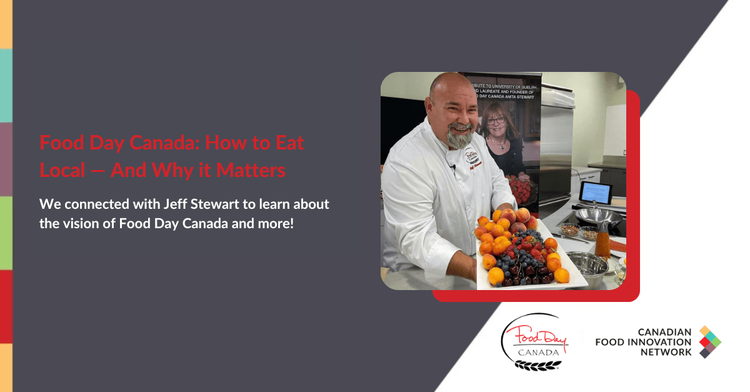
Food Day Canada: How to Eat Local — And Why it Matters
Food Day Canada is a coast-to-coast grassroots movement spearheaded by perhaps the most culinarily inclined family in the entire country. It began with Anita Stewart , a beloved and tireless champion of Canadian food and agriculture , as a way to support Canadian farmers and celebrate the country’s diverse ingredients, unique cuisines, and storied agri-food history . Anita’s sons Jeff, Mark, and Paul Stewart —all trained chefs and Canadian food advocates themselves—continue to grow and sustain their mother’s vision of an annual Canadian culin ary celebration as Board Members of Food Day Canada. We connected with Jeff to learn more about the vision of Food Day Canada, what 's in store for this year’s event, and how organizations like CFIN can help nurture a diverse, delicious, innovative, and sustainable Canadian food landscape . You can watch Jeff answer our questions in this video or read the transcribed interview that follows (edited for clarity). Be sure to also explore Food Day Canada’s list of local restaurants, events and markets to help you dine and celebrate Canadian for this year’s event , happening next S aturday , August 3 .
Community Manager-
50 Food & Beverage Programs - Conestoga College
Shaken, Stirred, and Educated: The Comprehensive Journey Through Conestoga's Beverage Management Program The Conestoga College 14-week intensive bartending program is designed to blend hands-on practice and theory with professional development skills for a leadership role in the hospitality industry. It offers a comprehensive study of mixology, wine, and beer, and is hosted in a state-of-the-art mixology lab. The program includes an immersive field placement opportunity with top industry partners. Program Highlights: As part of Level 1, students delve into an array of subjects. The curriculum includes a Field Placement, allowing students to apply their learning in real-world settings. For those with a penchant for hops and malt, The World of Beer course offers a deep dive into brewing and beer culture. Similarly, Introduction to Spirits unravels the complexities of distilled beverages. Understanding financial aspects is crucial in the beverage industry, and the Beverage Cost Control course equips students with the necessary budgeting and financial skills. Mixology, the art of crafting drinks, is explored in-depth through Mixology I and II , where students learn the intricacies of mixing, shaking, and presenting a variety of cocktails. Complementing these skills, the Customer Service course ensures that students can provide an exceptional experience to patrons. The World of Wine takes students on a global tour of vineyards, teaching them about different grapes, regions, and wine-making techniques. Safety is paramount in the food and beverage industry, and the Safety in the Workplace course educates students on maintaining a safe and hygienic environment. To round off their education, students are trained in essential industry certifications, including SmartServe & Food Handlers. What You’ll Leave With: Upon completing this program, graduates emerge as well-rounded professionals. They possess not only the ability to effectively communicate with customers and staff but also the practical skills to perform beverage and cash calculations. Their training in maintaining sanitation and safe food handling practices ensures a safe dining environment. C ontact Information : Shannon Rea : srea@conestogac.on.ca Academic School : Hospitality & Culinary Arts Canadian Admissions Contact : admissions@conestogac.on.ca V ideo/Social/Media : Conestoga College Youtube Video Conestoga College Additional Youtube Video
Community Manager-
50 Food & Beverage Programs - University of Saskatchewan
Exploring Excellence in Food Science at the University of Saskatchewan The University of Saskatchewan's Food Science program is at the forefront of academic and research excellence in the fields of food and bioproduct sciences. This program is ideal for students with a passion for applying scientific principles to the study of food and the development of food technology, with a focus on value-added crop utilization , food safety, quality assurance, and bioproduct development. Program Highlights: The program boasts expertise in a wide array of food science disciplines, including areas like food chemistry, microbiology, food safety, and biotechnology. Students gain access to cutting-edge facilities, including advanced laboratories dedicated to food and bioproduct research , and can actively participate in groundbreaking research projects. These projects span areas such as novel techniques for detecting food adulteration, enhancing lipid quality, and exploring food nanotechnology. The program takes a multi-disciplinary approach, delving into various aspects of food science and bioproduct development. This comprehensive approach equips you with a holistic understanding of the field. As you progress through the program, you ’ ll dive deep into the composition of foods and the analytical techniques used to study them. You'll explore the world of microorganisms in food, understanding their role and impact, and investigate microbiology from both molecular and environmental angles. The M.Sc. program typically spans two years, offering an immersive experience in food science. For those pursuing a Ph.D., the expected program length is four years, allowing for in-depth research and specialization. You can commence your academic journey in September, May, or January, providing flexibility to align with your schedule. What You’ll Leave With: Program graduates will possess comprehensive knowledge and skills in food science and bioproduct development . Contact Information : Graduate Chair: Supratim Ghosh (Email: supratim.ghosh@usask.ca ) Graduate Administrator: Ann Harley (Email: fabs.gradstudies@usask.ca ) V ideo/Social / Media : Explore more about the program through the University of Saskatchewan YouTube channel .
Community Manager-
50 Food & Beverage Programs - Centennial College
The Journey Through Baking and Pastry Arts Management at Centennial College Centennial College 's Baking and Pastry Arts Management program is designed for those who dream of turning their passion for baking into a thriving career. The program combines the fundamental skills of baking and pastry arts with essential management capabilities, focusing on aspects like menu design , purchasing , planning, and execution. Program Highlights: At Centennial College, students are provided with hands-on experience in state-of-the-art baking and pastry labs, as well as a commercial bakeshop. The program is enriched by real-world environments, including an on-campus cafe, restaurant, and event cent re , offering a holistic view of the culinary business. A 14-week work-integrated learning opportunity with industry partners is a cornerstone of this program, ensuring students acquire both practical skills and valuable industry insights. Centennial College’s curriculum is comprehensive, covering everything from a la carte cooking and international cuisine to wines and menu design. For those seeking global exposure, the program offers study-abroad opportunities in Ireland, enhancing the learning experience. What You’ll Leave With: Graduates of this program are well-positioned for a range of employment opportunities in the hospitality sector, including roles in hotels, resorts, restaurants, and commercial baking companies. The program paves the way for career paths such as pastry chef, bakery chef, food entrepreneur, executive chef, private chef, catering chef, and food and beverage manager. Upon completion of the program, students also earn important industry certifications such as Smart Serve, Safe Food Handlers, and CPR. For those interested in further study, the program offers pathways and credits toward degree-level education. Contact Information: Advising Services : Centennial College Advising Services General Enquiries : 416-289-5000, Toll free in Ontario: 1-800-268-4419 Admissions : Connect with Centennial College Education Pathways : advising@centennialcollege.ca Part-Time Learning : 416-289-5207, ce@centennialcollege.ca Industry : 416-289-5022, solv@centennialcollege.ca V ideo/Social/Media: Course Youtube Video Course Facebook Video
Community Manager-
Cultivating Success – Top 5 Takeaways
CFIN premiered i ts latest virtual experience -- Cultivating Succes s : Canada's Big Biomanufacturing Opportunity . The experience was hosted by cellular food experts Dr. Lenore Newman of the Food and Agriculture Institute at the University of the Fraser Valley in BC, and Dr. Evan Fraser of the Arrell Food Institute at the University of Guelph in Ontario . Many Ca nadian cellular food companies were featured in the experience a nd explained the potential of this emerging technology to change how we produce, purchase and consume food. Here are the top five takeaways from the experience : 1. Cellular food techniques such as precision fermentation have been used for decades. V egetable rennet created through precision fermentation has been used in cheesemaking s ince the 1990s. Cellular agriculture is a new tool to ensure there is enough protein to feed the world, as well as in-demand products with limited supply, such as coffee , vanilla and chocolate. It won’t necessarily replace traditional agriculture and food processing; it will supplement it. 2 . The cost of cellular food technology has decreased significantly in the past 10 years . The first hamburger created through cellular food processes in 201 3 cost more than $300,000. Today that same hamburger costs approximately $10 to create in the lab. The cost of producing cellular food will continue to decrease as new processes , technology , growth mediums , and companies enter the space and create a localized, sustainable supply chain. 3. Harvesting cells from an animal through a biopsy doesn’t harm the animal. Cells can then be modified to create immortalized cells that multiply indefinitely, meaning no more animal samples are required . Other animal products, like leather and silk, can also be created through the cellular process. Lab- grown products taste identical to the original animal product and have the same nutrition profile . 4. C anada is poised to become a global leader in cellular food. Canada currently exports many of its raw materials for processing elsewhere. Using cellular techniques means that more raw materials would stay in Canada for local processing, while helping the food industry lower its greenhouse gas emissions and its environmental and carbon footprint. Having a made-in-Canada solution for food processing would also help mitigate food scarcity and inflation, and boost supply chain resilience. 5. There are already several Canadian companies innovating to develop cellular food products, including protein and value-added ingredients such as fat and glutamates. Canada has a natural advantage in this field as we have a plentiful supply of biomass (organic material from plants and animals), technical knowledge, foodtech resources, a stable market, and a strong regulatory system . Here’s more about the companies featured in Cutivating Success: Ardra Inc. - Ardra produces sustainable, natural ing r edients through precision fermentation. Ardra is now developing a process for the fermentation-based production of heme as a natural flavour ingredient. Evolved Meats - Evolved Meats is a cultivated meat company based in Kitchener, ON. The company is creating cultivated pork belly that will be identical to conventional pork belly. Liven Proteins – Liven Proteins Corp. makes animal-free, f unctional and sustainable protein ingredients. The company is currently o ptimizing its bioprocess for upcycling starch streams and to test a dditional side streams in the food industry as a starting material to build a fermentation platform for animal-free protein manufacturing. YEX Serums – YEX Serums is a biotechnology research company developing media and nutrients for cellular culture growth.
Community Manager-
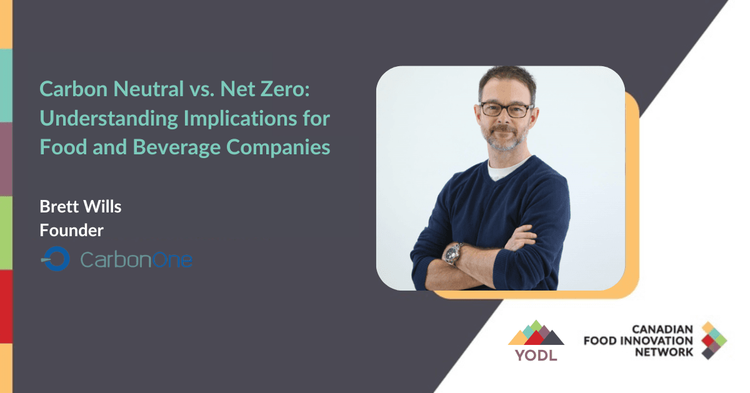
Carbon Neutral vs. Net Zero: Understanding Implications for Food and Beverage Companies
By: Brett Wills - Founder, CarbonOne T he evolving landscape of corporate sustainability can be puzzling, to say the least. The alphabet soup of acronyms and confusing terms muddies it further. A great example is the terms "Carbon Neutral" and "Net Zero". These terms are often used interchangeably by those unfamiliar with their distinct differences. However, the difference between the two is significant and crucial for brands to understand. As a carbon intelligence platf or m devoted to the Food & Beverage industry, CarbonOne is on a mission to cut through the cloud of confusion and bring F&B companies the clarity needed to drive climate performance at speed. So , what ’s the difference between Carbon Neutral and Net Zero? In short, Net Zero is much more rigorous than Carbon Neutral. Why F&B Companies Should Care Climate is arguably the top s ustainability -related concern globally. Expectations are companies will solidify climate commitments now and begin showing progress quickly. What companies need to know when setting climate commitments is that the market is shifting away from Carbon Neutral towards Net Zero with over 90% of Global GDP now covered by a Net Zero Commitment ( Net Zero Tracker , n.d.). This shift is being driven by governments, investors , and large players across all industries, including grocery retailers here in Canada. Brands need to ensure their commitments are relevant and align with stakeholder expectations. Failure to do so will create risk and limit growth. Brand Alert! Carbon Neutral does not equal Net Zero Carbon Neutral: The Starting Line The concept of c arbon neutrality focuses on balancing the amount of carbon dioxide emitted with an equivalent amount reduced, sequestered , or offset. However, Carbon Neutral certification has no requirements to set targets or even reduce emissions in the near or long term and allows for unlimited use of c arbon c redits. This means companies can achieve carbon neutrality by simply purchasing carbon credits to "cancel out" their emissions with no requirement to reduce their own carbon footprint directly, now or in the future. It also has n o requirement to include Scope 3 emissions, which typically represent 80% or more of a company’s carbon footprint. Most critically , Carbon Neutrality does not support the global goal of preventing average temperatures from rising above 1.5 ° C by 2050 . Without achieving this goal, the risk of worsening and potentially irreversible effects of climate change rise substantially . So, while Carbon Neutral was a good starting point in the climate fight , it no longer cuts it. Net Zero: The Commitment to Real Change Contrasting sharply with Carbon Neutral, Net Zero demands more stringent and proactive efforts . It is governed by The Corporate Net Zero Standard through the Science Based Targets Initiative (SBTi). The standard sets a clear direction for near and long-term targets with specific pathways for F &B companies via the Food Land and Agriculture (FLAG) Guidance Standard . Achieving Net Zero means setting near and long-term science-based targets aligned with the global goal to limit warming to 1.5°C above pre-industrial levels . The Net Zero Standard mandates the inclusion of Scope 3 emissions, representing the vast majority of a company’s carbon emissions. To reach net zero, a company must first drastically reduce its emissions across all scopes. Only the residual emissions—those that are technologically or financially infeasible to eliminate—can be offset by validated carbon credits. CarbonOne help s companies do this in Canada by offering an accurate and affordable platform that lets companies calculate their Scope 3 emissions easily. Implications for Brands: You Can't Buy Your Way to Sustainability For brands, particularly those under increasing scrutiny from consumers, customers , and investors who demand transparency and genuine sustainability, the journey to Net Zero is not a simple purchase away. It involves a deep, systemic transformation in how they operate and interact with the environment. This transformation includes technological innovations, changes in supply chain management, and a transition to renewable energy sources—all aimed at real emission reductions. Carbon credits, while still a tool in the arsenal, are relegated to a supplementary role under N et Z ero. They are used only after achieving the substantive emission reductions set out in near and long-term targets. This paradigm ensures the primary focus is on actual emission reductions within the company's operations and across its entire value chain. Conclusion: A Clear Path Forward Understanding the nuances between Carbon Neutral and Net Zero is not only essential for any brand genuinely committed to sustainability; it's essential to compete and win in a Circular, Net Zero world. While Carbon Neutral might offer a quicker, easier path to a “ green ” image, Net Zero embodies a more honest and impactful commitment to combating climate change. It will realize greater benefits and has become the global benchmark for climate targets. Brands aiming for true, long-term sustainability and compl iance are well served to adopt Net Zero, preparing for a future where this will be a prerequisite for doing business. Are you looking to learn more about Net Zero or have questions about this article? Get in touch with us today at Carbon-one.ca. References Net Zero Tracker . (n.d.). Net Zero Tracker. https://zerotracker.net/