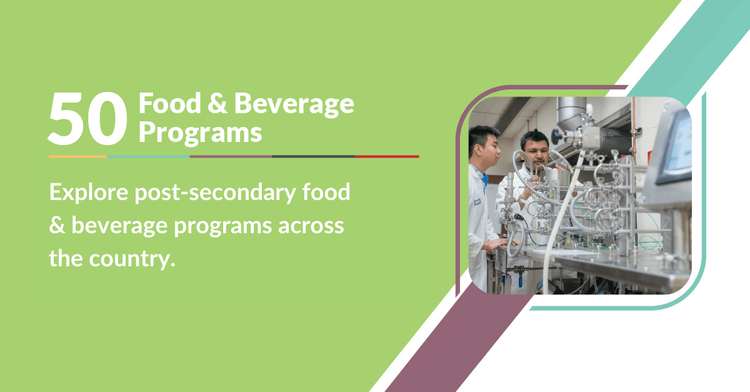
Canada is home to a diverse and dynamic food and beverage industry, supported by educational programs that train the next generation of chefs, brewers, entrepreneurs, and innovators. This roundup highlights 50 standout programs across the country, from top culinary schools and hospitality management courses to cutting-edge research initiatives and sustainability-focused training. Whether you're an aspiring professional, educator, or industry enthusiast, these programs provide valuable insights into the evolving world of food and drink in Canada. BC & Yukon Vancouver Community College UBC BCIT LaSalle College (Vancouver) UBC: Food, Nutrition, and Health Okanagan College Vancouver Island University University of Fraser Valley Northern Lights College North Island College Yukon University Selkirk College Thompson Rivers University Kwantlen Polytechnic University Prairies Saskatchewan Polytechnic University of Alberta University of Saskatchewan University of Manitoba SAIT NAIT Manitoba Institute of Trades & Technology International College of Manitoba Ontario Niagara College Humber College Le Cordon Bleu Ottawa George Brown College Fanshawe College Brock University University of Guelph Toronto Metropolitan University Loyalist College Georgian College Conestoga College Durham College Centennial College Canadore College Algonquin College Trent University St. Lawrence College St. Clair College Sault College Lambton College Confederation College Quebec McGill University LaSalle College Bishop's University Atlantic Canada University of PEI Memorial University Cape Breton University
Community Manager-
50 Food & Beverage Programs - Vancouver Island University
Crafting a Career in BC ’ s Wine Industry: VIU ’ s Wine Business Program The Wine Business program at Vancouver Island University is a comprehensive one-year certificate course designed for those passionate about pursuing a career in the BC wine industry. The program combines practical experience with academic learning in viticulture, wine business practices, marketing, and tourism. Program Highlights: As a student, you ’ ll have the chance to immerse yourself in hands-on experiences at local vineyards and wineries, gaining insights into the entire winemaking process. This practical foundation is then complemented by academic courses in viticulture, wine business practices, marketing, and tourism. A standout feature of this program is its flexibility. Whether you ’ re looking to study full-time for a year or prefer a part-time option spread over two years, VIU has you covered. Located in picturesque Nanaimo, BC, VIU provides an ideal setting for your wine education journey. With a curriculum designed to integrate viticulture essentials with business acumen, VIU ’ s Wine Business program offers a holistic understanding of the wine industry. Students can also earn credits that can be applied toward a Bachelor of Business or a Hospitality and Tourism Management program, opening doors to a wide range of future career prospects. The program includes seven courses and focuses on the broader aspects of the wine industry. In addition to viticulture and winemaking, students delve into wine marketing, exporting, and the vital role of wine tourism. C ourses cover a wide spectrum, from wine marketing and appreciation to beverage theory and the management of wine tourism. The program also offers elective courses in consumer behavio u r, entrepreneurship, and festival management . What You’ll Leave With: Upon graduation, a world of opportunities awaits you in BC ’ s wine industry. Whether you dream of managing a vineyard, excelling in wine s ales and marketing, or even opening your own restaurant, VIU ’ s Wine Business program provides the knowledge and skills to make your wine-related ambitions come true. Career options span winery/vineyard management, retail sales, wine marketing representation, hotel management, culinary arts, a gri - tourism development, and s pecial events coordination. V ideo/Social / Media : VIU YouTube Video
Community Manager-
Cellular Food in Canada
The past few years have proven how susceptible Canada’s food industry is to world events, supply chain disruptions and climate changes. New food production technology, such as cellular agriculture, has the potential to alleviate some of these challenges, while creating commercial opportunities and building a more sustainable, resilient food system. What is it? Cellular food – also known as engineering biology, synthetic biology or cell-cultivated products – is the production of food and textile products without using animals or land. Cell cultures harvested from animals, plants or micro-organisms are grown in the lab through tissue engineering or precision fermentation to produce: Cultivated proteins such as chicken, beef and seafood Fermented products like dairy, eggs, honey and chocolate Ingredients to add to products to create hybrid foods including proteins, enzymes, flavour molecules, vitamins, pigments and fats Textiles such as leather, silk and wool Why you should care As global population continues to grow, so does demand for protein, while access to land and other resource inputs become more scarce. Alternative agriculture could be an answer to food scarcity, concerns about animal and environmental welfare, cost inflation and resource challenges due to climate change. Compared to conventional agriculture, cellular agriculture production, is much less energy intensive, produces less greenhouse gas emissions, and has a much lower overall carbon footprint. With our strong food infrastructure, reputation for food safety, biotechnical expertise, and federal support for alternative protein production, Canada is well positioned to become a leader in cellular agriculture. The 2021 report Cellular Agriculture: Canada’s $12.5 Billion Opportunity in Food Innovation from Ontario Genomics and the Food and Agriculture Institute at the University of the Fraser Valley found that the international cellular agriculture market will reach US$100 billion by 2032. Canada’s food industry has the potential to take $12.5 billion that market, while creating up to 142,000 high-paying jobs. Opportunities in Canada Engineered plant proteins are already in the Canadian market, and by all estimates, precision fermented products are expected to appear before cultured meat products. Current Canadian regulations consider food produced through cellular agriculture as a novel food, and products are approved on a case-by-case basis. Here are a few Canadian start-ups making headlines: Because Animals – This Toronto-based pet food company uses cultured ingredients such as probiotics and nutritional yeast to create nutrient-rich cat and dog food designed to help digestive issues. Future Fields – Edmonton, AB-based Future Fields is a R&D producing growth media products that can be used to create commercialized cultivated proteins in a safe and sustainable manner. Cell-Ag Tech – Toronto’s Cell-Ag Tech is doing R&D on cell-cultured fish and seafood. New Harvest International non-profit research institute New Harvest , which promotes the science behind cultured meat through research, funding and a conference , now has a Canadian branch.
Community Manager-
Other Articles
Generative AI and the Food Industry
Generative AI use cases and applications are growing in many areas of the food industry , as f ood companies across all sectors recognize the competitive advantages offered by the technology. By Shawn Carver Generative Artificial Intelligence (AI) describes AI that can analyze data to create new data, content, or other outputs. Although you may not be familiar with the phrase, generative AI is already being used by food and beverage manufacturers, grocery retailers and the foodservice sector for a variety of tasks. For instance, think of ch atbots and online assistants t hat interact with customers and provide them with information and product recommendations . G enerative AI can also be used to create engaging and personalized marketing and branding content , or to assist in p roduct innovation by analyzing consumer preferences and creat ing new combinations of ingredients that are appealing, healthy or novel . Fiddlehead Technology has seen increased interest in this technology across the board. To help more food companies access generative AI, we’ve partnered with Microsoft to bring Open AI capabilities to our clients . We’re currently working with McCain Foods on two projects involving generative AI. The first is developing a p roduction and maintenance chatbot that will be able to quickly answer questions from production and service personnel about the company’s manufacturing equipment, saving valuable time and labour, and ensuring proper sanitation, maintenance and safety guidelines are followed. The digital assistant will be based on Retrieval Augmented Generation ( RAG ) technology , which enables the chatbot to retrieve relevant information while generating accurate and exact answers in a natural conversational flow. RAG technology is unique because it is capable of not only learning from data, but also retrieving specific information, resulting in more precise and context-aware conversations. It is used for smart chatbots, AI - powered search engine applications , and automation of any workflows involving text and writing . The second project we’re working on with McCain involves generating customized marketing messages based on good examples and detailed product information. If successful, this will save time and reduce the more routine work of marketing and product specialists , allowing them to focus on more creative work . Generative AI is becoming ubiquitous and can be effectively used to automate and improve pretty much any workflow involving text. If you have a daunting task, most likely it can be automated with the help of generative AI . CFIN members can contact the Fiddlehead team at hello@fiddlehead.io to discuss potential use cases . Shawn Carver is co-founder and CEO of Moncton, NB-based Fiddlehead Technology . Fiddlehead uses predictive forecasting and machine learning to help food and beverage manufacturers more accurately predict consumer demand and improve competitiveness.
Community Manager-
50 Food & Beverage Programs - New Brunswick Community College
Culinary Arts Program at New Brunswick Community College: Crafting Culinary Experts New Brunswick Community College (NBCC), with its campuses in St. Andrews and Moncton, offers an enriching Culinary Arts program designed for those passionate about the culinary world. This program is a gateway to a vibrant career in the culinary industry, blending practical skills with creative flair. Program Overview: The Culinary Arts program at NBCC is a comprehensive course that nurtures culinary expertise from production to presentation. It is aimed at preparing students for dynamic careers in various culinary settings. Program Details: Duration: One-year Certificate Program Campuses: St. Andrews and Moncton , NB Start Date: April 2025 (St. Andrews, Blended Delivery), September 2024 (Moncton, Blended Delivery) Program Highlights: Over 900 hours of hands-on training in food preparation and professional kitchen operation. Work-Integrated Learning Experience at an approved location. Option to continue for an additional year to receive the Culinary Arts Management diploma. Curriculum and Key Classes: Baking and Pastry Culinary Skills and Techniques Restaurant Operations Food Preparation and Presentation Garde-Manger Knife Skills and Butchery Hospitality Health and Safety Computer Applications and more Work Experience: The program includes practical work experience in approved restaurants, hotels, or resorts, providing industry perspective on kitchen operations. External Certifications: Food Safety Certification - SafeCheck Responsible Beverage Certification from TIANB Career Opportunities: Graduates are equipped to work globally as cooks, chefs, bakers, and culinary professionals in hotels, resorts, restaurants, cruise ships, catering companies, hospitals, and other culinary-related businesses. Career progression can lead to managing kitchens and culinary teams. Key Faculty Member: Darren Dorcas, Culinary Arts Educator/Executive Chef/Academic and Career Coach Contact Information: General Inquiries: (506) 460-6222 | 888-796-NBCC (6222) Email: nbcc@nbcc.ca NBCC FAQs Social Media and Online Resources: Culinary Arts YouTube Video NBCC’s Cook Program YouTube Video NBCC LinkedIn Profile The Culinary Arts program at NBCC is an excellent opportunity for those who wish to transform their passion for food into a rewarding career. With its blend of practical training and creative exploration, the program is a stepping stone to a world of culinary opportunities.
Community Manager-
#AskLavina - March 2024
In addition to being CFIN’s Regional Innovation Director for BC and Yukon, Lavina Gully is a food scientist and product developer with almost two decades of experience helping food and beverage companies innovate. In this series, Lavina answers questions from CFIN members on everything from product development, R&D, manufacturing best practices, and co-packing – just to name a few! If you have questions for Lavina, you can reach out to her directly and we can answer your question in next month’s mailbag. This month, Lavina answers your questions about advances in texture assessment, and non-compete clauses in employment offers. Q: I recently read that air is the ingredient o f the future and that getting texture correct is a difficult problem for many product developers. What new texture assessing and optimizing technologies are emerging that food innovators need to know about? A: The current industry standard for texture assessment is texture profile analysis (TPA) , a d ouble compression test to simulate bite or chew through measuring compression and decompression . This analysis gives researchers insight into primary texture characteristics like hardness, cohesiveness, springiness, and gumminess , but it does have some limitations. For instance, while TPA is good for solid/semi solid products , it is not great for variable textures . It also offers only a si ngle point of measurement, and doesn’t capture changes in texture over time or influences like saliva . There are some alternate and emerging technologies that can offer additional insights into texture assessing and development. These include: Electromyographic analysis , which measures electrical signals produced by muscles during chewing process . The process involves attaching electrodes to the jaw muscles of participants. Acoustic analysis, which m easure s sound waves generated when food is chewed , and which can contribute to an understanding of attributes such as the “c runch factor .” This process could be useful in the development of c rispy and crunchy foods . The use of facial expression cameras and software to measure texture response. Neuroscience-based protocols that me asure brain activity , which researchers can then correlate with sensory attributes. This method can be used to collect data over time from various eating stages such as from bite, to chew , to swallow. Q: I recently scored a job offer from a great company, but the contract included a very broad non-compete clause that would prevent me from working in the food industry if I left. What are my options? A: To answer this question I interviewed human resources expert Steve MacIntyre , a CFIN member based in Vancouver, BC, and former chair of the BC Food & Beverage board. According to Steve, these sweeping types of non-compete clauses in offer letters are not uncommon , but they’re usually not enforceable. “The only way they can really be enforced is if the clause contains very specific language about technology, formulations, customers, etc. that are proprietary and/or especially unique,” he says. “If challenged, a court or magistrate will likely strike down the provision in order that the person can continue earning an income in their area of expertise, or order that the ex-employer pay a severance equal to the term of the non-compete.” Steve adds that a non-compete clause “ can be negotiated during offer phase, but be mindful of the level of the role .” In other words, i f this is a n entry level position, it may be a detriment to raise concerns about the clause , as t he likelihood that the company will take legal action against an entry level employee is low .
Community Manager-
50 Food & Beverage Programs - Thompson Rivers University
Professional Cook Certificate at Thompson Rivers University: Mastering Culinary Skills Thompson Rivers University (TRU), located in Kamloops, B C , offers an intensive and hands-on Professional Cook Certificate program. This program is designed for those passionate about the culinary arts who are looking to develop a comprehensive skill set in food preparation and kitchen management. Program Overview: The Professional Cook Certificate program at TRU focuses on fundamental cooking techniques, advanced culinary skills, and the artistry of food preparation. The program is structured to provide students with certifications in Professional Cook 1 and 2 within three semesters, along with an option to complete a Professional Cook 3 Apprenticeship. Program Highlights: Hands-On Experience: Real-life kitchen experience in TRU’s on-campus public cafeteria, preparing international gourmet fare. Certification: Earn Professional Cook 1 and 2 certifications in three semesters. Industry-Relevant Skills: Training includes kitchen management, teamwork, and professional conduct, essential for success in the food preparation industry. Real-Life Working Kitchens: Training in "real-life" kitchen scenarios, covering all aspects of the food preparation industry. Curriculum and Learning Outcomes: The curriculum includes hands-on training in various culinary techniques and food preparation methods. Students will learn: Basic and advanced cooking principles. Safe food handling and kitchen safety standards. Skills in menu planning, cost control, and kitchen management. Techniques in baking, beverage preparation, and various international cuisines. Program Structure: Professional Cook 1: 30-week program, focusing on foundational culinary skills. Professional Cook 2: Additional semester, emphasizing specialty dishes, menu planning, and management skills. Work Practicum: Required 120-hour work experience in the food industry. Career Opportunities: Graduates are prepared for various roles in the food preparation industry, including restaurants, hotels, resorts, and institutional kitchens. Entry-level positions typically begin as prep cooks, with potential for advancement. Student Experience: Students at TRU benefit from small class sizes, experienced instructors, and a collaborative learning environment. The program emphasizes practical skills, creativity, and professionalism, preparing students for a dynamic culinary career. Additional Program Information: Tuition and Costs: Detailed information on tuition and other expenses is available on the TRU website. Apply Now: Applications for upcoming intakes are currently open. Key Faculty: Kimberly Johnstone, Chair of the Culinary Arts program, leads a team of industry-experienced instructors dedicated to student success. Contact Information: Canadian students: Email admissions@tru.ca or call 250-828-5036 for program inquiries. Video and Social Media : Explore the program and student experiences through YouTube videos and follow the Culinary Arts Instagram page . The Professional Cook Certificate program at Thompson Rivers University is ideal for those seeking a comprehensive culinary education. The program’s blend of practical skills, real-world experience, and academic knowledge provides a strong foundation for a successful career in the culinary arts.
Community Manager-
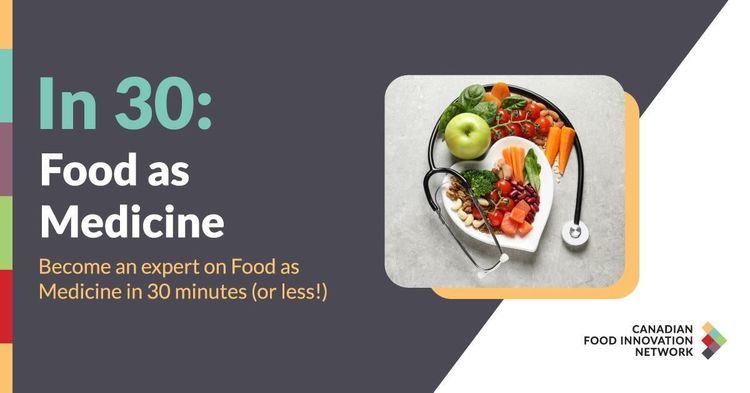
In 30: Food as Medicine
Sometimes, all it takes is 30 minutes to learn the ins and outs of new technologies and trends that are transforming the food and beverage industry. In this ser ies, we’ll dig into a food innovation topic and link you to content and resources so you can become a subject matter expert in 30 minutes (or less!). This week, we’re looking at food as medicine. Beyond its essential role in providing macronutrients, food can be a powerful tool in the prevention and treatment of human diseases and common health ailments. The concept of food as medicine is growing in popularity with consumers, leading innovators to develop software, ingredients, and products that aim to improve health and wellness. CFIN’s latest Innovation Booster Program focuses on Personalized Nutrition and Improving Human Health Through Food . The funding call opened on May 29, 2023, with all applications due by June 26, 2023. Winners will be announced in September 2023. The Overview Cleveland Clinic - How Nutrigenomics May Impact the Way You Eat The basics on what nutrigenomics is and how it works. Dal News – Ask an Expert: What is Functional Food and Why Should Canadians Care? Food is considered functional if it has benefits for human health beyond nutrition, for example it improves health or reduces the risk of disease. Forbes - This Diet Is Changing The Way We Think About Nutrition Artificial Intelligence and machine learning could offer consumers better control over t heir nutritional health. Techcrunch.com - Levels Raises $12M to Bring its Biowearable to M arket Level’s biowearable metabolic sensor constantly monitors glucose levels to create customized health and nutrition programs. Nestlé - Nestlé Health Science Expands into Personalized Nutrition In 2019 Nestle’s Health Science division acquired Persona, a company offering customized vitamins and supplements, and launched personalized vitamin packs through its Puritan’s Pride brand in June 2022 . The Canadian Connection Nutrigenomix – Nutrigenomix Inc. is based in Toronto, ON but is available in more than 40 countries . It provides DNA-based, customized nutrition recommendations for health and wellness, athletic performance and fertility, and includes plant-based nutrition. Medcan – Toronto’s Medcan is an integrated health and wellness company that uses up to 15 diagnostic tests covering cardiovascular health, cognition, hearing, vision, nutrition and fitness, to create a customized action plan to improve a customer’s lifestyle through food , exercise and supplements. Social Media @SPINSllc – (Twitter) SPINS, a wellness-focused data technology company based in Chicago , acquired Pinto, a product intelligence platform, in 2022. Pinto has a database of food, grocery and consumer products and creates personalized inventories for specific dietary needs. GUTXY – (LinkedIn) Denmark-based GUTXY tests customers’ gut microbiome to create a personal wellness plan. Atlas Biomed – (Facebook) Atlas Biomed Group is a London, UK-based company that uses both DNA and gut microbiome to establish a nutrition plan, and establish carrier status for hereditary conditions and risks for injuries due to sports. LSee – (YouTube) France’s LSee uses a metabolic tracker to create nutrition recommendations based on blood biomarkers. Overtime If you’ve got more than 30 minutes, these are for you : Spotify - The Doctor ’ s Kitchen Podcast The Doctor's Kitchen is a podcast about food, medicine, lifestyle and improving your health. YouTube – Viome’s Full Body Intelligence Test
Community Manager-
50 Food & Beverage Programs - Manitoba Institute of Trades and Technology
Culinary Arts and Design at Manitoba Institute of Trades and Technology: A Gateway to Gastronomic Excellence In the thriving culinary landscape of the Prairies, the Manitoba Institute of Trades and Technology (MITT) in Winnipeg offers an exceptional program in Culinary Arts and Design. This one-year, full-time program is an amalgamation of culinary skills, creativity, and management, setting a solid foundation for aspiring chefs and culinary entrepreneurs. Program Overview: The Culinary Arts and Design program at MITT is designed to turn a passion for food into a flourishing career. With a focus on hands-on skills developed in the production kitchen and a comprehensive work practicum, students are trained under the guidance of veteran chef instructors. The program is tailored for individuals who thrive under pressure, are team players, and possess a deep-rooted passion for culinary arts. Key Features of the Program: Intensive Training: The 10-month program is packed with practical and theoretical learning, culminating in a Level 1 Apprenticeship. State-of-the-Art Facilities: Students practice in MITT’s production kitchens, preparing food for campus cafeterias. Work Practicum: A vital component of the program, offering real-world experience in food preparation and production. Bridging to Work Workshops: These workshops enhance customer service, employability, and essential skills. Program Profile: Flexible Schedules: Classes are available in day or evening schedules, catering to diverse student needs. Work Skills Foundations: An online course that aids students in transitioning into a post-secondary academic environment. Affordable Tuition: Estimated tuition for the 2023/24 academic year is $5,633, making it a cost-effective option for culinary education. Curriculum Highlights: Cooking Principles: Fundamental theory and practical skills necessary for a culinary career. Garde Manger: Advanced preparation skills for cold kitchen items. Menu Planning and Food Costing: Crucial for aspiring chefs and restaurant managers. Work Practicum: Providing exposure to industry standards and practices. Employment and Advancement: Graduates of the Culinary Arts and Design program typically start in roles such as short-order cooks and line cooks, with the potential to advance to sous-chef and executive chef positions. The program equips students with the skills needed for a range of culinary settings, including restaurants, hotels, and institutional kitchens. How and Where to Apply: Prospective students can apply online through the MITT Admissions Page . Contact Information: For more details about the program, visit MITT's Contact Us Page . Video/Social/Media: Discover more about the program in this YouTube Video . Watch Chef Perry Favoni discuss the program here . Explore more on MITT's YouTube Page . The Culinary Arts and Design program at MITT is a golden opportunity for those looking to dive into the culinary world. With its blend of practical training, academic rigor, and industry connections, this program is a stepping stone to a fulfilling career in the culinary arts.
Community Manager-
EXPLAINED: The Canada Plastics Pact
Editor's Note: This article was originally published on 08-03-2022. What is it? The Canada Plastics Pact (CPP) is an independent, not-for-profit organization working with Canadian businesses, policymakers, associations and NGOs to create a circular economy for plastic packaging by 2030. It’s part of The Ellen MacArthur Foundation’s Plastics Pact Network which connects initiatives around the world in an aligned response to plastic waste and pollution. By working with diverse companies and experts in the plastics value chain, the CPP hopes to help businesses rethink how plastic packaging is designed, used and reused. The CPP’s mandate is to: Focus on the root causes of plastics pollution; Work collaboratively across the supply value chain to ensure industries remove plastic waste system wide; Mobilize and align stakeholders at the local, national and global level to work toward a common vision; and Harness and amplify skills, expertise and leadership among stakeholders while fostering innovation and solutions. Why you should care Canada has committed to removing plastic waste and pollution from our landfills, water, and environment, while moving toward a circular economy for plastic. As well as drastically reducing plastic waste and pollution , the CPP estimates that a circular economy would save up to $500 million annually, create tens of thousands of jobs, and substantially lower greenhouse gas emissions. And with the ban on single-use plastics coming into effect beginning by December 2022, food industry operators should already be looking at how to eliminate plastic waste in their businesses. Moving away from plastic packaging To help companies adjust their packaging and work towards a circular economy for plastics, in April 2022 the CPP introduced the Golden Design Rules for plastics packaging and a microsite offering context-specific guidance tailored to Canadian businesses. The rules offer global standards aligned with guidelines and targets laid out in the Ellen MacArthur Foundation’s New Plastics Economy Global Commitment . In July 2022, the CPP published its 2020 Baseline Report outlining the organization’s targets and plans for the next three years. They include: Supporting innovation on plastic packaging that can be safety reused, recycled or composted; Ensuring at least 50 per cent of plastic packaging is recycled or composted by 2025; Creating a list of problematic packaging and taking measures to eliminate them by 2025; and Ensuring an average of at least 30 per cent recycled content in all plastic packaging by 2025.
Community Manager-
50 Food & Beverage Programs - Lambton College
Culinary Management at Lambton College: A Fast Track to Culinary Excellence Nestled in the vibrant community of Sarnia, O N, Lambton College offers a unique and intensive one-year Culinary Management program designed for those passionate about a career in culinary arts. This program blends practical kitchen skills with managerial expertise , perfect for aspiring chefs and culinary managers. Program Overview: The Culinary Management program at Lambton College is a 12-month fast track to success in the dynamic food industry. It prepares students to adapt to evolving food trends and dining culture. With a focus on sustainable practices, applied nutrition, and the science of food and beverage, the curriculum is tailored to meet the changing tastes of consumers. Key Features of the Program: Experiential Learning: Students gain hands-on experience in restaurant operations across various settings, including the student-run Capstones enterprise. Industry-Relevant Curriculum: Courses cover a range of topics from culinary techniques to business principles, costing, and control practices. Small Lab Sections: Practical classes in small groups ensure personalized attention and adaptability to student needs. Field Placements: These opportunities offer real-life working experience and networking with community partners. Why Choose Culinary Management at Lambton College? Rapid Program Completion: Complete a comprehensive culinary program in just one year. Award-Winning Faculty: Learn from journeyperson chefs with vast experience in various food service operations. State-of-the-Art Facilities: Train in modern kitchen labs with the latest equipment and technology. Real-World Experience: The Capstones student-run restaurant offers practical experience in managing and operating a variety of food services. Career Opportunities: Graduates are well-prepared for diverse roles in restaurants, bakeries, hotels, spas, cruise ships, and more. The program also lays the groundwork for entrepreneurial ventures in the culinary field. Accreditations & Certifications: Cook Apprenticeship: Coursework in the program enables students to challenge Levels 1 and 2 of the Cook Apprenticeship in Ontario. Journey Person Cook: After completing apprenticeship hours and passing the Certificate of Qualification exam, graduates can become a Journey Person Cook. Pathways and Further Education: Opportunities for further education include transfer programs outside Ontario, like the Bachelor of Arts in Food Business Innovation at Munster Technology Institution in Ireland. Laptop and Software Requirements: Laptop: A Windows-operated laptop with specifications capable of handling course software. Internet: A strong internet connection for remote learning and video conferencing. Software: Access to Microsoft Office 365 and other course-relevant software. Student Support: Lambton College provides extensive student support services to assist with academic and personal development. Contact Information: For more details about the program: Phone: 1-844-LAMBTON or 519-542-7751 Email: info@lambtoncollege.ca Address: 1457 London Road, Sarnia, ON, N7S 6K4 Video/Social/Media: Explore more about the program through this Program YouTube Video . Stay updated and connected through Lambton College's YouTube Page . Lambton College's Culinary Management program is a stepping stone to a rewarding career in the culinary world. It equips students with the skills, knowledge, and experience needed to excel in the food industry, combining the love of cooking with the acumen for business management.
Community Manager-
Celebrating International Women’s Day with Women-Led Projects Funded by CFIN
CFIN has supported 65 foodtech projects and awarded more than $19 million to Canadian food and beverage innovators since launching in 2021 . To celebrate International Women’s Day, we’re highlighting (in alphabetical order) some of the women -led food tech projects we’ve funded . Rebecca Aldworth Co- F o under and CEO Harvest Moon Foods Inc. Léry, QC’s Harvest Moon Foods is the first company in Canada to produce animal-free casein through precision fermentation. In January 2024 the company received funding to develop a pilot project demonstrating recombinant casein production and applications to assess its scalability. The project is in partnership with a leading dairy manufacturer and food ingredient companies. Maddie Aliasl CTO / Business Director CanDry Technologies Inc. CanDry Technologies , located in Vancouver, ha s used vacuum, microwave, and infrared technologies to develop a patented low-temperature dehydration system that preserves nutrients while significantly cut ting dehydration costs . In January 2024 t he company received funding to customize its prototype technology to meet the specific requirements of the Canadian agri-food sector . CanDry’s partners in the project are Blueridge Produce, Susgrainable Health Foods Inc., and the British Columbia Blueberry Council . Erin Gilchrist Manager, Scientific Affairs Renaissance BioScience Corp. Based in Vancouver, Renaissance BioScience Corp. has developed a proprietary clean-label, non-GMO yeast technology to convert off-flavours in plant-based proteins using natural fermentation. The company’s goal is to increase the consumer appeal and versatility of plant-based options with a cost-effective and sustainable alternative. Renaissance received funding in January 2024 to test the technology in manufacturing settings i n collaboration with food industry partners C-Merak and Big Mountain Foods. Suzanne Iwankow CFO/COO CleanBands Systems Ltd. Charlottetown, PE-based CleanBands Systems is developing wearable technology that helps food workers ensure they are following proper handwashing procedures. The technology indicates handwashing status, and tracks all hand hygiene events to ensure standards are met. I n February 2023 CleanBands received funding to develop and commercialize its hand hygiene solution and pilot it with various quick-service restaurants in PEI . The project is 18% complete , and is currently being tested in four different businesses , allowing the company to make any software and hardware corrections . The e quipment was positively noted during a health inspector visit . Jenny Lemieux Co-F ounder and CEO Vivid Machines Inc. Toronto’s Vivid Machines has developed a multispectral computer vision and intelligence system to digitize fruit production and provide real-time insights to help fruit growers increase yield while reducing food waste. The company received funding in January 2023 to use the technology to create digital twins of orchards with industry partners Algoma Orchard and Blue Mountain Fruit company. Now 50% complete, the project has so far resulted in a new trademark in the UK and EU, machine learning algorithms, a data pipeline, dashboards, visualization tools, new software builds, and training for customers. Fei Luo Co- Founder and CEO Liven Proteins Corp. Toronto’s Liven Proteins Corp. makes animal-free, functional and sustainable protein ingredients. The company received funding in January 2023 to optimize its bioprocess for upcycling starch streams and to test additional side streams in the food industry as a starting material to build a versatile fermentation platform for animal-free protein manufacturing. The project is now complete , and the company has developed some proprietary processes to produce animal-free collagen . It has also secured a new lab . Beth Mason CEO Verschuren Centre Inc. for Sustainability in Energy and the Environment The Verschuren Centre is an independent , not-for-profit clean technology development and deployment facility in Sydney, NS. The centre received funding in September 2023 for a project to construct a unique 10,000-L precision fermentation facility with integrated AI, advanced automation, digital twin technology and machine learning . Partners for the project are Liven Proteins, NovoBind Livestock Therapeutics, Material Futures Lab, Dispersa , and Mara Renewables. The project, which will help companies bridge the gap between innovation and commercial scale deployment, is 25% complete . The centre is also currently designing automation equipment and hiring expert talent. Melanie Morrison Founder and CEO BetterCart Technologies Inc./ BetterCart Analytics Saskatoon, SK-based BetterCart Analytics is an AI-driven competitive pricing intelligence solution for l ocal and regional food companies and grocery chains . The company received f unding in February 2023 to develop and advance its price analytics and competitive intelligence feature suite. Pilot partners for the project are Fresh City Farms, Jordans Dorset Ryvita, Melitta Canada, and Distribution Canada Inc. The project is now 50% complete , and BetterCart has developed some proprietary processes including machine learning algorithms to indicate when grocery products are regularly priced or on sale. Laura Richard COO Saltwinds Coffee Company Ltd. Douglas, NB-based Saltwinds Coffee Company offers coffee beans with a unique Maritime flavour, roasted using a carbon - friendly technique. Saltwinds received funding in January 2023 to explore how to scale a proof-of-concept carbon capture system to reduce carbon emissions in coffee roasting , which it has now completed . Since then t he company has filed three new trademarks , including the SALTWINDS name and logo in the U.S., and the OCEAN AIR COFFEE trade mark in Canada . Kirsten Schwarz CFO Crush Dynamics Inc. Summerland, BC-based Crush Dynamics is an agritech company using grape derivatives and agricultural waste to create food ingredients through a targeted fermentation process. The company is developing a polyphenol-rich ingredient that enables food products to be made with less sugar and sodium, while improving texture and shelf life . Crush Dynamics received funding in December 2023 to demonstrate the production process at scale with project partners Purdys C hocolatier and Ecovatec Solutions Inc. The project is 20% complete , and the product has been tested in powders, purées, and tomato sauce . Jennifer St. Onge Senior Manager of Operations New School Foods Inc. Toronto ’s New School Foods uses innovative production technologies to create meat and seafood alternatives , including a salmon fillet that replicates salmon muscle fibres and connective tissue . As a result the product offers the same texture and mouthfeel as traditional salmon. In May 2023 New School Foods received funding to create the novel equipment needed to develop its salmon fillet . The project is now 90% complete . Megan Takeda-Tully Co-founder and CEO Suppli Sustainable Services Inc. Located in Toronto, Suppli uses a unique technology platform to offer a reusable takeout container service for online food channels . The end-to-end solution allows customers and restaurants to order and complete deliveries as usual, and then return used containers to Suppli’s drop-off bins to be cleaned at a commercial dishwashing facility. In November 2022 Suppli received funding to build this circular supply chain platform , and it is now complete . Since then the c ompany has also established a partnership with Uber Eats . Lesley Thompson Vice President, Sustainability and Communications FoodCycle Science Corp oration Cleantech company Food Cycle Science has developed technology that processes food waste to reduce its weight and volume by up to 90%, while converting it into valuable resources for enriching soil. In March 2023 the Ottawa company received funding to develop a “one-bin” system of enzyme degradation to process food waste and bioplastics together . The project is 10% complete , and Food Cycle Science has filed a new patent for its one-bin system . The company al so has a new hire to lead its enzyme-related research . Click here for more information on CFIN’s funding programs.
Community Manager-
EXPLAINED: Artificial Intelligence (AI)
What is it? Machines and systems that are programmed with AI can simulate human intelligence , can acquire and apply knowledge in order to perform tasks, solve complex problems, and improve performance. Machine learning is a subset of AI algorithms. Why you should care New food technologies and the introduction of AI programs in the computers that control production lines have the potential to change the way the food industry works, especially as businesses look for automated solutions to address issues such as supply chain traceability, production efficiency, food safety and quality control, and waste reduction. Some of the manufacturing technology included under the category Industry 4.0 relies on AI to process the data captured by Industrial Internet of Things (IIoT) devices, enterprise resource planning (ERP) systems, and connected remote access monitoring software. By using AI, businesses can collect and analyze data that enables them to generate business intelligence, giving them a competitive advantage. Most AI-driven functions are machine-to-machine transactions. AI-driven systems can add value and efficiency to many areas in food operations, including to: Automate tasks across different departments, such as accounting, IT, customer service and marketing. Streamline resource tracking throughout the supply chain and ensure compliance from vendors. Provide data for forecasting sales, resource demand and R&D on consumer trends. Automate production activities, including management work. Provide more effective quality and safety control in real time. Help create “smart” factories that run more efficiently with less downtime, using less energy and lower operating costs. Help drive greenhouse gas emission reduction targets. Help scale operations using predictive technology. Offer real-time monitoring of security systems. Provide technical support for employees and customers. Monitor and automate social media activity. Provide customized offers for consumers based on data analysis. Perform self-service analytics. Opportunities in Canada There are a range of companies offering AI-enabled software and equipment to Canadian food and beverage companies. Saint John, NB-based independent brewery Moosehead uses a conveyor belt at its bottling plant embedded with Internet-enabled sensors and data analytics software to monitor pasteurization, filling, labelling, capping and packaging, increasing capacity while lowering costs. Sobeys ’ fully automated Customer Fulfillment Centre, a $150-million, 500,000-sq.-ft. warehouse and distribution centre in Vaughan, ON, features AI-driven automated case picking and palletizing systems. The system can stack up to 10 per cent more products on each pallet, saving up to 40 per cent on labour costs. Fredericton, NB-based Eigen Innovations produces machine vision solutions powered by AI to help businesses automate their quality control system. Toronto, ON-based Canvass AI provides industrial AI software such as its Canvass Platform that can help food companies boost production efficiency and output, while reducing waste.
Community Manager-
50 Food & Beverage Programs - LaSalle College
Exploring the Culinary Arts at LaSalle College, Montreal: DEP & AEC in Food Service Management and Professional Cooking LaSalle College , located in the heart of Montreal, QC, offers innovative programs in Food Service Management and Professional Cooking. With its unique curriculum and hands-on approach, LaSalle College stands out as a premier institution for those aspiring to make their mark in the culinary world. Program Overview: LaSalle College provides two distinct programs in the culinary field – the Attestation of College Studies (AEC) in Food Service Management and the Diploma of Vocational Studies (DEP) in Professional Cooking. These programs focus on equipping students with both the practical skills and the management acumen needed for a successful career in the hospitality industry. AEC in Food Service Management: Duration & Structure: This program is unique in Quebec, offering comprehensive training in foodservice and catering. Practical Experience: Students gain hands-on experience through an internship and participation in various events, including service in La Classe restaurant dining room. Career Opportunities: Graduates can look forward to roles such as Maître D', foodservice and catering supervisor, banquet director, and manager or owner of a foodservice establishment. Bilingual Education: Offered in both French and English, this program caters to a diverse student body. Key Features of the AEC Program: Industry-Relevant Curriculum: Includes courses like Managerial Kitchen, Food and Beverage Service, Wine Stewarding, Restaurant Management and Organization, and more. Work-Study Program: The program includes two paid internships, allowing students to gain valuable work experience related to their field of study. Technological Integration: Students are required to use laptops and standard or student license software for their coursework. DEP in Professional Cooking: Training Objective: This program is designed for creative students with a passion for cooking and gastronomy. Diploma: Leads to a Diploma of Vocational Studies (DEP). Career Prospects: Opportunities range from being a chef de partie, sous-chef, caterer, to institutional cooking roles. Key Features of the DEP Program: Practical Coursework: Includes Hygiene and Food Safety, Kitchen Organization, Mise en Place, and Culinary Presentations. Apprenticeship: A five-week apprenticeship in a restaurant or foodservice business is part of the curriculum. Industry Connections: The program is affiliated with various industry associations and offers teaching, production, and demonstration kitchens. Contact Information: Montreal Campus Phone: 514 939-2006 Toll-free: 800 363-3541 WhatsApp or SMS: 438 796-3658 Admissions Office: Available for in-person consultations at the Montreal or Laval campus. LaSalle College’s culinary programs offer an ideal blend of theoretical knowledge and practical training, preparing students for the diverse and dynamic world of food service and culinary arts. With its state-of-the-art facilities and experienced faculty, LaSalle College is the perfect place for aspiring culinary professionals to hone their skills and prepare for a successful career.
Community Manager-
#AskLavina - February 2024
In addition to being CFIN’s Regional Innovation Director for BC and Yukon, Lavina Gully is a food scientist and product developer with almost two decades of experience helping food and beverage companies innovate. In this series, Lavina answers questions from CFIN members on everything from product development, R&D, manufacturing best practices, and co-packing – just to name a few! If you have questions for Lavina, you can reach out to her directly and we can answer your question in next month’s mailbag. This month, Lavina discusses career paths in the food industry, and answers you r question about working with a trade authority. Lavina: I’m often asked by students and people in the early stages of their food science career what steps they can take to achieve a certain job title or other career goal. This month I thought it would be helpful for readers to hear about Anubhooti Joshi ’s experience navigating a career pivot. Even through she approached me for ideas on how to make the job change smoother, Anubhooti already had some great ideas, and is happy to share them with other job seekers . Anubhooti is part of the Vancouver, BC food community . She had been working in quality assurance and food safety, had done some client-based work, and was interested in finding a position in sales, marketing or account management . In our first meeting we discussed her career aspirations, work style , goals, and other details that really helped Anubhooti open up to other career paths and opportunities in the food industry, including project management. Two months later we spoke again after Anubhooti had successfully landed a job as an operations supervisor. Here are a few tips from both of us on changing careers, and some feedback from Anubhooti about what worked for her : Before you begin your job search, ask yourself whether you’re really interested in a specific field, or are you just interested in the title? Or is it the style of work you’re interested in ? Anubhooti said that our initial discussion really opened her eyes to other roles, whereas she was first intent on exploring account management. If your current company has people in the role you ’ re interested in, start there. Talk to them , and see if you can shadow them to get a better sense of t he ir duties and daily routine . Consider if your skills and abilities align with the job requirements and work . Ask people for an informational interview to find out more about the type of work you’re interested i n , or about the work culture of different companies. In hindsight Anubhooti says she would have spent more time networking and less time simply sending in applications. Find out w hat experience, education or training is required for th e role. Are there continuing education or part-time educational programs available to enhance your skills? Anubhooti found ways to apply her existing experience and f ood science background to bring technical knowledge to client-based roles. Look for volunteer roles that can expand your skills . Network , join industry associations, and attend industry events. Anubhooti took on a marketing and communications role with the BC Food Technologists to become more involved in the local food community. To help compete against more experienced job seekers, w rite a strong cover letter and customize your resume to the new type of role . Focus on emphasizing soft, transferable skills . Send your resume to people in that role for feedback, ask if they find it compelling and use the feedback to improve it. Q: What can you tell me about working with trade authorities or participating in trade trips or promotions as a way to begin exporting? A: Canada’s Trade Commission can provide valuable resources and support to food and beverage businesses looking to export. That includes offering programs and assistance navigating international trade regulations and customs procedures ; providing valuable market research , expertise , resources ; and facilitating connections in export markets . They can also help companies prepare with understanding cultural differences, regulatory requirements, and logistical considerations . Participating in Team Canada Trade Missions or trade trips organized by industry associations or international trade organizations can be an effective way to explore new export opportunities, establish contacts, and build relationships in foreign markets. These trips often involve meetings with local businesses, government officials, local industry associations, and potential partners or customers. Trade fairs, exhibitions, and promotional events provide platforms for businesses to showcase your products and network, and can help generate leads and raise brand awareness . P hysically being in your intended ma rket will also help you better understand the retail landscape, and id entify local competito rs and market opportunities. Canada will be participating in two events, SXSW Austin in Austin, TX March 8 to 16, and Future Food Tech in San Francisco, CA March 21 to 22.