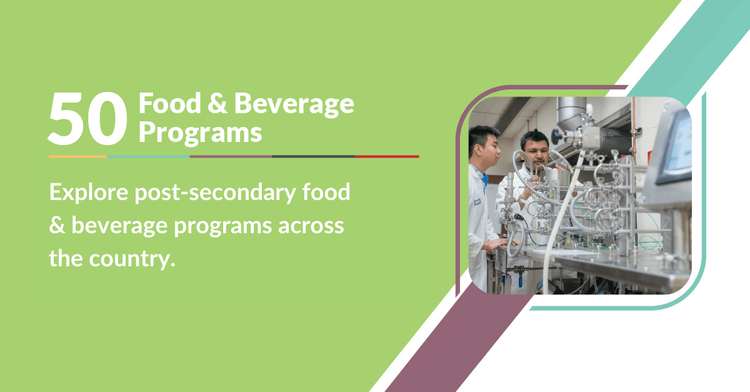
Canada is home to a diverse and dynamic food and beverage industry, supported by educational programs that train the next generation of chefs, brewers, entrepreneurs, and innovators. This roundup highlights 50 standout programs across the country, from top culinary schools and hospitality management courses to cutting-edge research initiatives and sustainability-focused training. Whether you're an aspiring professional, educator, or industry enthusiast, these programs provide valuable insights into the evolving world of food and drink in Canada. BC & Yukon Vancouver Community College UBC BCIT LaSalle College (Vancouver) UBC: Food, Nutrition, and Health Okanagan College Vancouver Island University University of Fraser Valley Northern Lights College North Island College Yukon University Selkirk College Thompson Rivers University Kwantlen Polytechnic University Prairies Saskatchewan Polytechnic University of Alberta University of Saskatchewan University of Manitoba SAIT NAIT Manitoba Institute of Trades & Technology International College of Manitoba Ontario Niagara College Humber College Le Cordon Bleu Ottawa George Brown College Fanshawe College Brock University University of Guelph Toronto Metropolitan University Loyalist College Georgian College Conestoga College Durham College Centennial College Canadore College Algonquin College Trent University St. Lawrence College St. Clair College Sault College Lambton College Confederation College Quebec McGill University LaSalle College Bishop's University Atlantic Canada University of PEI Memorial University Cape Breton University
Community Manager-
50 Food & Beverage Programs - Vancouver Island University
Crafting a Career in BC ’ s Wine Industry: VIU ’ s Wine Business Program The Wine Business program at Vancouver Island University is a comprehensive one-year certificate course designed for those passionate about pursuing a career in the BC wine industry. The program combines practical experience with academic learning in viticulture, wine business practices, marketing, and tourism. Program Highlights: As a student, you ’ ll have the chance to immerse yourself in hands-on experiences at local vineyards and wineries, gaining insights into the entire winemaking process. This practical foundation is then complemented by academic courses in viticulture, wine business practices, marketing, and tourism. A standout feature of this program is its flexibility. Whether you ’ re looking to study full-time for a year or prefer a part-time option spread over two years, VIU has you covered. Located in picturesque Nanaimo, BC, VIU provides an ideal setting for your wine education journey. With a curriculum designed to integrate viticulture essentials with business acumen, VIU ’ s Wine Business program offers a holistic understanding of the wine industry. Students can also earn credits that can be applied toward a Bachelor of Business or a Hospitality and Tourism Management program, opening doors to a wide range of future career prospects. The program includes seven courses and focuses on the broader aspects of the wine industry. In addition to viticulture and winemaking, students delve into wine marketing, exporting, and the vital role of wine tourism. C ourses cover a wide spectrum, from wine marketing and appreciation to beverage theory and the management of wine tourism. The program also offers elective courses in consumer behavio u r, entrepreneurship, and festival management . What You’ll Leave With: Upon graduation, a world of opportunities awaits you in BC ’ s wine industry. Whether you dream of managing a vineyard, excelling in wine s ales and marketing, or even opening your own restaurant, VIU ’ s Wine Business program provides the knowledge and skills to make your wine-related ambitions come true. Career options span winery/vineyard management, retail sales, wine marketing representation, hotel management, culinary arts, a gri - tourism development, and s pecial events coordination. V ideo/Social / Media : VIU YouTube Video
Community Manager-
Cellular Food in Canada
The past few years have proven how susceptible Canada’s food industry is to world events, supply chain disruptions and climate changes. New food production technology, such as cellular agriculture, has the potential to alleviate some of these challenges, while creating commercial opportunities and building a more sustainable, resilient food system. What is it? Cellular food – also known as engineering biology, synthetic biology or cell-cultivated products – is the production of food and textile products without using animals or land. Cell cultures harvested from animals, plants or micro-organisms are grown in the lab through tissue engineering or precision fermentation to produce: Cultivated proteins such as chicken, beef and seafood Fermented products like dairy, eggs, honey and chocolate Ingredients to add to products to create hybrid foods including proteins, enzymes, flavour molecules, vitamins, pigments and fats Textiles such as leather, silk and wool Why you should care As global population continues to grow, so does demand for protein, while access to land and other resource inputs become more scarce. Alternative agriculture could be an answer to food scarcity, concerns about animal and environmental welfare, cost inflation and resource challenges due to climate change. Compared to conventional agriculture, cellular agriculture production, is much less energy intensive, produces less greenhouse gas emissions, and has a much lower overall carbon footprint. With our strong food infrastructure, reputation for food safety, biotechnical expertise, and federal support for alternative protein production, Canada is well positioned to become a leader in cellular agriculture. The 2021 report Cellular Agriculture: Canada’s $12.5 Billion Opportunity in Food Innovation from Ontario Genomics and the Food and Agriculture Institute at the University of the Fraser Valley found that the international cellular agriculture market will reach US$100 billion by 2032. Canada’s food industry has the potential to take $12.5 billion that market, while creating up to 142,000 high-paying jobs. Opportunities in Canada Engineered plant proteins are already in the Canadian market, and by all estimates, precision fermented products are expected to appear before cultured meat products. Current Canadian regulations consider food produced through cellular agriculture as a novel food, and products are approved on a case-by-case basis. Here are a few Canadian start-ups making headlines: Because Animals – This Toronto-based pet food company uses cultured ingredients such as probiotics and nutritional yeast to create nutrient-rich cat and dog food designed to help digestive issues. Future Fields – Edmonton, AB-based Future Fields is a R&D producing growth media products that can be used to create commercialized cultivated proteins in a safe and sustainable manner. Cell-Ag Tech – Toronto’s Cell-Ag Tech is doing R&D on cell-cultured fish and seafood. New Harvest International non-profit research institute New Harvest , which promotes the science behind cultured meat through research, funding and a conference , now has a Canadian branch.
Community Manager-
Other Articles
50 Food & Beverage Programs - Memorial University
Exploring the World of Food Studies at Memorial University of Newfoundland Memorial University of Newfoundland , located in St. John’s, NL, offers a unique and interdisciplinary Certificate in Food Studies through its Faculty of Humanities and Social Sciences. This program is ideal for those intrigued by the complex world of food - from its production and consumption to its cultural, environmental, and health impacts. Program Overview: The Certificate in Food Studies at Memorial University is an engaging program that delves into the multifaceted role of food in society. It is designed for students interested in exploring food issues on a local, regional, national, and global scale. This program is unique in offering a comprehensive look at food from various academic perspectives. Key Features of the Program: Interdisciplinary Approach: The program includes courses from various disciplines, offering a holistic understanding of food in society. Online and On-Campus Learning: Some courses are offered online, providing flexibility for students. Core and Elective Courses: Students can choose from core courses like Foodways, Global Food Politics, and Food, Food Safety and Health, along with various electives. Hands-On Learning: The program emphasizes practical knowledge with opportunities for fieldwork and research. Course Structure: The certificate consists of 21 credit hours, including nine credit hours from core courses and 12 additional credit hours chosen from approved courses. Courses cover a range of topics from food safety and nutrition to food production, distribution, and consumption. Who is the Program For? Individuals interested in the ethics of food production and consumption. Those curious about the impact of food on health, the environment, and culture. Students wanting to explore how food binds people together and its role in various cultures. Admission Requirements: For new students, general admission to Memorial University is required . For current or admitted students, specific admission requirements for the Certificate in Food Studies program should be consulted. Career Prospects: Graduates can explore a variety of career paths in food policy, nutrition, food production, hospitality, and more. The program equips students with critical thinking and research skills applicable in many fields. Program Contacts: Food Studies Program Coordinator: Dr. Sharon Roseman - Email: sroseman@mun.ca Contact Info for Memorial University: Main Switchboard: Telephone: 709-864-8000 Website: www.mun.ca Social Media: Stay connected and updated with Memorial University’s activities on Instagram . Memorial University’s Certificate in Food Studies offers a unique and comprehensive exploration into the world of food and its numerous facets . This program is perfect for those who seek to understand the broader implications of food beyond mere sustenance and nutrition, examining its role in connecting communities, impacting the environment, and shaping cultures.
Community Manager-
Q&A with Shawn Carver (Fiddlehead)
Moncton, NB-based Fiddlehead Technology uses predictive forecasting and machine learning to help food and beverage manufacturers more accurately predict consumer demand and improve competitiveness. W e sat down with Fiddlehead co-founder and CEO Shawn Carver to discuss his company ’ s growth , and how data analytics is transforming the food sector . Q: Why did you start Fiddlehead , and what’s your mission? A: I started Fiddlehead Technology in 20 1 3 with the mission to help the world produce more food with less waste using data science. Our primary focus has been on providing professional services centered around predictive analytics , simulation, and optimization projects for the fast-moving consumer goods (FMCG) industry, with a focus on food and beverage manufacturers. W e strive to leverage the power of data science and advanced analytics to enable food manufacturers and retailers to optimize their operations, reduce waste, and ultimately increase global food production. Q: What are your goals for your company? A: Our focus in 2024 is to scale the company . We are growing our team and plan to have 50 full - time employees by the end of this year, and recently opened our Toronto office, which gets us closer to some of our key customers. We are also adding managed service offerings that leverage causal AI for solutions like forecasting, process optimization and pricing. Q: Who are your food industry customers? What services do you offer them? A: McCain Foods , one of the largest frozen foods manufactures in the world, is a major customer and also a minor ity shareholder in Fiddlehead . We are currently helping McCain leverage AI across its business, from forecasting to crop prediction to leveraging optimiz ing their global network of manufacturing plants. In recent years , we have added several large companies to our list of clients, including Wilton Brands and Day & Ross among others. The key areas where we have the most experience are : Supply chain optimization (forecasting, inventory management, and network optimization) M anufacturing optimization ( optimizing production schedules , predictive maintenance, and improv ing food safety and quality) Pricing and profitability optimization ( identifying opportunities for profitable growth) Q: What advantages does data analytics offer food companies? A: D ata analytics empowers food companies with actionable insights that allow them to remain competitive by optimizing operations, enhanc ing customer experience , and div ing profitability . Q: Why should both small and large food companies have a data mindset? A: E very stage of manufacturing has the potential for improvement with a data mindset. With a data-driven model of their company , food manufacture r s of all sizes become more resilient to the growing complexities of today’s markets , which in turn improve s their overall profitability and mitigat es risk. COVID is a recent and stark example of this. Companies with a strong data foundation were much more capable of navigating changing consumer preferences and the upheaval across global supply chains, which ultimately allowed them to maintain , and in many cases gain, market share in their categories. In short, a data mindset allows large food companies to act small and small food companies to act large . For example, data allows large manufacturers to remain nimble by quickly responding to changing market trends like their smaller competitors. While small companies can optimize their operations and benefit from the kind of efficiency gains enjoyed by category leaders. Q: What makes Fiddlehead and its services unique? A: We offer a unique combination of d ata s cience and in-depth understanding of FMCG – particularly food and beverage . Providing advanced analytics and AI solutions for food manufacturers over the last 10 years has g iven us a solid understanding of the industry ’s business challenges, IT infrastructure, processes, products, and, of course, datasets . This experience combined with our managed service approach to data science allows us to develop and deploy solutions that deliver real ROI on an accelerated time.
Community Manager-
50 Food & Beverage Programs - Kwantlen Polytechnic University
Crafting Excellence in Beer: The KPU Brewing and Brewery Operations Diploma Kwantlen Polytechnic University (KPU) in British Columbia, recognized for its innovative approach to education, offers a unique and comprehensive program in Brewing and Brewery Operations. This diploma is not only the first of its kind in BC but also the first in Canada to be recognized by the Master Brewers Association, making it a pioneer in brewing education. Program Overview: KPU's Brewing and Brewery Operations is a two-year diploma program tailored for those passionate about craft beer and aspiring for a career in the rapidly expanding craft beer industry. The program, developed in consultation with the BC Craft Brewers Guild and brewing industry experts, is designed to meet the demand for skilled brewers with a strong foundation in brewing science. Why KPU's Brewing Program? Award-Winning Excellence: KPU's students and brewery have been recognized with multiple awards, including at the Canada Beer Cup, Canadian Brewing Awards, and BC Beer Awards. State-of-the-Art Facilities: The program boasts a custom-built teaching brewery on campus, equipped with the latest brewing and lab equipment. Expert Instruction: Learn from experienced instructors with decades of industry experience. Industry Recognition: KPU is the first Canadian institution recognized by the Master Brewers Association, ensuring a high standard of brewing education. Program Highlights: Hands-On Training: Students receive practical training in brewing, using industry-standard equipment and technologies. Comprehensive Curriculum: The curriculum covers brewing chemistry and microbiology, recipe formulation, sensory evaluation, production and packaging, sales and promotion, and management skills. Small Class Sizes: Maximum of 35 students per class, ensuring personalized instruction and mentorship. Industry Partnerships: Strong connections with local breweries and national associations enhance learning opportunities. Portfolio Review & Admission: Admission to the program is competitive, with an emphasis on applicants having a strong background in science, particularly chemistry and mathematics. The portfolio review process ensures that students with the most potential and dedication are selected. Career Opportunities: Graduates have numerous career paths in the craft beer industry, from brewing and quality control to brewery management. KPU alumni have gone on to excel in the industry, such as Dan Marriette , a 2016 graduate and Head Brewer at Ravens Brewing, who credits his success to the technical knowledge and skills gained at KPU. Why Choose KPU? Location: BC is a major hub for the craft brewing industry in Canada. Industry-Ready Skills: The diploma equips students with both the technical knowledge and the practical skills needed to excel in the craft beer industry. Network and Exposure: Opportunities to connect with industry leaders and participate in events and competitions. Contact Information: For more details about the Brewing & Brewery Operations Diploma and upcoming information sessions, visit KPU Brewing Program , or email at brew@kpu.ca . Video/Social/Media: Discover more about the program through the KPU Brewing YouTube Page . Follow the program's journey on Instagram and Facebook . KPU’s Brewing and Brewery Operations program stands as a testament to the university's commitment to providing education that is not only academically rigorous but also industry-relevant . For those looking to turn their passion for craft beer into a profession, this program offers the perfect blend of science, art, and business of brewing.
Community Manager-
Visualizing Cellular Food: A Conversation with Yadira Tejeda Saldana of New Harvest
Visualizing Cellular Food: A Conversation with Yadira Tejeda Saldana of New Harvest CFIN's Alex Barlow sat down with Yadira Tejeda Saldana of New Harvest to discuss how cellular food is created. Illustrations by Nick Counter for New Harvest.
Community Manager-
50 Food & Beverage Programs - International College of Manitoba
Agricultural and Food Sciences at International College Manitoba: Paving the Way for a Sustainable Future International College Manitoba (ICM), situated in the heart of Winnipeg, offers a unique gateway to one of the most promising sectors in Canada – Agricultural and Food Sciences. The UTP Stage II: Agricultural and Food Sciences program is a standout pathway for students aiming to make significant contributions in sustainable agricultural practices and food safety. Program Overview: This program, equivalent to the first year of a bachelor’s degree at the University of Manitoba’s Faculty of Agricultural and Food Sciences, prepares students for various career paths in the agri-food industry. With intakes in January, May, and September, the program is structured over three terms and is located in Winnipeg, a hub for agricultural advancement. Why Choose This Program? Industry Relevance: The agri-food sector involves over two million Canadians, presenting diverse career opportunities. Employment Success: More than 90% of students find employment in their chosen career within a year of graduation. Real-World Experience: The inclusion of a cooperative education program offers practical, real-world experience. Academic Excellence: ICM’s collaboration with the University of Manitoba ensures a high-quality education in agricultural and food sciences. The unique program p athway allows you to continue your education and pursue a degree at the University of Manitoba in one of the following specialized programs: Bachelor of Science in Agribusiness, Agriculture (with various specializations), Agroecology, Food Science, or Human Nutritional Sciences, with the option of a cooperative education program. What You'll Leave With: Career Versatility: Graduates can explore careers in trade and development, environment policy analysis, food inspection, nutrition, marketing, and conservation. Academic Advancement: Successful completion leads to eligibility for the second year at the University of Manitoba in specialized agricultural and food sciences programs. Foundational Skills: The program equips students with essential skills in sustainable agricultural practices and food safety, responding to global challenges. Key People: The Faculty of Agricultural and Food Sciences at the University of Manitoba is home to renowned experts and researchers. Recent highlights include new faculty appointments and the honoring of global leaders in food safety research. For more details on the department faculty, visit University of Manitoba - Agricultural and Food Sciences . Contact Info: For more information about the program at ICM: Address: Room 190 Extended Education Complex, 406 University Crescent, University of Manitoba, Winnipeg, Manitoba R3T 2N2 Telephone: 204 474 8479 Fax: 204 474 8420 Email: info@icmanitoba.ca For queries related to the Faculty of Agricultural and Food Sciences at the University of Manitoba: Email: agfoodsci@umanitoba.ca Phone: 204-474-6026 Fax: 204-474-7525 Address: Room 256 - 66 Dafoe Road Winnipeg, M B R3T 2N2 CANADA Video/Social/Media: Stay updated and engaged with the program through the ICM YouTube Page , Instagram , and Facebook . The Agricultural and Food Sciences program at ICM is more than just an educational pathway; it is a journey into an essential and ever-evolving field. It provides students with the tools and knowledge to contribute meaningfully to sustainable agriculture and food safety, ensuring they are well-prepared to nourish the world responsibly.
Community Manager-
In 30: Carbon Neutral Foods
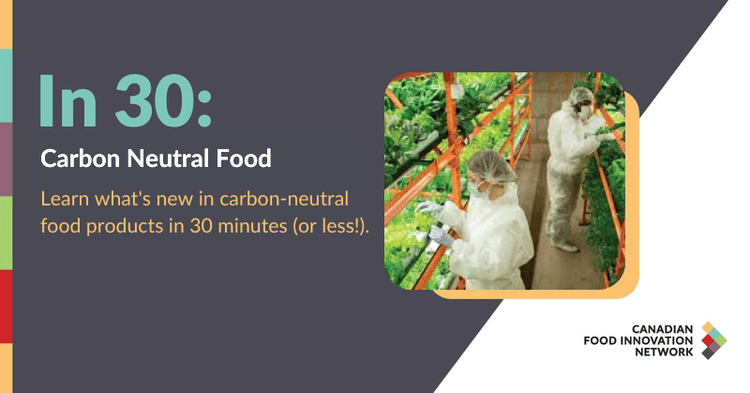
Sometimes, all it takes is 30 minutes to learn the ins and outs of new food technologies and trends that are transforming the food and beverage industry. In this series, we’ll dig into a food innovation topic and link you to content and resources so you can become a master on the topic in 30 minutes (or less!). This week we’re looking at carbon neutral food. When companies refer to their products as carbon neutral , it means that the company has reduced as much carbon emissions as it produces to create a net zero carbon output. The Overview Food Dive – Eight Carbon-Neutral Brands Aiming to Cut the Food and Beverage Industry’s Emissions Just a few of the f ood and beverage companies making their products carbon neutral. Green Eatz – How to Lower Your Food’s Carbon Footprint The carbon footprint of a food refers to the amount of greenhouse gas emissions go into producing that food, including growing, processing, and transportation. Just Food - Are “C arbon N eu t ral ” C laims D ead? Claims about carbon-neutral products are sometimes met with scepticism. The Canadian Connection Diageo – Diageo is building its a carbon neutral distillery to produce its Crown Royal Canadian Whisky brand in Ontario. Maple Leaf Foods - Maple Leaf became the world’s first major carbon-neutral food company in 2019. Karbon Brewing Co . – Karbon is the first carbon-negative brewery in Canada. Social Media Science Based Targets (LinkedIn) – Science Based Targets helps companies and organizations set emissions reduction targets. CDP (X/Twitter) - CDP is a not-for-profit charity that runs the global disclosure system for investors, companies, cities, states and regions to manage their environmental impact . Ecocert (Facebook) – Ecocert operates the Climate Neutral Certification program, which recognizes companies that contribute to carbon neutrality. Overtime If you’ve got more than 30 minutes, these are for you : YouTube – Earth Month: New Food and Drinks to Reduce your Carbon Footprint Carbon neutral products from this year’s Natural Products Expo West.
Community Manager-
50 Food & Beverage Programs - Confederation College
Culinary Mastery at Confederation College: Nurturing Future Chefs and Hospitality Leaders At the heart of Ontario's vibrant culinary scene, Confederation College ’s Culinary Management program is crafting the next generation of culinary experts and hospitality leaders. Located in Thunder Bay, ON this program stands out for its comprehensive curriculum, combining hands-on kitchen experience with the business acumen necessary for today's dynamic food service industry. Program Overview: Offering an Ontario College Diploma, the Culinary Management program is a two-year journey into the world of culinary arts and hospitality. It’s designed for those who dream of making their mark in various food service sectors, whether it be in a bustling restaurant, a flourishing food truck, a specialty food product line, or a food delivery business. Key Classes and Features: Core Skills Development: Courses in the first semester like Basic Culinary Skills (CU 120) and Baking and Pastry Arts I (CU 130) lay the foundation. Advanced Techniques: Subsequent semesters delve into Butchery & Garde Manger (CU 220), Exploring International Cuisine (CU 325), and A la Carte Cuisine (CU 320). Business and Legal Aspects: The program also covers essential topics like Culinary Marketing and Legislation (CU 350) and Management Applications for Chefs (CU 435). Field Placements: Offering real-world experience, these placements are integral to the program, allowing students to apply their learning in professional settings. Global Exposure: With courses like The Global Dining Room (CU 421) and World of Food and Wine (CU 430), students get a taste of international culinary trends. What You'll Leave With: Career Readiness: Graduates are equipped to become cooks, sous chefs, chefs, and supervisors in restaurants, hotels, and institutions. Entrepreneurial Skills: The program also caters to those who aspire to own their businesses, offering guidance on starting and managing successful culinary ventures. Real-World Experience: Through co-op work placements, students gain invaluable industry experience, making them highly sought after by employers. Key People: Dr. Bill J. Gregorash , Professor – Culinary Management, renowned for his expertise and passion for culinary arts. Contact: bgregora@confederationcollege.ca , (807) 475-6536. Shane Warwick , Professor - Culinary Management & Cook Apprenticeship, a mentor who brings real-world insights to the classroom. Contact: Shane.Warwick@confederationcollege.ca , (807) 475-6539. Tim Matthews , Program Coordinator and Certified Chef de Cuisine, guiding students through the intricacies of culinary management. Contact: matthews@confederationcollege.ca , (807) 475-6529. Contact Info: For more information about the program, reach out to Ken Veneruz , Program Coordinator, at Ken.Veneruz@confederationcollege.ca or call (807) 473-3840. Video/Social/Media: YouTube Videos: Get a glimpse into the program through these videos , here , and here . Social Media: Follow Confederation College on Instagram , Facebook , LinkedIn , TikTok , and Twitter for the latest updates and insights. Confederation College's Culinary Management program is more than just a diploma; it's a launchpad for aspiring chefs and hospitality professionals. It provides students with the skills, experiences, and connections to thrive in the culinary world. As graduates, they emerge not just as skilled chefs but as well-rounded professionals ready to make their mark in the ever-evolving landscape of food and hospitality.
Community Manager-
In 30: Cybersecurity 101
Welcome to YODL! In addition to daily original content, YODL helps CFIN Members find new partners , resources , and funding opportunities to grow their food business. Learn more about this growing community and become a CFIN Member (for free!) today . Sometimes, all it takes is 30 minutes to learn the ins and outs of new food technologies and trends that are transforming the food and beverage industry. In this series, we’ll dig into a food innovation topic and link you to content and resources so you can become a master on the topic in 30 minutes (or less!). This week, we’re looking at cybercrime and cybersecurity , and how they affect Canada's food and beverage industry. The Overview AAG - The Latest 2023 Cyber Crime Statistics Statistics on how cybercrime is impacting businesses and individuals worldwide. Marlin Communications – The 2023 Cyber Threat Landscape: 5 Key Trends Around the world, criminals are turning to “quieter” cyber attacks , including cryptojacking and IoT malware. Sophos – 2023 Threat Report According to this report, criminal malware “as-a-service” schemes are interrupting the global economy. The Canadian Connection Agriculture and Agri-Food Canada - Cyber Security and Your Farming Business AAFC reminds producers that they can also be targeted by cybercriminals, and need to ensure their businesses are secure. Canadian Centre for Cyber Security - The centre is part of the Communications Security Establishment, offering advice and services for Canadian businesses, individuals, organizations and institutions on cybersecurity. CIRA.ca – The Canadian Internet Registration Authority offers cybersecurity awareness training, insights, threats, and implementation plans. Government of Canada - Get Cyber Safe Guide for Small and Medium Businesses The federal government provides a comprehensive overview of steps businesses can take to minimize the threat of cybercrime. Social Media Beauceron Security (LinkedIn) – Fredericton, NB-based Beauceron Security helps organizations address the risk of cybercrime. Canadian Cyber Security Network (Instagram) CCSN is a group of dedicated cybersecurity professionals, focused on growing cybersecurity in Canada. Cybersecurity and Infrastructure Security Agency (Facebook) – The U.S. CISA offers research, advice, events and more on how to avoid cybercrime. Overtime If you’ve got more than 30 minutes, these are for you: YouTube – Cyberattacks on Food Businesses Any software or online sales or management systems used by food companies may be at risk of being targeted by cybercriminals.
Community Manager-
50 Food & Beverage Programs - Bishop's University
Exploring the Sustainable Agriculture and Food Systems Program at Bishop's University Nestled in the heart of Quebec's scenic Estrie region, Bishop ’ s University is pioneering a path in agricultural education with its Sustainable Agriculture and Food Systems (SAFS) program. This innovative program is designed to equip students with a profound understanding of ecological food production and agroecosystems, combined with a unique perspective on the sustainability of agriculture and food systems. Program Highlights: Diverse Academic Tracks: The SAFS offers a Major/Honours degree (48/60 credits), a Minor (24 credits), and a standalone Certificate program (30 credits). Comprehensive Coursework: Courses range from Intro to Sustainable Agriculture and Food Systems (AGR 100) to specialized subjects like Climate Change, Agriculture, and Food Security (AGR 333). Hands-On Learning: The program emphasizes practical field experience, providing students with the chance to work directly with local farmers and agribusinesses. Future-Ready Education: Anticipated future programs include B.Sc. Majors and Honours in Sustainable Agriculture and Food Systems, subject to external review. What You'll Leave With: Versatile Career Options: Graduates can pursue diverse roles, from agritourism entrepreneurs and organic farmers to food security analysts and agroecology researchers. Solid Foundation in Sustainable Practices: The curriculum focuses on the environmental, social, and economic aspects of agriculture, preparing students for the challenges of modern food systems. Global Perspective: The Permaculture Design Certificate offers international recognition, opening doors to global opportunities. Professional Networks: Interaction with industry leaders, farmers, and entrepreneurs in the agricultural sector. Key People: Dr. Darren Bardati , Chair of Sustainable Agriculture and Food Systems, is an expert in environmental studies and sustainable practices. Contact: darren.bardati@ubishops.ca Dr. Matthew Peros, Dean of Social Sciences, is a full professor with extensive knowledge in environment, agriculture, and geography. Contact: socialsciencesdean@ubishops.ca Monetta Gallichon, Academic Assistant to the Dean of Social Sciences, is available for inquiries and guidance. Contact: 819-822-9600 ext. 2453 or mgallich@ubishops.ca Student Experience and Campus Life: Bishop's University offers a vibrant campus life, detailed at BU Experience , and opportunities to tour the campus and partake in events, as outlined at Campus Tours & Events . Getting in Touch: For more details about the program, you can reach out at admissions@ubishops.ca or call 819-822-9600 ext. 2680. Additional information can be found in the FAQs and Fees & Funding sections. Engage with the Program Online: Watch an insightful YouTube video for an in-depth look. Follow the program's journey on Instagram: @ bu.safs Connect with the community on Facebook: BU.SAFS Discover more about Bishop's University on its YouTube page . The SAFS program at Bishop's University is more than just a degree; it's an immersive journey into the world of sustainable agriculture, readying students for a future where they can make significant contributions to the global food system. As the planet faces unprecedented environmental challenges, this program stands as a beacon of hope and innovation, guiding the next generation of agriculture and food systems professionals toward a sustainable future.
Community Manager-
#AskLavina - January 2024
In addition to being CFIN’s Regional Innovation Director for BC and Yukon, Lavina Gully is a food scientist and product developer with almost two decades of experience helping food and beverage companies innovate. In this series, Lavina answers questions from CFIN members on everything from product development, R&D, manufacturing best practices, and co-packing – just to name a few! If you have questions for Lavina, you can reach out to her directly and we can answer your question in next month’s mailbag. This month , Lavina answers your questions about 3D food printing, xanth an gum, and working with a brand strategist. Q: 3D food printing is fascinating! Can you explain what the process involve s , and what you think about the benefits and challenges of the technology? 3D food printing technology involves the use of 3D printers to create edible items layer by layer. This technology is an extension of traditional 3D printing, adapted for use with food-grade materials. The process typically begins by designing a digital model of a food product using computer-aided design (CAD) software. This model serves as the blueprint for the 3D printer, which deposits layers of edible materials, such as dough, chocolate, or other food-based pastes, to build the final product. The layers are gradually built up to form the desired shape. The printed product may need additional processing, such as baking or cooling, to set the layers and create the desired texture. The technology allows for a high degree of customization , including for specific dietary needs , or to create unique shapes and intricate designs that may be challenging or impossible to achieve through conventional processing. In terms of personalized nutrition, it can exactly control the composition of food materials, allowing ingredients to be adjusted to meet individual nutritional requirements. It can also streamline the food preparation process by automating certain tasks to reduce labour costs and increase efficiency, while significantly reducing food waste. While this sounds great, there are also challenges that need to be addressed as the technology continues to develop. The initial cost of 3D printing equipment and the edible materials is a key barrier, as is the limited variety of edible materials currently available for 3D printing . There are also limits to replicating the sensory qualities of traditionally prepared foods, and achieving the desired texture and flavours of food products can be difficult. At the same time, depending on the complexity of the design and the type of food being printed, the process can be time-consuming compared to traditional cooking methods. 3D food printing technology is still evolving, so it will be interesting to watch a s new products enter the market. For more on the topic click here to view a webinar on 3D food printing presented by Alberta’s Food Processing Development Centre and the University of Alberta. Q: We’re hearing a lot about fermentation or biomanufacturing. Is there an opportunity in Canada to manufacture a product like xanthan gum through this process? Cellular agriculture through precision fermentation is an emerging opportunity in Canada , and numerous Canadian companies are already developing cultivated ingredients . While not made through precision fermentation, xanthan is produced via bacterial ( xanthomonus ) fermentation of sugar substrates. It is the gold standard for thickening and stabilizing a wide array of food formulations due to its stability across a range of pH and temperatures, and is used in sauces, dressings, frozen dairy and beverages. Xanthan exhibits unique shear thinning behaviour , meaning viscosity decreases when stirring is applied. The industry saw an uptick in usage of xanthan with the rise in popularity of gluten - free baking, although this has plateaued. Startups tend to favour xanthan because it is readily available on retail shelves and therefore quite accessible and affordable for experimentation. Xanthan also doesn’t carry as much negative consumer perception as other hydrocolloids, such as carrageenan, so there isn’t much pressure for food companies to reformulate and find alternatives. Some proposed alternatives are fruit and vegetable fibres, however , they lack the pH and temperature stability and have higher cost in use. Most xanthan is produced in China, with some produced in Europe and the U.S., generally destined for foods sold at retailers that have country of origin restrictions. While fermentation is an energy-intensive process and therefore susceptible to changes in energy pricing or policy, opportunities do exist in Canada for investing in fermentation capacity and developing domestic xanthan supply, particularly when combined with the use of renewable or clean energy sources. This would also provide the opportunity to upcycle Canadian carbohydrate waste streams as fermentation substrate, reducing reliance on imports and the need for supply chain contingency planning. Q: I’m hoping to grow my food business over the next year . What are the advantage s of working with a brand strategist when expanding your food brand? Expanding a food brand requires careful planning and a deep understanding of the market. It’s not necessary to work with a brand strategist or specialist to grow your food brand , but they can provide several advantages . That includes: C onducting ma rket r esearch and providing i nsights on food trends, consumer preferences, and competitive landscapes. Helping you identify and understand your target audience and how to better align your brand with the ir preferences , values, and needs. Positioning your brand effectively, considering factors such as quality, sustainability, and unique selling propositions to stand out in the market. Crafting a compelling culinary identity and storytelling that enhances the emotional connection between your brand and consumers. Collaborating with designers to create packaging that reflects your brand identity and attracts and engages consumers on the shelf. Ensur ing you maintain consistency in messaging, visuals, and overall brand communication so your brand presents a cohesive image across various channels, including packaging, marketing materials, and online. Ensur ing new product lines complement the existing brand while meeting consumer demands. Plan ning and implement community engagement initiatives . D evelop ing a digital marketing and social media strategy that effectively communicates your food brand ’ s message and engages with your target audience online. If you’re not working with a brand strategist, ensure that all of these areas have been factored into any expansion plans. CFIN Members get exclusive access to funding opportunities , five Regional Innovation Directors , and YODL . Learn more about what it’s like to be a CFIN Member and how you can join our growing community of food professionals.
Community Manager-
50 Food & Beverage Programs - Cape Breton University
Nourishing Futures: The Bachelor of Science in Nutrition at Cape Breton University In the picturesque setting of Sydney, N S , Cape Breton University (CBU) is leading the way in nutrition education with its Bachelor of Science in Nutrition program. This program, nestled in Atlantic Canada, is a beacon for students passionate about understanding the vital role nutrition plays in health and well-being. Program Overview: The Bachelor of Science in Nutrition at CBU is a two-year undergraduate program designed to provide students with a solid grounding in health sciences. The program emphasizes the importance of nutrition in maintaining overall health and offers a unique perspective on global nutritional issues. With access to modern facilities and a diverse community on campus, students gain a comprehensive understanding of how proper nutrition makes a difference worldwide. Key Classes and Features: Experiential Learning Opportunities: CBU integrates experiential learning into the curriculum, allowing students to apply their knowledge to real-world problems and situations. This includes co-operative education, work experience placements, internships, and more. Diverse Coursework: The program covers various areas such as food labe l ling, Canada’s food guide, food security, the chemistry of nutrition, and the relationship between nutrition and disease prevention and management. Hands-On Learning: Students benefit from the practical experience in laboratories and direct interaction with experienced faculty and lab instructors. What You'll Leave With: In-Depth Knowledge: A profound understanding of nutritional science, food security, and the factors affecting it. Career Readiness: Graduates are equipped for careers in clinical dietetics, food service administration, community nutrition, food product development, and pharmaceutical sales. Practical Experience: Through CBU's various experiential learning programs, students graduate with practical experience and career knowledge, giving them a competitive edge in today’s labo u r market. Networking Opportunities: The program facilitates the development of a network of support, crucial for career growth. Key People: Ed Barre, Professor, Nutrition: Dr. Barre's research focuses on nutrigenetics, nutrigenomics, and the management of type 2 diabetes. His work is pivotal in understanding the dietary needs and health challenges specific to the population of Cape Breton and beyond. Contact at Ed_Barre@cbu.ca or phone: 902-563-1921. Student Experience: CBU offers a vibrant campus life, with numerous opportunities for students to engage in both academic and extracurricular activities. The university's commitment to providing an inclusive and supportive environment is evident in its wide range of student services and activities. Contact Info: For inquiries about the program, contact CBU at 1-888-959-9995 or by fax at (902) 563-1371. The mailing address is 1250 Grand Lake Road, Sydney, Nova Scotia, B1M 1A2. For additional contacts, refer to CBU's Employee Directory. Video/Social/Media: Explore the program further through these videos on YouTube and here . The Bachelor of Science in Nutrition at Cape Breton University stands out for its comprehensive approach to nutrition education, its commitment to experiential learning, and the unique opportunities it offers for understanding global nutrition challenges. This program is not just about learning the fundamentals of nutrition science; it's about preparing a new generation of nutrition professionals who are ready to make a significant impact in the field of health and well-being.
Community Manager-
FBO’s CareersNOW! Program
Welcome to YODL! In addition to daily original content, YODL helps CFIN Members find new partners , resources , and funding opportunities to grow their food business. Learn more about this growing community and become a CFIN Member (for free!) today . There are a range of resources available to both job seekers and food and beverage industry businesses as they seek to navigate the labour market, including Food and Beverage Ontario ’s CareersNOW! p rogram . As part of our Talent and Training series, we asked Isabel Dopta , program director of CareersNOW ! , to tell us more about the ways in which the program is connecting potential employees with employers. Q: Please explain what the CareersN OW ! program is? A: CareersNOW ! was created and launched by Food and Beverage Ontario in 2021 to facilitate connections between employers in Ontario’s food and beverage processing industry and jobseekers and students exploring career opportunities or ready to start a job. The program is based on a collaborative model, with several project partners that are industry associations and post-secondary educators, to leverage the best expertise and resources available. Q: How is the program helping to address the labour shortage being faced by the food industry? A: The current workforce for Ontario’s food and beverage processing industry is approximately 125,000 people. Like other sectors, this industry is experiencing labour and skills vacancies as high as 20% of the workforce due to a retiring labour force and lack of sufficient talent attraction. CareersNOW ! has a mandate to engage jobseekers and students on career opportunities by sharing information, and providing connecting tools and resources for businesses and jobseekers , such as job fairs, mentorship and coaching, skills training, and an employment platform. CareersNOW ! is available at no cost to participants. Q: What sectors of the industry are facing the largest labour gaps? A: Beverage processing is experiencing large gaps as is meat and poultry processing. Q: What are some of the most in-demand skills and jobs in the food industry today? What jobs do you see growing in demand? A: In-demand jobs continue to be in production and the skilled trades. Emerging jobs for the future will demand skills in innovation, automation , and advanced manufacturing. For example, expertise in sustainability , including new packaging strategies and food waste management , are in growing demand. Q: Food technology, automation and digitization are becoming more common in food production. How are companies retraining current employees to fill these roles? A: The food and beverage processing industry has a good reputation and a strong track record in providing training and professional development for its workforce. Food Processing Skills Canada, a CareersNOW ! partner, in particular offers several training and employee development programs for Canadian businesses. Of course, skilled individuals will also always be in demand. Q: If companies are filling technical roles with non-food professionals from other industries, what do skilled professionals need to understand about working in the food industry? A: It is important to remember that this industry is largely comprised of small - to medium-sized business es with less than 1 00 employees. It is common to see an individual that has started their caree r in an entry level role grow professionally with the same company into management and leadership positions. Professionals that are new to the food and beverage industry can also p articipate in the C areersNOW ! Job Ready Skills Training program. This online training offers 15 introductory courses to learners on relevant subjects including industry onboarding, food safety, good manufacturing practices, sanitation, industrial workplace safety, lock out/tag out, and allergens. The training is a great place for individuals to learn in a self-paced, online learning management system, and receive certificates for each completed course that can be shared with prospective employers. Q: Are you seeing more food companies offer special benefits to attract new hires and retain employees? A: Yes. Food and beverage companies have made a commitment to com m unica t e their value as an employer. For so long the focus for a business was on product marketing, now there is a shift to also branding the company as a top employer with an attractive workplace culture and rewarding career opportunities. It’s an exciting time for businesses and jobseekers to learn about each other . Q: Anything else to add about labour and the food industry? A: Visit www.careersnow.ca to learn more about the resources available for businesses, jobseekers and students, and join the CareersNOW ! community.