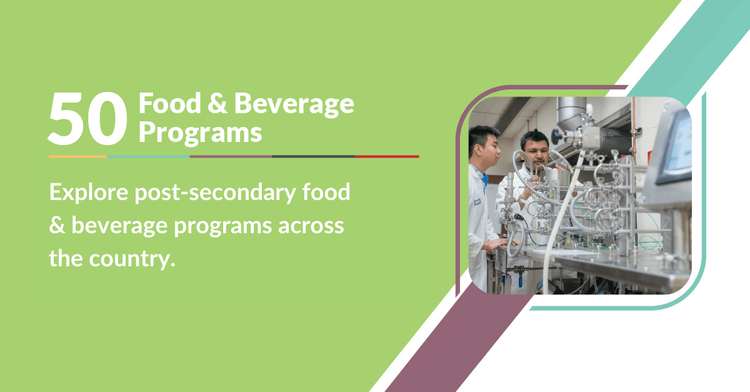
Canada is home to a diverse and dynamic food and beverage industry, supported by educational programs that train the next generation of chefs, brewers, entrepreneurs, and innovators. This roundup highlights 50 standout programs across the country, from top culinary schools and hospitality management courses to cutting-edge research initiatives and sustainability-focused training. Whether you're an aspiring professional, educator, or industry enthusiast, these programs provide valuable insights into the evolving world of food and drink in Canada. BC & Yukon Vancouver Community College UBC BCIT LaSalle College (Vancouver) UBC: Food, Nutrition, and Health Okanagan College Vancouver Island University University of Fraser Valley Northern Lights College North Island College Yukon University Selkirk College Thompson Rivers University Kwantlen Polytechnic University Prairies Saskatchewan Polytechnic University of Alberta University of Saskatchewan University of Manitoba SAIT NAIT Manitoba Institute of Trades & Technology International College of Manitoba Ontario Niagara College Humber College Le Cordon Bleu Ottawa George Brown College Fanshawe College Brock University University of Guelph Toronto Metropolitan University Loyalist College Georgian College Conestoga College Durham College Centennial College Canadore College Algonquin College Trent University St. Lawrence College St. Clair College Sault College Lambton College Confederation College Quebec McGill University LaSalle College Bishop's University Atlantic Canada University of PEI Memorial University Cape Breton University
Community Manager-
50 Food & Beverage Programs - Vancouver Island University
Crafting a Career in BC ’ s Wine Industry: VIU ’ s Wine Business Program The Wine Business program at Vancouver Island University is a comprehensive one-year certificate course designed for those passionate about pursuing a career in the BC wine industry. The program combines practical experience with academic learning in viticulture, wine business practices, marketing, and tourism. Program Highlights: As a student, you ’ ll have the chance to immerse yourself in hands-on experiences at local vineyards and wineries, gaining insights into the entire winemaking process. This practical foundation is then complemented by academic courses in viticulture, wine business practices, marketing, and tourism. A standout feature of this program is its flexibility. Whether you ’ re looking to study full-time for a year or prefer a part-time option spread over two years, VIU has you covered. Located in picturesque Nanaimo, BC, VIU provides an ideal setting for your wine education journey. With a curriculum designed to integrate viticulture essentials with business acumen, VIU ’ s Wine Business program offers a holistic understanding of the wine industry. Students can also earn credits that can be applied toward a Bachelor of Business or a Hospitality and Tourism Management program, opening doors to a wide range of future career prospects. The program includes seven courses and focuses on the broader aspects of the wine industry. In addition to viticulture and winemaking, students delve into wine marketing, exporting, and the vital role of wine tourism. C ourses cover a wide spectrum, from wine marketing and appreciation to beverage theory and the management of wine tourism. The program also offers elective courses in consumer behavio u r, entrepreneurship, and festival management . What You’ll Leave With: Upon graduation, a world of opportunities awaits you in BC ’ s wine industry. Whether you dream of managing a vineyard, excelling in wine s ales and marketing, or even opening your own restaurant, VIU ’ s Wine Business program provides the knowledge and skills to make your wine-related ambitions come true. Career options span winery/vineyard management, retail sales, wine marketing representation, hotel management, culinary arts, a gri - tourism development, and s pecial events coordination. V ideo/Social / Media : VIU YouTube Video
Community Manager-
Cellular Food in Canada
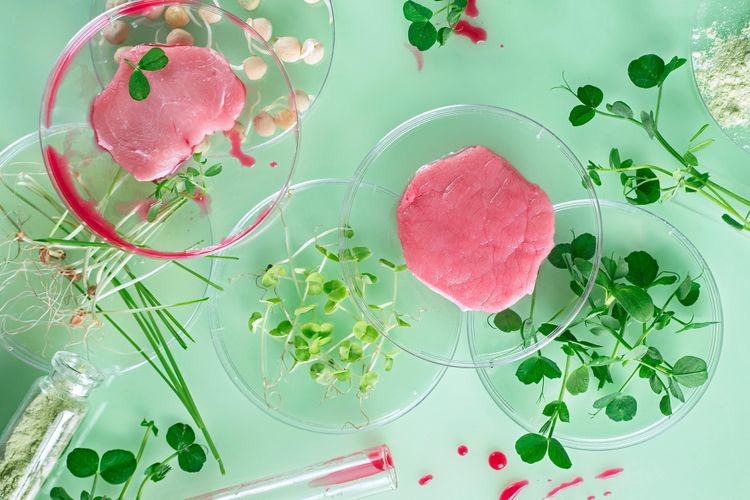
The past few years have proven how susceptible Canada’s food industry is to world events, supply chain disruptions and climate changes. New food production technology, such as cellular agriculture, has the potential to alleviate some of these challenges, while creating commercial opportunities and building a more sustainable, resilient food system. What is it? Cellular food – also known as engineering biology, synthetic biology or cell-cultivated products – is the production of food and textile products without using animals or land. Cell cultures harvested from animals, plants or micro-organisms are grown in the lab through tissue engineering or precision fermentation to produce: Cultivated proteins such as chicken, beef and seafood Fermented products like dairy, eggs, honey and chocolate Ingredients to add to products to create hybrid foods including proteins, enzymes, flavour molecules, vitamins, pigments and fats Textiles such as leather, silk and wool Why you should care As global population continues to grow, so does demand for protein, while access to land and other resource inputs become more scarce. Alternative agriculture could be an answer to food scarcity, concerns about animal and environmental welfare, cost inflation and resource challenges due to climate change. Compared to conventional agriculture, cellular agriculture production, is much less energy intensive, produces less greenhouse gas emissions, and has a much lower overall carbon footprint. With our strong food infrastructure, reputation for food safety, biotechnical expertise, and federal support for alternative protein production, Canada is well positioned to become a leader in cellular agriculture. The 2021 report Cellular Agriculture: Canada’s $12.5 Billion Opportunity in Food Innovation from Ontario Genomics and the Food and Agriculture Institute at the University of the Fraser Valley found that the international cellular agriculture market will reach US$100 billion by 2032. Canada’s food industry has the potential to take $12.5 billion that market, while creating up to 142,000 high-paying jobs. Opportunities in Canada Engineered plant proteins are already in the Canadian market, and by all estimates, precision fermented products are expected to appear before cultured meat products. Current Canadian regulations consider food produced through cellular agriculture as a novel food, and products are approved on a case-by-case basis. Here are a few Canadian start-ups making headlines: Because Animals – This Toronto-based pet food company uses cultured ingredients such as probiotics and nutritional yeast to create nutrient-rich cat and dog food designed to help digestive issues. Future Fields – Edmonton, AB-based Future Fields is a R&D producing growth media products that can be used to create commercialized cultivated proteins in a safe and sustainable manner. Cell-Ag Tech – Toronto’s Cell-Ag Tech is doing R&D on cell-cultured fish and seafood. New Harvest International non-profit research institute New Harvest , which promotes the science behind cultured meat through research, funding and a conference , now has a Canadian branch.
Community Manager-
Other Articles
Explained: Personalized Nutrition
Welcome to YODL! In addition to daily original content, YODL helps CFIN Members find new partners , resources , and funding opportunities to grow their food business. Learn more about this growing community and become a CFIN Member (for free!) today . Editor's Note: This article was originally published on 06-06-2023 This week, we’re looking at food as medicine , and today we’re highlighting personalized nutrition. What Is It? As consumers increasingly embrace the concept of food as medicine, many are looking for customized solutions, rather than a one-size-fits-all nutrition plan to treat or prevent illness and even injury . And while t he idea of personalized or precision nutrition isn’t new – think about the Low Glycemic index diet to lower blood sugar levels, or the heart-healthy Mediterranean diet – the ways in which companies are offering nutrition suggestions are. Today, integrated health and nutrition companies a re going beyond using health and lifestyle history to create personal nutrition plans. Many are combining wearable technology with software to analyze b lood biomarker s and microbiomes , measure metabolites, and monitor blood glucose levels or digestive health to determine how individuals will respond to specific nutrients. Practitioners say n utrigenomics, or genetic testing , can also offer DNA-based nutrition recommendations for health and wellness , athletic performance, fertility, weight loss and disease prevention. Why You Should Care With greater awareness of how nutrients affect them personally , customers will be increasingly looking for solutions tailored to their specific needs. That includes foods or supplements featuring functional ingredients , vitamins and minerals , natural health products with bioactive compounds, and products with ingredients designed to increase absorption or bioavailability, boost metabolism, or prevent nutrient degradation . What’s H appening in Canada? There are several nutrigenomics companies in Canada, including Toronto, ON-based Gini Health . The company analyzes customers’ DNA data to identify the optimal nutrition sources for their specific genetic profile. The company creates a personalized health tracker for customers that includes DNA-based nutrition and exercise goals. For more content on personalized nutrition see IN 30 – Food as Medicine. CFIN’s latest Innovation Booster Program focuses on Personalized Nutrition and Improving Human Health Through Food . The funding call opened on May 29, 2023, with all applications due by June 26, 2023. Winners will be announced in September 2023.
Community Manager-
Explained: Canada’s Plastic Problem
What is it? Canadians throw away a shocking 4.4 million tonnes of plastic waste annually , but only about eight per cent of that is recycled. Instead, roughly 91 per cent of plastic waste ends up as landfill, while about one per cent ends up as water and environmental pollution. Like other sectors, the food industry relies on plastic, in many different forms, for a variety of uses, from component parts in machinery, to single-use testing products, through to primary and secondary packaging, and end user products such as bags, straws and utensils. Now consumers and government are calling on food manufacturers, grocers and foodservice operators to help cut plastic waste by eliminating single-use plastics and unnecessary plastic packaging when safe to do so. Why you should care The federal government has committed to reaching a goal of zero plastic waste by 2030, beginning by banning single-use plastics. The Single-use Plastics Prohibition Regulations come into effect beginning in December 2022, with staggered deadlines until June 2024, and will prohibit the manufacture, import and sale of six single-use plastic items: plastic checkout bags, cutlery, foodservice ware containing problematic plastics, ring carriers, stir sticks, and straws (single-use plastic flexible straws can remain available, under certain conditions, for people who need them). Where to start For food industry operators unsure of how to begin the process of moving away from single-use plastic products, the federal government has developed Guidance for selecting alternatives to the single-use plastics in the proposed Single-Use Plastics Prohibition Regulations . In addition, to help address concerns around recycling programs, the government has launched two consultations to develop rules for recyclability and compostability labelling, and to establish a federal plastics registry for producers of plastic products. CFIN’s plastics coverage Over the next few weeks we’ll be taking a closer look at plastics in the food industry, and how operators can begin to transition away from their use. Watch for articles and videos on: The circular economy Accessing funding for non-plastic packaging Finding packaging partners Innovation and R&D in plastic alternatives Recyclable plastics New packaging materials CFIN’s exclusive member survey on plastics use
Community Manager-
Innovation and Digital Solutions are Future-proofing Canada’s Food and Beverage Industry
Editor's Note: This article was originally published on 1-05-2023 A s Canada’s second largest manufacturing sector, the food and beverage industry is a significant contributor to Canada’s GDP, labour and export market. Canada’s food industry includes a wide range of vibrant sectors and jobs, from agrifood production and food and beverage processing, to grocery/retail and foodservice, as well as associated sectors such as transportation, equipment manufacturing, biotechnology and software. Like many sectors of Canada’s economy, more than two-thirds of the food industry’s businesses are SMEs. With relatively low barriers to entry and unlimited growth potential, the food industry offers considerable opportunities for entrepreneurship, and is an important driver of innovation and prosperity in Canada. Yet to continue to grow and remain internationally competitive, the industry needs to become more efficient and sustainable, with an emphasis on smart processes and product development. Investing in automation, digitization, Industry 4.0 practices and IT adoption would boost production capacity for food businesses, while optimizing both startup and scale ups, and creating skilled, high-paying jobs across Canada’s manufacturing sector. It would also help produce stronger, more nimble and traceable supply chains able to respond quickly to changing consumer demands or safety concerns. These sorts of changes have had much slower adoption rates in the food industry, but have the potential to be just as transformative. Digitization has the capacity to strengthen our food supply chains and make them more resilient against ongoing and future challenges. Supply Chain 4.0 solutions as they relate to food businesses include digitizing and automating key elements of operations, and applying Internet of Things (IoT) and Industrial Internet of Things (IIoT) technology, artificial intelligence (AI), machine learning, robotics, blockchain and data analytics to supply chain management in order to improve efficiency, traceability, performance and customer satisfaction. The last few years have revealed just how vulnerable the Canadian food supply chain is to disruption, and the resulting challenge it creates for our food companies. With new tools to address the increasing volatility in customer requirements and supply availability, while addressing overall efficiency improvement expectations and food safety needs, Canadian food companies will be a position to move products faster, with more flexibility, granularity, accuracy and ultimately with less risk of disruptions. After several years of suffering from supply chain disruptions, food companies are now beginning to invest in Supply Chain 4.0 solutions. In coming years look for technology that provides operators with real-time data analytics to help manage supply chain and inventory, allowing them to optimize the use of raw materials and energy, reduce waste, and achieve higher margins. Other challenges shifting the food landscape include labour shortages, climate change, higher raw material costs and rapidly changing consumer demands around food safety, transparency and delivery. Much of these challenges can be addressed by digitizing and automating processes. Food companies are already making incremental investments in elements of Industry 4.0 in order to create more transparent, agile and competitive operations . In the future expect to see automation being added to food manufacturing and foodservice in areas with repetitive tasks or where consistency and food safety is crucial, such as in healthcare . At the same time, IoT and IIot technology embedded with AI and machine learning, including robots, will begin appearing in facilities and foodservice kitchens. Over the next decade costs of implementing automatic systems and robotics will continue to fall, while performance and consistency increases. These robotic systems will do tasks that are repetitive but necessary, or which can be dangerous or dirty. You’ll also see collaborative robotic systems which are designed to work side-by-side with workers, who are then free to perform more skilled duties. Canada’s food industry is also working to become greener, to reduce food and plastics waste, packaging, energy use and carbon emissions, and build more socially and environmentally responsible, sustainable supply chains. Further investing in digitization and automation will help close this circular economy, from packaging and production through to waste disposal, while removing costs and inefficiencies throughout the process. Technologies like machine vision, data, robotics and automation are changing all aspects of the food industry. There are so many entrepreneurs in Canada who have great ideas for improving the food business, but we also know that they often struggle to find the partners, resources and funds they need to bring those ideas to market. In 2023 CFIN will continue to help make those ideas a reality through innovation challenges, funding and mentorship opportunities. Watch YODL for more announcements in coming weeks. This article originally appeared in FoodBev's December 2022 issue under the title " Lessons Learned from Canada ."
Community Manager-
Last Week in Foodtech – Week of January 1
There is so much innovation happening in the food and beverage world today that it’s often hard to keep up. That’s why each week we’ll be bringing you highlights of the latest research and developments in food technology, new products, and food and beverage trends affecting the industry in Canada. Here are a couple stories you should know about: Restaurant Loyalty Program Will Be Ruled by Personalization in 2024 – RestaurantDive Restaurant chains are using AI and real-time customer data to provide personalized items and build brand loyalty. Chains are launching reward programs with targeted incentives to encourage customers to download and use their apps , allowing them to capture valuable customer data. Loyalty programs are increasingly adding real-time interaction capabilities and gamification to encourage more connections , as well as a wider variety of incentives such as points-for-dollar discounts, NFT digital tokens, freebies, and daily perks . AI can help companies target customers with exclusive and customized offers . The Canadian Impact: Major chains like Starbucks are already using AI in Canada to offer loyalty program customers personalized incentives. From YODL: For more on this subject read IN 30: Food Apps . Givaudan and UC Berkeley Release New Research on Maximizing Alt-Protein Efficiency - FoodNavigator Givaudan Taste & Wellbeing have teamed with the University of California (UC) Berkeley Product Development Program to research ways alternative protein manufacturers can boost production and operating efficiency. The researchers have released a white paper titled 10 Alternative Protein Pathways: Opportunities for Greater Efficiency , featuring actionable ideas on making the plant-based sector more affordable and sustainable. The white paper also looks challenges facing the industry , including supply chain insecurity , resourc e sustainability , production scale-up, and competitive pricing. Givaudan is also launching a Start-Up Challenge , featuring five start-ups from around the world , to reduce the costs of a standard recipe using the pathways outlined in the white paper, including raw material optimisation, hybrid products, process optimisation, and new technology and innovations. The Canadian Impact: According to Protein Industries Canada , the global plant-based food market is expected to reach $250 billion by 2035, and Canada has a significant opportunity to s upply the ingredients for 10 per cent of this market by 2035 , representing $25 billion . From YODL: For more on this subject read IN 30: The Plant-Based Food Market.
Community Manager-
In 30 – Robotics in the Food and Beverage Industry
Sometimes, all it takes is 30 minutes to learn the ins and outs of new food technologies and trends that are transforming the food and beverage industry. In this series, we’ll dig into a food innovation topic and link you to content and resources so you can become a master on the topic in 30 minutes (or less!). This week, we’re looking at the use of robotics in the food and beverage industry. The Overview YODL – Robotics in Action: Top 5 Takeaways T he use of automation, robotics and data analytics has the potential to transform Canada’s food and beverage industry. Foodservice & Hospitality - Technology innovation fuels change for Canada’s foodservice industry Trends in robotics and automation in the foodservice industry. Canadian Food Business – Rise of the Robots Next-generation tech n ology is tackling some of Canada’s greatest challenges in the agri-food sector . The Canadian Connection Cyberworks Robotics Markham, ON-based Cyberworks Robotics provides autonomous self-driving technology for material handling forklifts and tow-tuggers as well as industrial floor scrubbers. Relocalize Relocalize Inc. is a Montreal, QC-based company that hyper-localizes packaged food manufacturing with autonomous factories that eliminate middle mile logistics (and CO2 emissions), reduce product costs and cut waste. SJW Robotics Toronto’s SJW Robotics is a f ood technology company developing autonomous kitchen robotic systems for the hospitality industry. Social Media @tiny_mile (Twitter) Tiny M ile is a robot delivery service . @fanucamerica (Instagram) Fanuc is one of the world’s largest robotics manufacturers. KUKA (LinkedIn) KUKA is another giant in the world of automation and robotics. Overtime If you’ve got more than 30 minutes, these are for you: YouTube - Robotics in Action – Seeing is Believing
Community Manager-
Happy New Year from CFIN!
Welcome to YODL! In addition to daily original content, YODL helps CFIN Members find new partners , resources , and funding opportunities to grow their food business. Learn more about this growing community and become a CFIN Member (for free!) today . Happy New Year from the entire team at CFIN! Look for more original content on funding, innovation and other issues affecting the food industry on YODL throughout 2024. Happy YODLing!
Community Manager-
This Year on YODL – The Top Viewed Articles and Discussion Posts of 2023
Welcome to YODL! In addition to daily original content, YODL helps CFIN Members find new partners , resources , and funding opportunities to grow their food business. Learn more about this growing community and become a CFIN Member (for free!) today . YODL was the place to be this year , with exciting discussions and original articles appearing daily. In case you missed them, here are the top five discussions and most viewed articles and videos on YODL in 2023. Top YODL Discussions in 2023 Number 5 Food Trend Predictions Heading into 2024 - Get all the info here! A look at the trends and innovations expected in 2024. Number 4 B Corp certification Canadian companies are curious about the benefits of becoming B Corp certified for their social and environmental performance. Number 3 Our Favourite Food Newsletters A list of some of the food and beverage enewsletters food and beverage professionals rely on. Number 2 Upcoming Opportunities CFIN posts information on YODL about upcoming award competitions, events and funding opportunities . Number 1 Mintel 2023 Food Trends Reveal YODLers are looking for more information on trends affecting the Canadian food and beverage industry. Most Viewed YODL Articles and videos in 2023 Number 5 Member Picks – Cheryl Appleton Want to highlight your food-related company, organization or program? Contact your Regional Innovation Director to find out how to get involved. Number 4 Canadian FoodTech Trends: Interest and Curiosity in Cellular Food Continues to Grow – Three Key Takeaways This CFIN research report p rovides insight into the potential adoption of cellular meat in Canada. Number 3 An Interview with Land Lovers Land Lovers produces high-protein, plant-based meat alternatives with the flavour and texture of steak. Number 2 IN 30: BC’s Food Ecosystem Learn about BC’s food ecosystem, including resources, food companies and events, in 30 minutes or less. Number 1 50 Canadian FoodTech Resources – Perennia Food and Agriculture Corporation Perennia Food and Agriculture Corporation helps support growth, transformation and economic development in Nova Scotia’s agriculture, seafood, and food and beverage sectors.
Community Manager-
50 Canadian FoodTech Resources
Canada has an extensive range of research centres, food incubators, accelerators and labs supporting food and beverage innovation through the research they do and/or the services they offer. Each week throughout 2023, we highlighted an organization that’s supporting food innovation in Canada. To help make it easier to find a resource, here’s a list of all 50 of th ose organizations by region . Atlantic Canada Canada’s Smartest Kitchen Centre for Aquaculture and Seafood Development David Sobey Centre BioFoodTech Emergence NRC Marine Research Station Perennia Food and Agriculture Corporation Propel RPC Science & Engineering Verschuren Centre Quebec Biopterre INAF Invitro Digestion Platform Kemitek Merinov InBe NomadLab Innofibre Mycélium National Center for Electrochemistry and Environmental Technologies, Shawinigan College Platform Calgary Technology Access Centre in Bio-Innovation at La Cité College TransBIOtech Ontario Caddle Canada's Advanced Manufacturing Cluster Canadian Centre for Cyber Security Centre for Natural Products and Medical Cannabis Cultivated B Canada Cyber Science Lab Fanshawe College Centre for Research and Innovation Food and Beverage Innovation Centre at Niagara College Food Innovation & Research Studio (FIRSt), George Brown College GreenCentre Canada Meat Science Lab at the University of Guelph Walker Advanced Manufacturing Innovation Centre Prairies Ag-West Bio Enterprise Machine Intelligence and Learning Initiative (EMILI ) Food Processing Development Centre Prairie Research Kitchen Richardson Centre for Food Technology and Research Saskatchewan Food Industry Development Centre Technology Access Centre for Aerospace & Manufacturing (TACAM), Red River College Venturepark Labs BC Alacrity Cleantech BC Food Hub Network BC Beverage Technology Access Centre BC Food & Beverage Association Centre of Seafood Innovation at Vancouver Island University Food and Agricultural Institute, University of the Fraser Valley Good to Grow Innovate BC Investment Agriculture Foundation of BC
Community Manager-
What YODLers are Saying and Reading - Top YODL Content for December 2023
Welcome to YODL! In addition to daily original content, YODL helps CFIN Members find new partners , resources , and funding opportunities to grow their food business. Learn more about this growing community and become a CFIN Member (for free!) today . December was cold, but YODL was hot with lively discussions! . In case you missed them, here are the top five discussions and most viewed articles on YODL in December 2023. Top YODL Discussions in December 2023 Number 5 Kelp Liquid Fertilizer: The Key to a Self Sustaining Farming System CFIN members are looking for partners to collaborate on proof of concept trials. Number 4 Upcoming Opportunities - December 6, 2023 YODL is a great place to find out about industry events, awards, and funding opportunities. Number 3 Nutritional Facts Ta b le and shelf life analysis - fermented beverages Find more information on labs, research centres, and collage and university lab services on YODL. Number 2 Looking for Canadian supplier of dark chocolate YODL is a platform for sharing business ideas and supplier suggestions. Number 1 Sell Food Products and Services to Restaurants Connect with potential busin ess partners on YODL. Most Viewed YODL Articles in December 2023 Number 5 Company Profile – Millennia TEA Saint John, NB-based Millennia TEA Inc. received funding from CFIN for a project titled Increasing Solubility and Bioavailability in Nutrient-dense Plants. We spoke to Tracy Bell, co-founder of Millennia TEA, to find out more about the company and its project. Number 4 50 Canadian FoodTech Resources - Centre for Natural Products and Medical Cannabis Belleville, ON’s Centre for Natural Products and Medical Cannabis at Loyalist College is an innovation hub with expertise in plant-based technologies. Number 3 Report: Specialty Food Trends for 2024 The Specialty Food Association Trendspotter Panel recently released what it predicts will be the hottest specialty food and beverage trends for 2024 . Number 2 #AskLavina - December 2023 This month, Regional Innovation Director for BC and Yukon Lavina Gully answers questions from CFIN members on working with an out-of-province co-packer, and the benefits of food incubators. Number 1 Company Profile – Psigryph , Inc. Kitchener, ON-based Psigryph , Inc. received funding from CFIN for a project titled Clinical Trial for Cholestello – A Dietary Supplement for Maintaining Healthy Cholesterol Levels . We spoke to Sean Thompson, co- founder and CEO of Psigryph , Inc., to find out more about the company and its project.
Community Manager-
Happy Holidays from CFIN!
Welcome to YODL! In addition to daily original content, YODL helps CFIN Members find new partners , resources , and funding opportunities to grow their food business. Learn more about this growing community and become a CFIN Member (for free!) today . Happy holidays from the entire team at CFIN! Next week we’ll be counting down the most viewed YODL articles and discussion posts of December and the year. Look for more original content on innovation, funding and other issues affecting the food industry in 2024 !
Community Manager-
Let’s Talk Innovation - A final look at 2023 and a glance at 2024
Welcome to Let’s Talk Innovation with Isabelle Marquis, a French-language video covering all areas of food innovation. For this final interview of the year, we asked five experts — Julie Daigle, Catherine Lefebvre, Stéphane Crevier, Bernard Lavallée and Victor Yu — what stood out to them in the food world in 2023 and what is on their radar for 2024. One thing is clear: our industry is buzzing, and there are opportunities for everyone to stand out and make a difference.