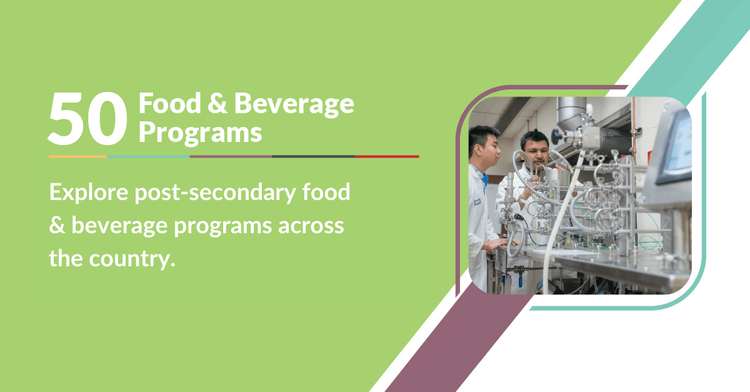
Canada is home to a diverse and dynamic food and beverage industry, supported by educational programs that train the next generation of chefs, brewers, entrepreneurs, and innovators. This roundup highlights 50 standout programs across the country, from top culinary schools and hospitality management courses to cutting-edge research initiatives and sustainability-focused training. Whether you're an aspiring professional, educator, or industry enthusiast, these programs provide valuable insights into the evolving world of food and drink in Canada. BC & Yukon Vancouver Community College UBC BCIT LaSalle College (Vancouver) UBC: Food, Nutrition, and Health Okanagan College Vancouver Island University University of Fraser Valley Northern Lights College North Island College Yukon University Selkirk College Thompson Rivers University Kwantlen Polytechnic University Prairies Saskatchewan Polytechnic University of Alberta University of Saskatchewan University of Manitoba SAIT NAIT Manitoba Institute of Trades & Technology International College of Manitoba Ontario Niagara College Humber College Le Cordon Bleu Ottawa George Brown College Fanshawe College Brock University University of Guelph Toronto Metropolitan University Loyalist College Georgian College Conestoga College Durham College Centennial College Canadore College Algonquin College Trent University St. Lawrence College St. Clair College Sault College Lambton College Confederation College Quebec McGill University LaSalle College Bishop's University Atlantic Canada University of PEI Memorial University Cape Breton University
Community Manager-
50 Food & Beverage Programs - Vancouver Island University
Crafting a Career in BC ’ s Wine Industry: VIU ’ s Wine Business Program The Wine Business program at Vancouver Island University is a comprehensive one-year certificate course designed for those passionate about pursuing a career in the BC wine industry. The program combines practical experience with academic learning in viticulture, wine business practices, marketing, and tourism. Program Highlights: As a student, you ’ ll have the chance to immerse yourself in hands-on experiences at local vineyards and wineries, gaining insights into the entire winemaking process. This practical foundation is then complemented by academic courses in viticulture, wine business practices, marketing, and tourism. A standout feature of this program is its flexibility. Whether you ’ re looking to study full-time for a year or prefer a part-time option spread over two years, VIU has you covered. Located in picturesque Nanaimo, BC, VIU provides an ideal setting for your wine education journey. With a curriculum designed to integrate viticulture essentials with business acumen, VIU ’ s Wine Business program offers a holistic understanding of the wine industry. Students can also earn credits that can be applied toward a Bachelor of Business or a Hospitality and Tourism Management program, opening doors to a wide range of future career prospects. The program includes seven courses and focuses on the broader aspects of the wine industry. In addition to viticulture and winemaking, students delve into wine marketing, exporting, and the vital role of wine tourism. C ourses cover a wide spectrum, from wine marketing and appreciation to beverage theory and the management of wine tourism. The program also offers elective courses in consumer behavio u r, entrepreneurship, and festival management . What You’ll Leave With: Upon graduation, a world of opportunities awaits you in BC ’ s wine industry. Whether you dream of managing a vineyard, excelling in wine s ales and marketing, or even opening your own restaurant, VIU ’ s Wine Business program provides the knowledge and skills to make your wine-related ambitions come true. Career options span winery/vineyard management, retail sales, wine marketing representation, hotel management, culinary arts, a gri - tourism development, and s pecial events coordination. V ideo/Social / Media : VIU YouTube Video
Community Manager-
Cellular Food in Canada
The past few years have proven how susceptible Canada’s food industry is to world events, supply chain disruptions and climate changes. New food production technology, such as cellular agriculture, has the potential to alleviate some of these challenges, while creating commercial opportunities and building a more sustainable, resilient food system. What is it? Cellular food – also known as engineering biology, synthetic biology or cell-cultivated products – is the production of food and textile products without using animals or land. Cell cultures harvested from animals, plants or micro-organisms are grown in the lab through tissue engineering or precision fermentation to produce: Cultivated proteins such as chicken, beef and seafood Fermented products like dairy, eggs, honey and chocolate Ingredients to add to products to create hybrid foods including proteins, enzymes, flavour molecules, vitamins, pigments and fats Textiles such as leather, silk and wool Why you should care As global population continues to grow, so does demand for protein, while access to land and other resource inputs become more scarce. Alternative agriculture could be an answer to food scarcity, concerns about animal and environmental welfare, cost inflation and resource challenges due to climate change. Compared to conventional agriculture, cellular agriculture production, is much less energy intensive, produces less greenhouse gas emissions, and has a much lower overall carbon footprint. With our strong food infrastructure, reputation for food safety, biotechnical expertise, and federal support for alternative protein production, Canada is well positioned to become a leader in cellular agriculture. The 2021 report Cellular Agriculture: Canada’s $12.5 Billion Opportunity in Food Innovation from Ontario Genomics and the Food and Agriculture Institute at the University of the Fraser Valley found that the international cellular agriculture market will reach US$100 billion by 2032. Canada’s food industry has the potential to take $12.5 billion that market, while creating up to 142,000 high-paying jobs. Opportunities in Canada Engineered plant proteins are already in the Canadian market, and by all estimates, precision fermented products are expected to appear before cultured meat products. Current Canadian regulations consider food produced through cellular agriculture as a novel food, and products are approved on a case-by-case basis. Here are a few Canadian start-ups making headlines: Because Animals – This Toronto-based pet food company uses cultured ingredients such as probiotics and nutritional yeast to create nutrient-rich cat and dog food designed to help digestive issues. Future Fields – Edmonton, AB-based Future Fields is a R&D producing growth media products that can be used to create commercialized cultivated proteins in a safe and sustainable manner. Cell-Ag Tech – Toronto’s Cell-Ag Tech is doing R&D on cell-cultured fish and seafood. New Harvest International non-profit research institute New Harvest , which promotes the science behind cultured meat through research, funding and a conference , now has a Canadian branch.
Community Manager-
Other Articles
What Canada’s Latest Affordability Measures Signal for the Food Sector
This morning, the federal government announced a new package of affordability measures, including a temporary increase to the GST credit aimed at easing grocery costs for lower-income Canadians. The intended immediate effect is household relief. The more important signal for the food sector is how affordability is being framed. Rather than focusing narrowly on retail prices, the announcement points upstream—to supply chains, production capacity, and the ability of the food system to absorb disruption before costs reach consumers. Critically, the measures aim to establish a multi-year food affordability runway. These latest announcements signal that affordability is no t being treated as a one-off intervention, but as a policy challenge that will play out over several years—creating space for system-level responses tied to productivity, resilience, and investment. Key Takeaways 1. Direct Income Support Is Being Paired with Upstream Cost Absorption While the expanded Canada Groceries and Essentials Benefit provides immediate household relief, the more consequential move is upstream. The allocation of $500 million through the Strategic Response Fund (SRF) is explicitly intended to help businesses manage supply chain disruptions without passing those costs on to consumers. This approach aligns closely with CFIN’s Food 4.0 Action Plan , which is built on the premise that affordability and competitiveness are ultimately productivity and resilience challenges. Food 4.0 focuses on equipping food businesses—particularly SMEs—to adopt technologies and operational innovations that improve throughput, flexibility, and responsiveness to disruption. When firms can absorb shocks through better systems, automation, data, and coordination, cost pressures are less likely to cascade downstream. In this context, the use of the SRF reflects growing policy recognition that stabilizing food prices requires strengthening the operating capacity of the sector itself, not just compensating consumers after the fact. Supporting innovation adoption, unblocking interprovincial trade, de-risking modernization, and improving system performance upstream are increasingly being recognized as affordability tools in their own right . 2. Capital Is Being Directed Toward Domestic Capacity The introduction of immediate expensing for greenhouse infrastructure acquired after November 2025 points to a targeted effort to accelerate domestic supply through capital formation. This measure establishes a precedent for using tax policy to support food s ystem infrastructure tied to affordability and supply stability—which could extend to processing, storage, automation, and logistics . This aligns with findings and recommendations from CFIN’s Breaking Barriers to Investment in Foodtech report, which identified capital intensity and misaligned fiscal incentives as key barriers to scaling food infrastructure in Canada—and pointed to targeted tax modernization as a lever to move innovation from R&D into commercialization. 3. Regional SMEs Are Being Positioned as Food System Infrastructure The creation of a $150 million Food Security Fund under the Regional Tariff Response Initiative places small and mid-sized enterprises, along with the organizations that support them, at the centre of food security planning. This reflects growing federal attention to regional processing, logistics , and enabling technologies as structural components of the food system, rather than peripheral actors in national supply chains. Regional capacity and throughput ar e being treated as critical to absorbing disruption, m aintaining supply continuity, and limiting the transmission of shocks through the system. From a delivery perspective, this places greater emphasis on innovation adoption and operational modernization at the SME level—where productivity gains, efficiency improvements, and resilience investments translate most directly into system performance. 4. Competition and Transparency Are Re-Entering the Frame Commitments to unit price labelling and expanded Competition Bureau oversight signal a renewed emphasis on cost visibility and accountability across food supply chains. Rather than focusing solely on end prices, these measures point toward closer scrutiny of how costs move through the system—from production and processing through distribution and retail. This elevates the role of Food 4.0–aligned technologies, including traceability systems, pricing transparency tools, and data platforms that support monitoring, compliance, and operational decision-making. As these measures take shape, digital capabilities increasingly function as system enablers, supporting both competitive markets and affordability outcomes by improving visibility, coordination, and trust across the value chain. What Comes Next Today’s announcement places renewed emphasis on supply chains, domestic capacity, and upstream cost pressures as part of the response to food affordability. CFIN welcomes this direction. Since 2021, we have been working with industry, innovators, and government to strengthen food security and affordability through innovation. This includes funding and supporting projects focused on digital supply chains, food safety and traceability, automation, and other technologies that directly influence costs, efficiency, and reliability across the food value chain . Continued investment in the se technologies and capabilities will be central to delivering more stable outcomes for Canadians. The measures announced today signal that this is where federal attention is shifting—toward investments that help the food system absorb disruption, manage risk, and lower avoidable costs before they reach consumers. What comes next will be how consistently this approach is carried through into funding, program design, and implementation.
Community Manager-
AI Is Reshaping How Canada Monitors Food Safety
Canada’s food safety framework is one of the strongest in the world, backed by regulatory oversight, scientific validation, and routine inspection. But in high-volume food processing environments, even the best systems have blind spots. Random sampling, lab turnaround times, and human error leave windows where contaminants or spoilage risks can go undetected . Th ose blind spots are where artificial intelligence is starting to make a material difference. By pairing real-time sensors with machine learning algorithms, companies can now monitor every unit on the line—not just a subset. This improves detection accuracy, speeds up response time, and reduces reliance on after-the-fact interventions. Canadian Tech Leading the Shift Waterloo-based P&P Optica has developed a hyperspectral imaging system that has already been deployed at meat processing plants throughout the country. The system mounts directly above production lines : a s meat passes beneath the camera, it collects and analyzes spectral data in real time, identifying bone shards, cartilage, and foreign materials with greater precision than traditional inspection methods. It also grades meat based on lean-to-fat ratios—useful for sorting and batching decisions. Savormetrics , headquartered in Mississauga, focuses on fresh produce. Their portable analyzers are used at receiving docks and packing facilities to assess incoming fruit and vegetables. Instead of pulling samples for lab testing, staff scan entire pallets. The system analyzes light reflectance patterns to estimate microbial risk, shelf life, and internal quality—flagging product that may appear fine externally but will spoil prematurely. Raising the Floor for Safety Standards These technologies don’t replace existing food safety practices and human oversight. Rather, t hey extend them. They allow continuous non-destructive testing at scale, while improving consistency and transparency. Importantly, they also offer smaller processors access to quality control capabilities previously limited to large firms with in-house labs and teams of specialists. That shift could have major implications. As global buyers tighten their import standards, Canada's ability to prove compliance—quickly and consistently—has real economic value. AI tools support that by generating structured data that can be audited, shared, and analyzed over time. Food Safety as a Competitiveness Strategy The public sector has a role to play here. Widespread adoption of these systems will require investment in training, digital infrastructure, and shared data standards. But the outcome is more than just safer food. It's a more resilient, export-ready food sector that stays ahead of both safety risks and regulatory demands. Download the Full Whitepaper: AI and the Future of Canada’s Food Sector See how Canadian companies like P&P O ptica and Savormetrics are applying AI to product development, automation, food safety, supply chains, and waste reduction . Our latest whitepaper will help you understand the obstacles to adoption, the competitive advantages at stake, and the policy supports needed to strengthen Canada’s food innovation ecosystem. Available exclusively to CFIN members. Access the full report here !
Community Manager-
How AI Adoption Strengthens Canada’s Food Supply Chains
Canada’s food supply chains stretch across long distances and multiple jurisdictions . For exporters, maintaining product quality and meeting documentation requirements—across languages, formats, and regulatory regimes—is increasingly complex. Errors in this chain can lead to spoilage, rejected shipments, or delays at the border. Large manufacturers often manage this through enterprise systems and compliance teams. F or small and mid-sized firms, however, the process is fragmented. Many still rely on manual entries, spreadsheets, and ad hoc coordination across suppliers and buyers. But advances in a rtificial intelligence are starting to bridge that gap. Smarter Label Checks, Document Parsing, and Cold Chain Visibility AI tools are now being used to automate quality checks, reduce manual workloads, and minimize costly errors. In food logistics , predictive models help optimize cold chain routing and reduce spoilage risk. In packaging and labelling, AI-powered validation tools can confirm whether bilingual labels meet federal and interprovincial requirements—before products are shipped. In Canada, companies like Predhomme Strategic Marketing are applying AI to streamline bilingual label checks and reduce interprovincial trade delays. Others are tackling the last mile: Freshline , a digital ordering platform, uses AI-assisted workflows to prevent delivery errors and automate customer comm unications —critical for wholesalers managing fresh food in real time. Structured Data, Trusted Trade As trading partner s ramp up food traceability mandates, structured digital records are becoming essential infrastructure. Exporters need to prove not just what’s in the box, but when it was packed, where it came from, and how it was handled. AI helps generate that data automatically. A scanned barcode can now trigger a cascade of verifications: ingredient origin, cold chain compliance, expiry windows, label conformity. For SMEs, these tools offer access to enterprise-grade controls—without having to build a compliance department from scratch. A National Competitiveness Question A supply chain that runs structured, shareable data is easier to regulate, easier to export from, and easier to trace when something goes wrong. But adoption of AI tools that facilitate that remains uneven. Barriers include limited internal capacity, unclear standards, and cost. Public investment in digital infrastructure, skills training, and shared validation protocols could accelerate uptake—particularly in high-value, perishable categories where compliance and speed are critical. Download the Full Whitepaper: AI and the Future of Canada’s Food Sector See how Canadian companies like Predhomme Strategic Marketing and Freshline are applying AI to product development, automation, food safety, supply chains, and waste reduction . Our latest whitepaper will help you understand the obstacles to adoption, the competitive advantages at stake, and the policy supports needed to strengthen Canada’s food innovation ecosystem. Available exclusively to CFIN members. Access the full report here !
Community Manager-
Fueling the Future: Why the Next Big Economic Story in Canada Starts in a Bioreactor
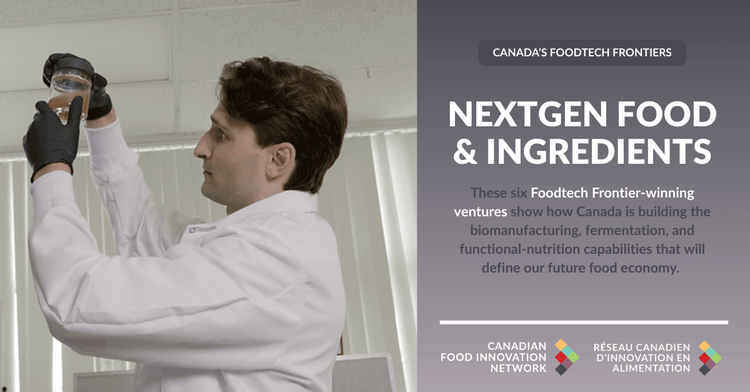
NextGen Food & Ingredients has become one of the most powerful drivers of Canada’s food innovation economy. Since 2021, this category has accounted for 22 percent of all CFIN program applications and nearly $7.7 million in awarded funding—the largest share across CFIN’s eight innovation priority areas. These projects sit at the intersection of biotechnology, nutrition, and sustainability, precisely where much of Canada’s future food manufacturing value will be created. This concentration of activity tells its own story. Canada’s food innovation ecosystem is shifting from product development to platform building—from brands that use ingredients to companies that create them , too . What’s emerging is the early foundation of a new food economy—one powered by biomanufacturing, precision fermentation, and functional nutrition, where value is generated not by scale alone, but by capability. The Frontier of Canadian NextGen Food & Ingredients The rise of Next-Gen Food & Ingredients is the result of an interesting convergence of forces : Consumers increasingly expect more function and less filler in their foods , and n ew biotechnologies like fermentation and cell cultivation have matured to the point where they can actually deliver on those expectations . Meanwhile, climate disruptions and trade volatility are exposing the fragility of global supply chains and commodity prices , making advanced ingredient manufacturing a way for Canada to add value and resilience at home. S ix of CFIN’s inaugural Foodtech Frontier 25 honourees are working in NextGen Food & Ingredients . Together, they offer a compelling portrait of the broad potential in th is space : Enhanced Medical Nutrition ( Toronto, ON ) is redefining post-surgical recovery through clinically backed, protein-dense formulations that accelerate healing. Their model shows how food can cross into the realm of healthcare—one of the highest-value intersections of nutrition and biotech. Infusd Nutrition ( Halifax, NS ) has built a novel micronutrient encapsulation system that keeps vitamins and minerals shelf-stable and tasteless. It’s a plug-and-play technology that lets CPG brands add functionality without reformulating products. Maia Farms ( Vancouver, BC) merges mycelium fermentation with upcycled plant feedstocks to create high-performance proteins that are both sustainable and nutritious . Their work positions Canada in the emerging global race to build a low-carbon “ fermentation economy .” Myo Palate ( Toronto, ON) is developing cultivated muscle tissue for use in hybrid proteins, translating tissue-engineering methods from medicine into food production. By tackling texture and mouthfeel— among the hardest problems in alt-protein— they’re expanding the frontier of what’s technically possible. Opalia Foods ( Montreal, QC) is Canada’s flagship cellular-dairy startup, using mammary-cell bioreactors to produce real milk proteins—without the cow, and without the methane. Opalia recently closed a deal with H oogwegt , one of the world’s largest privately held dairy ingredient providers —a major milestone towards commercializing the world’s first cell-based dairy products . Renaissance BioScience ( Vancouver , BC) engineers proprietary yeast strains that enhance flavour , nutrition, and shelf life in everything from beer to bakery. Their export-ready IP shows how microbial innovation can drive industrial licensing revenue—often the most durable growth path for biotech SMEs. Investment Momentum in NextGen Ingredients Across all innovation priority areas , CFIN-funded food innovation projects have leveraged $ 23.3 million in public support into more than $82 million in follow-on private investment—a four-to-one multiplier that shows how early-stage funding can unlock market confidence. For NextGen Food & Ingredients specifically, r ecent rounds from CFIN-funded companies highlight the growth potential. Maia Farms raised $2.3 million (CAD) in pre-seed financing led by Joyful Ventures, Koan Capital, and PIC Group , and Enhanced Medical Nutrition closed a $5 million (USD ) Series A led by dsm-firmenich Venturing and Ajinomoto’s CVC arm . These follow-on raises are evidence that investors are ready to back novel ingredients and processes that have already cleared the R&D hurdle and are moving toward commercial scale. The broader market backs up these proof points . According to CFIN’s Foodtech in Canada: 2025 Ecosystem Report , Canada’s plant-based and biotech-enabled ingredient sector is now worth roughly $1.7 billion USD , accounting for about one-quarter of all Canadian foodtech companies and growing nearly 50 percent faster than the global average. Investors are testing the waters , but there remains much to do if w e hope to scale the ingredients and infrastructure that will define the next stage of Canada’s food economy. Unpuzzling Canada’s Ingredient Advantage Despite the promising momentum, successful commercialization of NextGen Food & Ingredients remains uneven. Many v entures still struggle to access mid-scale pilot facilities for capabilities like food-grade fermentation or extrusion. Canada’s r egulatory frameworks for cell-based and precision-fermented ingredients still lag the science. And access to specialized downstream investors—those comfortable with long time horizons and capex-heavy models— remains limited. These gaps define the next opportunity for collaboration. Canada can build on the success of CFIN’s early-stage funding programs that have already de-risked promising ingredient technologies by focusing on what helps those ventures scale. That means investing in shared fermentation and processing infrastructure, updating regulatory frameworks to streamline approvals for low-risk novel ingredients, and developing financing tools that connect pilot-ready ventures with private and institutional capital. Th is is how we build industrial capacity and create a globally competitive innovation base that keeps ingredient manufacturing—and its value—rooted in Canada. Building What Comes Next NextGen Food & Ingredients has become one of the most active and consequential innovation areas in CFIN’s p ro gr amming . It represents not just new product categories, but new kind s of production. Fermentation tanks, bioreactors, and ingredient platforms are starting to sit alongside the processing plants and packaging lines that defined the last generation of food manufacturing. This is an exciting shift, one that show the potential for Canada’s larger agri-food sector to complement our agricultur al production muscle with value -adding innovation to capture more of the economic potential that we often export as raw commodities. If the current pace holds, these ingredient ventures will help form the foundation of a more productive, divers e, and resilient Canadian innovative food economy.
Community Manager-
Reinventing the Wrapper: Why Food Packaging Innovation in Canada Is Entering a Critical Decade
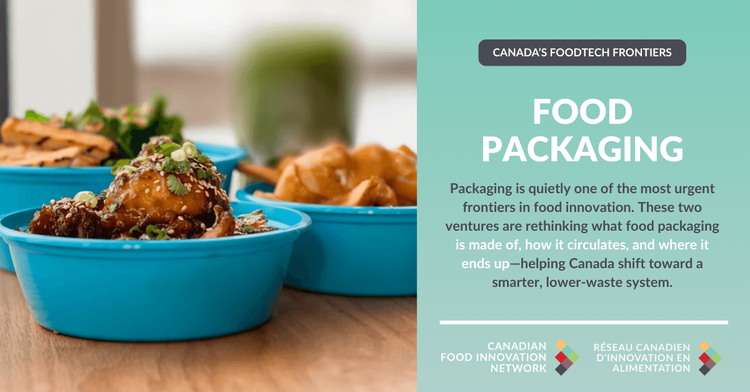
Once treated primarily as a branding surface or a cost cent re , food packaging is now emerging as a flashpoint for climate action, regulatory enforcement, and operational resilience. From grocers trialing reusable container systems to startups commercializing compostable bioplastics, the packaging economy is entering a new phase. That shift is clearly visible in CFIN’s programming. Since 2021, Food Packaging has accounted for 11% of all program submissions and nearly $1.8 million in awarded funding, making it one of the most consistently active innovation domains in our innovation portfolio—trailing only NextGen Food & Ingredients , F ood W aste, and K itchen T echnologies in total number of application s . This high level of engagement reflects an accelerating and sector-spanning need for solutions . As Extended Producer Responsibility (EPR) frameworks take hold across provinces and retailer mandates tighten around recyclability and compostability , food businesses are racing to future-proof their packaging before the next wave of enforcement, infrastructure change, and consumer scrutiny arrives. Why Packaging Is Moving to the Forefront The pressure points are stacking up. Across Canada and beyond, new packaging norms are being shaped by: EPR regulations that shift recycling costs onto producers and penalize non-recyclable formats Retailer and CPG mandates demanding that private-label packaging be fully recyclable, reusable, or compostable within 3–5 years Volatile resin and input prices tied to petrochemical markets Municipal landfill restrictions and consumer pressure to cut waste at the source Carbon targets that now include scope 3 packaging emissions in ESG accounting Meanwhile, Canada’s legacy plastic recycling infrastructure is increasingly viewed as both expensive and ineffective. With less than 16% of plastic packaging currently recycled, and compostable packaging lacking proper end-of-life systems, the gap between packaging “intent” and impact is growing more visible. This convergence of drivers is why innovation is accelerating not just in materials, but in the entire packaging system—from what gets used, to how it circulates, to where it ends up. The Frontier of Canadian Food Packaging Innovation Two of CFIN’s i naugural Foodtech Fronti er 25 hon ourees are a mong the innovators helping define this new packaging landscape. A Friendlier Company (Guelph, ON) has focused on reducing reliance on single-use foodservice packaging by deploying a reusable container system supported by digital traceability and controlled logistics . The model operates within defined environments such as campuses and institutional foodservice, where container circulation and returns can be managed predictably. By maintaining control over the packaging loop, the system reduces exposure to waste-stream uncertainty and ongoing compliance costs associated with disposables . Freshr Sustainable Tech nologies (Dartmouth, NS) is working on packaging-integrated approaches aimed at extending shelf life in perishable food categories. In segments where spoilage contributes significantly to margin loss, packaging that improves product stability directly affects operational performance. Adoption is driven by reductions in shrink and waste rather than by end-of-life considerations alone. Investment Momentum in Food Packaging Innovation Th ese two companies are highlights of Canad ian food packaging innovat ion , but they aren’t outliers. They’re signals of a market shift—and public funding is playing a catalytic role. Since 2021, CFIN-funded projects have helped unlock over $82 million in follow-on private investment, amplifying our initial $2 3.3 million in early-stage support across domains. In the packaging space specifically, that includes companies such as Freshr , which recently closed an oversubscribed seed funding round . And the macro data supports this momentum. Canada’s sustainable packaging market is projected to grow at a CAGR of 6.3% from 2023 to 2033 , driven by demand from both domestic CPGs and international buyers. Bio-based polymers, fiber-based packaging, and advanced recycled materials are all seeing double-digit growth, especially in applications like ready-to-eat meals, beverages, and fresh produce. Retailer mandates are also creating new pull: Walmart Canada, Metro, and Loblaw have each pledged to phase out hard-to-recycle plastics and introduce 30%+ recycled content across private-label packaging—creating supply chain urgency, and market opportunities for Canadian innovators who can deliver real solutions. What’s Still Holding Packaging Innovation Back? Despite the momentum, scaling remains difficult. Canada faces several structural barriers that prevent even the most promising packaging innovations from reaching mainstream adoption: Lack of domestic biopolymer production capacity , especially for food-grade compostable resins like PHA Insufficient recycling and composting infrastructure , with most compostable packaging still ending up in landfill Inconsistent certification and labelling standards , leading to confusion and greenwashing Retailer procurement hurdles , including costly pilots, slow decision cycles, and rigid testing frameworks Price competition from virgin petroplastics , which remain artificially cheap Limited financing models for facility buildouts and manufacturing scale-up In short: the future of packaging isn’t limited by imagination or technology— it’s limited by infrastructure, incentives, and systems. Building Canada’s Packaging Advantage If these constraints can be addressed, Canada has a chance to lead globally. With world-class biotech capabilities , an abundance of potential bio-based material inputs, and a growing foodtech startup base, Canada is well positioned to become an exporter of sustainable packaging materials, systems, and IP. But doing so will require coordinated investment in: Domestic manufacturing for recycled and bio-based packaging materials Standards and certifications that accelerate adoption, not confusion EPR frameworks that reward recyclability and reuse with lower costs Procurement models that de-risk trials for retailers and foodservice providers Ultimately, the evolution of food packaging will shape not just waste streams, but food-system productivity, trade competitiveness, and climate outcomes. In the years ahead, new packaging materials will determine which companies can meet export requirements, scale logistics efficiently, and deliver products that align with consumer values and regulatory expectations .
Community Manager-
From Static to Smart: How Digital Supply Chain Innovation Is Reshaping Canada’s Food Sector
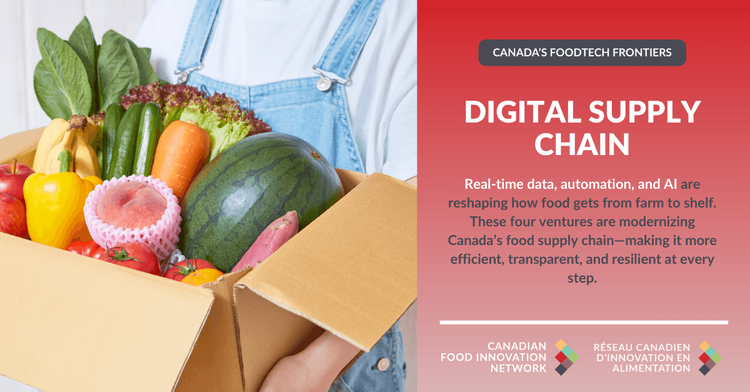
Few areas of food innovation are undergoing more rapid change than supply chains. Once siloed, analog, and reactive, Canada’s food supply networks are being reengineered around real-time data, AI optimization, and predictive resilience. As cost pressures, regulatory demands, and consumer expectations converge, digital supply chain innovation has moved from a nice-to-have to a competitive imperative. That shift is sharply reflected in CFIN’s project portfolio. Since 2021, Digital Supply Chain Solutions have accounted for 11% of all program submissions and over $3.4 million in awarded funding—making it one of the highest-funded innovation domains in CFIN’s ecosystem. From price analytics for grocers to Augmented Reality (AR)-guided foodservice operations, the emerging class of supply chain technologies is helping food businesses cut waste, boost margins, and build resilience. Digitizing the Weakest Link In a sector known for slim margins and high volatility, supply chain breakdowns can erase profitability overnight. That risk is intensifying: climate disruptions, pandemic-era shocks, and inflationary swings have exposed deep vulnerabilities in how food moves from farm to fork. Meanwhile, regulators and consumers are demanding greater traceability, shorter transport distances, and proof of ethical sourcing. Traditional supply chains weren’t built for this. Fragmented communication, static spreadsheets, and analog procurement workflows create blind spots at every turn. That’s where digital supply chain innovation is creating solutions . By integrating data streams, surfacing real-time insights, and automating decisions, new platforms are giving food businesses a way to respond faster, manage smarter, and operate leaner. The Frontier of Canada’s Digital Food Supply Chains Four CFIN-supported ventures from the Foodtech Frontier 25 are helping to define what th e digital supply chain transformation looks like in practice: BetterCart Analytics (Saskatoon, SK ) has built Canada’s largest independent grocery price database and wrapped it in an AI-driven analytics engine to provide real-time pricing insights for grocers and CPGs who need to stay competitive without sacrificing margin. In a sector where independent grocers often lack access to sophisticated tools, t he Saskatoon-based startup is leveling the playing field—using predictive analytics to help them anticipate price shifts, benchmark against competitors, and make smarter procurement decisions. Funded by CFIN, Innovation Saskatchewan, and NSERC, BetterCart is now piloting its platform with independent grocers and CPG brands. If data drives supply chain visibility, people still drive execution. DeepSight Réalité Augmentée (Montreal, QC) is rethinking workforce training and compliance using no -code augmented reality. Its platform transforms foodservice SOPs into immersive, step-by-step AR workflows accessible on smart glasses or tablets. By accelerating onboarding and reducing errors, DeepSight’s tech helps companies address labour shortages, maintain quality, and boost operational consistency. CFIN funding has helped the company pilot its solution with St-Hubert, while a strategic investment from Quebec-based i4 Capital is fueling broader commercialization. Jitto (Etobicoke, ON) is tackling the last-mile pain points in fresh food distribution by connecting small-scale farms and food businesses through a just-in-time, AI-enabled marketplace. The platform matches local supply with real-time demand from independent restaurants and grocers, cutting out intermediaries and reducing waste. With pilots across Southwestern Ontario and funding from CFIN and the i.d.e.a . Fund, Jitto is helping rural and remote communities secure fresher food at better prices—while giving farmers a direct, data-informed sales channel. Already active in 14 countries, Local Line (Kitchener, ON) is one of Canada’s most mature food supply chain platforms. It provides e-commerce and logistics tools that enable farmers, food hubs, and restaurants to trade directly and efficiently. The model has proven powerful: by shortening supply chains and digitizing logistics , Local Line has helped users reduce transport emissions, cut food waste, and grow sales. Building Canada’s Digital Edge These companies represent the leading edge of Canadian food supply chain innovation, but they are not outliers. They’re part of a broader shift toward digital infrastructure across the sector—a shift increasingly enabled by catalytic public funding. Companies in this space represent 11% of all funding applications and it is the second highest funded of CFIN’s eight innovation domains—illustrating the transformative potential of digital supply chain innovation Since 2021, CFIN’s $ 23.3 million in early-stage support has helped unlock over $82 million in follow-on private investment across its portfolio. In digital supply chain specifically, that momentum includes: BetterCart Analytics securing over $140,000 from investors through Startup TNT after its CFIN-supported pilot with Fresh City Farms. DeepSight closing a seed round with i4 Capital , following CFIN-funded deployment at St-Hubert foodservice operations. Local Line receiving strategic investment from Chipotle’s Cultivate Next fund , helping the platform scale to 10,000+ farms and enabling Chipotle to meet its own local produce sourcing goals. These outcomes illustrate how public investment is derisking early pilots and attracting venture capital that accelerates commercialization. The market signals are reinforcing that momentum and r etailer and manufacturer demand is accelerating adoption. Major grocers and foodservice players are actively sourcing traceability tools, demand forecasting platforms, and procurement optimization systems. Canadian food businesses are increasingly prioritizing supply chain modernization—global benchmarks suggest nearly half of food companies are actively investing in digital supply chain tracking and AI tools. What’s Still Holding Digital Supply Chain Innovation Back? Despite growing uptake and funding, scale remains a sticking point. Many promising digital supply chain ventures face persistent commercialization hurdles: Fragmented procurement environments that make it hard to win enterprise contracts Lack of mid-stage capita l to fund national expansion or infrastructure buildout Variability in data standards and interoperability across systems Labour and training gaps that slow adoption of advanced tech tools These structural frictions mean that even the most impactful technologies can struggle to scale beyond early adopters. Without deliberate ecosystem investment, the transition from pilot to platform often stalls. Building Canada’s Digital Advantage Despite the se challenges, C anada has a clear edge: an engaged ecosystem, rising demand for digital solutions , and a cohort of proven ventures ready to scale. With continued investment, stronger partnerships, and a push toward broader adoption, digital supply chain innovation can move from isolated pilots to sector-wide infrastructure. The pieces are already in motion—and momentum is building fast.
Community Manager-
Catch Up: Outlook for Food Innovation in 2026 — What’s Shaping the Year Ahead
As food businesses plan for 2026, a familiar set of pressures is converging: tighter consumer budgets, faster innovation cycles, rising expectations around value and performance, and growing uncertainty about where to place bets. These dynamics were at the centre of CFIN’s Outlook for Food Innovation in 2026 webinar that brought together senior R&D, culinary, and futures perspectives to examine how food innovation priorities are shifting—and what that means for product, technology, and strategy decisions in the year ahead. The discussion was host ed by Dana McCauley, CEO of the Canadian Food Innovation Network , and featured insights from Dave Bender (Global VP, R&D, Griffith Foods), Christine Couvelier (President & Executive Chef, Culinary Concierge), and Mike Lee (Principal Futurist & Author, The Future Market). Below are some of the important themes th at emer ged consistently throughout the session. Three key takeaways 1) 2026 roadmaps will be shaped by value pressure and tighter spending Affordability surfaced repeatedly as a defining constraint for innovation planning. The implication for product and R&D teams is clear: fewer “nice-to-have” initiatives, and more focus on innovations tied to tangible outcomes such as cost control, quality, taste, repeat purchase, and operational efficiency. Dave highlighted how R&D roadmaps are already being adjusted to address value-for-money pressures, including technologies designed to improve yield, reduce waste, and increase cooking or processing efficiency—often without major formulation compromises. 2) AI is most useful as an efficiency tool in the near term The panel treated AI as a practical enabler rather than a creative replacement for teams. Near-term, high-impact use cases discussed included: speeding up early-stage research and synthesis across consumer, market, and competitive inputs reducing time spent on administrative and back-office tasks supporting innovation process management and insight gathering, once strategy is set serving as a starting point for ideation, with human expertise and testing doing the real work The consensus: AI can compress timelines and free up capacity, but it does not solve product–market fit, sensory performance, or brand positioning. 3) Faster iteration beats better prediction A consistent operating recommendation was to shorten feedback loops. Christine emphasized staying externally focused—through tastings, store walks, chef engagement, travel, and direct exposure to how consumers actually eat . Mike extended this into a broader innovation system insigh t: early signals tend to appear at the edges, and organizations with low stakes testing mechanisms see them sooner and adapt faster. One model discussed for CPG teams was borrowing from restaurant dynamics: small runs, rapid testing, quick messaging refinement, and learning before committing to expensive scale decisions. Signals Worth Tracking into 2026 A short list of themes raised during the session included: food rescue and upcycling as an innovation platform, not just a sustainability initiative sustainable hedonism: making sustainable choices feel like the best-tasting, most enjoyable option protein as a sustained driver, with differentiation shifting to format, function, and experience clean label and simplicity re-emerging as scrutiny of ultraprocessed foods increases high- flavour produce as a way to make whole foods more compelling without reliance on dips or add-ons sweet + spicy as a flexible flavour platform across categories for ready-to- eat: global flavour cues, fermentation, regional storytelling, and sensory differentiation The full discussion is available to watch on demand here . Sign Up for Future Webinars Want to keep exploring complex industry topics? Check out our Events Page to sign up for upcoming webinars or in-person events in your region.
Community Manager-
AI-Enabled Automation& Robotics are Becoming Essential Food Processing Infrastructure
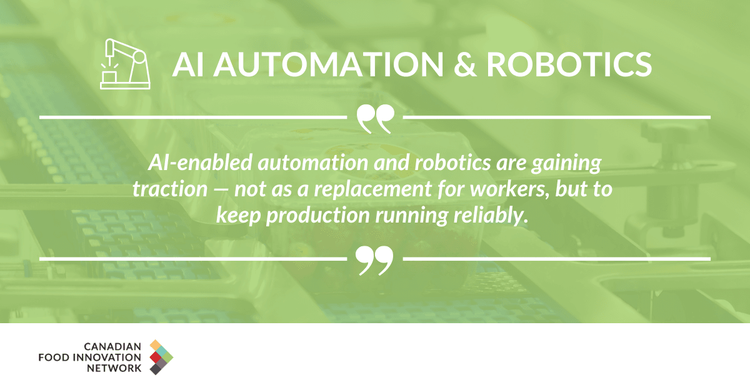
Canada’s food manufacturing sector has lived through years of labour shortages, rising input costs, and increasing pressure to maintain throughput. Many facilities are still running lines designed decades ago: equipment retrofits bolted onto legacy systems, inconsistent staffing levels, and manual tasks that slow down or destabilize production. Most plants are not chasing futuristic, fully autonomous factories. They are trying to maintain stable operations with too few hands and increasing regulatory and commercial demands. That is the context in which AI-enabled automation and robotics are gaining traction—not as a replacement for workers, but to keep production running reliably. AI-Guided Robotics in Real Food P rocessing Environments Several Canadian companies are developing automation systems specifically for the realities of food process ing — which features challenges like wet floors, variable products, washdown requirements, and tight margins. Cyberworks Robotics (Markham, ON) retrofits the tow tugs and forklifts food facilities already own. Their ceiling-mounted vision and AI navigation system turn conventional equipment into autonomous vehicles without floor markers or infrastructure shutdowns. Facilities get continuous material movement—critical for feeding packaging lines and preventing internal pileups—while reducing dependence on labour that is increasingly hard to staff. Gastronomous Technologies (Oakville, ON) automates high-volume, high-pressure tasks in quick-service kitchens. Their systems combine robotics with AI-driven vision and decision tools that track order flow and product quality in real time. By absorbing repetitive cooking and assembly tasks, they improve reliability during peak periods and reduce operational strain in one of the food sector’s tightest labour markets. ThisFish (Vancouver, BC) appl ies AI-powered computer vision to seafood processing lines. Instead of relying on manual inspection, their TallyVision platform evaluates defects, yield, and grading on every unit at production speed. The data supports consistent quality, reduces waste, and creates traceability records needed for export markets with rigorous verification requirements. These tools don’t eliminate the need for human oversight. They make production environments more predictable, especially when labour is thin or product variation is high. What Automation Really Solves The value of automation is often framed as cost reduction. In food manufacturing, the more fundamental issue is stability. Missing staff on a packaging shift can ripple across the supply chain. A single equipment issue can cause hours of downtime and thousands of kilograms of wasted food. AI models that guide robotic systems, monitor equipment condition, or adjust workflows aren’t replacing the workforce , but they are reducing uncertainty. They make it possible to operate older facilities more safely and predictably, without over-reliance on manual intervention. For SMEs, these tools also provide access to capabilities that previously required dedicated engineering teams. A small processor may not be able to hire an automation specialist, but it can deploy a modular robotic station that calibrates itself and integrates with existing equipment. A Competitive Requirement, Not a Luxury Export-oriented processors are under increasing pressure to provide consistency, traceability, and on-time delivery. Automation supports those requirements by reducing variability at the plant level. But the barriers remain familiar: upfront cost, integration complexity, and uneven access to technical expertise . Public-sector support—capital incentives, engineering assistance , workforce training, shared integration standards—can accelerate uptake, especially for SMEs that stand to benefit the most. Automation is no longer a hypothetical experiment : it is fast becoming part of the operating baseline for a resilient, export-ready food manufacturing s ector . Download the Full Whitepaper: AI and the Future of Canada’s Food Sector See how Canadian companies like Cyberworks , Gastronomous , and ThisFish are applying AI to product development, automation, food safety, supply chains, and waste reduction. Our latest whitepaper will help you understand the obstacles to adoption, the competitive advantages at stake, and the policy supports needed to strengthen Canada’s food innovation ecosystem. Available exclusively to CFIN members. Access the full report here !
Community Manager-
Catch Up: Protecting Your IP in China—What Canadian Foodtechs Need to Know
Missed our latest webinar on safeguarding your intellectual property (IP) in China ? You can now watch the full recording here . Hosted by CFIN’s VP of Programs, Alex Barlow, the session brought together experts from the Embassy of Canada to China, McCain Foods, and the Trade Commissioner Service (TCS). Together, they broke down how China’s rapidly evolving IP landscape works in practice—and what Canadian foodtech companies must do to avoid costly, sometimes irreversible mistakes. China remains a major opportunity for innovative food and agtech firms, but it’s also one of the most complex IP environments in the world. The speakers emphasized that success hinges on preparation, early action , and choosing partners and structures that prevent avoidable exposure. Below are three key takeaways from the session . 1. Register early—or risk losing your brand before you arrive. China’s first-to-file system creates real exposure for Canadian SMEs who delay trademark or patent filings. The panel shared several real examples i llustrating the consequences: Companies have had distributors walk away during due diligence because the brand wasn't registered in China. Others found competitors had already filed their trademark, forcing them into rebranding, litigation, or costly trademark recovery. The fix ? R egister early, register defensively, and include the Chinese-language brand name —which is how consumer s actually sear ch online and shop in-store. Neglecting this step ha s burned ev en major global brand s. Trademarks and patents registered in Canada do not carry over. China, Hong Kong, and Macau are separate jurisdictions . Be sure to p lan accordingly. 2. Enforcement is possible—and increasingly effective—but only if you’ve laid the groundwork. Challenges like those above contribute to a common misconception is that “China has no IP enforcement.” In reality, China has modernized its system significantly by : S trengthen ing trademark, patent, copyright, and anti-unfair-competition laws E xpand ing specialized IP courts I ncreas ing penalties, including multi-million-dollar awards to foreign companies But enforcement still requires strategic preparation: having proper registrations, documenting use, and working with on-the-ground legal experts who understand the procedural nuances. Even sending an initial takedown notice can resolve many e-commerce infringements early. The consistent message: don’t hesitate to enforce your rights . Small steps, taken early, often prevent bigger problems. 3. Protect what differentiates you through structure, not just contracts. For foodtech and ingredient innovators, the biggest vulnerability is often formulations, processes, or proprietary know-how . Regulators in China can require disclosure during product approvals, and the panel emphasized that companies must anticipate this before entering the market. Some strategies discussed: S hare only what is necessary for manufacturing or market access K eep sensitive processes modular so no partner sees the full system P erform IP clearance searches to avoid accidentally infringing local rights C hoose partners with great care and align incentives so they’re motivated to protect—not replicate—your IP The strongest companies design their China strategy so collaboration is possible without exposing the core of their competitive advantage. Why This Matters Canadian foodtech companies are increasingly looking to China for scale, supply-chain partnerships, or commercialization. The opportunity is real , but so are the risks for teams entering without a plan. This session makes one thing clear: IP protection isn’t a legal afterthought. It’s a business strategy, and the cost of getting it wrong can reshape your entire market entry. Watch the full webinar to dive deeper into the tools, resources, and examples shared by the experts . To dig even deeper, CFIN’s Going Global g uide to the top markets for Canadian food innovators features more export insight s and resources tailored to companies considering expanding into China and other global markets. Sign Up for Future Webinars Want to keep exploring complex industry topics? Check out our Events Page to sign up for upcoming webinars or in-person events in your region.
Community Manager-
Catch Up: Boosting Business Productivity with BDC’s Chief Economist – Recording Now Available
Missed Boosting Business Productivity with BDC’s Chief Economist ? You can now watch the full recording here . Hosted by CFIN CEO Dana McCauley in conversation with Pierre Cléroux , VP Research and Chief Economist at BDC, the session dug into Canada’s productivity gap, why it matters for food and beverage processors, and what practical steps SMEs can take to improve efficiency and margins without betting the farm (or factory) on massive capital projects. Three Key Takeaways 1. Productivity is about profit and resilience, not working harder. Pierre was blunt: if your business isn’t as efficient as it could be, you’re leaving profit on the table. Canada’s productivity sits well below the U.S. and G7 averages, and that shows up in thinner margins, weaker competitiveness, and lower business valuations when owners want to exit. For food and beverage processors, productivity means producing more with the same (or fewer) resources— labour , capital, inventory—while keeping quality high. That has a direct link to wages, food prices, and long-term viability, which is why both government and lenders are now very focused on it. 2. Start small, fix one real problem, and involve your team. The strongest case studies in BDC’s new business productivity study didn’t come from flashy AI transformations. They came from companies that picked a single , well-defined constraint and attacked it with intention . In every example, frontline employees were involved early—they identified waste, informed process changes, and were trained to work with new tools. Most projects paid back in roughly two years, often faster than owners expected. 3. Waiting to modernize is costly—for competitiveness and for your eventual exit. A recurring insight from Pierre was that older, “good enough” systems are becoming a liability. US firms invest nearly twice as much per employee in technology, and Canadian companies that delay modernization are already feeling the gap. Excess inventory, paper-based processes, underused equipment, and legacy systems erode profitability now and drag down valuation later—25% of Canadian businesses never manage to sell at all. For established processors, that means two things: start reducing waste (overproduction, waiting time, poor quality , bloated inventory) immediately , and use today’s mix of tax incentives, more affordable tech, and advisory support (from BDC and others) to plan and finance targeted upgrades. The outcome? A more efficient operation that can compete nationally and, eventually, abroad. If you’re a food or beverage processor trying to work smarter rather than just work more hours, this session is a useful reality check with concrete examples and next steps. Watch it here . Sign Up for Future Webinars Want to keep exploring complex industry topics? Check out our Events Page to sign up for upcoming webinars or in-person events in your region.
Community Manager-
Catch Up: Data that Delivers: Unpuzzling Consumer & Category Insights with NIQ Recording Now Available
Missed Data that Delivers: Unpuzzling Consumer & Category Insights with NIQ ? You can now watch the full recording here . The session brought together NielsenIQ’s Francis Parisien and Cedric Bélanger with founders Suzie Yorke (The Little Cacao Co., Love Good Fats) and Chris Magnone (Temple Lifestyle Brands / Thirsty Buddha, Rise Kombucha). Together, they broke down how Canadian food and beverage SMEs can use data to launch smarter, grow faster, and avoid expensive missteps—and why having NIQ category snapshots included in a CFIN+ membership gives smaller brands a level of insight they normally wouldn’t have access to. Three Key Takeaways 1. Your fundamentals matter more than anything—and data helps you get them right. B oth Cedric and Suzie hammered at a similar point: before you chase distribution, promotions, or innovation, you need tight positioning, a great-tasting product, and a price/value the category can sustain. NIQ data—especially the CFIN+ category snapshots—lets you check if your category is growing, whether private label is squeezing the middle, and what’s driving dollar vs. unit growth. It’s a fast, low-cost way to sanity-check your “3Ps” before you spend real money. 2. Retailers respond to category math, not founder passion. The panel showed how NIQ data lets SMEs speak the retailer’s language: defining the right competitor set, proving your subsegment is where the growth sits, and showing how your product brings in new shoppers or lifts basket size. You’ll hear concrete examples, from using flavour performance to win shelf space to using basket analysis to prevent a delist. The shift is simple but powerful: don’t argue for your brand—argue for the category outcome you create. 3. CFIN+ gives SMEs access to data they usually can’t afford—and why that matters. E arly-stage brands rarely have the budget for full NIQ subscriptions, but now they don’t need one. The new CFIN+ offering gives members access to 30+ NIQ category snapshots that answer the early, essential questions founders struggle with: Is this category worth entering? What’s growing? What’s stalling? Where’s the whitespace? Both Chris and Suzie described how data like this prevented wrong turns, helped them pick winning product s , and kept them focused on profitable growth. If you’re a founder or SME leader trying to shift from guesswork to evidence-based decision-making, this session is worth your time. Watch it here . Sign Up for Future Webinars Want to keep exploring complex industry topics? Check out our Events Page to sign up for upcoming webinars or in-person events in your region.
Community Manager-
Friday Food Innovation Round-Up – October 31, 2025
Canada’s food sector is starting to feel the rumble of big structural shifts. As Ottawa rewires its trade strategy and budget priorities, new capital and policy signals are emerging for innovators. This week’s roundup captures a few of the tremors. Recent highlights included: 🌐 Canada targets agri-food export growth beyond the U.S. 💸 A new $ 2 0M fund backs immigrant-led foodtec h ventures across Canada ♻️ Ontario innovators reframe food waste as a food security asset 🛠️ McCain, Danone, and Tim Hortons are all hiring for food innovation leadership roles Let’s dive in. Canada Trade Brief: Canada’s Export Strategy Is Being Rewritten Breaking down what’s changing in global trade relations —and what it means for Canad a’s food sector. What’s the Latest In a major pre-budget speech last week , Prime Minister Carney called for a “generational” reset of Canada’s economy—announcing plans to double non-U.S. exports over the next decade and fast-track industrial approvals tied to trade-enabling infrastructure. Days later, he departed for Southeast Asia, where Canada is pursuing expanded agreements with the Philippines, Malaysia, South Korea, and Japan, while also seeking to stabilize relations with China . Th is all follow s yet anoth er breakdown in U.S. trade talks and signals a more assertive shift toward long-term market diversification. What You Should Know Th e structural changes Carney described in his speech will shape the environment in which Canadian food companie s operate and grow: A new climate competitiveness strategy will be unveiled in Budget 2025, with implications for food processors navigating carbon pricing, packaging reform, and emissions-linked funding. The government will fast-track industrial buildouts through the Major Projects Office , which could accelerate timelines for expansions in processing, storage, and logistics infrastructure. Interprovincial trade frictions are a target: the One Canadian Economy Act , passed this summer, aims to streamline internal regulatory barriers—directly relevant to national food brands, co-manufacturers, and ingredient suppliers. Carney’s Asia tour and ongoing focus on strengthening non-U.S. trade relationships comes as Export Development Canada (EDC) reports a “ surge ” of agri-food companies exploring new markets , especially in clean-label, plant-based, and other innovation-centric subsectors. While the U.S. will continue to be a critical market , firms are increasingly targeting Southeast Asia and Latin America, where demand patterns are shifting faster than trade agreements alone can capture. EDC expects to increase export financing and compliance support for the agri-food sector as companies continue to look beyond the U.S . Key Takeaway For Canadian food businesse s, the era of exporting into a single dominant market is over. Ottawa is now building the physical and policy infrastructure for a multi-market strategy—but firms will need to plan for it too: more regulatory adaptation, more decentralized logistics , and tighter product-market fit across regions like Southeast Asia and Latin America. 💡 Food Innovation News Maple Bridge Ventures Raises $10 million for Fund Backing Immigrant Entrepreneurs Ottawa - based venture capital firm Maple Bridge Ventures has raised $10.2M toward a $20M fund backing immigrant-led foodtech , ag tech , and healthtech startups. Anchor LPs include Farm Credit Canada and Realize Capital Partners. The fund targets early-stage ventures in food production, processing, and traceability—recognizing immigrant founders as a key but underfunded force in Canadian food innovation. Food Waste to Food Security: Why Canada Can’t Keep Tossing its Advantage Writing in Food in Canada , CFIN’s Regional Innovation Director for Ontario, Marsha Druker, outlines how the province's startups are tackling food waste with scalable tech— from Index Biosystems’ edible traceability tags, to Nfinite Nanotech’s shelf-life-extending coatings, to Jitto’s smart sourcing for small grocers. Considering rising pressure on domestic food prices and U.S. import dependence, the piece positions waste reduction as both resiliency strategy and economic opportunity. Tyler Groeneveld Named as New CEO of Protein Industries Canada Protein Industries Canada (PIC) has named Tyler Groeneveld as its new CEO. A former board chair and Corteva exec, Groeneveld brings three decades of agri-food experience to the role. He steps in as PIC ramps up investment in plant-based ingredient manufacturing and food processing, including five new projects announced last month totaling $1.3M. 💰 New Opportunities Two support programs for early-stage food tech companies in southern Ontario are accepting applications—both with fast-approaching deadlines. Ontario Food Technology Pilot : Non-repayable funding for early-stage companies to validate and demonstrate food technologies developed in southern Ontario. Open to incorporated businesses with under $5M in revenue and innovations not yet commercialized. Apply by November 6, 2025 . Unpuzzling: Foodtech Ontario : A 12-week mentorship and cohort program helping post-farmgate foodtech startups prepare for market . Includes expert-led sessions, investor connections, and peer support. The next cohort starts January 7, 2026— apply by November 13, 2025. 🛠️ Job Openings W e ’ve got a bunch of cool food innovation jobs to share with you this week : Innovation and Development Scientist – Earth's Own Food Company – Delta, BC Innovation Product Developer / Développeur (e) de Produits – Nature's Touch Frozen Foods – Montreal, QC Industrial Technology Advisor - Applied Materials Science, Bio-Based Innovation – National Research Council Canada – Ottawa, ON Marketing Manager Innovation – The Hershey Company – Mississauga, ON Commercial Innovation Manager – Helaina – Remote Global Innovation Robotics Engineer – McCain Foods Limited – Fredericton, NB Head of Product Formulation & Innovation – Happy Mammoth – Toronto, ON Brand Manager Innovation (Contract) – Kellanova – Mississauga, ON Research and Development / Technical Innovation Intern – Riverside Natural Foods Ltd. – North York, ON Sr. Director, Equipment Innovation & Optimization, Tim Hortons – TDL Group – Toronto, ON Senior Manager, Innovation and Portfolio Strategy – Danone-CA – Boucherville, QC Tech-Focused Barista – Co. Innovation Centre – St John’s, NL Customer Success & Support Specialist – Icicle Technologies – Vancouver, BC Have an open position you’re looking to fill? Be sure to post it on the Food Innovator Career Hub ! 🌟 Highlights from YODL Catch up on this week’s top YODL conversations … Seeking Collaboration: Food-Safe Thermal System for Aircraft Meal Service Tips for Non-Technical Food Founders Outsourcing Development Work Do you have something worth including in our next Friday Food Innovation Roundup? Reply to this post to let us know about your news, events, or job openings! Thanks for reading!