Canada is home to a diverse and dynamic food and beverage industry, supported by educational programs that train the next generation of chefs, brewers, entrepreneurs, and innovators. This roundup highlights 50 standout programs across the country, from top culinary schools and hospitality management courses to cutting-edge research initiatives and sustainability-focused training. Whether you're an aspiring professional, educator, or industry enthusiast, these programs provide valuable insights into the evolving world of food and drink in Canada. BC & Yukon Vancouver Community College UBC BCIT LaSalle College (Vancouver) UBC: Food, Nutrition, and Health Okanagan College Vancouver Island University University of Fraser Valley Northern Lights College North Island College Yukon University Selkirk College Thompson Rivers University Kwantlen Polytechnic University Prairies Saskatchewan Polytechnic University of Alberta University of Saskatchewan University of Manitoba SAIT NAIT Manitoba Institute of Trades & Technology International College of Manitoba Ontario Niagara College Humber College Le Cordon Bleu Ottawa George Brown College Fanshawe College Brock University University of Guelph Toronto Metropolitan University Loyalist College Georgian College Conestoga College Durham College Centennial College Canadore College Algonquin College Trent University St. Lawrence College St. Clair College Sault College Lambton College Confederation College Quebec McGill University LaSalle College Bishop's University Atlantic Canada University of PEI Memorial University Cape Breton University
Community Manager-
50 Food & Beverage Programs - Vancouver Island University
Crafting a Career in BC ’ s Wine Industry: VIU ’ s Wine Business Program The Wine Business program at Vancouver Island University is a comprehensive one-year certificate course designed for those passionate about pursuing a career in the BC wine industry. The program combines practical experience with academic learning in viticulture, wine business practices, marketing, and tourism. Program Highlights: As a student, you ’ ll have the chance to immerse yourself in hands-on experiences at local vineyards and wineries, gaining insights into the entire winemaking process. This practical foundation is then complemented by academic courses in viticulture, wine business practices, marketing, and tourism. A standout feature of this program is its flexibility. Whether you ’ re looking to study full-time for a year or prefer a part-time option spread over two years, VIU has you covered. Located in picturesque Nanaimo, BC, VIU provides an ideal setting for your wine education journey. With a curriculum designed to integrate viticulture essentials with business acumen, VIU ’ s Wine Business program offers a holistic understanding of the wine industry. Students can also earn credits that can be applied toward a Bachelor of Business or a Hospitality and Tourism Management program, opening doors to a wide range of future career prospects. The program includes seven courses and focuses on the broader aspects of the wine industry. In addition to viticulture and winemaking, students delve into wine marketing, exporting, and the vital role of wine tourism. C ourses cover a wide spectrum, from wine marketing and appreciation to beverage theory and the management of wine tourism. The program also offers elective courses in consumer behavio u r, entrepreneurship, and festival management . What You’ll Leave With: Upon graduation, a world of opportunities awaits you in BC ’ s wine industry. Whether you dream of managing a vineyard, excelling in wine s ales and marketing, or even opening your own restaurant, VIU ’ s Wine Business program provides the knowledge and skills to make your wine-related ambitions come true. Career options span winery/vineyard management, retail sales, wine marketing representation, hotel management, culinary arts, a gri - tourism development, and s pecial events coordination. V ideo/Social / Media : VIU YouTube Video
Community Manager-
Cellular Food in Canada
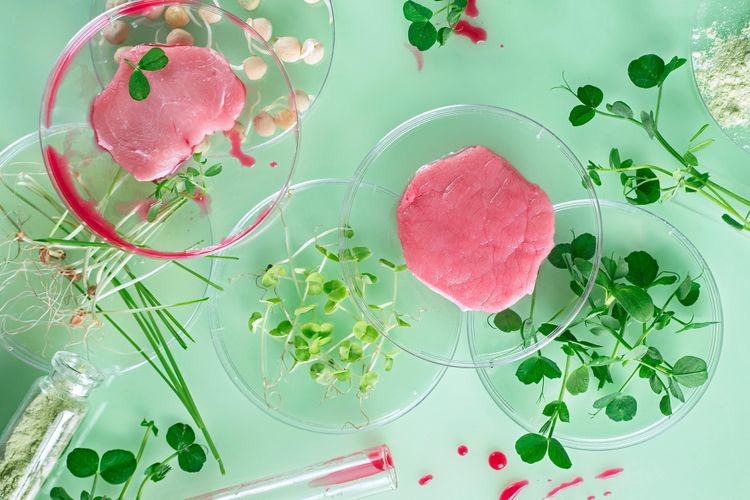
The past few years have proven how susceptible Canada’s food industry is to world events, supply chain disruptions and climate changes. New food production technology, such as cellular agriculture, has the potential to alleviate some of these challenges, while creating commercial opportunities and building a more sustainable, resilient food system. What is it? Cellular food – also known as engineering biology, synthetic biology or cell-cultivated products – is the production of food and textile products without using animals or land. Cell cultures harvested from animals, plants or micro-organisms are grown in the lab through tissue engineering or precision fermentation to produce: Cultivated proteins such as chicken, beef and seafood Fermented products like dairy, eggs, honey and chocolate Ingredients to add to products to create hybrid foods including proteins, enzymes, flavour molecules, vitamins, pigments and fats Textiles such as leather, silk and wool Why you should care As global population continues to grow, so does demand for protein, while access to land and other resource inputs become more scarce. Alternative agriculture could be an answer to food scarcity, concerns about animal and environmental welfare, cost inflation and resource challenges due to climate change. Compared to conventional agriculture, cellular agriculture production, is much less energy intensive, produces less greenhouse gas emissions, and has a much lower overall carbon footprint. With our strong food infrastructure, reputation for food safety, biotechnical expertise, and federal support for alternative protein production, Canada is well positioned to become a leader in cellular agriculture. The 2021 report Cellular Agriculture: Canada’s $12.5 Billion Opportunity in Food Innovation from Ontario Genomics and the Food and Agriculture Institute at the University of the Fraser Valley found that the international cellular agriculture market will reach US$100 billion by 2032. Canada’s food industry has the potential to take $12.5 billion that market, while creating up to 142,000 high-paying jobs. Opportunities in Canada Engineered plant proteins are already in the Canadian market, and by all estimates, precision fermented products are expected to appear before cultured meat products. Current Canadian regulations consider food produced through cellular agriculture as a novel food, and products are approved on a case-by-case basis. Here are a few Canadian start-ups making headlines: Because Animals – This Toronto-based pet food company uses cultured ingredients such as probiotics and nutritional yeast to create nutrient-rich cat and dog food designed to help digestive issues. Future Fields – Edmonton, AB-based Future Fields is a R&D producing growth media products that can be used to create commercialized cultivated proteins in a safe and sustainable manner. Cell-Ag Tech – Toronto’s Cell-Ag Tech is doing R&D on cell-cultured fish and seafood. New Harvest International non-profit research institute New Harvest , which promotes the science behind cultured meat through research, funding and a conference , now has a Canadian branch.
Community Manager-
Other Articles
IN 30: Atlantic Canada’s Food Ecosystem
Welcome to YODL! In addition to daily original content, YODL helps CFIN Members find new partners , resources , and funding opportunities to grow their food business. Learn more about this growing community and become a CFIN Member (for free!) today . Sometimes, all it takes is 30 minutes to learn the ins and outs of new food technologies and trends that are transforming the food and beverage industry. In this series, we’ll dig into a food innovation topic and link you to the best content and resources so you can become a master on the topic in 30 minutes (or less!). This week, we’re looking at food and beverage innovation and resources in Atlantic Canada. The Overview Government of New Brunswick - Atlantic Agriculture Research and Innovation Initiative The initiative aims to encourage Atlantic Canadian collaboration and provide financial assistance on research and innovation projects in the agriculture, agri- food and agri-product sectors in Atlantic Canada. University of Prince Edward Island - Strengthening Atlantic Canada’s plant-based food and ingredient ecosystem Protein Industries Canada announced a new project to grow the plant-based foods ecosystem in Atlantic Canada. Government of Newfoundland and Labrador – Our Food. Our Future The Department of Fisheries and Land Resources, Agriculture Production and Research Division, Agriculture and Agri-Food Canada and Memorial University – Grenfell Campus are conducting agriculture and food related research in Newfoundland and Labrador. Government of Nova Scotia - Food and beverage strategy: engagement The Government of Nova Scotia is developing a food and beverage strategy that will help improve access to and increase the production of healthy, local food. YODL - From biowaste to sustainable packaging Atlantic Canada’s seafood industry is challenged with how to deal with processing by-products and waste more sustainably. YODL - Maritimes brewers, this one is for you! Agriculture and Agri-Food Canada has announced a projec t led by Dr. Aaron Mills, r esearch s cientist at AAFC, that aims to grow malt barley varieties suitable for the Maritimes. Resources NRC Marine Research Station The Marine Research Station in Ketch Harbour, NS has experts in algal biology, marine biology, aquaculture, analytical chemistry, and applied nutrition. The algal research facility provides resources and expertise for the cultivation of seaweeds and microalgae to produce bioactives and other compounds. RPC Science & Engineering With locations in Fredericton and Moncton, NB , RPC offers research and development and technical services to clients in New Brunswick and in 30 countries around the world. Canada's Smartest Kitchen Canada’s Smartest Kitchen at Holland College in Charlottetown, PE is a food product development centre specializing in moving projects from concept to commercialization. It is also the research division of the Culinary Institute of Canada and an NSERC Technology Access Centre. Centre for Aquaculture and Seafood Development The Centre for Aquaculture and Seafood Development in St. John’s, NL offers t echnical services in seafood processing, aquaculture, and marine bioprocessing, in the areas of applied research, product and process development, advisory services, and training. BioFoodTech Charlottetown, PE’s BioFoodTech provides professional technical services to food and bioprocessing companies. Emergence Emergence is a bioscience incubator that accelerates the growth of Atlantic Canadian startups and early-stage companies moving from ideation to commercialization. The Verschuren Centre The Verschuren Centre in Sydney, NS is an independent, not-for-profit clean technology development and deployment facility offering a collaborative space that allows clients to advance technology cost-effectively, while having the support required on the path to commercialization. Companies you Should Know Chinova B ioworks The Fredericton , NB - based foodtech company uses upcycled white button mushroom stems to create a natural clean label preservative that is vegan, kosher, halal, and allergen-free . CleanBands Charlottetown, PE-based CleanBands is building handwashing compliance systems that help food workers ensure they are following handwashing policies. Copol International North Sydney, NS-based Copol International Ltd. manufactures cast polypropylene film for the flexible packaging industry, mostly for food packaging and often for high heat applications such as sterilizing. Milk Moovement Halifax, NS-based Milk Moovement creates supply chain management software for the dairy industry. Saltwinds Coffee Company Ltd. Douglas, NB-based Saltwinds Coffee Company’s aim is to offer a carbon neutral cup of coffee, something the company began by re-inventing coffee roasting itself to turn it into a zero-emission process. Overtime If you’ve got more than 30 minutes, these are for you: YODL - Blockchain and the Food Industry
Community Manager-
Staff Picks – Ella Baker
Welcome to YODL! In addition to daily original content, YODL helps CFIN Members find new partners , resources , and funding opportunities to grow their food business. Learn more about this growing community and become a CFIN Member (for free!) today . A lot of material comes across our desks at CFIN, and we love to share new information with YODLers ! This one in a series of articles highlighting what CFIN staff are reading, listening to, watching, and posting. Here ’ s CFIN ’ s Administrative Specialist Ella Baker . What are You Reading! I am currently reading Relax : A Guide to Everyday Health Decisions with More Facts and Less Worry by Timothy Caulfield . T his book debunks a lot of daily myths which can cause unnecessary stress in our lives. With information consistently changing about how many cups of coffee you should drink, whether it’s safe for your kids to walk to school , and how many hours of sleep you should get, it provides a more relaxed approach so you can live your daily life without the stress. What are you listening to? I like listening to podcasts, and r ight now I am listening to Roz and Mocha at Kiss 92.5 . I f you want to laugh while you work I highly recommend it. Who are you following? I don’t really follow social media. What are you watching? I am watching a lot of videos on YODL so I can get caught up with what’s happening in this industry. A few of them include : AI and the Food Industry – An interview with the Alberta Machine Intelligence Institute (AMII) The Future of Cellular Food Regulations in Canada Parlons d'innovation : Nouvelles initiatives d’étiquetage sur l’impact environnemental des aliments . What are you posting about? I don’t do social media! .
Community Manager-
Company Spotlight – Freshline
Welcome to YODL! In addition to daily original content, YODL helps CFIN Members find new partners , resources , and funding opportunities to grow their food business. Learn more about this growing community and become a CFIN Member (for free!) today . This is one in a series of interviews with CFIN member companies that have successfully applied for and received funding . Vancouver, BC-based Freshline provides e-commerce software th at allows food distributors to receive wholesale orders digitally to streamline their processes and save on labour costs . Freshline received $83,908 in funding for a project to bring increased innovation to the global food distribution supply chain. The company is building out the core functionality of its B2B e-commerce platform to enable food distributors and retailers to transact online in new ways. We talked with Freshline co-founder and CEO Robert Kirstiuk to find out more about the project and the company’s plans. Q: What is your company’s mission ? A: To bring food distributors into the 21 st century, allowing them to operate their business more intelligently and efficiently , and u ltimately creating a more resilient food supply chain where specialized distributors can compete. Q: Why did you apply for this funding and how will you use it? A: We will use this funding to strengthen our product’s competitive edge in the space and add more value to the companies we work with. Q: What excites you most about working in this area of the food industry? A: We have seen a real, tangible impact of using our software to the bottom line of the food distributors we work with. We are very proud of this. Q: Why is collaboration so important for accelerating innovation in the food industry? Is it difficult to find good collaborating partners, and what would make the process easier? A: Food is a historically low-tech industry. By increasing collaboration we increase the likelihood of technology being adopted and succeeded in the food industry. Q: Please comment on the importance of public funding to help companies clear innovation hurdles and access leveraged funds. A: It ’ s super critical for this to be the case as it helps Canada maintain an edge in the modern world economy , and compounded and aggregated over decades this helps Canadians maintain a high standard of living. Q: Looking ahead, what’s on the horizon for your company? A: Hopefully more growth and an expanded product offering! Q: What are your passions or hobbies outside of work. A: I like to hike and go running! Q: If you had to pick one person to make you a meal, who would you choose? A: My Mom.
Community Manager-
50 Canadian FoodTech Resources – Food & Beverage Innovation Centre at Niagara College
Welcome to YODL! In addition to daily original content, YODL helps CFIN Members find new partners , resources , and funding opportunities to grow their food business. Learn more about this growing community and become a CFIN Member (for free!) today . Canada has an extensive range of research centres, food incubators, accelerators and labs supporting food and beverage innovation through the research they do and/or the services they offer. Each week throughout 2023, we’ll be highlighting an organization that’s supporting food innovation in Canada. Name: Food & Beverage Innovation Centre at Niagara College ( formerly named the Canadian Food and Wine Institute Innovation Centre ) , Daniel J. Patterson Campus. Location: Niagara-on-the-Lake, ON Mission: The FBIC works with businesses and the community to provide real-world solutions through innovation activities. Focus: The centre offers services to support industry innovation and commercialization of new products and processes for food, beverages and cannabis edibles. Services: FBIC offers expertise in developing new food and beverage s , cannabis edibles and food science , including research for improving existing products, entering new product categories, increasing product quality and ease of operations, and assisting with ingredient sourcing, co-packing sourcing and packaging . Other R&D services include: providing guidance on food safety and regulatory standards; a small batch beverage processing pilot plant to support R&D and innovation; sensory analysis and consumer acceptance testing; hops analysis; and beverage analytical services to support commercialization of new products and processes for beer, cider, mead, kombucha, distillery and wine. Commercial services offered at FBIC include help with: market information, competitive analysis, prospect lists, advertising/marketing plan, exporting, and e-commerce and web design and development. What you need to know: FBIC offers an array of facilities, including: an R&D kitchen, beverage analytical labs; a beverage pilot processing plant; cannabis edibles R&D labs; chemistry lab; a shelf-life and packaging lab; artisanal distillery; brewery and hopyard; winery and vineyard; and industrial culinary kitchens. The centre’s staff includes faculty and student researchers from several programs at Niagara College , including Culinary Innovation and Food Technology, Culinary Management, Brewmaster , Brewery Operations Management, Artisan Distilling, Beverage Business Management, Winery and Viticulture Technician, and Wine Business Management. Notable News: This year Niagara College was named the number 1 top research college in Ontario and the number 2 top research college in Canada by Research Infosource Inc. in its annual Top 50 Research Colleges report. Get Involved: Contact Krystle Grimaldi, director, Research & Innovation, Daniel J. Patterson Campus, at 905 641-2252 ext. 4277 or research@niagaracollege.ca , or reach out to our Regional Innovation Director for Ontario, Linda Fox .
Community Manager-
Guest Blog: Can AI help with Marketing and Communications?
Welcome to YODL! In addition to daily original content, YODL helps CFIN Members find new partners , resources , and funding opportunities to grow their food business. Learn more about this growing community and become a CFIN Member (for free!) today . We are all learning about the capabilities of artificial intelligence (AI) and the applications it might have in our industry. AI can be perceived as incredibly powerful and game changing or frightening and taking over what humans do . Regardless of your perspective , it is here and we are surrounded by examples of it. It is true we have been living with this in many forms, but the recent explosion of attention on applications such as Chat GPT has made it much more prevalent. My understanding is the applications comb millions of websites for content . They use this learning to enable them to complete tasks , as outlined by the user. The response time is very fast and the applications have the ability to create responses in a format suitable for different purposes. In food and beverage there will be many opportunities to use this technology. Marketing & Communications We expect brands to communicate regularly with consumers over social media and other mediums. The AI applications can write copy for this communication and format it to fit the platform you are using. For example , they can write it for Facebook or Linked In . They can also create the content for direct communication to your community of consumers. AI can even write your holiday message to your online community if you choose to send one. Providing ideas and recipes for consumers to use food and beverage products is an important component of most marketing strategies. AI can be a source for recipes and other ideas to use your products. Sharing this type of information with your target market positions the supplier as a valuable resource and should drive trial and use. Almost every food and beverage business has a website and so many of those brand owners will tell you the website needs work or a refresh. AI does have the ability to generate some of the content for websites. Providing information to a target market that compliments a product does increase the value of a website. Research & Development AI is becoming an option to the traditional Google search , and f ood businesses can do research with AI to understand the potential for specific market segments. The difference between AI and Google is that AI will do the work for you, as opposed to going through multiple websites to get the information you need. The other difference is that with free versions of applications such as Chat GPT, you are not aware of the sources they are using to compile the information. We should all be weary of trusting any information gleaned from the Internet. After exploring the capabilities of AI, it is apparent this can be a valuable tool , but it does not replace the human element required for brands to stand out and create space in the market. The best analogy is to view AI as a piece of equipment on a processing line. Each piece of equipment you add can improve efficiencies , because they can do it faster or more accurately than humans. AI will allow you to create content faster but you still need to make it your own if you want to stand out and ensure it really does reflect your brand positioning. It can be a good starting point, but a person who can add critical thinking and understand the brand will ensure it is unique. This article was written by a human being. Peter Chapman operates SKUFood in Halifax, N.S. SKUFood works with producers and processors to help them get their products on the shelf and in the shopping cart. Contact him at peter@skufood.com
Community Manager-
IN30: Cashless Grocery
Welcome to YODL! In addition to daily original content, YODL helps CFIN Members find new partners , resources , and funding opportunities to grow their food business. Learn more about this growing community and become a CFIN Member (for free!) today . Sometimes, all it takes is 30 minutes to learn the ins and outs of new food technologies and trends that are transforming the food and beverage industry. In this series, we’ll dig into a food innovation topic and link you to content and resources so you can become a master on the topic in 30 minutes (or less!). This week, we’re looking at cashless grocery transactions. The Overview YODL – Shop to the Future Grocers are blending convenience with smart technology to create a more seamless instore shopping experience that will keep customers coming back. Canadian Grocer – What Retail Payment Trends are Here to Stay? Contactless is in and cash is out as savvy retailers give shoppers new ways to pay . YODL - Consumer Demands, Technology and Changing Access to Food This executive roundtable looks at consumer demands and changing access to food, with input from Ken Keelor, CEO of Calgary Co-op , and Arjan Stephens, president of Que Pasa Mexican Foods and executive vice-president of Nature’s Path Foods . The Canadian Connection YODL - The Future of E-Commerce: Health Canada and CFIA Propose Changes to Online Requirements for the Sale of Food Glenford Jameson discusses Health Canada and the CFIA ’s consultation on the development of voluntary guidance for providing food information for foods sold to consumers for e - commerce. Global News - Cashless Canada: Why Canadians are L eaders in the C ashless T rend Whether you pay by debit, credit, mobile wallet or smartwatch, speed and convenience are driving the way Canadians are choosing to pay . YODL - Are Screens The New Stores? W hy are Canadians still so hesitant to purchase food products online, given that consumers are familiar with the technology and the majority of them have access to the Internet? Social Media @Instacart – (Twitter) Instacart is one of the world’s largest online grocery services. @googlepay – (Instagram) Google Pay is a mobile payment service , or mobile wallet , that allows consumers to make contactless payments for goods on an app, online and in person. @freshdirect – (Facebook) Another online grocery service, FreshDirect includes produce, prepared deli items and meal kits. Overtime If you’ve got more than 30 minutes, these are for you: YouTube - Aisle 24 in Concord Park Place
Community Manager-
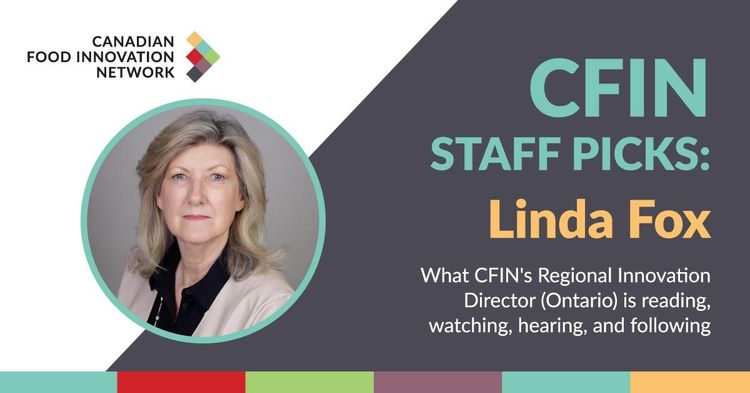
Staff Picks – Linda Fox
Welcome to YODL! In addition to daily original content, YODL helps CFIN Members find new partners , resources , and funding opportunities to grow their food business. Learn more about this growing community and become a CFIN Member (for free!) today . A lot of material comes across our desks at CFIN, and we love to share new information with YODLers ! This one in a series of articles highlighting what CFIN staff are reading, listening to, watching, and posting. This time we’re checking in with CFIN’s Regional Innovation Director for Ontario Linda Fox . What are you reading? I’m a big reader and will read almost anything (including the back of the cereal box). Mostly I tend toward Criminal Minds - type novels , and at the moment I’m diving deep into Nordic Noir – those are some very dark stories coming out of Scandinavia! On occasion I like to pick up a classic that I’ve not read and my last one was Anna Karenina , which I found surprisingly relevant and contemporary. Business-wise, I’m a fan of Malcolm Gladwell . And, no specific author, but I love to learn about the latest in marketing and consumer behaviour, so whatever comes across my desk or my feed (or as a recommendation, hint hint). Oh, and I LOVE travel books when trip planning. What are you listening to? Classic Rock for me, please. But , a friend recently introduced me to Twin Flames , an Indigenous duo that not only creates beautiful music, but also shares thought - provoking stories from their culture and experiences. I also recently discovered Chris Stapleton (listening to Tennessee Whiskey as I write ), and I do like me some Patsy Cline from time to time. Eclectic or weird , your call ! While I love the idea of p odcasts, I’m more of a reader (see above) and so haven’t really cultivated a lis t. I do think I’m missing out though, so that’s a project for me in the coming months. Who are you following? Several news channels, including CBC and BBC . Too many food and tech experts on LinkedIn to list ! What are you watching? Thrillers, Ted Lasso , Brit ish cop shows . I a lways keep my eye open for good documentaries. What are you posting about? I make a lot of use of LinkedIn to talk about the projects our members at CFIN have underway, and the programs we have in that realm. I remain amazed each day at the breadth of solutions our Canadian innovators are coming up with.
Community Manager-
AI + Food – Gastronomous Technologies
Welcome to YODL! In addition to daily original content, YODL helps CFIN Members find new partners , resources , and funding opportunities to grow their food business. Learn more about this growing community and become a CFIN Member (for free!) today . This series showcases Canadian foodtech companies that are using AI to solve a wide variety of industry challenges, including improving efficiency, pricing analysis, inventory management, quality control, food safety assurance and more. In this installment, we’re featuring Oakville, ON-based Gastronomous Technologies . What They Do Gastronomous creates smart commercial kitchens using automation, interconnected robotics and software to solve foodservice challenges such as labour shortages, consistency, profitability , supply chain management and waste disposal. How They’re Using AI According to co-founder and COO Kristian Tazbazian, the company uses AI in its in software to analyze data in order to improve operational and user efficiency. In the Media YouT u be – The Dawn of a New Era - Gastronomous
Community Manager-
50 Canadian FoodTech Resources - Innofibre
Welcome to YODL! In addition to daily original content, YODL helps CFIN Members find new partners , resources , and funding opportunities to grow their food business. Learn more about this growing community and become a CFIN Member (for free!) today . Canada has an extensive range of research centres, food incubators, accelerators and labs supporting food and beverage innovation through the research they do and/or the services they offer. Each week throughout 2023, we’ll be highlighting an organization that’s supporting food innovation in Canada. Name : Innofibre: Centre d’innovation des produits cellulosiques Location: Trois-Rivières, QC Mission: To c ontribute to the technological acceleration of bioprocesses and bioproducts in Quebec. Focus: Innofibre helps companies develop innovative cellulosic and biomass-based products . Services: The company works with clients in its analytical laboratories and pilot facilities to carry out applied research on cellulosic products , such as functional and bioactive papers and thermoformed products, as well as bioproducts such as biomass . For cellulosic products, Innofibre offers equipment and technical expertise for fibre functionalization, mechanical pulping, pulp treatment, surface treatment, and R&D in thermoformed cellulosic pulp eco-products. As well as R&D on biobased products, the centre also offers pretreatment and biorefining of biomass , biomass conditioning, thermochemical conversion, and the conversion of algal biomass into biocrude. What you need to know: Innofibre is a key player in the bioeconomy and in the recovery of biomass and waste material. Its mu ltidisciplinary team helps develop innovative solutions and products as alternatives to synthetic chemicals, for the reduction of residual material, and for the promotion of al ternatives to fossil fuels . Notable News: Innofibre hosts the NSERC College Industrial Research Chair in Ecodesign for a Circular Economy of Thermoformed Cellulose Packaging Materials. Innofibre researcher Tarik Jabrane is the chair . Get Involved: Contact Chlo ӫ Boulanger, administrative project manager at Innofibre , at chloe.boulanger@cegeptr.qc.ca or 819-995-2649 , or reach out to our Regional Innovation Director for Quebec Julie Daigle .
Community Manager-
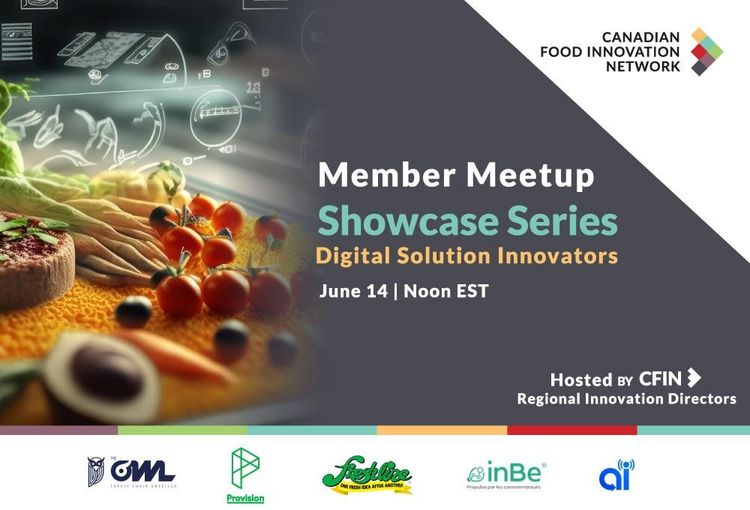
Member Meetup Showcase Series Preview
Welcome to YODL! In addition to daily original content, YODL helps CFIN Members find new partners , resources , and funding opportunities to grow their food business. Learn more about this growing community and become a CFIN Member (for free!) today . CFIN regularly holds bi-weekly virtual member meetups , where CFIN Members can connect with each other and our Regional Innovation Directors. We’re using this Wednesday’s virtual Meetup to highlight five digital solution innovators . On June 14, 2023 , we’re hosting a special Member Meetup focus ed on Digital Solutions Innovators . We’re featuring five digital innovators that are bringing new ideas , products, and solutions to the food sector. We ’l l hear from all five companies, learn more about their tech, and identify ways CFIN members can collaborate with these innovators. Here’s a sneak peak of our digital innovator s: Agyle Intelligence Mount Stewart, PE -based Agyle Intelligence offers digital transformation solutions for food producers, processors, packers and supply chains , with cloud-based technology that helps automate the delivery of insights, trends and reports in real-time through digitized forms and files. Developed in collaboration with industry partners, Agyle’s solutions fit seamlessly into a company’s processes without interruption. Freshline Vancouver, BC’s Freshline is a wholesale direct grocery marketplace for foodservice. The company provides a B2B e-commerce platform for food wholesalers, distributors and retailers that allows them order and complete fulfillment online. Freshline is developing its platform to automate and streamline sales and operations by including a turnkey integration management tool for suppliers that enables them to connect their ERP, accounting, inventory or operations management platform to the platform. InBe Based in Quebec City, QC, InBe works with innovative consumer brands from a variety of industries, including food and beverage manufacturing, t o provide consumer feedback on concepts, products and services in real-time to better guide decision making. InBe offers different methods of capturing consumer interests, including through testing based on client concepts, value propositions and products, as well as market research and validation. It also offers workshops on how to design, implement and optimize a front-end innovation system. The Owl Solutions Waterloo, ON-based The Owl Solutions offers businesses a data intelligence platform designed to identify inefficiencies within their supply chains. By providing real-time analytics on key performance indicators companies can monitor , detect and solve performance issues more quickly and efficiently. The Owl Solutions works with clients to identify areas of improvement, and to create and implement st rategic solutions. Provision Analytics Calgary, AB’s Provision Analytics features a digital platform that captures and analyzes food safety and quality data, allowing food and beverage businesses to create cloud-based records and policies, while streamlining supplier management, traceability and food safety culture. The platform ensures process data is easily accessible for audits and analytics, as well as for eliminating barriers to compliance and reducing certification risks through easy-to-access embedded schedules, rules and instructions. Click here to register for this event.
Community Manager-
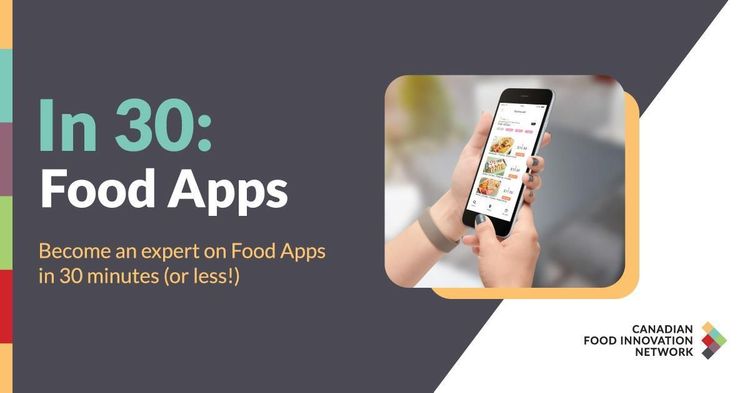
IN 30: Food Apps
Welcome to YODL! In addition to daily original content, YODL helps CFIN Members find new partners , resources , and funding opportunities to grow their food business. Learn more about this growing community and become a CFIN Member (for free!) today . Sometimes, all it takes is 30 minutes to learn the ins and outs of new food technologies and trends that are transforming the food and beverage industry. In this series, we’ll dig into a food innovation topic and link you to content and resources so you can become a master on the topic in 30 minutes (or less!). This week, we’re looking at food apps, including those for food ordering and delivery, grocery purchases, product reviews, restaurant reservations, nutrition tracking, purchasing deals, meal kit subscription services, food waste reducing, recipes and more. The Overview YODL - The Rise of Food Apps As well as the usual food apps that help people cook dishes, review restaurants, and order groceries, consumers are downloading apps that allow them to purchase discounted products that would otherwise become food waste or recover upcycled items destined for the dump. Businessofapps.com - Food Delivery App Revenue and Usage Statistics (2023) Food delivery has expanded from takeaways to anything and everything, adding billions of dollars in potential revenue capture. YODL - New Pathways to the Pantry – Top Five Takeaways Canadian consumers expect to access food conveniently, efficiently and safely. Thanks to the increase in online ordering, delivery and other cashless transactions they’re finding innovative options to meet their demands. And if one food business isn’t offering those options, they’ll quickly move to one that can. The Canadian Connection Genymoney.ca - 3 Food Waste Apps in Canada (That Save You Money) Canadian food apps that save consumers money while reducing food waste. Savvynewcanadians.com - Best Food Delivery Apps and Services in Canada 2023 Data on the most popular food delivery apps in Canada . YODL - 50 Canadian FoodTech Resources – Caddle Through its app, Caddle garners consumer data and insights for consumer packaging goods companies to use during decision making. Vividata – The Top Food Delivery Apps in Canada An estimated 4.8 million Canadian adults (or 16%) have a food delivery app downloaded on their mobile device. Social Media @skipthedishes – (Instagram) Skip the Dishes (part of food delivery marketplace Just Eat Takeaway) is one of the world’s most popular food ordering and delivery services. This year the company launched its AI-powered Inflation Cookbook as part of its Skip Express Lane service. @myfitnesspal – (Facebook) My Fitness Pal is a nutrition and fitness tracking app available globally. @McDonald’s – (Twitter) According to Similarweb , the McDonald’s app is the number-one food and beverage app used in Canada. Overtime If you’ve got more than 30 minutes, these are for you: YouTube - How Much Does It Cost to Build Food Delivery App in 2023
Community Manager-
The Future of Food as Medicine in Canada
Welcome to YODL! In addition to daily original content, YODL helps CFIN Members find new partners , resources , and funding opportunities to grow their food business. Learn more about this growing community and become a CFIN Member (for free!) today . To conclude our week of food as medicine, we’re looking at the future of the sector in Canada. We asked CFIN’s Dana McCauley , CEO, Alex Barlow , Vice President of Programs, and Lavina Gully , Regional Innovation Director for BC and Yukon, for their views on the future of food as medicine. Here’s what they had to say: Q: What advances in personalized nutrition are we likely to see within the next decade? Alex: W e are likely to see more frequent and accessible options for consumers to get deep insights on their nutrition needs through DNA profiles, blood tests, or other tools. I am hopeful that it democratises access to our own health data, making it easier to assess our actual health metrics as we need it rather than having to convince a doctor to run a blood or other kind of test. How many times do you take a whack of Vitamin D in the winter as a Canadian – what if you could access your actual levels and supplement accordingly ? Other critical tests such as metabolic or lipid panels could give us deeper insights as we seek to live healthier – certainly more details than just stepping on the weight scale. Dana: The good news is that industry and consumers are more aware of how what we eat affects our health. The bad news is that this awareness hasn’t progressed in tandem with progress in health science that is extending lifespans. As a result, we have a lot of people living longer, but not necessarily better. In the next decade, there is an opportunity to make progress in lifelong nutrition science and education to ensure that people are not only living longer, but feel great every day . We see hints of this progress on the horizon with companies like Loblaws which have purchased gyms, drug stores and even medical device companies. Lavina: We’ll see w earable devices and sensors that will provide real time tracking and monitoring of an individual ’ s health and integration of this data into nutrition planning. By combining health data with AI technology, personalized insights can be generated to help people better manage their health. We’ll also see g reater focus on disease prevention vs treatment via continued research into nutrigenomics. More will be learned about gene-diet interactions , but funding is critical to provide high-quality evidence in the form of randomized clinical trials. Q: How will the trend toward personalized nutrition impact the Canadian food and beverage industry? Alex: Firstly, this is building on the existing trend for healthier food products and cleaner ingredient lists which is already impacting many brands and food manufacturers in North America. If we add in AI making personalized recommendations, providing recipes and shopping lists, and directing consumers on where to shop, it will be a big shift for the industry as retailers and brands seek to redirect their marketing efforts and get listed on these tools or platforms to be among the list of recommendations. We have already seen some of our meal kit members invest in these types of technologies. Even grocery e-commerce platforms are moving towards these types of branding and recommendation options, but to have it truly personalized based on your individual health needs will be an added level to consider and include in their growth strategies. Dana: I imagine that we will see new kinds of specialty aisles and perhaps even online stores emerge that specialize in food as medicine. I can imagine that food businesses will start to pay more attention to corporate insurance plans , and companies such as Manulife are already starting to work with companies who are developing foods that address this topic and may in the future offer reimbursement or lower premiums for people who adopt these kinds of foods into their diets. This change will require that food companies learn new things and have messaging for a new group of stakeholders. Lavina: To deliver effective personalized nutrition products and tools, the industry will need access to talent with specialized skillsets in nutrition, food science, data analysis and machine learning. Think bioinformatics with a food twist. Also, partnerships and collaborations with healthcare professionals will need to be developed as they play a crucial role in guiding individuals towards personalized nutrition plans. Q: What should food companies understand about the potential growth of this trend and how should they be responding? Alex: I think awareness is critical, and the understanding that this space is set to accelerate very quickly, with a lot of new tools and platforms launching to support consumers. Being aware of the top tools in this space and considering how you can integrate them into your growth strategies is my number one recommendation. Consumers will not be the only ones picking and choosing – food industry players will also be looking for their perfect match as they look to integrate this technology into their go - to - market strategies. For example, Walmart has already adopted a “Shop-by-Diet” tool, powered by Sifter. Sifter’s technology matches hundreds of diet , allergen, and medication attributes across every food and supplement product in their database , returning relevant foods in milliseconds for consumers. I expect to hear more and more about these kinds of partnerships in the near future . Dana: Interesting question. I think industry needs to rally together with their associations and ensure that government understands what regulatory and claims opportunities need to be made available and verifiable. Otherwise, consumers won’t be able to buy into the concept. Industry should be keeping abreast of nutrition science by working with groups such as Dietitians of Canada and u niversities to make sure they are developing credible and effective products. Lavina: The desire to eat healthy is ubiquitous , but food companies still need to earn the trust of consumers when it comes to new products or technologies. Given that personalized nutrition is so…… personal , expect less reliance on product reviews or testimonials and more emphasis on rock solid data that proves the association between a tailored diet and the characteristics of the individual consumers. The proof must be in the (personalized) pudding! For more content on the topic see IN 30 - Food as Medicine , Explained : Personalized Nutrition , 50 Canadian FoodTech Resources – Richardson Centre for Food Technology and Research and Company Profile - Nutrigenomix . CFIN’s latest Innovation Booster Program focuses on Personalized Nutrition and Improving Human Health Through Food . The funding call opened on May 29, 2023, with all applications due by June 26, 2023. Winners will be announced in September 2023.