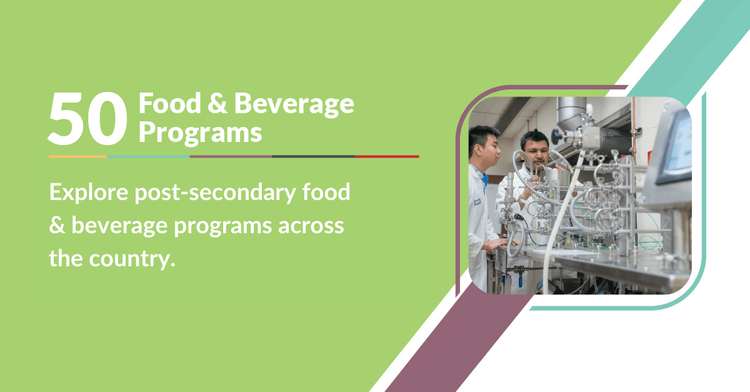
Canada is home to a diverse and dynamic food and beverage industry, supported by educational programs that train the next generation of chefs, brewers, entrepreneurs, and innovators. This roundup highlights 50 standout programs across the country, from top culinary schools and hospitality management courses to cutting-edge research initiatives and sustainability-focused training. Whether you're an aspiring professional, educator, or industry enthusiast, these programs provide valuable insights into the evolving world of food and drink in Canada. BC & Yukon Vancouver Community College UBC BCIT LaSalle College (Vancouver) UBC: Food, Nutrition, and Health Okanagan College Vancouver Island University University of Fraser Valley Northern Lights College North Island College Yukon University Selkirk College Thompson Rivers University Kwantlen Polytechnic University Prairies Saskatchewan Polytechnic University of Alberta University of Saskatchewan University of Manitoba SAIT NAIT Manitoba Institute of Trades & Technology International College of Manitoba Ontario Niagara College Humber College Le Cordon Bleu Ottawa George Brown College Fanshawe College Brock University University of Guelph Toronto Metropolitan University Loyalist College Georgian College Conestoga College Durham College Centennial College Canadore College Algonquin College Trent University St. Lawrence College St. Clair College Sault College Lambton College Confederation College Quebec McGill University LaSalle College Bishop's University Atlantic Canada University of PEI Memorial University Cape Breton University
Community Manager-
50 Food & Beverage Programs - Vancouver Island University
Crafting a Career in BC ’ s Wine Industry: VIU ’ s Wine Business Program The Wine Business program at Vancouver Island University is a comprehensive one-year certificate course designed for those passionate about pursuing a career in the BC wine industry. The program combines practical experience with academic learning in viticulture, wine business practices, marketing, and tourism. Program Highlights: As a student, you ’ ll have the chance to immerse yourself in hands-on experiences at local vineyards and wineries, gaining insights into the entire winemaking process. This practical foundation is then complemented by academic courses in viticulture, wine business practices, marketing, and tourism. A standout feature of this program is its flexibility. Whether you ’ re looking to study full-time for a year or prefer a part-time option spread over two years, VIU has you covered. Located in picturesque Nanaimo, BC, VIU provides an ideal setting for your wine education journey. With a curriculum designed to integrate viticulture essentials with business acumen, VIU ’ s Wine Business program offers a holistic understanding of the wine industry. Students can also earn credits that can be applied toward a Bachelor of Business or a Hospitality and Tourism Management program, opening doors to a wide range of future career prospects. The program includes seven courses and focuses on the broader aspects of the wine industry. In addition to viticulture and winemaking, students delve into wine marketing, exporting, and the vital role of wine tourism. C ourses cover a wide spectrum, from wine marketing and appreciation to beverage theory and the management of wine tourism. The program also offers elective courses in consumer behavio u r, entrepreneurship, and festival management . What You’ll Leave With: Upon graduation, a world of opportunities awaits you in BC ’ s wine industry. Whether you dream of managing a vineyard, excelling in wine s ales and marketing, or even opening your own restaurant, VIU ’ s Wine Business program provides the knowledge and skills to make your wine-related ambitions come true. Career options span winery/vineyard management, retail sales, wine marketing representation, hotel management, culinary arts, a gri - tourism development, and s pecial events coordination. V ideo/Social / Media : VIU YouTube Video
Community Manager-
Cellular Food in Canada
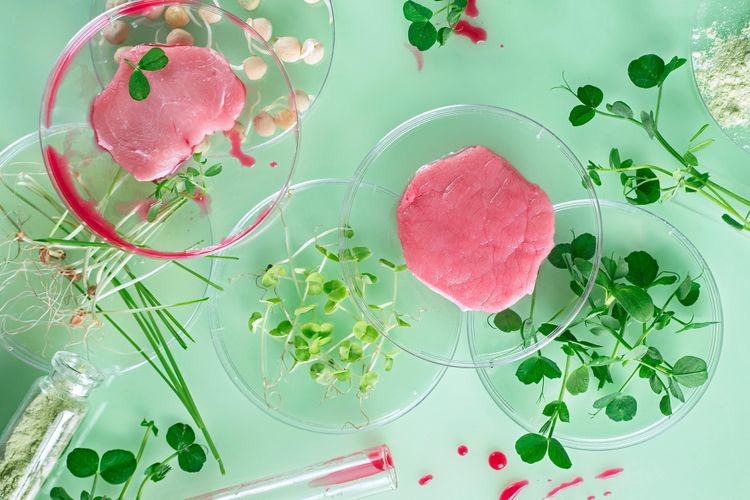
The past few years have proven how susceptible Canada’s food industry is to world events, supply chain disruptions and climate changes. New food production technology, such as cellular agriculture, has the potential to alleviate some of these challenges, while creating commercial opportunities and building a more sustainable, resilient food system. What is it? Cellular food – also known as engineering biology, synthetic biology or cell-cultivated products – is the production of food and textile products without using animals or land. Cell cultures harvested from animals, plants or micro-organisms are grown in the lab through tissue engineering or precision fermentation to produce: Cultivated proteins such as chicken, beef and seafood Fermented products like dairy, eggs, honey and chocolate Ingredients to add to products to create hybrid foods including proteins, enzymes, flavour molecules, vitamins, pigments and fats Textiles such as leather, silk and wool Why you should care As global population continues to grow, so does demand for protein, while access to land and other resource inputs become more scarce. Alternative agriculture could be an answer to food scarcity, concerns about animal and environmental welfare, cost inflation and resource challenges due to climate change. Compared to conventional agriculture, cellular agriculture production, is much less energy intensive, produces less greenhouse gas emissions, and has a much lower overall carbon footprint. With our strong food infrastructure, reputation for food safety, biotechnical expertise, and federal support for alternative protein production, Canada is well positioned to become a leader in cellular agriculture. The 2021 report Cellular Agriculture: Canada’s $12.5 Billion Opportunity in Food Innovation from Ontario Genomics and the Food and Agriculture Institute at the University of the Fraser Valley found that the international cellular agriculture market will reach US$100 billion by 2032. Canada’s food industry has the potential to take $12.5 billion that market, while creating up to 142,000 high-paying jobs. Opportunities in Canada Engineered plant proteins are already in the Canadian market, and by all estimates, precision fermented products are expected to appear before cultured meat products. Current Canadian regulations consider food produced through cellular agriculture as a novel food, and products are approved on a case-by-case basis. Here are a few Canadian start-ups making headlines: Because Animals – This Toronto-based pet food company uses cultured ingredients such as probiotics and nutritional yeast to create nutrient-rich cat and dog food designed to help digestive issues. Future Fields – Edmonton, AB-based Future Fields is a R&D producing growth media products that can be used to create commercialized cultivated proteins in a safe and sustainable manner. Cell-Ag Tech – Toronto’s Cell-Ag Tech is doing R&D on cell-cultured fish and seafood. New Harvest International non-profit research institute New Harvest , which promotes the science behind cultured meat through research, funding and a conference , now has a Canadian branch.
Community Manager-
Other Articles
Company Profile – Nutrigenomix
Welcome to YODL! In addition to daily original content, YODL helps CFIN Members find new partners , resources , and funding opportunities to grow their food business. Learn more about this growing community and become a CFIN Member (for free!) today . This week, we’re looking at food as medicine and personalized nutrition. Today, we’re highlighting Toronto, ON-based Nutrigenomix, a company that specializes in personalized nutrition through nutrigenomics , the study of genes and how they interact with diet. What They Do Nutrigenomix offers DNA tests (based on cheek or saliva swab samples ) consisting of 70 genetic markers for health and wellness, athletic performance and fertility, which the company says reveal how genes impact weight loss and body composition, nutrient metabolism, heart health, injury risk, physical performance, fertility, food intolerances, and eating habits. How They’re Featuring Food as Medicine The company provides the tests through more than 10,000 healthcare practitioners in over 40 countries. Based on the results of genetic testing, Nutrigenomix produces personalized recommendations that can be taken to a h ealthcare provider. The company also offers personalized nutrition and fitness reports based on a vegan or vegetarian diet. What You Need to Know The Nutrigenomix test kit was used in the first published, peer-reviewed randomized controlled trial of genetic information. According to the company, the research showed that DNA-based nutrition recommendations result in increased motivation , increased weight loss, a greater reduction in blood glucose levels, and greater dietary improvements than general advice and nutritional plans. Nutrigenomix also says that eating based on your DNA can also decrease the risk of developing chronic diseases and optimize health, sports performance , and fertility. The company is associated with the University of Toronto , and has an International Science Advisory Board featuring world - renowned researchers in the field of nutrigenomics and personalized nutrition. In the Media YouTube – Nutr i genomix for Practitioners
Community Manager-
50 Canadian FoodTech Resources – Richardson Centre for Food Technology and Research
Welcome to YODL! In addition to daily original content, YODL helps CFIN Members find new partners , resources , and funding opportunities to grow their food business. Learn more about this growing community and become a CFIN Member (for free!) today . Canada has an extensive range of research centres, food incubators, accelerators and labs supporting food and beverage innovation through the research they do and/or the services they offer. Each week throughout 2023, we’ll be highlighting an organization that’s supporting food innovation in Canada. Name: Richardson Centre for Food Technology and Research , at the University of Manitoba . Location: Winnipeg, MB Mission: To advance food quality and human nutrition through traditional and innovative food processing techniques . Focus: The centre partners with the food and agri-food industries on collaborative research and pre-commercial development activities. Services: The Richardson Centre is housed in a 55,000-sq.-ft. building on the University of Manitoba Fort Garry campus. It connects researchers from the Faculty of Agricultural and Food Sciences with food and agriculture companies to conduct collaborative R&D. The centre offers: Human nutrition studies, with staff and equipment for controlled human studies looking at the effects of food products, extracts and specific nutrients on human nutrition and wellness. Food product development, from a 550-sq.-ft. provincially regulated commercial kitchen. The kitchen is also equipped to prepare fixed diets for nutritional trials. Milling and dry fractionation, with a HACCP-registered pilot-scale processing facility for debranning , milling and dry fractionation of grains. Analytical testing for ingredients, food products and grains. Tabletting and capsule filling equipment for pilot processing of dry ingredients or plant extracts for human nutrition. Lab-scale oil extraction. A dairy pilot plant, for the development and manufacture of dairy and plant-based food products. The centre leas es office, laboratory, test kitchen and pilot plant space to food research organizations . What you need to know: The centre collaborates with internationally-recognized researchers from the University of Manitoba ’s Department of Food and Human Nutritional Sciences . The department offers R&D services that include fully-equipped analytical, extraction, processing, cell and tissue culture and genomic laboratories. Notable News: The centre was formerly known as the Richardson Centre for Functional Foods and Nutraceuticals . The name was changed in July 2022 to reflect its focus on collaborating with the food and agri-food industry to advance food quality and human nutrition through research and pre-commercial product development. Get Involved: Contact Dr. Rotimi Aluko , director of the Richardson Centre, at ( 204 ) 474-8883 , or at rotimi.aluko@umanitoba.ca . Or reach out to our Regional Innovation Director for the Prairies, Hubba Khatoon.
Community Manager-
Explained: Personalized Nutrition
Welcome to YODL! In addition to daily original content, YODL helps CFIN Members find new partners , resources , and funding opportunities to grow their food business. Learn more about this growing community and become a CFIN Member (for free!) today . This week, we’re looking at food as medicine , and today we’re highlighting personalized nutrition. What Is It? As consumers increasingly embrace the concept of food as medicine, many are looking for customized solutions, rather than a one-size-fits-all nutrition plan to treat or prevent illness and even injury . And while t he idea of personalized or precision nutrition isn’t new – think about the Low Glycemic index diet to lower blood sugar levels, or the heart-healthy Mediterranean diet – the ways in which companies are offering nutrition suggestions are. Today, integrated health and nutrition companies a re going beyond using health and lifestyle history to create personal nutrition plans. Many are combining wearable technology with software to analyze b lood biomarker s and microbiomes , measure metabolites, and monitor blood glucose levels or digestive health to determine how individuals will respond to specific nutrients. Practitioners say n utrigenomics, or genetic testing , can also offer DNA-based nutrition recommendations for health and wellness , athletic performance, fertility, weight loss and disease prevention. Why You Should Care With greater awareness of how nutrients affect them personally , customers will be increasingly looking for solutions tailored to their specific needs. That includes foods or supplements featuring functional ingredients , vitamins and minerals , natural health products with bioactive compounds, and products with ingredients designed to increase absorption or bioavailability, boost metabolism, or prevent nutrient degradation . What’s H appening in Canada? There are several nutrigenomics companies in Canada, including Toronto, ON-based Gini Health . The company analyzes customers’ DNA data to identify the optimal nutrition sources for their specific genetic profile. The company creates a personalized health tracker for customers that includes DNA-based nutrition and exercise goals. For more content on personalized nutrition see IN 30 – Food as Medicine. CFIN’s latest Innovation Booster Program focuses on Personalized Nutrition and Improving Human Health Through Food . The funding call opened on May 29, 2023, with all applications due by June 26, 2023. Winners will be announced in September 2023.
Community Manager-
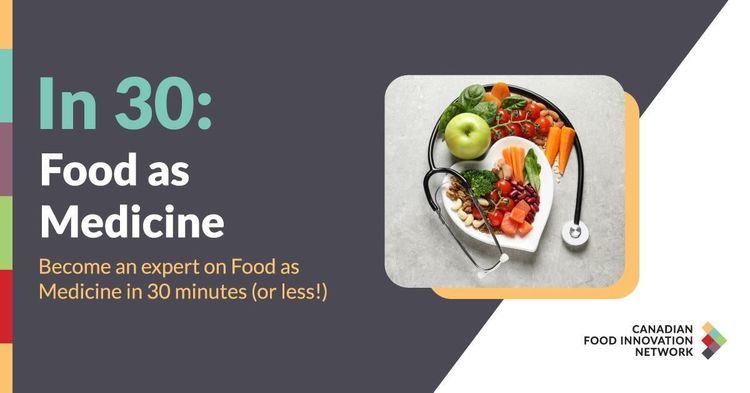
IN 30 – Food as Medicine
Welcome to YODL! In addition to daily original content, YODL helps CFIN Members find new partners , resources , and funding opportunities to grow their food business. Learn more about this growing community and become a CFIN Member (for free!) today . Sometimes, all it takes is 30 minutes to learn the ins and outs of new technologies and trends that are transforming the food and beverage industry. In this ser ies, we’ll dig into a food innovation topic and link you to content and resources so you can become a subject matter expert in 30 minutes (or less!). This week, we’re looking at food as medicine. Beyond its essential role in providing macronutrients, food can be a powerful tool in the prevention and treatment of human diseases and common health ailments. The concept of food as medicine is growing in popularity with consumers, leading innovators to develop software, ingredients, and products that aim to improve health and wellness. CFIN’s latest Innovation Booster Program focuses on Personalized Nutrition and Improving Human Health Through Food . The funding call opened on May 29, 2023, with all applications due by June 26, 2023. Winners will be announced in September 2023. The Overview Cleveland Clinic - How Nutrigenomics May Impact the Way You Eat The basics on what nutrigenomics is and how it works. Dal News – Ask an Expert: What is Functional Food and Why Should Canadians Care? Food is considered functional if it has benefits for human health beyond nutrition, for example it improves health or reduces the risk of disease. Forbes - This Diet Is Changing The Way We Think About Nutrition Artificial Intelligence and machine learning could offer consumers better control over t heir nutritional health. Techcrunch.com - Levels Raises $12M to Bring its Biowearable to M arket Level’s biowearable metabolic sensor constantly monitors glucose levels to create customized health and nutrition programs. Nestlé - Nestlé Health Science Expands into Personalized Nutrition In 2019 Nestle’s Health Science division acquired Persona, a company offering customized vitamins and supplements, and launched personalized vitamin packs through its Puritan’s Pride brand in June 2022 . The Canadian Connection Nutrigenomix – Nutrigenomix Inc. is based in Toronto, ON but is available in more than 40 countries . It provides DNA-based, customized nutrition recommendations for health and wellness, athletic performance and fertility, and includes plant-based nutrition. Medcan – Toronto’s Medcan is an integrated health and wellness company that uses up to 15 diagnostic tests covering cardiovascular health, cognition, hearing, vision, nutrition and fitness, to create a customized action plan to improve a customer’s lifestyle through food , exercise and supplements. Social Media @SPINSllc – (Twitter) SPINS, a wellness-focused data technology company based in Chicago , acquired Pinto, a product intelligence platform, in 2022. Pinto has a database of food, grocery and consumer products and creates personalized inventories for specific dietary needs. GUTXY – (LinkedIn) Denmark-based GUTXY tests customers’ gut microbiome to create a personal wellness plan. Atlas Biomed – (Facebook) Atlas Biomed Group is a London, UK-based company that uses both DNA and gut microbiome to establish a nutrition plan, and establish carrier status for hereditary conditions and risks for injuries due to sports. LSee – (YouTube) France’s LSee uses a metabolic tracker to create nutrition recommendations based on blood biomarkers. Overtime If you’ve got more than 30 minutes, these are for you : Spotify - The Doctor ’ s Kitchen Podcast The Doctor's Kitchen is a podcast about food, medicine, lifestyle and improving your health. YouTube – Viome’s Full Body Intelligence Test
Community Manager-
Staff Picks – Lavina Gully
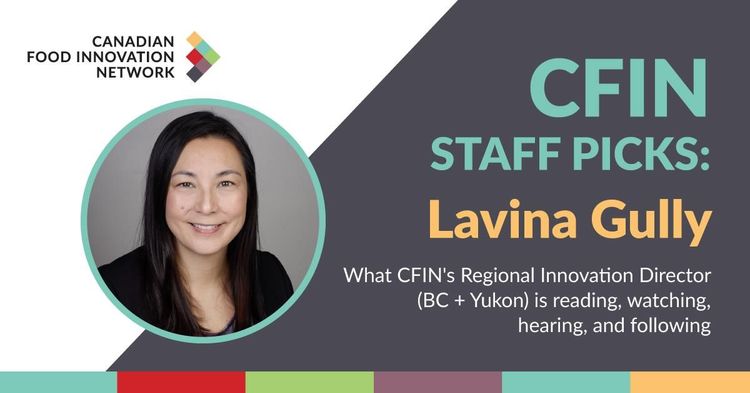
Welcome to YODL! In addition to daily original content, YODL helps CFIN Members find new partners , resources , and funding opportunities to grow their food business. Learn more about this growing community and become a CFIN Member (for free!) today . A lot of material comes across our desks at CFIN, and we love to share new information with YODLers ! This one in a series of articles highlighting what CFIN staff are reading, listening to, watching, and posting. This time we’re checking in with CFIN’s Reginal Innovation Director for BC and Yukon, Lavina Gully . What are you reading? I love the Hannah Swensen mysteries by Joanne Fluke and have read almost each one – and there are over 30! The title character is an amateur sleuth and bakery owner who is constantly mixed up in a culinary caper. Americana cuisine plays a big part in the stories and there’s a full recipe at the end of each chapter. This is where I learned about Minnesota hotdish ! On the non-fiction side, I’m waiting for my turn at Peter Attia’s new book Outlive . He’s relentless in his pursuit of health and longevity and I’m a long time listener of his podcast . I’m still a public library user and 15 th in line so hopefully I’ll get it in time for summer reading. What are you listening to? My favourite podcast is Econtalk by Russ Roberts . H e’s been at it for over 10 years and has branched out to cover a wide range of topics including health, business and psychology. Who are you following? Youtube is my platform of choice and at last count I’m subscribed to over 150 channels. Mostly they fall into r unning/ s port, t ravel, f inance and q uirky. Check out Cecilia Blomdahl – Life on Svalbard, an island close to the North Pole Little Chinese Everywhere – Fascinating markets and food Cody Townsend – Skiing N orth America’ s top 50 lines Jeff Pelletier - Vancouver-based trail runner and filmmaker Leon the Lobster – Life as a lobster rescued from the grocery store. What are you watching? I love factories and have a stack of How Its Made episodes on my PVR. I’m fascinated by the automation and machinery used to make everyday products, especially food ! What are you posting about? Pitch events offer a unique experience to explore innovation and celebrate entrepreneurship. I generally post about cool start-ups with a connection to the food industry, follow me on LinkedIn to see some events I’ve attended recently.
Community Manager-
Talking Innovation: Artificial intelligence serving the food industry
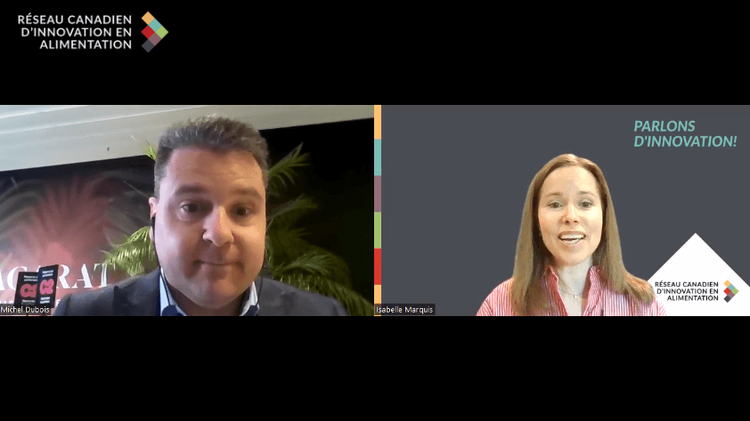
Welcome to YODL! In addition to daily original content, YODL helps CFIN Members find new partners , resources , and funding opportunities to grow their food business. Learn more about this growing community and become a CFIN Member (for free!) today . Welcome to Talking Innovation with Isabelle Marquis, a French-language video covering all areas of food innovation. Today, Isabelle speaks with Michel Dubois, Senior Director, AI Activation at the Mila research centre, about artificial intelligence and its applications and potential for the food industry.
Community Manager-
What YODLers are Saying and Reading – The Top YODL Content for May 2023
Welcome to YODL! In addition to daily original content, YODL helps CFIN Members find new partners , resources , and funding opportunities to grow their food business. Learn more about this growing community and become a CFIN Member (for free!) today . YODL was heating up last month with discussions and articles on industry events, trends, and networking opportunities. In case you missed them, here are the top five discussions and most read articles on YODL in May 2023. Top YODL Discussions in May 2023 Number 5 IFAB Introduction: We design and engineer specifically for the food and bev industry Cambridge, ON-based IFAB Engineering offers a range of facilities services for food businesses. Number 4 Seeking an expert for a Channel assessment Many food companies are looking for expert help and advice for strategic planning, product evaluation and other retail-focused services. Number 3 Debate about Sustainability of Cellular Food Cellular food has been a popular subject on YODL, with numerous articles and discussions ar ound cultivated products. Number 2 Looking for food-grade spray dryer CFIN members are coming to YODL to source a range of equipment and services. Number 1 Introduction & Some Exciting News! Manage My Groceries offers a Canadian online ecommerce platform designed to help retailers, distributors, importers and manufacturers find suppliers and grow their businesses. Most Read YODL Articles in May 2023 Number 5 50 Canadian FoodTech Resources – Canada’s Advanced M anufacturing Cluster Hamilton, ON-based research centre Canada’s Advanced Manufacturing Cluster supports businesses develop ing and scal ing new technology . Number 4 Meet a Member – Leonardo Calcagno The Meet a Member series is popular with YODLers ! This article features Leonardo Calcagno, editor of BaronMag.com/Boisson Québec . Number 3 Parlons d'innovation: SIAL Canada dévoile les inspirations de 2023 In her series Parlons d’innovation, Isabelle Marquis talks with the g eneral m anager of the SIAL network, Nicolas Trenteseaux, about this year’s SIAL Innovation competition. Number 2 50 Canadian FoodTech Resources - The BC Beverage Technology Access Centre The BTAC works with businesses to develo p beverages, including fermented, brewed, distilled and non-alcoholic products. Number 1 IN 30 – Robotics in the food and beverage industry The IN 30 series gives you all you need to know about new technology and trends affecting the Canadian food and beverage industry in 30 minutes or less. This article looks at the use of robotics in different sectors of the industry.
Community Manager-
50 Canadian FoodTech Resources - NRC Marine Research Station
Welcome to YODL! In addition to daily original content, YODL helps CFIN Members find new partners , resources , and funding opportunities to grow their food business. Learn more about this growing community and become a CFIN Member (for free!) today . Canada has an extensive range of research centres, food incubators, accelerators and labs supporting food and beverage innovation through the research they do and/or the services they offer. Each week throughout 2023, we’ll be highlighting an organization that’s supporting food innovation in Canada. Name: N ational Research Council (NRC) Marine R esearch Station Location: Ketch Harbour, NS Mission: To deliver specialized research solutions for collaborators and clients. Focus: The Marine Research Station has experts in algal biology, marine biology, aquaculture, analytical chemistry, and applied nutrition. The algal research facility provides resources and expertise for the cultivation of seaweeds and microalgae to produce bioactives and other compounds. Services: The station offers : a dvanced biomass processing equipment , including three high-speed centrifuges with up to 5000 L per hour processing capacity , and industrial freeze-drying capacity . A n a dvanced chemostat laboratory for continuous cultivation and monitoring of microalgae Advanced instrumentation for biomass and lipid analysis including: automated Soxhlet lipid extractor ; bench top lyophilizer ; bomb calorimeter ; elemental analyzer ; fluorometer ; gas chromatograph ; membrane inlet mass spectrometer ; micro-osmometer ; and nitrogen analyzer Continuous photobioreactor capacity for intensive continuous cultivation of microalgae ( Biofence photobioreactor with a 2,400 - L capacity ) Conviron environmental growth chambers for controlled cultivation of algae Dynasep supercritical CO 2 bioactive extraction system Extensive marine organism cultivation and holding capacity (for example, seaweed, microalgae, zooplankton) Gas mixing and containment system for delivering specific gas mixtures to algal cultures High-capacity seawater pumping station servicing multiple buildings on site; seawater chilling and heating capacity Intensive microalgae batch cultivation capacity (multiple Brite -Box photobioreactors with a total volume of approximately 12,000 L) Laboratory-scale feed production facility for post-harvest processing of aquatic and crop-based resources and for on-site formulation and production of test diets and research feeds for animal and/or aquaculture nutrition studies Wet labs for algal growth media preparation and cell counting What you need to know: Using an in-house collection of strains, the station is exploring potential commercial applications of microalgae, including aquaculture feeds, protein concentrates, anti-microbial compounds, and anti-oxidants like carotenoid pigments. Harvesting and biochemical analysis of algal biomass is done on site and advanced tools for more detailed analyses of algal biomass and the extraction of specific bioactives can be tailored to the needs of our research partners. Notable News: Cascadia Seaweed , Canada’s largest vertically integrated ocean kelp cultivator, ran a pilot study in 2021 testing its kelp restoration method, called the green gravel method. The company will be testing its Green Gravel Production System (GGPS) this summer at the Marine Research Station . The production system include s electrical and plumbing systems, equipment, protocols, and training for reforesting Saccharina latissima (Sugar kelp). The system can also be modified for other kelp species. Get involved: Contact Laurel O’Connor at (306) 975-4573, or at Laurel.oconnor@nrc-cnrc.gc.ca, or reach out to our Regional Innovation Director for Atlantic Canada Tyson MacInnis .
Community Manager-
IN 30 – Robots and Food Delivery
Welcome to YODL! In addition to daily original content, YODL helps CFIN Members find new partners , resources , and funding opportunities to grow their food business. Learn more about this growing community and become a CFIN Member (for free!) today . Sometimes, all it takes is 30 minutes to learn the ins and outs of new food technologies and trends that are transforming the food and beverage industry. In this series, we’ll dig into a food innovation topic and link you to content and resources so you can become a master on the topic in 30 minutes (or less!). This week, we’re looking at the use of autonomous and remote-controlled robots for “last mile/kilometer” food delivery service. The Overview Businessinsider.com - Self-driving delivery startup Nuro is partnering with Domino's to deliver pizzas in Houston— see how it works Nuro is a self-driving delivery service using electric autonomous vehicles. The Verge - Amazon stops field tests of its delivery robot Scout - The Verge Amazon launched its Scout robot delivery service in 2019, but scaled back the program in late 2022 in favour of trials for Amazon Prime Air’s drone delivery service . Forbes - The Future Of Delivery Robots Robot delivery is becoming more familiar in cities around the world, offering an efficient, environmentally-friendly alternative to vehicle delivery. The Canadian Connection Tiny Mile – Food businesses and consumers are using Geoffrey, small remotely-controlled robot couriers, from Toronto, ON-based Tiny Mile to make deliveries of less than 20 lbs. to customers within a specific delivery area. DM Magazine – The Last-Mile Challenge in Canada Customer demand for delivery has become a competitive edge for food companies and grocers. Digital, non-traditional delivery methods such as robots and drones could be a game-changer . InDro Robotics – This Victoria, BC-based company produces unmanned robotic technology including drones and robot s for air, land and water. Its ROLL-E is a remote-controlled UVG (unmanned ground vehicle) designed specifically for last mile deliveries. Social Media @starshiprobots – (Instagram) Founded in 2014, Starship has completed more than four million autonomous deliveries around the world. @kiwicampus – (Facebook) Columbia-based Kiwi Campus is a food delivery service for school campuses which delivers meals to students via Kiwibots . @ServeRobotics – (Twitter) San Francisco, CA-based Serve Robotics offers robot delivery with Uber Eats and other companies, and was testing its delivery service with Pizza Hut Canada in Vancouver, BC in September 2022. Overtime If you’ve got more than 30 minutes, these are for you: YouTube - Tiny Mile Delivery Robot, Geoffrey, Makes Friends in Charlotte
Community Manager-
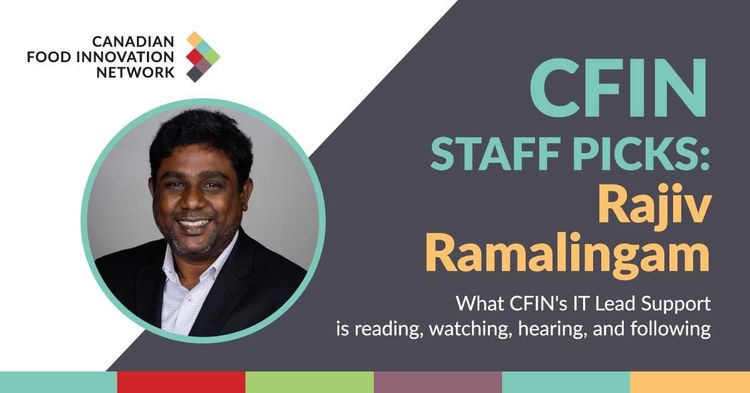
Staff Picks - Rajiv Ramalingam
Welcome to YODL! In addition to daily original content, YODL helps CFIN Members find new partners , resources , and funding opportunities to grow their food business. Learn more about this growing community and become a CFIN Member (for free!) today . A lot of material comes across our desks at CFIN, and we love to share new information with YODLers ! This one in a series of articles highlighting what CFIN staff are reading, listening to, watching, and posting. This time we’re checking in with CFIN’s IT Lead Support, Rajiv Ramalingam. What technology is out there right now that really excites? A rtificial intelligence (AI) is a wide-ranging tool that enables people to rethink how we integrate information, analyze data, and use the resulting insights to improve decision making , and already it is transforming every walk of life . AI ’ s application across a variety of sectors address es issues in its development, and offer s recommendations for getting the most out of AI while still protecting important human values. What tech tools do you think food and beverage companies should be investing in? Food and beverage businesses continue to be affected by industry trends and must contend with evolving regulatory compliance and changing consumer preferences. To manage it all, food and beverage companies should invest in technologies like m achine learning and AI that enables them to keep pace. What tech companies interest you the most and why? I love all the Microsoft products , e specially t he Windows operating system and Microsoft Office Suite , which have been responsible for the digital transformation of the modern world. Though Microsoft had a humble beginning, it has played a critical role in shaping the world of technology as we experience it toda y. The other company that interests me is Google. It has changed how search engine s work, by using a PageRank algorithm which prioritized a website’s popularity over its relevance. This led to websites becoming more connected to each other, popular websites coming up more often during Google searches , and unpopular ones promptly dying off. Now, most websites work together and link to each other in what’s called backlinking, a process that contributed to Google’s growth. Also , by creating products and services like Gmail and Google Maps, Google arguably became the most centralized hub on the internet to get all those services in single place. Google has leaned into that description by expanding into online communication with Google Hangouts and online storage like the Google Cloud. Products like Google Docs, Google Sheets and the Android operating system for mobile devices have also helped Google become a “lifestyle brand . ” They’ve already got 75 per cent of search traffic and 90 per cent of mobile search traffic. They’re going to be everywhere , including in sensors and in self-driving cars. What are you currently reading, watching, or listening to? I read technology related articles, especially from a tech website name called How to Geek – where experts will explain us technology . I started to follow them since 2008, until today I am getting their daily email notification about new technologies and problem-solving techniques. I highly recommend to anyone to visit their page who needs tech support or to learn about the latest technologies in the market. I enjoy watching action and thriller movies together with my six-year-old daughter on Netflix and Amazon. We repeatedly watch Grizzy and the Lemmings and Paw Patrol . I love listening to podcasts. I have been listening to The Phoen i x Project , A N ovel about IT DevOps, and Helping Your Business Win written by Gene Kim, Kevin Behr and George Spafford. You came to Canada from Singapore. What are the biggest differences you’ve noticed – from both a food and tech perspective? Locally grown fresh food (vegetables, fruits, grains, etc.) are available in Canada. In Singapore all the items related to food are imported from various countries and most of the time I noticed they were not fresh. On the other hand, Singapore adapts to the latest technologies that are available in the market both in private and public sectors very quickly. In Canada, I’ve noticed some of the businesses are often slow to adapt to new technologies.
Community Manager-
AI and the Food Industry – An interview with the Alberta Machine Intelligence Institute (AMII)
Welcome to YODL! In addition to daily original content, YODL helps CFIN Members find new partners , resources , and funding opportunities to grow their food business. Learn more about this growing community and become a CFIN Member (for free!) today . CFIN’s Chief Technology Officer Nestor Gomez recently sat down with Russ Erickson, vice president of Investment and Partnerships at the Alberta Machine Intelligence Institute (AMII) to discuss how innovative businesses are using artif icia l intell igence to optimize and scale their endeavors. AMII is a non-profit research institute driving world leading AI studies and translating those findings into scientific breakthroughs and industry adoption and commercial applications.They partner with companies of all sizes, across industries, to drive innova tion st rategy and provide practical guidance and advice to help businesses unlock the true potential of AI.
Community Manager-
50 Canadian FoodTech Resources - Investment Agriculture Foundation of BC
Welcome to YODL! In addition to daily original content, YODL helps CFIN Members find new partners , resources , and funding opportunities to grow their food business. Learn more about this growing community and become a CFIN Member (for free!) today . Canada has an extensive range of research centres, food incubators, accelerators and labs supporting food and beverage innovation through the research they do and/or the services they offer. Each week throughout 2023, we’ll be highlighting an organization that’s supporting food innovation in Canada. Name: Investment Agriculture Foundation of BC (IAF) Location: Victoria, BC Mission: To offer support and funding opportunities to BC companies in the agriculture and food sector. Focus: IAF delivers programs a nd services to support the agriculture and agri-food sector in BC. Services: The foundation offers customized, end-to-end program administration solutions for programs that support operational and environmental concerns of the agriculture and agri-food sector in BC. That includes: Program planning and implementation design Program promotion and marketing Planning and implementation Program monitoring, evaluation and auditing Quality a ssurance Communications and stakeholder engagement Training and knowledge-base management The foundation also helps guide applicants through: Guidance on program eligibility and project structure Project due diligence and funding decisions Writing and executing contracts Project assessment and monitoring Payments and claims processing What you need to know: IAF has delivered many strategic initiatives through collaboration with government in recent years, including AgriChain , an agriculture specific blockchain, and the Growing Agriculture Trust created in 2021 with $19.3 million in funding available . The sustainable Trust enables AIF to develop programs to help grow agriculture and agri-food in BC. Notable News: IAF delivers a wide range of funding opportunities through government programs aimed at different sectors of the agriculture, agri-food, and food and beverage processing industries. Get Involved: Contact IAF at info@iafbc.ca or at (250) 940-6150, or reach out to our Regional Innovation Director for BC Lavina Gully .