Canada is home to a diverse and dynamic food and beverage industry, supported by educational programs that train the next generation of chefs, brewers, entrepreneurs, and innovators. This roundup highlights 50 standout programs across the country, from top culinary schools and hospitality management courses to cutting-edge research initiatives and sustainability-focused training. Whether you're an aspiring professional, educator, or industry enthusiast, these programs provide valuable insights into the evolving world of food and drink in Canada. BC & Yukon Vancouver Community College UBC BCIT LaSalle College (Vancouver) UBC: Food, Nutrition, and Health Okanagan College Vancouver Island University University of Fraser Valley Northern Lights College North Island College Yukon University Selkirk College Thompson Rivers University Kwantlen Polytechnic University Prairies Saskatchewan Polytechnic University of Alberta University of Saskatchewan University of Manitoba SAIT NAIT Manitoba Institute of Trades & Technology International College of Manitoba Ontario Niagara College Humber College Le Cordon Bleu Ottawa George Brown College Fanshawe College Brock University University of Guelph Toronto Metropolitan University Loyalist College Georgian College Conestoga College Durham College Centennial College Canadore College Algonquin College Trent University St. Lawrence College St. Clair College Sault College Lambton College Confederation College Quebec McGill University LaSalle College Bishop's University Atlantic Canada University of PEI Memorial University Cape Breton University
Community Manager-
50 Food & Beverage Programs - Vancouver Island University
Crafting a Career in BC ’ s Wine Industry: VIU ’ s Wine Business Program The Wine Business program at Vancouver Island University is a comprehensive one-year certificate course designed for those passionate about pursuing a career in the BC wine industry. The program combines practical experience with academic learning in viticulture, wine business practices, marketing, and tourism. Program Highlights: As a student, you ’ ll have the chance to immerse yourself in hands-on experiences at local vineyards and wineries, gaining insights into the entire winemaking process. This practical foundation is then complemented by academic courses in viticulture, wine business practices, marketing, and tourism. A standout feature of this program is its flexibility. Whether you ’ re looking to study full-time for a year or prefer a part-time option spread over two years, VIU has you covered. Located in picturesque Nanaimo, BC, VIU provides an ideal setting for your wine education journey. With a curriculum designed to integrate viticulture essentials with business acumen, VIU ’ s Wine Business program offers a holistic understanding of the wine industry. Students can also earn credits that can be applied toward a Bachelor of Business or a Hospitality and Tourism Management program, opening doors to a wide range of future career prospects. The program includes seven courses and focuses on the broader aspects of the wine industry. In addition to viticulture and winemaking, students delve into wine marketing, exporting, and the vital role of wine tourism. C ourses cover a wide spectrum, from wine marketing and appreciation to beverage theory and the management of wine tourism. The program also offers elective courses in consumer behavio u r, entrepreneurship, and festival management . What You’ll Leave With: Upon graduation, a world of opportunities awaits you in BC ’ s wine industry. Whether you dream of managing a vineyard, excelling in wine s ales and marketing, or even opening your own restaurant, VIU ’ s Wine Business program provides the knowledge and skills to make your wine-related ambitions come true. Career options span winery/vineyard management, retail sales, wine marketing representation, hotel management, culinary arts, a gri - tourism development, and s pecial events coordination. V ideo/Social / Media : VIU YouTube Video
Community Manager-
Cellular Food in Canada
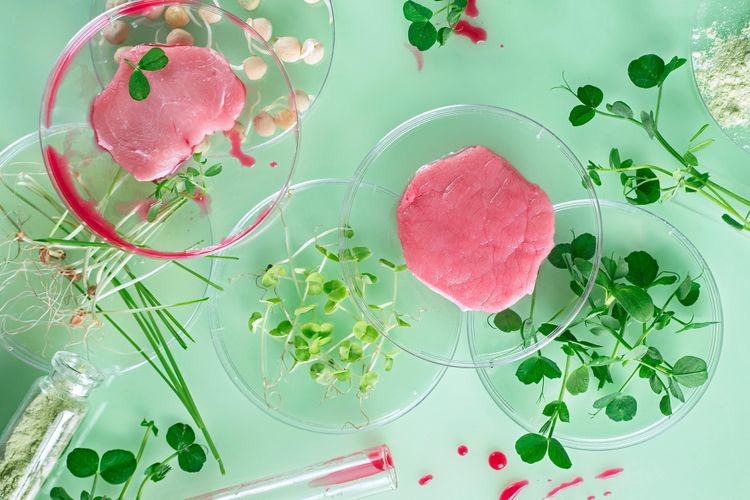
The past few years have proven how susceptible Canada’s food industry is to world events, supply chain disruptions and climate changes. New food production technology, such as cellular agriculture, has the potential to alleviate some of these challenges, while creating commercial opportunities and building a more sustainable, resilient food system. What is it? Cellular food – also known as engineering biology, synthetic biology or cell-cultivated products – is the production of food and textile products without using animals or land. Cell cultures harvested from animals, plants or micro-organisms are grown in the lab through tissue engineering or precision fermentation to produce: Cultivated proteins such as chicken, beef and seafood Fermented products like dairy, eggs, honey and chocolate Ingredients to add to products to create hybrid foods including proteins, enzymes, flavour molecules, vitamins, pigments and fats Textiles such as leather, silk and wool Why you should care As global population continues to grow, so does demand for protein, while access to land and other resource inputs become more scarce. Alternative agriculture could be an answer to food scarcity, concerns about animal and environmental welfare, cost inflation and resource challenges due to climate change. Compared to conventional agriculture, cellular agriculture production, is much less energy intensive, produces less greenhouse gas emissions, and has a much lower overall carbon footprint. With our strong food infrastructure, reputation for food safety, biotechnical expertise, and federal support for alternative protein production, Canada is well positioned to become a leader in cellular agriculture. The 2021 report Cellular Agriculture: Canada’s $12.5 Billion Opportunity in Food Innovation from Ontario Genomics and the Food and Agriculture Institute at the University of the Fraser Valley found that the international cellular agriculture market will reach US$100 billion by 2032. Canada’s food industry has the potential to take $12.5 billion that market, while creating up to 142,000 high-paying jobs. Opportunities in Canada Engineered plant proteins are already in the Canadian market, and by all estimates, precision fermented products are expected to appear before cultured meat products. Current Canadian regulations consider food produced through cellular agriculture as a novel food, and products are approved on a case-by-case basis. Here are a few Canadian start-ups making headlines: Because Animals – This Toronto-based pet food company uses cultured ingredients such as probiotics and nutritional yeast to create nutrient-rich cat and dog food designed to help digestive issues. Future Fields – Edmonton, AB-based Future Fields is a R&D producing growth media products that can be used to create commercialized cultivated proteins in a safe and sustainable manner. Cell-Ag Tech – Toronto’s Cell-Ag Tech is doing R&D on cell-cultured fish and seafood. New Harvest International non-profit research institute New Harvest , which promotes the science behind cultured meat through research, funding and a conference , now has a Canadian branch.
Community Manager-
Other Articles
Staff Picks – Jaleh Sasani, Programs Specialist
Welcome to YODL! In addition to daily original content, YODL helps CFIN Members find new partners , resources , and funding opportunities to grow their food business. Learn more about this growing community and become a CFIN Member (for free!) today . A lot of material comes across our desks at CFIN, and we love to share new information with YODLers! This one in a series of articles highlighting what CFIN staff are reading, listening to, watching, and posting. Here’s CFIN’s program specialist, Jaleh Sasani . What are you reading ? I have truly enjoyed reading Dinner on Mars: The Te c hnologies That Will Feed the Red Planet and Transform Agriculture on Earth , written by Lenore Newman and Evan D.G. Fraser. Their expertise and flowing conversation throughout the book makes it hard to put down! I would recommend this to anyone who is interested in learning about technology advancements and innovations in the food sector. What are you listening to ? I love anything and everything TED Talks . I’ve been listening to TED Talks Daily podcasts and came across an interesting episode by Phnam Bagley called Gou r met food for the final frontier , which is on theme with the book I’m reading. What is the next generation of space food? How do we get to Mars (or deep space) while eating Michelin star food ? Who are you following ? I follow a variety of great newsletters including Food D i ve , Groc e ry Dive , MaRS News , and the Arrell Fo o d Institute . Lately, I’ve been interested in learning more about honey bee health and enjoy updates from the University of Guelph Honey Bee Research Centre . What are you watching ? My watching habits are guided by my three-year-old , who is currently into everything space related. We are enjoying all kinds of videos and cartoons about planets, galaxies, stars, and what it would be like if you were to try running on every planet. We also watch Octonauts and Numberblocks on repeat! What are you posting about ? I recently posted on YO D L about the federal government’s announcement of Canada’s next agricultural policy framework. The Sustainable Can a dian Agricultural Partnership (SCAP) is a new $3.5-billion, five-year agreement (April 1, 2023 to March 31, 2028), between the federal, provincial and territorial governments to strengthen the competitiveness, innovation, and resiliency of the agriculture, agri-food and agri-based products sector.
Community Manager-
Company Spotlight – Copol International
Welcome to YODL! In addition to daily original content, YODL helps CFIN Members find new partners , resources , and funding opportunities to grow their food business. Learn more about this growing community and become a CFIN Member (for free!) today . This is one in a series of interviews with CFIN member companies that have successfully applied for and received funding . North Sydney, NS-based Copol International Ltd. manufacture s c ast p olypropylene film for the flexible packaging industry, mostly for food packaging and often for high heat applications such as sterilizing . This product extends the shelf life of most foods , improves food safety and reduce s food waste. I t also offers one of the most efficient packaging options , reducing weight, transportation and storage costs, resulting in minimizing GHCs in the food chain. At the same time the company is trying to find alternatives to fossil - based polymers that would also be compostable. This would improve the sustainability of supply and offer an end of life solution. Copol International received $858,959.55 in funding to develop m ultifunctional b iopolymer f ood p ackaging a pplications to i mprove the s ustainability of f ood p ackaging and extend the s helf life. The company’s project partners are The Verschuren Centre Inc., Farnell Packaging Ltd., and G N Thermoforming Equipment. We talked to Denis Lano ë vi ce- p resident of Operations and g eneral m anager of Copol International , to find out more about the project and the company’s plans. Q: Wh at is your company’s mission? A: Our mission is to provide a rewarding and safe environment for our employees, provide outstanding quality services and products to our customers, and support our community. Q: W h y did you apply for this funding and how will you use it? A: We applied for this funding to be able to develop a biopolymer that we would be able to process and use in our current applications. This requires specialized equipment and research and development to be able to stabilize the polymer and have it available in production. Q: What excites you most about working in this area of the food industry? A: This project is very exciting as it takes us into the future where the polymers we use are grown by bacteria and are fully compostable in nature. Being able to offer an alternative to fossil - based polymers in our applications is a huge step forward. Q: Why is collaboration so important for accelerating innovation in the food industry? Is it difficult to find good collaborating partners, and what would make the process easier? A: Collaboration is essential to embarking on such a project. We are lucky to have a biopolymer research facility here in Sydney, T he Verschuren Centre for Sustainability, wh ich will be crucial to the development of the biopolymer. As well we have two other partners that will help us convert our film for trials out in the industry, Farnell Packaging and G N Thermoforming, both from Nova Scotia. And lastly we would not be doing this without the support of CFIN. Q: Please comment on the importance of public funding to help companies clear innovation hurdles and access leveraged funds. A: Companies our size do not have the resources to embark on such a project on their own. Public funding and leveraged funds are needed to be able to take that step and foster the innovation that will allow us to break through to the next level. Q: Looking ahead, what’s on the horizon for your company? A: We are focused on being able to offer a viable biopolymer alternative to our customers, and to be able to develop and grow this industry based here in Nova Scotia. Q: What are your passions or hobbies outside of work? A: I am an avid long distance runner, and I love spending time with my family. Q: I f you had to pick one person to make you a meal, who would you choose? A: My Mom .
Community Manager-
50 Canadian FoodTech Resources - The BC Beverage Technology Access Centre
Welcome to YODL! In addition to daily original content, YODL helps CFIN Members find new partners , resources , and funding opportunities to grow their food business. Learn more about this growing community and become a CFIN Member (for free!) today . Canada has an extensive range of research centres, food incubators, accelerators and labs supporting food and beverage innovation through the research they do and/or the services they offer. Each week throughout 2023, we’ll be highlighting an organization that’s supporting food innovation in Canada. Name: The BC Beverage Technology Access Centre (BC BTAC) at Okanagan College. Location: Penticton, BC Mission: To work with the food and beverage industry toward sustained economic and intellectual growth. Focus: BC BTAC works with companies and organizations to exchange ideas and resources to create real-world solutions for the development of beverages, including fermented, brewed, distilled and non-alcoholic products. Services: The organization supports beverage innovation in Canada by offering a range of expert services and resources. Services include laboratory analysis such as testing for smoke taint, TCA, pesticides and herbicides; sensory services from descriptive tasting notes to fault identification and shelf-life testing analysis; commercial and business services such as market research and grant accessibility; research and development; analytical testing; education ; and networking. What you need to know: BC BTAC offers workshops on a wide variety of topics such as customer experience, sensory tastings and social media. The organization has partnered with Statera Academy to offer Wine & Spirit Education Trust (WSET) courses and qualifications , and offers courses in cider production and qualifications through the Cider Institute of North America (CINA). Notable news: As of 2023, the BC BTAC team has almost 60 years of experience in laboratory work, and 40 years of beverage production experience. Get involved: Contact BC BTAC at 1-250-490-3952 ext 3360, or bcbtac@okanagan.bc.ca, or reach out to our Regional Innovation Director for BC and the Yukon Lavina Gully .
Community Manager-
Meet a Member – Mary Ellen Schaafsma
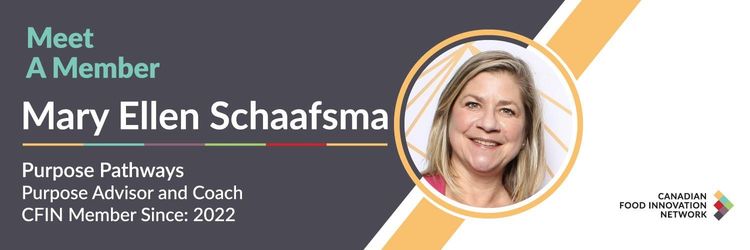
Welcome to YODL! In addition to daily original content, YODL helps CFIN Members find new partners , resources , and funding opportunities to grow their food business. Learn more about this growing community and become a CFIN Member (for free!) today . Since launching in 2022, CFIN has grown to more than 2, 7 00 members, which includes professionals from every sector of the food industry. This series highlights the many different CFIN members across Canada who visit YODL to learn, make connections, find funding, and discover new ways to grow their businesses. Mary Ellen Schaafsma Purpose advisor and coach , Purpose Pathways Consulting Greater Vancouver, B C Tell us a bit about your job I am founder and principal of Purpose Pathways, a consultancy that exists to empower leaders to change the world through business. What I mean by this is that I help businesses find their societal p urpose and bring it to life, integrating it into the whole company and activating it with their business ecosystem – so that the business becomes an engine for good as it is doing its business. To add context, here’s how I talk about p urpose in business: p urpose in business is defining the reason your company exists as a societal reason (social or environmental) , where that unique p urpose becomes the decision lens on all that your company does, driving business growth as well as societal good. There is no trade-off by adopting a societal p urpose – it is not charity or an expense line. I t is good for society and good for business . With this fresh lens on everything it does, the company discovers new business solutions to the world’s problems, related to the company’s unique strengths and assets. I t is intentionally and strategically identifying how your business can have the most impact and focusing your resources on that to enable innovation and growth, attract and retain talent, resonate with more loyal customers, attract capital, and enhance financial performance. How is YODL helping you do your job ? I joined CFIN and YODL as a s ervice p rovider because I strongly believe that the f ood s ector has the capacity and ingenuity to work together to help end hunger and malnutrition in the world (we all know no one needs to go hungry, there is enough for everyone) and can solve the environmental issues associated with food production , packaging, and distribution . A powerful way to accelerate action and increase collaboration is to foster a critical mass of food companies with a societal p urpose , because that ensures companies start partnering up for the good of all (no single company can achieve its p urpose alone). I hoped to meet innovative and open companies (and have!) wh ich see the win-win of p urpose , but aren’t sure how to do it, so that I can offer my help to clarify their p urpose. I would also love to offer new insights, so people increase their understanding about p urpose as the next essential thing in business (think CSR 20 years ago!) and take the lead in this new field . How often do you visit YODL ? I open YODL a few times a week to look around a nd see what’s new, what’s being talked about, and who’s liking what. It’s a great window into the Canadian f ood s ector and I am really learning a lot of the ins and outs of it. I also get the daily d igest in my inbox so I can quickly see what I might want to dive into that day. What is your favourite aspect of YODL ? The discussion board – it’s a wealth of information and inspiration. Anything you’d like to see changed or added ? Maybe to add a m ember search field for p rovince, or type of food business to help people more easily find the partner they are looking for. Can you tell us something you’ve learned on YODL ? I have learned that I was right! The food sector is innovative. I see so many interesting new concepts, processes, and products being talked about and asked about. The food sector is generously collaborative. I see people in need of leads, advice, direction, partners, and suppliers – and all they need to do is ask and they get answers, just like that! The food sector is engaged. Many are already working to reduce negative impact s , upcycle what was once considered waste, and find new ways to feed people that are more accessible and easier on our environment. What type of connection partners are you looking for ? I am passionate about helping business es uncover their higher p urpose for people and the planet (along with profit) . I am looking for companies wh ich want to fully understand what they bring to the world so that they effortlessly attract aligned and committed employees, turn customers into a mbassadors of their brand, increase innovation and productivity with a new lens on their business, differentiate themselves in the market to increase their resilience , and have the most positive impact on society as they possibly can – leaving nothing on the table. I love to work with c ompanies until they : h ave a crystal-clear , inspirational societal reason for being (social or environmental) ; i ntegrate their p urpose into all that they do so it drives growth ; and a ctivate p urpose in new ways within their business ecosystem for greater innovation . What area of food innovation interests you the most ? All of it , and I love when I find p urpose food companies – it makes my heart sing! What is your f avourite food and/or beverage ? Cheese !
Community Manager-
50 Canadian FoodTech Resources – Master List
Welcome to YODL! In addition to daily original content, YODL helps CFIN Members find new partners , resources , and funding opportunities to grow their food business. Learn more about this growing community and become a CFIN Member (for free!) today . Canada has an extensive range of research centres, food incubators, accelerators and labs supporting food and beverage innovation through the research they do and/or the services they offer. Each week throughout 2023, we highlighted an organization that’s supporting food innovation in Canada. To help make it easier to find a resource, here’s a list of all the organizations we’ve highlighted to date: Ag-West Bio Alacrity Cleantech Biopterre BioFoodTech BC Food Hub Network BC Beverage Technology Access Centre BC Food & Beverage Association Caddle Canada's Advanced Manufacturing Cluster Canada’s Smartest Kitchen Canadian Centre for Cyber Security Centre for Aquaculture and Seafood Development Centre for Natural Products and Medical Cannabis Centre of Seafood Innovation at Vancouver Island University Cultivated B Canada Cyber Science Lab David Sobey Centre Emergence Enterprise Machine Intelligence and Learning Initiative (EMILI ) Fanshaw e College Centre for Research and Innovation Food and Agricultural Institute, University of the Fraser Valley Food and Beverage Innovation Centre at Niagara College Food Innovation & Research Studio (FIRSt), George Brown College Food Processing Development Centre Good to Grow GreenCentre Canada INAF Invitro Digestion Platform InBe NomadLab Innofibre Innovate BC Investment Agriculture Foundation of BC Kemitek Merinov Meat Science Lab at the University o f Guelph Mycélium National Center for Electrochemistry and Environmental Technologies, Shawinigan College NRC Marine Research Station Perennia Food and Agriculture Corporation Platform Calgary Prairie Research Kitchen Propel Richardson Centre for Food Technology and Research RPC Science & Engineering Saskatchewan Food Industry Development Centre T echnology Access Centre in Bio-Innovation at La Cit é College Technology Access Centre for Aerospace & Manufacturing (TACAM), Red River College TransBIOtech Venturepark Labs Verschuren Centre Walker Advanced Manufacturing Innovation Centre
Community Manager-
In 30: Regulating Cellular Food
Welcome to YODL! In addition to daily original content, YODL helps CFIN Members find new partners , resources , and funding opportunities to grow their food business. Learn more about this growing community and become a CFIN Member (for free!) today . Sometimes, all it takes is 30 minutes to learn the ins and outs of new food technologies and trends that are transforming the food and beverage industry. In this series, we’ll dig into a food innovation topic and link you to content and resources so you can become a master on the topic in 30 minutes (or less!). This week, we’re looking at how emerging cellular food technology is being regulated around the world, and some of the debate around how products will be regulated as they hit the market. The Overview Good Food Institute - Cultivated meat is gaining momentum—and pathways for regulatory approval The article gives a comprehensive overview of the nations working toward regulatory approval of cellular food. CNBC – Singapore issues first regulatory approval for lab-grown meat to Eat Just Singapore is the first country to approve the sale of cellular food, in this case lab-grown chicken. FAO UN – Food Safety Aspects of Cell-based Food The Food and Agriculture Organization of the United Nations in collaboration with the World Health Organization recently published a document to identify food safety considerations of cellular food, including a view of current regulatory frameworks for cell-based food. USDA – Human Food Made with Cultured Animal Cells The U.S. Department of Agriculture and the F ood and D rug A dministration have a formal agreement on regulating foods containing cultured animal cells in the U.S. The Canadian Connection YODL - Cellular Food Opportunities in Canada YODL - Regulations Governing Cellular Food in Canada with Glenford Jameson
Community Manager-
Staff Picks – Hubba Khatoon
Welcome to YODL! In addition to daily original content, YODL helps CFIN Members find new partners , resources , and funding opportunities to grow their food business. Learn more about this growing community and become a CFIN Member (for free!) today . A lot of material comes across our desks at CFIN, and we love to share new information with YODLers ! This one in a series of articles highlighting what CFIN staff are reading, listening to, watching, and posting. Here ’ s CFIN ’ s Regional Innovation Director for the Prairies, Hubba Khatoon . What are you reading? Similar to Jamil, I also received a signed copy of Dinner on Mars by Lenore Newman and Evan Fraser…and I’m obsessed! The book offers a fascinating perspective on the potential of biomanufacturing and cellular agriculture to support human settlements on Mars and beyond. Highly recommend checking it out! What are you listening to? Currently, I’m really into Turkish instrumental music! I’ve been exploring some new artists and discovering some amazing music that I never knew existed before – it’s so soothing and works really well during focus time. Have you listened to any Turkish instrumental music before? Right now, my favourite is the O riental G uitar album on Spotify . Who are you following? I ’ m currently keeping tabs on all the winners of the CFIN funding programs. It ’ s so great to see all these innovators pushing the boundaries of food technology. I ’ ll definitely be following along closely to see them in action! Check them out here . What are you watching? Oh man, re-watching The Office . I can’t get enough of it! I’ve lost count of how many times I’ve watched it all the way through. And recently, I checked out season 4 of Y ou , but I’ve got to say, it just didn’t do it for me. I was really let down after how much I enjoyed the first three seasons. Also, I can’t wait to watch John Wick: Chapter 4 (this movie series has my heart forever and ever!) What are you posting about? Of course, I’m posting about the upcoming premiere of our next CFIN Live Experience: Cultivating Success: Canada ’ s Big Biomanufacturing Opportunity . I’m really pumped for this event and I think it’s going to be super exciting. You should definitely check it out! Anything else to add? It’s great to see the CFIN membership growing! I think there’s so much potential for us to work together to advance food innovation in Canada. I’m really looking forward to collaborating with everyone in the Prairies and doing some exciting things that push the boundaries of what’s possible. There’s no doubt in my mind that Canada has what it takes to be a major player in the global food industry.
Community Manager-
Company Spotlight - CleanBands
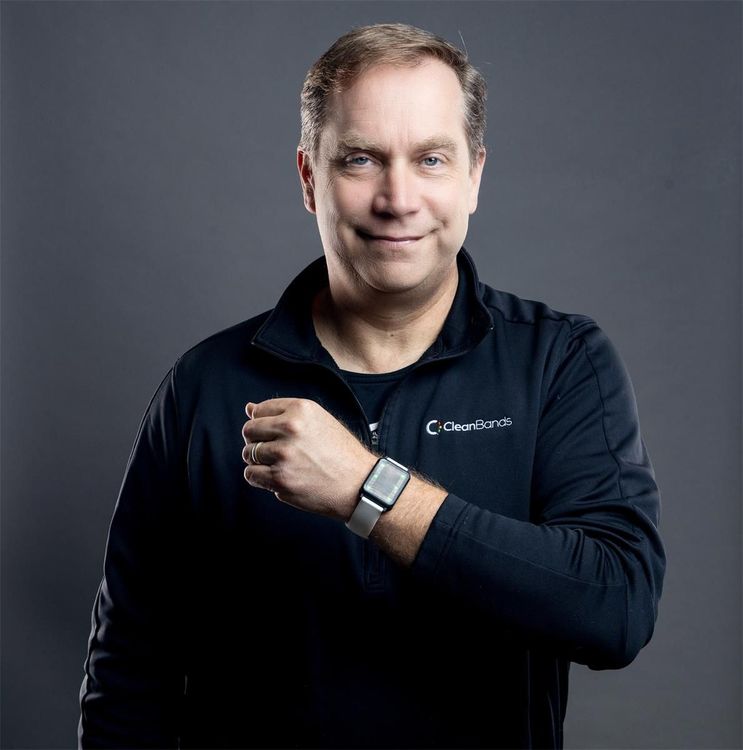
Welcome to YODL! In addition to daily original content, YODL helps CFIN Members find new partners , resources , and funding opportunities to grow their food business. Learn more about this growing community and become a CFIN Member (for free!) today . This is one in a series of interviews with CFIN member companies that have successfully applied for and rec e i v ed funding . Charlottetown, PE-based CleanBands is building handwashing compliance systems that help workers ensure they are following handwashing policies. The company’s wearables visually indicate handwashing status, and allow for every single hand hygiene event to be tracked. By tracking the status of handwashing, we can create compliance ratings that can be used by operators and processors to ensure standards are met. CleanBands received $244,977 in funding to develop and commercialize an enterprise-ready hand hygiene solution. The company is piloting the project with various quick-service restaurants in PEI. We spoke with CEO Dave Iwankow to learn more about the company and its p lans. Q: What is your company’s mission? A: Our mission is to i mproving food safety, by building tools to help with handwashing controls. Q: W h y did you apply for this funding and how will you use it? A: We applied for the FoodTech Next funding program to help us bring our product to an early commercialization stage. Going through all the product development phases is expensive, and the funding will help us bridge the gaps . The funding will primarily be used to build out our development and engineering teams that are responsible for the software and physical components of our system. Q: What excites you most about working in this area of the food industry? A: We believe we can have a significant and lasting impact on food safety by being the first company to digiti ze handwashing in the food industry! Q: Why is collaboration so important for accelerating innovation in the food industry? Is it difficult to find good collaborating partners, and what would make the process easier? A: It’s all well and good to invent something that works in a lab, but in order to bring that invention into use, it needs collaboration partners to test, to evaluate, and to help refine. Tools such as YODL and industry networking events are very helpful in making the connections that lead to collaborations. In this spirit, I’d love to talk to anyone reading this about collaboration, so please reach out! Q: Please comment on the importance of public funding to help companies clear innovation hurdles and access leveraged funds. A: All innovation is very expensive . As a start up , m any times we end up in chicken - before - the - egg conversations with prospective investors , i.e. “ Can’t fund until you have customers .” B ut it’s difficult to get customers without having the product developed to a point that can be shown to prospective customers. I have heard this called the “ i nnovation g ap” and we have certainly experienced it. Public funding has and will continue to help us bridge this gap in commercializing our innovation. Q: Looking ahead, what’s on the horizon for your company? A: We are working hard to bring our systems into public use in 2023 . We’ve got a lot planned, and lots of ways and ideas that will be added to our system for the food and other industries! We are also excited to be bringing the system for more industry feedback to the Restaurant s Canada Show . Q: What are your passions or hobbies outside of work? A: Running, c amping, tr ave l ling, landscaping and tinkering with new technologies .
Community Manager-
50 Canadian FoodTech Resources – EMILI
Welcome to YODL! In addition to daily original content, YODL helps CFIN Members find new partners , resources , and funding opportunities to grow their food business. Learn more about this growing community and become a CFIN Member (for free!) today . Canada has an extensive range of research centres, food incubators, accelerators and labs supporting food and beverage innovation through the research they do and/or the services they offer. Each week throughout 2023, we’ll be highlighting an organization that’s supporting food innovation in Canada. Name: EMILI (Enterprise Machine Intelligence and Learning Initiative) Location: Winnipeg, MB Mission: Advancing technology and developing skills to accelerate the growth of digital agriculture in the P rairies and across Canada. Focus: EMILI works with industry organizations and academic institutions from across the technology sector to increase integration of intelligent technologies, empower people with digital skills, support scale-ups to grow in the P rairies, and accelerate Canada ’ s growth as a leader in digital agriculture. Services: EMILI leads a variety of projects in partnership with industry and academics to provide the digital ag ecosystem with more skills, training and resources. Innovation Farms Powered by AgExpert provides innovators across industry and academia access to leading-edge equipment, technology, and production practices in order to develop viable solutions to the diverse agronomic and technological constraints and opportunities farmers face. EMILI does this by demonstrating the productivity and sustainability of commercialized technologies; testing and validating new technologies to bring them from pre-commercial to market; and sharing findings to increase understanding of and access to digital agriculture tools. The EMILI Data Initiative focuses on building capacity in Canada’s agrifood value chain through the use of intelligent technologies like AI and machine learning, providing an opportunity for optimization and greater productivity in industries across the ecosystem. Work is ongoing as far as meeting the growing need for enhanced technological skills in agriculture and recognizing that Canada must continue skill building from the ground up, and work to attract top talent globally. The Explore Project delivers programming to youth from Kindergarten through Grade 12, with a focus on STEM (Science, Technology, Engineering and Mathematics). Since the launch of the Explore Project, youth engagement has reached 58,000 students, including more than 11,000 Indigenous youth. EMILI established the Emergence Initiative in 2021 to help bridge the gap start - ups and emerging tech organizations experience when developing new digital agriculture technologies. This initiative provides vital support to increase the scale of ag-tech innovation in Manitoba and across the P rairies. Over the past two years, this initiative has funded more than $ 150 ,000 toward emerging technologies by Prairie innovators. What you need to know: EMILI’s next Agriculture Enlightened Conference will take place on October 26, 2023. This annual conference fosters connection between academia and industry to further advance the agri-food industry in the Canadian P rairie provinces. Subscribe to EMILI’s quarterly newsletter to learn about ongoing projects and partnership opportunities. Notable news: Digital agriculture is making strides, bringing innovative technology and data to farmers to make their operations run more efficiently. Hear what EMILI m anaging d irector Jacqueline Keena has to say about this and how Innovation Farms Powered by AgExpert is creating space for the integration and adoption of new technologies in Digital Farm i ng: The fu t ure is now . Get involved: Contact EMILI at info@emilicanada.com , or c ontact our Regional Innovation Director for the Prairies Hubba Khatoon .
Community Manager-
One Year Check In: A Roundtable with CFIN and Ontario Genomic's AcCELLerate-ON Funding Recipients
Welcome to YODL! In addition to daily original content, YODL helps CFIN Members find new partners , resources , and funding opportunities to grow their food business. Learn more about this growing community and become a CFIN Member (for free!) today . In May 2022 the Canadian Food Innovation Network (CFIN) and Ontario Genomics announced the winners of AcCELLerate-ON , Canada’s first regional cellular agriculture competition. Together the four recipients received more than $900 ,000 in funding to support the research and development of novel, viable and sustainable food production methods. The AcCELLerate -ON funding recipients and their projects are: Ardra Inc.: The development of fermentation-based production of heme as a natural flavour ingredient. Cell Ag Tech: The manufacturing of fish muscle stem cells from a 2D to 3D culture system with proteomic assessments of the cells Evolved Meats (formerly Caro Meats ): Creating cultivated pork belly that is identical to conventional pork belly The University of Toronto ’s Dr. Michael Garton in collaboration with Myo Palate : Establishing the foundational tools for cultivated pork production. We checked in with the four companies to hear more about how their projects are progressing. Please give us an update on your project. How are things progressing? Ardra: The project is being carried out as per the plan and there has been significant improvement in terms of developing new strains for improvement of the heme titre. These new strains that are developed are being tested further in the fermentation trials to evaluate their performance in improving the final heme concentration. Along with the strain improvement, there is also development on the 30 L pilot scale fermentation trials. Several 30 L fermentation trails were carried out at the Lambton C ollege facility. The fermentation output was further concentrated and purified at Lambton C ollege and a novel precipitation method was developed to purify the heme and achieve the downstream processing. The heme that was produced at Lambton college was further tested analytically at Xerox Research Centre of Canada and University of Toronto, Biozone analytical testing facility. The analytical technique developed is used to identify heme and other heme - like compounds which are found in the final purified product. The next steps will be to continue testing the improved strains in the fermentation trails to evaluate the heme concentration and further testing these strains in the pilot scale, to confirm scale up and improved heme titre. Cell Ag Tech: We are pleased to report significant progress in our p roject to s cale- u p the m anufacturing of f ish m uscle s tem c ells from a 2D to 3D c ulture s ystem with p roteomic a ssessments of the c ells. The scale-up portion of the project has been successfully completed. In collaboration with the Centre for Commercialization of Regenerative Medicine (CCRM), we have managed to grow our fish muscle stem cells in small bioreactors with significant proliferation. We’re very happy with the outcome of this phase of the project and look forward to building upon this success. As we move forward, our focus will shift to completing the omics-related activities for this project. We anticipate that this phase will be finalized within the next few months. Evolve d Meats: Our project is progressing well. We were able to not only create the world’s first porcine tissue that was both scaffold- and biomaterial-free, but we were also able to prove that we could automate the process of muscle fib re creation for scale up. In addition to this, we are in the final stages of building out a proteomics database for pork. As promised, once the database is complete, we will share it with others s o that they can use the information to prove the similarity of their products against conventional pork products. Dr. Michael Garton: Our project is progressing well, approximately in line with what we anticipated . We have produced a synthetic pig gene that causes a fluorescent protein to be expressed in response to slight increase in temperature (37°C to 42°C). We inserted this gene into pig stem cells and showed that they fluoresce green in response to heat elevation. This technology is a proof of concept that we can control pig cell gene expression using temperature. Using temperature to control gene expression is of course vastly cheaper than using expensive biological reagents, and this is critical to the reduction of meat production costs. We have also designed and produced a version of the gene where fluorescence is replaced with a critical component driving muscle production from pig stem cells. Stay tuned! How has the funding impacted this project? Ardra: The funding has been crucial in helping us develop our process for heme production. We are now able to make samples of our product, and have started sending sample s for customer validation. Getting validation from customers is an important first step towards commercialization of the product, and is an important milestone before we start scaling-up the process further. Cell Ag Tech: The funding provided by CFIN has been instrumental in the success of our project. The financial support enabled us to move forward with a project that may have otherwise been untenable due to the high costs associated with cell-culture scale up. The funding also facilitated the establishment of a valuable relationship with a key partner, the Centre for Commercialization of Regenerative Medicine (CCRM) and allowed us to execute the project thoroughly. Evolve d Meat: The funding we received through this program allowed us to commit the necessary resources towards establishing a proteomics database for pork. Without the funding, we would not have been able to establish the underpinnings of that database. Garton: This project would certainly not have been possible without the funding provided by CFIN and Ontario genomics. It has enabled us to focus a highly experienced team including experts in gene cloning and stem cell differentiation and to deliver the key milestones on schedule. Our team is growing and we expect this to be the start of a very significant advancement in integrating synthetic biology and cell agriculture. What’s changed for the company in the past year? Ardra: Company has achieved several important milestones in the last year including successful fundraising from BioIndustrial Innovation Canada to support our technology pipeline, initiating scale-up studies (5,000 L fermentation) of our flavour ingredient leaf-aldehyde, and hiring a Business Development Lead, who brings in decades of experience in sales and marketing of food ingredients. Cell Ag Tech: The last year has been very exciting for C ell Ag Tech. In addition to developing a cooked white fish fillet prototype, we’ve made great technical progress with our immortalized cell lines, medium and cell manufacturing process. All these elements have come together to lay the foundation for commercial production. In addition, we’re proud to have been awarded non-dilutive funding from NRC-IRAP and have welcomed a few new members to our team. Evolve d Meats: A number of things have changed for the company over the last year. Namely : w e filed three new patents, one of which was granted ; w e ran proof of concepts with three leading, global cultivated meat companies , and we are signing a JDA with the first group now ; w e created multiple world’s firsts for scaffold- and biomaterial-free tissue, inclusive of samples using porcine, avian, ovine, and bovine cells ; w e created the world’s first automation testbed for turning cell sheets into muscle fib res; and w e spoke about alternative proteins at the 2022 APEC CEO Summit in Bangkok (we were on stage after U . S . vice president Kamala Harris; we presented alongside the CEO of CP Foods, a top five global food company, and the former CEO of Greenpeace) . Myo Palate: Myo Palate has been developing and expanding its embryonic cell lines for cultivated meat production. In the last year, we have created meatball prototypes using embryonic stem cells. Furthermore, our embryonic cell line and development method is patent pending. Myo Palate is also renovating a 16,000 - sq .- ft . facility in downtown Toronto to expand research capabilities and further foster academic collaborations. The new facility will include cleanrooms, dedicated bioreactor space, and a microbiology suite. What are your thoughts on the current state of the cellular food industry? Ardra: The cellular food industry allows for 1) sustainable production of food, 2) strengthens local supply-chains, and 3) offers ways to make novel food products and ingredients. Given these advantages it will inevitably be a part of our future food value-chain. Cell Ag Tech: The cellular agriculture industry is currently at a pivotal moment. With the concept of producing cell cultured meat and seafood now proven, the focus has shifted to optimization, manufacturing scale up, and reducing the cost of goods sold (COGS) to achieve commercial viability. In the interim, it’s imperative that companies concentrate on these aspects, as they will play a vital role in making cell cultured meat and seafood products competitive with traditional animal-derived products currently on the market. Additionally, we’re seeing rapid growth in the ecosystem of supportive technologies and vendors ( for example, growth factors, contract manufacturing facilities, commercialization partners, etc.). These developments are crucial for the industry ’ s advancement, as it enables companies to access the tools, resources, and expertise necessary to overcome the major challenges facing the industry. Unfortunately, at the same time it’s become more difficult to access capital due to the current macroeconomic environment. For the industry to move forward, it’s essential to ensure that adequate capital is available to fuel this phase of the industry ’ s development and growth. Capital from investors and non-dilutive sources is vital for the industry to fulfill its full potential. Evolve d Meats: The cellular food industry is in its very early days. A lot of progress is being made on proliferating cells using serum-free media, but the bioprocess itself has barely been innovated on. Significant advances will need to be made on that front in order for cell ag riculture to actually penetrate the broader consumer market. In addition to that, we think that grouping all cell ag products in the same bucket is going to be harmful over time. Most current products are not structurally or biochemically identical to conventional meat. Instead, they use a high proportion of plant proteins and other biomaterials within their end products. Based on proxies, consumers are not interested in hybrids. We think that the only way cultivated meat will succeed is to create products that are 100% cell-based . Garton: Cellular food answers an incredibly important environmental question and is rightly garnering huge interest from government and the general public . By far the biggest challenge is reducing cost to compete with conventional meat products , and the advances we are making in synthetic biology are poised to facilitate that very significantly. Are you looking for new partners or collaborators? If so, who would be the perfect partner? Ardra: We are looking for new partners and collaborators. Our ideal partners would be food processing companies that are seeking novel food ingredients (flavours, colours and nutritional ingredients), and natural ingredients for their formulations. The company is also seeking partners that have large scale flavour production equipment in Canada for contract manufacturing. Cell Ag Tech: We are always open to forming new partnerships and collaborations with like-minded organizations that share our goal of supplying the world with sustainable and delicious cell-cultured seafood. Ideal partners would include investors who are willing to provide financial support to help us complete development and finalize preparations for commercialization. Of course, we also welcome non-dilutive funding sources and would appreciate the opportunity to connect with government and other organizations supporting the industry. We’re also open to collaborating with strategic partners that align with our mission and can contribute valuable resources and expertise . Lastly, we are interested in collaborating with commercialization partners who can help us navigate the path to market, providing support in areas such as marketing, sales, and distribution in different markets around the world. Evolve d Meats: Our ideal partner profile is as follows: a c ultivated meat company that has an established, well characterized cell line (cells can be anything from pluripotent to unipotent) ; that has a consistent bioprocess to proliferate those cells ; that understand s how to differentiate those cells ; and that, t ypically, the company has raised >$50-100M and they are starting to consider tissue engineering . Myo Palate: Myo Palate is actively engaged in multiple academic and industrial partnerships and have found these collaborations to be extremely fruitful. At Myo Palate’s next stage, we hope to collaborate with downstream meat processors to start tailoring meat output for processing requirements. What’s next for the company? Ardra: The company’s current focus is on bringing its most developed products to market to reach revenues, along with pushing the development of novel ingredients such as heme further. Cell Ag Tech : We’re currently raising a round of financing to complete development and finalize preparations for regulatory approval, commercial production, and sales. Evolve d Meats: In terms of next steps, we plan to c reate a proprietary, small - size bioreactor to produce multiple cell sheets at the same time (proof of concept is complete , and the provisional patent will be filed in 2023 Q2) . We will also b egin work with our JDA partner on a world’s first sample , and c ontinue developing our IP moat around the use of cell sheets . Myo Palate: Myo Palate is getting ready to move to its new space and ramp up production at a laboratory scale.
Community Manager-
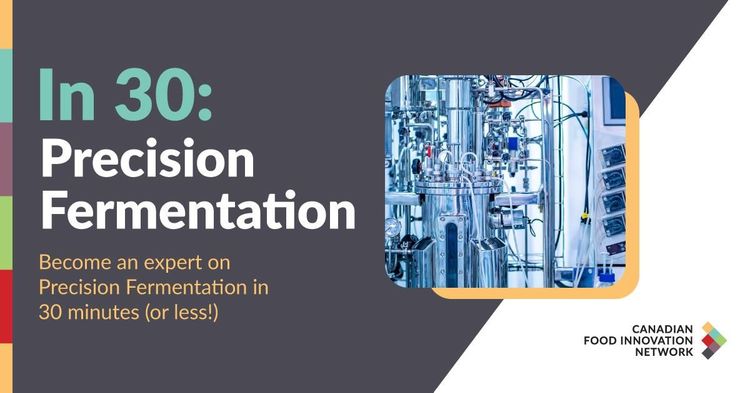
In 30: Precision Fermentation
Welcome to YODL! In addition to daily original content, YODL helps CFIN Members find new partners , resources , and funding opportunities to grow their food business. Learn more about this growing community and become a CFIN Member (for free!) today . Sometimes, all it takes is 30 minutes to learn the ins and outs of new food technologies and trends that are transforming the food and beverage industry. In this series, we’ll dig into a food innovation topic and link you to content and resources so you can become a master on the topic in 30 minutes (or less!). This week, we’re looking at one of the key techniques being used to produce cellular food, precision fermentation. The Overview YODL – Explained: Precision Fermentation Precision fermentation, or acellular cultivation, has emerged as a specific kind of fermentation process to create lab-grown ingredients for use in a wide variety of products, including food. YODL – The Language of….Cellular Food This article includes a rundown of terms you may hear used when describing precision fermentation, including bioreactor and scaffolding. Hartman Group - Fermenting the Future: The Growing Opportunity for Products Made with Precision Fermentation This white paper, based on research conducted by The Hartman Group and sponsored by Perfect Day and Cargill, examines consumer perceptions , attitudes, and purchase drivers related to precision fermentation. The Canadian Connection Arrell Food Institute at the Uni versity of Guelph offers an overview of sustainable food production via technology such as cellular agriculture and precision fermentation. Biofect Innovation is a Toronto, ON-based biotech company using microbial fermentation to develop novel plant-based ingredients. Social Media @PFAlliance_Org on Twitte r. The new PFAlliance champions precision fermentation as a solution for a more resilient and sustainable food system. Perfect Day on LinkedIn . P roduces whey protein through precision fermentation. The Every Company on Facebook. The company uses precision fermentation to create protein. Overtime If you ’ve got more than 30 minutes, these are for you: YODL – Visualizing Cellular Food: A Conversation with Yadira Tejeda Saldana of New Harvest
Community Manager-
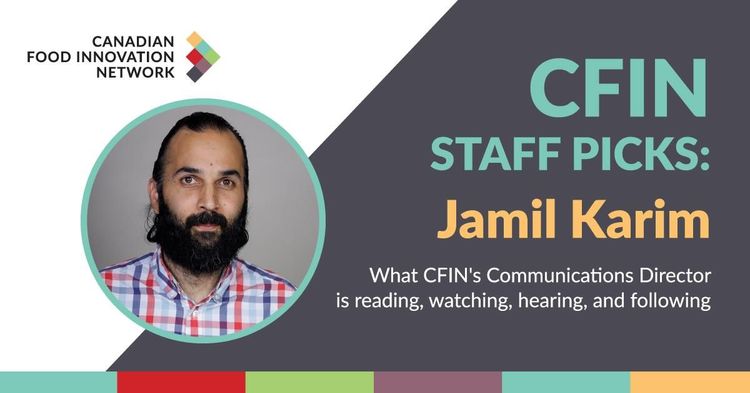
CFIN Staff Picks - Jamil Karim
Welcome to YODL! In addition to daily original content, YODL helps CFIN Members find new partners , resources , and funding opportunities to grow their food business. Learn more about this growing community and become a CFIN Member (for free!) today . A lot of material comes across our desks at CFIN, and we love to share new information with YODLers ! This is the first in a series of articles highlighting what CFIN staff are reading, listening to, watching , and posting . First up is CFIN’s Director of Communications , Jamil Karim . What are you reading ? I have my (signed!) copy of Dinner on Mars so I’m hoping to dig into that before our Experience on May 16 th . I’m also re-reading this great article from 2021 by the SPD Group about potential use cases for machine learning and AI in the food sector. The year is less tha n three months old, but it already feels like 2023 is the year AI pushes industries forward by leaps and bounds. Lastly, I’m a huge fan of newsletters and love reading DigitalFoodLab every time it hits my inbox. What are you listening to ? I don’t listen to a lot of podcasts (I’ m more of a reader), but I am enjoying listening to the commentary around SVB’s collapse and what that means for us here in Canada. On YODL, we have a ton of great video interview s with subject matter experts on plastics , cell food , robotics , etc. – so usually when I’m working, I’ll have one of these interviews on in the background . Who are you following ? I’m following anyone (or anything?) that shows off all the cool features of Chat-GP T . I’m also a sucker for tech news, so I'm constantly getting alerts from publications like Vancouver Tech Journal , The Logic , and BetaKit . Unrelated to foodtech , I also follow this twitter account that lets me know whether or not it is Ted Danson’s birthday. Spoiler alert – it's not today. What are you watching ? This Ted Talk from 2021 featuring New Harvest ’s Isha Dotar has been making the rounds on our CFIN Teams channel. It’s 12 minutes and you’ll leave with an above average understanding of what cellular agriculture is and why it’s got the potential to be a vital piece to solving food security. I’ll also use this opportunity to point out that the new season of Succession started recently and I simultaneously love and hate every character on that show. What are you posting about ? On YODL, I like to share posts about food news, events, and the great work our CFIN team is doing. On WhatsApp , my friends get posts about fantasy football and 00s R&B. On LinkedIn , I’m more of a private messenger but I use it to connect with old friends from the tech sector and check in (creep?) on former coworkers. So, depending on where you find me, you’re getting something completely different. Anything else to add? I’m excited to see what my fellow co-workers share in this series! Hopefully I can pick up a few new podcasts and newsletters to consume before bed.