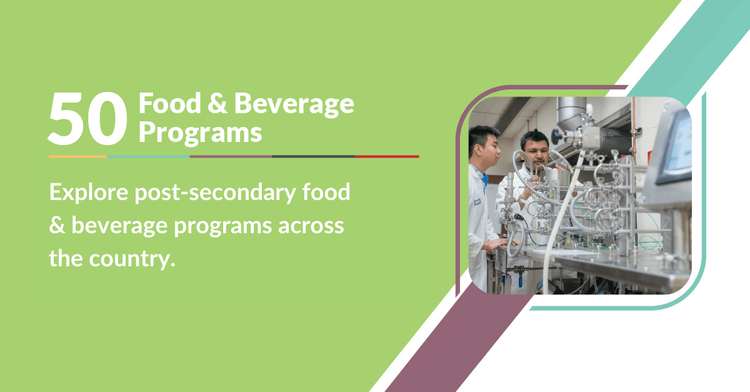
Canada is home to a diverse and dynamic food and beverage industry, supported by educational programs that train the next generation of chefs, brewers, entrepreneurs, and innovators. This roundup highlights 50 standout programs across the country, from top culinary schools and hospitality management courses to cutting-edge research initiatives and sustainability-focused training. Whether you're an aspiring professional, educator, or industry enthusiast, these programs provide valuable insights into the evolving world of food and drink in Canada. BC & Yukon Vancouver Community College UBC BCIT LaSalle College (Vancouver) UBC: Food, Nutrition, and Health Okanagan College Vancouver Island University University of Fraser Valley Northern Lights College North Island College Yukon University Selkirk College Thompson Rivers University Kwantlen Polytechnic University Prairies Saskatchewan Polytechnic University of Alberta University of Saskatchewan University of Manitoba SAIT NAIT Manitoba Institute of Trades & Technology International College of Manitoba Ontario Niagara College Humber College Le Cordon Bleu Ottawa George Brown College Fanshawe College Brock University University of Guelph Toronto Metropolitan University Loyalist College Georgian College Conestoga College Durham College Centennial College Canadore College Algonquin College Trent University St. Lawrence College St. Clair College Sault College Lambton College Confederation College Quebec McGill University LaSalle College Bishop's University Atlantic Canada University of PEI Memorial University Cape Breton University
Community Manager-
50 Food & Beverage Programs - Vancouver Island University
Crafting a Career in BC ’ s Wine Industry: VIU ’ s Wine Business Program The Wine Business program at Vancouver Island University is a comprehensive one-year certificate course designed for those passionate about pursuing a career in the BC wine industry. The program combines practical experience with academic learning in viticulture, wine business practices, marketing, and tourism. Program Highlights: As a student, you ’ ll have the chance to immerse yourself in hands-on experiences at local vineyards and wineries, gaining insights into the entire winemaking process. This practical foundation is then complemented by academic courses in viticulture, wine business practices, marketing, and tourism. A standout feature of this program is its flexibility. Whether you ’ re looking to study full-time for a year or prefer a part-time option spread over two years, VIU has you covered. Located in picturesque Nanaimo, BC, VIU provides an ideal setting for your wine education journey. With a curriculum designed to integrate viticulture essentials with business acumen, VIU ’ s Wine Business program offers a holistic understanding of the wine industry. Students can also earn credits that can be applied toward a Bachelor of Business or a Hospitality and Tourism Management program, opening doors to a wide range of future career prospects. The program includes seven courses and focuses on the broader aspects of the wine industry. In addition to viticulture and winemaking, students delve into wine marketing, exporting, and the vital role of wine tourism. C ourses cover a wide spectrum, from wine marketing and appreciation to beverage theory and the management of wine tourism. The program also offers elective courses in consumer behavio u r, entrepreneurship, and festival management . What You’ll Leave With: Upon graduation, a world of opportunities awaits you in BC ’ s wine industry. Whether you dream of managing a vineyard, excelling in wine s ales and marketing, or even opening your own restaurant, VIU ’ s Wine Business program provides the knowledge and skills to make your wine-related ambitions come true. Career options span winery/vineyard management, retail sales, wine marketing representation, hotel management, culinary arts, a gri - tourism development, and s pecial events coordination. V ideo/Social / Media : VIU YouTube Video
Community Manager-
Cellular Food in Canada
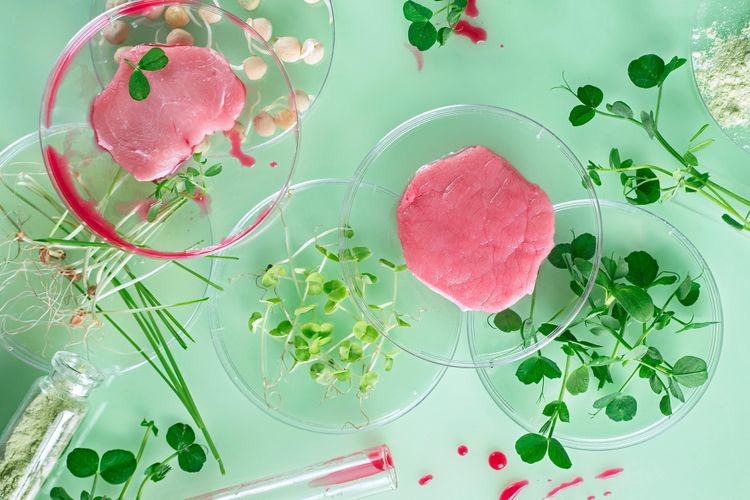
The past few years have proven how susceptible Canada’s food industry is to world events, supply chain disruptions and climate changes. New food production technology, such as cellular agriculture, has the potential to alleviate some of these challenges, while creating commercial opportunities and building a more sustainable, resilient food system. What is it? Cellular food – also known as engineering biology, synthetic biology or cell-cultivated products – is the production of food and textile products without using animals or land. Cell cultures harvested from animals, plants or micro-organisms are grown in the lab through tissue engineering or precision fermentation to produce: Cultivated proteins such as chicken, beef and seafood Fermented products like dairy, eggs, honey and chocolate Ingredients to add to products to create hybrid foods including proteins, enzymes, flavour molecules, vitamins, pigments and fats Textiles such as leather, silk and wool Why you should care As global population continues to grow, so does demand for protein, while access to land and other resource inputs become more scarce. Alternative agriculture could be an answer to food scarcity, concerns about animal and environmental welfare, cost inflation and resource challenges due to climate change. Compared to conventional agriculture, cellular agriculture production, is much less energy intensive, produces less greenhouse gas emissions, and has a much lower overall carbon footprint. With our strong food infrastructure, reputation for food safety, biotechnical expertise, and federal support for alternative protein production, Canada is well positioned to become a leader in cellular agriculture. The 2021 report Cellular Agriculture: Canada’s $12.5 Billion Opportunity in Food Innovation from Ontario Genomics and the Food and Agriculture Institute at the University of the Fraser Valley found that the international cellular agriculture market will reach US$100 billion by 2032. Canada’s food industry has the potential to take $12.5 billion that market, while creating up to 142,000 high-paying jobs. Opportunities in Canada Engineered plant proteins are already in the Canadian market, and by all estimates, precision fermented products are expected to appear before cultured meat products. Current Canadian regulations consider food produced through cellular agriculture as a novel food, and products are approved on a case-by-case basis. Here are a few Canadian start-ups making headlines: Because Animals – This Toronto-based pet food company uses cultured ingredients such as probiotics and nutritional yeast to create nutrient-rich cat and dog food designed to help digestive issues. Future Fields – Edmonton, AB-based Future Fields is a R&D producing growth media products that can be used to create commercialized cultivated proteins in a safe and sustainable manner. Cell-Ag Tech – Toronto’s Cell-Ag Tech is doing R&D on cell-cultured fish and seafood. New Harvest International non-profit research institute New Harvest , which promotes the science behind cultured meat through research, funding and a conference , now has a Canadian branch.
Community Manager-
Other Articles
Company Spotlight – Relocalize Inc.
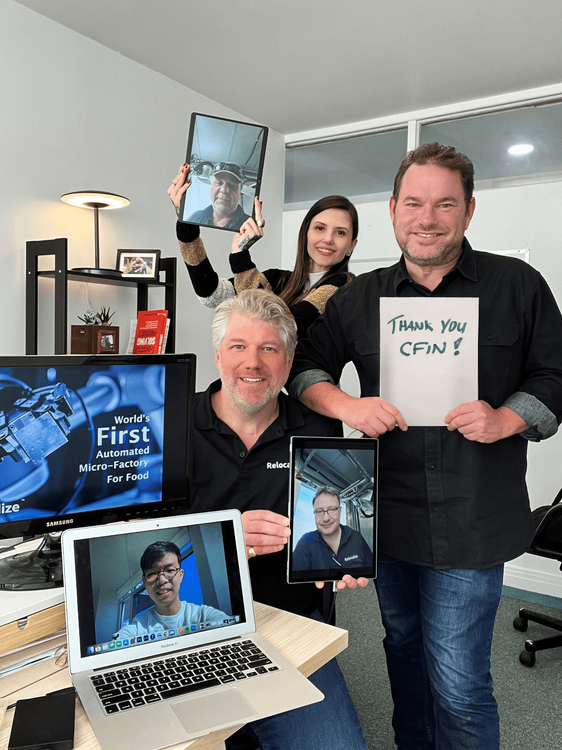
Welcome to YODL! In addition to daily original content, YODL helps CFIN Members find new partners , resources , and funding opportunities to grow their food business. Learn more about this growing community and become a CFIN Member (for free!) today . This is one in a series of interviews with CFIN member companies that have successfully applied for and received funding . Relocalize Inc. is a Montreal, QC- based company that hyper-localize s packaged food manufacturing with autonomous factories that eliminate middle mile logistics (and CO 2 emissions), reduce product costs and cut waste. The company received $246,618 in funding to demonstrate the world’s first autonomous micro-factory for food and beverage, in a pilot partnership with an unnamed U.S. retailer/distributor. We spoke to Wayne McIntyre, CEO and co-founder of Relocalize , to hear more about the company and its plans. Q: What is your company’s mission? A: Our mission is to make packaged food and beverage products better, greener and more affordable. Q: W h y did you apply for this funding and how will you use it? A: This funding ma d e it possible to deploy the world’s first autonomous micro-factory for food. With CFIN’s help, we are conducting a proof of concept in partnership with a major regional retailer to demonstrate the decarbonization, cost reduction and product improvement benefits of hyper-local food. Q: What excites you most about working in this area of the food industry? A: Nothing is more important to people that the nourishment and pleasure of food. At the same time, the food industry is a root cause of some of our biggest problems, including plastic pollution and greenhouse gas emissions. For a company looking to do right by people and the planet, the food industry could not be a more ideal sector to work in. Q: Why is collaboration so important for accelerating innovation in the food industry? Is it difficult to find good collaborating partners, and what would make the process easier? A: Our food system is extremely complex. Scaling innovation and solving big problems cannot be done alone. Fortunately, we have found amazing partners who are supporting us on our transformation journey. Creating platforms for exchanging ideas, building relationships , and collaborating with partners is critical to mak ing the process easier. CFIN is a great example of how to build such a platform. Continued funding and scaling of CFIN would be helpful to make the process easier for more companies. Q: Please comment on the importance of public funding to help companies clear innovation hurdles and access leveraged funds. A: Canada is home to some of the world’s best innovators and entrepreneurs. But they simply don’t have the same kind of access to capital as U . S . -based startups . Public funding helps close that gap and give companies like Relocalize the opportunity to become leaders in Canada and beyond. Q: Looking ahead, what’s on the horizon for your company? A: We are excited to be deploying the world’s first fully autonomous food factory in partnership with CFIN. The next step is to transform our food category – packaged ice – and disrupt the North American market with better, greener , and cheaper packaged ice. Q: What are your passions or hobbies outside of work? A: Long distance canoe tripping and trekking trips , and sailing (my newest hobby) . Q: If you had to pick one person to make you a meal, who would you choose? A: As a proud member of the Canadian food community, my pick needs to be a Canuck , so Michael Smith.
Community Manager-
Meet a Member – Richard Baker
Welcome to YODL! In addition to daily original content, YODL helps CFIN Members find new partners , resources , and funding opportunities to grow their food business. Learn more about this growing community and become a CFIN Member (for free!) today . Since launching in 2022, CFIN has grown to more than 2, 8 00 members, which includes professionals from every sector of the food industry. This series highlights the many different CFIN members across Canada who visit YODL to learn, make connections, find funding, and discover new ways to grow their businesses. Richard Baker Founder and p resident of the Food Distribution Guy Greater Toronto Area, ON Tell us a bout your j ob I am a consultant in the food and beverage sector. Providing our clients with market insights and industry expertise , we champion the sales procurement process in which our principles break through the competitive landscape to “Getting and Staying” listed in Canada’s grocery sector. Our principles are of a global nature. We assist Canadian, U . S . , and International food manufacturers. How is YODL helping you do your job ? I use YODL to post my monthly blog and special reports ; to understand growing segments in the Canadian grocery sector, such as seaweed . I’ve also used YODL to get an article published , and to introduce a member to old principle that is B Corp certified. How often do I visit YODL ? Every time I receive an update I always open it t o understand what has been posted, and how can I learn from it. I also visit YODL for my blogs and special reports two to three times per month. What’s your f avourite a spect of YODL ? The ability to post my blogs and articles in order to bring increased exposure to my business ; to learn from others who have different roles in the food sector ; and to l earn about new trends in the food sector. Can y ou t ell u s s omething y ou l earned o n YODL? I learned of Canada’s Seaweed Association. A couple of years ago it was on trend, yet I have heard very little of it or seen this type of product at retail since. I remember Loblaws under their PC brand launched such a product. What t ype of c onnection p artners are you l ooking f or ? I am always open to talking to new Canadian - owned brands seeking to take the next step in the grocery ladder with a unique product that adds value to their respective category . In addition, we are open to talking with U . S . or global brands hoping to enter the Canadian market , as well as brokers and distributors working in the C-store and home improvement sector s . What a rea s of f ood in novation i nterests y ou the m ost ? 1. Plant-based. The areas of opportunity are endless. I just learned grass may become a plant-based ingredient. There is also a Swedish firm that manufactures a plant-based dairy alternative utilizing potatoes. 2. U p- c ycled f ood. This is a growing category in which firms up-cycle ingredients that would have gone to land-fill . It’s a n innovative approach to reducing food waste. 3. Sustainable p roducts or packaging that h ave a positive impact on the environment. A w omen-based Calgary brand I am working with is looking to introduce the first compostable, freezer compliant zip-loc bags, and compostable wrap. What has b een y our f avourite d iscussion p ost ? sus As a consultant who provides market insights to their clients, I am always looking to learn more about the food and beverage sector – Canadian, US, or Global. Due to YODL, I had an article published for the first time. Due to the pandemic, I am a strong supporter of mental health , which I feel we as a country do not give as much attention to as we should. I know there is a way food and beverage can play a part in consumers ’ emotional states. I want to write a blog on this subject matter. What’s your f avourite f ood ? BBQ Lamb Chops
Community Manager-
50 Canadian FoodTech Resources – Caddle
Welcome to YODL! In addition to daily original content, YODL helps CFIN Members find new partners , resources , and funding opportunities to grow their food business. Learn more about this growing community and become a CFIN Member (for free!) today . Canada has an extensive range of research centres, food incubators, accelerators and labs supporting food and beverage innovation through the research they do and/or the services they offer. Each week throughout 2023, we’ll be highlighting an organization that’s supporting food innovation in Canada. Name: Caddle Location: St. Catharines, ON Mission: To create a transparent, friction-free marketplace for consumers and brands to exchange data for value. Focus: Through its app, Caddle garners consumer data and insights for consumer packaged goods companies to use during decision making. Services: Caddle offers companies full-service, end-to-end custom research based on a wide range of consumers across Canada. That includes research on trade marketing, consumer insights, brand marketing, category development, and eCommerce and digital growth. Caddle also gives companies access to webinars and articles on consumer trends, marketing, innovation and more. What you need to know: Consumers use the Caddle app to earn rewards, rebates and cash back by answering surveys, watching ads, writing reviews and engaging with brands during specific timeframes . Notable New s: Caddle says it has the largest daily and monthly active panel in Canada, with diversity validated through third-party providers. The company also offers panels of micro-niche audiences. Caddle works with CPG companies of all sizes, such as Nestlé and Conagra , grocery chains including Loblaws and Sobeys , and foodservice chains like Domino’s. Get Involved : Contact Caddle at (905) 321-5255 , or reach out to our Regional Innovation Directo r Linda Fox .
Welcome to YODL! In addition to daily original content, YODL helps CFIN Members find new partners , resources , and funding opportunities to grow their food business. Learn more about this growing community and become a CFIN Member (for free!) today . Sometimes, all it takes is 30 minutes to learn the ins and outs of new food technologies and trends that are transforming the food and beverage industry. In this series, we’ll dig into a food innovation topic and link you to content and resources so you can become a master on the topic in 30 minutes (or less!). This week, we’re diving into cellular food and how it’s changing the way we produce, transport, and consume food. The Overview YODL - Introduction to Cellular Food YODL - A Timeline of Cellular Food Innovation Forbes - Understanding the Cellular Agriculture Industry’s Impact and Growth Dr. Hamid Noori of Cultivated B describes the basics of cellular agriculture and its transformative potential. The Canadian Connection YODL - Explained: Cellular Food in Canada Cellular agriculture has the potential to alleviate challenges facing the Canadian food and beverage industry, while creating commercial opportunities and building a more sustainable, resilient food system. Ontario Genomics - Cellular Agriculture: Canada’s $12.5 Billion Opportunity in Food Innovation Cellular agriculture presents a significant opportunity to diversify food production in Canada, while complementing existing traditional production approaches. University of the Fraser Valley, Food and Agriculture Institute - Cellular Agriculture: What role will cellular agriculture play in the future of food for Canada? New technologies and techniques in cellular food mean these products will enter Canadian food markets and increase in prevalence over the next few years. Researchers New Harv e st is a global non-profit research institute advancing the science of cellular agriculture. Genome Canada is an independent, federally funded not-for-profit organization that invests in and coordinates genomics research, innovation, data and talent. Startups Liven Proteins makes animal-free, functional and sustainable protein ingredients. Myopalate ’s mission is to produce real meat without raising whole animals and facilitate a new era of protein consumption. Evolved Meats grows meat directly from animal cells. Funders Cult Foodscience invests in and commercializes cellular agriculture products. NSERC offers funding to entrepreneurs and innovators researching and developing scientific and technical breakthroughs that will b enefit Canada. NRC IRAP offers small- and medium-sized Canadian businesses advice, access to connections, and funding to help them innovate and bring products to market. Social Media @CellBasedNews on Twitter showcases scientific breakthroughs in cellular food. Cellagcanada on Instagram supports cellular agriculture developments in Canada. Perfect Day Foo ds on Facebook is one of the first U.S. companies approved to produce animal-free dairy. Overtime If you got more than 30 minutes, these are for you: YODL – Visualizing Cellular Food: A Conversation with Yadira Tejeda Saldana of New Harvest
Community Manager-
What YODLers are Saying and Reading – The Top YODL Posts and Articles of March 2023
Spring is in the air, and YODL is heating up lively discussion posts and articles. In case you missed them, here are the top five discussions and most read articles on YODL in March 2023. Top YODL Discussions in March Number 5 AI and Machine Learning Benefits for the food industry - what you need to know CFIN is keenly interested in the benefits AI can bring to product development and innovation projects in the food business. Number 4 Notre membre Laurent Dallaire du Québec, Leader émergeant de 2023 selon The Peak! Laurent Dallaire, co-fondadeur d' Innodal au Québec a été nommé l'un des leaders émergents de 2023 par The Peak . Number 3 WEBINAR: Global Packaging Trends This webinar features David Luttenberger, Mintel ’s Director of Packaging, who will share insights on how solutions-based package innovations are replacing disruptive innovations . Number 2 Creating circular economy from food waste streams (Post farm produce and food scraps) Companies are looking for “waste products” to create new food products and revenue. Number 1 CFIN Members ABOUND on NPC's Canada's Game Changers List! In celebration of International Women's Day, Natural Products Canada listed over 100 women-led companies to watch , including many CFIN members . Most Read YODL Articles in March Number 5 50 Canadian FoodTech Resources – The Centre of Seafood Innovation at Vancouver Island University CSI is an innovation hub that helps companies to help extract more value from sustainable seafood harvests. Number 4 Company Spotlight – Cyberworks Robotics Cyberworks Robotics provides autonomous self-driving technology for material handling forklifts and tow-tuggers as well as industrial floor scrubbers. Number 3 Company Spotlight – Rapid Aid Corp. Rapid Air Corp. has been the leading global developer and manufacturer of temperature-related solutions for the healthcare, transportation, food, and retail sectors since 1975. Number 2 50 Canadian FoodTech Resources – Fanshawe College’s Centre for Research and Innovation (CRI) CRI is the only research facility among Ontario’s colleges specializing in nutritional and shelf-life testing for product development and validation. Number 1 What YODLers are Saying and Reading – The Top YODL Posts and Articles of February 2023 YODLers are catching up on what they missed in the past month!
Community Manager-
News File – March 31, 2023
Each Friday we’ll bring you a roundup of news from CFIN, YODL and around the food world. As seen on YODL Check out this week’s most viewed discussions: Job in Food industry Discount code for Restaurant Canada Show Aerosol copacker Around the Food World Tetra Pak announces plans for packaging research into paper straws . Good Meat has received a “no questions” approval letter from the U.S. FDA for its cultivated protein. A new study shows fibre intake is associated with lower risk of cognitive decline in seniors. Did you Kno w? Farm Credit Canada (FCC) has released its 2023 Food and Beverage Report , covering the food and beverage industry’s key economic indicators for 2022. Here are a few highlights: Due to a combination of inflationary pressures, higher costs and a tighter labour market, food and beverage manufacturing gross margins as a per cent of sales fell to the lowest level in 20 years. Margins are expected to rise slightly in 2023. Retail food prices increased 8.9% year - over - year, the fastest increase since 1981 . Food and beverage manufacturing sales increased 10.6% year - over - year in 2022, while foodservice sales rose approximately 27%, and retail grocery sales grew 2%.
Community Manager-
Company Spotlight – BetterCart Analytics
This is one in a series of interviews with CFIN member companies that have successfully applied fo r and received funding . Saskatoon, SK-based BetterCart Analytics is an AI-driven competitive pricing intelligence solution for local and regional grocery chains and CPG brands . The company offers real-time, hyper-local price analytics and competitive intelligence to independent grocers, CPG manufacturers, and food and beverage processors that enable them to increase their profit margins, operational efficiencies, and ROI. BetterCart received $151,597 in funding for a project to r evolution ize p rice a nalytics and c ompetitive i ntelligence for Canada ’ s f ood i ndustry . Pilot partners for the project are Fresh City Farms, Jordans Dorset Ryvita, Melitta Canada, and Distribution Canada Inc. We spoke to Melanie Morrison, founder and CEO of BetterCart Analytics , to hear more about the company and its plans. Q: What is your company’s mission? A: Grocery remains the largest non-digitized retail segment on E arth ; pricing is the number - on e drive of consumer-purchasing behaviour ; and 80% of independent grocers and 70% of CPG manufacturers operate without analytics . As a result, the industry is in need of innovation, especially when it comes to the development of pricing technologies. Our mission is to help th ose companies that have limited access to pricing data and competitive intelligence so they can digitally transform, execute data-driven pricing decisions , and unleash their competitive advantage. Q: W h y did you apply for this funding and how will you use it? A: I viewed th e FoodTech Next Program as a very special opportunity for our company and I was intent on applying from the moment I heard about the p rogram’s launch. We will be using the funding to support our product team as they develop and advance our price analytics and competitive intelligence feature suite. Q: What excites you most about working in this area of the food industry? A: The opportunity in this space is vast , and under-served food sector stakeholders are now on the lookout for the type of technolog y that we are bringing to market. Our goal is to become an industry-leading company known for merg ing the needs of customers with technology to arrive at truly innovative solutions. Q: Why is collaboration so important for accelerating innovation in the food industry? Is it difficult to find good collaborating partners, and what would make the process easier? A: Collaboration is definitely an important ingredient when it comes to accelerating innovation in the food industry. It can be difficult to find collaborators, but what is making the process easier is CFIN. CFIN is offering a ground-breaking centralized hub to start conversations and collaborations from coast to coast to coast. I think as more people become active on the platform, connecting with others who share similar interests and priorities will become just that much easier and the impact will be extraordinary. Q: Please comment on the importance of public funding to help companies clear innovation hurdles and access leveraged funds. A: It cannot be mentioned enough times just how important public funding is to technology companies and those in the FoodTech space. Having the opportunity to obtain funding like that offered from CFIN is a game- changer , and will enable many companies to leverage their CFIN success to obtain private investment. Q: Looking ahead, what’s on the horizon for your company? A: We will be leveraging the strong strategic partnerships that we have built, and onboarding as many new independent grocers, CPG manufacturers, and food and beverage processors as we can in the next 12 months. Our company will be focused on growth and we will be taking that message to investors as we raise our pre-seed round. Q: What are your passions or hobbies outside of work? A: I enjoy film, nature (the ocean, mountains, old growth forests) , exercise (when I can), being ambitious, and getting to where I want to go! I love spending time with my family, as there are no other people that can make me laugh quite like they do ! Q: If you had to pick one person to make you a meal, who would you choose? A: Though I would be very happy to spend time with Dana, I would pick my Mom . My Mom is a phenomenal cook and I have so many fond memories of spending time with her, my brothers, and other family and friends, eating the wonderful food that she created. She is truly an artist and my best friend! Ready to access funding for your innovative initiative? Click here to find out more about CFIN’s funding programs.
Community Manager-
50 Canadian FoodTech Resources – Technology Access Centre in Bio-Innovation (TAC-B)
Canada has an extensive range of research centres, food incubators, accelerators and labs supporting food and beverage innovation through the research they do and/or the services they offer. Each week throughout 2023, we’ll be highlighting an organization that’s supporting food innovation in Canada. Name : Technology Access Centre in Bio-Innovation (TAC-B) at La Cit é collégiale Location: Ottawa, ON Mission: To develop or improve products or processes in biotechnology for the food industry, agriculture, agri- food and bio-pharmaceutical industries. Focus: The centre is comprised of a team with expertise in biophysics, bioprocesses, biotechnology, analytical chemistry and genetic engineering that c ollaborate s with businesses and institutions to offer solutions to specific challenges . Services: TAC-B offers businesses and research institutes a ccess to scientific and technical personnel and high-level equipment , while supporting training, innovation and development to commercialize new processes and products. Research services available for agriculture, animal science and food include: Chemical and biochemical analyses Cell and microbial culture Genetic engineering and bioinformatics Engineering and recombinant protein production What you need to know: The centre also offers specialized labs and equip m ent for chemical element analysis, particle analysis, nutritional analysis, analytical chemistry, and tissue culture. Notable News: TAC-B has worked with private and public sector research partners, including Agrinova , deltaDNA , Cell Reserve , RD Legault Seeds , Agrisoma Biosciences , Pommes de Terre Laurentionnes , Artenga , an d Siniazo Biotech . Get Involved: Contact Julien Le Roy , research centre manager at TAC-B , at JLeroy@collegelacite.ca , or reach out to our Regional Innovation Director for Ontario, L i nda Fox or Julie Daigle , our Regional Innovation Director for Quebec.
Community Manager-
The Language of….Cellular Food
Each sector of the food and beverage industry has its own on-the-job jargon and vocabulary . Here’s some of the terminology you may be questioning when it comes to the cellular food and agriculture sector. Acellular : Containing no cells. Precision fermentation is an acellular process. Biomass: Biomass is renewable organic material that comes from plants and animals. Biopsy: A sample of tissue taken in order to examine it more closely. Bioreactor: A large stainless - steel tank which provides a constant, stable environment for the cells to flourish. Cellular: Material consisting of cells. Cultivated proteins : Another name for cellular protein. Fractionating: D ividing a substance into its parts. For example , food processors take pulses, extract the protein , and leave high - quality starch which could have other applications. Heme: A n essential molecule that contains iron . Immortalized cells: C ells that have been manipulated to multiply indefinitely and be cultured for long periods of time. Genome Canada : An independent, federally funded not-for-profit organization that invests in and coordinate s genomics research, innovation, data and talent . Net zero: A n economy that doesn’t create greenhouse gas emissions. New Harvest: A global non-profit research institute advancing the science of cellular agriculture. NRC IRAP : NRC IRAP offers small- and medium-sized Canadian businesses advice, access to connections, and funding to help them innovate and bring products to market. NSERC : NSERC offers funding to entrepreneurs and innovators researching and developing scientific and technical breakthrough s that will benefit Canada. Precision fermentation: This process uses cells from micro-organisms like yeast and bacteria to produce specific enzymes, fat, collagen, flavour molecules, vitamins or protein ingredients that are identical to animal proteins but which do not contain any living material in the final product. Scaffolding: A material that provides the structural support for cell attachment and tissue development. Serum: L iquid medium that provides all the nutrients needed to thrive. Any terms or explanations we’ve missed? Click here to let us know!
Community Manager-
The Tablesetter – March 27, 2023
Happy Monday CFIN members! Here’s your weekly heads up on what’s happening on YODL and around the food world this week. The YODL Menu Monday: The Tablesetter – March 2 7 , 2023 Tuesday: The Language of Cellular Food Wednesday: 50 Canadian FoodTech Resources – Technology Access Centre in Bio-Innovation (TAC-B) Thursday: Company Spotlight – Better C art Analytics Friday: News File , and the Top YODL discussions and articles for March Something to Celebrate March 27 is National Spanish Paella Day! The dish originated in Valencia, Spain, and is considered the national dish of Spain. The traditional dish is made for sharing with friends and family, and includes short-grain rice, saffron, chicken, rabbit and white beans. Food Facts According to Taste Atlas , the 10 most popular Canadian dishes are: 1. Poutine 2. Chicken pot pie 3. Hawaiian pizza 4. Pancakes with maple syrup 5. Uramaki 6. Butter tarts 7. Kraft Dinner 8. Smoked salmon 9. Montreal smoked meat 10. Garlic fingers Happy YODLing!
Community Manager-
News File – March 24, 2023
Each Friday we’ll bring you a roundup of news from CFIN, YODL and around the food world. As seen on YODL Check out this week’s most viewed discussions: New YODL Feature: The Resource Finder FOODAROM Innovative flavors Leveraging Lean Manufacturing in 2023 Around the Food World Research from Mintel shows that 83% of Canadian s believe grocers and food producers are using inflation as an excuse to price gouge . Lantic Sugar Ltd. is joining Canada Plastics Pact as a signatory partner. Sweden’s Millow is producing novel protein made of mycelium and oats. Did you Kno w? The Future Menu s Trend Report 2023 from Unilever Food Solutions offers insights from more than 1,600 international chefs on the top menu trends for the year. The report identifies eight foodservice trends it says will be top of mind with consumers in 2023 , and offers recipes, ingredient advice and techniques for chefs and restaurant operators. The trends (in no particular order) are : 1. Modern comfort food 2. Irresistible vegetables 3. Wild and pure 4. Flavour contrasts 5. Feel-good food 6. The new sharing 7. Mindful proteins 8. Low-waste menus