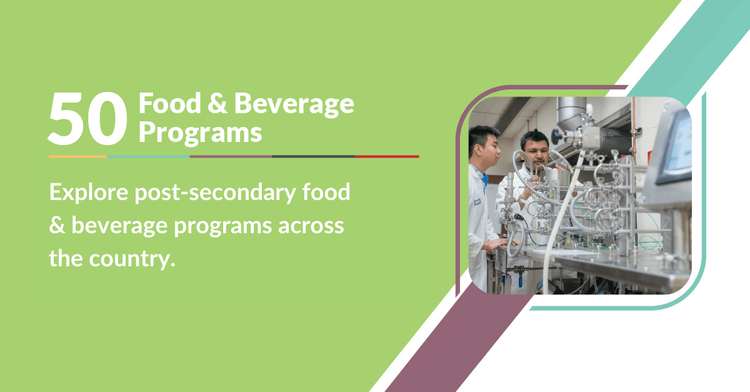
Canada is home to a diverse and dynamic food and beverage industry, supported by educational programs that train the next generation of chefs, brewers, entrepreneurs, and innovators. This roundup highlights 50 standout programs across the country, from top culinary schools and hospitality management courses to cutting-edge research initiatives and sustainability-focused training. Whether you're an aspiring professional, educator, or industry enthusiast, these programs provide valuable insights into the evolving world of food and drink in Canada. BC & Yukon Vancouver Community College UBC BCIT LaSalle College (Vancouver) UBC: Food, Nutrition, and Health Okanagan College Vancouver Island University University of Fraser Valley Northern Lights College North Island College Yukon University Selkirk College Thompson Rivers University Kwantlen Polytechnic University Prairies Saskatchewan Polytechnic University of Alberta University of Saskatchewan University of Manitoba SAIT NAIT Manitoba Institute of Trades & Technology International College of Manitoba Ontario Niagara College Humber College Le Cordon Bleu Ottawa George Brown College Fanshawe College Brock University University of Guelph Toronto Metropolitan University Loyalist College Georgian College Conestoga College Durham College Centennial College Canadore College Algonquin College Trent University St. Lawrence College St. Clair College Sault College Lambton College Confederation College Quebec McGill University LaSalle College Bishop's University Atlantic Canada University of PEI Memorial University Cape Breton University
Community Manager-
50 Food & Beverage Programs - Vancouver Island University
Crafting a Career in BC ’ s Wine Industry: VIU ’ s Wine Business Program The Wine Business program at Vancouver Island University is a comprehensive one-year certificate course designed for those passionate about pursuing a career in the BC wine industry. The program combines practical experience with academic learning in viticulture, wine business practices, marketing, and tourism. Program Highlights: As a student, you ’ ll have the chance to immerse yourself in hands-on experiences at local vineyards and wineries, gaining insights into the entire winemaking process. This practical foundation is then complemented by academic courses in viticulture, wine business practices, marketing, and tourism. A standout feature of this program is its flexibility. Whether you ’ re looking to study full-time for a year or prefer a part-time option spread over two years, VIU has you covered. Located in picturesque Nanaimo, BC, VIU provides an ideal setting for your wine education journey. With a curriculum designed to integrate viticulture essentials with business acumen, VIU ’ s Wine Business program offers a holistic understanding of the wine industry. Students can also earn credits that can be applied toward a Bachelor of Business or a Hospitality and Tourism Management program, opening doors to a wide range of future career prospects. The program includes seven courses and focuses on the broader aspects of the wine industry. In addition to viticulture and winemaking, students delve into wine marketing, exporting, and the vital role of wine tourism. C ourses cover a wide spectrum, from wine marketing and appreciation to beverage theory and the management of wine tourism. The program also offers elective courses in consumer behavio u r, entrepreneurship, and festival management . What You’ll Leave With: Upon graduation, a world of opportunities awaits you in BC ’ s wine industry. Whether you dream of managing a vineyard, excelling in wine s ales and marketing, or even opening your own restaurant, VIU ’ s Wine Business program provides the knowledge and skills to make your wine-related ambitions come true. Career options span winery/vineyard management, retail sales, wine marketing representation, hotel management, culinary arts, a gri - tourism development, and s pecial events coordination. V ideo/Social / Media : VIU YouTube Video
Community Manager-
Cellular Food in Canada
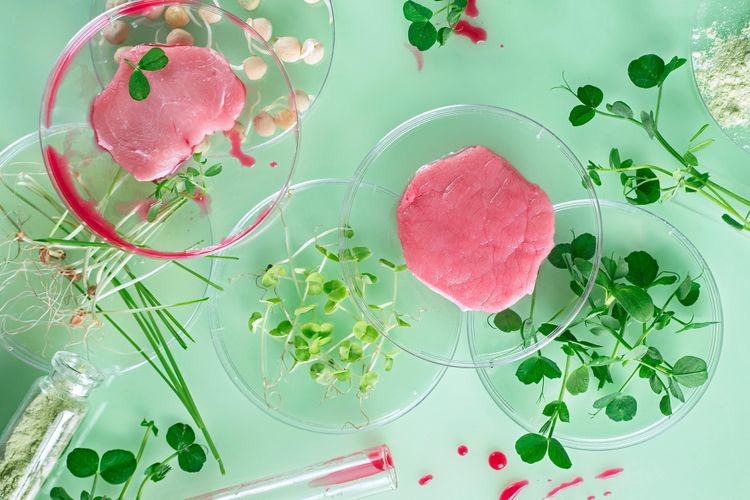
The past few years have proven how susceptible Canada’s food industry is to world events, supply chain disruptions and climate changes. New food production technology, such as cellular agriculture, has the potential to alleviate some of these challenges, while creating commercial opportunities and building a more sustainable, resilient food system. What is it? Cellular food – also known as engineering biology, synthetic biology or cell-cultivated products – is the production of food and textile products without using animals or land. Cell cultures harvested from animals, plants or micro-organisms are grown in the lab through tissue engineering or precision fermentation to produce: Cultivated proteins such as chicken, beef and seafood Fermented products like dairy, eggs, honey and chocolate Ingredients to add to products to create hybrid foods including proteins, enzymes, flavour molecules, vitamins, pigments and fats Textiles such as leather, silk and wool Why you should care As global population continues to grow, so does demand for protein, while access to land and other resource inputs become more scarce. Alternative agriculture could be an answer to food scarcity, concerns about animal and environmental welfare, cost inflation and resource challenges due to climate change. Compared to conventional agriculture, cellular agriculture production, is much less energy intensive, produces less greenhouse gas emissions, and has a much lower overall carbon footprint. With our strong food infrastructure, reputation for food safety, biotechnical expertise, and federal support for alternative protein production, Canada is well positioned to become a leader in cellular agriculture. The 2021 report Cellular Agriculture: Canada’s $12.5 Billion Opportunity in Food Innovation from Ontario Genomics and the Food and Agriculture Institute at the University of the Fraser Valley found that the international cellular agriculture market will reach US$100 billion by 2032. Canada’s food industry has the potential to take $12.5 billion that market, while creating up to 142,000 high-paying jobs. Opportunities in Canada Engineered plant proteins are already in the Canadian market, and by all estimates, precision fermented products are expected to appear before cultured meat products. Current Canadian regulations consider food produced through cellular agriculture as a novel food, and products are approved on a case-by-case basis. Here are a few Canadian start-ups making headlines: Because Animals – This Toronto-based pet food company uses cultured ingredients such as probiotics and nutritional yeast to create nutrient-rich cat and dog food designed to help digestive issues. Future Fields – Edmonton, AB-based Future Fields is a R&D producing growth media products that can be used to create commercialized cultivated proteins in a safe and sustainable manner. Cell-Ag Tech – Toronto’s Cell-Ag Tech is doing R&D on cell-cultured fish and seafood. New Harvest International non-profit research institute New Harvest , which promotes the science behind cultured meat through research, funding and a conference , now has a Canadian branch.
Community Manager-
Other Articles
Let’s Talk Innovation: Cellular Agriculture and Cultivated Foods
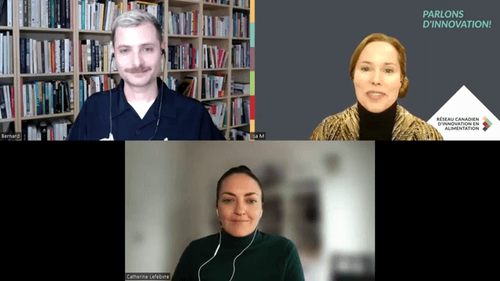
Welcome to Let’s Talk Innovation with Isabelle Marquis, a French-language video series covering every area of food innovation. Today, Isabelle speaks with Catherine Lefebvre and Bernard Lavallée, nutritionists and co-hosts of the popular podcast On s’appelle et on déjeune, about the development of foods produced through cellular agriculture.
Community Manager-
The Tablesetter – February 20, 2023
Happy Monday CFIN members! Here’s your weekly heads up on what’s happening on YODL and around the food world this week. The YODL Menu Monday: The Tablesetter – February 20 , 2023 Tuesday: Agriculture cellulaire et aliments cultivés ( Video ) Wednesday: 50 Canadian FoodTech Resources – Mycelium Thursday: Company Spotlight – TheoryMesh Friday: News File Something to Celebrate February 23 is National Banana Bread Day! Bananas began to be transported in bulk to North America in the early 1900s as improved refrigeration techniques became more available . While r ecipes for banana bread began appearing in the 1930s as a way to use up ripe bananas , and the quick bread became more popular following the publication of the Chiquita Banana Recipe Book in 1950. Food Facts Breakfast trends have changed dramatically over the years, from bacon and eggs to acai bowls . Click here to check out some of the most popular breakfast foods since 1950. Happy YODLing !
Community Manager-
News File – February 17, 2023
Each Friday we’ll bring you a roundup of news from CFIN, YODL and around the food world. As seen on YODL Check out this week’s most viewed discussions: Potential Food Plant Real-Estate near Toronto | Open Forum (cfin-rcia.ca) Ontario Beverage Co Packers | Open Forum (cfin-rcia.ca) Excellent example OEM equipment development & innovation | Open Forum (cfin-rcia.ca) Around the Food World Czech company Mewery has developed the first prototype of cultivated meat made of pork cells and microalgae cells. Researchers in the UK have used gene-editing CRISPR technology to produce wheat that produces much lower acrylamide when cooked. Lactalis Canada has announced the winner of its Lactalis Canada NEXT Ventures initiative around waste reduction . Did you Kno w? A new study from Dalhousie University’s Agri-food Analytics Lab in partnership with Angus Reid called Cashed Out: How a Cashless Economy Impacts Your Grocery Experience, a Canadian Perspective , looked at how consumer s view cashless shopping experiences. The survey found: O n average 6% of Canadians only use cash to buy groceries, although that varies by province, with 13% of consumers in Manitoba and 11% of consumers in Atlantic Canada say ing they only use cash when shopping for groceries. Credit cards are the most popular with grocery shoppers in B C (58%), while debit cards are the most popular way to buy groceries in Saskatchewan (51%). 53% o f Canadians consider a cashless economy to be a threat to their privacy. 73% of consumers believe a cashless grocery store can be discriminatory. 74% of Canadians believe that not using cash can be more convenient, but only 26% believe grocery stores will not accept cash within the next five years.
Community Manager-
Company Spotlight – Smallfood Inc.
This is one in a series of interviews with CFIN member companies that have successfully applied for and received fu n ding. Dartmouth, NS-based Smallfood Inc. uses microalgae and a proprietary biomass fermentation process to produce food ingredients that are abundant in high-quality protein and rich in brain-boosting omega-3 DHA. According to the company, its ingredients are ideally suited for brands seeking to bring innovative, nutritious, animal-free foods to market. The process also delivers a consistent, high-quality product and ensures supply chain reliability. The company received $98,932 in funding for a project to assess the shelf-life stability of a novel protein and DHA-rich food ingredient that could be used by the alternative seafood industry. We spoke with Smallfood’s director of Research and Development Gulten Izmirlioglu to learn more about the company and its plans. Q: What is your company’s mission? A: To nourish a sustainable plane. Our global population is estimated to grow to 10 billion people by 2050 – as such, one of the biggest challenges we will face over the next generation is feeding everyone. The majority of protein production systems are highly inefficient and livestock production is quickly becoming the largest contributor to global warming, outranking all forms of transportation. Seafood consumption is at an all-time high, driven by the global demand by health-conscious consumers for protein and omega - 3 rich diets. And increasing demand for plant-based proteins is causing global problems that include deforestation, soil erosion, and loss of biodiversity. At Smallfood, our quest for a sustainable solution to the world’s massive food production challenge resulted in the discovery of something “ small ” with very “big” potential. Microbes are the world’s most energy-efficient production systems so we set out in search of a microbe that could produce abundant protein and DHA, with the highest nutritional quality, while conserving the Earth’s precious resources. And after 10 years and over 20,000 unique microorganisms discovered, Smallfood unearthed unique microalgae that could produce wholesome food ingredients that are abundant in high-quality protein and rich in brain-boosting omega-3 DHA. Biomass fermentation is the ultimate sustainable solution given its minimal land, water, and energy requirements compared to traditional protein sources. The unparalleled productivity of our process results in a production time of just seven days vs. seven to nine months for plant-based proteins, and years for beef protein. Our process also delivers a consistent, high-quality product and ensures supply chain reliability. Ingredients produced through fermentation aren’t subject to the fluctuations in quality and supply we sometimes see with plant-sourced ingredients. Q: W h y did you apply for this funding and how will you use it? A: Smallfood will commercialize its first product, algal powder, as a protein and DHA source for the alternative seafood industry in early 2024. Prior to commercialization, however, stability of the dried algal biomass needs to be evaluated. High lipid content of the algal biomass, particularly long chain omega-3 polyunsaturated fatty acids (DHA) are susceptible to oxidation. Therefore, storage stability of Smallfood’s microalgal whole cell needs to be assessed for its stability. In order to perform this study, we applied to CFIN ’s Innovation Booster program. This funding will allow Smallfood to undertake th e study i n a timely manner and keep our commercialization plan on schedule. Q: W hat excites you most about working in this area of the food industry? A: As a Turkish - Canadian, food always played a key role in my childhood. Food was the way of caring for your loved ones. Later on , I also realized the importance of self-sufficiency and sustainability in food production. Now, my work allows me to help Canada become a self-sufficient and sustainable producer of food ingredients and merge s my two cultures together. That is why I am very excited and proud of my work. Q: Why is collaboration so important for accelerating innovation in the food industry? Is it difficult to find good collaborating partners, and what would make the process easier? A: An interdisciplinary collaboration is vital for food innovation that must bring experts from various backgrounds. Based on my experience, finding the right partners might be a challenge for innovators, especially who are new in the space. Having a platform for food innovators could really help with that. Q: Please comment on the importance of public funding to help companies clear innovation hurdles and access leveraged funds. A: Innovation in the food industry requires extensive resources for a food product. Developing a process may take years with a well-qualified team of researchers before becoming profitable. Therefore, public funding is key for the food industry, especially for start-ups, since the majority of investors are looking for companies where they can commercialize quickly. Q: Looking ahead, what’s on the horizon for your company? A: In the next 12 to 18 months, Smallfood will be commercializing its biomass product while building capacity. Our target is to build a pilot scale fermentation plant (1 , 500 L to 7 , 500 L) in the next year and continue increasing the fermentation capacity to 500 million liters in the next five years. In addition to building capacity, we will diversify our product line, from algal biomass powder to premium protein and DHA products. Q: What are your passions or hobbies outside of work? A: I am passionate about the environment. As a mother of two young boys, I feel responsible for the damage we have done to the E arth. While we all try very hard to provide a good life for our children, we mostly overlook the most precious inheritance that every living organism needs for a better life, a healthy planet. Although I know it is not enough, I try my best both professionally and personally to decrease the damage we do to the E arth . Q: If you had to pick one person to make you a meal, who would you choose? A: I would choose Dana McCauley. As a researcher, I would love to talk with Dana about her work while enjoying her food . Ready to access funding for your innovative initiative? Click here to find out more about CFIN’s funding programs.
Community Manager-
50 Canadian FoodTech Resources – Centre for Aquaculture and Seafood Development
Canada has an extensive range of research centres, food incubators, accelerators and labs supporting food and beverage innovation through the research they do and/or the services they offer. Each week throughout 2023, we’ll be highlighting an organization that’s supporting food innovation in Canada. Name : Centre for Aquaculture and Seafood Development . Location: St. John’s, NL. The Centre is an industrial response unit in the School of Fisheries at the Fisheries and Marine Institute of Memorial University of Newfoundland . Focus: Technical services in seafood processing, aquaculture, and marine bioprocessing , in the areas of applied research, product and process development, advisory services, and training. Mission: To offer technical support to industry in the seafood and aquaculture sectors. Services: The Centre’s, 400-sq.-m pilot plant facilities include a 1,100-sq.-m food processing pilot plant, an aquaculture facility, and a marine bioprocessing facility. The food processing plant offers a food development kitchen, a sensory analysis lab, and a variety of pilot-scale food processing equipment that will enable clients to develop new seafood products, equipment and processes, or train employees. The bioprocessing research laboratory performs analytical work and small-scale process development , and is available for businesses requiring lab - scale production of marine bio-products, lab - scale concentration of marine extracts, or for testing, analysis of products, food chemistry, or wastewater . The Centre helps clients move from product concept to development through to proof-of-concept and pre-commercialization stages. What you need to know: The Centre has strategic partnerships with various faculties within Memorial University to compliment its capabilities. Notable News: The Centre’s clients include seafood and food processing companies, aquaculture companies, provincial and federal governments, fish harvesters, biotechnology companies, and suppl ier businesses to these sectors. Get Involved: Contact the Centre for Aquaculture and Seafood Development at casd@mi.mun.ca , or at 709-778-0532, or reach out to our Regional Innovation Director for Atlantic Canada Tyson M acInnis .
Community Manager-
Regulating Cellular Food: A Discussion on the Regulations Governing Cultivated Food in Canada
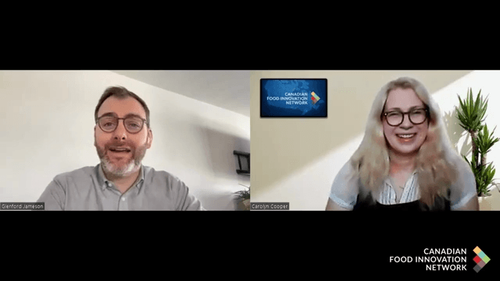
Carolyn Cooper sat down with food lawyer Glenford Jameson of G.S. Jameson & Co. to discuss the regulations governing the research, development and commercialization of cellular food in Canada. Look for more on the laws and regulations covering cellular food in coming weeks.
Community Manager-
The Tablesetter – February 13, 2023
Happy Monday CFIN members! Here’s your weekly heads up on what’s happening on YODL and around the food world this week. The YODL Menu Monday: The Tablesetter – February 13, 2023 Tuesday: Regulating Cellular Food: A Discussion with Glenford Jameson on the Regulations Governing Cultivated Food in Canada (Video) Wednesday: 50 Canadian FoodTech Resources – Centre for Aquaculture and Seafood Development Thursday: Company Spotlight – Smallfood Inc. Friday: News File Something to Celebrate February 16 is Paczki Day ! A p aczki is a Polish pastry dating back to the middle ages, similar to a sugary, filled doughnut . The treats are traditional ly eaten on the Thursday before Ash Wednesday in Poland, and on Fat Tuesday (Pancake Day) in North America . They can be filled with a variety of fruit preserves , cream or custard , and topped with granulated sugar, icing sugar or sugar glaze. Food Facts National Retail Federation conducts an annual Valentine’s Day consumer spending survey. Here’s what the 2023 survey reveals: 52% of consumers say they plan to celebrate Valentine’s Day this year, and will spend an average of $192.80. That compares to an average of $175.41 in 2022. 28% of consumers who say they won’t celebrate the day, still plan to mark the occasion in some way. Candy is the top gift to give for Valentine’s Day, with 57% of respondents saying they’ll be buying confection e ry. 35% of shoppers are buying gifts online this year, followed by department stores (34%), discount stores (31%) and specialty stores (18%). Happy YODLing!
Community Manager-
News File – February 10, 2023
Each Friday we’ll bring you a roundup of news from CFIN, YODL and around the food world. As seen on YODL Check out this week’s most viewed discussions: Opportunity for Canadian Frozen Food Brand | Open Forum (cfin-rcia.ca) Recycling Challenges and Opps - great piece for CBC | Open Forum (cfin-rcia.ca) Seaweed in the News | Open Forum (cfin-rcia.ca) Around the Food World Researchers in France have shown a direct association between diabetes and nitrates from food additives. This spring customers will have the chance to visit a “ Zellers Diner on wheels ” in the form of food truck when the first Zellers pop-up stores appear within Hudson’s Bay locations. Kerry’s Global Taste and Nutrition Charts for 2023 predicts that flavours inspired by heirloom recipes will drive food and beverage innovation this year. Did you Kno w? Second Harvest has released the results of a two-year project on food waste involving 20 large-scale Canadian food manufacturing companies. The study, funded by Walmart Foundation, reveals that food waste reduction measures can produce significant results and financial savings . Findings include: Each year a pproximately 60% of food produced for Canadians is lost or wasted. 47% of this loss occurs during manufacturing and processing, equalling 16.77 million metric tonnes. Working with advisors to reduce food loss and waste allowed the manufacturers involved in the project to collectively prevent 3.1 million kg/year of food from being wasted, and 100,295 kg of food to be redistributed. The companies collectively saved 7,029 tonnes of greenhouse gas emissions, while reducing their water use by an average of 879 m 3 , natural gas use by 4,013 m 3 , and electricity use by 69,225 kWh annually. The companies collectively saved an average of $205,800 annually by retaining food that was being lost or wasted, enough for 6.7 million meals.
Community Manager-
Explained: Precision Fermentation
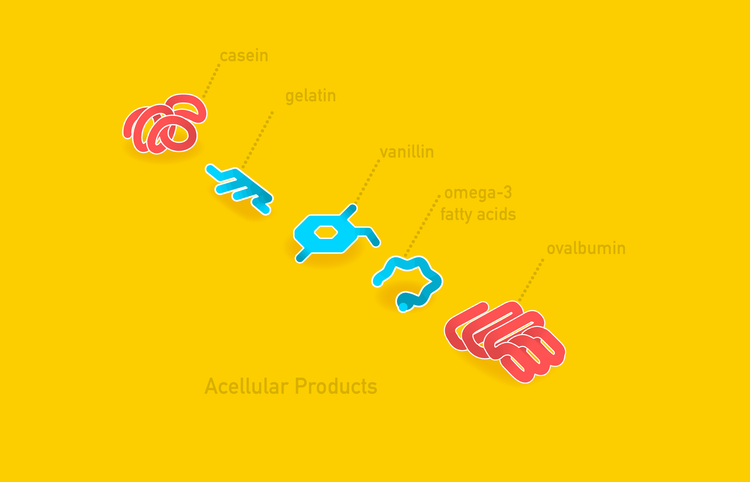
Fermentation is an ancient process of preserving and creating food and beverages. Over the past four decades , p recision fermentation , or acellular cultivation, has emerged a s a specific kind of fermentation process to create lab-grown ingredients for use in a wide variety of products, including food. What Is It? Unlike cultivated products that are derived from cells harvested from live animals, precision fermentation uses cells from micro-organisms like yeast and bacteria to produce specific enzymes , fat, collagen, flavour molecules, vitamins or protein ingredients that are identical to animal proteins but which do not contain any living material in the final product. The process is being used to create : Casein O valbumi n Rennet Omega-3 fatty acids Vanillin Chocolate Coffee Why You Should Care As the cost of the p recision fermentation process falls , the possibilities for creating ingredients to replace animal - derived ingredients for use in the food industry will be endless. Consider that by using precision fermentation: E xpensive or imported ingredients like vanilla can be created and sourced in Canada , which will help build new, sustainable Canadian-based supply chains. Precision fermentation allows for greater product consistency and stability, meaning products can be more easily scaled for commercial markets . Once scaled, it ha s the capacity to meet the growing demand for novel and vegan protein s. It s use has the potential to help solve issues of food scarcity and insecurity , as well as food waste. Unlike synthetic or artificial ingredients, it i s derived from a natural source , and can offer food companies a “clean label.” Its use removes concerns about animal welfare and the environment that have been linked to conventional dairy and meat industries, including land and water use, carbon footprint , and greenhouse gas emissions. Opportunities in Canada While i nsulin made through p recision fermentation has been on the market in Canada since the 1980s , today there are a variety of products containing ingredients derived through the process. Some of the Canadian startups using the process to create novel proteins and other alternative products include: Mississauga, ON-based Liven Proteins , which creates animal-free functional protein s for use in plant-based food and beverages. Proveta Nutrition Ltd. based in Saskatoon, SK produces animal feed for farmers across the Prairies using precision fermentation. Toronto’s Ardra , is using the process to produce natural flavours and fragrances . Another Fish , based in Montreal, plans to use precision fermentation to create a sustainable whitefish fillet without animal ingredients. To learn more about the precision fermentation process, listen to Alex Barlow’s conversation with Yadira Tejada of New Harvest.
Community Manager-
Company Spotlight - BioShur Inc.
This is one in a series of interviews with CFIN member companies that have successfully applied for and received funding . Montreal, QC-based BioShur Inc. aims to replace petro-based flexible plastic packaging with soil-compostable, plant-based flexible films. This is ideal for situations in which the recycling of petro-based plastics is particularly difficult or unfeasible. The company aims to improve the food industry by helping environmentally conscious brands reduce their greenhouse gas (GHG) footprint and plastic pollution; and through plans to incorporate natural agents that help reduce food spoilage caused by pathogens, the company will reduce food waste. BioShur received $50,000 in funding from CFIN to scale up the fabrication of a bio-based and backyard compostable cling food wrap that can also extend the shelf life of fresh food. We talked to BioShur founder and CEO Roger Tambay to learn more about the company and its plans. Q: What is your company’s mission? A: Our mission is to help consumers and brands reduce plastic waste, reduce food waste, and reduce the emissions of GHG. Our near-term objective is to replace non-recyclable PVC cling food wrap with a plant-based and soil-compostable cling wrap. The film will also enhance the shelf life of fresh produce like strawberries and cauliflower. Q: Why did you apply for this funding and how will you use it? A: We applied to CFIN because it targets a great community of Canadian food industrials. The Innovation Booster will help us along the product development cycle, allowing us to make prototypes that potential buyers can touch, feel and try. Q: What excites you most about working in this area of the food industry? A: GHG emissions and food waste are huge social problems. We are excited about helping brands and individual consumers contribute to address these problems. It’s an honour to collaborate with CFIN to achieve this goal. Q: Why is collaboration so important for accelerating innovation in the food industry? Is it difficult to find good collaborating partners, and what would make the process easier? A: Solving social problems like the ones we are addressing requires the collaboration of many stakeholders all along the chain. If we have any chance of solving this problem, it is through deep social collaboration, including with the food industry. Yes, it is difficult to find good collaborating partners. The CFIN network of innovators is a community and the YODL platform is a great tool to connect with other individuals that share the same passion we do. Q: Please comment on the importance of public funding to help companies clear innovation hurdles and access leveraged funds. A: Public funding is essential. The cost of development is getting higher and higher, and private investors are generally unwilling to fund research and development or scale-up risk. Thanks to CFIN, we’re able to leverage our internal funding and have better access to scale up facilities much faster than if we were to go it alone. Q: Looking ahead, what’s on the horizon for your company? A: We hope to bring a prototype to market by the end of 2023. We hope this prototype will be adopted by major food companies and retailers both here in Canada and internationally. We also really want to offer a product to individual consumers – we really believe that the average person wants to contribute to a cleaner economy. We want to give people access to a food wrap that has the same performance they’re used to, but with a better carbon footprint. Q: What are your passions or hobbies outside of work? A: I love running, biking, skiing, and playing piano. Q: If you had to pick one person to make you a meal, who would you choose? A: My girlfriend, Sarah! Ready to access funding for your innovative initiative? Click here to find out more about CFIN’s funding programs.
Community Manager-
50 Canadian FoodTech Resources – BC Food Hub Network
Canada has an extensive range of research centres, food incubators, accelerators and labs supporting food and beverage innovation through the research they do and/or the services they offer. Each week throughout 2023, we’ll be highlighting an organization that’s supporting food innovation in Canada. Name: The BC Food Hub Network Location: Throughout BC Focus: The BC Food Hub Network aims to foster growth and innovation in the processing sector through improved industry access to facilities, equipment, technology, technical services, and business supports. The Network is developed in collaboration with industry, communities, and post-secondary institutions to build provincial food and beverage processing while serving the regional and sector diversity of the province. Mission: To help BC’s food and businesses grow, innovate, and commercialize. Services: The Network is made up of regional food processing and innovation hubs or food hubs, as well as an Endowed Food and Beverage Innovation Professorship at the University of British Columbia, Vancouver campus. Food hubs are shared-use food and beverage processing facilities that offer food and agriculture businesses access to commercial kitchen and production space, processing and packaging equipment, product development and testing services, storage and distribution facilities, mentorship training and support, and resources to support business development and growth. There are currently food hubs operating or under development in 12 BC communities . What you need to know: The Network supports the provincial government’s “Grow BC, Feed BC and Buy BC” programs to encourage greater food security and local business growth. Notable News: On its site the Network offers two free resources for entrepreneurs looking for practical business start up information: Shared-Use Food and Beverage Processing Facilities in BC, Part I: A Step-by-Step Guide, and Part II: Business Plan Template. Get Involved: Contact the BC Food Hub Network at Foodhubs@gov.bc.ca , or at 888-221-7141, or reach out to our Regional Innovation Director Lavina Gully.
Community Manager-
Visualizing Cellular Food: A Conversation with Yadira Tejeda Saldana of New Harvest.
CFIN's Alex Barlow sat down with Yadira Tejeda Saldana of New Harvest to discuss how cellular food is created. Illustrations by Nick Counter for New Harvest.