Featured

Other Articles

The Tablesetter – January 23, 2023

The Tablesetter – January 23, 2023

Happy Monday CFIN members! Here’s your weekly heads up on what’s happening on YODL and around the food world this week. The YODL Menu Monday: The Tablesetter – January 23, 2022 Tuesday: Introduction to cellular food (infographic) Wednesday: 50 Canadian FoodTech Resources – University of Guelph Meat Lab Thursday: Member Spotlight – Saltwinds Coffee Company Friday: News File Something to Celebrate January 27, 2023 is National Chocolate Cake Day! According to a survey by NYC Marketing Agency, 58% of 1,000 people surveyed prefer chocolate cake over vanilla. In fact, 32% of people said chocolate was their favourite flavour, and 4% said they won’t eat a cake unless it’s chocolate. Food Facts Barry Callebaut’s Top Chocolate Trends for 2023 and Beyond report says consumers are now looking for three things when they choose chocolate: Intense indulgence – Chocolate that is a feast for the eyes and for the taste buds, with 71% of consumers saying they when they want to celebrate they choose chocolate. Mindful indulgence – Chocolate that is tasty but at the same time good for the consumer and the planet. That includes treats that are plant-based, sugar reduced, and sustainably sourced with traceable ingredients. Healthy indulgence – Chocolate that is fortified and functional, with 65% of consumers saying they would enjoy a health-boosting chocolate featuring macro/micronutrients. The company says consumers are also looking for innovative chocolate products which include vitamins, minerals, fibres, and flavanols. Happy YODLing!

Community Manager

News File – January 20, 2023

News File – January 20, 2023

Each Friday we’ll bring you a roundup of news from CFIN, YODL and around the food world. As seen on YODL Check out this week’s most viewed discussions: Confused about HACCP, GMP, GFSI, SQF and more? | Open Forum (cfin-rcia.ca) New SDTC Round of funding announced | Open Forum (cfin-rcia.ca) Bluebird Hardwater : une eau alcoolisée sans bulles (prêt-à-boire) | Hard Water | Open Forum (cfin-rcia.ca) Around the Food World Acosta has released its insights into what shoppers will be looking for they shop in store for groceries or dine out this year. Danone is the first food company to set a methane reduction target and align with the Global Methane Pledge. A study in Nature Food journal on production metrics at Israel’s Believer Meats shows that cell-cultured meat can be scalable. Did you Know? A new survey by Steritech reveals what consumers want and don’t want when they visit a retail brand. The survey of more than 3,000 North American consumers found: 74% expect a brand to provide the same experience in every store. 25% said they would visit a brand less frequently after one negative experience, while; 59% said they would visit a location more often after one positive experience. 52% said online reviews provide an accurate representation of a brand. 29% said they were more likely to post a review about a good experience, vs. a bad experience (23%). The most valued grocery store features cited by respondents are food (60%), value (57%), product availability (56%), customer service/staff disposition (40%), and store appearance (35%). The least valued features of a brand cited were app and mobile ordering (10%), bathroom cleanliness (13%), store design or organization (22%), physical safety (25%) and food taste (25%).

Community Manager

Company Spotlight - Vivid Machines Inc.

Company Spotlight - Vivid Machines Inc.

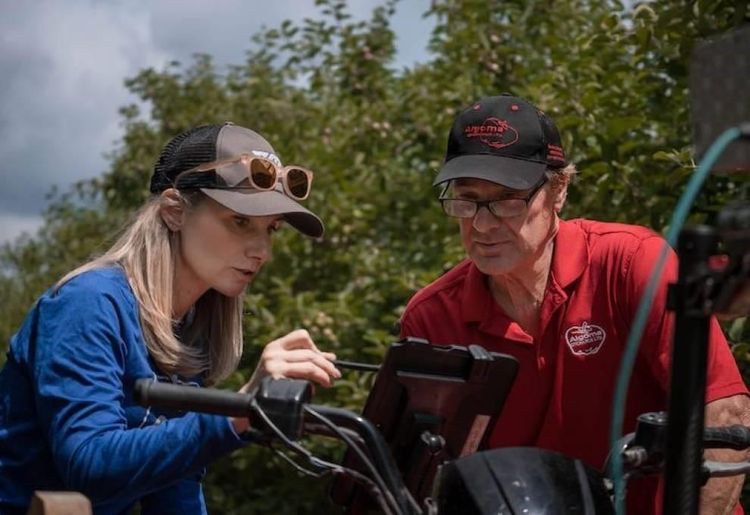
This is one in a series of interviews with CFIN member companies that have successfully applied for and received funding . Toronto, ON-based Vivid Machines developed a multispectral computer vision platform to digitize fruit production. The shoe-box size device mounts onto an ATV or tractor to capture plant-level data below the canopy and across the farm, providing real-time insights to help fruit growers produce more fruit on existing acreage and reduce food waste. The company started with apples but will be moving into other fruits such as grapes and kiwifruit. Vivid Machines received $810,920 in funding for a project to scale fruit volumes and transparency across the fruit supply chain. We talked to Jenny Lemieux, founder and CEO of Vivid Machines, to learn more about the company and its plans. Q: What is your company’s mission? A: Our mission is to revolutionize fruit production and the entire supply chain to help farmers solve food security globally. Q: Why did you apply for this funding and how will you use it? A: We applied for this funding so that we can extend the application of our orchard yield predictions and insights to different fruit supply chain partners to help reduce food waste and ensure more fresh fruit gets to market. Q What excites you most about working in this area of the food industry? A: My co-founder and I are passionate about food and agriculture, and also have backgrounds in physical, machine learning, and software products. We talked to hundreds of farmers, agronomists, and fruit and vegetable growers, and discovered this interesting problem in permanent crops that we thought we were particularly suited to solve. Q: Why is collaboration so important for accelerating innovation in the food industry? Is it difficult to find good collaborating partners, and what would make the process easier? A: We’ve been fortunate to meet and work with industry experts in the fruit industry and in the machine learning space. These collaborations have accelerated our milestones and growth. We are very excited to be collaborating with CFIN and with the connections we will make. Q: Please comment on the importance of public funding to help companies clear innovation hurdles and access leveraged funds. A: Public funding has helped us develop prototypes of our technology and have given us runway to test and validate our results before it was commercially viable. Without public funding, we would not be where we are today. Q: Looking ahead, what’s on the horizon for your company? A: We plan on extending our technology to other tender fruit such as grapes, kiwifruit and pears. Q: What are your passions or hobbies outside of work? A: I’m a proud soccer mom! Q: If you had to pick one person to make you a meal, who would you choose? A: My dad. Ready to access funding for your innovative initiative? Click here to find out more about CFIN’s funding programs.

Community Manager

50 Canadian FoodTech Resources – The Verschuren Centre

50 Canadian FoodTech Resources – The Verschuren Centre

Canada has an extensive range of research centres, food incubators, accelerators and labs supporting food and beverage innovation through the research they do and/or the services they offer. Each week throughout 2023, we’ll be highlighting an organization that’s supporting food innovation in Canada. Name: The Verschuren Centre for Sustainability in Energy and the Environment Location: Sydney, NS. Focus: The Verschuren Centre is an independent, not-for-profit clean technology development and deployment facility offering a collaborative space that allows clients to advance technology cost-effectively, while having the support required on the path to commercialization. Mission: To improve food security, provide measurable economic development, and reduce greenhouse gas emissions in order to meet transition by 2030 goals. Services: The centre covers the areas of bio manufacturing, bio marine, bio agriculture, energy systems, carbon transformation, bio polymer, and aquaculture. Services include rapid process and media optimization, process control and parameter identification, process characterization, analytical testing and process development, energy net-zero mapping, polymer extrusion and processing, material/product characterization, and training in lab equipment, fermentation, and extraction. What you need to know: The facility includes biosafety level 1 and level 2 labs, fully equipped analytical suite, pilot plant facility with scale up to 1,000 L with downstream processing, marine extraction facility with scale up to 6,000 L with extraction, a plant growth room with controlled environment for agricultural trails, and a 30 x 60-ft. pilot greenhouse with 900 sq. ft. of automatic drip irrigation. The centre is also home to one of only three bioreactors in Canada. Notable news: The centre received $2 million in funding last year through the Canada Coal Transition Initiative – Infrastructure Fund, which together with other financing will go towards expanding its lab facility and increasing its bioreactor capacity by 10 times. The facility currently works with more than 40 companies to develop bioeconomy and green energy innovations. Notable clients include Ardra Inc., New Dawn Enterprises, Reazent, and alterBiota. Get involved: Contact the Verschuren Centre at info@verschurencentre.ca , or reach out to our Regional Innovation Director for Atlantic Canada, @TysonMacInnis.

Community Manager

Let’s Talk Innovation: Using Whole Legumes as Functional Ingredients

Let’s Talk Innovation: Using Whole Legumes as Functional Ingredients

Today, we are launching a new series, Let’s Talk Innovation with Isabelle Marquis, a French-language video series covering every area of food innovation. In the first instalment of the series, Isabelle speaks with Sylvie Turgeon, Professor of Food Science at Université Laval, researcher at INAF and co-director of GastronomiQc Lab, about the use of whole legumes as functional ingredients.

Community Manager

The Tablesetter – January 16, 2023

The Tablesetter – January 16, 2023

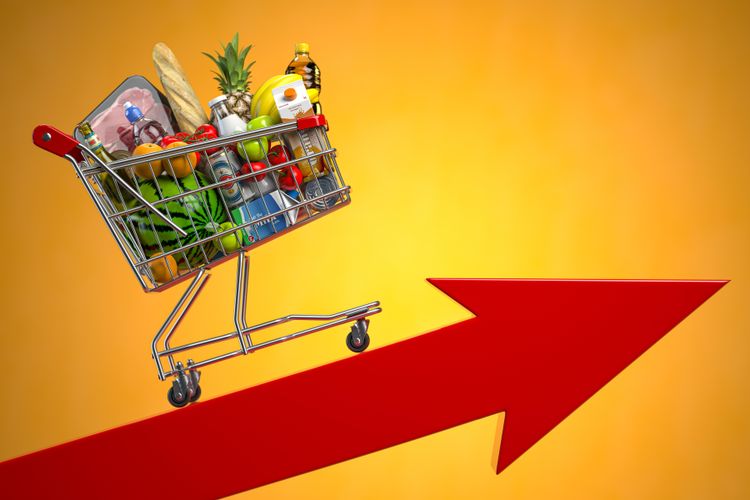
Happy Monday CFIN members! Here’s your weekly heads up on what’s happening on YODL and around the food world this week. The YODL Menu Monday: The Tablesetter – January 16, 2022 Tuesday: Utilisation de légumineuses entières comme ingrédients fonctionnels (video) Wednesday: 50 Canadian FoodTech Resources – Verschuren Centre Thursday: Member Spotlight – Vivid Machines Friday: News File Something to Celebrate January 19, 2023 is National Popcorn Day! According to Popcorn.org, there are four types of corn – sweet, field, popcorn and flint – but only popcorn pops. Unlike other corn, popcorn has a thicker hull (pericarp), which when heated allows pressure to build inside until it bursts open to reveal the gelatinous starch inside. The whole grain bursts into two shapes: butterfly and mushroom. Food Facts Dalhousie University’s Canada’s Food Price Report 2023 is forecasting grocery costs to jump between five and seven per cent this year, with some differences between categories, sectors and region. Vegetables are expected to see the largest price increase, up to 8%, while fruits will see the smallest increase, between 3 and 5%. Food prices will also continue to differ by region, with BC likely to experience the smallest change in food prices from 2022 (9.2%), and Quebec expected to see the greatest change (11%). On average, the total annual food expenditure for a family of four is expected to be more than $16,000 for 2023, compared to 2022’s $15,222.80. Happy YODLing!

Community Manager

News File – January 13, 2023

News File – January 13, 2023

Each Friday we’ll bring you a roundup of news from CFIN, YODL and around the food world. As seen on YODL Check out this week’s most viewed discussions: Upcycled food waste. | Open Forum (cfin-rcia.ca) Circular Sandwich - How is rework used in your industry? | Open Forum (cfin-rcia.ca) National Food Days | Open Forum (cfin-rcia.ca) Around the Food World A survey from the Netherlands reveals consumer concerns about cultivated meat. Cult Food Science has opened a new division called Cult Food Division to develop and commercialize cell-based products. Vgarden Ltd. has developed a plant-based canned “tuna.” Did you Know? A new report from Second Harvest shows that reliance on food banks and food charities will increase by 60 per cent in 2023. The report also revealed that: Dependency on food banks or charities grew a whopping 134% in 2022. The report cites the end of COVID supports, food inflation, and flat wages for contributing to increased reliance on food charity in 2022. The more than 1,300 Canadian food charities surveyed for the report anticipated a $94-million shortfall in meeting demand this year, working out to approximately $70,000 per organization. Up to 70% of the organizations surveyed said they will require both increased amounts of food and funding to meet expected demand for 2023.

Community Manager

CFIN Podcasts: Farm to Fork + The Bruce Singer Podcast

CFIN Podcasts: Farm to Fork + The Bruce Singer Podcast

The CFIN team routinely appears on podcasts covering the Canadian food and beverage industry. Here are two recent podcasts featuring CFIN's CEO @JoeLake and chief experience officer @DanaMcCauley. Click here to listen to Joe speaking on the Farm to Fork Podcast about how CFIN supports the food industry; and click here to hear Dana on the Bruce Singer Podcast discussing the future of the food and beverage industry, innovation, biotechnology, funding, and nutrition science.

Community Manager

50 Canadian FoodTech Resources – INAF’s In Vitro Digestion Platform

50 Canadian FoodTech Resources – INAF’s In Vitro Digestion Platform

Canada has an extensive range of research centres, food incubators, accelerators and labs supporting food and beverage innovation through the research they do and/or the services they offer. Each week throughout 2023, we’ll be highlighting an organization that's supporting food innovation in Canada. Name: The In Vitro Digestion Platform , part of INAF (Institute of Nutrition and Functional Foods) at Laval University in Quebec City, QC. Focus: The lab studies the impact of the digestion system on bioactive compounds. Mission: To carry out realistic preclinical studies on the impacts of digestion and microbiota on healthy ingredients or functional foods. Services: Research on digestion and inaccessibility of dietary fibre, nutrients, and proteins, research on probiotics, encapsulated molecules, and more. What you need to know: The lab offers five digestion models to study digestion and to simulate gut flora, including TIM-1, a sophisticated in vitro unit which simulates digestion conditions in the stomach and small intestine. Bioreactors used in conjunction are used to simulate the physiological conditions of the large intestine. According to the lab, the simulation allows researchers to see the proportion of assimilated molecules, to test galenic formulas, to evaluate the potential of pre- and probiotics, to identify the metabolites produced during digestion and to determine the influence of the compound or its derivatives on the intestinal microbiota. The lab’s digestion model allows food companies to conduct preclinical studies without the use of animal or human studies, with controllable digestion parameters, easy sampling, highly reproductible results, and reduced costs. Notable Numbers: The lab has delivered approximately 40 large-scale projects and 10 industry-funded projects in the past six years. Some examples of completed projects include: The determination of antioxidants in berry juices to optimize the fortification parameters of a specialized beverage for a company; the determination of several bioactive molecules in broccoli grown in different ways to establish the most optimal cultivation methods to improve their nutritional value; and verification of the bioavailability of antioxidant molecules in blood plasma and tissues after consumption of healthy ingredients. Get involved: Contact INAF at info@inaf.ulaval.ca or reach out to CFIN's Regional Innovation Director (Quebec), Julie Daigle .

Community Manager

Guest Blog - SKUFood's Trends for 2023

Guest Blog - SKUFood's Trends for 2023

The food and beverage industry continues to evolve at an accelerated pace with inflation dominating the shopping experience. We see retailers like Walmart offering holiday items at 2021 prices and the No Name price freeze from Loblaw. One thing that does not change is consumers can vote at the cash register each week. We have to stay on top of the changes and look to the future to ensure your food and beverage business is positioned for the future. We have some trends for you to consider as we get into 2023. We approach this a bit differently than some of the other trend reports you see out there, as our trends are developed for suppliers in the food and beverage industry. They are based on what we learn talking to different retailers, suppliers and stakeholders in the industry. Our top 10 trends for suppliers in food and beverage for 2023 1. Calm focus on the priorities: Everyone has endured two to three years of upheaval and challenges to get products produced. Retailers are looking to work with suppliers who are focused on how they can get it done as opposed to the reasons why they can’t. 2. Sales growth is key: With consumers returning to food service, retailers are facing negative comparable sales. Any supplier who delivers positive year over year growth will be ahead of many. 3. Stability in product cost: Food inflation is a big issue and retailers are eager to work with suppliers who find a way to keep their costs in line and deliver stability. 4. Local products that sell: Retailers have allocated more space and resources to regional and local brands. Now they need to see them deliver sales. 5. Sustainability matters: Sustainable packaging, reduced food waste and your environmental footprint all matter. They can be a path to the shelf or your route off the shelf if someone else in your category figures it out. 6. Next generation of plant-based products: It has been enough to be plant-based, now the products need to taste good and sell. There are opportunities for products that perform like the products they are designed to replace. Plant-based is not enough anymore. 7. Reduce logistics costs: Products need to get from where they are produced to the shelf and it is costing more all the time. Retailers might entertain creative solutions such as fewer deliveries of more products, to share some benefits. 8. Accountants will have more input: Retailers are facing higher interest rates like everyone else. The cost of inventory and when it is paid for will be under more focus and pushed to the limits. 9. Communication is evolving: Some retailers are back with in person meetings and others prefer video. Keep an open mind. Remember they are all different. 10 . Watch your category: With sales declines in retail, food inflation and focus on inventory, a lot might change. There could be a lot of pressure to drive private label, reduce SKUS and focus on items that sell. Spend time in the stores and talk to your customers about how to deliver sales growth. For more information visit SKUFood or contact Peter Chapman at peter@skufood.com. This article originally appeared on the SKU Food blog on December 19, 2022.

Community Manager

The Tablesetter – January 9, 2023

The Tablesetter – January 9, 2023

Happy Monday CFIN members! Here’s your weekly heads up on what’s happening on YODL and around the food world this week. The YODL Menu Monday: The Tablesetter – January 9, 2022 Tuesday: Guest Blog - SKUFood Trends for 2023 Wednesday: 50 Canadian FoodTech Resources - INAF’s In Vitro Digestion Platform Thursday: Double Benefit: Innovative Canadian companies are impacting our economy and food security in positive ways Friday: News File Something to Celebrate This is National Mocktail Week! The annual celebration takes place the second week of January, this year between January 8 to 14. Many Canadians opt for a dry January, or at least a week without alcohol, after the holiday season. And according to a Canadian Press article , one in five consumers are already drinking less than they did pre-pandemic. Food Facts Technomic recently released its Canadian foodservice trends forecast What We Foresee for 2023 , and its 2023 Global Restaurant Trend Forecast . Some of the foodservice trends and predictions Technomic sees for this year include: A return to traditional menus and ordering from technologies such as QR codes; Loyalty programs will become crucial to driving interest among younger consumers; Menus highlighting Central and South American cuisines, food preservation methods, and nostalgic health cues; Takeaway service will increase at the detriment of delivery; Global street foods, especially food from Lebanon, will become more popular; The plant-based movement will continue to evolve in 2023. Happy YODLing!

Community Manager

News File – January 6, 2023

News File – January 6, 2023

Each Friday we’ll bring you a roundup of news from CFIN, YODL and around the food world. As seen on YODL Check out this week’s most viewed discussions: Today Canada's ban of some single use plastics takes effect - how does it impact your business? | Open Forum (cfin-rcia.ca) Research on value-added biotechnology from grain byproducts | Open Forum (cfin-rcia.ca) What to Know - Legal issues in co-packing and co-manufacturing | Open Forum (cfin-rcia.ca) Around the Food World The Institute of Cellular Agriculture is now under development at the University of Alberta. Israel’s Celleste Bio is creating lab-grown cocoa ingredients using plant cell culture methods. Mushrooms are making headlines in food research. Did you Know? The Food Industry Association’s 2022 The Food Retailing Industry Speaks report shows that consumers are becoming increasingly comfortable with technology at the grocery store. The research shows that: 91% of food retailers now sell groceries online. 79% offer curbside pick-up of online orders. 55% offer home delivery of online orders. 96% of stores offer self-checkout lanes. 29% of transactions at food retailers were at self-checkout kiosks in 2020, compared to 23% in 2019. 52% of grocery stores offer scan-and-go technology. 15% of grocers use in-store technology such as robotics and AI. 44% of stores use or plan to use electronic shelf labels and tags.

Community Manager