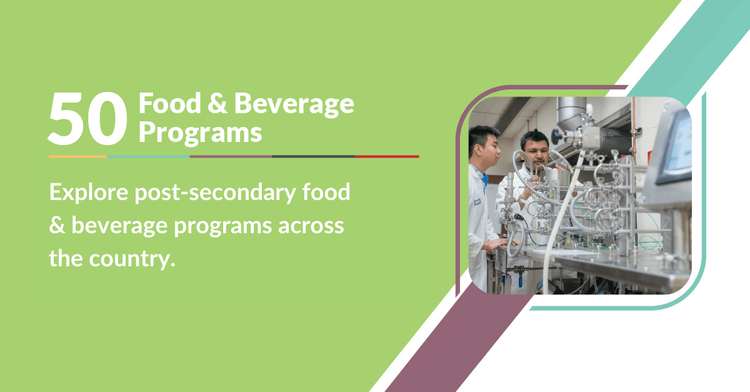
Canada is home to a diverse and dynamic food and beverage industry, supported by educational programs that train the next generation of chefs, brewers, entrepreneurs, and innovators. This roundup highlights 50 standout programs across the country, from top culinary schools and hospitality management courses to cutting-edge research initiatives and sustainability-focused training. Whether you're an aspiring professional, educator, or industry enthusiast, these programs provide valuable insights into the evolving world of food and drink in Canada. BC & Yukon Vancouver Community College UBC BCIT LaSalle College (Vancouver) UBC: Food, Nutrition, and Health Okanagan College Vancouver Island University University of Fraser Valley Northern Lights College North Island College Yukon University Selkirk College Thompson Rivers University Kwantlen Polytechnic University Prairies Saskatchewan Polytechnic University of Alberta University of Saskatchewan University of Manitoba SAIT NAIT Manitoba Institute of Trades & Technology International College of Manitoba Ontario Niagara College Humber College Le Cordon Bleu Ottawa George Brown College Fanshawe College Brock University University of Guelph Toronto Metropolitan University Loyalist College Georgian College Conestoga College Durham College Centennial College Canadore College Algonquin College Trent University St. Lawrence College St. Clair College Sault College Lambton College Confederation College Quebec McGill University LaSalle College Bishop's University Atlantic Canada University of PEI Memorial University Cape Breton University
Community Manager-
50 Food & Beverage Programs - Vancouver Island University
Crafting a Career in BC ’ s Wine Industry: VIU ’ s Wine Business Program The Wine Business program at Vancouver Island University is a comprehensive one-year certificate course designed for those passionate about pursuing a career in the BC wine industry. The program combines practical experience with academic learning in viticulture, wine business practices, marketing, and tourism. Program Highlights: As a student, you ’ ll have the chance to immerse yourself in hands-on experiences at local vineyards and wineries, gaining insights into the entire winemaking process. This practical foundation is then complemented by academic courses in viticulture, wine business practices, marketing, and tourism. A standout feature of this program is its flexibility. Whether you ’ re looking to study full-time for a year or prefer a part-time option spread over two years, VIU has you covered. Located in picturesque Nanaimo, BC, VIU provides an ideal setting for your wine education journey. With a curriculum designed to integrate viticulture essentials with business acumen, VIU ’ s Wine Business program offers a holistic understanding of the wine industry. Students can also earn credits that can be applied toward a Bachelor of Business or a Hospitality and Tourism Management program, opening doors to a wide range of future career prospects. The program includes seven courses and focuses on the broader aspects of the wine industry. In addition to viticulture and winemaking, students delve into wine marketing, exporting, and the vital role of wine tourism. C ourses cover a wide spectrum, from wine marketing and appreciation to beverage theory and the management of wine tourism. The program also offers elective courses in consumer behavio u r, entrepreneurship, and festival management . What You’ll Leave With: Upon graduation, a world of opportunities awaits you in BC ’ s wine industry. Whether you dream of managing a vineyard, excelling in wine s ales and marketing, or even opening your own restaurant, VIU ’ s Wine Business program provides the knowledge and skills to make your wine-related ambitions come true. Career options span winery/vineyard management, retail sales, wine marketing representation, hotel management, culinary arts, a gri - tourism development, and s pecial events coordination. V ideo/Social / Media : VIU YouTube Video
Community Manager-
Cellular Food in Canada
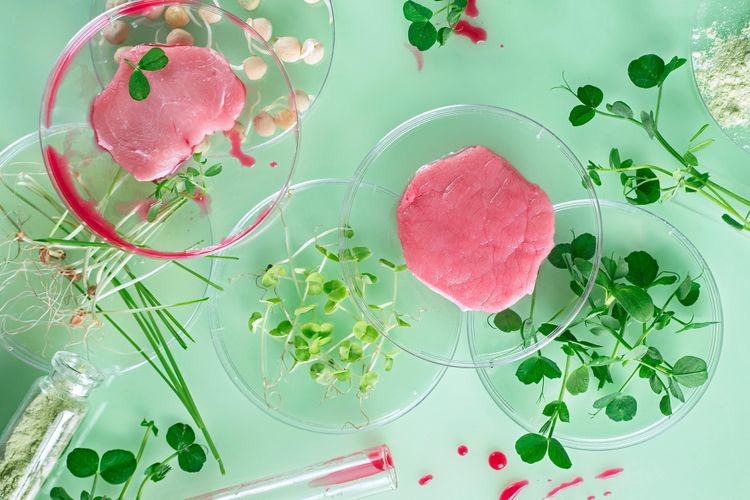
The past few years have proven how susceptible Canada’s food industry is to world events, supply chain disruptions and climate changes. New food production technology, such as cellular agriculture, has the potential to alleviate some of these challenges, while creating commercial opportunities and building a more sustainable, resilient food system. What is it? Cellular food – also known as engineering biology, synthetic biology or cell-cultivated products – is the production of food and textile products without using animals or land. Cell cultures harvested from animals, plants or micro-organisms are grown in the lab through tissue engineering or precision fermentation to produce: Cultivated proteins such as chicken, beef and seafood Fermented products like dairy, eggs, honey and chocolate Ingredients to add to products to create hybrid foods including proteins, enzymes, flavour molecules, vitamins, pigments and fats Textiles such as leather, silk and wool Why you should care As global population continues to grow, so does demand for protein, while access to land and other resource inputs become more scarce. Alternative agriculture could be an answer to food scarcity, concerns about animal and environmental welfare, cost inflation and resource challenges due to climate change. Compared to conventional agriculture, cellular agriculture production, is much less energy intensive, produces less greenhouse gas emissions, and has a much lower overall carbon footprint. With our strong food infrastructure, reputation for food safety, biotechnical expertise, and federal support for alternative protein production, Canada is well positioned to become a leader in cellular agriculture. The 2021 report Cellular Agriculture: Canada’s $12.5 Billion Opportunity in Food Innovation from Ontario Genomics and the Food and Agriculture Institute at the University of the Fraser Valley found that the international cellular agriculture market will reach US$100 billion by 2032. Canada’s food industry has the potential to take $12.5 billion that market, while creating up to 142,000 high-paying jobs. Opportunities in Canada Engineered plant proteins are already in the Canadian market, and by all estimates, precision fermented products are expected to appear before cultured meat products. Current Canadian regulations consider food produced through cellular agriculture as a novel food, and products are approved on a case-by-case basis. Here are a few Canadian start-ups making headlines: Because Animals – This Toronto-based pet food company uses cultured ingredients such as probiotics and nutritional yeast to create nutrient-rich cat and dog food designed to help digestive issues. Future Fields – Edmonton, AB-based Future Fields is a R&D producing growth media products that can be used to create commercialized cultivated proteins in a safe and sustainable manner. Cell-Ag Tech – Toronto’s Cell-Ag Tech is doing R&D on cell-cultured fish and seafood. New Harvest International non-profit research institute New Harvest , which promotes the science behind cultured meat through research, funding and a conference , now has a Canadian branch.
Community Manager-
Other Articles
CFIN at One - Funding Innovation
After a full year of operations, CFIN has a lot to be proud of – from building a national organization in a virtual environment, to creating a community of food innovators, and funding innovative food projects across Canada. CEO @Joe Lake spoke with @CarolynCooper about some of CFIN’s accomplishments over the past 12 months. Here’s part three of the three-part series. In part one we discussed how CFIN has built an organization in the past year, and in p art two we looked at how CFIN has created a community. Funding Innovation One of CFIN’s mandates is to provide food and beverage companies access to funding for innovation. To date CFIN has invested more than $5M through multiple funding calls under three programs: Innovation Booster, Food Innovation Challenge, and FoodTech Next. In total, CFIN has received 141 applications from across Canada. “What I’m quite proud of for the team, is the speed with which we were able to launch calls for proposals,” says Lake. “And again, we’re learning from those, we’ve got room to improve. I think one of the stories that articulates the spirit of the organization, the culture that we’re developing, was our Innovation Booster, which is inherently designed to be much more at the speed of business. They’re really quick, they’re fairly small. People still sort of dropped their jaw when we say we’re turning them around in 40 days – that’s unusual in most grant programs.” “But I’d say that’s probably a common theme for almost everything we’ve been moving forward, it’s pretty rapid,” adds Lake, “you know, more people, more attention, we’re growing quicker. And we’re getting that feedback. Generally, people don’t seek us out to tell us bad things. I’m sure there are people that don’t like what we’re doing, and I’d be curious to hear that and more importantly why? But the ones that are coming to us are generally celebrating going, ‘Hey, we didn’t quite have a home, or we didn’t know where to turn, or this is more of the kind of group that we’re looking for, or this is needed.’ So, it does seem like we’re hitting the right buttons for a lot of people.”
Community Manager-
Live interview from SIAL Paris on the major trends of the moment
Couldn’t make it to Paris over the past few days to attend the major SIAL trade show? @Isabelle Marquis spoke with Xavier Terlet, innovation expert and chair of the jury for the SIAL Innovation competition, to discuss the major trends observed at the show this year. Xavier also presents some of the winning products and finalists in the competition.
Community Manager-
Revisiting YODL's Top Plastics and Packaging Stories
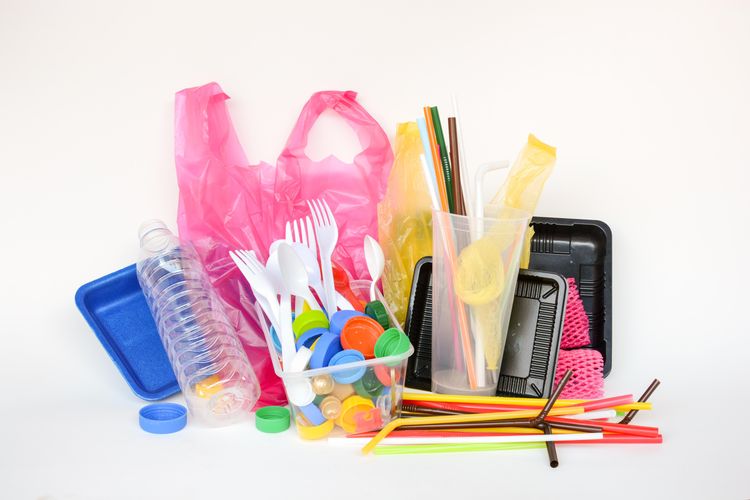
What is it? Canadians throw away a shocking 4.4 million tonnes of plastic waste annually , but only about eight per cent of that is recycled. Instead, roughly 91 per cent of plastic waste ends up as landfill, while about one per cent ends up as water and environmental pollution. Like other sectors, the food industry relies on plastic, in many different forms, for a variety of uses, from component parts in machinery, to single-use testing products, through to primary and secondary packaging, and end user products such as bags, straws and utensils. Now consumers and government are calling on food manufacturers, grocers and foodservice operators to help cut plastic waste by eliminating single-use plastics and unnecessary plastic packaging when safe to do so. Why you should care The federal government has committed to reaching a goal of zero plastic waste by 2030, beginning by banning single-use plastics. The Single-use Plastics Prohibition Regulations come into effect beginning in December 2022, with staggered deadlines until June 2024, and will prohibit the manufacture, import and sale of six single-use plastic items: plastic checkout bags, cutlery, foodservice ware containing problematic plastics, ring carriers, stir sticks, and straws (single-use plastic flexible straws can remain available, under certain conditions, for people who need them). Where to start For food industry operators unsure of how to begin the process of moving away from single-use plastic products, the federal government has developed Guidance for selecting alternatives to the single-use plastics in the proposed Single-Use Plastics Prohibition Regulations . In addition, to help address concerns around recycling programs, the government has launched two consultations to develop rules for recyclability and compostability labelling, and to establish a federal plastics registry for producers of plastic products. This article originally appeared on YODL on August 3, 2022. Explained: The Canada Plastics Pact What is it? The Canada Plastics Pact (CPP) is an independent, not-for-profit organization working with Canadian businesses, policymakers, associations and NGOs to create a circular economy for plastic packaging by 2030. It’s part of The Ellen MacArthur Foundation’s Plastics Pact Network which connects initiatives around the world in an aligned response to plastic waste and pollution. By working with diverse companies and experts in the plastics value chain, the CPP hopes to help businesses rethink how plastic packaging is designed, used and reused. The CPP’s mandate is to: Focus on the root causes of plastics pollution; Work collaboratively across the supply value chain to ensure industries remove plastic waste system wide; Mobilize and align stakeholders at the local, national and global level to work toward a common vision; and Harness and amplify skills, expertise and leadership among stakeholders while fostering innovation and solutions. Why you should care Canada has committed to removing plastic waste and pollution from our landfills, water, and environment, while moving toward a circular economy for plastic. As well as drastically reducing plastic waste and pollution , the CPP estimates that a circular economy would save up to $500 million annually, create tens of thousands of jobs, and substantially lower greenhouse gas emissions. And with the ban on single-use plastics coming into effect beginning by December 2022, food industry operators should already be looking at how to eliminate plastic waste in their businesses. Moving away from plastic packaging To help companies adjust their packaging and work towards a circular economy for plastics, in April 2022 the CPP introduced the Golden Design Rules for plastics packaging and a microsite offering context-specific guidance tailored to Canadian businesses. The rules offer global standards aligned with guidelines and targets laid out in the Ellen MacArthur Foundation’s New Plastics Economy Global Commitment . In July 2022, the CPP published its 2020 Baseline Report outlining the organization’s targets and plans for the next three years. They include: Supporting innovation on plastic packaging that can be safety reused, recycled or composted; Ensuring at least 50 per cent of plastic packaging is recycled or composted by 2025; Creating a list of problematic packaging and taking measures to eliminate them by 2025; and Ensuring an average of at least 30 per cent recycled content in all plastic packaging by 2025. What is it? Extended producer responsibility (EPR) is an initiative that encourages manufacturers to consider a product’s entire life cycle, including end use, in its original design. This way the product can be designed to minimize its environmental impact. First introduced in Sweden in 1990, the policy shifts financial and operational responsibility for end-of-life management to the product manufacturer, who must pay for that product’s reuse, recycling or disposal. EPR programs involve government working with manufacturers, and vary according to the recycling and waste programs available, as well as set standards and performance agreements. While they can be industry-led and voluntary, governments may legislate programs when a waste stream is too costly for producers or recycling companies to voluntarily recover products. EPR programs can include consumer initiatives such as deposit returns, fees or other incentives, and voluntary initiatives like industry or company targets, and consumer education and awareness. Why you should care The Canada-wide Action Plan for Extended Producer Responsibility was introduced in 2009, and since then more provincial, territorial and municipal governments have moved towards EPR models. According to the Canadian Stewardship Services Alliance’s 2020 report Canada’s Extended Producer Responsibility Programs: An Overview , EPR is essential to creating a circular economy for waste. EPR programs vary across the country, from full producer responsibility in B.C. and Quebec, to producers paying 75 per cent of end-of-life management costs in Saskatchewan, 80 per cent in Manitoba and 50 per cent in Ontario (although Ontario recently announced a major expansion to its Blue Box recycling program, eventually making producers of products and packaging fully responsible for product life cycle by 2025). Next Steps The federal government offers a list of recycling programs for different consumer products, including beverage containers, plastic bags and packaging, as well as a list of programs by region. Industry associations such as PAC Global also offer resources and support for member companies working to design products with end of life planning in mind. This article originally appeared on YODL on October 5, 2022. When the federal government published the Single-use Plastics Prohibition Regulations in June 2022, some food retailers and producers were surprised to learn that the incoming ban on single-use plastic (SUP) products will extend to compostable plastic bags and those made with oxo-degradable plastic. Compostable and biodegradable plastic have been touted as an eco-friendly solution for food operators and grocers moving away from SUP bags and utensils. But there’s still confusion over the terms and how this type of plastic affects the environment. What is it? The terms compostable, oxo-biodegradable (which break down in the air) and biodegradable plastic refer to plastic products formed by combining bio-additives such as plant starch with polyethylene, so that it “breaks down.” While most are bio-based, some are still fossil-fuel based, for example oxo-biodegradable plastics are made from oil refining waste. Biodegradable products should eventually break down into their natural state, while products labelled as compostable should completely degrade in compost in a reasonable amount of time. However, the terms are misleading as these plastic products do not degrade the same way as natural materials. Instead, says Michelle Saunders, vice president of Sustainability for Food, Health & Consumer Products of Canada, these products are designed to degrade to a set standard or speed, and they still leach chemicals into the environment. Bio-based products made from plants should also be accredited through third-party field tests showing that the product breaks down in the earth. Why you should care The Single-use Plastics Prohibition Regulations are intended to divert plastic waste from becoming pollution by banning the manufacture, import and sale of six types of SUPs. That includes checkout bags “made entirely or in part from plastic, that is formed in the shape of a bag that is designed to carry purchased goods from a business,” and whose fabric will break or tear if used to carry 10 kg over a distance of 53 m 100 times, or washed in accordance with the washing procedures specified for a single domestic wash in the International Organization for Standardization standard ISO 6330.” The Regulations also include single-use plastic cutlery made entirely or in part from plastic, that is formed in the shape of a fork, knife, spoon, spork or chopstick.” Utensils that “change their physical properties after being run through an electrically operated household dishwasher 100 times” will also be banned. The regulations banning SUP checkout bags, cutlery, foodservice ware, stir sticks, and straws come into effect over the next three years: for manufacture and import on December 20, 2022, for sale on December 20, 2023, and for export on December 20, 2025. Click here for more about the technical requirements under the Regulations. This article originally appeared on YODL on October 6, 2022. Et si nous donnions une seconde chance au plastique? Nous en avons beaucoup parlé sur YODL dans les dernières semaines : les emballages en plastique sont un problème important pour l’environnement, notamment parce qu’ils sont presque éternels. Alors que de nombreuses entreprises travaillent d’arrache-pied à trouver des solutions de remplacement à ce matériau quasi parfait pour les aliments, d’autres recherchent plutôt des façons de le rendre plus durable. Interrogé récemment sur l’avenir du plastique dans les emballages alimentaires, Simon Chrétien, Directeur général d’ Alliance Polymères Québec est clair : Le plastique est une matière incontournable pour l’industrie alimentaire qui lui rend et lui rendra encore plus dans le futur de grands services. L’enjeu est d’assurer un approvisionnement intelligent basé sur une approche d’écoconception associée à une filière de récupération efficace, donc une bonne gestion de fin de vie des produits. Et cette filière de récupération et de revalorisation est justement en train de se mettre en place. L’exemple le plus connu est sans doute celui de Loop Industries , une entreprise fondée au Québec en 2014 ayant pour mission d’accélérer la transition vers une économie circulaire des plastiques. Les experts de Loop Industries ont mis au point une technologie novatrice permettant de décomposer le plastique PET et les fibres de polyester en leurs éléments de base pour ensuite recréer une matière vierge, et donc sans aucune perte de qualité. En septembre 2021, Evian annonçait le lancement d’un prototype de bouteille de plastique fabriqué à partir de la technologie de Loop Industries, et plus récemment Loop annonçait un contrat d’approvisionnement commercial avec Danone et la construction d’une usine en Europe. On peut donc s’attendre à voir apparaitre des emballages de plastique identifiés « Loop » prochainement! Un autre angle de recherche qui bouillonne d’innovations est celui de rendre les emballages plastiques plus faciles à recycler. De la création des résines à la conception des emballages, en passant par la gestion des étiquettes et le tri des matières usées, tous les aspects des emballages plastique sont à l’étude et font l’objet de projets de recherche partout dans le monde. Au Canada seulement, l’industrie du plastique est un contributeur important à l’économie locale avec des revenus annuels de près de 29 milliards de dollars. La division des plastiques de l’Association canadienne de l’industrie de la chimie est particulièrement active en recherche et développement d’innovations pour rendre les emballages plastiques durables. Nous nous entretiendrons avec leur Vice-présidente exécutive, Mme Isabelle Des Chênes, la semaine prochaine. Soyez des nôtres pour en apprendre plus sur l’avenir du plastique dans les emballages alimentaires!
Community Manager-
The Tablesetter – October 24
Happy Monday CFIN members! Here’s your weekly heads up on what’s happening on YODL and around the food world this week. The YODL Menu Did you notice we added a YODL Menu widget to our homepage? Now you can easily access all of our articles and keep track of what’s coming up. Monday: The Tablesetter – October 24 Tuesday: Plastics and packaging revisited Wednesday: Innovation at SIAL Paris (video) Thursday: CFIN Celebrates its First Anniversary – Part 3 Friday: News File Something to Celebrate October 28 is Wild Foods Day! The day commemorates the edible fruits, vegetables, flowers, nuts and herbs that grow around the world without human intervention. Just a few of the wild foods that can be foraged in Canada include mushrooms, fiddleheads, leeks, berries, botanicals, and evergreen leaves and sap. Food Facts In 2019 Canada was the world’s second largest exporter of mushrooms, one of the most popular edible wild foods. Here are some other mushroom facts: There are roughly 14,000 species of mushroom grown around the world, in different sizes, shapes and colours. About 2,189 varieties are edible. Mushrooms are rich in vitamin D, B, potassium and antioxidants, are low in calories, and are fat, cholesterol and gluten free. Yartsa gunbu, the caterpillar fungus, is the world’s most rare and expensive edible mushroom, selling for around US$50,000 per pound. An armillaria ostoyae mushroom, also known as a honey mushroom, is the world’s oldest organism at about 8,650 years old. It covers almost 9 km 2 (mostly underground) in Malheur National Forest, Oregon. There are more than 50 mushroom varieties than can digest and break down plastics. Happy YODLing!
Community Manager-
News File – October 21
Each Friday we’ll bring you a roundup of news from CFIN, YODL and around the food world. As seen on YODL Check out this week’s most viewed discussions: Sustainable Market Share Index Report | Open Forum (cfin-rcia.ca) Canada's Clean 50 | Open Forum (cfin-rcia.ca) 1e forum régional sur la bioéconomie au Québec- inscription en cours! | Open Forum (cfin-rcia.ca) Around the Food World Kraft Heinz released its 2022 Environmental Social Governance Report showing how the company is moving towards its global sustainability goals. New biomarker technology from Wales may provide scientific links to diet and long-term health. Loblaw Companies announced it will freeze prices of more than 1,500 private-label No Name products until January 31, 2023 to help Canadians fight food price inflation. Did you Know? A June 2022 report from Food Banks Canada revealed that more Canadians are facing hunger and food insecurity due to rising food and housing costs. Here are some of the highlights: 23% of Canadians polled say they are eating less than they think they should because they don’t have enough money for food. One in five Canadians reported going hungry at least once in the past two years. One in three Canadians earning less than $50,000 a year reported not having enough money for food in the past two years. Food banks across Canada are seeing an increase, up to 25% in some regions, in Canadians visiting a food bank for the first time. 61% of Canadians see housing costs as the largest financial obstacle preventing consumers from affording food.
Community Manager-
CFIN at One - Creating a Community
After a full year of operations, CFIN has a lot to be proud of – from building a national organization in a virtual environment, to creating a community of food innovators, and funding innovative food projects across Canada. CEO @Joe Lake spoke with @CarolynCooper about some of CFIN’s accomplishments over the past 12 months. Here’s part two of the three-part series. In part one we discussed how CFIN has built an organization in the past year, and in p art three we'll look at how CFIN has funded innovation. Creating a Community There are now more than 1,900 CFIN members representing all regions of the country and every sector of the food and beverage industry. That number has steadily grown over the past 12 months as the CFIN team connected with industry through social media, through articles in industry publications, attendance at countless industry events, and by presenting online experiences such as Robotics in Action and New Pathways to the Pantry. CFIN recently partnered with CIFST to present CIFST ALT, the team participated in several in-person events this year that focus on innovation, including SIAL Canada, and is contributing to the Toronto Global Forum on October 17 to 19, and the Advanced Design and Manufacturing Expo (ADM) from November 9 to 10. Lake will be speaking at Protein Industry Canada’s Plant Forward event on November 1, as well as on Carlisle Technology’s Farm to Fork podcast on November 3. In addition, RIDs are tasked with reaching out to the food industry to make connections, raise awareness of CFIN’s funding opportunities, and engaging in conversations with CFIN members. “We say boots on the ground a lot, which to me is more of a ranger mentality – you’re out there exploring and learning about the players, the influencers, but also what are the projects and priorities? What are the problems? What are the opportunities? And help bring all that information back into that national soup,” explains Lake. “And then we can help try and bridge and connect. Because we’re trying to create a community. To me, community is a little different than ecosystem, in the sense that you’re part of a community. You don’t have to necessarily be totally engaged all the time, but you’re still part of the community. And that’s the way we’re trying to design CFIN. We’re two-pronged: we fund and we build community. And we want people to come because they feel like they’re part of. We don’t want to just create a list of all these people that are accessible should you Google or phone them. That’s not quite the same to me.” A key part of creating a cross-country, cross-sector community has been YODL, an online platform designed exclusively for CFIN and designed to facilitate discussion and partnerships among members. With original daily content, collaboration opportunities, funding calls, and lively discussions, YODL is quickly becoming the place to look for potential business partners, network with other industry professionals, and learn about new innovations. “YODL was always designed as this digital hub, this centralized location that people could come to, but it was never designed or intended to be a database, just a listing of here’s the people who are members, browse this,” says Lake. “We always wanted it to be a place where there was a sense of members having control of their contributions, their engagement and activity.” The organization hired a third party to facilitate focus groups and needs assessment polling with industry stakeholders and put out a request for proposals from tech companies to design the platform. “And from there we ended up with the YODL platform that we have now. So, it’s one of those things where you kind of know where you’re going, but the path there is certainly windy. And the only thing that’s guaranteed is 12 months from now it’s going to be different. But we always wanted this to be a flexible kind of thing that even the community itself can help design and engage in.” Lake says the platform is also drawing companies on the periphery of food, which may have the technological solutions food operators are seeking. “We’re looking for innovation, and what’s cool and exciting from my perspective is it also expands beyond your typical players in food,” says Lake. “So, you can get companies who are doing data analytics and medicine, and they can pivot and turn their skill sets to food in a new way, or robotics from the automotive sector, or large manufacturing and apply it to food. There’s a lot of opportunity and ground to be gained in what I would say is collaboration. But we’re seeing it. And actually, it’s much easier and probably more efficient to get collaboration in the non-traditional manners, so a traditional food company with a non-traditional technology, because there’s no competition.”
Community Manager-
CFIN Members Exhibiting at ADM Montreal 2022
The CFIN team will be visiting the Advanced Design & Manufacturing Expo (ADM Montreal) on November 9 and 10 at the Palais des Congrès de Montréal in Montreal, QC. The event includes five manufacturing areas – Design & Manufacturing (D&M), Automation Technology Expo (ATX), PACKEX, EXPOPLAST and Powder & Bulk Solids – featuring the latest equipment and technology for advanced design and manufacturing across several industries, including packaging, automation and robotics, energy efficiency, plastics, and processing. As well as hosting more than 200 exhibitors, the Expo will include live demos, panel discussions, and thought leadership presentations. Registration is free for qualified attendees. Click here for more information about the show and to register. Here are the CFIN members who will be displaying at ADM Montreal. INO Booth: Exhibit Hall, 1517, ATX Montréal 2022 INO is a design, development, prototyping, and small-run production house specialized in optics and biophotonics. The company develops biomedical systems, including specialized microscopes, optical and optomechanical design of light delivery systems, surgical navigation, flow cytometry, fluorescence readers, spectroscopy systems, specialized fiber endoscopy, NIR tissue optics and sensors, optical dosimetry, fiber lasers and custom LED systems.
Community Manager-
INFOGRAPHICS: CFIN's Survey on Plastics Use in the Food Industry
Editor's Note: This article originally appeared on August 9, 2022. Plastics reduction and disposal is a hot topic in many industries, including ours. But because we need to move forward and find solutions, we recently surveyed our members to find out where they stand in their intentions and actions to eliminate plastic as we know it today. The results speak for themselves! Here's what we've learned from you about the subject: Key learning #1 There’s clearly a need for sustainable alternatives to plastics. 62% of Canadian food companies see an increase in requests for more sustainable alternatives. Key learning #2 Finding solutions is a priority for most companies, and many are already turning this into action. It’s a corporate priority for 73% of our respondents and 65% are already working on it. This is great news! Key learning #3 Food companies are exploring a diversity of options. Alternative materials and compostable plastics are the top two options mentioned. It’s also interesting to see that plastic is not systematically pushed aside: 16% of respondents explored higher quality/more recyclable plastics instead of trying to replace it. Could that be a more accessible, yet sustainable way to reduce plastics…? Key learning #4 The main barrier to adopting solutions is money - either the existing solutions are too expensive or the companies don’t have the budget to invest in finding solutions. The lack of solutions suitable for one’s products, equipment and/or needs, the lack of time to search for solutions, and the lack of knowledge around who can help are other important barriers, with all three scoring equally. Key learning #5 Google and research centres (including academia) are companies’ best friends when it comes to finding info on plastics reduction. Suppliers and collaborators are also a good source of info. And CFIN is now one to! Finally, although the topic is quite new, several great resources already exist to support your work towards plastics reduction and elimination. The Canada Plastics Pact (CPP) is one of them. The non-for-profit organization and member of the Ellen MacArthur Foundation’s Global Plastics Pact network, “unites diverse leaders and experts in the national plastics value chain to collaborate and rethink the way we design, use, and reuse plastic packaging to realize a circular economy for plastic in Canada.” Unfortunately, the CPP doesn’t seem to be on the radar for most Canadian food companies, with 79% of respondents saying they have never heard of it. For more on the CPP read CFIN’s article Explained: The Canada Plastics Pact . Check out more coverage on plastics, including: Canada's Plastic Problem , and Auditing your Operations and Moving Towards a Circular Economy in Plastics, Part 1 , and Part 2. Here are a few more findings from CFIN's plastics survey:
Community Manager-
Blockchain and the Food Industry
Technology Management & Entrepreneurship Program at the University of New Brunswick to discuss blockchain and the food industry.
Community Manager-
The Tablesetter – October 17
Happy Monday CFIN members! Here’s your weekly heads up on what’s happening on YODL and around the food world this week. The YODL Menu Did you notice we added a YODL Menu widget to our homepage? Now you can easily access all of our articles and keep track of what’s coming up. Monday: The Tablesetter – October 17 Tuesday: More on blockchain, algorithms and the food industry (Video) Wednesday: Plastics use survey results and infographics Thursday: CFIN Celebrates its First Anniversary – Part 2 Friday: News File Something to Celebrate October 17 is National Pasta Day! Pasta is thought have been made as early as the fifth century, and by the later 13 th century it was a staple across the Italian Peninsula. Because there are so many regional varieties, estimates of the number of pastas out there range from 350 to more than 600 different shapes and sizes. According to Share the Pasta , the average North American eats approximately 20 lbs of pasta annually. Food Facts A poll by the Restaurant Marketing Agency on pasta preferences found: 75% of people surveyed eat pasta at least once a week, and one in 20 say they eat pasta every day. 2.8% of people say they never eat pasta. 51.95% of respondents say they prefer red sauce (marinara or Bolognese), 43.72% prefer white sauce (alfredo), and 4.32% prefer green sauce (pesto). 25% of people say spaghetti is their favourite type of pasta. Happy YODLing!
Community Manager-
News File – October 14
Each Friday we’ll bring you a roundup of news from CFIN, YODL and around the food world. As seen on YODL Check out this week’s most viewed discussions: Extended shelf life for fresh produce | Open Forum (cfin-rcia.ca) Business in Vancouver Article: Food waste innovators take aim at West Coast farms | Open Forum (cfin-rcia.ca) New fertilizer product | Open Forum (cfin-rcia.ca) Around the Food World United Caps has developed recyclable bottle cap Mimica Touchcap with label innovator Mimica, that provides consumers with real-time information about the freshness of food, and helping to prevent food waste. Organic Meadow is Canada’s first dairy to use Elopak’s unbleached paperboard milk carton packaging with net-zero carbon emissions. IGA has chosen 18 innovative Quebec companies for its inaugural Local Accelerator program. Did you Know? The Retail Council of Canada’s Halloween 2022 Shopping in Canada Survey found that 45% of Canadians celebrate Halloween. And 86% of them plan to buy the same or more amount of Halloween treats as they did last year. Here’s what else the survey found: 54% of Canadians who celebrate Halloween spend more than $50 on Halloween. Most people who celebrate Halloween make purchases up to four weeks before Halloween (16.1%), while 15.4% make purchases about two weeks before. 56% buy Halloween products at big box retailers, 37% buy them at food retailers, and 24% buy them at drug stores. 31% of Canadians say they search for Halloween products in regular grocery store aisles, while 21.1% say they look for them in front-of-store displays. They also look in free-standing displays (18.5%), in end cap displays (15.3%); in entryway displays (13.7%); in the checkout aisle (8.4%); and in dump bins (7.9%). About 28% of Canadians make a trip specifically to buy Halloween products. 45.6% of respondents say they will shop at local at brick and mortar businesses for Halloween products instead of online this year to support businesses impacted by the pandemic.
Community Manager-
The future of plastic in food packaging
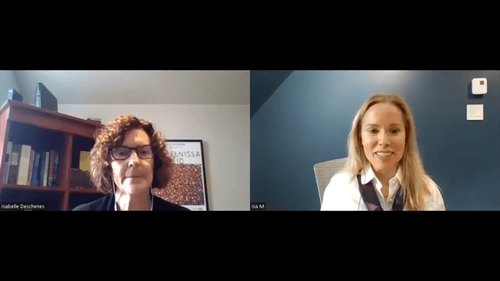
Interview by @Isabelle Marquis with Isabelle Des Chênes, Executive Vice-President of the Chemistry Industry Association of Canada, on the innovations being developed to make plastic a material that is both high-performing and environmentally responsible.