Featured

Other Articles

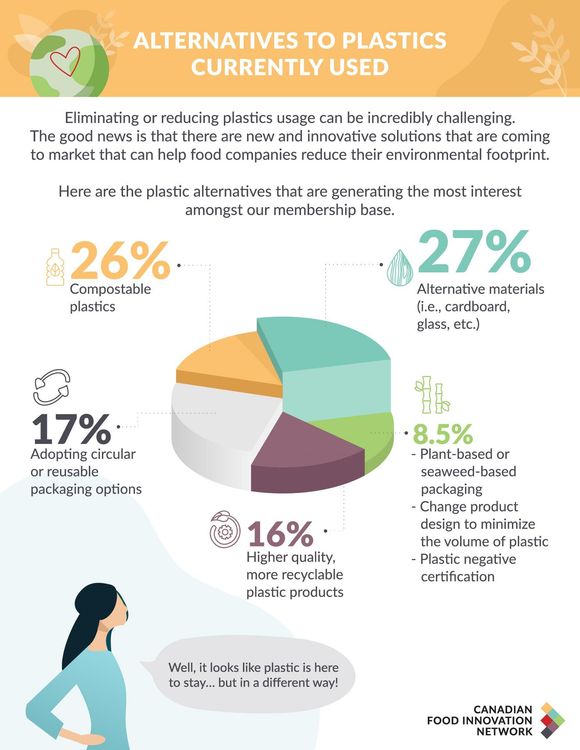
Infographic: Alternatives to plastics currently used

Infographic: Alternatives to plastics currently used

CFIN's recent plastics use survey asked members what alternatives to plastics they're using or considering using in their company. Here's what they told us:

Community Manager

CFIN Member Spotlight – Trendi Tech

CFIN Member Spotlight – Trendi Tech

This is one in a series of interviews with CFIN member companies that have successfully applied for and received funding . Burnaby, BC-based TrendiTech Inc. upcycles food waste to produce nutrient-dense products. The company is receiving $85,667 in funding through CFIN’s Innovation Booster program to create technology that aligns with CFIN’s smart product and process development priority. We sat down with co-founder and CEO Craig McIntosh to find out more about the company’s plans. Q: What does TrendiTech do and how are your services improving the food industry? A: Trendi uses robotics and automation to upcycle otherwise wasted food at the farm and food processor level, fractioning fruits and vegetables into a variety of nutrient-dense products, a fraction of its original size and weight and shelf-stable output. We offer flexible terms for farmers and reduce volumes without sacrificing nutrition, making it more cost-effective for transportation and for inclusion in other food products. Q: What is TrendiTech’s mission? A: Our mission is to stop the cycle of food waste by using our advanced technological innovations, impactful partnerships, and a suite of products that enable food waste reduction across the supply chain. Q: Why did you apply for this funding and how will you use it? A: Saving and upcycling misfit fruits and vegetables is only the first step. We want to create a circular economy by designing a new generation of our Smoothie Machine to convert our powders to hot soup. Q: What excites you most about working in this area of the food industry? A: So many things. Farmers are at the riskiest end of food production, and they’re at the whim of weather and markets. We help them maximize their return by rescuing the perfectly good food that wouldn’t otherwise get to market. Where consumers are concerned, snack foods are often junk foods. We want to make it as convenient as possible to choose healthy alternatives with no sacrifice of flavour or convenience. Q: Why do you think public funding is important in helping companies clear innovation hurdles and access leveraged funds? A: Canadian investors are notoriously conservative, much more willing to invest in a technology once it has proven itself in the marketplace. Public funding helps companies like ours accelerate to that level so we can create jobs and expand to export markets much more quickly. The funding from CFIN means we can jump start the design for a hot soup kiosk, which will use our own freeze-dried products. While making it easy for people to get nutritious food on the fly, we will begin to create a circular economy. Q: Looking ahead, what’s on the horizon for TrendiTech? A: Our goals are to scale production of our vending kiosk innovations and maximize their use of recycled food waste, position our one-of-a-kind farm food waste fractionation units (BioTrim) to address the enormity of food waste globally, and source markets for all the potential uses of the unit output (BioFlakes). Q: What are your passions or hobbies outside of work? A: Cooking, sharing food, and travelling to eat. Q: If you had to pick one person to make you a meal, who would you choose? A: Definitely my mom. She’s a great cook and loves to eat food she wouldn’t normally be comfortable cooking. Our shared love for soups was part of the soup machine inspiration. Ready to access funding for your innovative initiative? Click here to find out more about CFIN’s funding programs.

Community Manager

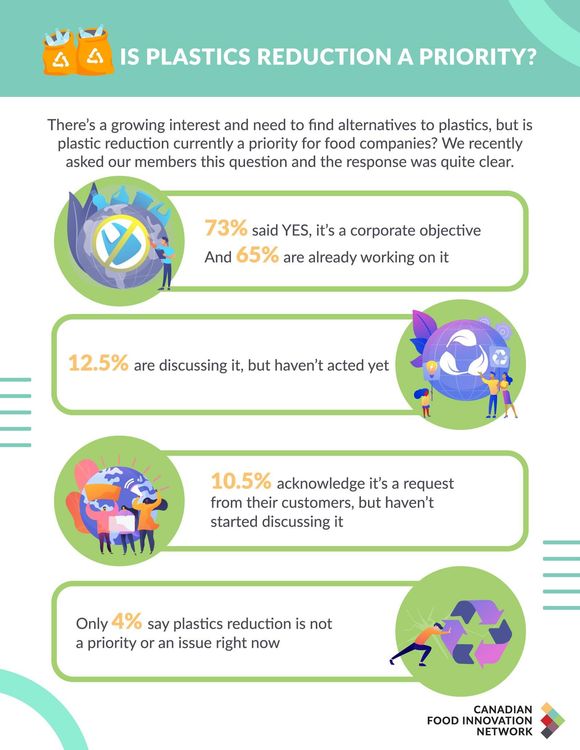
Infographic: Is plastics reduction a priority?

Infographic: Is plastics reduction a priority?

Community Manager

The Tablesetter – August 22

The Tablesetter – August 22

Happy Monday CFIN members! Here’s your weekly heads up on what’s happening on YODL and around the food world this week. The YODL Menu Did you notice we added a YODL Menu widget to our homepage? Now you can easily access all of our articles and keep track of what’s coming up. This week watch for articles and videos on: Monday: The Tablesetter – August 22 Tuesday: Survey highlights – Is plastics reduction a priority for food businesses? Wednesday: Member profile – Trendi Tech Thursday: Challenge – Accessing funds for alternative packaging solutions Friday: News File Something to Celebrate August 23 is National Eat a Peach Day! Peaches are actually part of the rose family, and are native to China. Canada produces a multitude of peach varieties, primarily in BC’s Okanagan (were the town of Peachland is located), Southern Ontario, and Nova Scotia. Food Facts According to a 2020 survey by market researcher Leger 360, 85 per cent of Canadians say buying local vegetables is important to them, while 84 per cent say they prefer to buy local fruit. Leger 360 also asked Canadians what vegetables and fruit they’ve consumed in the past year. Here’s what they found: Vegetables: Potatoes 91% Carrots 89% Onions 87% Lettuce 87% Tomatoes 86% Broccoli 82% Cucumbers 80% Peppers 79% Celery 74% Beans 74% Fruit: Apples 85% Strawberries 82% Grapes 79% Blueberries 76% Raspberries 69% Melons 59% Peaches 56% Cherries 55% Pears 51% Summer Reading List Got time on your hands this week? Check out what we’re reading these days: ‘Consumers don’t want to take another pill’: Nutrisure fills gap in 50+ nutrition with UK’s ‘first’ dedicated superfood brand (foodnavigator.com) https://www.theglobeandmail.com/business/article-food-producers-move-to-make-just-the-basics/ Happy YODLing!

Community Manager

News File – August 19

News File – August 19

Each Friday we’ll bring you a roundup of news from CFIN, YODL and around the food world. As seen on YODL Check out this week’s most viewed discussions: Private Label: An Inflationary Inevitability? | Open Forum (cfin-rcia.ca) The 100 best business meeting spots in Canada | Open Forum (cfin-rcia.ca) CFIN Food Innovation Challenge : Plastics Solutions for Foods: Reduction, Replacement, and Recyclability | Open Forum (cfin-rcia.ca) Around the Food World A new study reveals the environmental impact of meat and meat alternative proteins. Experts suggest 3D printing could help consumers in the Western world overcome their aversion to alternative protein like insects. Leaked data from the Canadian Dairy Commission raises questions about the rapidly rising cost of dairy products. Did you know? Statistics Canada figures show that Canadians are consuming roughly 20 per cent less dairy than they were a decade ago, replacing it with plant-based alternatives. Between 2018 and 2019, the Nielsen Company reports that sales of oat milk rose 244 per cent, while soy milk declined by one per cent, coconut milk dropped three per cent, and rice milk fell a whopping 48 per cent.

Community Manager

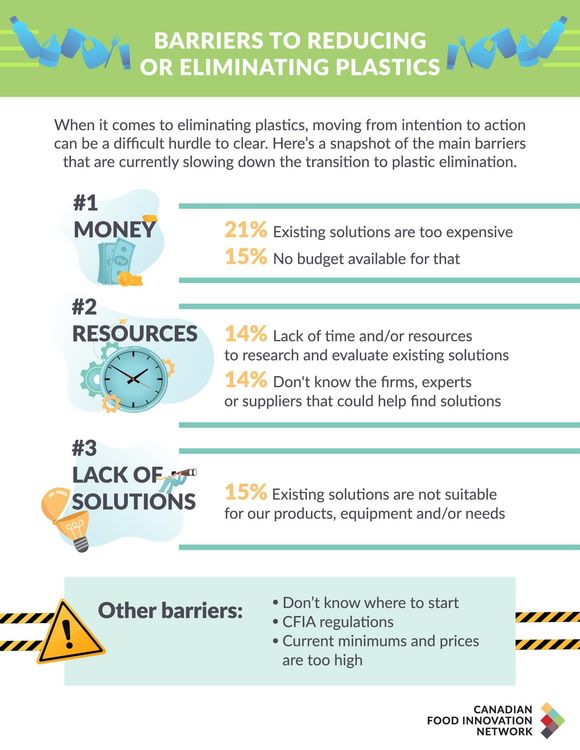
Barriers to reducing or eliminating plastics use - Infographic

Barriers to reducing or eliminating plastics use - Infographic

CFIN's recent plastics use survey asked members what barriers they experience to reducing or eliminating plastics use in their operations. Here's what they told us:

Community Manager

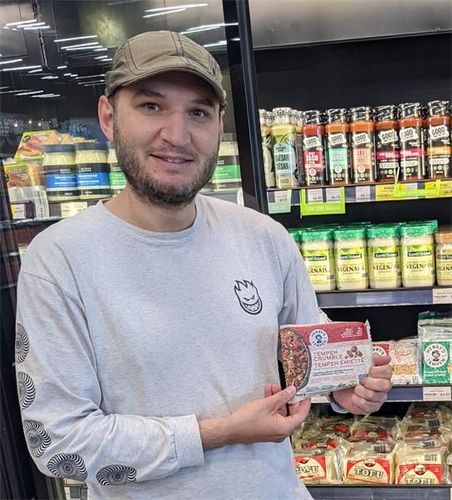
CFIN Member Spotlight – Henry’s Tempeh

CFIN Member Spotlight – Henry’s Tempeh

This is one in a series of interviews with CFIN member companies that have successfully applied for and received funding . Kitchener, ON-based Henry’s Tempeh Inc. produces organic, sustainable tempeh. The company is receiving $61,051 in funding through CFIN’s Innovation Booster program to create technology that aligns with CFIN’s smart product and process development priority. We sat down with president Jason Jurchuk to find out more about the company’s plans. Q: What does Henry’s Tempeh do and how are your products improving the food industry? A: Henry’s Tempeh produces organic tempeh, a fermented plant protein with Indonesian roots. We use organic Canadian soybeans to produce our flagship line of soy-based tempeh products. We are part of Canada’s sustainable food system; we buy from growers close to our production facility that use organic farming principles, and turn these beans into a minimally processed and delicious nutrient-dense product. Q: What’s the mission of Henry’s Tempeh? A: Our mission is to produce accessible, fermented plant-based foods using ethically sourced ingredients. Q: Why did you apply for this funding and how will you use it? A: We’re working to develop a new fermentation system that will significantly reduce waste and produce a better product. We applied for the CFIN Innovation Booster funding to support the development of this innovative technology and to kickstart the development of a new non-soy product line. Q: What excites you most about working in this area of the food industry? A: The fact that what our team does every day grows Canada’s sustainable food system and puts high-quality, nutritious, and delicious foods on Canadians’ plates. Q: Why do you think public funding is important in helping companies clear innovation hurdles and access leveraged funds? A: Public funding accelerates innovation and growth. Without it, we would certainly not be where we are today. Funding through organizations like the CFIN enables us to innovate, scale up, and get technology and products to market quickly and effectively while creating jobs and strengthening Canada’s domestic food system. Q: Looking ahead, what’s on the horizon for Henry’s Tempeh? A: We operate with a growth mindset. We’re working to expand our product line, expand our production facility and develop world-class fermentation technology that will position us as a leader, not only in the fermented food space but in the Canadian food economy, all while operating transparently and sustainably. Q: What are your passions or hobbies outside of work? A: Mycology, fermentation, spending time with family. Q: If you had to pick one person to make you a meal, who would you choose? A: Peter Pan Ready to access funding for your innovative initiative? Click here to find out more about CFIN’s funding programs.

Community Manager

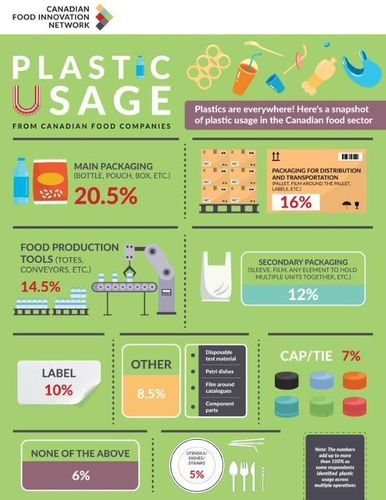
Use of plastics in Canada's food industry

Use of plastics in Canada's food industry

CFIN's recent plastics use survey asked members how they use plastics in their operations. Here's what they told us:

Community Manager

The Tablesetter – August 15

The Tablesetter – August 15

Happy Monday CFIN members! Here's your weekly heads up on what’s happening on YODL and around the food world this week. The YODL Menu Did you notice we added a YODL Menu widget to our homepage? Now you can easily access all of our articles and keep track of what’s coming up. This week watch for articles and videos on: Monday: The Tablesetter – August 15 Tuesday: Survey highlights – Plastic use in the food industry Wednesday: Member profile – Henry’s Tempeh Thursday: C hallenge - Auditing your operations and moving towards a circular economy, Part 2 Friday: News File Something to Celebrate August 19 is national potato day! First cultivated in Peru in approximately 8,000 BC, there are more than 4,000 potato varieties, including Canada’s famous Yukon Gold. The first Canadian-bred potato variety marketed by name, the Yukon Gold potato was developed in 1966 by Gary Johnston and Geoff Rowberry at the University of Guelph in Guelph, ON, and made it to market in 1980. Food Facts According to National Today , potato chips are consumers’ favourite snack food (with Lay’s preferred by 32.4% of consumers), while french fries are the preferred way to enjoy potatoes in a recipe. In a survey which asked consumers “which potato recipes do you enjoy the most?” respondents cited: French fries (16.23%) Mashed potatoes (15.23%) Baked potato (11.68%) Hash browns (10.64%) Tater tots (8.44%) Potato salad (8.35%) Potato wedges (8.18%) Twice baked potato (6.97%) Potato skins (6.10%) Potato soup (5.24%) Classic potato gratin (2.94%) Surprisingly, simply boiling and adding butter didn’t make the cut in this survey! What’s your favourite way to enjoy potatoes? Summer Reading List Got time on your hands this week? Check out what we’re reading these days: Create long-term value in a reimagined food system | EY Canada https://www.forbes.com/sites/garyocchiogrosso/2022/02/14/continued-supply-chain-issues-in-the-restaurant-industry/?sh=ca5de1e5bbdd Comment: Pushing back on paper packaging (foodservicefootprint.com) Happy YODLing!

Community Manager

News File – August 12

News File – August 12

Each Friday we’ll bring you a roundup of news from CFIN, YODL and around the food world. As seen on YODL Check out this week’s most viewed discussions: New SDTC Seed Funding Winners announced, with a few CFIN members! | Open Forum (cfin-rcia.ca) Electronic Shelf Labels (ESL) at my local Loblaws supermarket | Open Forum (cfin-rcia.ca) Fermentation Expertise abounds in Quebec! | Open Forum (cfin-rcia.ca) Around the Food World BioEnterprises’ FoodShift Program is now accepting applications from Ontario-based food businesses looking for funding to adopt clean technology projects. Researchers at Oxford University in England have established a rating method to help food companies better measure their environmental impact. Shorr’s The 2022 Sustainable Packaging Consumer Report reveals that 76% of US consumers are making an effort to purchase more sustainable products. A coalition of plastics manufacturers is challenging the government’s single-use plastics ban. Did you know? A new study from WorkJam shows that businesses across all industries are currently more concerned with labour issues than supply chain challenges. The study of executives worldwide in 21 industries found that: 48% of respondents said labour shortages were their biggest operational concern, followed by employee turnover (31%), workplace stress (10%), and supply chain issues (nine per cent). 30% said employee retention is their current top priority, followed by attracting talent (28%), upskilling staff (20%), improving operating efficiency (12%), and better customer service (seven per cent). Scheduling flexibility is the number-one area respondents said employees would like to see improvements in (57%), followed by meaningful work (54%), compensation (53%), schedule predictability (49%), growth (46%), company culture (45%), and diversity, equity and inclusion (DEI) initiatives (17%). Respondents said pay increases (60%) and perks (50%) are the top two ways companies are trying to improve retention, while 41% cited sharing employees across locations and regions. For more on attracting and retaining skilled employees, check out this discussion .

Community Manager

Challenge: Auditing your operations and moving towards a circular economy for plastics (Part I)

@Carolyn Cooper sat down with Michelle Saunders, vice president of Food, Health & Consumer Products of Canada (FHCP) to discuss how food businesses can begin to move towards a circular economy for plastics.

Community Manager

CFIN Member Spotlight – Index BioSystems

CFIN Member Spotlight – Index BioSystems

This is the first in a series of interviews with CFIN member companies that have successfully applied for and received funding . Toronto, ON-based Index BioSystems Inc. produces BioTags that allow food and ingredients to be tracked as they move through the supply chain. The company is receiving $92,790.01 in funding through CFIN’s Innovation Booster program to complete a pilot project that aligns with CFIN’s agile and safe supply chains priority. We sat down with CEO Mike Borg to find out more about the company’s plans. Q: What does Index BioSystems do, and how are your improving the food industry? A: We use biotechnology to turn baker’s yeast into microscopic barcodes called BioTags. BioTags can be applied directly to food products and ingredients, while creating a secure link between a physical product and its supply chain data. This is especially important for high-volume commodity products like grain, which lose their identity as they’re co-mingled in the supply chain. BioTags enable true supply chain digitization where the source-of-origin, sustainable production methods and other critical authenticity data can be directly linked to a product itself. Q: What is Index BioSystems’ mission? A: We’re using biotechnology to imprint identity onto products, enabling brands to deliver a more secure and sustainable future. Q: Why did you apply for this funding, and how will you use it? A: Index is collaborating with industry partners to optimize an automated BioTag application system to BioTag grain and allow us to track grain through the value chain. This pilot will determine the optimal method of applying BioTags to grain products so these supply chains can truly be digitized. CFIN’s Innovation Booster will help us overcome remaining technical hurdles before commercial deployment, and the success of this project is a critical step towards the implementation of BioTags into Canada’s commodity supply chains. Q: What excites you most about working in this area of the food industry? A: Supply chains have been designed to combine commodities, such as grain, for processing and global distribution. This system doesn’t allow for the identity preservation of premium products unless they are segregated from their non-premium counterparts. BioTags allow you to differentiate between products that were previously unidentifiable and suffered from challenges related to ESG and sustainability. This means we can create premiums for value-add commodity products to improve quality control and reduce counterfeiting, and that’s an exciting frontier in the food industry. Q: Why do you think public funding is important in helping companies clear innovation hurdles and access leveraged funds? A: Startups need to be nimble in response to market opportunities, and public funding opportunities like CFIN’s Innovation Booster allow startups to make technical progress that is critical for commercialization success. Support from CFIN on this project allows us to move quickly with our partners, and ultimately increases our chances of success. Q: Looking ahead, what’s on the horizon for Index BioSystems? A: We’ve launched our next capital raise and are in the process of moving into a larger lab facility and growing our team. We’re now completing trials at commodity scale, where dozens of metric tons of product have been BioTagged. This sets us up for exciting trials in food retail, primary agriculture and pharmaceuticals. Q: What are your passions or hobbies outside of work? A: Winter sports are a favourite past time, especially hockey and snowboarding. I play on three different hockey teams and also coach my son’s team which is a lot of fun. We live right near a pond so we’ll often go out and practice together once it freezes over in the winter. Q: If you had to pick one person to make you a meal, who would you choose? A: Matty Matheson Ready to access funding for your innovative initiative? Click here to find out more about CFIN’s funding programs.

Community Manager