Featured

Other Articles

CFIN survey on plastics use in the food industry: Top five key learnings

CFIN survey on plastics use in the food industry: Top five key learnings

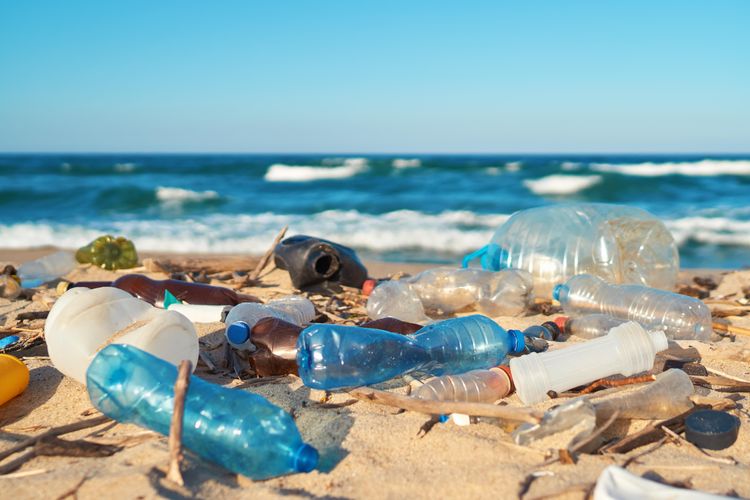
Plastics reduction and disposal is a hot topic in many industries, including ours. But because we need to move forward and find solutions, we recently surveyed our members to find out where they stand in their intentions and actions to eliminate plastic as we know it today. The results speak for themselves! Here's what we've learned from you about the subject: Key learning #1 There’s clearly a need for sustainable alternatives to plastics. 62% of Canadian food companies see an increase in requests for more sustainable alternatives. Key learning #2 Finding solutions is a priority for most companies, and many are already turning this into action. It’s a corporate priority for 73% of our respondents and 65% are already working on it. This is great news! Key learning #3 Food companies are exploring a diversity of options. Alternative materials and compostable plastics are the top two options mentioned. It’s also interesting to see that plastic is not systematically pushed aside: 16% of respondents explored higher quality/more recyclable plastics instead of trying to replace it. Could that be a more accessible, yet sustainable way to reduce plastics…? Key learning #4 The main barrier to adopting solutions is money - either the existing solutions are too expensive or the companies don’t have the budget to invest in finding solutions. The lack of solutions suitable for one’s products, equipment and/or needs, the lack of time to search for solutions, and the lack of knowledge around who can help are other important barriers, with all three scoring equally. Key learning #5 Google and research centres (including academia) are companies’ best friends when it comes to finding info on plastics reduction. Suppliers and collaborators are also a good source of info. And CFIN is now one to! Finally, although the topic is quite new, several great resources already exist to support your work towards plastics reduction and elimination. The Canada Plastics Pact (CPP) is one of them. The non-for-profit organization and member of the Ellen MacArthur Foundation’s Global Plastics Pact network, “unites diverse leaders and experts in the national plastics value chain to collaborate and rethink the way we design, use, and reuse plastic packaging to realize a circular economy for plastic in Canada.” Unfortunately, the CPP doesn’t seem to be on the radar for most Canadian food companies, with 79% of respondents saying they have never heard of it. For more on the CPP read CFIN’s article Explained: The Canada Plastics Pact . Watch for more results from CFIN’s plastic usage survey in coming weeks.

Community Manager

The Tablesetter – August 8

The Tablesetter – August 8

Happy Monday CFIN members! Here's your weekly heads up on what’s happening on YODL and around the food world this week. The YODL Menu This week watch for articles and videos on: Monday: The Tablesetter – August 8 Tuesday: Highlights of CFIN’s survey on plastic use in the food industry Wednesday: Member Profile – Index BioSystems Thursday: C hallenge - Auditing your operations and moving towards a circular economy, Part 1 Friday: News File Something to Celebrate August 12 th is Shop Online for Groceries Day! Online grocery sales may have received a big boost during the pandemic, but the ability to purchase food online has been around since 1994 and the early days of the “information highway” (aka the Internet). The first online food order was completed through Pizza Hut’s digital ordering hub that same year, while the first online grocery store, Webvan, launched in 1995. Food Facts In July 2022 delivery service DoorDash released its 2022 Restaurant Online Ordering Trends report , looking at how food ordering and dining has changed in the past two years, as well as forecasts for 2022 and beyond. Here are a few of its key findings: Canadian restaurant delivery revenues were nearly $7 billion in 2021, a 90-per-cent increase over 2019. 86 per cent of diners are still ordering food for takeout/pickup as much or more than they did in 2021, while 83 per cent are ordering delivery a much or more as they did last year. When ordering food for delivery, only 18 per cent of consumers prefer to call a restaurant directly. Instead 31 per cent like ordering through the restaurant’s website or app, and 48 per cent prefer to order through a third-party system or app such as DoorDash. The number-one reason consumers report trying a new menu item for delivery was attractive price, followed by boredom with their usual orders, and treating themselves with an indulgence. Baked goods were the most widely ordered delivery item in Canada between January and March 2022, followed by American food, dessert, Japanese, chicken, poutineries, Indian, alcohol, Mexican and Chinese food. Summer Reading List Got time on your hands this week? Check out what we’re reading these days: Supply Chain 4.0 – the next-generation digital supply chain The New Secret Chicken Recipe? Animal Cells US food supply chain: Disruptions and implications from COVID-19 Happy YODLing!

Community Manager

News File – August 5

News File – August 5

Each Friday we’ll bring you a roundup of news from CFIN, YODL and around the food world. As seen on YODL Did you notice we added a YODL Menu widget to our homepage? Now you can easily access all our articles and keep track of what’s coming up. Check out this week’s most viewed discussions: Fermentation Expertise abounds in Quebec! (open forum) Artificial Intelligence in the Food Business (open forum) Should Alternative Protein Companies Target Flexitarians or Just Market to Everyone? Around the Food World Technomic has published its mid-year update of Canadian foodservice trends. Oli-Tec has developed temperature indicator label technology that will help consumers make smarter choices around food waste. Microplastics have been found in bottled water. Did you know? Plastics are everywhere in the food industry, including in products such as silken tea bags made of PET or nylon, and chewing gum, most of which is made from petroleum-based chemicals. There are currently several plant-based, plastic-free gums on the market, including Canada’s Pür , which produces a range of vegan, gluten-free, nut/soy-free, allergen-free, and aspartame-free gum and mints. And last year UK start-up company Milliways launched a plant-based chewing gum specifically marketed as plastic free and 100 per cent biodegradable.

Community Manager

Guest Blog: Packaging Misconceptions Unwrapped

This article originally appeared on Birgit Blain & Associates' Food Biz Blog . By @Birgit Blain In this age of plastic dependency and growing mountains of packaging waste, brand owners need to take responsibility. The consumer conscience is shifting in favour of sustainable packaging and affecting purchase decisions. Before jumping on the bandwagon and giving misinformed consumers what they are asking for, consider the following misconceptions about packaging. Misconception #1: All plastics are recyclable. Unfortunately that is not the case. For example, up to 30 per cent of blue box recycling materials in Ontario end up in landfill. Non-recyclables that contaminate the recycling stream include black plastic containers, snack food bags, plastic squeeze tubes, beverage bottles with plastic shrink sleeves and bio-based plastics. Resealable stand-up pouches are increasingly popular but problematic for recycling. Most facilities cannot process multi-material laminates and during the sorting process pouches get mixed in with paper. Misconception #2: Biodegradable and compostable packaging is the perfect solution for our waste woes. Consumers and eco-conscious brands have a penchant for biodegradable and compostable packaging. And scientists are working feverishly to develop innovative solutions like bio-plastics, made from a variety of bio-based materials like cornstarch, milk protein and seaweed. However, these materials may not be viable solutions due to waste processing limitations. Biodegradable and compostable packaging ends up in landfill or contaminates the recycling and composting streams. The City of Toronto considers it a composting contaminant because of its incompatibility with anaerobic digestion, stating “anything that behaves like a plastic, regardless of what it is made of, is removed and sent to landfill.” According to Health Canada’s Draft Science Assessment of Plastic Pollution, “although biodegradable plastics and bioplastics are increasingly being used as alternatives to conventional plastics, they may not degrade more readily than conventional plastics once in the environment.” Misconception #3: Recycling and waste management programs are the same everywhere. What makes waste management especially challenging is that recycling programs in Canada are managed by municipalities, with each having their own system, capabilities and material restrictions. Ontario, for example, has 240 municipal recycling programs with various requirements for recyclable materials. When evaluating packaging options don’t rely solely on claims made by packaging suppliers. Misconception #4: The brand’s responsibility ends when the product is sold. One of the challenges is that brands can’t control how and where consumers discard packaging. Consumers struggle and often give up when sorting waste because it is virtually impossible to distinguish between recyclable, compostable and biodegradable and dispose of it in the right place. Under Extended Producer Responsibility (EPR) regulations producers of packaging are responsible for paying the environmental costs after the materials are discarded. Legislation already exists in Ontario, Quebec, Manitoba, Saskatchewan and British Columbia. For beverage containers, most provinces and territories have beverage container deposit-return laws. Some require licensing or registration of beverage manufacturers and distributors, registration of all products, and container labelling. How can brands step up to the challenge? Multiple packaging components can negatively impact recyclability and compostability. This includes packaging material, colour, container size and shape, barriers, additives, closures, sleeves, labels, inks and adhesives. When evaluating packaging options don’t rely solely on claims made by packaging suppliers. Consult with municipalities regarding processing capabilities. Contact PAC Packaging Consortium for tools and resources to understand the full scope of sustainability and make environmentally conscious packaging decisions. To understand your legal obligations review the Guidebook for Stewards or contact Resource Recovery Alliance . Tackling proliferating packaging waste is a monumental undertaking. There is no simple solution for this complex problem. Ultimately, consumers will play a pivotal role and must change behaviours to clean up our future. And we’re all consumers. As a packaged foods consultant, Birgit Blain helps clients think strategically to build a sustainable brand. Her experience includes 17 years with Loblaw Brands and President’s Choice®. Contact her at Birgit@BBandAssoc.com or learn more at www.BBandAssoc.com © Birgit Blain

Community Manager

EXPLAINED: The Canada Plastics Pact

EXPLAINED: The Canada Plastics Pact

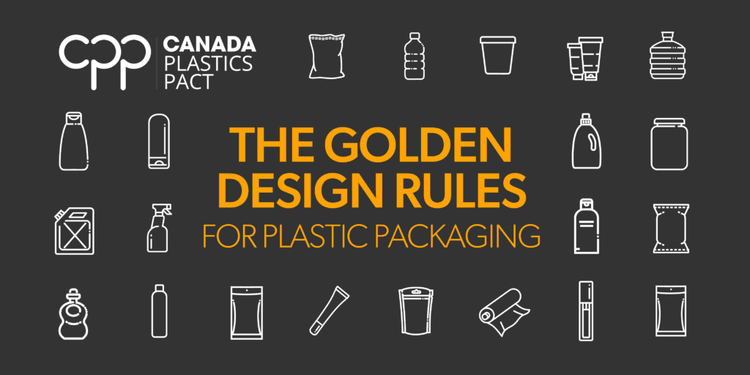
What is it? The Canada Plastics Pact (CPP) is an independent, not-for-profit organization working with Canadian businesses, policymakers, associations and NGOs to create a circular economy for plastic packaging by 2030. It’s part of The Ellen MacArthur Foundation’s Plastics Pact Network which connects initiatives around the world in an aligned response to plastic waste and pollution. By working with diverse companies and experts in the plastics value chain, the CPP hopes to help businesses rethink how plastic packaging is designed, used and reused. The CPP’s mandate is to: Focus on the root causes of plastics pollution; Work collaboratively across the supply value chain to ensure industries remove plastic waste system wide; Mobilize and align stakeholders at the local, national and global level to work toward a common vision; and Harness and amplify skills, expertise and leadership among stakeholders while fostering innovation and solutions. Why you should care Canada has committed to removing plastic waste and pollution from our landfills, water, and environment, while moving toward a circular economy for plastic. As well as drastically reducing plastic waste and pollution , the CPP estimates that a circular economy would save up to $500 million annually, create tens of thousands of jobs, and substantially lower greenhouse gas emissions. And with the ban on single-use plastics coming into effect beginning by December 2022, food industry operators should already be looking at how to eliminate plastic waste in their businesses. Moving away from plastic packaging To help companies adjust their packaging and work towards a circular economy for plastics, in April 2022 the CPP introduced the Golden Design Rules for plastics packaging and a microsite offering context-specific guidance tailored to Canadian businesses. The rules offer global standards aligned with guidelines and targets laid out in the Ellen MacArthur Foundation’s New Plastics Economy Global Commitment . In July 2022, the CPP published its 2020 Baseline Report outlining the organization’s targets and plans for the next three years. They include: Supporting innovation on plastic packaging that can be safety reused, recycled or composted; Ensuring at least 50 per cent of plastic packaging is recycled or composted by 2025; Creating a list of problematic packaging and taking measures to eliminate them by 2025; and Ensuring an average of at least 30 per cent recycled content in all plastic packaging by 2025.

Community Manager

EXPLAINED: Canada’s plastic problem

EXPLAINED: Canada’s plastic problem

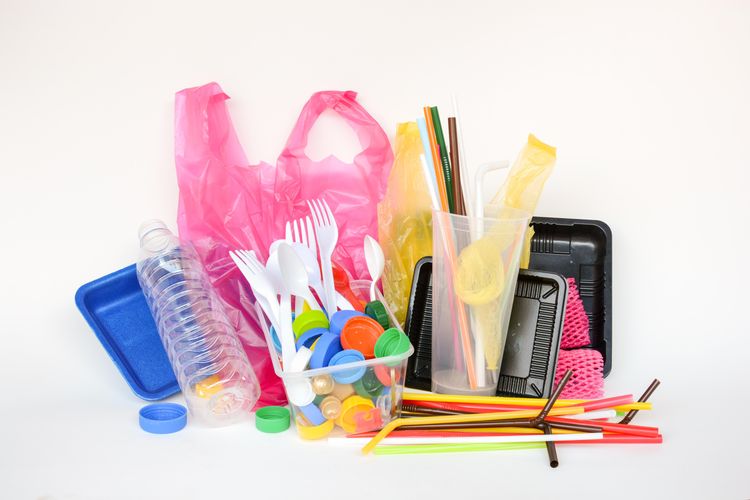
What is it? Canadians throw away a shocking 4.4 million tonnes of plastic waste annually , but only about eight per cent of that is recycled. Instead, roughly 91 per cent of plastic waste ends up as landfill, while about one per cent ends up as water and environmental pollution. Like other sectors, the food industry relies on plastic, in many different forms, for a variety of uses, from component parts in machinery, to single-use testing products, through to primary and secondary packaging, and end user products such as bags, straws and utensils. Now consumers and government are calling on food manufacturers, grocers and foodservice operators to help cut plastic waste by eliminating single-use plastics and unnecessary plastic packaging when safe to do so. Why you should care The federal government has committed to reaching a goal of zero plastic waste by 2030, beginning by banning single-use plastics. The Single-use Plastics Prohibition Regulations come into effect beginning in December 2022, with staggered deadlines until June 2024, and will prohibit the manufacture, import and sale of six single-use plastic items: plastic checkout bags, cutlery, foodservice ware containing problematic plastics, ring carriers, stir sticks, and straws (single-use plastic flexible straws can remain available, under certain conditions, for people who need them). Where to start For food industry operators unsure of how to begin the process of moving away from single-use plastic products, the federal government has developed Guidance for selecting alternatives to the single-use plastics in the proposed Single-Use Plastics Prohibition Regulations . In addition, to help address concerns around recycling programs, the government has launched two consultations to develop rules for recyclability and compostability labelling, and to establish a federal plastics registry for producers of plastic products. CFIN’s plastics coverage Over the next few weeks we’ll be taking a closer look at plastics in the food industry, and how operators can begin to transition away from their use. Watch for articles and videos on: The circular economy Accessing funding for non-plastic packaging Finding packaging partners Innovation and R&D in plastic alternatives Recyclable plastics New packaging materials CFIN’s exclusive member survey on plastics use

Community Manager

The Tablesetter – August 1

The Tablesetter – August 1

Happy Monday, CFIN members! Here's your weekly heads up on what’s happening on YODL and around the food world this week. Did you notice we added a YODL Menu widget to our homepage? Now you can easily access all of our articles and keep track of what’s coming up. The YODL Menu This week watch for articles or videos on: Monday: The Tablesetter – August 1 Tuesday: The problem with plastics Wednesday: Explained: The Canada Plastics Pact Thursday: Guest Blog - Packaging Misconceptions Unwrapped Friday: News File Something to Celebrate August 5 is International Beer Day! Since its kickoff in California in 2007 the celebration has grown to include events in 80 countries and 207 cities. As well as commemorating all things beer, the day recognizes brewers, bartenders and servers. Food Facts Beer is the number-one alcoholic preference among Canadians, so it shouldn’t be surprising that a Statista survey shows there were 830 licenced breweries in Canada as of December 2021: 263 in Ontario, 185 in BC, and 146 in Quebec, 89 in Alberta, 49 in Nova Scotia; 32 in New Brunswick, 20 in Saskatchewan, 19 in Manitoba, 15 in Newfoundland and Labrador, eight in PEI, three in Yukon, and one in Nunavut. Summer Reading List Got time on your hands this week? Check out what we’re reading these days: Predicting the Future of Food Plant-Based Food Startup Uses AI to Solve Supply Chain Woes 2021 Supply Chain Technology Trends To Watch Happy YODLing!

Community Manager

News File – July 29

News File – July 29

Each Friday we’ll bring you a roundup of news from CFIN, YODL and around the food world. As seen on YODL Did you notice we added a YODL Menu widget to our homepage? Now you can easily access all of our articles and keep track of what’s coming up. Check out this week’s most viewed discussions: Artificial Intelligence in the Food Business Pesky Plastics - How will we get rid of them? Lets showcase our great Food Innovation Ecosystem in Atlantic Canada | Regional Community Around the Food World Sobeys has announced Eco Guardian as the winner of its Plastic Waste Challenge. Team Canada placed second at the Bocuse d’Or continental finals in Santiago, Chile, qualifying them for a place at the 2023 finals in Lyon, France. Arva, ON’s Arva Flour Mills has acquired the Red River Cereal Brand from Smucker Foods of Canada Corp. Did you know? Tomorrow is Food Day Canada ! Here’s what CFIN staff from across the country will be cooking and dining on tomorrow! Tag yourself online with #FoodDayCanada, and let us know how you’ll be celebrating! Not sure what to make for Food Day Canada? Why not try @Dana McCauley’s recipe for Simple Seafood Salad with shellfish from the Atlantic or Pacific coast?

Community Manager

What YOLDERs are saying – YODL's Top 5 Discussions July 2022

What YOLDERs are saying – YODL's Top 5 Discussions July 2022

Since launching in late June, YODL has generated a lot of buzz! In case you’ve missed them, we’re counting down the top five discussions that took place over the past month, listed by reader views and responses. Number 5 CFIN's Innovation Booster Intake Now Open - Focused on Food Ecosystem Sustainability projects | Open Forum Posted by @Alex Barlow Many of you wanted to know more about CFIN’s latest Innovation Booster, which looks at food ecosystem sustainability. Application deadline for the Booster is September 12, 2022 at 11:59 p.m. EST. Number 4 Could Plant-based Milk Eventually Replace Dairy Milk? | Open Forum Posted by @Doug Eatwell Plant-based products are coming down in price, while milk prices have risen – will this be the push Canadians need to explore plant-based milk substitutes? Number 3 Creating circular economy from food waste streams (Post farm produce and food scraps) | Open Forum Posted by @Zack Abdi Many YODLers want to know if creating a waste-free operation is possible – look for more articles on circular economies on YODL in coming weeks. Number 2 Digital transformation in food and beverage: why is it important? | Open Forum P osted by @Nestor Gomez Find out why digitization is necessary for the future of the Canadian food industry. Number 1 Should Start Ups Treat their Companies Like Products | Open Forum Posted by @Dana McCauley There was so much interest in the topic of mergers and acquisitions we followed up with a roundtable on the subject . What’s been your favourite article or discussion post on YODL so far? Let us know in the comments!

Community Manager

EXPLAINED: QR Codes

EXPLAINED: QR Codes

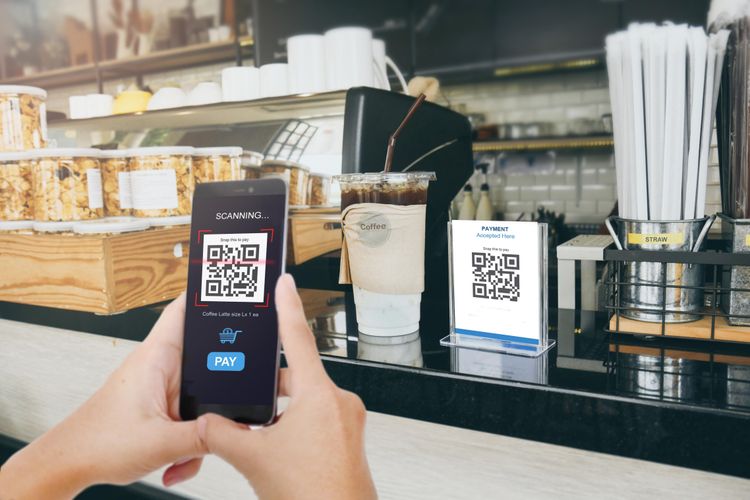
Although Quick Response (QR) codes have been around for decades, their use during the pandemic on restaurant menus, retail displays, grocery shelves and even COVID vaccination passports, have made them more accepted by consumers. And as demand for a contactless economy grows, QR codes are an increasingly important step in connecting businesses and consumers. What are they? A QR code is a form of two-dimensional barcode invented in Japan as a means to store more data about a product and shorten scanning time. Many food and beverage companies began using the symbols on packaging in the early 2000s. But it wasn’t until smart phone technology evolved to the point that consumers could quickly and easily scan QR codes through their camera that companies began actively using them to provide information and engage customers. As consumers increasingly ask for contactless transactions, QR codes are a quick and inexpensive way to update menus, communicate with customers, and add traceability to the supply chain. What makes them unique? As opposed to one-dimensional barcodes which are only encoded with information horizontally, QR codes – which can be static or dynamic -- are encoded with information vertically and horizontally, meaning they can transmit more data at a faster speed. They can be embedded with banking and credit card information, and in many countries such as China and India, they’re often used as mobile payment method. As their use becomes more sophisticated, companies can add multimedia elements and create a more immersive experience for customers. Why you should care While QR codes are become more recognizable, it doesn’t mean Canadians have fully embraced them. In fact, a recent survey by Field Agent Canada showed that only about a third of Canadian consumers have used a QR code -- the majority of those millennial and younger shoppers. And although QR codes are everywhere, 48 per cent of respondents to its 2021 survey say they have scanned a QR code in a grocery store, by far the most often cited location. Barriers to use A lack of understanding seems to be a barrier to greater usage in Canada, and ultimately it may be up to businesses to highlight the benefits of QR Codes to their customers. In asking why they don’t use QR codes, Field Agent found, for example, that just three per cent of consumers said they didn’t know what they were, while nine per cent of admitted that they didn’t know how to use them. Instead, 62 per cent of respondents said they hadn’t seen QR codes in stores, 21 per cent said they didn’t understand the value of using them, and 15 per cent said they didn’t use them because of the information they contained. QR Codes will become more important to food and beverage supply chain distribution as additional companies invest in automation and traceability. New research from Cornell University suggests that best-before dates on dairy products could also be replaced by QR codes in order to give consumers the most accurate information possible and prevent food waste. QR codes in use Several payment apps are already using QR codes. Since 2020 PayPal has embraced QR codes to allow Canadians to scan and pay at retailers through the third-party payment platform in a fast, touchless transaction. Tim Hortons integrated QR codes into the awareness campaign leading up to its 31 st annual Camp Day on July 13, 2022 with the help of technology from Scanbuy, Inc. QR codes were added to marketing and point-of-purchase materials, allowing customers to scan them for information about Tim Hortons Foundation Camps, and how to donate funds.

Community Manager

Algorithms and their use in food processes

@Isabelle Marquis sat down with @Nestor Gomez , chief technology officer for CFIN, to talk about algorithms and the food supply chain.

Community Manager

The Tablesetter – July 25

The Tablesetter – July 25

Happy Monday CFIN members! Every Monday, we’ll give you a heads up on what will be appearing on YODL this week and around the food world. The YODL Menu This week watch for articles and videos on: Monday: The Tablesetter – July 25 Tuesday: Algorithms explained Wednesday: QR codes and the food industry Thursday: Top YODL discussions Friday: News File Something to Celebrate July 30 is Food Day Canada! The day was created by Anita Stewart in 2003, and is intended to bring the country together to celebrate the delicious diversity of Canada’s ingredients, beverages and cuisine, while recognizing all the farmers, fishers, food companies, food researchers and restaurateurs that make it possible. Looking for inspiration on how to celebrate Food Day Canada? Later this week we’ll reveal how CFIN staff will be celebrating the day cooking up regional recipes, or check out Food Day Canada’s map on chefs, retailers, restaurants and events commemorating the day. Tag yourself online with #FoodDayCanada, and let us know how you’ll be celebrating! Food Facts Indigenous Canadian cuisine is as diverse as Canada’s ecosystem, and includes game, seafood, plants and berries. Destination Indigenous offers an interactive map showing were to find businesses and restaurants offering traditional and modern takes on Indigenous cuisine. Happy YODLing!

Community Manager