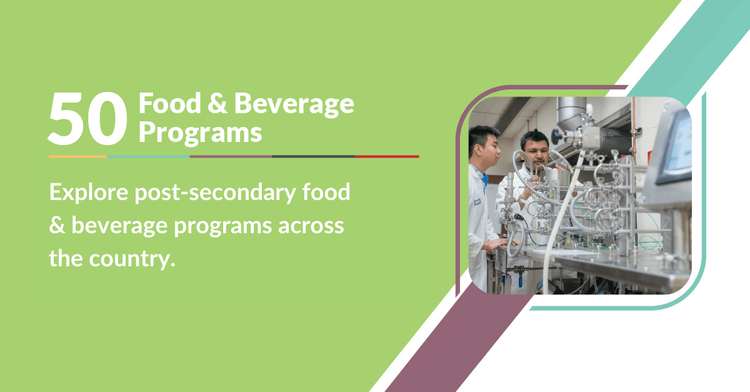
Canada is home to a diverse and dynamic food and beverage industry, supported by educational programs that train the next generation of chefs, brewers, entrepreneurs, and innovators. This roundup highlights 50 standout programs across the country, from top culinary schools and hospitality management courses to cutting-edge research initiatives and sustainability-focused training. Whether you're an aspiring professional, educator, or industry enthusiast, these programs provide valuable insights into the evolving world of food and drink in Canada. BC & Yukon Vancouver Community College UBC BCIT LaSalle College (Vancouver) UBC: Food, Nutrition, and Health Okanagan College Vancouver Island University University of Fraser Valley Northern Lights College North Island College Yukon University Selkirk College Thompson Rivers University Kwantlen Polytechnic University Prairies Saskatchewan Polytechnic University of Alberta University of Saskatchewan University of Manitoba SAIT NAIT Manitoba Institute of Trades & Technology International College of Manitoba Ontario Niagara College Humber College Le Cordon Bleu Ottawa George Brown College Fanshawe College Brock University University of Guelph Toronto Metropolitan University Loyalist College Georgian College Conestoga College Durham College Centennial College Canadore College Algonquin College Trent University St. Lawrence College St. Clair College Sault College Lambton College Confederation College Quebec McGill University LaSalle College Bishop's University Atlantic Canada University of PEI Memorial University Cape Breton University
Community Manager-
50 Food & Beverage Programs - Vancouver Island University
Crafting a Career in BC ’ s Wine Industry: VIU ’ s Wine Business Program The Wine Business program at Vancouver Island University is a comprehensive one-year certificate course designed for those passionate about pursuing a career in the BC wine industry. The program combines practical experience with academic learning in viticulture, wine business practices, marketing, and tourism. Program Highlights: As a student, you ’ ll have the chance to immerse yourself in hands-on experiences at local vineyards and wineries, gaining insights into the entire winemaking process. This practical foundation is then complemented by academic courses in viticulture, wine business practices, marketing, and tourism. A standout feature of this program is its flexibility. Whether you ’ re looking to study full-time for a year or prefer a part-time option spread over two years, VIU has you covered. Located in picturesque Nanaimo, BC, VIU provides an ideal setting for your wine education journey. With a curriculum designed to integrate viticulture essentials with business acumen, VIU ’ s Wine Business program offers a holistic understanding of the wine industry. Students can also earn credits that can be applied toward a Bachelor of Business or a Hospitality and Tourism Management program, opening doors to a wide range of future career prospects. The program includes seven courses and focuses on the broader aspects of the wine industry. In addition to viticulture and winemaking, students delve into wine marketing, exporting, and the vital role of wine tourism. C ourses cover a wide spectrum, from wine marketing and appreciation to beverage theory and the management of wine tourism. The program also offers elective courses in consumer behavio u r, entrepreneurship, and festival management . What You’ll Leave With: Upon graduation, a world of opportunities awaits you in BC ’ s wine industry. Whether you dream of managing a vineyard, excelling in wine s ales and marketing, or even opening your own restaurant, VIU ’ s Wine Business program provides the knowledge and skills to make your wine-related ambitions come true. Career options span winery/vineyard management, retail sales, wine marketing representation, hotel management, culinary arts, a gri - tourism development, and s pecial events coordination. V ideo/Social / Media : VIU YouTube Video
Community Manager-
Cellular Food in Canada
The past few years have proven how susceptible Canada’s food industry is to world events, supply chain disruptions and climate changes. New food production technology, such as cellular agriculture, has the potential to alleviate some of these challenges, while creating commercial opportunities and building a more sustainable, resilient food system. What is it? Cellular food – also known as engineering biology, synthetic biology or cell-cultivated products – is the production of food and textile products without using animals or land. Cell cultures harvested from animals, plants or micro-organisms are grown in the lab through tissue engineering or precision fermentation to produce: Cultivated proteins such as chicken, beef and seafood Fermented products like dairy, eggs, honey and chocolate Ingredients to add to products to create hybrid foods including proteins, enzymes, flavour molecules, vitamins, pigments and fats Textiles such as leather, silk and wool Why you should care As global population continues to grow, so does demand for protein, while access to land and other resource inputs become more scarce. Alternative agriculture could be an answer to food scarcity, concerns about animal and environmental welfare, cost inflation and resource challenges due to climate change. Compared to conventional agriculture, cellular agriculture production, is much less energy intensive, produces less greenhouse gas emissions, and has a much lower overall carbon footprint. With our strong food infrastructure, reputation for food safety, biotechnical expertise, and federal support for alternative protein production, Canada is well positioned to become a leader in cellular agriculture. The 2021 report Cellular Agriculture: Canada’s $12.5 Billion Opportunity in Food Innovation from Ontario Genomics and the Food and Agriculture Institute at the University of the Fraser Valley found that the international cellular agriculture market will reach US$100 billion by 2032. Canada’s food industry has the potential to take $12.5 billion that market, while creating up to 142,000 high-paying jobs. Opportunities in Canada Engineered plant proteins are already in the Canadian market, and by all estimates, precision fermented products are expected to appear before cultured meat products. Current Canadian regulations consider food produced through cellular agriculture as a novel food, and products are approved on a case-by-case basis. Here are a few Canadian start-ups making headlines: Because Animals – This Toronto-based pet food company uses cultured ingredients such as probiotics and nutritional yeast to create nutrient-rich cat and dog food designed to help digestive issues. Future Fields – Edmonton, AB-based Future Fields is a R&D producing growth media products that can be used to create commercialized cultivated proteins in a safe and sustainable manner. Cell-Ag Tech – Toronto’s Cell-Ag Tech is doing R&D on cell-cultured fish and seafood. New Harvest International non-profit research institute New Harvest , which promotes the science behind cultured meat through research, funding and a conference , now has a Canadian branch.
Community Manager-
Other Articles
News File – July 22
Each Friday we’ll bring you a roundup of news from CFIN, YODL and around the food world. As seen on YODL Check out this week’s most viewed discussions: Podcast suggestion - Solve for X: We need to talk about our carbon problem Packaging recovery projects Upcycling – beer pants anyone? What’s happening at CFIN? CFIN’s Innovation Booster has announced the final 2022 intake, focusing on our Food Ecosystem Sustainability priority. The deadline is September 12, 2022. CFIN and the Canadian Institute of Food Science and Technology are hosting CIFST ALT on September 28, 2022 in Toronto. The event offers food innovators an opportunity to demonstrate alternative food products and ideas to the industry. Around the Food World BC retailer Save-on-Foods has teamed up with Ocean Wise to celebrate Plastic Free July and raise awareness of plastic pollution through the Plastic Challenge . Some retailers in the UK are removing best before dates from produce and dairy products to help prevent food waste. For those of you who didn’t make it to IFT First 2022, Foodnavigator-USA highlights the best of the annual event. Did you know? PwC’s June 2022 Global Consumer Insights Pulse Survey shows that Canadians’ food shopping habits have been forever changed by the pandemic. Here are some key findings: Canadians are adapting to supply chain disruptions and inflation by using technology to: use comparison sites to look for product availability (29%), to switch to buying online (25%), to shop at different retailers (35%), to switch to buying in-store (27%), and to change the location they usually shop in order to get the product they want (24%). One in three respondents have used a virtual reality (VR) channel to shop, with most buying retail products and luxury goods. 35% of Canadians say a company’s social policies and actions often or always influence their purchasing behaviour, while 34% sight their governance policies, and 28% sight their environmental policies and actions. 75% of Canadians say they’d be prepared to pay more for locally sourced products, and 66% say they’d pay more for made-in-Canada products. 51% of consumers shop online at least once a month on a personal computer, down from 56% in April 2021. Hate to cook in the summer heat? @Dana McCauley has you covered with her recipe for Curried Lentil Salad .
Community Manager-
Rethinking the restaurant experience through innovation
Before everything was brought to a standstill by the pandemic, the share of Canadians’ food budget spent in foodservice establishments was rising. By the end of 2019, it was approaching 40%, and several experts believed it would pass that threshold in 2020. People were cooking less and less, were busier than ever, and were looking for ways to combine convenience and pleasure: everything was aligned for restaurateurs. Despite increasing competition from retailers, restaurateurs retained one significant advantage: the customer experience. Then a virus came along and took that advantage away overnight. Once again in history, Canadian restaurateurs have demonstrated their incredible resilience through the strength of their passion and creativity. As a result, new models are emerging everywhere: Takeaway counters offering a simplified version of the menu served in the dining room Frozen dishes and grocery products prepared by the chef Pop-up restaurants A hybrid between a convenience store and a café Outdoor space equal to or larger than the indoor space Farm restaurant The difficult context, economically, logistically and in terms of human resources, has also pushed restaurateurs to simplify and optimise their operations. Gone are the ten-page menus full of dishes with no soul or personality! Not only did this no longer meet consumer expectations, but it is also almost impossible to read on a phone. But be careful not to oversimplify at the expense of the customer experience. With prices continuing to rise, consumers will not expect less from restaurateurs — quite the opposite. Innovative ideas and partnerships will be more useful than ever in supporting restaurateurs. Automation, ingredient upcycling, supply-chain simplification and a safe environment are some of the major innovation themes currently very active in the sector. How do you see the restaurant of tomorrow, and how could you help make that vision a reality?
Community Manager-
Coming to a kitchen near you: foodservice innovation to 2030
This story originally appeared on the Foodservice & Hospitality website , and will appear in the September issue of Foodservice & Hospitality magazine. By @Dana McCauley Changes in the way we work can sometimes happen so quickly that they become standard practice seemingly overnight – just consider how fast consumers and restaurants embraced online apps during the pandemic, forever changing how food is delivered. Other changes, such as those involving new technology and Internet-connected innovations, have had much slower adoption rates in the foodservice world, but have the potential to be just as transformative. Here are some things we see on the horizon for foodservice in Canada and the world. Robotics and Automation Many of the challenges facing foodservice operators today are common across the Canadian food world. Labour shortages, supply chain disruptions, climate change, higher raw material costs and rapidly changing consumer demands around food safety, transparency and delivery are just some of the issues shifting the food landscape. Much of these challenges can be addressed by digitizing and automating processes. While the food industry has been slower than other sectors to automate, food chains are already making incremental investments in elements of Industry 4.0 in order to create more transparent, agile and competitive operations . In coming years expect to see automation being added any area of foodservice with repetitive tasks or where consistency and food safety is crucial, such as in healthcare . At the same time, Internet of Things (IoT) and Industrial Internet of Things (IIoT) technology embedded with artificial intelligence (AI) and machine learning, including robots, will begin appearing in kitchens of all sizes. Robots won’t look like the ones you see in sci-fi movies. Instead, robotic systems in foodservice will do tasks that are repetitive but necessary, such as mis en place, or which can be dangerous or dirty, such as waste disposal. You’ll also see collaborative robotic systems which are designed to work side-by-side workers, who are then free to perform more skilled duties. Over the next decade costs of implementing automatic systems and robotics will continue to fall, while performance and consistency increases. “Food is the last great frontier of automation,” says Kristian Tazbazian, co-founder and COO of Oakville, Ont.-based Gastronomous Technologies , Canada’s leading food automation start-up. “The way that QSR food is prepared is much like a mini factory – you have to do the same steps in the most timely, efficient and reliable manner possible. But so many things have changed, the market, input costs, but the equipment and the way they’re cooking the food has not. Back of house, front of house, commissaries, high throughput, low throughput – it is all applicable for robotics and automation.” Gastronomous is designing a network of connected, automated cooking equipment, which tie together to create a fully autonomous commercial kitchen. Today, the Gastronomous team is working with some of North America’s largest restaurant brands to solve their deepest problems in terms of labour, consistency, food waste and energy usage. Other innovations changing QSR over the next decade are automated foodservice kiosks that are much more than vending machines. Quick-service kiosks designed to cook and dispense a wide range of hot and cold food choices like salad, pizza and cooked noodles, are already appearing on university campuses offering customized meals prepared in minutes. With a low carbon footprint and minimal labour needs, expect to see these kiosks pop up in locations such as malls, at sports events and in other public spots where traditional staffed QSR units would be too costly to operate. Cellular agriculture The affects of climate change, the pandemic, and the war in Ukraine have pushed food prices to new highs, straining already tight foodservice margins. Cellular agriculture may alleviate some of these sore points in coming years, while creating new foodservice opportunities and markets (think “cegan” or non-animal synthetic alternatives). Cellular agriculture – also known as engineering biology, synthetic biology or cell-cultivated products – is the production of food and textile products without using animals or land. Cell cultures harvested from animals, plants or micro-organisms are grown in the lab through tissue engineering or precision fermentation to produce cultivated proteins such as chicken, beef and seafood; fermented products like dairy, eggs, honey and chocolate; and ingredients for hybrid foods such as proteins, enzymes, flavour molecules, vitamins, pigments and fats. Engineered plant proteins are already in the Canadian market, with precision fermented products expected to appear next, followed by cultured meat products within the next decade. Current Canadian regulations consider food produced through cellular agriculture as a novel food, and products are approved on a case-by-case basis. Compared to conventional agriculture, cellular agriculture production is much less energy intensive, produces less greenhouse gas emissions, and has a much lower overall carbon footprint. Canada is well positioned to become a leader in cellular agriculture. The 2021 report Cellular Agriculture: Canada’s $12.5 Billion Opportunity in Food Innovation from Ontario Genomics and the Food and Agriculture Institute at the University of the Fraser Valley found that the international cellular agriculture market will reach US$100 billion by 2032. Canada’s food industry has the potential to take $12.5 billion of that market. Inventory and traceability After several years of suffering from supply chain disruptions, food companies are beginning to invest in Supply Chain 4.0 solutions designed to make their food chains more traceable, transparent, resilient and sustainable. In coming years look for technology that provides operators with real-time data analytics to help manage supply chain and inventory, allowing them to optimize the use of raw materials and energy, reduce waste, and achieve higher margins. One example of this technology is Mississauga, Ont.-based Savormetrics ’ hand-held AI-driven units for analyzing biochemical and biophysical factors to determine food quality. The unit is designed to help chefs manage inventory and prevent shrinkage by identifying foods that should be used for specials or turned into sauces before they pass their best before date. The technology can also be used to provide ingredient and marketing information. “Our technology assesses the decay patterns and biochemical markers present in foods so that the best quality food gets used when it tastes and looks its best ,” says Harjeet Bajaj, p resident and CEO of Savormetrics. Virtual Menus Diners became comfortable with online ordering during the pandemic, usually for delivery through an app, but increasingly at the table. Expect to see virtual menus appearing alongside continued use of ordering apps during in-house dining. In fact, a report released in May 2022 by Givex revealed that 68 per cent of Canadians are comfortable using technology to see the menu and order in a restaurant. Thirty-six per cent said that the ability to see menu items before ordering was the best part of online ordering, while 30 per cent cited the ability to customize your order. And 27 per cent said they like being able to order through an app without having to call over a server. As a result, some restaurants are using virtual menus to take the pressure off of staff, while keeping customers entertained while they wait. Caterers and event planners are also using virtual menus as a tool to show customers what the food dishes really look like. The Metaverse The Metaverse virtual platform is going to be big marketing opportunity for restaurants in coming years as more customers explore the platform and businesses figure out how to best position themselves. While people play games and access entertainment in the Metaverse through virtual reality headsets they’ll be able to visit virtual restaurant chains, buy virtual food for their avatars, and purchase real food for delivery from local ghost kitchens. McDonalds has already established its virtual real estate in the Metaverse, but there’s room for everyone, with smaller chains like Montreal’s Famous Cosmos hoping to attract local customers. NFTs NFTs, or Non-Fungible Tokens, are digital collectibles of art, audio, video other information that can be bought, traded or sold. Because they are based on blockchain technology they are traceable, and therefore their value can be authenticated. While NFTs are becoming increasingly popular, they’re currently no better than a regular loyalty program, a crowd sourcing platform or a good maître d’. But as NFTs become more prevalent, in real life and virtually on the Metaverse, they’ll offer additional opportunities for foodservice. For example, clubs may use them for exclusive patron access, and restaurants may ask customers to use NFTs to secure reservations, removing the risk of cancellations during busy periods. “Technologies like machine vision, data, robotics and automation are changing all aspects of the food industry,” says Joseph Lake, CEO of CFIN. “There are so many smart people in Canada who have great ideas for improving the food business, but we also know that entrepreneurs often struggle to find the partners, resources and funds they need to bring those ideas to market. CFIN is helping make those ideas a reality through innovation challenges, funding and mentorship opportunities, and through YODL, an interactive online platform designed to help food and beverage professionals from all sectors of the industry connect, learn, and grow their businesses.”
Community Manager-
Guest Blog: Health Canada's New Labelling Requirement: The Front-of-Package Nutrition Symbol
This article originally appeared on the G.S. Jameson & Company blog . By @Glenford Jameson Health Canada has released the details of its long-awaited framework for Front-of-Package Nutrition Symbol labelling on any prepackaged food that meets or exceeds 15 per cent sodium, sugar, or saturated fat (30 per cent for prepackaged meals). The new regulations come into force on July 20, 2022 but manufacturers have until January 1, 2026 to implement changes. All of this is part of Health Canada’s Healthy Eating Strategy , which strives to encourage consumers to make healthier and more informed food choices in an effort to attack diabetes, heart disease, obesity, and other detrimental diseases. Certain exemptions apply to the labelling requirements, though, which manufacturers should note prior to production of their prepackaged foods and/or their labels. If you manufacture single-serving food products, for example, or single ingredient foods (such as granulated sugar, maple syrup, salt, butter, plain milk, plain yogurt, cheese, ground beef, or whole cuts of poultry or fish), you are exempt from declaring a Nutrition Symbol on the front of your prepackaged food. However, if you manufacture any prepackaged food that meets the definition found in either the Food and Drug Regulations or the Safe Food for Canadians Regulations chances are you will need to update your packaging or review your recipe within the next few years. While updating a package to include a new symbol is always tedious and expensive, we view the changes that Health Canada has implemented as encouraging a level playing field amongst affected manufacturers, some of whom have been portrayed negatively for producing foods with equivalent sugar, sodium, or saturated fat values to their more frequently praised counterparts. High fructose juices, for example, will now bear the same Nutrition Symbol as carbonated soda; most granola bars, including those chocolate-covered ones, will display the same symbol as chocolate bars; prepackaged popcorn, often touted as the diet-friendly alternative to potato chips, will now display a symbol suggesting its sodium content. We should not be surprised to also see high levels of sugar in most gluten-free baked goods, or high levels of sodium in most meat alternatives. Unlike Canada’s rules surrounding sugars-based ingredients , which can be applied in unintentional ways, for example, these rules seem clear and enforceable on a consistent basis. Yet, what happens if you are a manufacturer of guacamole? Assuming there are no fillers or additives, guacamole – at its core – is a combination of single ingredient vegetables and fruits. Maybe a bit of salt, and a splash of oil to help emulsify. And yet, its saturated fat content is high enough to warrant a Front-of-Package Nutrition Symbol. We could make a similar argument with apple sauce, which is ultimately puréed apples. And yet, its sugar content is high enough to warrant a Nutrition Symbol. Consumers are faced with tough choices: is apple sauce a better choice than pudding? Is guacamole a better choice than queso fundido? Either way, it appears that the effect of this new regulatory scheme is that Health Canada will attempt to curb the public’s consumption of sugar, sodium, and saturated fat by requiring all of these products to bear the same front-of-package warnings. This particular labelling requirement is clearly not perfect, but its intention is clear and similar mandates have been received as just and effective in a number of other comparable jurisdictions . More importantly, it cannot be viewed in isolation: the Front-of-Package Nutrition Symbol must be viewed in combination with any other labelling or packaging update that Health Canada has made recently, or provided a consultation for, in an effort to encourage healthy eating practices. Health Canada and the Public Health Agency of Canada continually review different tools to improve the dietary and nutritional choices that Canadians make. For example, the Nutrition Symbol must be read side-by-side with the updated Nutrition Facts table and the grouping of sugars now found in ingredient lists, all of which become enforceable by the Canadian Food Inspection Agency as of December 2022. As always, the Nutrition Symbol must be implemented in the required format, including correct size and placement, and therefore it serves manufacturers to have their labels reviewed prior to production.
Community Manager-
The Tablesetter - July 18
Happy Monday CFIN members! Every Monday, we’ll give you a heads up on what will be appearing on YODL this week and around the food world. The YODL Menu This week watch for articles on: Monday: The YODL Menu, Something to Celebrate, Food Facts Tuesday: Health Canada's New Labelling Requirement: The Front-of-Package Nutrition Symbol Wednesday: Coming to a kitchen near you: Foodservice technology and trends to 2030 Thursday: Rethinking the Restaurant Experience Friday: News file Something to Celebrate July 19 is national d aiquiri day. The original Cuban cocktail made with rum, sugar, lemon or lime juice, and served over ice, was concocted in 1891 by an American engineer in the mining town of Daiquiri, Cuba. Today there are a multitude of popular variations on the classic cocktail, including the ubiquitous frozen daiquiri. Food Facts Taste Atlas lists the following made-in-Canada drinks as the top four most popular alcoholic beverages from Canada: The B-52, invented in Banff, AB in 1977, the layered cocktail features coffee liqueur, Irish cream liqueur and orange liqueur. Vidal blanc wine made from Vidal hybrid grapes grown in Ontario. Canadian whisky, which must be distilled from a mash of cereal grains and aged for a minimum of three years to officially bear the name. The Caesar, made with vodka, clam-infused tomato juice, hot sauce and Worcestershire sauce, served with a celery salt rim, and garnished with lime and celery, originated in Calgary in 1969. Caribou is a Quebec beverage made from a blend of red wine, maple syrup and whisky or vodka and served chilled. There are also ready-to-drink varieties of the beverage on the market. Happy YODLing!
Community Manager-
News File – July 15
Each Friday we’ll bring you a roundup of news from CFIN, YODL and around the food world. As seen on YODL Personalized Nutrition - the future is all abut you! New Report -- Nielsen IQ Canada / Q2 Inflation Creating circular economy from food waste streams (Post farm produce and food scraps) What’s happening at CFIN? CFIN is launching an open call for reviewers to support our funding programs . CFIN members will be at the C ultivate Sustainability Conference in Winnipeg, MB on September 7. Around the Food World Diageo has acquired Vivanda, the company behind the beverage maker’s What’s Your Whiskey digital platform, allowing it to expand the FlavorPrint technology to other categories. Puratos is hosting a Food Innovation Challenge for startups developing technologies to enhance gut health. SCiFi Foods has produced the first cultivated beef developed by single-cell suspension, something it says is an industry first. Check out this year’s listing of the World’s 50 Best Restaurants , numbers 100 to 51 at least. Sponsors S. Pellegrino & Acqua Panna will reveal the Top 50 online on July 18, 2022 . Did you know? Consumers across Canada are returning to restaurants and bars. According to Statistics Canada , restaurant and bar sales have surged above pre-pandemic levels for the first time in two years. Year-over-year sales in March 2022 jumped 35 per cent compared to March 2021, 62.9 per cent compared to March 2020, and 4.9 per cent compared to March 2019. StatsCan points to pent-up demand for the rise in sales. While there’s clearly pent-up consumer demand, inflation and the increasing cost of raw materials and other inputs may dampen sales throughout the summer. If you’re not planning on visiting a restaurant this weekend, why not try @Dana’s recipe for Shrimp Toasty Naanwhich .
Community Manager-
The rise of food apps
Anyone with a smartphone knows that there are an infinite number of mobile food apps available. As well as the usual food apps that help people cook dishes, review restaurants, and order groceries, consumers are downloading apps that allow them to purchase discounted products that would otherwise become food waste or recover upcycled items destined for the dump. Here are a few cool food apps worth knowing about: Too Good to Go Described as the world’s top anti-food waste app, Too Good to Go launched in Canada in 2021, and has spread to about 2,000 food businesses in Toronto, Montreal, Quebec City and Vancouver. The app allows restaurants and other foodservice businesses to offer surprise bags of surplus prepared food and ingredients at end of the day for up to a third off the price. Caddle This 100-per-cent Canadian app for couponing and surveys offers customers cash back on purchases (between $1 and $20), surveys (between five and 25 cents per 30 second survey), and for watching ads. Through the app, companies can access valuable customer reviews while increasing engagement with their customers. Foupon Canada’s number-one restaurant app isn’t connected to any one chain, but offers consumers digital coupons for more than 10,000 major fast-food restaurants that can be scanned instore. Flashfood Flashfood allows consumers to search for local grocers offering between 30 and 50 per cent discounts on perishable foods that may otherwise end up in landfills. Consumers order and pick up their products on the same day at the store, where grocers say customers typically add to their overall purchase. The Yuka App The concept behind the Yuka App isn’t necessarily unique, but it’s proven to have a direct influence on sales and consumer choices and is growing in popularity across the globe. Here’s what you need to know about the Yuka App. What it is An app developed in France that allows users to scan a barcode to access information about food and personal care products and lets consumers know if the product is worth purchasing. Why you should care It’s independent, free and the information is science-based Over 1.5 million food products have been analyzed so far Over 27 million people are using the app It was launched in Canada in 2020 and is also accessible in Belgium, Switzerland, Luxembourg, Spain, Italy, Germany, Great-Britain, Ireland, USA and Australia. According to a study conducted in France, 92% of consumers who read a negative review on a product put it back on the shelf The app has become so popular in Europe that some food companies are sending their new product recipe to Yuka to get their score before they even launch. Whether or not the app becomes as popular in Canada remains to be seen, but one thing we do know – the Yuka App can make the difference between securing a new customer or losing an existing one.
Community Manager-
Guest Blog: Time to say good-bye? When to exit a business
Roundtable: Should Start Ups Treat their Companies Like Products?
Dana McCauley recently began a lively discussion on YODL about merger and acquisition activity in the food industry, noting that for some time now larger food companies have chosen to expand into new categories and markets through acquisitions of innovative start ups and SMEs rather than through internal investment. As a result, some entrepreneurs are adopting an exit-strategy mindset as part of their initial start-up plans. If the trend continues, Dana believes it will result in great branding and marketing expertise being required to create new categories; and that more co-packers will be needed to provide plants and equipment for exit-minded entrepreneurs looking to keep their operations as simple as possible to make acquisition attractive. We wanted to know more about what YODLers thought about the topic, and how it will affect your businesses and the food industry in Canada. Here’s what some of you had to say. Participants: Gunjan Syal , founder and chief strategy officer, GoEmerald , ON Marc Wandler , co-founder/CEO, Susgrainable , Vancouver, BC Does having an exit-strategy mindset limit the company’s potential in terms of innovation and growth? @Gunjan : I do not believe having an exit strategy mindset always limits the innovation or growth. It is practical for companies to have the worst-case options identified, including practical exit strategies to ensure the business can survive. On the other hand, it is important to note where the connections are between the firm’s overall growth strategy, the leadership, values and the skillset on the team. These are ingredients to create a culture of innovation. Circularity ensures the innovation culture can be resilient during the desperate times. Some businesses may create products or services with the intent of exiting from the start; others may be committed to drive long-term growth by investing in, what I call a culture of circular innovation. @Marc : I would argue it often has the opposite effect. Having an exit-strategy makes you focus on creating something valuable enough for someone else to want to purchase what you have created. This ensures you constantly have an end customer in mind. Having an exit-strategy can also indicate that your company has thought of innovation and growth up to a certain point and through the exit, the mission could potential be advanced even further with the resources from the acquirer. Do difficult economic times push companies to become more efficient and innovative, or do they push more entrepreneurs to exit the industry? @Gunjan : T he uncertainty during difficult economic times may propel companies to reflect back on their underlying values and mission. When resources are dwindling, companies will need to strategically choose where to focus for the greatest impact and alignment towards the right consumers – these are the consumers who will benefit from the services/ products. The difference in the post-pandemic world is that the rapid changes in consumer behaviours are creating a new layer of uncertainty. Inflation is also impacting drastic changes in supply chain operations. This will propel companies to invest in innovation, when resources are available and investments appear to drive long-term value. At the same time, innovation will suffer because ROI cannot always be calculated in advance – it requires trial-and-error to some degree. Novel partnerships, simplifying business models and solutions that can be pivoted quickly, will thrive in the difficult economic times. @Marc : It does both in my opinion. Difficult economic times push customers to really evaluate where their dollars will go. For those companies who don’t panic and focus on their core offerings it will push them to become more focused and efficient. Any company that becomes spread too thin is at risk during these difficult times. At the same time, other entrepreneurs may get pushed out for several reasons – sometimes for the better and sometimes for the worse. For those entrepreneurs whose mission or vision is completely wiped out, exit may be the best strategy. Are M&As beneficial in the long run for the industry, or do they impede innovation? @Gunjan : M&As can be beneficial when there is alignment in product strategy as well as the end user impact among the firms. However, M&A strategy may also severely limit a company’s ability to innovate as the culture of circular innovation may dwindle over time, if not deliberately harnessed after M&A. It will be key to ensure special attention is allocated to developing and aligning a culture of circularity, human capital and profit along with the customer needs. @Marc : Again, it could be either. If the acquisition is between two values-aligned companies focused on growing the mission together, and they can leverage the skills and resources that each brings, then it will foster innovation. In other cases, it may be a strategic acquisition made by a bigger entity acquiring a smaller company that could be a threat in the future but isn’t quite there yet. Depending on how this acquisition is managed, especially when there are big differences in culture, this type of acquisition can impede innovation. @Dana’s take: I would say that if, as many predict, a recession comes and our interest rates climb, that we will absolutely see M&A decrease. In my opinion, it is the very low interest rates that have encouraged many high-net-worth individuals to become angels and venture capitalists. If they can invest in safer products that get them a good return, they will abandon M&A activity for savings products. Disruptive technology and products that solve truly unmet pain points are always marketable. Unfortunately, they are pretty few and far between! Have your say! Tell us what you think about merger and acquisition activity in the food industry. Add your comments here .
Community Manager-
The Tablesetter - July 11
Happy Monday CFIN members! Every Monday, we’ll give you a heads up on what will be appearing on YODL this week and around the food world. The YODL Menu This week watch for articles on: Monday: The YODL Menu, Something to Celebrate, Food Facts. Tuesday: Roundtable: Mergers and acquisitions in the food industry. Wednesday: Guest blog: Time to say goodbye? When to exit a business. Thursday: The rise of food apps, plus the Yuka app. Friday: Friday News File Something to Celebrate July 13 is national French fry day. French fries are thought to have originated in Belgium, and grew in popularity in France during the 1700s where fat-fried frittes were served as a snack from street vendors. While Belgium boasts the world’s only French fry museum, the Frietmuseum the Canadian Potato Museum in O’Leary, PEI includes exhibits on all things potato, as well as an onsite restaurant featuring a mouth-watering variety of loaded fries. Food Facts McCain Foods Ltd. is the world’s l argest manufacturer of frozen potato specialties. The Florenceville, NB-based company harvests nearly 6.8 million tons of potatoes annually and produces roughly one third of all frozen fries in the world, earning its hometown the title of French fry capital of the world. A 2017 survey of Canadians on behalf of McCain found that: 33% of respondents preferred straight cut fries over curly, shoestring or waffle cut versions. 63% of women reported sharing their fries, but only 49% of men said they share. Almost 50% of respondents said they like to dip their fries in a topping, while 35% pour their topping over the fries, and 15% do both. 52% of respondents nationally said they would choose plain French fries over poutine, but in Quebec 65% said they preferred poutine. Happy YODLing!
Community Manager-
News File – July 8
Each Friday we’ll bring you a roundup of news from CFIN, YODL and around the food world. As seen on YODL Check out this week’s most viewed discussions: Digital transformation in food and beverage: why is it important? A Critical Time for Plant-based Meat CFIN Call for Reviewers/Appel ouvert aux examinateurs YODL Poll We asked what your biggest challenge was in growing your food business? Here’s what you had to say: Access to capital: 61% Access to talent: 13% Access to partners: 17.3% None of the above: 8.7% What’s happening at CFIN? Joe Lake , CEO of CFIN, recently spoke to GovInsider about how the organization is helping to catalyze innovation for the growth of Canada’s agriculture and agri-food sectors. Around the Food World Health Canada announces it will require nutrition warnings on pre-packaged foods containing more than 15 per cent of the suggested daily value of saturated fat, sugar or sodium, beginning in 2026. Proteins Industries Canada unveils a project to create a clean-label soy protein Researchers in Greece are using blockchain technology to create a genetic barcode to fight food fraud in olive oil. Did you know? Fraud is rampant in the fish and seafood industry, with incidents occurring worldwide. Food & Allergy Consulting & Testing Services (FACTS) estimates that one in five seafood samples in mislabelled. One reason is a lack of proper traceability measures and/or documentation, making it easier to intentionally mislabel species. Fish and seafood aren’t the only products affected by fraud. As this infographic from FACTS shows, food fraud is a challenge in many categories across different countries. #foodfraud #FoodSafety
Community Manager-
Are Screens The New Stores?
In the last few years, e-commerce has seen tremendous growth throughout the world. According to a 2020 study by Euromonitor International, which was also published by the Government of Canada, the e-commerce market for packaged foods has boomed from 149 million dollars in 2015 to almost 1.6 billion dollars in 2020. The historic rate of annual growth was 59.1%. The non-alcoholic beverage sector also showed remarkable growth, with the size of its e-commerce market having grown from 203 to 596 million dollars for the same time period. Still, the food and beverage industry in Canada has stalled in developing its e-commerce offerings in comparison to other consumer goods. Despite the unexpected bump brought about by the pandemic, in 2021, online sales of food and beverages represented only 3% of total online sales in Canada . So, why are Canadians still so hesitant to purchase food products online, given that consumers are familiar with the technology and the majority of them have access to the Internet? Grocery Shopping: A Complex Multi-sensory Experience As soon as we walk into a grocery store, our instinct and all our senses awaken: we see, we touch, we smell, we compare, and we imagine how each coveted food will be transformed… Then images and ideas emerge from our minds, only to be brought down to earth by the price tag. We make a decision and confirm our choice, a fluid choice, one that may change if inspired by something else on the way to the checkout counter… You don't have to look any further to understand how difficult it is to transpose this ritual and all the reflexes attached to it in two dimensions on a screen. Ironically, even though large Canadian retailers understand this phenomenon better than anyone else, it's Amazon, not them, that holds the largest share of the online grocery market. And the same goes for the US, the UK and France. While there are many reasons that explain why Amazon holds the number one spot, certain sensibilities of grocery consumers are not being met by the experience that Amazon is offering. It is clear that there is room for innovation and to transform a dehumanized mechanical experience into a real "multi-sensory" experience. So, what is it that brings us back to the grocery store instead of buying our food online? The colourful and attractive displays of fresh products. The direct access to an array of options, all easy to see in the same field of vision. The ability to make a decision quickly when a product meets our needs (for example, allergies). The ability to interact with an employee to request a service, ask for help finding a product, or to simply ask them for their opinion. A purchasing context that fosters inspiration and spontaneous purchases. An interesting example of this type of innovation was developed by Inabuggy . In November of 2020, they launched the first 3D virtual reality online grocery platform in Canada for McEwan Fine Foods, an upscale grocery store in Toronto. That being said, for online grocery shopping to reach a new level, we need to think even bigger. What if buying food became human again? Think of the sounds, the smells, tasting samples, even the meeting of new people (real people, not robots!)? In 2011, Tesco, a market leader in Europe, saw tremendous success with the launch of a virtual store in a South Korean subway station. We would be willing to bet that sales would have been even higher if the smell of freshly baked bread just out of the oven had accompanied the screen showing all of the bakery items! For their part, storefronts aren't going anywhere. They'll always be ahead of the curve in providing a real and personable food buying experience. Now that the pandemic is in the rear-view mirror, their biggest challenge will be providing consumers with a feeling of safety again, in an environment conducive to exploration and the joy of sharing a meal.