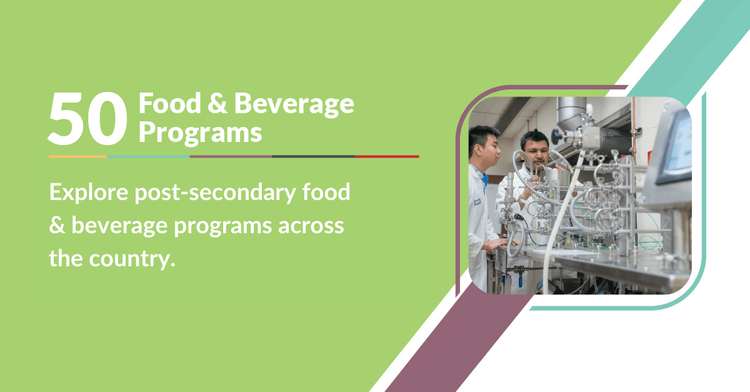
Canada is home to a diverse and dynamic food and beverage industry, supported by educational programs that train the next generation of chefs, brewers, entrepreneurs, and innovators. This roundup highlights 50 standout programs across the country, from top culinary schools and hospitality management courses to cutting-edge research initiatives and sustainability-focused training. Whether you're an aspiring professional, educator, or industry enthusiast, these programs provide valuable insights into the evolving world of food and drink in Canada. BC & Yukon Vancouver Community College UBC BCIT LaSalle College (Vancouver) UBC: Food, Nutrition, and Health Okanagan College Vancouver Island University University of Fraser Valley Northern Lights College North Island College Yukon University Selkirk College Thompson Rivers University Kwantlen Polytechnic University Prairies Saskatchewan Polytechnic University of Alberta University of Saskatchewan University of Manitoba SAIT NAIT Manitoba Institute of Trades & Technology International College of Manitoba Ontario Niagara College Humber College Le Cordon Bleu Ottawa George Brown College Fanshawe College Brock University University of Guelph Toronto Metropolitan University Loyalist College Georgian College Conestoga College Durham College Centennial College Canadore College Algonquin College Trent University St. Lawrence College St. Clair College Sault College Lambton College Confederation College Quebec McGill University LaSalle College Bishop's University Atlantic Canada University of PEI Memorial University Cape Breton University
Community Manager-
50 Food & Beverage Programs - Vancouver Island University
Crafting a Career in BC ’ s Wine Industry: VIU ’ s Wine Business Program The Wine Business program at Vancouver Island University is a comprehensive one-year certificate course designed for those passionate about pursuing a career in the BC wine industry. The program combines practical experience with academic learning in viticulture, wine business practices, marketing, and tourism. Program Highlights: As a student, you ’ ll have the chance to immerse yourself in hands-on experiences at local vineyards and wineries, gaining insights into the entire winemaking process. This practical foundation is then complemented by academic courses in viticulture, wine business practices, marketing, and tourism. A standout feature of this program is its flexibility. Whether you ’ re looking to study full-time for a year or prefer a part-time option spread over two years, VIU has you covered. Located in picturesque Nanaimo, BC, VIU provides an ideal setting for your wine education journey. With a curriculum designed to integrate viticulture essentials with business acumen, VIU ’ s Wine Business program offers a holistic understanding of the wine industry. Students can also earn credits that can be applied toward a Bachelor of Business or a Hospitality and Tourism Management program, opening doors to a wide range of future career prospects. The program includes seven courses and focuses on the broader aspects of the wine industry. In addition to viticulture and winemaking, students delve into wine marketing, exporting, and the vital role of wine tourism. C ourses cover a wide spectrum, from wine marketing and appreciation to beverage theory and the management of wine tourism. The program also offers elective courses in consumer behavio u r, entrepreneurship, and festival management . What You’ll Leave With: Upon graduation, a world of opportunities awaits you in BC ’ s wine industry. Whether you dream of managing a vineyard, excelling in wine s ales and marketing, or even opening your own restaurant, VIU ’ s Wine Business program provides the knowledge and skills to make your wine-related ambitions come true. Career options span winery/vineyard management, retail sales, wine marketing representation, hotel management, culinary arts, a gri - tourism development, and s pecial events coordination. V ideo/Social / Media : VIU YouTube Video
Community Manager-
Cellular Food in Canada
The past few years have proven how susceptible Canada’s food industry is to world events, supply chain disruptions and climate changes. New food production technology, such as cellular agriculture, has the potential to alleviate some of these challenges, while creating commercial opportunities and building a more sustainable, resilient food system. What is it? Cellular food – also known as engineering biology, synthetic biology or cell-cultivated products – is the production of food and textile products without using animals or land. Cell cultures harvested from animals, plants or micro-organisms are grown in the lab through tissue engineering or precision fermentation to produce: Cultivated proteins such as chicken, beef and seafood Fermented products like dairy, eggs, honey and chocolate Ingredients to add to products to create hybrid foods including proteins, enzymes, flavour molecules, vitamins, pigments and fats Textiles such as leather, silk and wool Why you should care As global population continues to grow, so does demand for protein, while access to land and other resource inputs become more scarce. Alternative agriculture could be an answer to food scarcity, concerns about animal and environmental welfare, cost inflation and resource challenges due to climate change. Compared to conventional agriculture, cellular agriculture production, is much less energy intensive, produces less greenhouse gas emissions, and has a much lower overall carbon footprint. With our strong food infrastructure, reputation for food safety, biotechnical expertise, and federal support for alternative protein production, Canada is well positioned to become a leader in cellular agriculture. The 2021 report Cellular Agriculture: Canada’s $12.5 Billion Opportunity in Food Innovation from Ontario Genomics and the Food and Agriculture Institute at the University of the Fraser Valley found that the international cellular agriculture market will reach US$100 billion by 2032. Canada’s food industry has the potential to take $12.5 billion that market, while creating up to 142,000 high-paying jobs. Opportunities in Canada Engineered plant proteins are already in the Canadian market, and by all estimates, precision fermented products are expected to appear before cultured meat products. Current Canadian regulations consider food produced through cellular agriculture as a novel food, and products are approved on a case-by-case basis. Here are a few Canadian start-ups making headlines: Because Animals – This Toronto-based pet food company uses cultured ingredients such as probiotics and nutritional yeast to create nutrient-rich cat and dog food designed to help digestive issues. Future Fields – Edmonton, AB-based Future Fields is a R&D producing growth media products that can be used to create commercialized cultivated proteins in a safe and sustainable manner. Cell-Ag Tech – Toronto’s Cell-Ag Tech is doing R&D on cell-cultured fish and seafood. New Harvest International non-profit research institute New Harvest , which promotes the science behind cultured meat through research, funding and a conference , now has a Canadian branch.
Community Manager-
Other Articles
Industry Roundtable: Consumer demands, technology and changing access to food
CFIN’s first Executive Roundtable looks at consumer demands and changing access to food, with input from Ken Keelor, CEO of Calgary Co-op , and Arjan Stephens, president of Que Pasa Mexican Foods and executive vice-president of Nature’s Path Foods . How has technology such as ecommerce, QR codes and mobile apps changed how consumers access your products? Ken Keelor: Technology has greatly improved the customer experience and allowed for two-way communication with our members, so we immediately know what our members are looking for and how we can help them with their day-to-day shopping decisions. For example: Digital communication was used by us throughout the pandemic for health and safety, as well as to share value/couponing/information/inspiration through regular communication such as social media channels, our flyer, website and member emails. Apps: Our Calgary Co-op app allows members to stay in touch, update their own personal information, receive valuable offers exclusive to them through our Mewards program and access to exclusive member pricing on tickets including the Calgary Flames and Hitmen. E-commerce makes it easy for our members to shop remotely and have their items delivered or picked up at a time and location that is convenient for them. Our shop online programs continue to evolve to offer even more convenience and choice on our Food, Wine Spirits Beer and Cannabis sites. Arjan Stephens: Ecommerce has allowed consumers to access our products through several channels including online marketplaces, grocery delivery apps like Instacart and our website. This has shifted the way we think about user experience. We are focusing on content creation and search optimization to ensure we’re giving the customer a robust user experience, which includes easily searching and accessing our products. QR codes on products and packaging create an easy, rapid and touch-free transaction for consumers. There are about twice as many scans of barcodes at points of sale each day as there are Google searches. Our customers currently use them to purchase our products through Amazon Fresh stores in the U.S., and we are currently looking at how implementing QR codes on our packaging could provide more product and brand information, ultimately building another channel for connecting directly with our consumers. Additionally, the sunset of Google’s third-party cookie in 2023 makes analytics less accessible. QR codes can significantly help our business identify important customer data to inform our overall business. What new experiences are consumers looking for when they shop or dine in person? Keelor: Convenience, choice and freshness, along with local and healthy options. We are pleased to be re-opening our salad bars, curry and olive bars and self-serve kombucha stations. In many of our locations we have seating areas where members can enjoy a light lunch, coffee with friends, or a few moments to themselves. We are also pleased to see in-person events coming back, including our famous pancake breakfasts in the summer, our Grape Escape event in 2023, in-person tastings at our Wine Spirits Beer locations, and partnering with our vendors to offer unique sampling opportunities for our members. We are proud to offer a unique experience to members when they come into our stores and know that they are looking for more from us than just a simple shopping trip! Stephens: When it comes to dining, consumers are looking for elements that support the storytelling aspect of a dining experience. This creates a unique, memorable experience that is shareable with their friends and on social media. These elements could be part of the food itself, the restaurant space, the customer service or other methods. Examples include unique food creations, robot-waiters, personalized chef cooking-at-table and more. What will grocery stores look like in 2035? Keelor: It’s hard to say exactly what stores will look like that far down the road but we certainly expect multi-channel shopping to continue to evolve with more choice, convenience, delivery options and support to help meal plan and budget accordingly. We have also seen a number of recent trends emerge from the pandemic that we expect will continue including: Bigger baskets, but less trips to the stores Less families shopping, more single-person trips for the household More focus on health and wellness More focus on value, budgets and “what do I need to prepare meals” Even more focus on locally sourced products Reduced assortment in some categories because suppliers have narrowed the number of lines they are manufacturing ie: paper category Stephens: The future of grocery stores will be focused on providing experiences versus things. It will be a seamless online/offline mobile enabled, high tech, high convenience food shopping experience. Touch-free transactions will become commonplace and Augmented Reality (AR) and Artificial Intelligence (AI) will be indispensable. The grocery store of the future will enable customers to use apps to input dietary needs and taste profiles to be connected to products through advanced AR features providing audible information about the products selected, almost like having a personal assistance accompanying you to the store. There will be a large influx of plant-based alternatives to animal products created through 3D printing and AI technologies. Grocery stores like Alibaba’s Hema and Amazon Fresh are really just the beginning of the grocery store revolution. If you have a digital solution to make supply chains safer and more agile, apply for our Food Innovation Challenge . Applications are due July 7th.
Community Manager-
Guest Post: The Future of E-Commerce: Health Canada and CFIA Propose Changes to Online Requirements for the Sale of Food
This article originally appeared on the G.S. Jameson & Company blog . By @Glenford Jameson Consumers are protected against false, misleading, or deceptive representations of goods or services intended to be purchased; food and food products are no exception. Per the Food and Drugs Act (FDA) and the Safe Food for Canadians Act (SFCA), false, misleading or deceptive labelling or advertising is prohibited on food; consumers have the right to make well-informed and safe food choices, which often results from reading an accurate and compliant label. But what happens when a consumer does not handle a food product before purchase? What happens if a consumer cannot read the physical label in front of them? What happens if they are dropping groceries into an online basket, and checking out of a grocery store via the Internet? Should they have the same protections against false, misleading or deceptive advertising? Health Canada and the Canadian Food Inspection Agency (CFIA) think so. On May 9, 2022, Health Canada and the CFIA launched a consultation on the development of voluntary guidance for providing food information for foods sold to consumers for ecommerce. Their proposal is to require all ecommerce sites to provide the same food information that is required to appear on any label of food offered for sale in a physical store. This includes: common name, net quantity, storage instructions, country of origin, a Nutrition Facts table, a list of ingredients, food allergen information and precautionary statements, caution statements, a period of minimum durability (similar to a “best before” date), and commodity specific information such as the percentage of moisture for dairy or the percentage of alcohol by volume (ABV) for alcohol products. The list is quite extensive. In addition, Health Canada and the CFIA would like to see product images for all foods sold through ecommerce, an indication of how the delivered food may differ from the food being offered for sale online, food information presented in the same way online as it would be on a physical label, a consistent layout for product information pages, food information that is readable by screen readers, and the design of ecommerce platforms as user-friendly and easy to navigate. Again, quite an extensive list. These intentions are good – consumers deserve transparency – and the decision arose to conduct this consultation because of an increase in online shopping during the early stages of the pandemic (we also suspect far too many undeclared allergens on ecommerce sites). Health Canada and the CFIA also point to the growing, international recognition of the need to extend food information to consumers through ecommerce sites. The Codex Committee on Food Labelling, for example, has convened a working group to develop guidance for food labelling and ecommerce; the European Union provides regulatory oversight to distance selling, and requires mandatory labelling. And yet, we must question how these new requirements might affect small business, especially those in the hospitality industry that pivoted to an online model when faced with pandemic closures, and have maintained their ecommerce presence to re-coup losses. Paying a UX designer to develop a user-friendly interface is expensive. Paying a photographer to take recent photographs of your food products can also be costly. Consulting a lawyer to review your labels is also not cheap (we should know!). Small businesses that did not require a SFCA licence prior to the pandemic, and therefore were not subject to mandatory labelling requirements because their food products never travelled across borders, will now be required to pivot further because their ecommerce platform might reach someone in another province. All of this has us asking whether this consultation might be too soon? Regardless, we are pleased to see that Health Canada and the CFIA have provided an online survey and link with questions to answer. Question six is of particular importance: “if you are a business that sells or is considering selling foods to Canadian consumers through ecommerce, please describe any challenges regarding displaying and maintaining current information on product information pages.” Question five also asks for commentary related to the mandatory labelling requirements. If you would like to voice your experiences, concerns, comments, or questions regarding this proposal, you can access the Consultation here . The Consultation is open until July 8, 2022.
Community Manager-
The Tablesetter - July 4
Happy Monday CFIN members! Every Monday, we’ll give you a heads up on what will be appearing on YODL this week and around the food world. The YODL Menu This week watch for articles on: Monday: The YODL Menu, Something to Celebrate, Food Facts. Tuesday: Guest Blog: The Future of Ecommerce. Wednesday: Cons umer demands, technology and changing access to food. Thursday: Are screens the new stores? Friday: Weekly News File Around the Food World IFT First takes place July 10 to 13 at McCormick Place in Chicago, IL. Festival StreetFood Montreal happens July 7 to 10 in Montreal, QC. Summerlicious begins July 7 and runs until July 23 in Toronto, ON. Something to Celebrate July 4 is independence from meat day around the world, which began as a way for vegetarian groups to raise awareness of the benefits of eating a meat-free diet. A 2020 Statista survey showed that there are 2.3 million Canadians are vegetarians, while 850,000 Canadians follow a vegan diet. The researcher expects Canadian retail sales of meat substitutes to reach approximately US $226.7 million in 2022, compared to $119.9 million in 2015. Food Facts The NPD Group/CREST recently revealed how Canadians eating habits have changed in the past two years. Here are consumer’s most loved restaurant menu items today: French fries Burgers Breakfast sandwiches https://www.cfin-rcia.ca/network/members/profile?UserKey=b800c223-a09d-49c9-a3e4-a1b7781d9f6c Chicken Doughnuts Pizza Chicken sandwiches Happy YODLing!
Community Manager-
Friday News File – July 1
Each Friday we’ll bring you a roundup of news from CFIN, YODL and around the food world. This week to commemorate Canada Day we’re celebrating iconic Canadian cuisine and products. Coast-To-Coast Cuisine If you want to celebrate Canada Day with a unique dish or product from across the country, here are a few ideas: British Columbia – Nanaimo bars, salmon Alberta – Perogies Saskatchewan – Saskatoon berry pie Manitoba – Bannock, Schmoo torte, flapper pie Ontario – Butter tarts, peameal bacon Quebec – Tourtière, poutine Nova Scotia - Donair PEI – Lobster roll New Brunswick – Rappie pie Newfoundland and Labrador – Toutons, seal flipper pie Yukon – Sourdough pancakes Northwest Territories - Muktuk Nunavut – Arctic char Top 10 Best Rated Canadian products According to Taste Atlas , which looks at food products and cuisine around the world, the highest-rated Canadian food and beverage products worldwide are: Maple syrup B-52 shooter cocktail Vidal Blanc wine from Ontario Canadian whiskey Montreal Steak Seasoning from McCormick McIntosh Apples Caesar cocktail Peameal bacon Piacere cheese from Monteforte Dairy in Stratford, ON Yukon Gold potatoes Kraft Dinner is the most popular grocery item in Canada, according to TasteAtlas . In fact, Canadians eat 55 per cent more Kraft Dinner than Americans, purchasing 1.7 million boxes each week, and consuming an average 3.2 boxes annually. The boxes of pasta and powdered cheese first appeared in 1937 and sold for 19 cents each. Eight million boxes were sold that year. For a cool Canada Day meal option, check out this recipe for Marinated Greek Salad from Dana McCauley. Around the Food World Walmart is testing Walmart Now , a 30-minute delivery service, starting with about 4,000 of its most popular items at 10 stores in the Greater Toronto Area, one day after Loblaws announced a similar service through DoorDash. Coca-Cola Canada Bottling is investing almost $42 million in its production and warehousing and distribution facilities in Richmond, BC. The Veal Farmers of Ontario announce the winner of Ontario’s Best Veal Sandwich contest.
Community Manager-
EXPLAINED: Blockchain Technology
The international trade of goods and services related to the food industry is very complex and poses great logistical challenges. Knowing where these goods and services come from, how they were produced and by whom are only a fraction of the crucial information needed to be able to ensure the authenticity as well as the safety and security of what will be offered to consumers. Although it was not created for the food industry, blockchain technology lends itself perfectly to it and has immense potential for the industry. What is it? Export Development Canada (EDC) defines blockchain as “a distributed database holding encrypted ledgers that reside on a network.” Well established in the cryptocurrency sector, this technology allows network members to consult and share a register of transactions, data entries or documents called blocks. This network can be public (for example, through the Internet) or private (such as between a group of companies). Data must be verified by members in a private ledger, and when all agree on the validity of the information the block becomes a permanent record that no one can change. Why you should care Food fraud continues to occur worldwide at an alarming rate. No commodity or country seems to be spared, and all sectors are affected, from the farm to the final point of sale. According to the U.S. Grocery Manufacturers Association, fraud costs the global food industry between $10 and $15 billion a year. Other organizations estimate that the industry loses up to $40 billion a year. At the same time, consumers are demanding more transparency from the industry about their products and business practices, a demand that can be difficult to meet if we don’t know the full history of the food we produce and process ourselves. Blockchain technology offers a complex but powerful solution to optimize and secure the entire supply chain. Benefits of using this technology include: Complete traceability of all interventions made on a commodity. Real-time supply management, including precise monitoring of a commodity’s journey and transport conditions such as temperature or humidity. Centralization of information about a commodity. Anticipation and simplification of recalls. Accountability of all stakeholders. Helps build a solid reputation, facilitating local and international trade. Not surprisingly, the cost of implementing this technology is high, which is also the main obstacle to its expansion. Opportunities in Canada Here are some examples of local and international companies with expertise in blockchain development for the food industry: FuturistIQ and Appinventiv are two international companies specialized in digital transformation. They operate in many sectors, including the food industry. IBM , a well-known computer and digital giant, also offers consulting services for the implementation of various technologies, including blockchains. As for TraceFood , their main focus and expertise is the creation of blockchains and they serve exclusively the food sector. If you have a digital solution to make supply chains safer and more agile, apply for our Food Innovation Challenge . Applications are due July 7th. @Dana’s Take: When it comes to traceability, consumers want to know that their food is safe, and increasingly, that it was produced in a sustainable way. By digitizing operations and using technology such as blockchain, food companies can track every ingredient and product in their supply chain, ensuring vendor compliance on sustainability measures, while offering consumers transparency on how products are sourced, processed, transported and retailed. The real potential of this technology will be realized when its use of energy is optimized or mitigated. An inspiring collaboration in North Vancouver, sees that municipality, using the heat generated by block chain activity to heat buildings!
Community Manager-
EXPLAINED: 5G and the food industry
As 5G technology is rolled out by internet providers around the world, companies in a wide variety of industries are exploring how higher-speed connectivity will change production and operations. In the food industry, manufacturers are already examining how to leverage 5G to add smart technology designed to improve sustainability, efficiency, capacity and food safety. What is it? 5G technology is the fifth generation of wireless networks, which enables faster and more powerful connectivity between machines and devices. The technology allows for faster response times (latency) and higher bandwidth capacities, allowing companies to transfer more data at one time. Why you should care Implementing a 5G-enabled system for automation and smart technology will eventually become a competitive advantage for Canadian food businesses, especially as operators begin to see rewards such as a more streamlined system, lower operating costs, and greater production efficiency and capacity. With a 5G network and the use of sensors, food companies will be able to: Make better use of Internet of Things (IoT) devices, artificial intelligence (AI) and machine learning to create smarter operating systems. Monitor and send warehouse and production data in real time. Boost automation efforts. More easily operate robotics, drones and other advanced technology. Create faster, more accurate communications, especially when companies are also using enterprise resource planning (ERP) systems to track material throughout the supply chain. Monitor and improve safety throughout the system. Allow for faster and more accurate recalls. Allow companies to store information in blockchain, which adds transparency for consumers. Encourage more online ordering, payment and delivery due to the higher bandwidth and latency. Opportunities in Canada Canada’s 5G network is already fairly advanced, and as companies continue to innovate with smart technology they will increasingly discover ways to leverage the network while offering consumers more transparency around their supply chains. 5G network coverage in Canada is led by companies such as Bell Canada , Rogers and Telus , connection and coverage is expanding, starting primarily with urban centres. @Joe Lake 's Take: Faster and more reliable networks will be required to properly leverage the connected technology often referred to as the Internet of Things (IoT) and the Industrial Internet of Things (IIoT). As opposed to consumer-oriented IoT applications such as smart thermostats, IIoT devices are networked through sensors to other devices and with industrial software and cloud computing to manage production, monitor quality assurance, control energy use, and more. Within this controlled, connected system operators can view real-time data, allowing them to make needed adjustments and improve overall efficiency. One challenge for Canada is its larger geographical size vs. population density. Additionally, a large portion of the country’s agriculture and food processing is rural. It’s imperative that both farming and manufacturing in rural areas are serviced to ensure that processing innovation requiring 5G can thrive and advance competitiveness nationally. If you have a digital solution to make supply chains safer and more agile, apply for our Food Innovation Challenge . Applications are due July 7th.
Community Manager-
Challenges to Canada’s supply chain and digital solutions
The last few years have revealed just how vulnerable the Canadian food supply chain is to disruption, and the resulting challenge it creates for our food companies. The effects of extreme weather events, the COVID-19 pandemic and the war in Ukraine are impacting supply chains around the world. For example, the pandemic restricted the movement of workers and created changes in demand for consumers, while temporarily shuttering food production plants and restricting food trade policies are putting added financial pressures on the food supply chain. And Russia’s war on Ukraine has forced nations to push additional grain, corn and fertilizer supplies into world markets to make up for supply disruptions. In Canada those factors have highlighted weaknesses in our national, provincial and regional supply chains, leading to production interruptions, facility closures, labour shortages, and rising input costs. At the same time, economic recovery hasn’t been the same across food sectors. Restaurants and foodservice operations, which saw the most closures during pandemic, and which have suffered from consumer trends towards at home dining, have experienced significant supply chain shortages and price increases of ingredients such as chicken and corn. In fact, a recent National Restaurant Association survey revealed that 95 per cent of U.S. restaurants had experienced considerable supply delays or shortages in recent months. Meanwhile, the rise of omni-channel sales has pushed fulfillment capabilities to the maximum at all points throughout the supply chain. Digital solutions for supply chain resilience Supply Chain 4.0 solutions as they relate to food businesses, include: Digitizing and automating key elements of operations Applying Internet of Things (IoT) and Industrial Internet of Things (IIoT) technology Applying technology with artificial intelligence (AI), machine learning and robotics Using blockchain and data analytics to supply chain management to improve efficiency, traceability, performance and customer satisfaction. While the move to digitization and Supply Chain 4.0 solutions has been slower in the food industry than in other sectors, it has the capacity to strengthen our food supply chains and make them more resilient against ongoing and future challenges. With new tools to address the increasing volatility in customer requirements and supply availability, while addressing overall efficiency improvement expectations and food safety needs, Canadian food companies will be able to move products faster, with more flexibility, granularity, accuracy and ultimately with less risk of disruptions. CFIN is leading the call for research, development and demonstration of digital and digitized solutions for Canada’s food supply chain with the introduction of a Food Innovation Challenge called Digitization and digitalization solutions that create safer, more secure, more agile food supply chains. Program priorities include: data capture and management; predictive analytics and demand planning; automation of the physical flow of goods; digital order management; driving improved capacity utilization in food processing; and food safety and traceability throughout the supply chain. Look for more information on digital and automated supply chain solutions over the next few weeks, including articles on 5G and blockchain. If you have a digital solution to make supply chains safer and more agile, apply for our Food Innovation Challenge . Applications are due July 7th.
Community Manager-
Guest Post: Events in Ukraine impact global supply chains
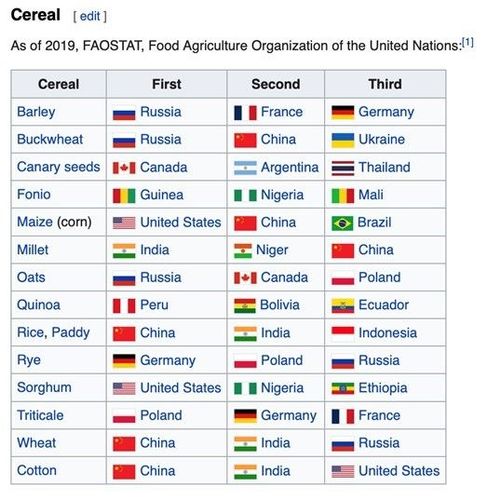
This article originally appeared on the SKU Food website . By @Peter Chapman Whether we like it or not our food industry is global and events around the world impact what happens here at home. The unprovoked attack on Ukraine has had impacts on the supply and cost of food around the world. The global supply chain we operate in really has evolved in recent years to adapt and work hard to feed a growing population. Google can provide definitions, but it does not always help you understand the importance of the term or perhaps even a specific meaning in our industry. We are going to share some food and beverage industry terms and explain how they can benefit or impact your business. Global supply chain is the complicated international production, processing and delivery of food, from farm to table. The food industry does operate on supply and demand. Food is essential to life and it has become a massive machine, with so many interlocking links. In the end, it is driven by consumer demand and producer and processor ability to supply. There are so many complexities that an event such as the invasion of Ukraine impacts the supply of basic commodities and the cost of energy. Both will likely be in shorter supply, which will drive costs up. West meets east We have all seen the chilling images coming from Ukraine. It is also scary to see the allies in the west line up against Russia and their allies. We do have a sophisticated supply chain for food, that has been tested in the last two years with the pandemic. Now it’s being tested again as many countries of the world unite in their opposition to Russia. When you think about food the truth is Russia and China produce vast amounts of food, much more than many of the western allies. Two other countries that have not lined up with the western allies are India and Brazil. They also produce huge quantities of food. The majority of this food from China and India is used to feed their own populations, but it is all part of the global supply chain. We know all food has it’s origin in primary agriculture, with the exception of some new lab produced items. It is enlightening to explore where primary agriculture happens around the world. Obviously, climate, arable land, labour and technology impact the amount of food that can be produced. Even if processing is done in North America, many of the raw materials can be or are being produced elsewhere. Diet also has a huge impact on the global supply chain. Demand for certain items is much higher in some areas. One of the complexities of the global supply chain is when products produced in other parts of the world are ingredients. If supply is short or costs increase significantly it can impact production of many processed items. According to the Food and Agriculture Organization of the United Nations, the following nations produced the largest quantities of food in each category. These charts do not provide amounts so they do not illustrate the proportion from each country. Although our population in Canada is small, compared to some other countries it is surprising how few times we see Canada in the top food producing countries, given the land mass we have. Cereals include the top three producers and in 14 categories Canada is only there for canary seeds and oats. The top three wheat producing countries are China, India and Russia. In the 27 vegetable categories, which include the top five producers, Canada only appears twice. We lead the world in the production of lentils and rapeseed. In the 27 fruit categories Canada only appears once with blueberries. When you review the vegetables and fruit categories China leads in 13 vegetable categories and nine fruit categories. India is in the top two in 14 vegetable categories and only five fruit categories. Animal protein is another primary agriculture to consider when understanding the global supply chain for food. Again, Canada is not within the top five for any categories. Brazil has made significant investments in these items and they export considerable quantities. China are one of the top three in every category except turkeys. Not surprisingly Canada does not appear in the drinks category either. Coffee and tea are dominated by southern hemisphere countries. Dairy is interesting given the different diets in different countries. In Canada we might be looking for some of these items but probably not too much of the camel milk. I can honestly say I have not tried it so perhaps I should reserve judgement until I do! As you can see the supply of food is global and we do rely on different parts of the world for a lot of the food we consume. If the invasion of Ukraine separates the world into two sides, it will have significant impacts on our global supply chain. One of the tactics employed by the west is to impose economic sanctions. In many cases this means we do not purchase products from Russia and allies. Given the source of food in the world we will have to make some changes to what we eat and how we process food. It is true our global supply chain is already somewhat aligned with our allies, but some items will not be available and costs will increase on others. If you are interested in global food production, I have a website for you. In 2019 I had the opportunity to speak at the CRAAQ conference in Drummondville, QC. George Steinmetz also spoke at the conference. He is a photojournalist from the U.S. He was tasked by National Geographic to explore how the world will feed itself. His images of food production around the world were fascinating. The images are beautiful and so interesting to see how things are done in different places and the scale at which they are doing them. What does this mean for suppliers in Canada? It is ironic to talk about the impact of a global supply chain when I would also tell you food produced in Canada is more popular than ever. The fact is many Canadian products include ingredients from all over the world. Just when the pandemic is easing up, food producers now have to be concerned if any of their ingredients or other inputs such as packaging or even fertilizer are at risk. Russia supplies huge amounts of natural gas used to make nitrogen fertilizer. With the economic sanctions in place, we have already seen energy costs rising and it is staggering when you understand the amount of agriculture inputs that come from eastern Europe. Your cost of inputs could increase (again) and supply could be a challenge. Time to review with your suppliers (again) that they will have what you need it, when you will need it and how much it will cost. Keep your customers informed of any challenges you see on the horizon. Consider shifting the sourcing of inputs, if possible, to countries more aligned with the view in the west. To date China seems to be quietly supporting Russia but wanting to do business with the west. Obviously if this changes, it would have a huge impact. Food security will be in the news and remember to tell your own story. If your products are produced in Canada consumers want to know about it more than ever. Remember this causes great upheaval for your customers too. Retailers are sourcing products from all over the world and this will cause them more work. It is not easy bringing fresh produce from all over the world. I remember someone at Loblaw wiring money in advance for a container of cherries from across the world. The money went but the cherries never came. Global sourcing is not for the faint of heart! We can all hope for a change and peace in the region and a chance for our global supply chain to breathe and recover from the pandemic.
Community Manager-
Shop to the future!
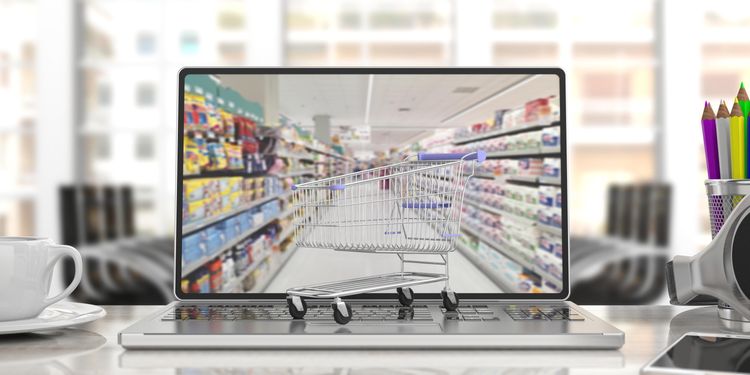
Grocers are blending convenience with smart technology to create a more seamless instore shopping experience that will keep customers coming back. When Amazon Fresh -- Amazon’s first bricks and mortar grocery store and an evolution of its Amazon Go cashierless convenience stores -- opened in 2020, it offered the leading edge in grocery retailing technology in North America. Designed to blend the online and instore shopping experience, the store creates a seamless and convenient experience for consumers that retailers hope will entice them back to in-person shopping. With Amazon Fresh, shopping starts at home as consumers use the Amazon app to create grocery lists categorized by department and continues in the store when consumers connect to Alexa kiosks to help them locate items, search food facts and access recipes suggestions. Amazon’s Dash Cart uses cameras, sensors and a scale to know what items are placed in it and automatically bills their Amazon account when shoppers exit through the Dash Cart Lane. Amazon Fresh stores lets you scan a QR code to use their Dash Cart smart cart to automatically pay for your items as you exit the store in a cashierless transaction. Although not all consumers are ready to embrace this sort of smart technology experience, acceptance grew significantly during the pandemic, as even tech-wary shoppers turned to online ordering, delivery and cashless payments. Canadians now expect larger grocers to offer options such as self-checkout, contactless payment, and automated delivery and pickups to make their experience more convenient. Aisle 24 is Canada’s first cashierless grocery and convenience store. The chain’s locations in Montreal and Toronto are open 24/7 to members who have already downloaded an app and created an account with the company. Members then scan and pay for their items at a self-checkout. Other in-store technology being testing in Canada include Instacart’s Caper AI powered shopping cart with its own checkout technology, and electronic shelf labels that not only allow operators to make faster price adjustments, but also add value to the instore experience by offering consumers nutritional or promotional information. Around the world, grocery retailers are exploring a wide range of creative technology that adds value to the instore experience. The COOP Supermarket in Milan, Italy was unveiled at Expo Milano in 2015 as the “supermarket of the future,” and features technology such as digital screen mirrors offering interactive displays on products, robots that sort and pack food, and Xbox Kinect technology that allows customers to point at products to learn more about them. In fall 2021, Carrefour opened its first cashierless convenience store in Paris, France , using machine-vision powered checkout technology to create a personal digital avatar for each customer entering the store. The Hema Supermarket in Shanghai, China is part of a chain of stores launched by internet retailer Alibaba that combine online and in-person shopping to create a seamless experience for customers. Consumers use an app to scan barcodes on products for information while shopping, order products that employees will then prepare and pack for delivery, and even choose and order fresh seafood to eat at the in-store restaurant. As similar concepts appear in the Canadian market, it will be interesting to see how Canadian shoppers react, food businesses adapt, and how the shopping experiences evolves.
Community Manager-
The Tablesetter: June 27
Happy Monday CFIN members! Every Monday, we’ll give you a heads up on what will be appearing on YODL this week and around the food world. The YODL Menu: This week watch for articles on: Monday: The YODL Menu, Something to Celebrate, Food Facts. Monday: Shop to the Future: S mart technology is creating a more seamless instore shopping experience. Tuesday: Current challenges to Canada’s food supply chain, and digitization solutions for building resilience in the food system. Tuesday: Guest Post: How events in Ukraine impact global supply chains. Wednesday: 5G is coming to Canada – what will this mean for the food industry? Thursday: Blockchain technology has the potential to offer food businesses greater transparency, efficiency and productivity. Friday: Weekly News Roundup Something to celebrate June 27 marks National Ice Cream Cake day. The first ice cream cakes on record were the fruity frozen ice cream dessert bombes enjoyed during the Victorian era, created in a round mould and named for their resemblance to cannonballs. Biscuit or cake-lined bombes evolved into ice cream cakes, with the first recipes appearing in the 1870s. Food Facts According to a 2021 survey the most popular ice cream flavours are: Chocolate Vanilla Strawberry Butter Pecan Mint Chocolate Chip Other Cookies n’ Crème Chocolate chip cookie dough Rocky Road Coffee
Community Manager-
New Pathways to the Pantry – Top Five Takeaways
Canadian consumers expect to access food conveniently, efficiently and safely. Thanks to the increase in online ordering, delivery and other cashless transactions they’re finding innovative options to meet their demands. And if one food business isn’t offering those options, they’ll quickly move to one that can. During the pandemic, Canadians increasingly turned to their smartphones to order groceries, meal kits, and food subscriptions , and the lines between restaurant and grocery store continued to blur. Consumers increasingly began segmenting their shopping lists into categories like online shopping, subscription deliveries, or a trip to the club store. Exploring these new ways consumers access food was the focus of CFIN’s first members-only experience, held virtually on March 17, 2022 . The one-hour session was moderated by Dana McCauley, CFIN’s Chief Experience Officer, in discussion with food entrepreneurs: Khalil Khamis, CEO of Crafty Ramen , a restaurant and meal kit subscription service with locations in Guelph and Kitchener, ON; Kris Linney, co-founder Toronto’s GoodGood, a café grocery chain retailing locally made products; and Matthieu Vincent, co-founder of Paris, France-based food tech consultant Digital Food Lab . Curious about what they had to say? Here are the top five takeaways from the session: 1. Post-pandemic, Canadians will continue to purchase food in a variety of ways The need for convenience isn’t going away, so demand for online ordering, meal kits and subscription services that offer a unique or new at-home experience will only increase. 2. Consumers don’t want to pay extra for online ordering and delivery That means operators will have to incorporate the costs of delivery services into their ecommerce modelling for now. Having a hybrid (in-person and online) model or diversified revenue channels can help offset costs. 3. Companies are investing in more creative and efficient ecommerce and delivery models Food startups are considering delivery models as part of their business plan, rather than as a loss leader. Existing businesses can reinvent their ecommerce offering through third-party providers such as Shopify, which also help offset consumer concerns about cybersecurity. 4. Companies can leverage technology to enhance the customer experience and connection Keeping in touch with customers through apps to offer personalized samples, and offering options like pre-ordering online, can drive repeat visits and visits during different parts of the day. 5. New technology is making the delivery process safer, more efficient and transparent Food safety can be a major barrier to delivery. Companies are overcoming this challenge by using third-party apps and tools like sensors to schedule delivery, track product movement, monitor temperature, and keep customers notified with links to tracking. Expect more innovations to emerge around food safety and delivery. Want to re-live the event? Check out the full-length recording on your YouTube page .
Community Manager-
EXPLAINED: Machine Learning
What is it? Machine learning is defined by IBM as “a branch of artificial intelligence (AI) and computer science which focuses on the use of data and algorithms to imitate the way that humans learn, gradually improving its accuracy.” In other words, the system collects data and learns from it on its own by creating algorithms. The main goal of machine learning is to make learning easier and faster, while gaining accuracy in data analysis, with little or no human intervention. Why you should care There are numerous applications for machine learning. This technology has notably allowed the development of voice and image recognition systems, and has been used by social media to optimize user experience through customized advertising and news feeds. In the food industry, machine learning can be used to: Determine and track the changing taste preferences of different customers. Analyze inventories, transportation times, and raw material price fluctuations to adjust ingredient purchasing to ensure timely supply, better pricing and less waste. Optically sort ingredients according to their physical characteristics and freshness to determine their best use. For example, to determine if a potato should be made into french fries or chips. Identify factors that affect the performance of production equipment and predict maintenance needs before problems arise. Jointly analyze the food preferences, purchasing habits and consumption patterns of a restaurant or caterer’s customers to help build the menu and manage inventory. Help facilitate more efficient, cost-effective and time-efficient dispatching of drivers for food and meal delivery. Create unique recipes from available ingredients. Detect odours and other characteristics affecting food safety. Opportunities in Canada Most companies producing AI solutions are also developing machine learning technology. Here are a few examples of local and international companies specializing in this field. See our article on AI for more companies working in AI and machine learning. GastrographAI is a New York, NY-based company that has designed the first AI platform to interpret and predict flavour preferences for more than a billion unique consumer groups. Attabotics , a Calgary, AB-based company offering the world’s first 3D robotic supply chain system, specializes in supply chain automation and e-commerce optimization on a global scale. One of its Canadian partners, FoodX Technologies , offers a scalable end-to-end eGrocery Management Solution (eGMS) designed to meet the needs of large and small grocery retailers while providing profitable unit economics. Its mission includes enabling retailers to eliminate plastics, minimize food waste and reduce costs while creating a healthier food ecosystem. FGF Brands describes itself as a technology company that bakes. The company uses advanced robotics, integrated artificial intelligence and machine learning to custom engineer processes around each product to improve recipes, operational efficiency, and production capacity. Dana’ s Take: Adding connected and automated technology based on AI and machine learning can help food executives to overcome challenges such as l abour shortages, supply chain disruptions, higher input costs, and changing consumer expectations. As a marketer, this consumer insight is very exciting; it will make positioning and targeted selling more accurate than ever before! Meanwhile, the costs of implementing machine learning enabled systems such as robotics have fallen, while performance and consistency have increased dramatically. (For more insight on how robotics are changing food operations, see Robotics in Action – Top Five Takeaways.) If you have a digital solution to make supply chains safer and more agile, apply for our Food Innovation Challenge . Applications are due July 7th.