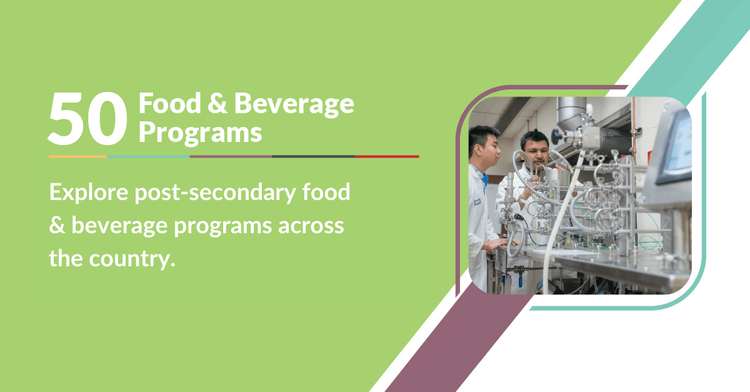
Canada is home to a diverse and dynamic food and beverage industry, supported by educational programs that train the next generation of chefs, brewers, entrepreneurs, and innovators. This roundup highlights 50 standout programs across the country, from top culinary schools and hospitality management courses to cutting-edge research initiatives and sustainability-focused training. Whether you're an aspiring professional, educator, or industry enthusiast, these programs provide valuable insights into the evolving world of food and drink in Canada. BC & Yukon Vancouver Community College UBC BCIT LaSalle College (Vancouver) UBC: Food, Nutrition, and Health Okanagan College Vancouver Island University University of Fraser Valley Northern Lights College North Island College Yukon University Selkirk College Thompson Rivers University Kwantlen Polytechnic University Prairies Saskatchewan Polytechnic University of Alberta University of Saskatchewan University of Manitoba SAIT NAIT Manitoba Institute of Trades & Technology International College of Manitoba Ontario Niagara College Humber College Le Cordon Bleu Ottawa George Brown College Fanshawe College Brock University University of Guelph Toronto Metropolitan University Loyalist College Georgian College Conestoga College Durham College Centennial College Canadore College Algonquin College Trent University St. Lawrence College St. Clair College Sault College Lambton College Confederation College Quebec McGill University LaSalle College Bishop's University Atlantic Canada University of PEI Memorial University Cape Breton University
Community Manager-
50 Food & Beverage Programs - Vancouver Island University
Crafting a Career in BC ’ s Wine Industry: VIU ’ s Wine Business Program The Wine Business program at Vancouver Island University is a comprehensive one-year certificate course designed for those passionate about pursuing a career in the BC wine industry. The program combines practical experience with academic learning in viticulture, wine business practices, marketing, and tourism. Program Highlights: As a student, you ’ ll have the chance to immerse yourself in hands-on experiences at local vineyards and wineries, gaining insights into the entire winemaking process. This practical foundation is then complemented by academic courses in viticulture, wine business practices, marketing, and tourism. A standout feature of this program is its flexibility. Whether you ’ re looking to study full-time for a year or prefer a part-time option spread over two years, VIU has you covered. Located in picturesque Nanaimo, BC, VIU provides an ideal setting for your wine education journey. With a curriculum designed to integrate viticulture essentials with business acumen, VIU ’ s Wine Business program offers a holistic understanding of the wine industry. Students can also earn credits that can be applied toward a Bachelor of Business or a Hospitality and Tourism Management program, opening doors to a wide range of future career prospects. The program includes seven courses and focuses on the broader aspects of the wine industry. In addition to viticulture and winemaking, students delve into wine marketing, exporting, and the vital role of wine tourism. C ourses cover a wide spectrum, from wine marketing and appreciation to beverage theory and the management of wine tourism. The program also offers elective courses in consumer behavio u r, entrepreneurship, and festival management . What You’ll Leave With: Upon graduation, a world of opportunities awaits you in BC ’ s wine industry. Whether you dream of managing a vineyard, excelling in wine s ales and marketing, or even opening your own restaurant, VIU ’ s Wine Business program provides the knowledge and skills to make your wine-related ambitions come true. Career options span winery/vineyard management, retail sales, wine marketing representation, hotel management, culinary arts, a gri - tourism development, and s pecial events coordination. V ideo/Social / Media : VIU YouTube Video
Community Manager-
Cellular Food in Canada
The past few years have proven how susceptible Canada’s food industry is to world events, supply chain disruptions and climate changes. New food production technology, such as cellular agriculture, has the potential to alleviate some of these challenges, while creating commercial opportunities and building a more sustainable, resilient food system. What is it? Cellular food – also known as engineering biology, synthetic biology or cell-cultivated products – is the production of food and textile products without using animals or land. Cell cultures harvested from animals, plants or micro-organisms are grown in the lab through tissue engineering or precision fermentation to produce: Cultivated proteins such as chicken, beef and seafood Fermented products like dairy, eggs, honey and chocolate Ingredients to add to products to create hybrid foods including proteins, enzymes, flavour molecules, vitamins, pigments and fats Textiles such as leather, silk and wool Why you should care As global population continues to grow, so does demand for protein, while access to land and other resource inputs become more scarce. Alternative agriculture could be an answer to food scarcity, concerns about animal and environmental welfare, cost inflation and resource challenges due to climate change. Compared to conventional agriculture, cellular agriculture production, is much less energy intensive, produces less greenhouse gas emissions, and has a much lower overall carbon footprint. With our strong food infrastructure, reputation for food safety, biotechnical expertise, and federal support for alternative protein production, Canada is well positioned to become a leader in cellular agriculture. The 2021 report Cellular Agriculture: Canada’s $12.5 Billion Opportunity in Food Innovation from Ontario Genomics and the Food and Agriculture Institute at the University of the Fraser Valley found that the international cellular agriculture market will reach US$100 billion by 2032. Canada’s food industry has the potential to take $12.5 billion that market, while creating up to 142,000 high-paying jobs. Opportunities in Canada Engineered plant proteins are already in the Canadian market, and by all estimates, precision fermented products are expected to appear before cultured meat products. Current Canadian regulations consider food produced through cellular agriculture as a novel food, and products are approved on a case-by-case basis. Here are a few Canadian start-ups making headlines: Because Animals – This Toronto-based pet food company uses cultured ingredients such as probiotics and nutritional yeast to create nutrient-rich cat and dog food designed to help digestive issues. Future Fields – Edmonton, AB-based Future Fields is a R&D producing growth media products that can be used to create commercialized cultivated proteins in a safe and sustainable manner. Cell-Ag Tech – Toronto’s Cell-Ag Tech is doing R&D on cell-cultured fish and seafood. New Harvest International non-profit research institute New Harvest , which promotes the science behind cultured meat through research, funding and a conference , now has a Canadian branch.
Community Manager-
Other Articles
In 30: Addressing Labour Challenges
Sometimes, all it takes is 30 minutes to learn the ins and outs of new food technologies and trends that are transforming the food and beverage industry. In this series, we’ll dig into a food innovation topic and link you to the best content and resources so you can become a master on the topic in 30 minutes (or less!). Finding and retaining skilled workers is an ongoing problem in all sectors of the food industry. As experienced workers retire, food businesses are often struggling to attract younger employees to replace them. And with more companies adding automation, digitization and other food technology, finding workers with the skills and training needed to succeed has become even more challenging . This week we’re looking at some of the labour issues, opportunities and resources accessible both to food and beverage entrepreneurs looking for talent, and skilled professionals hoping to enter the industry . The Overview Government of Canada – What We Heard Report – Agricultural Labour Strategy Agriculture and Agri-Food Canada’s summary of consultations with stakeholders on the development of a National Agriculture Labour Strategy. The report outlines the challenges facing the agriculture and food industries surrounding labour, as well as next steps. Statistics Canada – The changing nature of work in Canada: 1987 to 2024 Data from early 2025 indicates that Canadian employment continues shifting from routine, manual roles toward non-routine, cognitive jobs, with little evidence so far of widespread AI disruption despite ongoing technological change. Just Food - Canada Extends Agri-food Sector Labour Scheme Industries eligible under the scheme include meat product manufacturing, food processing and greenhouse production. Food in Canada – Success Factors when Hiring Newcomers The role of immigration in addressing labour market challenges. YODL - How Networking on YODL Led to a New Career Path and the Growth of Ontario's Laplace Robotics Jeff Hetherington forged a new career through a connection on YODL. Resources FBO – Skilled Trades Study & Recommendations Ontario's food and beverage processing industry is seeking to increase education, employment opportunities, and access to qualified foreign workers to make up for a shortage of skilled trade workers. FPSC – At the Crossroad to Greatness Key insights and labour market research about Canada’s food and beverage processing industry. FPSC – 2024 Labour Market Information Survey A report addressing labour challenges in the Canadian food and beverage m anufacturing industry. Social Media @FoodGrads – (Facebook) FoodGrads supports students beginning their careers in the food and beverage industry. Food and Beverage Canada – Aliments et boissons Canada – (LinkedIn) The association advocates for the food and beverage manufacturing industry on many issues, including labour and workforce development . @jobsthatfeed – (Instagram) – Jobs That Feed connects people to employment in the food industry. Overtime If you’ve got more than 30 minutes, these are for you: PodBean – Food and Beverage Processor Forum A discussion on the industry’s labour gaps. Spotify – The FoodGrads Podcast The FoodGrads podcast shares insights from food and beverage professionals at all stages in their careers.
Community Manager-
What We Heard: Highlights from CFIN’s Member Satisfaction Survey
We want to give a huge thank you to the 487 CFIN members who took the time to complete our first-ever a nnual mem ber satisfaction survey. Whether you’ve been part of the network for years or just joined, your feedback is helping shape what comes next for CFIN—and how we continue to support food innovators across Canada. Here’s what we learned: 🔍 You’re Engaged—and Growing 71% of respondents have used YODL , showing it’s becoming a regular part of how members access tools, information, and support. Most surve y participants identified as small food and beverage manufacturer s, service providers, or foodtech startups—a reflection of who makes up the heart of our community. Nearly half of respondents joined within the past year, and most are already active across our events, programs, and platforms. The network continues to experience significant growth, from 4500 members in 2024 to 6800+ members. 🤝 What You Value Most Across the board, members pointed to community, connection, and collaboration as the most valuable parts of their CFIN experience. COMMUNITY : Members consistently highlighted the value of connection with peers, collaborators, and others navigating similar challenges. Community topped the list of what members valued most, followed closely by how YODL helps members find relevant resources, surface opportunities, and stay connected to what’s happening across the industry. CONNECTIONS : Many respondents said that CFIN is helping break down innovation barriers, especially through meaningful connections across the sector. COLLABORATION : Active YODL users were among the most satisfied members, reinforcing the platform’s role as a key tool for collaboration and visibility. 🛠️ Where We’re Improving Members who are the most engaged reported the highest satisfaction, but we know there’s work to do. Your feedback is already shaping our 2025 priorities, including: FUNDING : Expanding the types of funding opportunities and making the process clearer and easier to navigate NETWORKING : Offering more opportunities to connect both in-person and virtually YODL : Continu e to improve YODL’s usability , functionality , and recommendation s 📣 What’s Next Based on your feedback, we’re already making meaningful changes to how CFIN shows up for our members: Events are picking up pace . We’ve already hosted 13 virtual and in-person events this year—including our new monthly Unpuzzling webinar series—and nearly 30 are planned by year-end. Bookmark our event pages to see the latest CFIN -hosted and industry event s in your region . We’ve made key improvements to YODL, beginning with a new monthly YODL 101 webinar to help members get the most out of the platform . We’ve also r evamp ed our Programs page t o enhance navigation and continue to add new resources , such as the U.S. Tariff Resource Guide , designed to assist food businesses in navigating the current era of economic uncertainty. We’ re la unching new programs with FedDev Ontario to support foodtech companies scaling up in Southern Ontario. T he Innovation Booster and Foodtech Nex t programs are both back for 2025, with more funding on the way to help early-stage innovators build, test, and grow. Finally, we just announc ed Foodtech Frontier 25— a first-of-its-kind celebration recognizing Canada's most ambitious and impactful foodtech innovators . The initiative aligns with member priorities by provid ing selected companies with targeted media coverage, enhanced investment attraction, and strategic partnership opportunities . Red Stick Ventures has committed $200,000 investment to support two companies featured on F TF25 program . Applications close July 10th, 2025 ! Thank you again for shaping this work with us. CFIN exists to support your success, and your input makes us better equipped to deliver on that promise . We’re excited about what’s ahead for Canadian food innovation, and we’re glad you’re building it with us.
Community Manager-
Dyeing for Change: How Material Futures is Upcycling Food Waste into Brilliant Colours
On April 23 2025 , the U.S. FDA and Health & Human Services confirmed a phased removal of eight petroleum-based food dyes—including Red 40 and Yellow 5—by 2026, with Citrus Red 2 and Orange B facing the axe even sooner. Brands that sell into the U.S. have begun a scramble for natural colourants that can survive heat, light, and long shelf lives. The shift away from synthetic food dyes is precisely what Material Futures, a Kitchener, Ontario startup , has been working towards. Backed by funding from CFIN ’s Innovation Booster program , the company is scaling a microbial‐fermentation platform in which wild microbes are engineered over-produce specific pigment molecules when fed with low-value processing residues— things like fruit pomace, carrot peel, or spent grain. After a gentle extraction and purification step, the result is a suite of red, yellow and purple colourants that match synthetic dyes on brilliance but beat them on consumer label friendliness. Upcycling t hat P ays Discarded pulp and brewers’ grain normally cost processors money to haul away. Material Futures signs supply agreements that revenue-share with those same processors: every tonne of residue becomes feedstock for pigment worth as much as $20 dollars per kilogram , flipping a disposal cost into a lucrative revenue stream. For CPG brands, the story is equally powerful. A product tinted with pigments made from food byproducts is a circular-economy proof point that’s both visible and verifiable. Unlike ambiguous or abstract ESG claims, it’s a story consumers can literally see . Canada’s Food Dye Status Quo—and a Head Start for Exporters Unlike the U.S., Canada hasn’t moved to restrict synthetic dyes. Health Canada continues to permit additives like Red 40, Yellow 5, and others deemed safe under current guidelines. But for Canadian processors shipping into U.S. markets—especially retailers and QSR chains adapting to state-level bans—the pressure to reformulate is already real. Material Futures offers a strategic head start: a domestic supply of high-performance natural colourants that meet emerging U.S. standards without the long lead times or import dependencies of overseas sources. For exporters, it’s a way to stay ahead of shifting regulations and public scrutiny— if and when the food dye policy conversation arrives north of the border. Learn more about Material Futures here .
Community Manager-
Friday Food Innovation Round-Up – May 16
From global trade policy developments to funding the next generation of homegrown foodtech , this week’s round-up looks at what’s cooking in Canadian food innovat ion . Here’s some of today’s highlights : 🪙 What temporary U.S. and Chinese tariff cuts could mean for Canada’s food sector 💡 CFIN awards $50K to 5 student-led ventures across the country 🏆 3 foodtec h startups earn national recognition for planet-friendly breakthroughs 🛠️ Ne w food innovation job openings at Daiya, Mara Renewables, and more Let’s dive in! Canada–U.S. Trade Brief: China Tariff Rollback Could (Temporarily) Ease Input Pressures for Canadian Food Companies Breaking down what’s changing in cross-border trade—and what it means for Canad a’s food sector. What’s the Latest? The U.S. and China announced a 90-day tariff rollback, temporarily reducing steep reciprocal duties. American tariffs on Chinese imports drop from 145% to 30%, while China reduces tariffs on U.S. exports from 125% down to 10%. The temporary truce runs until mid-August, offering short-term relief—but uncertainty remains high. For Canadian food manufacturers and processors, the lowered U.S. tariffs may translate into slightly lower costs for Chinese-sourced inputs like specialized packaging materials, food-processing equipment components, flavourings , nutritional additives, and smaller-scale machinery. However, tariffs remain historically high at 30%, and this window is limited. What You Should Know Short-term cost relief on imported inputs: Canadian food companies sourcing U.S.-distributed inputs originally from China might see slight reductions in procurement costs, benefiting production budgets in the near-term. Brands should use this 90-day window to reassess input suppliers and secure stable pricing where possible. Knock-on effects from U.S.–UK ethanol deal: Th is week, we also saw the removal of Britain’s 19% tariff on U.S. ethanol as part of a new trade pact , open ing the door for up to 1.4 bill ion litres of duty-free American ethanol to enter the UK. While the agreement doesn’t directly involve Canada, it could tighten North American ethanol supplies and nudge prices upward. Canadian manufacturers that use ethanol in processing , sanitation , or lab applications should monitor the market and consider securing supply contracts or exploring alternative sources. Helpful Links Why the U.S.-China tariff pause could signal ‘good news’ for Canadians - Global News Breakdown of the temporary tariff adjustments and implications for North American businesses. Trump, Starmer hail limited US-UK trade deal, but 10% duties remain - Reuters Covers the U.S.–UK ethanol agreement, which could affect North American ethanol supply and pricing for Canadian manufacturers. 💡 Food Innovation News Canadian Food Innovation Network Awards $50K to Five Student-Led Foodtech Venture s – Canadian Food Innovation Network CFIN has awarded nearly $50,000 to five student-led food innovation ventures as part of its NextGen Food Innovators pilot fund. Winning projec ts include a seaweed-based shelf-life coating, AI-powered French fry quality control, a nd bio-based pathogen detection . The 2025 CB Innovation Awards – Canadian Business This year’s Canadian Business Innovation Awards highlighted several food-sector standouts tackling climate challenges. New School Foods was honoured for its hyper-realistic plant-based salmon, now served in top restaurants and backed by $18M in funding. Harvest Systems earned recognition for tech that captures kitchen heat waste—now being deployed by Pizza Pizza and Recipe Unlimited. Nulife GreenTech was also featured for converting food and ag waste into renewable bio-crude oil. FSANZ and Health Canada collaborate on GM food assessment s – FSANZ Health Canada and Food Standards Australia New Zealand have introduced a shared GM food assessment pathway, allowing companies to submit one application for approval in both markets. The pilot aims to reduce regulatory duplication and streamline market access—especially beneficial for Canadian ag ri-food biotech firms targeting Asia-Pacific. 🛠️ Job Openings Here’s a few cool food innovation jobs that popped up recently: Business Development Intern – Genuine Taste – Montreal, QC (Hybrid) Marketing Manager – Mara Renewables – Dartmouth, NS R&D Sr. Scientist, Product Development – Daiya Foods – Burnaby, BC Have an open position you’re looking to fill? Be sure to post it on the Food Innovator Career Hub ! 🌟 Highlights from YODL Catch up on this week’s YODL conversations … Seeking food scientist or chef for high protein sauce Question for fellow food business owners Do you have something worth including in our next Friday Food Innovation Roundup? Reply to this post to let us know about your news, events, or job openings! Thanks for reading!
Community Manager-
In 30: Food and Beverage Associations Across Canada
Sometimes, all it takes is 30 minutes to learn the ins and outs of new food technologies and trends that are transforming the food and beverage industry. In this series, we’ll dig into a food innovation topic and link you to content and resources so you can become a master on the topic in 30 minutes (or less!). This week, we’re taking a look at some of the food and beverage associations across Canada that provide support and resources for members . There are many more sector- or region-specific, member-driven organizations across the country. National Associations BAC – Baking Association of Canada BAC’s mission is to empower members (Canadian bakers, large and small) in providing nutritious and delicious baked goods to consumers in Canada and around the world through leading public policy, knowledge transfer and networking. BIOTECanada BIOTECanada is a Canada-wide association with members from Canada’s health, industrial, and agricultural biotechnology sectors. CBA – Canadian Beverage Association The voice across Canada for the non-alcoholic refreshment beverage sector. CFIG – Canadian Federation of Independent Grocers CFIG is a non-profit trade association that helps independent, franchised and specialty grocers find sustainable success. CFIN – Canadian Food Innovation Network The Canadian Food Innovation Network (CFIN) is a national, member-based organization that’s stimulating innovation across the Canadian food sector. CHFA – Canadian Health Food Association The CHF A is Canada’s largest trade association dedicated to natural, organic and wellness. CIFST – Canadian Institute of Food Science & Technology The national association for food and beverage sector professionals includes members such as scientists and technologists in industry, government and academia . CM&E – Canadian Manufacturers & Exporters CM&E works to influence and recommend effective policies that will allow manufacturers to compete at home and abroad. CMA – Canadian Meat Council CMC represents Canada’s federally licensed meat packers, meat processors and suppliers of good and services to the meat industry. FHCP – Food, Health & Consumer Products of Canada FHCP members include large and small companies that provide Canadians with food, health, and consumer products. FPC – Food Producers of Canada FPC’s mandate is to advocate on behalf of Canadian owners and leaders of food - based companies. PAC – PAC Global The national organization fosters a community where companies from across the packaging value chain can come together to collaborate, innovate, and educate. Restaurants Canada The association is the national voice of the foodservice industry in Canada. Provincial Associations AFPA - Alberta Food Processors Association The association represents the interests of its members in the Alberta food and beverage industry. Ag-West Bio Ag-West Bio helps move research to the market and grow agri-food business in Saskatchewan by supporting businesses, catalyzing initiatives, creating connections, and promoting science. BCFB - BC Food & Beverage BC Food & Beverage a not-for-profit industry association representing food and beverage manufacturers in British Columbia . CTAQ – Conseil de la transformation alimentaire du Québec Le CTAQ a pour mission d’orchestrer l’excellence et la croissance durable du secteur de la transformation alimentaire en appuyant ses parties prenantes et en unifiant l’écosystème du Québec. FBA - Food & Beverage Atlantic FBA is committed to driving the success of food and beverage companies across the region. FBM – Food & Beverage Manitoba Food and Beverage Manitoba provide s services and resources to members to strengthen the local food and beverage processing industry. FBO – Food and Beverage Ontario Food and Beverage Ontario is the provincial professional leadership organization for food and beverage processors across Ontario. Overtime If you’ve got more than 30 minutes, these are for you. YODL – Meet YODL! Find out more about our one-of-a-kind online platform. YODL – Le RCIA innove avec de nouveaux outils pour ses membres Julie Daigle, Directrice régionale pour le Québec, présente quatre fonctionnalités uniques à la plateforme YODL, dont deux nouveaux outils de recherche de financement ou de ressources en soutien aux innovateurs alimentaires canadiens. Is there a major Canadian food and beverage association we’ve missed? Reach out to your Regional Innovation Director to let us know
Community Manager-
Friday Food Innovation Round-Up – May 2
Election week might be over, but for Canada’s food sector, the real campaign is just beginning. In response to U.S. trade volatility, sluggish productivity, and long-standing interprovincial barriers, the new Liberal government has proposed some ambitious changes . This week’s round-up explores what those p roposed changes would mean for food innovators—and how they might reshape how Canadian companies secure investment, bring new products to market, and expand beyond the U.S. Other menu items this week include : 💡 CFIN’s Dana McCauley reflects on 85 years of food innovation 🎯 Reusables raises $3.6M to scale its smart-container system for campus dining 💰 A new Innovation Product Manager job opening with a national food brand 🌟 H ow to build a cacao supply chain right here in Canada Let’s dive in! Canada–U.S. Trade Brief: What to Expect from the New Liberal Government Breaking down w hat’s changing in cross-border trade—and what it means for Canadian food companies. What’s the Latest? Mark Carney’s Liberals won this week’s federal election a fter campaigning on a clear message: Canada needs to reduce its reliance on U.S. trade and double down on boosting domestic productivity and innovation. For the food sector, this likely means more federal dollars flowing into processing infrastructure, tech adoption, and export diversification—especially as U.S. tariffs and political volatility show no signs of easing. The shift could reshape how Canadian food manufacturers grow, compete, and scale in the years ahead. What You Should Know Expect targeted fund ing for critical food processing infrastructure . The new Liberal platform proposes committing substantial resources—including a dedicated $200 million Domestic Food Processing Fund—to boost capacity, automation, and innovation at Canadian food processing facilities. Market diversification is a federal priority . The Liberals have outlined plans to enhance trade missions and expand export incentives, particularly into the EU, Asia, and Latin America. T hese alternative global markets which could offer food businesses more stable and predictable growth opportunities compared to the volatile U.S. environment. Streamlined regulations and interprovincial trade reforms are on the way. The government has also stated its intentions to undertake substantial regulatory reform s , including removing interprovincial trade barriers and streamlining food-safety approval processes. Food manufacturers and exporters can expect clearer, more efficient compliance frameworks. This could significantly reduce the time-to-market for new products, especially those leveraging innovative food technologies and novel ingredients. Helpful Links Liberals Outline Agrifood Plan A policy blueprint laying out export supports, investments in food processing , and explicit protections for supply-managed industries. The Liberal 2025 Election Platform Provides comprehensive details on the government's plans to enhance economic sovereignty and invest in domestic industries, including food processing. 💡 Food Innovation News Innovation Insights: 85 Y ears of F ood I nnovation – Food in Canada To mark Food in Canada’s 85th anniversary, CFIN’s CEO Dana McCauley penned this column reflecting on the last 85 years of food innovation . F rom WWII-era frozen foods to lab-grown meat and AI-driven personalization , e ach milestone reflects how cross-sector collaboration, technology, and cultural shifts have redefined what and how we eat. Reusables looks to help cafeterias scrap single-use containers with $3.6-million seed round – BetaKit Vancouver-based Reusables has raised $3.6 million in seed funding to expand its reuse system for institutional foodservice operators across North America. Its smart-container platform is already in use at campuses in Ontario, B.C., and California, with over 500,000 containers reused in just two semesters. Five New Tech Companies Launched onto the International Stage Thanks to Québec Tech – Québec Tech Québec Tech has announced the latest cohort of its Stage V program, designed to help export-ready Quebec tech companies scale internationally. Among the five selected is Longueuil-based Innodal , which develops natural antimicrobial solutions to help food processors prevent contamination from pathogens like Listeria and E. coli. 🛠️ Job Openings Here’s a few cool food innovation jobs that popped up recently: Innovation Product Manager – Piller's Foods – Waterloo, ON Sr. Food Technologist – Ventura Foods – Toronto, ON B2C Marketing Manager – Too Good to Go – Toronto, ON (Hybrid) Have an open position you’re looking to fill? Be sure to post it on the Food Innovator Career Hub ! 🌟 Highlights from YODL Catch up on this week’s YODL conversations … Unlocking Quebec’s Food Market: Key Consumer Insights for Innovation Cacao Beans - Establishing a Canadian-Based Supply Chain Seeking Food Scientist for Beverage Development Do you have something worth including in our next Friday Food Innovation Roundup? Reply to this post to let us know about your news, events, or job openings! Thanks for reading!
Community Manager-
Unlocking Quebec’s Food Market: Key Consumer Insights for Innovation
Last week, CFIN hosted a special Unpuzzling webinar focused on the Quebec food market—Canada’s second largest and culturally unique consumer base. CFIN’s Regional Innovation Director for Quebec, Julie Daigle, was joined by Elyse Boulet and Stéphane Crevier from Pigeon , one of Canada’s leading branding agencies, to explore how companies can successfully launch innovative food products in Quebec. Here are the key takeaways from the conversation. Different Language, Different Food Culture Quebec is home to nearly 25% of Canada’s population and accounts for a similar share of food and beverage sales. But winning in this market takes more than a French label. Quebec consumers are emotionally driven, pleasure-seeking, and intensely value local identity. As Stéphane noted, “pleasure is a serious thing” in Quebec. Brands that understand this—and market accordingly—will resonate more deeply. Taste Preferences and Shopping Habits Are Unique Among Canadian The Quebec food consumer balances functionality and emotion. Early-week meals are planned and health-conscious, while Thursday to Saturday is all about indulgence—chocolate, wine, beer, and good company. Quebecers are enthusiastic cooks who shop frequently , often at small neighborhood grocers, and they use loyalty apps and digital flyers more than the rest of Canada. They also have distinct flavor preferences: maple, caramel, and strawberry perform far better than pumpkin spice or mint chocolate. And when it comes to protein, Quebecers over-index on beef, veal, and pork—while eating less spicy or ethnically diverse cuisines than Ontario or BC. Cultural Context Should Inform Product Development From fondue and raclette to food shows built around conversation, not competition, Quebecers embrace food as a shared experience. That cultural backdrop should shape everything from packaging size (Quebec homes are smaller) to product naming and seasonal marketing. Brands that align with Quebec-specific holidays (like Saint-Jean-Baptiste Day instead of Victoria Day) or team up with local celebrities gain added traction. Practical Steps for Market Entry Elyse and Stéphane both emphasized the importance of testing products with French-speaking consumers, co-creating with regional partners, and investing in Quebec-specific creative assets. Independent grocers, local distributors, and associations like CTAQ can provide valuable footholds for entering the market. Above all, don’t assume that market insights gained from neighbouring provinces equally apply to Quebe c . Use data, validate insights, and take time to understand the culture on its own terms. Watch the Recording and Sign Up for Future Webinars For a deeper dive into these insights, you can find the full recording of the webinar on YouTube . Want to keep exploring complex industry topics ? Check out our Events Page to sign up for upcoming webinars or in-person events in your region.
Community Manager-
Friday Food Innovation Round-Up – April 17
We 're coming to you a day early for the Easter edition of our Food Innovation Round-Up . From the lates t tariff developments to major investments in advance d food manufacturing, here’s what caught our attention this week : 🪙 Ottawa announces tariff relief measures for Canadian food manufacturers 💡 Manitoba backs $102M grain innovation hub to boost global market reach. 🛠️ An innovation commercialization job opportunity with a leading CPG brand Let’s dig in! Canada–U.S. Trade Brief: Ottawa Eases Pressure for Food Sector Importers Breaking down what’s changing in cross-border trade—and what it means for Canadian food companies. What’s the Latest On Tuesday, April 15, the federal government announced temporary relief from Canada’s counter-tariffs for Canadian manufacturers, processors, and food and beverage packaging companies that rely on U.S. imports. The move responds to new U.S. tariffs introduced in March and April, which continue to affect key inputs such as aluminum, paperboard, and plastic packaging components. This six-month remission gives businesses time to adapt their supply chains and manage rising costs, while a new loan program will provide support to large enterprises critical to food security. What You Should Know Tariff relief applies to U.S. goods used in Canadian food manufacturing and packaging. This includes inputs that can’t be sourced domestically . Relief is time-limited . The remission runs for six months, giving businesses time to adjust sourcing strategies or invest in domestic alternatives. Large food companies may now apply for federal support. The Large Enterprise Tariff Loan Facility (LETL) is open to eligible employers facing financing challenges due to U.S. trade actions. New Tariff Resources Understanding CUSMA Compliance – Trade Commissioner Service Guide M ost Canadian food exports remain exempt from new U.S. tariffs—but only if CUSMA origin rules are met and properly claimed. This guide explains how to determine eligibility and complete certification to avoi d duties on U.S. shipments. Weathering the Storm – Canadian SME Tariff Playbook (Toronto Region Board of Trade) This practical guide offers step-by-step strategies for Canadian businesses navigating U.S. tariffs. It’s designed specifically for SMEs, with checklists and low-cost, actionable tips for adapting quickly to trade volatility. 💡 Food Innovation News Manitoba spends 'a whole lotta bread' to find new markets for cereal grains – CBC News Manitoba is investing $13 million to help launch the Global Agriculture Technology Exchange (GATE), a $102 million facility in Winnipeg that will showcase Canadian cereal grains. Designed to attract global buyers and partners, GATE will equip the grain sector with hands-on innovation space to develop and promote value-added products . Ferrero Canada invests $445M in Ontario plant – Food in Canada Ferrero Canada is investing $445 million to expand its Ontario facility with new IoT-enabled and robotics-powered production lines—marking a major leap in smart manufacturing for the food sector. The tech-driven expansion reinforces Ontario’s growing role in advanced food manufacturing. Food Processing Skills Canada Unveils Three New Programs – Foodservice and Hospitality Food Processing Skills Canada launched three new programs to help food and beverage businesses attract, train, and retain talent. With digital food safety training, student work placements, and leadership coaching for managers, the initiative aims to strengthen workforce resilience a t a critical time for Canada’s processing sector. 🛠️ Job Openings Here’s a few cool food innovation jobs that popped up recently: Sr. Innovation Commercialization Associate – Hain Celestial Group – Remote Food and Waste Specialist – MacEwan University – Edmonton, AB Hardware Technician (Contract) – Reusables.com – Vancouver, BC Have an open position you’re looking to fill? Be sure to post it on the Food Innovator Career Hub ! 🌟 Highlights from YODL Catch up on some of this week’s top YODL highlights… Flip the Switch on Waste: Turn Your Food Processing Byproducts into Value Streams Transformation/Innovation - ERP Needs Seeking Strategic Partners – Let's build the next generation of B2B procurement Do you have something worth including in our next Friday Food Innovation Roundup? Reply to this post to let us know about your news, events, or job openings! Thanks for reading!
Community Manager-
Flip the Switch on Waste: Turn Your Food Processing Byproducts into Value Streams
Every year, billions of dollars in food production value literally go to waste—discarded in the form of orange peels, bruised apples, spent brewery grains, pork bones, and coffee grounds. According to a 2024 report by Second Harvest , nearly half of all food waste in Canada happens during processing, much of it in the form of byproducts like this. These byproducts aren’t useless, but t hey of ten end up treated that way. Not because they have no value, but because most businesses lack the systems to capture it. Nature doesn’t have waste—every output feeds something else. The same can be true in food manufacturing , where byproducts are not inevitable, but rather a result of lacking the tools or systems to realize their hidden potential. Fortunately, n ew technologies and business models are making it easier than ever to turn what was once discarded into valuable new products. Food manufacturers that treat byproducts as waste are leaving money on the table. The companies cashing in on their waste aren’t waiting for a perfect solution, they’re building their own. Here are four ways to do the same. Forge Circular Economy Partnerships In Halifax, N ova Scotia , a group of businesses have cracked the code on waste-free manufacturing by recycling each other’s byproducts into valuable input s. This miniature circular economy includes Sustane Technologies (a solid waste processor) , Smallfood (a microalgae ingredient developer) , Oberland Agrisciences (an agrifood biotechnology company) , and Sustainable Blue (a land-based aquaculture fishery) . Organic waste, like spent brewery grains , are salvaged by Sustane and incorporated into aquaculture feed developed by Oberland Agriscience. Oberland’s feed also uses unsaleable produce sourced from local supermarkets, and Smallfood’s microalgae — a sustainable source of protein and omega-3 fatty acids that is produced using far less land and fresh water than conventional animal protein sources . The feed is used by Sustainable Blue , who in turn send all of the waste from their closed-loop fishery to a methane digester to generate electricity. This is just one example of how creative circular economy partnerships between food producers, processors, and ingredient developers can help unlock value from even the unlikel iest of byproduct s . T ake a page from this model by consider ing how like-minded businesses in your region could h e lp you transform waste into new products, cut costs, and build more sustainable supply chains . Tap into Existing Upcycled Ingredient Market s More businesses are finding innovative ways to turn food byproducts into valuable ingredients, creating new opportunities for manufacturers to reduce waste and generate revenue. That’s exactly what LOOP Mission is doing in Montreal. For nearly a decade, LOOP has transformed rejected supermarket produce into cold-pressed juices and smoothies, rescuing over 20,000 tonnes of food that would have otherwise gone to waste. Now, with the launch of LOOP Synergies —a dedicated upcycled ingredients platform— they’re helping manufacturers monetize byproducts and incorporate sustainable ingredients into their own formulations. Similarly, Nova Scotia-based RFINE Biomass Solutions is creating new value streams for the food industry by upcycling spent coffee grounds at the source. Using in-store drying systems placed in cafés and restaurants, RFINE transforms waste coffee into shelf-stable, nutrient-rich ingredients that can replace cocoa in brownies, cookies, protein bars, and beyond . By processing waste on-site and partnering with ingredient buyers, they’re closing the loop between foodservice operators and manufacturers. Whether you’re looking to reduce waste disposal costs or develop products with sustainability in mind, innovators like LOOP and RFINE offer manufacturers a direct path into the growing market for upcycled ingredients. Investing in Waste Stream Valorization While circular economy partnerships and B2B upcycled ingredient markets can be great for selling byproducts with pre-existing demand, some of the biggest opportunities come from identifying and developing new uses yourself. The dairy industry provides one of the most compelling examples. For decades, whey -laden cheesemaking wastewater was nothing more than an expensive —and environmentally destructive— disposal problem for processors. But, when isolated , whey is an exce ptional source of protein and other essential nutrients. Once dairy processors invested in and developed new filtration, drying, and fractionation technologies, whey transformed from waste into a high-value ingredient for sports nutrition, infant formula, and functional foods. By 2030, the Canadian whey protein market is projected to hit $1 billion USD —a stunning reversal for an ingredient that was long considered a valueless byproduct. But investing in new processes is only half the battle—the other half is defining the value proposition and finding the right buyers. Whether it’s extracting fibers, proteins, or bioactives from food byproducts, your biggest waste stream valorization wins will come from understanding market gaps, branding the ingredient effectively, and positioning it as a premium ingredient—one that you control and profit from directly. Closing the Loop Back to the Land Not all food waste can be upcycled into new products. Some byproducts are too perishable, contaminated, or lacking a clear market—at least for now. Circular economy partnerships and byproduct valorization take time to develop, and in the meantime, food manufacturers are still left with large volumes of organic waste. But even here, waste is still an untapped resource. Investing in industrial food waste recycling and composting systems, like those developed by Food Cycle Science , allows manufacturers, restaurants, and even municipalities to reduce organic waste volume by up to 90% and bring the food cycle full circle . These units convert food scraps into a dry, odorless, nutrient-rich soil amendment, which can then be sold to farms, landscaping companies, or garden cent re s to return nutrients a n d organic matter back to the soil. Lower waste disposal costs, an added revenue stream, and stronger sustainability performance— it’s a rare win-win-win. From Waste to Revenue : Where to Start Shifting from seeing byproducts as waste to treating them as valuable resources requires both a mindset change and a strategic approach . The best place to start is by conducting a comprehensive waste stream audit . This allows you to identify and quantify your highest-volume and highest-potential byproducts. From there, you can explore which of the se strategies aligns best with your operational realities and regional opportunities. Waste is still too often seen as an unavoidable cost of doing business. But when you break it down, every discarded byproduct represents lost value and untapped potential. The food companies leading the way are finding ways to make waste streams work for them . By seeing waste for what it often really is—a misallocated resour ce, not a valueless byproduct—you too can start fill ing your pockets instead of our landfills .
Community Manager-
Friday Food Innovation Round-Up – April 4, 2025
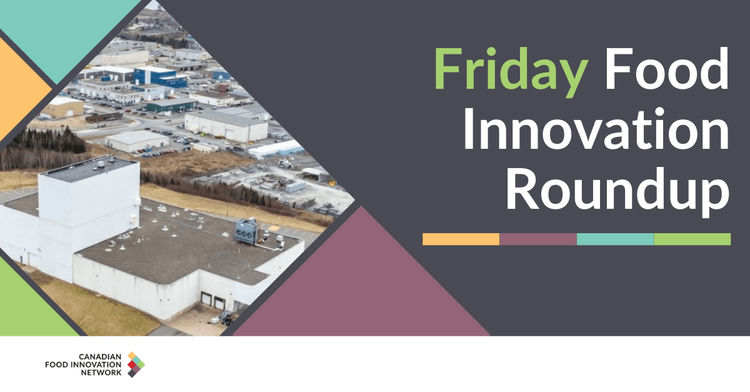
U.S. tariffs continue to dominate the headlines, and we want to know how the uncertainty is affecting Canada's food sector . Before getting into this week's r oundup, w e hope you'll take a moment to respond to our one- question poll about the biggest tariff-related challenge your food business is contending with. With that, let's dig in ! H ighlights from this edition include: 💡 Canada announces its first large-scale bioinnovation centre 🛠️ A job opening in ice cream innovation—say no more! 🧠 Lessons for innovators from a new book on the science of exploration 💡 Food Innovation News Establishing Canada’s first large-scale bioinnovation centre – Government of Canada Canada’s first large-scale bioinnovation hub is launching in Nova Scotia, with $5 million in federal funding to support precision fermentation, functional food development, and green biomanufacturing. The Neptune BioInnovation Centre will give businesses access to contract manufacturing and scale-up capacity —making it easier to commercialize sustainable ingredients and products without leaving the country. How tariffs are impacting Canadian food companies (and what they’re doing about i t) – The Spoon In this conversation with foodtech expert Michael Wolf, CFIN CEO Dana McCauley outlines how escalating U.S. tariffs are reshaping the landscape for Canadian food manufacturers. Dana explains how companies are being pushed to localize supply chains, embrace Canadian-made technologies, and diversify export strategies—urgent shifts made even more critical by regulatory uncertainty and a volatile trade environment. Protein Industries Canada launches $3M program for plant-based industry – Canadian Grocer In response to growing trade tensions with the U.S., Protein Industries Canada has launched a $3 million program to help plant-based food companies reformulate and scale products using Canadian-grown ingredients. The initiative offers up to 75% cost reimbursement and aims to strengthen Canada’s domestic food supply chain—supporting processors through both innovation and investment in Canadian crops like peas, soy, and fava beans. 📅 Upcoming Events Restaurants Canada: RC Show 2025 April 7-9, Toronto Canada’s leading hospitality and foodservice trade even t is hap p ening in Toronto next week! If you’re attending, be sure stop by Innovation Alley to chat with us and connect with some of Canada's most exciting foodtech startups. CFIN’s Regional Innovation Director for Ontario, Marsha Druker, will also be moderating a panel discussion on Monday, April 7 from 2:15-3:00 PM . It will cover strategies for restaurants, caterers, and hospitality leaders seeking to embrace the latest foodtech advancements and future-proof their businesses. Don’t miss it! CFIN Webinar: Unlocking Quebec’s Food Market: Key Consumer Insights for Innovation Thursday, April 17 , 1:00 PM EST In CFIN’s next Unpuzzling webinar session, you’ll hear from experts in Quebec’s food branding and marketing landscape as they break down what makes Quebec consumers different—and why this matters when it comes to launching successful products and brands in Canada's second-largest market. Discover all the F&B industry events on the horizon over on CFIN’s Events Page ! 🛠️ Job Openings Here’s a few cool food innovation jobs t hat popped up recently : Innovation and Product Development Specialist - Ice Cream – Agropur – Edmonton, AB Engineering Director – New School Foods – Toronto, ON Formulations Technician – Dispersa – Laval, QC R&D Manager, Product Innovation – Enhanced Medical Nutrition – Toronto, ON (Hybrid) Have an open position you’re looking to fill ? Be sure to post it on the Food Innovator Career Hub ! 🌟 Highlights from YODL Catch up on some of this week’s top YODL highlights … How YODL Is Transforming the Sales Process for Food Distributors: Fueling Business Growth Through Connection Sourcing Canadian Flavour Extracts 🧠 Brain Food If you’re hungry for some additional food for thought , here 's a few things we've been enjo y ing lately : 📰 ️ The Impact of Survivorship Bias on Innovation Policy – Ca n Innovate In this sharp piece, Kyle Briggs makes the case that Canada’s innovation policies are falling short because we’re only learning from the winners. He argues that by ignoring failed startups and underused programs, policymakers and ecosystem builders are reinforcing blind spots— when what Canada really needs is a willingness to study failure and use those lessons to design more thoughtful and impactful innovation policy. 📕 ️ The Explorer's Gene – by Alex Hutchinson The Explorer’s Gene is a deep dive into the science and psychology behind exploration—and why i t’s fundamental to human progress. For innovators and entrepreneurs, science journalist Alex Hutchinson flips the script on risk and uncertainty, showing how venturing into the unknown fuels creativity, adaptability, and long-term growth. Drawing on science, history, and personal stories, he makes a compelling case for choosing the uncharted path. Do you h ave something worth including in our next Friday Food Innovation Roundup ? R eply to this post to let us know about your news, even ts, or job openings ! Thanks for reading!
Community Manager-
In 30: Atlantic Canada’s Food Ecosystem
Sometimes, all it takes is 30 minutes to learn the ins and outs of new food technologies and trends that are transforming the food and beverage industry. In this series, we’ll dig into a food innovation topic and link you to the best content and resources so you can become a master on the topic in 30 minutes (or less!). This week, we’re looking at food and beverage innovation and resources in Atlantic Canada. The Overview CFIN - Seven Atlantic Food Businesses Receive Funding to Green their Operations In 2024, CFIN and the Atlantic Canada Opportunities Agency.( ACOA) provided $130k in funding to seven companies to help Atlantic Canada’s food business ecosystem create new regional economic opportunities while simultaneously working to advance Canada’s broader sustainability goals. Government of Canada - Establishing Canada’s first large-scale bioinnovation centre A one-of-a-kind facility in Canada, Dartmouth ’s Neptune BioInnovation Centre (NBC) will provide shared industrial space, contract manufacturing, spray drying, and precision fermentation up to 100,000L, enabling companies to scale locally instead of leaving Canada. Government of Newfoundland and Labrador – Our Food. Our Future The Department of Fisheries and Land Resources, Agriculture Production and Research Division, Agriculture and Agri-Food Canada and Memorial University – Grenfell Campus are conducting agriculture and food related research in Newfoundland and Labrador. Government of Nova Scotia - Food and beverage strategy: engagement The Government of Nova Scotia is developing a food and beverage strategy that will help improve access to and increase the production of healthy, local food. YODL - From biowaste to sustainable packaging Atlantic Canada’s seafood industry is challenged with how to deal with processing by-products and waste more sustainably. YODL - Maritimes brewers, this one is for you! Agriculture and Agri-Food Canada has announced a projec t led by Dr. Aaron Mills, r esearch s cientist at AAFC, that aims to grow malt barley varieties suitable for the Maritimes. YODL - Creating a Greener Future for Atlantic Canada’s Food Sector Drawing on his decades of experience as both a food entrepreneur and advisor, Tyson MacInnis , Regional Innovation Director for Atlantic Canada is helping local food businesses convert their environmental aspirations into actionable —and profitable— change. Resources NRC Marine Research Station The Marine Research Station in Ketch Harbour, NS has experts in algal biology, marine biology, aquaculture, analytical chemistry, and applied nutrition. The algal research facility provides resources and expertise for the cultivation of seaweeds and microalgae to produce bioactives and other compounds. RPC Science & Engineering With locations in Fredericton and Moncton, NB , RPC offers research and development and technical services to clients in New Brunswick and in 30 countries around the world. Canada's Smartest Kitchen Canada’s Smartest Kitchen at Holland College in Charlottetown, PE is a food product development centre specializing in moving projects from concept to commercialization. It is also the research division of the Culinary Institute of Canada and an NSERC Technology Access Centre. Centre for Aquaculture and Seafood Development The Centre for Aquaculture and Seafood Development in St. John’s, NL offers t echnical services in seafood processing, aquaculture, and marine bioprocessing, in the areas of applied research, product and process development, advisory services, and training. BioFoodTech Charlottetown, PE’s BioFoodTech provides professional technical services to food and bioprocessing companies. Emergence Emergence is a bioscience incubator that accelerates the growth of Atlantic Canadian startups and early-stage companies moving from ideation to commercialization. The Verschuren Centre The Verschuren Centre in Sydney, NS is an independent, not-for-profit clean technology development and deployment facility offering a collaborative space that allows clients to advance technology cost-effectively, while having the support required on the path to commercialization. Companies you Should Know Chinova B ioworks The Fredericton , NB - based foodtech company uses upcycled white button mushroom stems to create a natural clean label preservative that is vegan, kosher, halal, and allergen-free . CleanBands Charlottetown, PE-based CleanBands is building handwashing compliance systems that help food workers ensure they are following handwashing policies. Copol International North Sydney, NS-based Copol International Ltd. manufactures cast polypropylene film for the flexible packaging industry, mostly for food packaging and often for high heat applications such as sterilizing. Milk Moovement Halifax, NS-based Milk Moovement creates supply chain management software for the dairy industry. Saltwinds Coffee Company Ltd. Douglas, NB-based Saltwinds Coffee Company’s aim is to offer a carbon neutral cup of coffee, something the company began by re-inventing coffee roasting itself to turn it into a zero-emission process. Overtime If you’ve got more than 30 minutes, these are for you: YODL - Blockchain and the Food Industry Nestor Gomez, Chief Technology Officer for CFIN, sat down with Dr. Dhirendra Shukla, professor and chair, Dr. J. Herbert Smith/ACOA Technology Management & Entrepreneurship Program at the University of New Brunswick , to discuss blockchain and the food industry. YouTube - International students get a "taste" of Atlantic Canada Students at St. Thomas University in Fredericton, NB try food and beverage made in Atlantic Canad a .
Every year in Canada, we throw away enough food to feed every person in Finland , Sweden, and Denmark combined. A staggering 21 million tonnes — or $58 billion — of food heads for landfills, all while millions of Canadians struggle to keep up with rising grocery bills . O ur food waste problem is just as troubling from an environmental perspective . According to a report by Second Harvest , t he greenhouse gas emissions of Canada’s avoidable food waste— defined as all food that was at one point edible, including at the time of disposa l—emits the equivalent of 253,223 one-way flights from Toronto to Vancouver. Globally, food waste accounts for between 8-10% of all emissions. The scope of the food waste crisis is head spinning, influencing everything from cost of living to our climate. But we are making progress . As CFIN’s Food tech in Canada: 2025 Ecosystem Report illustrates, Canada is emerging as a global leader in food waste and upcycling innovation. Across the country, dozens of innovative startups are building food waste solutions where it matters most. Expiration Exasperation: When Good Food Goes Bad (For No Good Reason) Born in 1976 as a seemingly helpful guide for consumers, best before dates (BBDs) ha ve instead become a primary culprit behind nearly a quarter of Canada's food waste. Most consumers still take "best before" to be synonymous with "bad after" . Legally speaking, that is true for ret ailers, who cannot sell food past the (often arbitrary) BBD stamped on its package . Mountains of perfectly good food go to waste thanks to this well-intentioned, but deeply flawed system. However, s tartups like Toronto-based Flashfood are helping address BBD -related food waste with solutions that benefit both retailers and consumers . Founded in 2016, the startup created a mobile app that helps consumers find discounted items nearing expiry , purchase them at significant markdowns, and pick up groceries directly from participating stores. In doing so, Flashfood has prevented millions of pounds of food from ending up in landfills . Connecting Donors and Food Rescue Organizations Businesses often find it easier—and cheaper—to compost surplus food or turn it into animal feed rather than donate it. Logistical hurdles , food safety concerns, and legal risks further deter companies from donating perfectly edible food. Calgary startup Knead Technologies tackles these barriers head-on by simplifying the food donation process. Their intuitive digital platform seamlessly connects businesses with food rescue organizations, handling logistics effortlessly, tracking donations in real-time, and efficiently coordinating volunteers. Knead’s platform allows nonprofits to spend more time feeding people and less managing spreadsheets. Metro Food Rescue, for example, now rescues an additional 5,750 pounds of food each month since adopting Knead’s system, significantly reducing food waste, lowering greenhouse gas emissions, and directly supporting communities. New Use Cases for the Outcasts Huge volumes of produce end up discarded in Canada simply because it doesn’t meet stringent visual or size-based grading regulations set by governments and retailers. But upcycling-sa vv y startups like Montreal-based LOOP Mission are finding ways to transform these overlooked outcasts into innovative products. Initially launched with cold-pressed juices from these "imperfect" fruits and vegetables, LOOP has quickly expanded its creative approach into smoothies, wellness shots, probiotic sodas, and more. B y demonstrat ing that produce deemed un saleable by traditional standards still has market value , LOOP has successfully diverted millions of pounds of food from landfill s. Scaling Innovation: The Challenges Hindering Food Waste Solutions When it comes to scaling solutions like these , Canadian innovators face a gauntlet of real-world obstacles. Regulatory frameworks are outdated and fragmented. Private capital is limited, particularly at later stages of growth. And while public funding is widely available, it’s often geared toward early-stage projects, leaving a critical gap when companies need it most. The progress we’re making on tackling food waste through innovative solutions is inspiring, but we need to do more. We must support our innovators with targeted policy reform, greater access to private capital , and collaboration across the value chain to bring new ideas to market. Curious about what’s next? Check out the full Foodtech in Canada 2025 Ecosystem Report to explore how Canadian startups are tackling food waste—and what it’ll take to scale their success.