Featured

Other Articles

How YODL Is Transforming the Sales Process for Food Distributors: Fueling Business Growth Through Connection

How YODL Is Transforming the Sales Process for Food Distributors: Fueling Business Growth Through Connection

T he ability to quickly establish p ersona l connections is something of a superpower for food manufacturers and ingredient suppliers , where word-of-mouth marketing and professional networks is still so often the name of the game. Belinda Elysee-Collen , Vice President of the Food Canada Division at Dempsey Corporation, knows this as well as anyone. W ith nearly 30 years of industry experience , including five in her current leadership role at a major interna t ional food ingredients distributor , Belinda counts identifying and building new relationships with food manufacturers as a challenging priority for her sales team . But t his process is changing for the better t hanks to YODL, CFIN’s member - exclusive platform that was created to drive innovation and collaboration in the food sector. Belinda and her team a re leveraging YODL’s potential as a client acquisition channel to quickly build partner ships in a way that was scarcely possible just a few years ago . The Missing Link: Connecting Food Distributors and Manufacturers For ingredient distributors and food manufacturers alike, forming strong partnerships is often a complicated journey. Sales cycles can be long, and , in many instances, partnership development remains offline — initiated at industry trade shows or through professional introductions . With few comprehensive resources or directories available for distributors to connect with manufacturers (and vic e-versa), the process of finding value - and process-aligned businesses ready for a mutually beneficial collaboration is time-consuming, often with limited outcomes. “Connecting with new companies that are ready to engage meaningfully has always been a challenge,” explains Belin da . “We needed a way to reach manufacturers who understood the intricacies of working with ingredient distributors and were prepared to partner in a way that made sense for both parties.” This disconnect between industry players is precisely the sort of gap that YODL was built to fill. By providing a dedicated community where food professionals can find each other and share insights, YODL has given companies like Dempsey a new way to discover reliable leads and collaborate on a deeper level. The discussion board facilitate s chance encounters, and countless opportunities for casual introductions to transform into long-term partnerships . YODL as a Business Development Tool When Belinda and other Dempsey team members first joined YODL, the y quickly discovered its potential as more than just a networking tool . I t became a strategic asset — a direct line to a diverse, rapidly growing community of potential industry partners and customers. “ We’ve begun to recognize YODL as a fantastic resource for our sales team,” says Belin da . “Over the past nine months, we’ve acquired at least eight new leads and converted three of those into customers.” With YODL, b rands now have a space to inquire about very specific operational needs , like a co-packer with allergen-free operation s specializing in small order sizes , or a local distributor of niche ingredients. And they will get answers — both from service providers directly and from industry colleagues facing similar challenges who have recommendations of their own. For Dempsey , engaging on YODL by participat ing in discussions and connecting with businesses actively seeking partnerships ha s established a promising pipeline of qualified leads. A Community-Driven Approach to Connection Belinda identifies the community-building and knowledge-sharing elements of YODL within the food sector as equally im portant to the connections that it facilitates . “One of YODL’s biggest advantages is how it bridges the gap between new and growing food manufacturers and ingredient distributors,” Belinda explains. “CFIN helps these companies gain the knowledge and maturity they need to ask the right questions and become good customers. The result is more productive and efficient partnerships.” This “preparedness” factor has been critical to Dempsey’s success on the platform. By engaging with companies that are equipped to collaborate meaningfully, Dempsey is building efficient, enduring partnerships with clients who understand the complexities of ingredient sourcing and distribution . Looking Ahead: The Future with YODL E ngaging on YODL has become a strategic investment in the future for Dempsey . With its growing user base and ever-expanding library of resources to support and educate new food brands , YODL has invigorated Belinda ’s perspective on business development in the food industry. “CFIN has played a key role in connecting us with innovative, fast-growing food manufacturers who are well-prepared to collaborate,” says Belinda. “We’re excited to see how this platform will continue to evolve and help us build even more productive relationships.” As YODL grows, so too does Dempsey’s confidence in its ability to foster high-value partnerships that fuel ongoing success in the competitive and rapidly changing Canadian food sector .

Community Manager

Friday Food Innovation Round-Up – March 21, 2025

Friday Food Innovation Round-Up – March 21, 2025

From a new Ontario Genomic s report on the potential of precision fermentation potential to consumer psychology insights for plant-based brands, this week’s F ood I nnovation Round-Up has plenty for you to chew on . H ighlights from this edition include: 💡 Canada’s $18.8B precision fermentation opportunity 💰 Last call for CFIN Innovation Booster funding 🛠️ Help tackle food waste with Second Harvest 🧠 Why “vegan” labels might be hurting plant-based sales Let’s dive in ! 💡 Food Innovation News Food Innovation in Canada Report – Ontario Genomics A new report from Ontario Genomics highlights Canada’s $18.8B opportunity in precision fermentation and cultivated foods, with the potential to create 125,000 jobs. While global leaders like Singapore and the US push ahead with strong national strategies, the report calls for urgent action to secure Canada’s spot in this growing sector. Food companies work with researchers to further innovation in Canada – University of Manitoba Small and medium-sized food manufacturers in Canada are tapping into the Contribution to Organization ( CtO ) Agreement, a funding program from the University of Manitoba and NRC-IRAP that offers up to $5,000 for research support. This initiative helps SMEs access scientific expertise and state-of-the-art facilities to develop new food products. Recent projects include a sweet lupin bean -based ice cream at Winnipeg’s Bridge Drive Inn, developed with Lupin Platform Inc., and ingredient testing for Prairie Flour Mills Ltd. to improve baking performance. 2024 FoodTech 500 Unveiled: The Leading AgriFoodTech Innovators – iGrow News Forward Fooding released their 2024 FoodTech 500 rank ing the top 500 agrifoodtech startups, with 8 Canadian CFIN members making the list. The new list signals that the industry is entering " Food t ech Wave 3.0" era, where sustainability, biotech, and circular economies are positioned as the key drivers of future growth. 💰 F unding Opportunities CFIN Innovation Booster & Foodtech Next – Appl y Soon ! The Innovation Booster prov ides Canadian SMEs (under 500 employees and less than $50M in gross revenues) with up to 50% of project costs (ranging from $20,000 to $200,000) to overcome technical hurdles and accelerate commercialization. Applications close on March 25, 2025 FoodTech Next o ffers early-stage Canadian technology firms up to 50% of project costs, up to a maximum of $250,000, to pilot and demonstrate innovations in operational environments, aiming to validate solutions and their return on investment for the food sector. Expression of Interest d eadline is April 7, 2025 Discover more F&B funding opportunities through CFIN’s Funding Finder ! 🛠️ Job Openings Here’s a couple of cool food innovation jobs t hat popped up recently : Cleantech Advisor – MaRS Discovery District – Quebec (Remote ) Food Service Account Manager – Second Harvest – Etobicoke, ON (Hybrid) Have an open position you’re looking to fill ? Be sure to post it on the Food Innovator Career Hub ! 🌟 Highlights from YODL Catch up on some of this week’s top YODL highlights … Navigating U.S. Tariffs: Resource Guide for Canadian Food Businesses Beyond the Trade War - Building a Stronger Food Future for Canada Empowering Women in the Food Industry 🧠 Brain Food If you’re hungry for some additional food for thought , here 's a few things we've been enjo y ing lately : 📰 ️ The power of language: Rethinking food labels to expand our plant-based choices – The Conversation How we describe plant-based foods can impact consumer choices. This piece from The Conversation explores how shifting from terms like vegan or meatless to more appealing, sensory-driven language—think savory or juicy—can boost mainstream interest. With plant-based adoption still lagging, better food labeling could be a low-cost way to make these options more inviting. 📰️ Building the next food system – Solvable Syndicate In this insightful piece, Daniel Skavén Ruben, Founder & Partner of Solvable Syndicate, explores the urgent need to transform our global food system. He delves into how technology and innovation—including advancements in biotech, precision agriculture, and alternative proteins—can drive a more sustainable and resilient food future. Do you h ave something worth including in our next Friday Food Innovation Roundup ? R eply to this post to let us know about your news, even ts, or job openings ! Thanks for reading!

Community Manager

In 30 - Food Apps

In 30 - Food Apps

Sometimes, all it takes is 30 minutes to learn the ins and outs of new food technologies and trends that are transforming the food and beverage industry. In this series, we’ll dig into a food innovation topic and link you to content and resources so you can become a master on the topic in 30 minutes (or less!). This week, we’re looking at food apps, including those for food ordering and delivery, grocery purchases, product reviews, restaurant reservations, nutrition tracking, purchasing deals, meal kit subscription services, food waste reducing, recipes and more. The Overview YODL - The Rise of Food Apps As well as the usual food apps that help people cook dishes, review restaurants, and order groceries, consumers are downloading apps that allow them to purchase discounted products that would otherwise become food waste or recover upcycled items destined for the dump. Businessofapps.com - Food Delivery App Revenue and Usage Statistics (2025) Food delivery has expanded from takeaways to anything and everything, adding billions of dollars in potential revenue capture. YODL - New Pathways to the Pantry – Top Five Takeaways Canadian consumers expect to access food conveniently, efficiently and safely. Thanks to the increase in online ordering, delivery and other cashless transactions they’re finding innovative options to meet their demands. And if one food business isn’t offering those options, they’ll quickly move to one that can. The Canadian Connection Genymoney.ca - 3 Food Waste Apps in Canada (That Save You Money) Canadian food apps that save consumers money while reducing food waste. Savvynewcanadians.com - The Best Food Delivery Apps and Services in Canada for 2025 Data on the most popular food delivery apps in Canada . YODL - 50 Canadian FoodTech Resources – Caddle Through its app, Caddle garners consumer data and insights for consumer packaging goods companies to use during decision making. Vividata – The Top Food Delivery Apps in Canada An estimated 4.8 million Canadian adults (or 16%) have a food delivery app downloaded on their mobile device. Social Media @skipthedishes – (Instagram) Skip the Dishes (part of food delivery marketplace Just Eat Takeaway) is one of the world’s most popular food ordering and delivery services. Th e company has also launched its AI-powered Inflation Cookbook as part of its Skip Express Lane service. . @ Flashfood – (LinkedIn) Toronto-based Flashfood connects shoppers with fresh produce, meat and other groceries at up to 50% off. By partnering with retailers across North America, we offer nutritious staples at affordable prices and reduce the amount of food going to landfills. @myfitnesspal – (Facebook) My Fitness Pal is a nutrition and fitness tracking app available globally. Overtime If you’ve got more than 30 minutes, these are for you:

Community Manager

Empowering Women in the Food Industry

Empowering Women in the Food Industry

Last week , CFIN hosted an engaging discussion in commemoration of International Women’s Day . Featuring Dana McCauley, CEO of the Canadian Food Innovation Network, and Jo-Ann McArthur, President of Nourish Marketing, the session explored the unique challenges and opportunities for women in the food sector , touching on barriers they’ve faced, lessons learned, and the broader impact of gender inequality in leadership, entrepreneurship, and corporate culture. Here are some of the key takeaways from the discussion. Women Entrepreneurs in the Food Industry Face Unique Barriers For many women, entrepreneurship is about overcoming systemic obstacles as much as it is about building a business. Dana and Jo-Ann discussed how female founders still receive disproportionately less funding than their male counterparts, making it harder to scale food businesses . Many investors still favor male-led companies, making it harder for female founders to scale their businesses. Initiatives like the Government of Canada’s Women Entrepreneurship Strategy (WES) are becoming more commonplace, but a significant funding gap remains . Retailers were also identified as key players in supporting women-owned food brands. Shelf placement, promotional campaigns, and visibility efforts can make a substantial difference in helping women-led businesses succeed in the competitive food sector. Women’s Leadership in the Food Industry: More Progress Needed The discussion highlighted that while there has been progress in women’s leadership, systemic biases persist. There remains a significant gender gap in executive positions, and many leadership roles continue to be dominated by men. Indeed, as Jo-Ann shared, S&P 500 companies had more CEOs named John than women CEOs until 2023 —which puts the gender imbalance in stark perspective. Women in the industry often find themselves having to prove their capabilities repeatedly, while men are more likely to be promoted based on their potential. Both Dana and Jo-Ann emphasized that women should own their expertise and step into leadership roles with confidence, even in spaces where they are underrepresented. They also reflected on how historical gender inequalities—such as restrictions on women’s financial independence—have had a lasting impact on the workplace today. Navigating the Gender Pay Gap and Salary Negotiations One of the most actionable takeaways from the discussion was how women approach salary negotiations . Studies show that women tend to ask for raises and promotions less frequently than men , and when they do, they often request lower amounts. Women are also more likely to be evaluated based on what they have already accomplished , whereas men are often considered for advancement based on what they might achieve in the future . Dana and Jo-Ann emphasized the importance of knowing market salary benchmarks, preparing for negotiations in advance, and confidently articulating one’s value. They also discussed strategies for advocating for fair pay, including negotiating from a position of strength and not undervaluing one’s contributions. Watch the Recording and Learn More For a deeper dive into these insights, you can find the full recording of the webinar on YouTube . Want to continue the discussion? Head to CFIN’s Food Innovator Career Hub (FICH) , where Dana has written more about her biggest lessons from a career in food and the power of mentorship for women pursuing food sector careers . Jo-Ann also expanded on this discussion in a Nourish Food Marketing blog post . Be sure to also keep an eye on our events page for details on upcoming webinar s, as we continue to unpuzzl e the food industry’s biggest challenges and opportunitie s.

Community Manager

#AskLavina - Roundup

#AskLavina - Roundup

In addition to being CFIN’s Regional Innovation Director for BC and Yukon, Lavina Gully is a food scientist and product developer with almost two decades of experience helping food and beverage companies innovate. In this series, Lavina answers questions from CFIN members on everything from product development, R&D, manufacturing best practices, and co-packing – just to name a few! Here are the past editions of the series, where Lavina shares her expertise on key topics in food innovation and product development: November 2023 : Sourcing New Supply Partners, the Basics of Applying for Funding, and Labelling Approvals from the CFIA December 2023 : Working with an Out-of-Province Co-Packer, and the Benefits of Food Incubators January 2024 : 3D Food Printing, Xanthan Gum, and Working with a Brand Strategist February 2024 : Career Paths in the Food Industry March 2024 : Advances in Texture Assessment, and Non-Compete Clauses in Employment Offers April 2024 : Entering the Foodservice Market, and Participating in Tradeshows May 2024 : Food & Beverage Trends, and the Difference Between a Spoilage Organism and a Pathogen June 2024: Career and Professional Development July 2024: How Innovation Centres can Help Food Businesses Grow

Community Manager

Member Spotlights - Roundup

Member Spotlights - Roundup

This article series explores key industry trends, member achievements, and real-world YODL use cases, providing food sector professionals with valuable insights into emerging innovations, market challenges, and growth opportunities. Meet the CFIN Innovators Revolutionizing Waste and Upcycling Intellectual Property Essentials for Food Innovators Meet 5 Incredible Ingredient Suppliers from Across the Country 5 Canadian Food Companies Embracing Foodtech -Fueled Innovation Food Automation Successes in Canada

Community Manager

Women in Food Series - Roundup

Women in Food Series - Roundup

In this roundup of articles from the Women in Food series, Dana McCauley, CEO of the Canadian Food Innovation Network, shares her expertise and experiences to empower women building ambitious careers in the food sector. From practical advice to personal stories, this series highlights the challenges and opportunities women face as they pave the way for innovation and leadership in the food industry. Women in Food Series - My Secret Recipe: What Women Need to Know to Succeed in the Food Business Women in Food Series - The Power of Mentorship: How It Shaped My Career and Why It Matters for Yours

Community Manager

50 Foodtech Innovation Resources  - Roundup

50 Foodtech Innovation Resources - Roundup

Canada has an extensive range of research centres, food incubators, accelerators and la bs supporting food and beverage innovation through the research they do and/or the services they offer. Each week throughout 2023, we highlighted an organization that’s supporting food innovation in Canada. To help make it easier to find a resource, here’s a list of all 50 of those organizations by region. BC Alacrity Cleantech BC Food Hub Network BC Beverage Technology Access Centre BC Food & Beverage Association Centre of Seafood Innovation at Vancouver Island University Food and Agricultural Institute, University of the Fraser Valley Good to Grow Innovate BC Investment Agriculture Foundation of BC Prairies Ag-West Bio Enterprise Machine Intelligence and Learning Initiative (EMILI ) Food Processing Development Centre Prairie Research Kitchen Richardson Centre for Food Technology and Research Saskatchewan Food Industry Development Centre Technology Access Centre for Aerospace & Manufacturing (TACAM), Red River College Venturepark Labs Ontario Caddle Canada's Advanced Manufacturing Cluster Canadian Centre for Cyber Security Centre for Natural Products and Medical Cannabis Cultivated B Canada Cyber Science Lab Fanshawe College Centre for Research and Innovation Food and Beverage Innovation Centre at Niagara College Food Innovation & Research Studio (FIRSt), George Brown College GreenCentre Canada Meat Science Lab at the University of Guelph Walker Advanced Manufacturing Innovation Centre Quebec Biopterre INAF Invitro Digestion Platform Kemitek Merinov InBe NomadLab Innofibre Mycélium National Center for Electrochemistry and Environmental Technologies, Shawinigan College Platform Calgary Technology Access Centre in Bio-Innovation at La Cité College TransBIOtech Atlantic Canada Canada’s Smartest Kitchen Centre for Aquaculture and Seafood Development David Sobey Centre BioFoodTech Emergence NRC Marine Research Station Perennia Food and Agriculture Corporation Propel RPC Science & Engineering Verschuren Centre

Community Manager

Insights from the Foodtech in Canada 2025 Ecosystem Report

Insights from the Foodtech in Canada 2025 Ecosystem Report

Discover key insights from the Foodtech in Canada 2025 Ecosystem Report through a series of in-depth articles. From expert analysis on industry trends to investment challenges, emerging startups, and the evolving bio- foodtech landscape, these articles explore the opportunities shaping the future of Canadian food innovation. What Experts are Saying About the State of Canadian Foodtech 5 Takeaways from the Foodtech in Canada 2025 Ecosystem Report Visualizing the Economics of Canada's Food S ector Meet the Rising Stars in Canadian Foodtech Why Canadian Foodtech Startups Are Attracting More Government Grants Than VC Funding The B2B Opportunity for Canadian Plant-Based Food Innovators From Lab to Market: Canada’s Bio-Foodtech Ecosystem Mapping Canada's Foodtech Clusters Beyond the Trade War: Beyond the Trade War: Building a Stronger Food Future for Canada

Community Manager

In 30 - Roundup

In 30 - Roundup

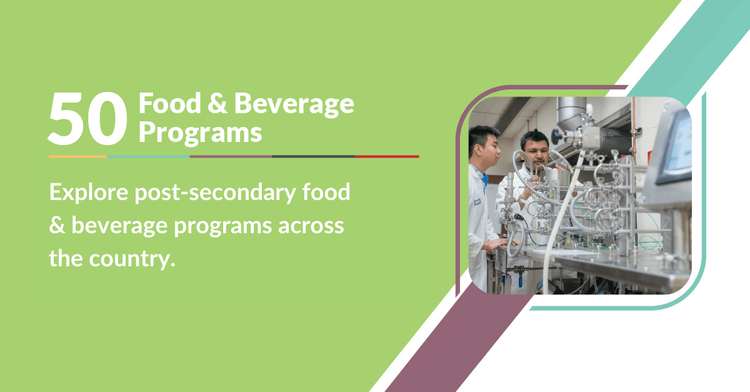
Sometimes, all it takes is 30 minutes to learn the ins and outs of new food technologies and trends that are transforming the food and beverage industry. In this series, we’ve curated a roundup of articles that explore key food innovation topics, linking you to essential content and resources. Dive in and become a master on the se topic s in 30 minutes (or less!). Ransomware Addressing Labour Challenges Cobots Robotics in the Food and Beverage Industry Post-Secondary Food and Beverage Programs Across Canada Post-Secondary Food Research Machine Learning Regulating Cellular Food Ghost Kitchens Food Apps Food as Medicine Carbon Neutral Foods BC's Food Ecosystem Praires' Food Ecosystem Ontario's Food Ecosystem Quebec's Food Ecosystem Atlantic Food Ecosystem Commercializing Cellular Food Food Scarcity and Insecurity The Plant-Based Food Market Food and Beverage Associations Across Canada Newsletters YODL Packaging Innovations P recision Fermentation

Community Manager

Beyond the Trade War - Building a Stronger Food Future for Canada

Beyond the Trade War - Building a Stronger Food Future for Canada

The U.S.-Canada trade war has shown us how vulnerable our food economy is and how urgently we need to rethink our approach to growth. For too long, Canada has overlooked the potential of foodtech —the innovations that make our food sector more competitive, efficient, and resilient. Now is the time to change that. We need to invest in foodtech —not just to navigate short term trade uncertainty, but to build a stronger, more productive, and more independent food sector for the long haul . Here’s how we make it happen. 1. Investing in Value-Added Food Innovation at Home Investments in the Canad ian agrifood tech sector are overwhelmingly weighted toward agtech . F oodtech , which encompasses all post - farmgate applications (think processing, supply chain logistics , novel ingredient development, and beyond) receiv es just 56% of total agrifoodtech investments , far behind the global norm of 83%. This is reflected in the fact that much of Canada’s agrifood exports are raw, unprocessed inputs, priced at commodity rates . To boost national food security and economic growth in our agrifood food sector , we need to boost investments in —and the adoption of—Canadian foodtech solutions . How to do i t: Empower existing Canadian food businesses to adopt homegrown tech . Many food manufacturers are hungry for growth but lack the tools to integrate innovation. Canada could provide free automation audits to identify efficiency opportunities and fund tech adoption programs to accelerate awareness and implementation. Leverage trade agreements to scale Canadian foodtech globally . Canada has strong trade agreements that we could be leveraging more strategically to help food innovators. MOUs and existing trade deals should be used to expand market access for Canadian foodtech solutions , not just agricultural exports. 2. Closing Canada’s Growth-Stage Funding Gap Between 2018 and 2024, Canada’s foodtech startups secure d $1.6B in investment . T hat represents a ton of progress , b ut compared to $8.8B in the UK and $86.6B in the US ove r the same period , Canadian foodtech is still small potatoes , especially when it comes to late-series funding rounds . To keep pace with global foodtech leaders, addressing our current gap in mid-to-late-stage funding must be prioritized. How to do i t: Develop specialized foodtech accelerators that understand food science. General tech accelerators don’t always meet the needs of food-focused startups. Canada needs sector-specific growth programs that provide tailored support, from regulatory navigation to supply chain scaling. Create anchor investment incentives to attract late-stage capital . Canada should offer more co-investment incentives for large institutional investors and corporate VCs willing to fund late-stage foodtech startups. By de-risking investments with matching funds and tax credits, we can bring more growth-stage capital into the ecosystem. 3. Unlocking Private Investment: The Key to Scaling Canada’s Foodtech Sector Currently, 30% of foodtech investments in Canada come from public grants, compared to just 5% in the UK and 8% in the US. While public funding h elps establish a viable foodtech ecosystem and accelerate the commercialization potential of novel technologies , it’s not designed for scale. We need to shift the balance toward private investment that can take companies beyond pilot projects and into commercial reality. How to do i t: Speed up regulatory approvals for new foodtech innovations. A fast-track system f or alternative proteins, biotech-enabled ingredients, and food processing advancements would give investors more confidence in market timelines. Support the development of corporate venture partnerships between legacy food manufacturers and foodtech startups. Canada’s large food manufacturers and processors can play a role in scaling foodtech startups. We should encourage corporate venture capital partnerships, acquisitions, and joint ventures to help high-potential foodtech companies reach commercial scale. Strengthen Canada’s foodtech investment narrative. Investors need a clear case for why foodtech is worth their capital. A national investment attraction strategy focused on food innov ation can build momentum. Why This Matters Now This trade war has exposed Canada’s vulnerabiliti es. Right now, we’re overly reliant on one export market . That’s a losing game in the long run . If we don’t invest in foodtech now, we risk being stuck as a commodity supplier while other foodtech trailblazers capture the high-value market opportunities. The solution isn’t just more investment— it’s smarter investment. That means de-risking private capital, building infrastructure for scale, and fixing the mid- and late- stage funding gap that’s keeping Canadian foodtech companies from reaching their potential. Volatility in Canada-U.S. trade relations has made it clear: investing in foodtech is essential to ensuring the long-term resilience and growth of our food sector . Be sure to r ead the Foodtech in Canada 2025 Ecosystem Report for a deep er dive into the data, trends, and strategies to shaping foodtech investment in Canada: https://cfin-rcia.ca/yodl-content/cfin-reports/foodtech-in-canada-2025-ecosystem-report

Community Manager