Canada is home to a diverse and dynamic food and beverage industry, supported by educational programs that train the next generation of chefs, brewers, entrepreneurs, and innovators. This roundup highlights 50 standout programs across the country, from top culinary schools and hospitality management courses to cutting-edge research initiatives and sustainability-focused training. Whether you're an aspiring professional, educator, or industry enthusiast, these programs provide valuable insights into the evolving world of food and drink in Canada. BC & Yukon Vancouver Community College UBC BCIT LaSalle College (Vancouver) UBC: Food, Nutrition, and Health Okanagan College Vancouver Island University University of Fraser Valley Northern Lights College North Island College Yukon University Selkirk College Thompson Rivers University Kwantlen Polytechnic University Prairies Saskatchewan Polytechnic University of Alberta University of Saskatchewan University of Manitoba SAIT NAIT Manitoba Institute of Trades & Technology International College of Manitoba Ontario Niagara College Humber College Le Cordon Bleu Ottawa George Brown College Fanshawe College Brock University University of Guelph Toronto Metropolitan University Loyalist College Georgian College Conestoga College Durham College Centennial College Canadore College Algonquin College Trent University St. Lawrence College St. Clair College Sault College Lambton College Confederation College Quebec McGill University LaSalle College Bishop's University Atlantic Canada University of PEI Memorial University Cape Breton University
Community Manager-
50 Food & Beverage Programs - Vancouver Island University
Crafting a Career in BC ’ s Wine Industry: VIU ’ s Wine Business Program The Wine Business program at Vancouver Island University is a comprehensive one-year certificate course designed for those passionate about pursuing a career in the BC wine industry. The program combines practical experience with academic learning in viticulture, wine business practices, marketing, and tourism. Program Highlights: As a student, you ’ ll have the chance to immerse yourself in hands-on experiences at local vineyards and wineries, gaining insights into the entire winemaking process. This practical foundation is then complemented by academic courses in viticulture, wine business practices, marketing, and tourism. A standout feature of this program is its flexibility. Whether you ’ re looking to study full-time for a year or prefer a part-time option spread over two years, VIU has you covered. Located in picturesque Nanaimo, BC, VIU provides an ideal setting for your wine education journey. With a curriculum designed to integrate viticulture essentials with business acumen, VIU ’ s Wine Business program offers a holistic understanding of the wine industry. Students can also earn credits that can be applied toward a Bachelor of Business or a Hospitality and Tourism Management program, opening doors to a wide range of future career prospects. The program includes seven courses and focuses on the broader aspects of the wine industry. In addition to viticulture and winemaking, students delve into wine marketing, exporting, and the vital role of wine tourism. C ourses cover a wide spectrum, from wine marketing and appreciation to beverage theory and the management of wine tourism. The program also offers elective courses in consumer behavio u r, entrepreneurship, and festival management . What You’ll Leave With: Upon graduation, a world of opportunities awaits you in BC ’ s wine industry. Whether you dream of managing a vineyard, excelling in wine s ales and marketing, or even opening your own restaurant, VIU ’ s Wine Business program provides the knowledge and skills to make your wine-related ambitions come true. Career options span winery/vineyard management, retail sales, wine marketing representation, hotel management, culinary arts, a gri - tourism development, and s pecial events coordination. V ideo/Social / Media : VIU YouTube Video
Community Manager-
Cellular Food in Canada
The past few years have proven how susceptible Canada’s food industry is to world events, supply chain disruptions and climate changes. New food production technology, such as cellular agriculture, has the potential to alleviate some of these challenges, while creating commercial opportunities and building a more sustainable, resilient food system. What is it? Cellular food – also known as engineering biology, synthetic biology or cell-cultivated products – is the production of food and textile products without using animals or land. Cell cultures harvested from animals, plants or micro-organisms are grown in the lab through tissue engineering or precision fermentation to produce: Cultivated proteins such as chicken, beef and seafood Fermented products like dairy, eggs, honey and chocolate Ingredients to add to products to create hybrid foods including proteins, enzymes, flavour molecules, vitamins, pigments and fats Textiles such as leather, silk and wool Why you should care As global population continues to grow, so does demand for protein, while access to land and other resource inputs become more scarce. Alternative agriculture could be an answer to food scarcity, concerns about animal and environmental welfare, cost inflation and resource challenges due to climate change. Compared to conventional agriculture, cellular agriculture production, is much less energy intensive, produces less greenhouse gas emissions, and has a much lower overall carbon footprint. With our strong food infrastructure, reputation for food safety, biotechnical expertise, and federal support for alternative protein production, Canada is well positioned to become a leader in cellular agriculture. The 2021 report Cellular Agriculture: Canada’s $12.5 Billion Opportunity in Food Innovation from Ontario Genomics and the Food and Agriculture Institute at the University of the Fraser Valley found that the international cellular agriculture market will reach US$100 billion by 2032. Canada’s food industry has the potential to take $12.5 billion that market, while creating up to 142,000 high-paying jobs. Opportunities in Canada Engineered plant proteins are already in the Canadian market, and by all estimates, precision fermented products are expected to appear before cultured meat products. Current Canadian regulations consider food produced through cellular agriculture as a novel food, and products are approved on a case-by-case basis. Here are a few Canadian start-ups making headlines: Because Animals – This Toronto-based pet food company uses cultured ingredients such as probiotics and nutritional yeast to create nutrient-rich cat and dog food designed to help digestive issues. Future Fields – Edmonton, AB-based Future Fields is a R&D producing growth media products that can be used to create commercialized cultivated proteins in a safe and sustainable manner. Cell-Ag Tech – Toronto’s Cell-Ag Tech is doing R&D on cell-cultured fish and seafood. New Harvest International non-profit research institute New Harvest , which promotes the science behind cultured meat through research, funding and a conference , now has a Canadian branch.
Community Manager-
Other Articles
Navigating U.S. Tariffs: Resource Guide for Canadian Food Businesses
Canadian food and beverage businesses are facing significant impacts from U.S. tariffs on Canadian exports. The Canadian Food Innovation Network (CFIN) is here to support you through this challenging period. What's Happening? The U.S. has imposed tariffs of up to 25% on a wide range of Canadian goods, significantly impacting food exports. The tariffs went into effect on Tuesday, Mar ch 3 , but many were temporarily removed until April 2. All Canadian food businesses exporting to or importing from the U.S. stand to be negatively affected by this uncertainty, regardless of if the tariffs are ever enacted for an extended period . The situation is evolving rapidly; stay informed through official Government of Canada updates . Federal Government Resources Food businesses can l everage federal programs dedicated to helping businesses affected by U.S. tariffs. These initiatives offer financial aid, strategic advice, and advocacy to reduce the strain on your operations: Trade Commissioner Service (TCS) – Provides export advice, market entry support, and international connections. Their page on Supporting Canadian exporters through United States tariff challenges is being updated in real time. CanExport Funding : The federal CanExport program offers funding to help Canadian SMEs explore new overseas markets. With CanExport SMEs grants, you can get financial support (for travel, marketing, compliance testing, etc.) to develop business in markets beyond the U.S. Agriculture and Agri-Food Canada Export Support – Offers a grifood trade services for Canadian exporters, market in telligence , funding to participate in international trade events, and more. Export Development Canada (EDC) – Launching the Trade Impact Program to deploy $5 billion over two years, starting this year, to help exporters reach new markets for Canadian products and help companies navigate the economic challenges imposed by the tariffs. It also o ffers credit insurance, financial solutions, and risk management advice for exporters. Business Development Bank of Canada (BDC) – Provid ing $500 million in favourably priced loans for businesses in sectors directly targeted by tariffs, along with businesses in their supply chains. Off ers advisory services in financial management and market diversification. Farm Credit Canada (FCC) – Providing $1 billion in new financing to help Canadian agriculture and food businesses address cash flow challenges and adjust to a new operating environment. Provincial Export Organizations & Resources Th ese provincial organizations and government agencies provide comprehensive export services for local businesses and often administer funding p rograms to offset costs for trade shows and market exploration . Trade and Invest BC – Supports B.C. exporters with trade missions, market intelligence, and international networking. Alberta Export Expansion Program (AEEP) – Provides financial support for Alberta SMEs to enter new international markets. Saskatchewan Trade and Export Partnership (STEP) – Facilitates export opportunities, market research, and trade missions for Saskatchewan businesses. Manitoba Agriculture Market Development – Offers business development support, including market research, trade events, and export funding. Canada-Ontario Export Forum (COEF) – A partnership of 21 agencies and organizations that helps Ontario businesse s develop and diversify their exports to become more globally competitive . Group Export Agri-Food Québec- Canada – Canada’s largest association of agri-food exporters , facilitates access to Canadian and international markets for Quebec businesses. Invest Nova Scotia – Provides export readiness training, market intelligence, and facilitates trade missions. Opportunities New Brunswick (ONB) – Offers mentoring, market research, and financial assistance for exporters. Innovation PEI – Global Trade Services – Supports Prince Edward Island food businesses with export development, market analysis, and international trade missions. Atlantic Canada Opportunities Agency (ACOA) – C reates opportunities for economic growth in Atlantic Canada by helping businesses become more competitive, innovative, and productive. They offer various programs and services to support businesses in reaching international markets . Trade Compliance & Customs Support Canada Tariff Finder – Quickly identify tariff rates and trade agreements applicable to your products. CFIA Exporting Food Guide – Step-by-step regulatory guidance for Canadian food exporters. Canadian Society of Customs Brokers (CSCB) – Find licensed brokers to manage customs paperwork, tariff classifications, and compliance. Business Networks & Industry Associations Navigating trade turbulence is easier with a strong network. In addition to CFIN, connect with industry associations and business groups that are coordinating support and advocacy: Food & Beverage Canada – Advocates nationally for food processors; provides trade updates and industry networking opportunities . Canadian Manufacturers & Exporters (CME) – Offers lobbying support, strategic advice, and resources to help manufacturers navigate trade challenges. Canadian Federation of Independent Business (CFIB) – SME-specific advocacy, resources, and tariff updates. Canadian Agri-Food Trade Alliance (CAFTA) – Provides insights into international trade negotiations and lobbying support. Canadian Chamber of Commerce – Trade resources, advocacy, and programs to support market diversification. Alternative Markets with Free Trade Agreements Canada has free trade agreements (FTAs) with numerous countries, offering tariff-free or reduced-tariff access to those markets. Explor e FTAs to access tariff-free or reduced-tariff markets outside the U.S. , such as: CETA (Europe) CPTPP (Asia-Pacific) CUSMA (Mexico , in addition to the U.S. ) These FTAs mean Canadian agri-food products can often enter those markets with low or zero duties — a huge competitive advantage. Explore markets where you can capitalize on this. For instance, under CETA, almost all Canadian food products enter Europe duty-free . Under CPTPP, you have preferred access to Japan, Vietnam, and beyond . The Global Affairs Canada website lists all FTAs and can guide you on the benefits in each. Support Canadian Food Businesses Help s trengthen Canada's food sector by sourcing from innovative Canadian food busin es ses ! You can d iscover new Canadian partners and resources through C FIN resources like: Resource Finder – An interactive tool that lets you search through our curated database of food-centric resources to identify the companies and services you need . YODL Open Forum – Make c onnections and share advice with Canada’s largest community of food business professionals. Foodtech Solutions Library – Learn more about all the companies CFIN has funded and discover new Made in Canada foodtech solutions. Stay resilient, informed, and connected. CFIN is here to help you navigate this challenge.
Community Manager-
Friday Food Innovation Round-Up – March 7, 2025
Tariffs are top of mind for the entire F&B industry as Canada-US trade relations were upended on Tuesday. Today’s roundup shares some early looks at what the weeks and months ahead may bring for Canadian food businesses, along side plenty of positive food innovation developments too. H ighlights from this edition include: 💡 Ottawa and provinces promise support for Canadians as trade war begins 💰 New foodtech funding opportunities 🛠️ Work for one of Canada’s leading foodtech companies 🧠 Tariff and trade policy resources for Canadian businesses Let’s dive in ! 💡 Food Innovation News Ottawa and provinces promise support for Canadians as trade war begins – The Logic ($) The Logic examines the potential actions that governments could pursue to soften the trade war blow, from provincial rainy-day funds to counter-tariff revenue distribution. Already, the B DC has committed to allocating nearly $1 billion to support Canadian companies facing economic and trade uncertainty, and Prairies Economic Development Canada awarded $1 million to Edmonton-based cellular food research institute, New Harvest Canada , to enhance food system resilience. Food and Beverage Canada calls for strong govt. action in response to U.S. tariffs – Food in Canada Food and Beverage Canada (FBC) is calling for strong government action to counter U.S. tariffs. Key policy recommendations include reciprocal tariffs on U.S. finished goods, reducing interprovincial trade barriers, expanding automation and production incentives, launching Buy-Canadian campaigns, and introducing financial relief measures for manufacturers. FBC also stresses the need to improve export infrastructure and trade diversification to reduce reliance on the U.S. market. $15.5M Investment Fuels Agritech Innovation and Workforce Training in B.C. – Agritech Digest B.C. is investing $15.5M in agri food tech through the B.C. Centre for Agritech Innovation (BCCAI) to support 19 projects and nine training programs focused on workforce development and helping food producers adopt new technologies , improve climate resilience, and strengthen B.C.’s agrifood sector. CFIN members including Maia Farms and Cascadia Seaweed were among the funding recipients. 💰 F unding Opportunities CFIN Innovation Booster & Foodtech Next – Applications Now Open! The Innovation Booster prov ides Canadian SMEs (under 500 employees and less than $50M in gross revenues) with up to 50% of project costs (ranging from $20,000 to $200,000) to overcome technical hurdles and accelerate commercialization. Applications close on March 25, 2025 FoodTech Next o ffers early-stage Canadian technology firms up to 50% of project costs, up to a maximum of $250,000, to pilot and demonstrate innovations in operational environments, aiming to validate solutions and their return on investment for the food sector. Expression of Interest d eadline is April 7, 2025 Eureka Network Canada – Call for Pro prosals Canadian food and agritech SMEs can apply for funding to co-develop innovative technologies with international partners through the Eureka Network Canada program. This opportunity supports R&D projects with high commercialization potential , helping businesses scale globally. Registration closes April 1, 2025 , with full proposals due by May 30, 2025 . AGRI Tech Venture Forum – Apply to Present Early-stage and high-growth agtech and foodtech companies can apply to showcase their innovations at the AGRI Tech Venture Forum in Toronto, May 7-8, 2025 . Selected companies will pitch to top investors, corporate strategics, and industry leaders , gaining exposure, networking opportunities, and exclusive event benefits. Applications close on March 17, 2025. Discover more F&B funding opportunities through CFIN’s Funding Finder ! 🛠️ Job Openings Here’s a few cool food innovation jobs t hat popped up recently : Business Development and Sal es Manager – Food Cycle Science – Ottawa, ON (Hybrid) Brand Manager, Innovation – Riverside Natural Foods – North York , ON Innovation Economy Specialist – City of Edmonton – Edmonton, AB Have an open position you’re looking to fill ? Be sure to post it on the Food Innovator Career Hub ! 🌟 Highlights from YODL Catch up on some of this week’s top YODL highlights … Productivity Pointers: How to Get More Value Out of Your Staff and Factory in 2025 M apping Canada's Foodtech Clusters Food Automation Successes in Canada 🧠 Brain Food If you’re hungry for some additional food for thought , here 's a few things we've been enjo y ing lately . 📰 ️ The Future of Food Is Now – Bon Appétit This article by Ali Bouzari in Bon Appétit explores how the future of food is already here—just in ways we might not expect. Instead of a flashy, sci-fi overhaul, these innovations are working behind the scenes to make food more sustainable, personalized, and efficient—without losing the flavors and traditions we love. 📖 Helping you navigate the changing political and economic climate between Canada and the U.S – Innovation Factory This page is a fantastic resource for helping businesses navigate Canada-US trade relations and mitigate the impact of new tariffs. It includes a collection of links to everything from government funding programs to businesses with services to assist with tariffs. Do you h ave something worth including in our next Friday Food Innovation Roundup ? R eply to this post to let us know about your news, even ts, or job openings ! Thanks for reading!
Community Manager-
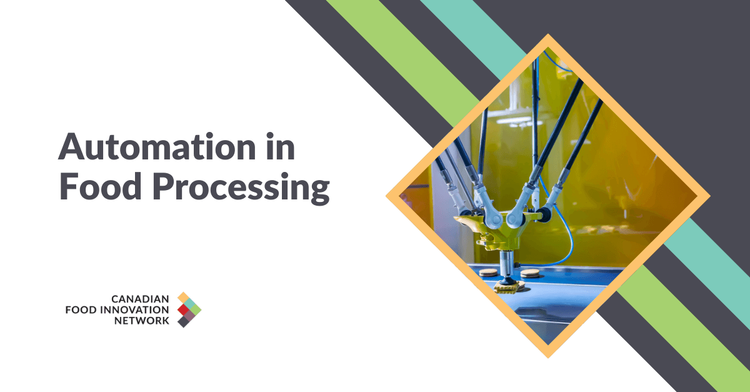
Food Automation Successes in Canada
Last week, we hosted our latest Unpuzzling webinar on Food Automation Successes in Canada . CFIN’s Tyson MacInnis and Julie Daigle were joined by i ndustry leaders from Relocalize , Area 52, and Gastronomous Technologies to discuss how food companies are leveraging automation technology to address workforce shortages, improve efficiency, and scale operations. Here are some of the key takeaways from the discussion. Automation Drives Efficiency and Cost Savings A key insight from the discussion was the role of automation in driving efficiency. One compelling case study highlighted during the webinar showcased a food manufacturer that overhauled its operations by automating a processing line. This strategic shift reduced workforce needs from 12 employees to just 3-4, while simultaneously quadrupling production capacity. Even more impressively, the company achieved a full return on investment (ROI) within just 18 months . Workforce Challenges Accelerate the Need for Automation The Canadian food industry is facing a critical labor shortage, making automation an essential solution. Reports indicate that for every 10 retirees, only 7 younger workers are entering the workforce, creating a significant gap. The seafood processing and quick-service restaurant (QSR) industries , in particular, are struggling with labor retention and high turnover rates. Automation allows companies to maintain production levels while reducing reliance on an unpredictable labour market. It also improves employee satisfaction by removing repetitive, labor-intensive tasks and shifting the workforce towards higher-value roles. AI and IoT Will Shape the Future of Food Automation Artificial Intelligence (AI) and the Internet of Things (IoT) are redefining food production in ways we couldn't have imagined just a decade ago. As Wayne McIntyre, CEO of Relocalize , put it, the goal isn't just to automate existing processes , but to rethink food manufacturing altogether. His company is doing just that through its autonomous IoT-connec ted microfacto r ies t hat facil i tate hyper-loca l, decentralized production to elimi nate u nnecessar y trucking and drastically cut carbon emissions . Other innovations featured in the webinar included those from Gastronomous Technologies , a Canadian startup proving that AI can provide efficiency gains and quality gains. Their AI-driven solutions in quick-service restaurants ensure food is prepared with consistent precision every time, addressing a major pain point in an industry known for high turnover and skill variability. Finally, Tim Fogerty shared how Area52 is leveraging IoT and AI for predictive maintenance, creating automation systems that learn and adapt over time to reduc e downtime and optimi ze production processes. With these innovations moving at breakneck speed, the food sector in Canada is on the verge of a fundamental transformation. Businesses that embrace AI and IoT today will be the ones leading that shift. Watch the Recording and Sign Up for Future Webinars For a deeper dive into these insights, you can find the full recording of the webinar on YouTube . Want to keep exploring complex industry topics ? The r e’s still time to register for tomorrow’s session on empowering women in the food industry , featuring a discussion with CFIN CEO Dana McCauley . Don’t miss this one — sign up here !
Community Manager-
Productivity Pointers: How to Get More Value Out of Your Staff and Factory in 2025
Standing out in today’s food manufacturing sector has never been more challenging—or more crucial. With shifting consumer demands, rising costs, and rapid advancements in technology, manufacturers must constantly rethink how they can maximize both their human and physical capit al to adapt and thrive . In this article, we explore the latest trends in digital transformation and process optimization, providing actionable strategies to help food manufacturers extract more value from their staff and facilities. If you’re looking to enhance productivity and future-proof your factory, these insights will set you on the right path. Embrace Smart Manufacturing Technologies I ndustry 4.0 technologies —things like AI, IoT, smart sensors, and robots— are already helping food manufacturers digitalize their operations to make precise, data-backed decisions — streamlin ing everything from mixer calibrations to conveyor belt speeds . In many cases, Industry 4.0—or “ s mart manufacturing ”— technologies can also take care of repetitive tasks like quality checks, packaging, and inventory counts, liberating teams to dedicate more of their time to complex, high-value tasks . Implementing smart manufacturing technologies is a substantial investment , but one whose importance should not be discounted. Fortunately, smart factories are not an all-or-nothing proposal. For instance, companies like Plan Automation can help you create a phased integration strategy to align automation and digitalization projects with your priorities and capi tal availability. T alk to your tech vendors and consider visiting fully integrated smart factories t o begin identifying some areas in your own operation where these technologies could provide an immediate boost to productivity metrics. Make Your Data Work for You Gone are the days of relying solely on gut feelings or haphazard dashboards to make critical operational decisions . As your facility becomes increasingly digitized, data will become the most powerful ingredient in creating a winning productivity -boosting recipe — no easy task for any manufacturer . But t hanks to recent AI-powered advances in the capabilities of Enterprise Resource Planning (ERP) systems, improving productivity by putting your data to work is now easier than ever. Manufacturers have long used ERP systems for data management and to aid in tasks ranging from predictive maintenance and supply chain optimization. 2024 represented a massive leap forward in the capabilities of leading platforms through the introduction of AI agents and further integration with Industry 4.0 technologies. These systems can increasingly make complex, context-dependent decisions to drive manufacturing processes related to inventory restocking, demand forecasting , logistics optimization , and beyond . Take some time to explore the latest advances in ERP and learn how you can leverage these new capabilities to get more out of your data. Invest in Your Most Valuable Asset Even the smartest machines and digital systems need people who know how to work with them. That means your workforce will remain your most valuable asset . But for that asset to appreciate, you need to make upskilling and opportunities for advancement top priorities . Upskilling opportunities should be deployed in tandem with the introduction o f new technologies and processes . Virtual and augmented reality training technologies, microlearning platforms, and f lexible scheduling with dedicated training days are among the strategies you can e xplore to overcome common b arriers to workforce training like production time constraints and scheduling conflicts. Prioritize Process es Before Outcome s Getting the most out of your factory demands a constant reassessment of how and why you do things . Value-stream mapping and regularly scheduled process review sessions, like Kaizen Events , can help you accomplish this . Examine the minute details of every step—from ingredient weighing to packaging—and ask, “Does this truly add value or is it just a relic of outdated processes?” Even small tweaks, like reordering station workflows or standardizing shift set-up procedures, can potentially cut production times dramatically. To make significant—and sustainabl e— productivity gains, consider engaging outside consultants who specialize in production process optimization. Their fresh perspective and expertise can help identify blind spots and provide innovative strategies that might not be apparent internally. This can also serve as the first step in building an organizational culture that views improvement as an ongoing, continuous process , not just a series of “one-and-done" short-term project s . Maximizing Productivity: The Road Ahead for Food Manufacturers Productivity gains are a function of continuously pursuing innovation. For food manufacturers, that means prior i tizing smart technology adoption , process i mprovements , and workforce development strategies in equal measure . When every facet of food production is viewed as an opportunity to refine and optimize , incremental changes can compound into significant productivity improvements . Th e strategies explored here will help you drive operational efficiency today , while charting a course towards sustain ed future growth in a rapidly evolving industry .
Community Manager-
Mapping Canada's Foodtech Clusters
The landscape of Canada's foodtech ecosystem is as varied and diverse as that of the country itself. Different regions, with different agricultural strengths, natural resources, research institutions, and business communities, are producing different foodtech clusters—or hub s. When mapping Canada's foodtech ecosystem in our n ew F oodtech in Canada 2025 Ecosystem Report , we identified some noteworthy emerging clusters of foodtech activity . Let's take a closer look at what each region of Canada is doing particularly well , along with some of the innovators, researchers, and organizations making that happen. Vancouver , BC - The Sustainable Food Innovation Hub With a strong tech ecosystem, diverse local agriculture production, flourishing food culture, and world-class research institutions, i t s hould be no surprise that Vancouver has become a hotspot for sustainable food innovation. Companies like The Better Butchers, TMRW Foods, and No Meat Factory are scaling up production of cell-cultivated and plant-based meat products. Others are taking some of the city's most iconic foods in exciting new directions: Konscious Foods is developing one of the first frozen plant-based sushi lines, while Maia Farms is harnessing the wonders of another Pacific Northwest favourite —mushrooms—to develop high-protein, highly sustainable mycelial-based meat alternative s . Vancouver innovators find support from a robust venture capital ecosystem, provincial resources like the BC Food Hub Network, and R&D facilities like the new Food and Beverage Innovation Centre at the University of British Columbia — one of the best food science universities in the country. Saskatchewan - The Plant Protein Powerhouse The vast majority of Canadian-grown pulses—protein-packed crops like lentils, peas, and chickpeas—come from Saskatchewan. The province's mighty agricultural engine has quietly propelled its plant protein industry to world leading heights . T he provincial capital of Regina is home to Protein Industries Canada (PIC), o ne of Canada's five Global Innovation Clusters. PIC funds industry-led projects to accelerate innovation in plant proteins and co-products, fostering collaboration among businesses, researchers, and government. In Saskatoon, the Saskatchewan Food Industry Development Centre provides support for innovators seeking to develop and commercialize new plant-based ingredients and products. Both cities also host the headquarters of many global plant-based protein processing and product development companies, including AGT Foods, Bioriginal, and Above Foods. Initiatives like the Saskatchewan Commercial Innovation Incentive provides very competitive provincial corporate income tax for food processors and product developers bringing new innovations to market, ensuring the province will continue its evolution into a true plant protein powerhouse. Greater Golden Horseshoe: The Digital Foodtech Corridor Stretching from Toronto through Kitchener-Waterloo and down to Niagara, the Greater Golden Horseshoe (GGH) is Canada’s most densely populated and economically diverse region. It is a natural hub for food innovation—particularly in automation and digitalization . C ompanies like Gastronomous Technologies and Real Life Robotics are building autonomous food preparation systems and delivery robots , while s oftware startups Jitto , Flashfood , and Local Line are building novel solutions t o optimiz e perishable goods logistics , reduc e food waste, localize supply chains, and much more. Foodtech companies in the GGH benefit from abundant access to world class research institutes and incubators , like t he MaRS Discovery District, a globally recognized innovation hub, and the University of Guelph — Canada's "food university" . The Golden Horseshoe Food and Farming Alliance (GHFFA) is also committed to enhanc ing the sustainability , economic growth , and innovation capacity of the region's agri-food industry . Montreal & Quebec - The Functional Food Frontier Montreal and Quebec City have become Canada’s hub for functional food innovation, where nutrition and food science intersect to enhance health benefits in everyday products. Companies in this corridor like Phytimpact , Lallemand, Tait Laboratories, and Symrise-Diana Food are harnessing local agricultural strengths and biotech expertise to create value-added functional ingredients ranging from probiotic beverages to antioxidant-rich berry powders. This region’s functional food leadership is driven by world-class research institutions. Université Laval’s Institute of Nutrition and Functional Foods (INAF) is at the forefront of food science research, developing bioactive ingredients that support gut health, immunity, and overall well-being. Nova Scotia : The Blue Food Zone Renowned as a leader in marine-based innovation, Nova Scotia is making waves in “blue” food tech . Companies like Mara Renewables and Smallfood are producing Omega-3 oils and proteins from algae and marine microbes, while Copol International Ltd. Is creating compostable food packaging from seafood byproducts that previously went to waste . The region is supported by top food research institutions like Dalhousie University and organizations like Perennia t he Verschuren Centre play key role s in incubating biotech solutions for sustainable seafood and marine ingredient processing. Strong f ederal and provincial funding initiatives in marine biotechnology further bolster Nova Scotia’s role as a leader in the blue food economy. Beyond the Hubs: Canada’s Expanding Foodtech Landscape While these regional hubs are shaping the future of Canadian foodtech , they are only part of the picture. Across the country, innovators are advancing everything from cellular agriculture to alternative seafood, packaging innovation, and upcycling . To get a full view of the evolving foodtech landscape—including emerging strengths, new opportunities, and the challenges ahead—download CFIN’s latest report and explore how Canada is positioning itself as a global leader in food innovation. Find the report here: https://cfin-rcia.ca/yodl-content/cfin-reports/foodtech-in-canada-2025-ecosystem-report
Community Manager-
In 30: Food as Medicine
Sometimes, all it takes is 30 minutes to learn the ins and outs of new technologies and trends that are transforming the food and beverage industry. In this ser ies, we’ll dig into a food innovation topic and link you to content and resources so you can become a subject matter expert in 30 minutes (or less!). This week, we’re looking at food as medicine. Beyond its essential role in providing macronutrients, food can be a powerful tool in the prevention and treatment of human diseases and common health ailments. The concept of food as medicine is growing in popularity with consumers, leading innovators to develop software, ingredients, and products that aim to improve health and wellness. The Overview Cleveland Clinic - How Nutrigenomics May Impact the Way You Eat The basics on what nutrigenomics is and how it works. Dal News – Ask an Expert: What is Functional Food and Why Should Canadians Care? Food is considered functional if it has benefits for human health beyond nutrition, for example it improves health or reduces the risk of disease. CFIN – The Future of Food as Medicine in Canada We asked CFIN’s Dana McCauley, CEO, Alex Barlow, Vice President of Programs, and Lavina Gully, Regional Innovation Director for BC and Yukon, for their views on the future of food as medicine. Read what they had to say. Forbes - This Diet Is Changing The Way We Think About Nutrition Artificial Intelligence and machine learning could offer consumers better control over t heir nutritional health. The Canadian Connection In 2023, CFIN ran a food as medicin e - themed Innovation Booster funding roun d. Read more about the eight funded p r o j e c t s here . Other Canadian companies in the space include: Nutrigenomix – Nutrigenomix Inc. is based in Toronto, ON but is available in more than 40 countries . It provides DNA-based, customized nutrition recommendations for health and wellness, athletic performance and fertility, and includes plant-based nutrition. Medcan – Toronto’s Medcan is an integrated health and wellness company that uses up to 15 diagnostic tests covering cardiovascular health, cognition, hearing, vision, nutrition and fitness, to create a customized action plan to improve a customer’s lifestyle through food , exercise and supplements. Social Media Food as Medicine Global – (LinkedIn) Food as Medicine Global is a n international network dedicated to bridging the divide between food and healthcare. Fresh Prep Foods – (Instagram) Fresh Prep is a Canadian meal delivery company that is developing an AI-powered virtual nutrition advisor to provide personalized nutritional guidance alongside the convenience of meal kit deliveries. Overtime If you’ve got more than 30 minutes, these are for you : YouTube – Personalized Nutrition: Eating Well for Yourself and the Planet
Community Manager-
From Lab to Market: Canada’s Bio-Foodtech Ecosystem
Biotech is quietly rewriting the future of food. Not in some vague, distant way, but in ways that are already changing the food we eat—and how that food is produce d . “Bio- foodtech ” is leveraging the laboratory to make food healthier and more sustainable : Think n atural preservatives made from mushrooms instead of synthetic chemicals . Omega-3 sourced from algae instead of overfished oceans . Plant-derived proteins that function like egg whites—neither chicken nor egg need come first. This stuff is no longer the realm of sc ience fiction . And with an impressive pool of bi o- foodtech innovators , Canada has a real opportunity at being a global leader in a rapidly growing space . But science alone won’t get us there. The real challenge lies in s caling our breakthrough bio- foodtech research into market-ready, investment-worthy, and commercially viable solutions. So, where is Canada ahead of the bio- foodtech game, and where are we falling behind? Where Canada is Winning World-Class Bio- Foodtech Innovat ors Canada’s food science expertise has been strong for years, helping to build a pipeline of biotech-driven solutions that the food industry is now adopting. For example, Mara Renewables has made algae a commercially viable source of DHA-rich omega-3, giving manufacturers a stable, sustainable functional food ingredient that doesn’t rely on overstressed fisheries. Elsewhere, Chinova Bioworks is using mushroom fib re to replace synthetic preservatives, meeting demand for clean-label solutions without compromising shelf life. These are just two of the many Canadian innovators whose bio- foodtech breakthroughs are already solv ing real industry problems. Strong Government Backing Through recent initiative s like the $2.2 billion B iomanufacturing and L ife S ciences S trategy , the Government of Canada is making strategic investments in bio- foodtech and playing a crucial role in helping startups transition from R&D to commercialization. This matters, because taking a bio- foodtech product from the lab to full-scale production isn’t like launching a new software app. It requires much more physical infrastructure and time to achieve profitability , making government support an essential ingredient for long-term success . Where Canada Needs to Step Up Regulatory Timelines Are Slowing Us Down While government funding for early-stage foodtech innovation is strong, b iotech ingredients often face an 18- 24 month approval process in Canada—longer than in many competing markets. A more efficient regulatory pathway could accelerate commercialization withou t diminishing Canada’s exceptional global standing as a leader in food safety . If we want to lead in bio- foodtech , we need a regulatory system that keeps pace with innovation , not one that lags behind it. Scaling Infrastructure is Lacking Canada has terrific bio- foodtech research capabilities , but when it comes to scaling, we’re missing a crucial piece of the puzzle: mid-scale biomanufacturing capacity . Startups often struggle to transition from lab-scale production to full-scale commercialization. Unlike in the U.S. or Europe, there aren’t enough pilot facilities or bioreactors here to support that critical middle stage of growth. Without it, promising innovations risk stalling before they ever reach the market . Private Investment is Falling Behind Public funding can only take companies so far. In Canada, private investment in food biotec h lags behind the U.S. and UK , making it harder for startups to secure the capital needed to scale beyond early-stage R&D. This funding gap poses a serious competitive risk. If we don’t build a stronger venture ecosystem around bio- food t ech , we’ll lose promising companies to markets with more investment-ready capital . What’s Next? Canada has the science, talent, and momentum to lead in bio- foodtech . But turning innovation into economic growth means addressing the gaps between research and commercialization. What will it take? Stronger industry partnerships to bridge the commercialization gap Industry and government investment in bioprocessing infrastructure to support scaling Regulatory agility that balances food safety with speed-to-market Without these changes, promising companies will struggle to scale, and Canada risks losing its competitive edge to faster-moving markets. 👉 Want to understand the full picture? Download CFIN’s Foodtech in Canada 2025 Ecosystem Report to explore the biggest opportunities and challenges shaping Canada’s bio- foodtech future : https://cfin-rcia.ca/yodl-content/cfin-reports/foodtech-in-canada-2025-ecosystem-report
Community Manager-
5 Canadian Food Companies Embracing Foodtech-Fueled Innovation
Technology is always changing the food on our plates—and how that food is made, sourced, and delivered. Canada's most forward-thinking companies are harnessing t he breakthroughs from foodtech innovators to rethink everything from dairy — and dairy alternative — pro duct development to sustainable packaging and carbon neutral manufacturing . Let's explo re som e of those trailblazers setting new standards for the F&B industry , and the innovation priorities currently shaping their work. Agropur As Canada’s largest dairy cooperative , Agropur continues to redefine what’s possible in dairy processing through constant innovation . T hey develop advanced ingredients and optimiz e production techniques to improve nutrition, efficiency, and sustainability of the dairy sector in Canada and across the globe . Innovation Priorities: Advancing dairy ingredient formulations for improved functionality, texture, and nutritional benefits N ovel enzyme technolog ies and bioprocessing techniques to enhance dairy processing efficiency S ustainable packaging and energy-efficient production methods to reduce environmental impact Learn more about Agropur . Daiya Foods Daiya Foods creates dairy-free alternatives that deliver on both taste and functionality and are one of Canada’s biggest plant-based success stories. In many ways t heir plant-based cheeses have become the industry standard , thanks to their ability to replicate the melt, stretch, and creaminess of traditional dairy. By investing in ingredient technology and advanced food processing techniques, Daiya continues to advance the quality, nutrition, and accessibility of plant-based dairy alternatives. Innovation Priorities: N ext-generation fermentation and microbial protein solutions for plant-based dairy Enhancing ingredient formulations to optimize texture, meltability, and nutritional value H igh-efficiency food processing technologies to scale production sustainably Learn more about Daiya Foods . Earth’s Own Foods Earth’s Own is a purpose-driven brand that advocates for plant-based diets as a solution to climate change and food system s ustainability . Best known for their plant-based milks, they’ve also expanded into a broader range of dairy -free alternatives, including creamers, butter, and cream cheese. By sourcing 100% Canadian-grown oats and prioritizing responsible production and packaging practices, Earth’s Own has become a Canadian leader in sustainab le food innovation . Innovation Priorities: Optimizing plant-based milk extraction techniques and ingredient formulations to enhance quality, texture, and taste C arbon-neutral and zero-waste manufacturing processes Strengthening food system sustainability by supporting and funding plant-based entrepreneurs and regenerative agriculture practices Learn more about Earth’s Own . McCain Foods McCain Foods’ claim to fame is being the world’s largest producer of French fries (responsible for one of every four fries in the world !), but the New Brunswick company is so much more than that . Across its globe-spanning operations , McCain Foods is revolutionizing food manufacturing : its embrace of new food tech is reflected in the company’s support for regeneratively farmed products and a tech-led approach to advancing zero-waste and resource-efficient operations . Innovation Priorities: AI-driven quality control and process optimization in food manufacturing H igh-speed robotics and automation to enhance precision and energy efficiency Efficient freezing and storage technologies to reduce energy consumption Learn more about McCain Foods . Riverside Natural Foods Riverside Natural Foods is the company behind healthy snack brands like Made Good and Good to Go. They focus on developing nutrient-rich, allergen-free products using high-quality ingredients, with sustainability always front-of-mind. As a certified B Corp, 1% For the Planet Member, and Future-Fit Business, making planet and people-friendly foods is the foundation to all of Riverside’s innovation priorities — from electrifying manufacturing ovens to robust support for sustainable packaging advancements . Innovation Priorities: O ven electrification to significantly reduce manufacturing greenhouse gas emissions N ext-generation sustainable packaging solutions, including recyclable, bio-based, and compostable materials Targeting emissions reductions through sustainable ingredient sourcing and supply chain optimization Learn more about Riverside Natural Foods . Advancing the Future of Food Innovation T he se companies are finding success by constantly adapting and fully embracing food innovation to improve their products and processes. For startups and entrepreneurs building new solutions in food tech , you can explore CFIN’s Resource Finder to connect with more food industry leaders who are eager to collaborate and drive innovation forward. Be sure to also optimize your YODL profile —this helps potential partners searching for specific foodtech solutions find you via the Resource Finde r.
Community Manager-
Friday Food Innovation Roundup – February 21, 2025
B right ideas , bold collaborations , and big opportunities—this week’s round-up has it all. Let’s take a look at what’s been cooking in Canadian food innovation. H ighlights from this edition include: 💡 The Canadian flavour engineers revolutionizing plant-based meat 💰 New foodtech funding applications open next week 🛠️ A n amazing opportunity to join the CFIN team 🧠 How can Canada take the lead in feeding the world? Let’s dive in ! 💡 Food Innovation News What to look for in Canada's foodtech ecosystem in 2025 – BNN Bloomberg CFIN’s CEO, Dana McCauley , made an appearance on BNN Bloomberg’s “The Close” to share insights from the inaugural Foodtech in Canada 2025 Ecosystem Report and her thoughts on what to expect from the year ahead in Canadian foodtech . Mee t the flavo ur engineers working to make plant-based food taste more like meat – The Globe and Mail Across Canada, innovative startups and research institutes like Genuine Taste , The Better Butchers , and the Verschuren Centre are collaborating to help plant-based foods find mainstream success. This profile offers a fascinating look at the role food science plays in making sustainable diets more attainable—and desirable. Sask. Food Centre teams up with Singapore-based Nurasa to expand market opportunities – Food in Canada The Saskatchewan Food Industry Development Centre (Food Centre) has announced a partnership with Nurasa , a Singaporean company specializing in sustainable nutrition development . The Food Centre and Nurasa will work together to offer c ollaborative seminars, webinars, and workshops , with the goal of “ empower ing agri-food companies to navigate complex innovation challenges and launch new products in the global food and beverage marketplace. ” 📅 Upcoming Events & Opportunities There are four CFIN-hosted events on the docket over the next two week s : Next week, j oin Alex Barlow, CFIN VP of Programs , for two Info Sessions, one for the Innovation Booster on Feb 24 and another for Foodtech Next on Feb 25 , to learn about our latest funding call s and have your application questions answered. Applications for both programs open next week. On Thursday, Feb 27, CFIN Regional Innovation Director for Atlantic Canada, Tyson MacInnis , will be moderating an Unpuzzling webinar featuring leaders from food automation startups like Gastronomous Technologies , Area5 2 , and Relocalize . Tune in to learn how retail, foodservice, and manufacturing operators are successfully leveraging food automation tech to grow their businesses. Register here . On Thursday, March 6, join CFIN’s CEO, Dana McCauley, and Found ing Partner and President of Nourish Food Marketing , Jo-Ann McArthur, for a special Unpuzzling webinar commemorating International Women’s Day. As leading executives and innovators in Canada’s food sector, Dana and Jo-Ann will be dishing out hard-earned insights for women blazing their own trails in the food sector. Register here . If you have any questions you’d like Dana or Jo-Ann to answer in the webinar , send them to us at i nfo@cfin-rcia.ca ! Discover all the F&B industry opportunities and events on the horizon over on CFIN’s Events Page ! 🛠️ Job Openings Here’s a few cool food innovation jobs t hat popped up recently : VP Online Experience – Canadian Food Innovation Nework – Remote Index Biosystems is hiring for several key positions, including Head of Machine Learning and Data , Head of Success , and Software Engineer (Full Stack) . Have an open position you’re looking to fill ? Be sure to post it on the Food Innovator Career Hub ! 🌟 Highlights from YODL Catch up on some of this week’s top YODL highlights … Why Canadian Foodtech Startups Are Attracting More Government Grants Than VC Funding Meet 5 Incredible Ingredient Suppliers from Across the Country Cooking for Change – Supporting Zero-Waste Solutions 🧠 Brain Food If you’re hungry for some additional food for thought , here 's a few things we've been enjo y ing lately . 🎙 ️ AgriFood and Food Security: Can Canada Feed the World? – Disruptors x CDL In this episode of the Disruptors x CDL podcast, Evan Fraser (Director, Arrell Food Institute ) and Alison Sunstrum (CEO, CNSRV-X Inc. ) explore the innovations reshaping the global food system , and Canada’s place within it . With Canada slipping in global agri-food rankings, what must we do to stay competitive? And how can we bridge the gap between innovation and adoption? 📖 Born to Create – by Anne Jacoby Born to Create offers a fresh perspective on using creative skills to drive breakthrough ideas and build resilient teams. Anne Jacoby blends her creative roots with over twenty years of business expertise to show how an artistic mindset can transform leadership and spark innovation. The book is filled with engaging stories and practical exercises to help leaders build a culture of connection, inclusion, and innovation in any industry. Do you h ave something worth including in our next Friday Food Innovation Roundup ? R eply to this post to let us know about your news, even ts, or job openings ! Thanks for reading!
Community Manager-
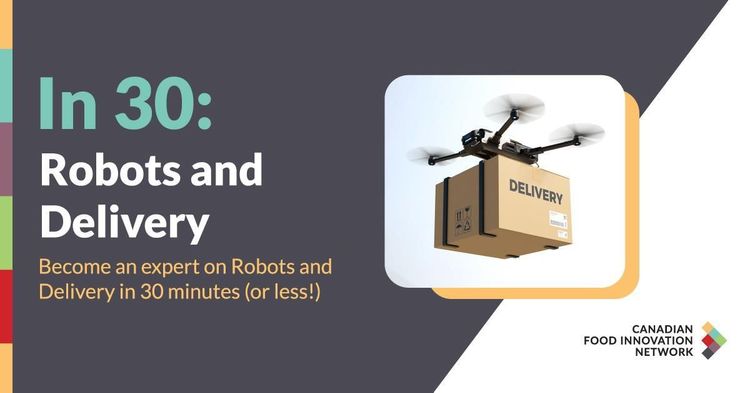
In 30: Robots and Delivery
Sometimes, all it takes is 30 minutes to learn the ins and outs of new food technologies and trends that are transforming the food and beverage industry. In this series, we’ll dig into a food innovation topic and link you to content and resources so you can become a master on the topic in 30 minutes (or less!). This week, we’re looking at the use of autonomous and remote-controlled robots for “last mile/kilometer” food delivery service. The Overview Business Insider - Self-driving delivery startup Nuro is partnering with Domino's to deliver pizzas in Houston— see how it works Nuro is a self-driving delivery service using electric autonomous vehicles. The Verge - Amazon stops field tests of its delivery robot Scout - The Verge Amazon launched its Scout robot delivery service in 2019, but scaled back the program in late 2022 in favour of trials for Amazon Prime Air’s drone delivery service . Forbes - The Future Of Delivery Robots Robot delivery is becoming more familiar in cities around the world, offering an efficient, environmentally-friendly alternative to vehicle delivery. The Canadian Connection Toronto Star – Toronto Zoo rolls out robotic food delivery for animals – CFIN-funded startup Real Life Robotics has partnered with the Toronto Zoo to employ their fully autonomous electric ro bot , named Bubs , to deliver animal feed across the zoo’s sprawling campus. Pink Bot – Food businesses and consumers are using Geoffrey, small remotely-controlled robot couriers, from Toronto, ON-based Pink Bot to make deliveries of less than 20 lbs. to customers within a specific delivery area. DM Magazine – The Last-Mile Challenge in Canada Customer demand for delivery has become a competitive edge for food companies and grocers. Digital, non-traditional delivery methods such as robots and drones could be a game-changer . Social Media @starshiprobots – (Instagram) Founded in 2014, Starship has completed more than four million autonomous deliveries around the world. @kiwicampus – (Facebook) Col o mbia-based Kiwi Campus is a food delivery service for school campuses which delivers meals to students via Kiwibots . @ServeRobotics – ( X ) San Francisco, CA-based Serve Robotics offers robot delivery with Uber Eats and other companies, and was testing its delivery service with Pizza Hut Canada in Vancouver, BC in September 2022. Overtime If you’ve got more than 30 minutes, these are for you: YouTube - Pink Bot (formerly Tiny Mile ) Delivery Robot, Geoffrey, Makes Friends in Charlotte
Community Manager-
The B2B Opportunity for Canadian Plant-Based Food Innovators
One of every four Canadian foodtech companies focuse s on plant-based food innovation —nearly double the global average . The country is becoming a global leader in this high-growth potential market, and B2B innovators are leading the way. Here is how they are capitalizing on Canada’s unique strengths to make that happen. How Canada Became a Plant-Based Co-Manufacturing Hub The plant-based protein category has seen its share of challenges, from shifting consumer preferences to high production costs . While t he struggle s of leading global consumer brands like Impossible Foods in achieving profitability and expanding consumer acceptance have been well documented , Canada’s strength in B2B ingredient manufacturing represents a quiet success story that is now turning heads globally. Major investments—like Roquette’s $600M pea protein facility in Manitoba, the largest of its kind in the world—are positioning Canada as a co-manufacturing hub for plant-based ingredients. Elsewhere, com panies like Merit Functional Foods are refining use cases for canola proteins i n plant-based meat and dairy products and c ross-industry c ollaborations , such as the $16M initiative led by Daiya Foods , are developing cheese alternatives using Canadian-grown pulses . All these examples demonstrat e how Canada’s unique position as a global agricultural leader in high-protein crop production lays an essential foundation for future growth in this sector. Overcoming Barriers to Growth Despite Canada’s natural agricultural advantages and B2B infrastructure , commercializing and scaling plant-based products doe s remain a challenge. High production costs, regulatory hurdles, and gaps in commercialization support are making it difficult for Canada’s plant-based innovators to expand. To accelerate growth in this key market opportunity , Canadian food sector must: ✅ Leverage Canada’s agricultural strengths – Canada is a global leader in plant protein crops like lentils, peas, and canola . Investments like Roquette’s $600M pea protein facility in Manitoba prove there’s demand for high-quality, sustainably sourced ingredients. The opportunity? Scaling production and turning Canada into a dominant player in global plant-based co-manufacturing. ✅ Double down on partnerships – Strategic collaborations can de-risk innovation and accelerate product development . Daiya Foods' partnership with Ingredion and Lovingly Made Flour Mills is a prime example of the role collaboration can play in developing high quality, next-gen plant-based ingredients . More of these kinds of value-chain partnerships will help strengthen Canada’s role as a food innovation leader. ✅ Expand commercialization pathways – Canada is developing countless groundbreaking plant-based innovations, but many struggle to move from R&D to market. More pilot facilities, co-manufacturing hubs, and regulatory support can help startups bridge this gap. Canada’s B2B Plant-Based Future The Canadian foodtech ecosystem is primed for B2B growth. Companies that focus on solving formulation challenges, enhancing functionality, and supplying CPG brands with high-performing plant-based ingredient options will play a leading role in the coming wave of plant-based innovation. 👉 Want to dive deeper? Access the Foodtech in Canada 2025 Ecosystem Report for a full breakdown of the trends shaping Canada’s food innovation landscape : https://cfin-rcia.ca/yodl-content/cfin-reports/foodtech-in-canada-2025-ecosystem-report
Community Manager-
Why Canadian Foodtech Startups Are Attracting More Government Grants Than VC Funding
With C$4.1 billion invested in Canadian foodtech between 2014 and 2024, the sector has experienced impressive growth . And while Canada’s early-stage public funding landscape is robust, private venture capita l remains cautious . This is leaving a noticeable gap in later-stage financing , and many of Canada’s 200+ foodtech startups struggle to secure growth capital needed to establish long-term financial sustainability. So why is private investment lagging behind ? First, although recent growth in the Canadian foodtech ecosystem is extremely promising , it remains in a relatively early stage of developmen t, where market traction and scalable business models are just emerging . Private investors typically look for clear, proven pathways to commercial success before committing large sums , especially in capital-intensive industries like food manufacturing . In Canada, early rounds tend to be about half the size of those in comparable markets like the U.S. and the U.K. , before dropping even further in Series C rounds and beyond . This discrepancy isn’t due to any fault in the startups; rather, it reflects a private investment culture that is, for now, cautiously waiting for more demonstrable results before scaling up . Another reason for the gap is the inherent risk tolerance differences. Public funding, provided via grants and government programs, is designed to nurture innovation at the seed stage. These funds are available precisely because the public sector accepts a higher risk in exchange for long-term strategic benefits, such as sustainable food solutions and regional economic development. Conversely , private venture capital typically seeks rapid growth and quick returns. In an emerging ecosystem like Canada’s foodtech space, where scaling up technology and operations takes time, many private investors prefer to hold back until the path to profitability becomes clearer. F i nally , Canada’s regulatory and market environment ha s a role to play in the foodtech investment gap . W hile government support has laid a solid foundation, private investors remain influenced by factors such as uncertainty stemming from stringent regulatory frameworks , and the effect that has in getting innovative products to market on a time horizon that aligns with investor expectations. Canada’s foodtech funding gap isn’ t necessarily a sign of weakness; it’ s simply a reflection of an evolving ecosystem where public investment has been the catalyst for early innovation. However, bridging this gap must be considered a top priority to fuel the growth of Canada’s food sector— and it require s policymakers and industry leaders to take decisive action. This could take the form of targeted co-investment programs, where the government partners with private investors to share the financial risk of later-stage funding rounds. These programs help attract venture capital by offering matching funds, loan guarantees, or tax incentives, making private investment in foodtech startups more appealing. Successful foodtech -specific models exist globally. Europe’s EIT Food is a prime example, operating as a public-private partnership that co-invests in high-potential agrifood startups, providing not just funding but also mentorship and commercialization support to help them scale. Similarly, Singapore’s SEEDS Capital , a government-backed investment arm, has successfully attracted venture capital to its agrifood sector by offering co-matching investments, effectively reducing risk for private investors. Adapting similar strategies in Canada—whether through direct co-investment, tax credits, or government-backed loan guarantees—could catalyze private capital flow into foodtech , ensuring promising startups have the funding needed to scale, compete globally, and drive food innovation forward. Encouraging innovation through t he development of regulatory sandboxes and providing clearer commercialization pathways for novel food technologies will also be essential to garnering investor confidence . Prioritizing these efforts nationally will be critical to not just the growth and global competitiveness of Canad a’s foodtech sector , but to s ecure a resilient and sustainable food system in this new era of geopolitical upheaval. Canada’s foodtech sector is primed for growth, but unlocking private capital remains a challenge. The Foodtech in Canada 2025 Ecosystem Report dives deep into the factors at play in todays’ investment landscape and what can be done accelerate Canada’s foodtech revolution. Check out the full report here !