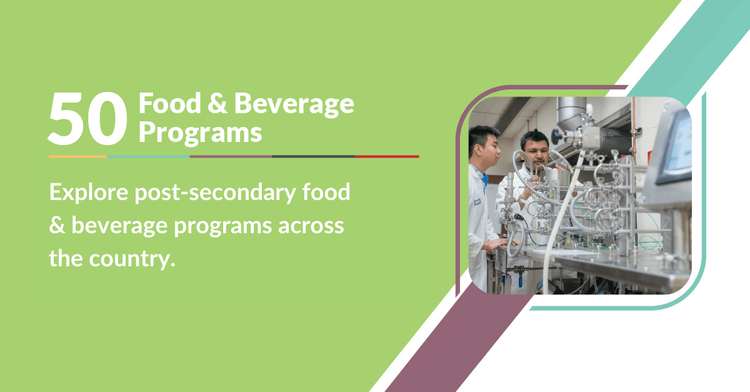
Canada is home to a diverse and dynamic food and beverage industry, supported by educational programs that train the next generation of chefs, brewers, entrepreneurs, and innovators. This roundup highlights 50 standout programs across the country, from top culinary schools and hospitality management courses to cutting-edge research initiatives and sustainability-focused training. Whether you're an aspiring professional, educator, or industry enthusiast, these programs provide valuable insights into the evolving world of food and drink in Canada. BC & Yukon Vancouver Community College UBC BCIT LaSalle College (Vancouver) UBC: Food, Nutrition, and Health Okanagan College Vancouver Island University University of Fraser Valley Northern Lights College North Island College Yukon University Selkirk College Thompson Rivers University Kwantlen Polytechnic University Prairies Saskatchewan Polytechnic University of Alberta University of Saskatchewan University of Manitoba SAIT NAIT Manitoba Institute of Trades & Technology International College of Manitoba Ontario Niagara College Humber College Le Cordon Bleu Ottawa George Brown College Fanshawe College Brock University University of Guelph Toronto Metropolitan University Loyalist College Georgian College Conestoga College Durham College Centennial College Canadore College Algonquin College Trent University St. Lawrence College St. Clair College Sault College Lambton College Confederation College Quebec McGill University LaSalle College Bishop's University Atlantic Canada University of PEI Memorial University Cape Breton University
Community Manager-
50 Food & Beverage Programs - Vancouver Island University
Crafting a Career in BC ’ s Wine Industry: VIU ’ s Wine Business Program The Wine Business program at Vancouver Island University is a comprehensive one-year certificate course designed for those passionate about pursuing a career in the BC wine industry. The program combines practical experience with academic learning in viticulture, wine business practices, marketing, and tourism. Program Highlights: As a student, you ’ ll have the chance to immerse yourself in hands-on experiences at local vineyards and wineries, gaining insights into the entire winemaking process. This practical foundation is then complemented by academic courses in viticulture, wine business practices, marketing, and tourism. A standout feature of this program is its flexibility. Whether you ’ re looking to study full-time for a year or prefer a part-time option spread over two years, VIU has you covered. Located in picturesque Nanaimo, BC, VIU provides an ideal setting for your wine education journey. With a curriculum designed to integrate viticulture essentials with business acumen, VIU ’ s Wine Business program offers a holistic understanding of the wine industry. Students can also earn credits that can be applied toward a Bachelor of Business or a Hospitality and Tourism Management program, opening doors to a wide range of future career prospects. The program includes seven courses and focuses on the broader aspects of the wine industry. In addition to viticulture and winemaking, students delve into wine marketing, exporting, and the vital role of wine tourism. C ourses cover a wide spectrum, from wine marketing and appreciation to beverage theory and the management of wine tourism. The program also offers elective courses in consumer behavio u r, entrepreneurship, and festival management . What You’ll Leave With: Upon graduation, a world of opportunities awaits you in BC ’ s wine industry. Whether you dream of managing a vineyard, excelling in wine s ales and marketing, or even opening your own restaurant, VIU ’ s Wine Business program provides the knowledge and skills to make your wine-related ambitions come true. Career options span winery/vineyard management, retail sales, wine marketing representation, hotel management, culinary arts, a gri - tourism development, and s pecial events coordination. V ideo/Social / Media : VIU YouTube Video
Community Manager-
Cellular Food in Canada
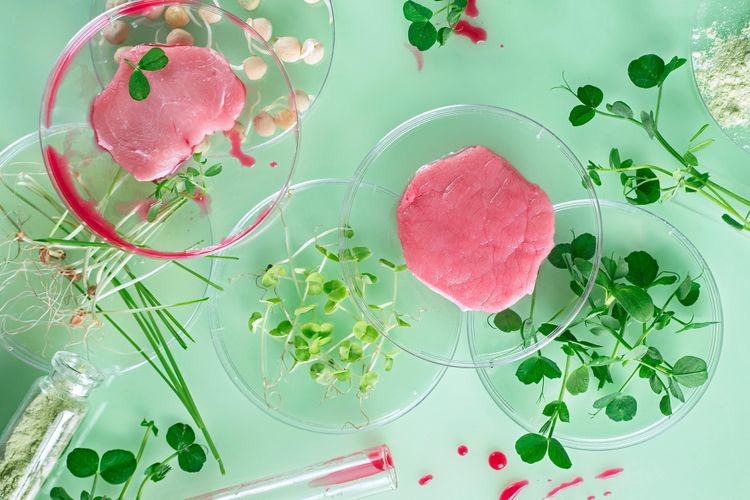
The past few years have proven how susceptible Canada’s food industry is to world events, supply chain disruptions and climate changes. New food production technology, such as cellular agriculture, has the potential to alleviate some of these challenges, while creating commercial opportunities and building a more sustainable, resilient food system. What is it? Cellular food – also known as engineering biology, synthetic biology or cell-cultivated products – is the production of food and textile products without using animals or land. Cell cultures harvested from animals, plants or micro-organisms are grown in the lab through tissue engineering or precision fermentation to produce: Cultivated proteins such as chicken, beef and seafood Fermented products like dairy, eggs, honey and chocolate Ingredients to add to products to create hybrid foods including proteins, enzymes, flavour molecules, vitamins, pigments and fats Textiles such as leather, silk and wool Why you should care As global population continues to grow, so does demand for protein, while access to land and other resource inputs become more scarce. Alternative agriculture could be an answer to food scarcity, concerns about animal and environmental welfare, cost inflation and resource challenges due to climate change. Compared to conventional agriculture, cellular agriculture production, is much less energy intensive, produces less greenhouse gas emissions, and has a much lower overall carbon footprint. With our strong food infrastructure, reputation for food safety, biotechnical expertise, and federal support for alternative protein production, Canada is well positioned to become a leader in cellular agriculture. The 2021 report Cellular Agriculture: Canada’s $12.5 Billion Opportunity in Food Innovation from Ontario Genomics and the Food and Agriculture Institute at the University of the Fraser Valley found that the international cellular agriculture market will reach US$100 billion by 2032. Canada’s food industry has the potential to take $12.5 billion that market, while creating up to 142,000 high-paying jobs. Opportunities in Canada Engineered plant proteins are already in the Canadian market, and by all estimates, precision fermented products are expected to appear before cultured meat products. Current Canadian regulations consider food produced through cellular agriculture as a novel food, and products are approved on a case-by-case basis. Here are a few Canadian start-ups making headlines: Because Animals – This Toronto-based pet food company uses cultured ingredients such as probiotics and nutritional yeast to create nutrient-rich cat and dog food designed to help digestive issues. Future Fields – Edmonton, AB-based Future Fields is a R&D producing growth media products that can be used to create commercialized cultivated proteins in a safe and sustainable manner. Cell-Ag Tech – Toronto’s Cell-Ag Tech is doing R&D on cell-cultured fish and seafood. New Harvest International non-profit research institute New Harvest , which promotes the science behind cultured meat through research, funding and a conference , now has a Canadian branch.
Community Manager-
Other Articles
50 Food & Beverage Programs - Canadore College
Charting a Path to Success in Culinary Management with Canadore College Begin an exciting career in a global field, from working in resorts and cruise ships to owning your business. The Culinary Management program at Canadore College trains students in modern culinary skills and management techniques under skilled professors and chefs de cuisine. Program Highlights: Whether your dream is to shine as an executive chef on a luxury cruise ship, manage a high-end resort kitchen, or even start your own culinary venture, this program offers the foundational skills and knowledge to turn these dreams into reality. S tudents in the Culinary Management program receive training in both contemporary culinary techniques and essential management skills. The program offers a diverse learning experience, covering everything from the art of liquid nitrogen cooking to the intricacies of buffet work, pastry arts, restaurant food production, and even the delicate craft of ice carving. In the first semester, you ’l l delve into the fundamentals of food preparation, baking for cooks, and learn crucial aspects of sanitation and safety. The second semester advances your learning with courses in cost control, introduction to foodservice, pastry arts, restaurant food production, and an introduction to the world of wines. The third and fourth semesters elevate your skills with applied a la carte cooking, international contemporary cuisine, garde manger/culinary display, business development, and the foundation of food and wine pairing. There is also a Study Abroad option in Ireland for students seeking international exposure. What You’ll Leave With: Career opportunities for graduates are as varied as they are exciting . You could find yourself in roles such as an executive chef, private chef, catering chef, food and beverage manager, chef de cuisine, sous chef, or chef consultant. Graduates also receive certifications in Smart Serve, WHIMIS, and Food Safety Training. K ey People : Shelley Busch, Dining Room Coordinator / Technologist: shelley.busch@canadorecollege.ca Fintan Flynn, Professor: fintan.flynn@canadorecollege.ca Derek Lawday, Professor / Coordinator: derek.lawday@canadorecollege.ca Emilie Metwalli , Professor: Emilie.Metwalli@canadorecollege.ca Karen Montcalm, Technologist: karen.montcalm@canadorecollege.ca Karen Nakogee , Technologist: karen.nakogee@canadorecollege.ca Lou-Anne Robinson, Culinary Technologist: LouAnne.Robinson@canadorecollege.ca Contact Information : Culinary Management Contact: Derek Lawday - derek.lawday@canadorecollege.ca or 705 - 474 - 7600 ext. 5537 Admissions Office: admissions@canadorecollege.ca or 705 - 474 - 7600 ext. 5123 Video/Social/Media : Canadore College Culinary Student Recognition Education.com - Culinary Management IDP.com - Ontario College Diploma in Culinary Management
Community Manager-
Report: Specialty Food Trends for 2024
The Specialty Food Association (SFA) Trendspotter Panel recently released what it predicts will be the hottest specialty food and beverage trends for 2024 . Here are a few highlights from the panel : Innovative beverages sales are growing faster than food products, so expect to see more single-serve, non-alcoholic carbonated and non-carbonated beverages ; coffee, tea and broth with functional ingredients; beverages that add energy, clarity, focus or a calming effect; beverages with less or no sugar, salt or artificial sweeteners; beverages with herbs, tropical flavours and botanicals. Cellular protein will grow in popularity next year, and so will plant-based seafood. Peach as a flavour and ingredient will get a boost in 2024, in jams, teas, condiments, and baked goods. Calabrian chili peppers will appear more often in pasta sauce, hot sauce , cured meats, snacks, relish, and hot honey. Tahini will continue to appear outside of Middle Eastern dishes, including in milk shakes, coffee, cookies and pastries. Soup is hot thanks to the popularity of TikTok recipes, so expect to see more soup, broths, soup starters and mixes. Black sesame, ube and milk tea will pop up in unexpected products and formats , including in baked goods, beverages, and snacks. Consumers are still excited by global flavours, heritage traditional foods, regional foods and ingredients.
Community Manager-
50 Food & Beverage Programs - University of Fraser Valley
UFV’s Culinary Arts Certificate The University of the Fraser Valley offers a Culinary Arts Certificate . The university is also home to the Food and Agricultural Institute (FAI) an interdisciplinary research centre that focuses on issues, challenges, and sustainability solutions related to food and farm systems. Program Highlights: The full-time , 39-week Culinary Arts certificate program at the University of the Fraser Valley sets up students for success in the culinary world. Students will gain the in-class training necessary to work in any kitchen, combined with hands-on experience working at the school’s Rivers’ Dining Room under the s upervision of professional chefs. The program will cover topics such as s afety and sanitation , k nife-handling skills , u se and care of equipment , c ooking methods , b anquet planning , à la carte dining , b asic service skills , and m enu planning and costing . When students begin the program they are registered as an apprentice with Skilled Trades BC. UFV allows secondary school students to complete this program through a concurrent studies model during their Grade 12 year. What You’ll Leave With: Upon completion of the certificate program students will gain advanced placement in the apprenticeship program. Once all requirements have been met apprentices are eligible to write the P rofessional C ook L evel One and Two Certificate of Qualification exams . Key People & Contact Information: Sian Hurley - Assistant Professor, Culinary Arts Phone: 604-847-5459 Toll Free: 1-888-504-7441, ext. 5459 sian.hurley@ufv.ca John Garrett - Program Assistant , Applied & Technical Studies Phone: 604-847-5463 Toll Free: 1-888-504-7441, ext. 5463 john.garrett@ufv.ca Video/Social/Media: University of the Fraser Valley on LinkedIn UFV on Instagram Sustainable food & agriculture pathways at the heart of new partnership between UFV and the University of Guelph – UFV Today The future of food & genomics: Shaping how we eat (w/ Lenore Newman & Dan Weary) - The Code of Life (youtube.com)
Community Manager-
Thank You to Our YODL Champions
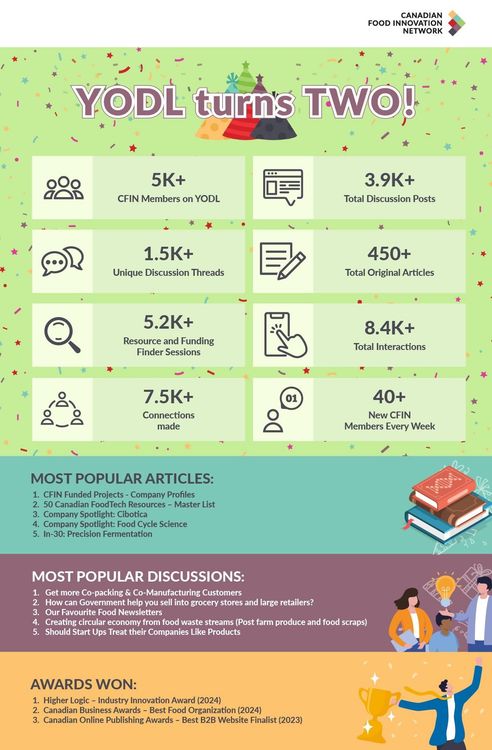
As we look back on how YODL has grown and evolved over its first two years, we want to celebrat e the incredible contributions from the many community members who shaped this platform into what it is today. Every day, CFIN members come to YODL to share valuable insights, resources, and expertise to the benefit of everyone in Canada’s food innovation ecosystem. Today, we’re thrilled to highlight the top discussion posts, articles, and individual contributors that have helped make YODL a valuable platform for all our members . Top 5 Discussions Get More Co-packing & Co-Manufacturing Customers — This discussion thread invited co-packers and co-manufac turers to share what services they offer and where they are located . It now serves as an excellent resource for businesses seeking to discover new service providers across Canada . How Can Government Help You Sell into Grocery Stores and Large Retailers — T o support a CFIN initiative with Canada’s Ministry of Small Business, members shared their insights on what government can do to support small and medium food businesses in getting their products onto the shelves of major retailers . Our Favourite Food Newsletters — Members shared their go-to food industry newsletters, resulting in a comprehensive list of essential reading for staying up to date with the latest trends, news, and innovations in the food sector. Creating Circular Economy from Food Waste Streams (Post Farm Produce and Food Scraps) — This engaging discussion on innovative approaches to transforming food waste into valuable products highlight s the impressive knowledge base and solutions-oriented mindset of CFIN members. Should Startups Treat Their Companies Like Products ? — A thought-provoking , member-driven conversation about the mindset and strategies food startups should adopt to drive growth and success, treating their companies with the same care and innovation as their products. Top 5 Articles CFIN Funded Projects: Company Profiles — An in-depth look at 70+ member project s funded by CFIN, showcasing their innovative solutions and the impact they are making in the food industry. 50 Canadian FoodTech Resources Master Lis t — A comprehensive list of essential Canadian resources for foodtech entrepreneurs . This article features accelerators, incubators, funding sources, and more, providing a valuable guide for CFIN members navigating the food tech lan dscape. Company Spotlight: Cibotica — A detailed profile o f CFIN member Cibotica . This Vancouver company is putting their innovative automation and robotics tech to work in restaurants throughout Canada and the US . Company Spotlight: Food Cycle Science — This article features CFIN member Food Cycle Science , a n Ottawa-based company dedicated to transforming how (and where) food waste is managed, recycled, and re-used . In-30: Precision Fermentation — An exploration of precision fermentation technology, its potential for creating sustainable and innovative food products , and the Canadian resources that exist to help innovators working in this exciting field. Most Active Contributors We’re grateful for all the CFIN members who are sparking lively discussions and sharing their expertise on YODL, and want to celebrate the contributions of some of our most active posters : Richard Baker , CEO and Founder of Food Distribution Guy The Niriqatiginnga Project , a community-driven non-profit building food sector opportunities for indigenous communities in northern Canad a Nishan Silva , Director of Alinitak Global (North America) Greg Prokopowich , Lead Sales Representative of TheoryMesh Henry Chang , Freelance Consultant Thank you to all our YODL champions for their outstanding contributions. The dedication and enthusiasm of CFIN’s 5,000+ members have been essential in building YODL into a vibrant and supportive community. We ’re excited to see how YODL continues fostering the growth and success of Canada’s food innovation ecosystem and are so glad to have you all along for the ride!
Community Manager-
#AskLavina - Career and Professional Development (June 2024)
In addition to being CFIN’s Regional Innovation Director for BC and Yukon, Lavina Gully is a food scientist and product developer with almost two decades of experience helping food and beverage companies innovate. In this series, Lavina answers questions from CFIN members on everything from product development, R&D, food industry careers, manufacturing best practices, and co-packing — just to name a few! If you have questions for Lavina, you can reach out to her directly and we can answer your question in next month’s mailbag. This month, Lavina answers your career and professional development questions. She answers questions about career p lanning for new food science graduates , plus the value of partici pating in food industry mentorship programs—as a mentor and a mentee. Q: As a recent food science graduate, I'm feeling overwhelmed by the p ossibility of taking my career in a direction that isn’t right for me . How should I approach career pathing in this field? A: I recently attended a graduation ceremony at the University of British C o lumbia as an alumni representative, which made me reflect on my career path — and the paths of my peers. Unlike other technical fields like nursing or engineering, where careers paths and outcome s are often more predictable , food science careers are rarely as linear. I can assure you that feeling overwhelmed or worried is not uncommon . While R&D and QA are the most thought of food science career paths , they are far from the only paths. T h e re is a huge breadth and diversity of options that fall under “food science . ” The options are not always obvious and finding a path that resonates can indeed feel overwhelming, but I consider this one of the things that makes the field so compelling. There is a near endless variety of way s you can build a career in food science to not just match your current interests, but to evolve as your interests inevitably change over time. If you’re a recent graduate, the best place to start is by reflecting on what parts of your education excited you the most . Was it product research and development? Quality control and food safety? The same goes for work environments ; maybe you love hands on lab work, the systems approach of QA in processing facilities, or perhaps you thrive in front of an audience, pitching new products to boardrooms of executives. Try writing down four or f ive tasks you really enjoy doing and find energizing , along with four or f ive that you find draining . It is a simple exercise, but I find it is an effective way to help clarify your priorities, values, and skills . Look ing for patterns in your preferred tasks is a terrific way to uncover so me po tential food science career paths that may be less immediately obvious. For example, if you enjoy analytic al and quantitative work , you could explore opportunities in consumer science . If you like ingredients, application specialist roles with ingredient companies are an excellent option . And if you like the strategic element s of bringing new products to market, you might be a great fit for a product manager role . The biggest mistake I see new food scientists make is getting hung up on taking the right direction , only to get stuck spinning their wheels for too long. It is important to consider your first step post-graduation as a starting point, not a be-all, e nd -all . Take my own career as an example: I have worked in labs , classrooms, corporate offices, and as a contractor. I have conducted analytical test s in labs, developed innovative new food products , managed large R&D teams, handled regulatory compliance processes, and worked in academia as a researcher and instructor. As you start walking your path , you will uncover aspects of food science you never thought you would enjoy, and v ic e versa . It doesn’t have to be the “perfect” decision . New opportunities will present themselves in ways you cannot even imagine until you just get started. Ultimately, I encourage new grads to simply b e open to exploring different roles within food science and be patient with the process . You can also try connecting with other food scientists whose path s resonate with you by asking if they’ d be willing to chat about their career path in an informational interview. You will find that most people are more than eager to help, especially when it involves talking about shared passions and career goals . Just because you might not know exactly where your path will take you does not mean that you aren’t still on your way somewhere. Remember to enjoy the journey! Q: I have an opportunity to join a mentorship program in the food industry. Have you ever participated in a mentorship program as a mentor? If so, what can I expect of the experience from a mentor’s perspective ? A: This past winter, I participated as a mentor in CFIN’s Connextions P rogram . Many people imagine mentorship programs as being one-directional, with a mentee absorbing the knowledge, wisdom, and network of more experienced professionals in their field. This is obviously the primary goal of mentorship programs and makes participating as a mentor worthwhile and fulfilling in its own right, but I've discovered that mentorships can in fact be a learning experience for the mentor as well. Mentoring allows you to give back to the industry by helping the next generation of food scientists and professionals. This sense of giving back is rewarding and can add a new dimension of meaning to your own career experiences . Perhaps more surprisingly , mentors often find that they learn from their mentees . They have fresh perspectives and can challenge your pre-conceived notions in ways that can reinvigorate your own work . Taking on a mentee is also an excellent way to hone your leadership and coaching skills —incredibly valuable skillsets in any professional setting. These skills enhance your professional profile and provide personal satisfaction in seeing your mentee grow and succeed, knowing y ou’ve played a part in their journey. Mentoring is so much more accessible now with virtual meetings and the popularizatio n of remote work environments , but I t hink it is important to strive for some in-person connection between mentors and mentees if possible. Look for mentorship opportunities local to you —your alma mater is a good place to start . Universities often run excellent programs, like UBC’s unique tri-mentoring model , which partners a junior student, a senior student/young professional , and an experienced professional together to enhance the traditional mentor/mentee configuration . Whether you’re seeking guidance or offering it, mentorship programs can be a deeply enriching career experience, and something I would recommend every one to pursue if an opportunity presents itself !
Community Manager-
YODL and YOU: Discover How YODL Helps Members
Over its first two years, YODL has grown from an aspiration to connect Canada’s food business community into a f eature rich platform that connects CFIN members to funding, partners, and each other. We already covered YODL’s career resources and its library of exclusive content this week. Today, we’re going to open the YODL toolbox to look at the array of self-serve tools food innovators can use to grow their organizations and their personal networks. Connect With Fellow CFIN Members With the Find Contacts Tool , you can search for and connect with relevant CFIN members and potential partners. Whether you’re looking for industry experts, collaborators, or new business connections, the tool’s advanced search capabilities make it easy to filter by in dustry, expertise , and location to help you easily connect with CFIN members aligned with your own work and interests . Discover Funding Opportunities YODL can also be used to discover new funding opportunities for your business. The Funding Finder is an intuitive platform that was designed to help innovators efficiently search for grants, loans, and investments relevant to their work. No more time spent manually combing through different grant databases: th e Funding Finder allows you to quickly identify the opportunities you would be eligible fo r , freeing you to put together winning applications and grow your business . Collaborate With New Partners and Service Providers On top of our Find Contacts and Funding Finder tools, CFIN members gain access to our recently revamped Resource Finder —a tool that can help you discover thousands of food-centric businesses and service providers. If you’re se arch ing for lab spaces, startup accelerators, co-packers, distributors, production facilities, or anything else, the Resource Finder makes it easy to find e xactly what you’re looking for. Get More out of YODL YODL is one of the ways we engage Canada’s fastest growing food business community, but it is also so much more than that. It is a vibrant ecosystem designed to foster growth by giving food innovators effective tools to connect to partners, funding, and resources to help their businesses thrive. We hope yo u’ re taking full advantage of YODL’s diverse toolbox ! Drop a comment and l et us know how YODL has helped you find new opportunities, make connections , and grow your food business.
Community Manager-
YODL Roundup: This Year’s Top Member-Created Content
One of the greatest things about YODL is getting to benefit from the collective knowledge and expertise o f CFIN’s 5,000+ members. Every week, members working at every level of Canada’s food innovation ecosystems are sharing their insights through discussion posts and articles posted to YODL. As we continue celebrating YODL’s two-year anniversary , we collected some of the wisdom, insights, and advice that our members have shared with the community. Top Articles by CFIN Members How Networking on YODL Led to a New Career Path and the Growth of Ontario's Laplace Robotics — Jeff Hetherington shares how his YODL posts caught the eye of Rae Jeong, the CEO of Toronto, ON-based Laplace Robotics . The two connected, and Jeff eventually joined Laplace Robotics as the head of Project Development . I n this article , Jeff illustrates how YODL can be used to forge new connections, ignite collaborations, and create new opportunities. Generative AI and the Food Industry — Generative AI use cases and applications are growing throughout the food industry, a trend that will only continue as these technologies evolve and mature . Nobody knows this better than Shawn Carver , co-founder and CEO of Fiddlehead Technology , a Moncton- based startup building machine learning applications for food manufacturers. In this YODL article, Shawn shares some of the innovative ways companies are already leveraging the power of generative AI tools. Data Quality Matters - Unravelling the Impact of Bad Data on Inventory Expiration — In this article, CEO of The Owl Solutions Hugo Fuentes explores the negative ramifications of poor data quality for food businesses . He details some of the solutions that small and medium food companies can begin implementing to improve their data t o facilita te better decision making, waste reductions, and a more efficient and environmentally conscious supply chain. Agriculture and Agri-Food Canada is Putting a Priority on Cyber Resilience in Agriculture and Food — As agri-food businesses become increasingly digitized, the need for robust cybersecurity protocol s becomes critical . Katherine MacDonald , Director General, Strategic Management, Information Systems Branch with Agriculture and Agri-Food Canada authored this YODL article to help CFIN members understand the risk s and what they can do to build up their organization’s cyber resilience. YODL’s Open Forum Every day, CFIN members are also sharing their expertise through insightful and nuanced discussion threads on YODL’s Open Forum . These discussions are what make YODL a truly unique platform —it is where food professionals c ome to engage deeply on topics like upcycling, product development, ingredient sourcing , and much more. YODL is quickly becoming the best place to l earn directly from the industry’s leading experts and innovators. After catching up on the fantastic member content highlighted here, check out the topics members are discussing today , and join the conversation yourself!
Community Manager-
50 Food & Beverage Programs - Brock University
From Vine to Wine: Exploring Brock University's Oenology and Viticulture Program Brock University ’s Oenology and Viticulture program offers a comprehensive education in sensory science, biochemistry, biotechnology, chemistry, microbiology, genetics, molecular biology, plant physiology, and cell biology. The program includes hands-on winemaking labs and viticulture fieldwork, along with opportunities to connect with leading researchers through Brock’s Cool Climate Oenology and Viticulture Institute. Program Highlights: The immersive program combines a comprehensive scientific education with practical skills in oenology (the study of wines) and viticulture (the cultivation of grapevines). As part of the program, students participate in a Co-operative Education Program, which includes at least one work term in a vineyard and another during the winery harvest. This hands-on experience is invaluable, offering students the opportunity to apply their learning in real-world settings. The program offers a robust curriculum that covers a wide range of scientific disciplines, all of which are relevant to the grape and wine industry. Students will gain a strong base in biotechnology and be exposed to important aspects of marketing, tourism, and wine appreciation. This blend of theoretical and practical learning ensures graduates are well-prepared for their careers. What You’ll Leave With: Upon completion of the program, graduates have a high employment rate, with 96% finding positions in the grape and wine industry. Career opportunities for graduates are diverse, ranging from Winemaker and Vineyard Manager to Lab Manager, Sensory Scientist, and Researcher. The average salary in this field varies significantly, ranging from $40,000 to $150,000, reflecting the wide range of roles and levels of expertise within the industry. Key People: Professor Debbie Inglis, Director of Brock ’ s Cool Climate Oenology and Viticulture Institute (CCOVI) . Contact Information: Registrar & Admissions office , 905-688-5550 x4293 ; futurestudent@brocku.ca This program is an excellent choice for those passionate about the grape and wine industry, looking to blend scientific knowledge with practical skills. V ideo/Social/Media : Student Experience Youtube Video 1 Student Experience Youtube Video 2 Student Experience Youtube Video 3 Instagram Alumni Youtube Video 1 Alumni Youtube Video 2
Community Manager-
Get to Know FICH: YODL’s Comprehensive Career Resource for Food Professionals
Over the last two years, YODL has expanded to include a ton of valuable tools and resources, including the Food Innovators Career H ub (FICH) . FICH is a forum where students, rec ent graduates , and established professionals can make connections with employers , find jobs, and grow their food industry careers . It is a valuable resource for recruiters and employers eager to post jobs and connect directly with Canada’s top food i ndustry talent. Since launching, FICH has: Added 5000+ members Hosted 84 discussion threads and job postings and 30+ articles on food career topics Helped 18 participants build their food industry careers through CFIN’s Connextion s Mentorship Program We are constantly adding new resourc es and capabilities to make FICH the one-stop-shop for food industry job seekers . The platform already features 13 AI-powered tools built to help job seekers refine their resumes, write better cover letters , and prepare for interviews. This, along with a curated library of 11 food industry job boards , makes FICH the place to be for aspiring food innovators across Canada . In addition to resources like the curated industry job boards and AI tools, Th e FICH d i scussion board helps food professionals find their path by connecting them right to recruiters and employers seeking talent across every aspect of the food sector. Students and professionals looking to break into the indust ry can also take advantage of the Connextions Mentorship program , where mentees are paired with seasoned experts to help them build networks and establish their own food innovation careers . We are so excited to watch this community grow and evolve in the coming years. Be sure to check out all the amazing things already happening on FICH !
Community Manager-
YODL Turns Two🎉
Happy Birthday to Canada’s f irst online platform connecting all players in the food and beverage ecosystem ! It is hard to believe that YODL is already two . In the last year alone, YODL has won industry awards, welcomed thousands of new members, sparked hundreds of insightful discussions, and forge d valuable connections across Canada’s food innovation ecosystem. This infographic breaks down the impact of YODL, highlighting everything from its newest industry tools to the most popular content and dis cussions published over the past two years:
Community Manager-
50 Food & Beverage Programs - University of Guelph
Exploring the Nutrition and Nutraceutical Sciences Program at the University of Guelph The Nutrition and Nutraceutical Sciences program at the University of Guelph combines the study of human health, nutrition, and nutraceuticals within the Department of Human Health and Nutritional Sciences. This program is ideal for students interested in understanding how food and nutrients affect health and wellness, and how they can be used to develop innovative products to improve human and environmental health. Program Highlights: This holistic perspective provides students with a comprehensive understanding of the profound impact of dietary choices on human health. One of the program’s highlights is the opportunity for hands-on research. Students have access to state-of-the-art facilities such as the Human Nutraceutical Research Unit, where they can actively engage in practical research projects. This experiential learning deepens their grasp of program concepts. The Nutrition and Nutraceutical Sciences program is designed to address pressing issues within the food, pharmaceutical, and natural health product industries. Graduates are empowered to create innovative solutions that promote the well-being of individuals and the environment. To further enhance their education, students can participate in cooperative education work terms. The program’s primary emphasis is on exploring the pivotal role of food and nutrients in promoting health and preventing disease. Students delve into the intricate interplay between food, nutraceuticals, and pharmaceutical drugs, and gain insights into the regulatory policies governing the food and health product industries. What You’ll Leave With: Upon completion of the Nutrition and Nutraceutical Sciences program at the University of Guelph, graduates are equipped to work in the food, pharmaceutical, and natural health product industries. They are prepared for roles in food manufacturing, product development, quality control, and regulatory compliance. The program opens doors to further studies in nutrition, dietetics, or related fields. Video/Social/Media: Explore more about the program through Youtube and Facebook
Community Manager-
50 Food & Beverage Programs - Algonquin College
Mastering the Art of Baking: Algonquin College ’ s Comprehensive Baking and Pastry Arts Management Program T he Baking and Pastry Arts Management Ontario College Diploma program from Algonquin College offers hands-on experience under professional chefs in state-of-the-art labs. Learn advanced patisserie training and management skills for career advancement or entrepreneurship. Unleash creativity in chocolate work, sugar artistry, cake design, artisan breads, and more. Acquire knowledge in business planning and operations for a successful career in the industry. Program Highlights: Courses include Communications, Sanitation and Safety Training, Introduction to Culinary, Baking Theory and Practical, Cake Decorating, Nutrition and Food Preparation, Sugar and Chocolate Techniques, Specialized Baking, and more. Real-world experience is emphasized with 120 hours of field placement and participation in community events and competitions. Additional Programs : Culinary Arts and Food Science, Bartending, Culinary Arts, Culinary Skills, Sommelier, Food and Nutrition Management W hat You’ll Leave With : Graduates will be equipped with skills to work as bakers, pastry chefs, chocolatiers, confectioners, bakery managers, or pursue entrepreneurship. The program develops skills for effective business management, creative culinary production, and environmental stewardship in the baking and pastry arts field. Admissions Requirements : Ontario Secondary School Diploma (OSSD) or equivalent English, Grade 12 (ENG4C or equivalent) IELTS or TOEFL for language proficiency if needed Application Information: Program Code: 1207X01FWO Apply through OntarioColleges.ca International applicants: International Application Process Tuition & Fees: Use the Tuition and Fees Estimator Key People: Harsh Singh , Program Coordinator: singhh@algonquincollege.com, 613-727-4723, ext. 6423 Amanda Baxter , Instructor: baxtera@algonquincollege.com, 613-727-4723, ext. 7426 Barbara Burkhard , Professor: burkhab@algonquincollege.com, 613-727-4723, ext. 7426 Abdelmalek Lebbal , Instructor: lebbala@algonquincollege.com, 613-717-4723, ext. 7259 Stella Ludlow , Student Success Specialist: ludlows@algonquincollege.com, 613-727-4723, ext. 2102 Dan Luo , Instructor: luod@algonquincollege.com, 613-727-4723 Contact Information : School of Business and Hospitality