Featured

Other Articles

Report: Changing Grocery Shopping Habits of Canadians

Report: Changing Grocery Shopping Habits of Canadians

Welcome to YODL! In addition to daily original content, YODL helps CFIN Members find new partners , resources , and funding opportunities to grow their food business. Learn more about this growing community and become a CFIN Member (for free!) today . The Agri-Food Analytics Lab at Dalhousie University recently collaborated with Caddle on a survey to discover how Canadians are dealing with changing challenges in the food market. The survey , conducted in September 2023 and published in Grocery Business , revealed that consumers are changing their grocery shopping habits due to the rising cost of food. Here are three key takeaways from the survey . 1. Canadians are feeling the crunch from higher f ood prices . 64.1% of respondents say they have substantially changed how they shop for food. 86.4% say they are more price-conscious than a year ago. 55.1% are using cost-saving measures more than they were a year ago, including using coupons (74.8%) , food-rescuing apps ( 52.8%) , loyalty programs (79.2%) and “enjoy tonight” deals (41.4%). 49.7% of consumers say they have thought about growing their own food. 79.1% say they have reduced food waste significantly over the past year. 2. Consumers are changing how and where they shop for groceries. 41.2% of Canadians visit grocery stores less often than they did a year ago, and strategize by stocking items when they are on sale. 26.5% say they visit grocery stores more often to capitalize on deals , and only purchase food necessary for two to three days. 59.3% of consumers say they are now more likely to shop at dollar stores than they were a year ago. 18.5% of respondents visit farmers’ markets more often. 63.8% are now more likely to purchase store brands rather than national brands to save money. 3. Canadians are changing their diets due to rising food prices. 49.2% of consumers say they have reduced the quality of the protein they buy due to higher costs. 45.4% of respondents say they now prioritize cost over nutritional value when shopping for groceries, although 63.3% report being wary about the affect of this practice on their long-term health . 4. Concern about higher prices differs among the generations. 54.5% of Canadians born between 1900 and 1945 say they prioritize cost over nutritional value, higher than any other generation of respondents. 68.7% of millennials worry about compromising on nutrition due to higher food prices, more than any other generation. Only 34.6% of baby boomers say they put cost before nutrition when shopping for food.

Community Manager

AI + Food – A&L Canada Laboratories

AI + Food – A&L Canada Laboratories

Welcome to YODL! In addition to daily original content, YODL helps CFIN Members find new partners , resources , and funding opportunities to grow their food business. Learn more about this growing community and become a CFIN Member (for free!) today . In this installment, we’re looking at London , ON-based A&L Canada Laboratories . What They Do A &L Canada Laboratories offers soil , p lant tissue , feed, fertilizer and water analysis for the agriculture, environmental, food and pharma (cannabis) industries. It also offers software solutions, analytics platforms and mobile apps. How They’re Using AI The company uses AI-driven image analysis to detect contaminants and defects in food products to ensure food safety and quality . A&L Canada Laboratories contributed to a project with Aspire Food Group, Darwin AI and TELUS that received funding from Canada’s Advanced Manufacturing Cluster. The project created the world’s largest fully automated food grade cricket protein manufacturing facility in London, ON that uses advanced manufacturing technologies such as AI, automation, robotics, Internet of Things, automated storage and retrieva l, and deep learning and analytics. In the Med ia AgriTech Tomorrow - A&L Canada Laboratories announces launch of TerraSiteRx analytics platform A&L Laboratories ’ TerraSiteRx analytics platform provides ag retailers and crop consultants analytical tools and algorithms to gain deeper insights from farm data . Bloomberg - A&L Canada Laboratories to be L ead A nalytical T esting F acility in Shoppers Drug Mart and TruTrace Pilot Traceability Program A&L Canada was one of the primary testing facilities in the pilot program on medicinal cannabis products ensuring quality assurance. If you’d like to connect with A&L Canada Laboratories reach out to your Regional Innovation Director.

Community Manager

50 Canadian FoodTech Resources – Propel

50 Canadian FoodTech Resources – Propel

Welcome to YODL! In addition to daily original content, YODL helps CFIN Members find new partners , resources , and funding opportunities to grow their food business. Learn more about this growing community and become a CFIN Member (for free!) today . Canada has an extensive range of research centres, food incubators, accelerators and labs supporting food and beverage innovation through the research they do and/or the services they offer. Each week throughout 2023, we’ re highlighting an organization that’s supporting food innovation in Canada. Name: Pro p e l Inc. Location: Saint John, NB Mission: Propel is a virtual accelerator that helps startup technology companies validate their product and market fit, find customers and raise financing. Focus: Propel offers technology entrepreneurs virtual coaching and mentoring , with a priority on companies from Atlantic Canada. Services: The organization’s online accelerator program offers startups access to coaching at every stage of growth , from ideation through product development to scaleup. As well as one-on-one mentoring, online learning includes speakers from around the world, and the courses Vision and Validation for companies making less than $1,000/month, and Traction and Growth for companies making more than $1,000/month. What you N eed to K now: Propel has more than 350 alumni, has funded millions of dollars to technology companies in financing , and has created 1,400 jobs. The centre says alumni have shorted their sales cycles by 78%, and have doubled their contract size. Some of the companies in the food industry which have worked with Prop e l are SomaDetect , Easy Platter , Couryah! and Prospre . Notable News: Propel received $1.05 million in funding from the government of Nova Scotia to continue to deliver programming and coaching for startups over the next three years. Get Involved: Contact Propel at info@propelict.com or reach out to our Regional Innovation Director for Atlantic Canada Tyson MacInnis .

Community Manager

Interview with Saltwinds Coffee Company

Interview with Saltwinds Coffee Company

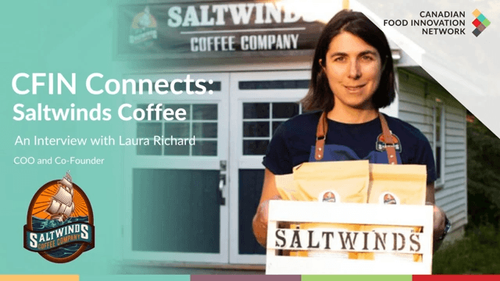
Welcome to YODL! In addition to daily original content, YODL helps CFIN Members find new partners , resources , and funding opportunities to grow their food business. Learn more about this growing community and become a CFIN Member (for free!) today . Nestor Gomez , CFIN’s Chief Technology Officer, recently caught up with Laura Richard, COO and co-founder of Douglas, NB-based Saltwinds Coffee Company, during the 2023 InnovateNB Awards. Saltwinds produces unique tasting coffee roasted using carbon-friendly techniques. The company received funding through CFIN’s Food Innovation Challenge to help create its carbon capture system that can be used in the exhaust flue of a roaster, capturing the CO 2 that is emitted when coffee beans are roasted. Here they discuss the company and what it has been up to in the past year since receiving funding.

Community Manager

IN 30: Roundup of Cellular Food Articles

IN 30: Roundup of Cellular Food Articles

Welcome to YODL! In addition to daily original content, YODL helps CFIN Members find new partners , resources , and funding opportunities to grow their food business. Learn more about this growing community and become a CFIN Member (for free!) today . Sometimes, all it takes is 30 minutes to learn the ins and outs of new food technologies and trends that are transforming the food and beverage industry. In this series, we’ll dig into a food innovation topic and link you to content and resources so you can become a master on the topic in 30 minutes (or less!). This year we dug deep into the topic of cellular food and agriculture, so now we’re recapping all of the original content posted on the topic in 2023. Canadian FoodTech Trends: Interest and Curiosity in Cellular Food Continues to Grow CFIN worked with Moncton, NB-based data science company Fiddlehead Technology to develop a report providing insight into the potential adoption of cellular meat in Canada. Cellular Food How cellular food is changing the way we produce, transport, and consume food. Cellular Food in Canada New food production technology such as cellular agriculture has the potential to alleviate challenges facing the food industry, including supply chain disruptions and climate change. Commercializing Cellular Food Issues surrounding c ellular food entering or currently on the market, and opportunities for commercialization in Canada and around the world. Cultivating Success – Top 5 Takeaways CFIN’s latest virtual experience is Cultivating Success: Canada ’ s Big Biomanufacturing Opportunity. Here are the top five takeaways from the experience: Funding for Cellular Food Research and Development There are several sourc es of funding for companies working to develop new products, technology, and services for the emerging cellular agriculture industry in Canada. Infographic: Introduction to Cellular Food An infographic showing the history of cellular food and precision fermentation and opportunities in Canada. The Language of…Cellular Food Here’s some of the terminology you may be questioning when it comes to the cellular food and agriculture sector. New Harvest New Harvest is a global non-profit research institute advancing the science of cellular agriculture , with a Canadian division based in Edmonton, AB. Precision Fermentation P recision fermentation is a specific kind of fermentation process to create lab-grown ingredients for use in a variety of products, including food. Regulating Cellular Food How emerging cellular food technology is being governed around the world, and the debate around how products will be regulated as they hit the market. What’s for Dinner on Mars? Dinner on Mars: The Technologies that Will Feed the Red Planet and Transform Agriculture on Earth by Lenore Newman and Evan Fraser explores the food science and cellular food technology and production methods it will take to feed a settlement on Mars, while meeting the needs of the estimated 9.8 billion people on Earth by 2050. Overtime If you’ve got more than 30 minutes, these are for you: Cultivating Success: Canada’s Big Biomanufacturing Opportunity CFIN ’s latest virtual experience , Cultivating Success: Canada's Big Biomanufacturing Opportunity , was ho sted by cellular food experts Dr. Lenore Newman of the Food and Agriculture Institute at the University of the Fraser Valley in BC, and Dr. Evan Fraser of the Arrell Food Institute at the University of Guelph in Ontario.

Community Manager

Report: Public Trust in Canada’s Food System

Report: Public Trust in Canada’s Food System

Welcome to YODL! In addition to daily original content, YODL helps CFIN Members find new partners , resources , and funding opportunities to grow their food business. Learn more about this growing community and become a CFIN Member (for free!) today . The Canadian Centre for Food Integrity (CCFI) recently released it s 2023 Public Trust Research Report revealing consumer perceptions of Canada’s food and agri-food industry, and views on issues such as rising food costs, food safety and transparency . Here are four key highlights. 1. Rising f ood costs are top of mind with Canadians . 50% of consumers polled said they are very concerned about the affordability of healthy food. That compares to 47% in 2022 and just 28% in 2020. 54% of Canadians say the cost of food is their number one concern , while 41% say they are most concerned with the affordability of healthy food. 2. Canadians are changing their habits due to higher food costs . 45% say they are reducing food waste; 42% are cooking more meals at home; and 37% are buying less food. Other changes include buying more frozen food (23% ) , and changing grocery stores (21%) and recipes (14%) . 60% of respondents say they’re interested in learning how to spend less on food. 50% say they loo k up online information about spending less on food. 3 . Consumers are focused on issues such as food, health and housing rather than big-picture concerns such as the economy , and are increasingly linking food and health. 44% of Canadians are very concerned about health care, up from 37% in 2022. 54% of consumers say they engage with information about nutrition and healthy eating. 4 . Consumer s show overall trust in our agri-food system, but want more transparency. 34% of Canadians say the food system is heading in the right direction, although 41% say they are unsure. Canadians have a moderate level of trust when it comes to food safety, with only 26% saying they are very concerned about food safety overall, compared to 30% last year. 41% of consumers believe supply chain costs are to blame for rising food costs , down from 56% the previous year. 34% feel food costs are higher because businesses want to increase their profits . T hat compares to 20% in 2022. Transparency scores have decreased significantly since 2018 , especially around misinformation, with 62% saying they are concerned about misleading food labels or descriptions for marketing, and 33% saying they are very concerned . Click her e to download the full report.

Community Manager

Let’s Talk Innovation – the Integrated Pre-commercial Hall

Let’s Talk Innovation – the Integrated Pre-commercial Hall

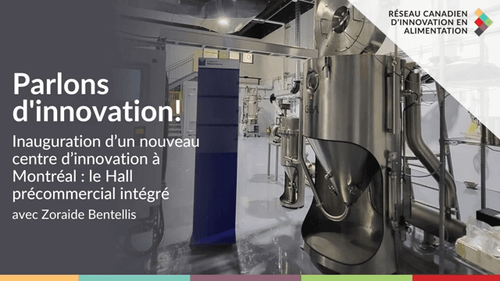
Welcome to Let’s Talk Innovation with Isabelle Marquis, a French-language video covering all areas of food innovation. Today, Isabelle speaks with Zoraїde Bentellis, Director of ITEGA, the Institute of Packaging Technology and Food Engineering, about the inauguration of a new innovation centre in Montréal: the Integrated Pre-commercial Hall. On 30 October, the official inauguration of the Integrated Pre-commercial Hall (HPCI) took place in Montréal: a new research and innovation hub for sustainable development, unique in Canada. Equipped with the latest technologies and combining the expertise of ITEGA and CEPROCQ in packaging, food engineering and food chemistry, the HPCI’s mandate is to support businesses wishing to create, develop and commercialise innovative products.

Community Manager

50 Canadian FoodTech Resources – The Cultivated B Canada

50 Canadian FoodTech Resources – The Cultivated B Canada

Welcome to YODL! In addition to daily original content, YODL helps CFIN Members find new partners , resources , and funding opportunities to grow their food business. Learn more about this growing community and become a CFIN Member (for free!) today . Canada has an extensive range of research centres, food incubators, accelerators and labs supporting food and beverage innovation through the research they do and/or the services they offer. Each week throughout 2023, we’ll be highlighting an organization that’s supporting food innovation in Canada. Name : The Cultivated B Canada (TCB Canada) is a subsidiary of Germany’s The Cultivated B. The company’s R&D centre is in Heidelberg, Germany, while its manufacturing facility is in Burlington, ON. Location: Burlington, ON Mission: To accelerate R&D around scalable and sustainable fermented and cultivated food products and ingredients. Focus: TCB Canada develops scalable alternative protein and cellular agriculture technologies. It works with governments and companies in Canada’s cellular agriculture and food ecosystem to help develop bioengineering technologies. Services: TCB Canada operates a 130,000-sq.-ft. manufacturing facility in Burlington, ON for the production of bioreactors and the development of alternative proteins. The location also offers the Innovation Hub in collaboration with Ontario Genomics and N atural Products Canada (NPC) , a 25,000-sq.-ft. space for academic institutions, start-ups and small- to medium-sized businesses to advance research in cellular food and agriculture towards scalable testing and product development. The Innovation Hub offers lab space, bioreactors (including the world’s first bioreactor with a 25,000-L volume) , mentorship and expertise . What you need to know: In September 2023 the TCB Canada and NPC announced a program to accelerate the growth of Canadian startups using precision fermentation. The Cultivated B is develop s precision fermentation technology through its subsidiary PreFer Industries . Notable News: The company recently signed a Memorandum of Understanding with McMaster University’s Faculty of Engineering to commit to ongoing collaboration on cellular agriculture projects and talent development. Get Involved: Contact TCB Canada by email or at ( 905 ) 681-2404 , or reach out to our Regional Innovation Director for Ontario, Linda Fox.

Community Manager

AI + Food – ThisFish Inc.

AI + Food – ThisFish Inc.

Welcome to YODL! In addition to daily original content, YODL helps CFIN Members find new partners , resources , and funding opportunities to grow their food business. Learn more about this growing community and become a CFIN Member (for free!) today . Canadian food, beverage and foodtech companies are using AI to solve a wide variety of industry challenges, including improving efficiency, pricing analysis, inventory management, quality control, food safety assurance and more. In this installment, we’re looking at ThisFish Inc. What They Do Vancouver, BC-based ThisFish Inc. provides TallyVision , an AI solution for seafood traceability and production workflows designed to boost business efficiency, transparency and compliance in seafood supply chains. How They’re Using AI The TallyVision software, combined with sensors and industrial hardware such as scanners, digital scales and computer vision technology, help s seafood processing plants automate data collection and digitize information systems to produce real-time insights that can be used to improve traceability and quality control, while reducing waste. The software also provides for the use of QR code labels, allowing customers to track seafood through retailing and processing back to the farm or fishing vessel that harvested it. In the Media Government of BC - ThisFish Tracks BC Seafood The B.C. government supports traceability as a public health measure and to help businesses run efficiently. Global Seafood Alliance – ThisFish Launches Seafood Sector Software Directory ThisFish has launched an online directory of software, artificial intelligence (AI) and blockchain technologies for the seafood sector.

Community Manager

IN 30: Carbon Neutral Food

IN 30: Carbon Neutral Food

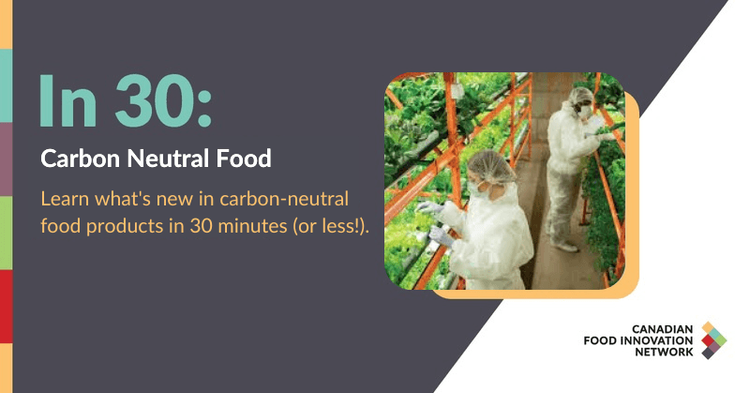
Welcome to YODL! In addition to daily original content, YODL helps CFIN Members find new partners , resources , and funding opportunities to grow their food business. Learn more about this growing community and become a CFIN Member (for free!) today . Sometimes, all it takes is 30 minutes to learn the ins and outs of new food technologies and trends that are transforming the food and beverage industry. In this series, we’ll dig into a food innovation topic and link you to content and resources so you can become a master on the topic in 30 minutes (or less!). This week we’re looking at carbon neutral food. When companies refer to their products as carbon neutral , it means that the company has reduced as much carbon emissions as it produces to create a net zero carbon output. The Overview Food Dive – Eight Carbon-Neutral Brands Aiming to Cut the Food and Beverage Industry’s Emissions Just a few of the f ood and beverage companies making their products carbon neutral. Green Eatz – How to Lower Your Food’s Carbon Footprint The carbon footprint of a food refers to the amount of greenhouse gas emissions go into producing that food, including growing, processing, and transportation. Just Food - Are “C arbon N eu t ral ” C laims D ead? Claims about carbon-neutral products are sometimes met with scepticism. The Canadian Connection Diageo – Diageo is building its a carbon neutral distillery to produce its Crown Royal Canadian Whisky brand in Ontario. Maple Leaf Foods - Maple Leaf became the world’s first major carbon-neutral food company in 2019. Karbon Brewing Co . – Karbon is the first carbon-negative brewery in Canada. Social Media Science Based Targets (LinkedIn) – Science Based Targets helps companies and organizations set emissions reduction targets. CDP (X/Twitter) - CDP is a not-for-profit charity that runs the global disclosure system for investors, companies, cities, states and regions to manage their environmental impact . Ecocert (Facebook) – Ecocert operates the Climate Neutral Certification program, which recognizes companies that contribute to carbon neutrality. Overtime If you’ve got more than 30 minutes, these are for you : YouTube – Earth Month: New Food and Drinks to Reduce your Carbon Footprint Carbon neutral products from this year’s Natural Products Expo West.

Community Manager

AI + Food – Canvass AI

AI + Food – Canvass AI

Welcome to YODL! In addition to daily original content, YODL helps CFIN Members find new partners , resources , and funding opportunities to grow their food business. Learn more about this growing community and become a CFIN Member (for free!) today . Canadian food, beverage and foodtech companies are using AI to solve a wide variety of industry challenges, including improving efficiency, pricing analysis, inventory management, quality control, food safety assurance and more. In this installment, we’re looking at Canvass AI . What They Do Canvass Analytics Inc. (Canvass AI) is an industrial AI software developer based in Toronto, ON. How They’re Using AI The company offers AI software specifically for the industrial sector that it says will allow manufacturing companies , including food and beverage manufacturers, to monitor and predict future output to optimize operational performance, make decisions faster based on data, and set new sustainability benchmarks by reducing water consumption and CO 2 emissions . In the Media Control Engineering - Canvass AI’s APC Solution , part of its Asset Suite of software, won gold in Control Engineering ’ s 2023 Product Of The Year Awards. CB Insights – In 2022 Canvass AI was recognized by CB Insights on its annual list of the world’s 5 0 most promising advanced manufacturing companies. FedDev Ontario – The Federal Economic Development Agency for Southern Ontario invested more than $5.7 million in Canvass AI in 2022. The funding will go towards the expansion and commercialization of its AI software platform, to create 45 new jobs , and to help the company grow.

Community Manager

Company Profile – Myo Palate

Company Profile – Myo Palate

Welcome to YODL! In addition to daily original content, YODL helps CFIN Members find new partners , resources , and funding opportunities to grow their food business. Learn more about this growing community and become a CFIN Member (for free!) today . This is one in a series of interviews with CFIN member companies that have successfully applied for and rec e ived fun d ing . Toronto, ON-based Myo Palate received $1,971,084 in funding for a project titled Scaling Cultivated Pork Production Using Embryonic Stem Cells, with project partners Getinge Canada Ltd. We spoke with Myo Palate co-founder Frank Yu to find out more about the company and its project. Q: Please explain what your company does and how your products are improving the food industry? A: Myo Palate is a biotechnology company developing sustainable meat products. We nurture cells to make meat, instead of growing the entire animal. Using natural animal cells, we produce muscle, fat and cartilage to create ground meat as a raw material. Our controlled bioprocess allows us to reduce the environmental burden associated with meat production and provide a consistent supply. Q: What is your company’s mission? A: We are a team of scientists, engineers, and food lovers applying cutting-edge technologies to achieve a common mission: making meat sustainable and accessible for everyone. Q: Why did you apply for this funding and how will you use it? A: We have developed a novel bioprocess to address the two biggest barriers in cultivated meats: scalability and price. We are now in an exciting time to scale this process. CFIN funding has provided us with the opportunity to de-risk this process and collaborate with incredible industry and academic partners. Q: What excites you most about working in this area of the food industry? A: We are a big team of foodies and we are excited about the potential of creating customizable meat products. Imagine a world where you can choose the amount of fat, muscle, and cartilage that goes into your meat . We’re still far away from this vision, but the thought of it gets us excited. Q: Why is collaboration so important for accelerating innovation in the food industry? Is it difficult to find good collaborating partners, and what would make the process easier? A: Cultivated meats is still deep tech and there are a lot of verticals in our industry. Collaborations allow us to climb these verticals faster and develop better products. We have been fortunate to have a great network of collaborators and we would not be in our current position without them. Q: Please comment on the importance of public funding to help companies clear innovation hurdles and access leveraged funds. A: Public funding serves as a critical catalyst in transitioning deep tech innovations from theoretical possibilities to real-world solutions. Deep tech, which encompasses groundbreaking technologies like AI, biotech, and advanced materials, often requires substantial investment in R&D, long gestation periods, and a high tolerance for risk. These factors make them less appealing to short-term investors or traditional venture capital. The history of solar energy serves as a prime example. In its infancy, solar technology was expensive and inefficient, making it an unattractive commercial investment. However, public funding and government grants enabled years of research, scaling, and iterative development, ultimately reducing costs and increasing efficiency. Today, solar energy is one of the most widely-used and cost-effective renewable energy sources globally. This transformative journey from a niche technology to a global industry was made possible, in large part, by public investment. Q: Looking ahead, what’s on the horizon for your company? A: We are currently preparing for our Health Canada submission and hope to bring some delicious tastings to CFIN members soon! Q: What are your passions or hobbies outside of work? A: This year will be my ninth year running HOSA Canada , a registered nonprofit organization that provides healthcare education for high school and university students. We have had over 30,000 students cycle through our program and we bring home many international competition medals every year! Q: If you had to pick one person to make you a meal, who would you choose? A: Gordon Ramsey.

Community Manager