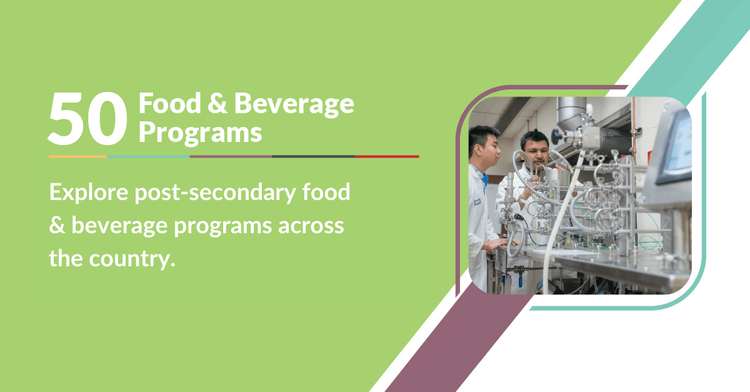
Canada is home to a diverse and dynamic food and beverage industry, supported by educational programs that train the next generation of chefs, brewers, entrepreneurs, and innovators. This roundup highlights 50 standout programs across the country, from top culinary schools and hospitality management courses to cutting-edge research initiatives and sustainability-focused training. Whether you're an aspiring professional, educator, or industry enthusiast, these programs provide valuable insights into the evolving world of food and drink in Canada. BC & Yukon Vancouver Community College UBC BCIT LaSalle College (Vancouver) UBC: Food, Nutrition, and Health Okanagan College Vancouver Island University University of Fraser Valley Northern Lights College North Island College Yukon University Selkirk College Thompson Rivers University Kwantlen Polytechnic University Prairies Saskatchewan Polytechnic University of Alberta University of Saskatchewan University of Manitoba SAIT NAIT Manitoba Institute of Trades & Technology International College of Manitoba Ontario Niagara College Humber College Le Cordon Bleu Ottawa George Brown College Fanshawe College Brock University University of Guelph Toronto Metropolitan University Loyalist College Georgian College Conestoga College Durham College Centennial College Canadore College Algonquin College Trent University St. Lawrence College St. Clair College Sault College Lambton College Confederation College Quebec McGill University LaSalle College Bishop's University Atlantic Canada University of PEI Memorial University Cape Breton University
Community Manager-
50 Food & Beverage Programs - Vancouver Island University
Crafting a Career in BC ’ s Wine Industry: VIU ’ s Wine Business Program The Wine Business program at Vancouver Island University is a comprehensive one-year certificate course designed for those passionate about pursuing a career in the BC wine industry. The program combines practical experience with academic learning in viticulture, wine business practices, marketing, and tourism. Program Highlights: As a student, you ’ ll have the chance to immerse yourself in hands-on experiences at local vineyards and wineries, gaining insights into the entire winemaking process. This practical foundation is then complemented by academic courses in viticulture, wine business practices, marketing, and tourism. A standout feature of this program is its flexibility. Whether you ’ re looking to study full-time for a year or prefer a part-time option spread over two years, VIU has you covered. Located in picturesque Nanaimo, BC, VIU provides an ideal setting for your wine education journey. With a curriculum designed to integrate viticulture essentials with business acumen, VIU ’ s Wine Business program offers a holistic understanding of the wine industry. Students can also earn credits that can be applied toward a Bachelor of Business or a Hospitality and Tourism Management program, opening doors to a wide range of future career prospects. The program includes seven courses and focuses on the broader aspects of the wine industry. In addition to viticulture and winemaking, students delve into wine marketing, exporting, and the vital role of wine tourism. C ourses cover a wide spectrum, from wine marketing and appreciation to beverage theory and the management of wine tourism. The program also offers elective courses in consumer behavio u r, entrepreneurship, and festival management . What You’ll Leave With: Upon graduation, a world of opportunities awaits you in BC ’ s wine industry. Whether you dream of managing a vineyard, excelling in wine s ales and marketing, or even opening your own restaurant, VIU ’ s Wine Business program provides the knowledge and skills to make your wine-related ambitions come true. Career options span winery/vineyard management, retail sales, wine marketing representation, hotel management, culinary arts, a gri - tourism development, and s pecial events coordination. V ideo/Social / Media : VIU YouTube Video
Community Manager-
Cellular Food in Canada
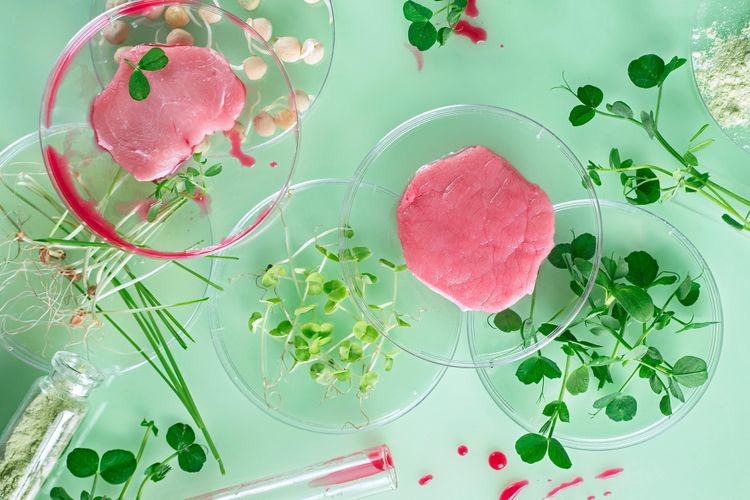
The past few years have proven how susceptible Canada’s food industry is to world events, supply chain disruptions and climate changes. New food production technology, such as cellular agriculture, has the potential to alleviate some of these challenges, while creating commercial opportunities and building a more sustainable, resilient food system. What is it? Cellular food – also known as engineering biology, synthetic biology or cell-cultivated products – is the production of food and textile products without using animals or land. Cell cultures harvested from animals, plants or micro-organisms are grown in the lab through tissue engineering or precision fermentation to produce: Cultivated proteins such as chicken, beef and seafood Fermented products like dairy, eggs, honey and chocolate Ingredients to add to products to create hybrid foods including proteins, enzymes, flavour molecules, vitamins, pigments and fats Textiles such as leather, silk and wool Why you should care As global population continues to grow, so does demand for protein, while access to land and other resource inputs become more scarce. Alternative agriculture could be an answer to food scarcity, concerns about animal and environmental welfare, cost inflation and resource challenges due to climate change. Compared to conventional agriculture, cellular agriculture production, is much less energy intensive, produces less greenhouse gas emissions, and has a much lower overall carbon footprint. With our strong food infrastructure, reputation for food safety, biotechnical expertise, and federal support for alternative protein production, Canada is well positioned to become a leader in cellular agriculture. The 2021 report Cellular Agriculture: Canada’s $12.5 Billion Opportunity in Food Innovation from Ontario Genomics and the Food and Agriculture Institute at the University of the Fraser Valley found that the international cellular agriculture market will reach US$100 billion by 2032. Canada’s food industry has the potential to take $12.5 billion that market, while creating up to 142,000 high-paying jobs. Opportunities in Canada Engineered plant proteins are already in the Canadian market, and by all estimates, precision fermented products are expected to appear before cultured meat products. Current Canadian regulations consider food produced through cellular agriculture as a novel food, and products are approved on a case-by-case basis. Here are a few Canadian start-ups making headlines: Because Animals – This Toronto-based pet food company uses cultured ingredients such as probiotics and nutritional yeast to create nutrient-rich cat and dog food designed to help digestive issues. Future Fields – Edmonton, AB-based Future Fields is a R&D producing growth media products that can be used to create commercialized cultivated proteins in a safe and sustainable manner. Cell-Ag Tech – Toronto’s Cell-Ag Tech is doing R&D on cell-cultured fish and seafood. New Harvest International non-profit research institute New Harvest , which promotes the science behind cultured meat through research, funding and a conference , now has a Canadian branch.
Community Manager-
Other Articles
EXPLAINED: Artificial Intelligence (AI)
Welcome to YODL! In addition to daily original content, YODL helps CFIN Members find new partners , resources , and funding opportunities to grow their food business. Learn more about this growing community and become a CFIN Member (for free!) today . What is it? Machines and systems that are programmed with AI can simulate human intelligence , can acquire and apply knowledge in order to perform tasks, solve complex problems, and improve performance. Machine learning is a subset of AI algorithms. Why you should care New food technologies and the introduction of AI programs in the computers that control production lines have the potential to change the way the food industry works, especially as businesses look for automated solutions to address issues such as supply chain traceability, production efficiency, food safety and quality control, and waste reduction. Some of the manufacturing technology included under the category Industry 4.0 relies on AI to process the data captured by Industrial Internet of Things (IIoT) devices, enterprise resource planning (ERP) systems, and connected remote access monitoring software. By using AI, businesses can collect and analyze data that enables them to generate business intelligence, giving them a competitive advantage. Most AI-driven functions are machine-to-machine transactions. AI-driven systems can add value and efficiency to many areas in food operations, including to: Automate tasks across different departments, such as accounting, IT, customer service and marketing. Streamline resource tracking throughout the supply chain and ensure compliance from vendors. Provide data for forecasting sales, resource demand and R&D on consumer trends. Automate production activities, including management work. Provide more effective quality and safety control in real time. Help create “smart” factories that run more efficiently with less downtime, using less energy and lower operating costs. Help drive greenhouse gas emission reduction targets. Help scale operations using predictive technology. Offer real-time monitoring of security systems. Provide technical support for employees and customers. Monitor and automate social media activity. Provide customized offers for consumers based on data analysis. Perform self-service analytics. Opportunities in Canada There are a range of companies offering AI-enabled software and equipment to Canadian food and beverage companies. Saint John, NB-based independent brewery Moosehead uses a conveyor belt at its bottling plant embedded with Internet-enabled sensors and data analytics software to monitor pasteurization, filling, labelling, capping and packaging, increasing capacity while lowering costs. Sobeys ’ fully automated Customer Fulfillment Centre, a $150-million, 500,000-sq.-ft. warehouse and distribution centre in Vaughan, ON, features AI-driven automated case picking and palletizing systems. The system can stack up to 10 per cent more products on each pallet, saving up to 40 per cent on labour costs. Fredericton, NB-based Eigen Innovations produces machine vision solutions powered by AI to help businesses automate their quality control system. Toronto, ON-based Canvass AI provides industrial AI software such as its Canvass Platform that can help food companies boost production efficiency and output, while reducing waste.
Community Manager-
IN 30 – Machine Learning
Welcome to YODL! In addition to daily original content, YODL helps CFIN Members find new partners , resources , and funding opportunities to grow their food business. Learn more about this growing community and become a CFIN Member (for free!) today . Sometimes, all it takes is 30 minutes to learn the ins and outs of new food technologies and trends that are transforming the food and beverage industry. In this series, we’ll dig into a food innovation topic and link you to content and resources so you can become a master on the topic in 30 minutes (or less!). This week, we’re looking at the use of machine learning in the food and beverage industry. The Overview YODL - EXPLAINED: Machine Learning Computer sciences are responsible for revolutionary process changes in many sectors, including the food industry. Every year, new innovative solutions emerge that can improve the efficiency and profitability of companies, and machine learning is a prime example. SPD Group - Machine Learning and AI in Food Industry: Solutions and Potential Artificial Intelligence and Machine Learning solutions offer many possibilities to optimize and automate processes, save money, and reduce human error for many industries. Softwaretestinghelp.com - Top 13 BEST Machine Learning Companies An in-depth look at how machine learning is used, and how to select the best machine learning company to meet your company’s needs. The Canadian Connection Canadian Grocer - What ChatGPT and AI could do for the food industry Sylvain Charlebois discusses C hatGPT , machine learning and AI, and it’s potential impact on how the food industry embraces new technologies in the future . YODL - 50 Canadian FoodTech Resources – EMILI Manitoba’s Enterprise Machine Intelligence and Learning Initiative (EMILI) works with industry organizations and academic institutions from across the technology sector to increase integration of intelligent technologies, empower people with digital skills, support scale-ups to grow in the Prairies, and accelerate Canada’s growth as a leader in digital agriculture. Social Medi a @ vividmachines (Instagram) Toronto-based Vivid Machines has developed a multispectral computer vision platform to digitize fruit production. TheoryMesh (LinkedIn) Winnipeg-based TheoryMesh is working through the entire supply chain from growers to consumers to revolutionize traceability through application. @InData Labs (Facebook) InData Labs is one of the world’s top machine learning companies. Overtime If you’ve got more than 30 minutes, these are for you: YODL - Interview with Nestor Gomez on Algorithms
Community Manager-
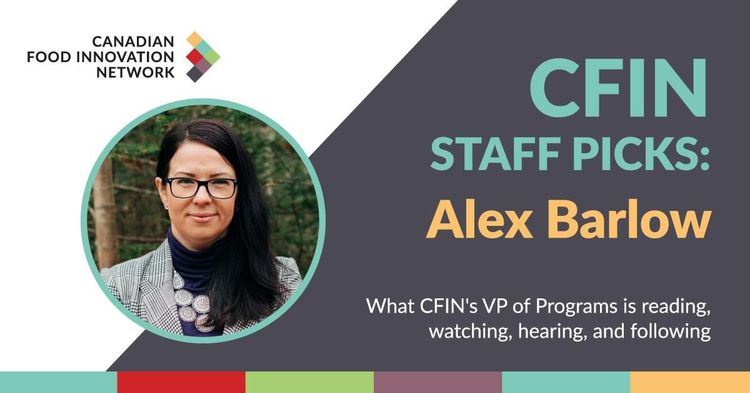
Staff Picks – Alex Barlow
Welcome to YODL! In addition to daily original content, YODL helps CFIN Members find new partners , resources , and funding opportunities to grow their food business. Learn more about this growing community and become a CFIN Member (for free!) today . A lot of material comes across our desks at CFIN, and we love to share new information with YODLers ! This one in a series of articles highlighting what CFIN staff are reading, listening to, watching, and posting. This time we’re checking in with CFIN’s vice president of Programs, Alex Barlow . What are you reading? I just finished a C.S. Sansom book called Tombland . C.S. Sansom writes these huge books about a lawyer back in the 1500s. I’ve always been a sucker for long mysteries set in the way back times , I inherited that interest from my father. What are you listening to? Recently I’m obsessed with a band called Lake Street Dive that a friend introduced me to. Podcast wise, I really like The Big Story which is a daily 20 - to 30 - min ute episode on Canadian topics – recent ones around grocery prices, single - use plastics, or how our cup of coffee helps us understand global inflation are some favo u rites. My listening habits, unlike my reading habits, are all about short and sweet ! Who are you following? Most of my “following” these days happens on Instagram. I really enjoy Dr. Rhonda Patrick , who focuses a lot on the science behind health and longevity . On a more professional basis, I follow groups like Foresight Canada and many of the “Top 50” style lists on LinkedIn to understand who the great up and comers are in this country. What are you watching? Yellowjackets and RuPaul’s Drag Race . What are you posting about? Anything to do with our great members, funded products, as well as new opportunities for funding and commercialization support. You can find me on LinkedIn !
Community Manager-
Meet a Member – Leonardo Calcagno
Welcome to YODL! In addition to daily original content, YODL helps CFIN Members find new partners , resources , and funding opportunities to grow their food business. Learn more about this growing community and become a CFIN Member (for free!) today . Since launching in 2022, CFIN has grown to more than 2,600 members, which includes professionals from every sector of the food industry. This series highlights the many different CFIN members across Canada who visit YODL to learn, make connections, find funding, and discover new ways to grow their businesses. Leonardo Calcagno Editor, podcaster, marketing for BaronMag.com / Boisson Québec Laval, QC Tell us about your job I'm the editor of BaronMag , a trade publication about the beer and beverage industry. I’m also a podcaster, guest speaker and industry consultant. How is YODL helping you do your job? I use YODL to find interesting topics for my podcasts, to get news , and meet people . How often do you visit YODL ? On a d aily basis . What is your favo u rite aspect of YODL ? The f orum . Can you tell us something you learned on YODL? For now, getting info rmation and meeting with people to better understand the industry. What type of connection partners are you looking for? All of them! We need to meet as many people to better understand the industry. What areas of food innovation interests you the most? Packaging , sales, distribution , and innovation . What has been your favourite discussion post? The articles on packaging. Favourite food and/or beverage ? Gin, beer and wine.
Community Manager-
50 Canadian FoodTech Resources – InBe NomadLab
Welcome to YODL! In addition to daily original content, YODL helps CFIN Members find new partners , resources , and funding opportunities to grow their food business. Learn more about this growing community and become a CFIN Member (for free!) today . Canada has an extensive range of research centres, food incubators, accelerators and labs supporting food and beverage innovation through the research they do and/or the services they offer. Each week throughout 2023, we’ll be highlighting an organization that’s supporting food innovation in Canada. Want to catch up? Click here to view our master list of foodtech resources. Name: InBe NomadLab Location: Québec Ci ty, QC Mission: To connect innovators to their consumers in real time and provide actionable insights to guide decision making. Focus: InBe works with innovative consumer brands from a variety of industries, including food and beverage manufacturing, to provide consumer feedback on concepts, products and services. Services: The company offers different methods of capturing consumer interests, including through testing based on client concepts, value propositions and products, as well as market research and validation. Clients receive customized on consumer responses in real time. It also offers workshops on how to design, implement and optimize a front-end innovation system. What you need to know: InBe provides a platform for users to give feedback, allowing clients to stay connected with consumers during innovation projects, gain consumer insights, and send targeted surveys. This could include home testing to fine-tune strategies. Notable News: InBe stands for “in between,” and symbolizes the organization’s role as a catalyst between innovators and consumers. Get Involved: Contact Sebastien Leduc , h ead o f S trategic Development and p artner at InBe , at (418) 263-4760 , or reach out to our Regional Innovation Directo r Julie Daigle .
Community Manager-
Let’s talk innovation: SIAL Canada unveils the inspirations of 2023
Welcome to YODL! In addition to daily original content, YODL helps CFIN Members find new partners , resources , and funding opportunities to grow their food business. Learn more about this growing community and become a CFIN Member (for free!) today . Welcome to Let’s Talk Innovation with Isabelle Marquis, a French-language video series covering every area of food innovation. Today, Isabelle speaks with Nicolas Trenteseaux, Managing Director of the SIAL network, who discusses the SIAL Innovation competition and the 10 finalists in the 2023 Canadian edition.
Community Manager-
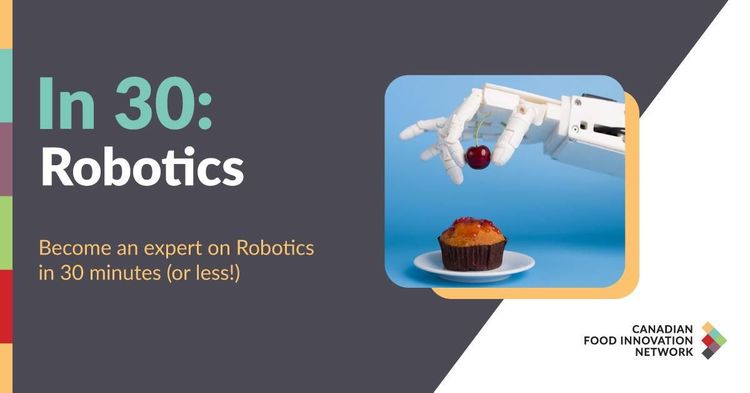
IN 30 – Robotics in the food and beverage industry
Welcome to YODL! In addition to daily original content, YODL helps CFIN Members find new partners , resources , and funding opportunities to grow their food business. Learn more about this growing community and become a CFIN Member (for free!) today . Sometimes, all it takes is 30 minutes to learn the ins and outs of new food technologies and trends that are transforming the food and beverage industry. In this series, we’ll dig into a food innovation topic and link you to content and resources so you can become a master on the topic in 30 minutes (or less!). This week, we’re looking at the use of robotics in the food and beverage industry. The Overview YODL – Robotics in Action: Top 5 Takeaways T he use of automation, robotics and data analytics has the potential to transform Canada’s food and beverage industry. Foodservice & Hospitality - Technology innovation fuels change for Canada’s foodservice industry Trends in robotics and automation in the foodservice industry. Canadian Food Business – Rise of the Robots Next-generation tech n ology is tackling some of Canada’s greatest challenges in the agri-food sector . The Canadian Connection Cyberworks Robotics Markham, ON-based Cyberworks Robotics provides autonomous self-driving technology for material handling forklifts and tow-tuggers as well as industrial floor scrubbers. Relocalize Relocalize Inc. is a Montreal, QC-based company that hyper-localizes packaged food manufacturing with autonomous factories that eliminate middle mile logistics (and CO2 emissions), reduce product costs and cut waste. SJW Robotics Toronto’s SJW Robotics is a f ood technology company developing autonomous kitchen robotic systems for the hospitality industry. Social Media @tiny_mile (Twitter) Tiny M ile is a robot delivery service . @fanucamerica (Instagram) Fanuc is one of the world’s largest robotics manufacturers. KUKA (LinkedIn) KUKA is another giant in the world of automation and robotics. Overtime If you’ve got more than 30 minutes, these are for you: YouTube - Robotics in Action – Seeing is Believing
Community Manager-
Staff Picks – Nestor Gomez
Welcome to YODL! In addition to daily original content, YODL helps CFIN Members find new partners , resources , and funding opportunities to grow their food business. Learn more about this growing community and become a CFIN Member (for free!) today . A lot of material comes across our desks at CFIN, and we love to share new information with YODLers! This one in a series of articles highlighting what CFIN staff are reading, listening to, watching, and posting. Here’s CFIN’s Chief Technology Officer Nestor Gomez . What are you reading? Work-related / professional ly I’m reading Isaac Sacoli ck’s Digital Trailblazer , a compila tion of important lessons in digital transformation and technology leadership. This resonates a lot with my past years working at a large food and beverage corporat ion . The other one is Winning the R oom by Bill Franks, one of my favourite gurus in data analytics . This packs practical and proven recommendations for creating and delivering data-driven presentations. Personally/for fun I’m reading Del templo al temple : silencios y esc á ndalos de la masoner í a cubana , by Camila Acosta. This is an absorbing investigative essay into the history of the Cuban Freemasonry, splendidly crafted by a brave independent Cuban journalist. What are you listening to? I listen to podcast s . Lots of them. And I also follow their equivalent YouTube channels. Among my favourites are Revisionist History by Malcolm Gladwell that focuses on overlooked and misunderstood yet significant events in history ; Sean Carroll’s Mindscape , a 360 view of p hiloso p hy and science with a lot of cosmology and particle physics ; StarTalk Radio , with Neil DeGrasse Tyson and Chuck Nice , a fun take on very serious astrophysics and science ; The E zra Klein Show ; Freakonomics Radio ; The Hidden Brain ; and the list goes on and on… Who are you following? I don’t tend to follow people . Perhaps some of the authors I mentioned in my previous answers. I rather follow topics o f interest and those vary substantially. Right now , like millions of people, I am fascinated with generative AI . T he technology itself is captivating , but how to embrace it, reject it or react to it is even more mesmerizing . In my opinion , when it comes to g enerative AI, we are in between the “ Innovation Trigger ” and the “ Peak of inflated Expectations , ” using G artner ’s hype cycle terminology . I’m not looking forward to the “ Tro ugh of Disillusionment , ” but it is inevitable. When you have lived through a few of these cycles (i.e. dot coms bubble, 3D printing, Blockchain) you learn to identify the patterns. What are you watching? Do you mean what’s in my Netflix’s list? I think Netflix lists are aspirational lists. I have several of these aspirational lists, including one on Amazon. I think they reflect the person I wish I could be if I had time to watch or money to buy it all . The genres I prefer include historical fiction, thrillers , comedies, horror, and some sci-fi. Recently I have been watching Transat l antic on Netflix and Chance on Disney+ . What are you posting about? I tend to post about the latest advancements in AI and machine learning, sharing articles and discussions on ethical considerations in AI development. I also post about privacy and security issues, raising awareness about the importance of safeguarding our digital identities and about cybercrime and people awareness as the first line of defense against it. Occasionally, I share content related to food security, human rights, and the promotion of peace and equity. Anything else to add? I am looking forward to this fiscal year and to all the exciting plans we are working on for CFIN’s content production, YODL 2.0 and all the technologies we want to bring to our member’s attention this year.
Community Manager-
What YODLers are Saying and Reading – The Top YODL Content for April 2023
Welcome to YODL! In addition to daily original content, YODL helps CFIN Members find new partners , resources , and funding opportunities to grow their food business. Learn more about this growing community and become a CFIN Member (for free!) today . YODL was the place to be last month to hear about industry events, trends, and networking opportunities. In case you missed them, here are the top five discussions and most read articles on YODL in April 2023. Top YODL Discussions in April 2023 Number 5 Funding for sustainable product dev! Terra Bioindustries is looking for food manufacturers to sample its upcycled plant-based protein ingredient for free. Number 4 CIFST Annual Conference: L ooking for Speakers The Canadian Institute of Food Science & Technology’s (CIFST) 2023 Food Summit takes place June 7 to 9 in London, ON and is looking for speakers to participate in its industry education track. Number 3 Food sensory evaluation equipment Many YODLers are either looking for or can supply food perception and evaluation equipment. Number 2 Looking for fruit an d veg purees Looking for fruit and vegetable purees? This posting has lots of suggestions for private-label manufacturers. Number 1 FREE 3 Day Passes to RC Show Toronto April 10th-12th! The Restaurants Canada trade show took place April 10 to 12, 2023, with more than 1,000 exhibitors displaying new products and services in the foodservice and hospitality sector. Most Read YODL Articles in April 2023 Number 5 In 30: Regulating C e llular Food Find out everything you need to know about cellular food in 30 minutes or less . Number 4 Company Spotlight – Relocalize Inc. Montreal, QC-based Relocalize Inc. hyper-localizes packaged food manufacturing with autonomous factories that eliminate middle mile logistics and CO 2 emissions, reduce product costs , and cut waste. Number 3 CFIN Staff Picks - Ja m il Karim This is the first in a series of articles highlighting what CFIN staff are reading, listening to, watching, and posting. First up is CFIN’s Director of Communications Jamil Karim. Number 2 One Year Check In: A Roundtable with CFIN's A c CELLerate-ON Fun d ing Recipients In May 2022 CFIN and Ontario Genomics announced the four winners of AcCELLerate-ON, Canada’s first regional cellular agriculture competition. We checked in with the companies to hear more about how their projects are progressing. Number 1 In 30: Precision Fermentation Discover more about one of the key techniques being used to produce cellular food, precision fermentation, in 30 minutes or less. What’s been your favourite article or discussion post from the past month? Let us know!
Community Manager-
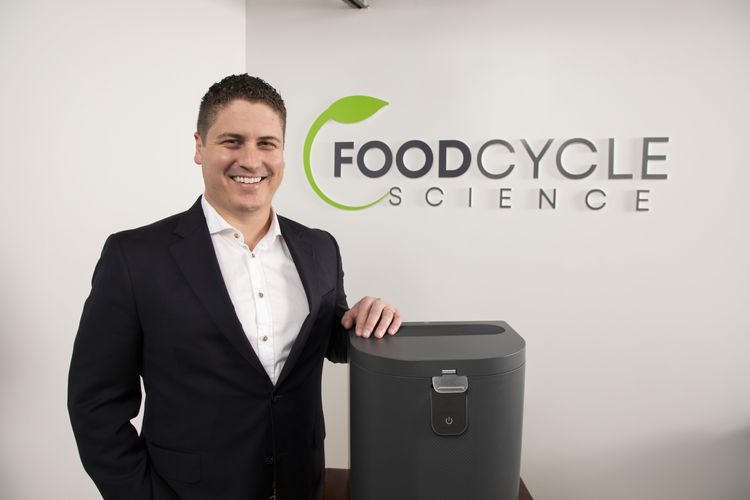
Company Spotlight – Food Cycle Science Corporation
Welcome to YODL! In addition to daily original content, YODL helps CFIN Members find new partners , resources , and funding opportunities to grow their food business. Learn more about this growing community and become a CFIN Member (for free!) today . This is one in a series of interviews with CFIN member companies that have successfully applied for and recei v e d funding . Ottawa, ON-based Food Cycle Science Corporation (FCS) is a Canadian cleantech company established in 2011, dedicated to revolutionizing food waste management, reducing greenhouse gas emissions, and promoting soil health and a circular economy. Its innovative FoodCycler technology processes food waste onsite, reducing its weight and volume by up to 90%, while converting it into valuable resources for enriching soil. This past year alone, FCS has diverted 15,000 metric tonnes of food waste and 27,000 metric tonnes of CO 2 emissions . This is the equivalent of taking over 6,000 gas-powered cars off the road for a year. This latest project will allow the company to create a “one-bin” system capable of processing food waste and bioplastics together, accelerating the adoption of bioplastics and contributing to elimination of single-use plastics (SUPs) . Each unit will be capable of reducing emissions by up to 52 metric tonnes of CO 2 emissions annually, that’s equivalent to 10 homes’ electricity use for a year . The company received $1,650,820. to develop enzyme- degradation to address plastic waste with project partner Weaving Baskets Group and Bridgehead Coffee . We spoke with FCS CEO Brad Crepeau to find out more about the project and the company’s plans. Q: What is your company’s mission? A: Our mission is to inspire individuals to take ownership of their food waste. Q: W h y did you apply for this funding and how will you use it? A: We applied for this funding because we saw an opportunity to help our customers and communities tackle the challenge of eliminating SUPs . As a company that focuses on food waste, we understand the difficulties, costs, and complexities our clients face when it comes to waste management. One of the main challenges they are facing now is distinguishing between compostable bio-based packages and their plastic counterparts, which can lead to contamination issues at commercial composting facilities. We believe that our onsite technology for food waste can be adapted to also process bioplastics onsite, which would help to eliminate many of the challenges our customers face. By processing food waste and bioplastics together onsite, we can reduce weight and volume of waste and the resulting costs, while enabling accelerated degradation of bioplastics. This will make it much easier for our clients, municipalities, and recycling and composting site operators to widely adopt and manage bioplastics. With the funding, we plan to invest in research and development to adapt our technology to process bioplastics. We will also work to educate our clients and stakeholders on the benefits of bioplastics and how our technology can help make the adoption of bioplastics easier and more cost effective. Ultimately, we hope that this project will contribute to the elimination of SUPs and a cleaner and more sustainable future for our planet. Q: What excites you most about working in this area of the food industry? A: What excites me most about working in this area of the food industry is the opportunity to work with partners and a team of passionate individuals who all share the same desire to make a difference. We are unified in our mission and dedicated to making a positive impact on the planet by tackling the issue of food waste and SUPs and their impact on the environment. Moreover, there is great potential for disruption in the waste industry. With FoodCycler technology , we can transform the way people think about waste . The ability to make a real impact is exciting and motivating. T he impact we can have on the planet is immense. Every day we are reminded of the urgency to address climate change, and working in the food industry provides us with a unique opportunity to contribute to the solution. I find it incredibly fulfilling to know that our work can make a tangible difference and lead to a more sustainable future. Q: Why is collaboration so important for accelerating innovation in the food industry? Is it difficult to find good collaborating partners, and what would make the process easier? A: C ollaboration is incredibly important for accelerating innovation in the food industry. The challenges we face in this industry are complex and multifaceted, and it will take many people with different backgrounds and perspectives to develop effective solutions. At Food Cycle Science, we recognize the value of collaborating with others and actively seek out partnerships with like-minded organizations and institutions. We have been fortunate to work with great partners such as Bridgehead, Weaving Baskets Group, Carleton University, and York University , among others . These collaborations have allowed us to leverage different areas of expertise and pool resources to develop innovative solutions. We need diverse partnerships to offer up new and divergent ways of thinking and promote innovation. Finding collaboration partners hasn’t been difficult for us, and I believe that is because teamwork is so much at the core of what we do. We have been fortunate to find ourselves aligned with organizations that share similar values and goals , which is why it works so well. Maintaining the partnerships is the tricky part – everyone is busy and has a million things on the go. We work hard to establish regular, clear , and open lines of communication from the outset . Ultimately, we believe that collaboration is the key to accelerating innovation and creating a more sustainable future. Q: Please comment on the importance of public funding to help companies clear innovation hurdles and access leveraged funds. A: P ublic funding is vital for companies like Food Cycle Science to drive innovation and bring new ideas to market. It allows us to take risks, invest in bolder R&D initiatives, accelerate research and commercialization, and access broader networks and aligned expertise. Ultimately, this funding helps us to create a positive impact and contribute to a more sustainable future. Q: Looking ahead, what’s on the horizon for your company? A: There are big things on the horizon for Food Cycle Science. We are not slowing down and have an aggressive product development roadmap that we are excited to execute. To achieve our goals, we are planning to hire more talented individuals who share our passion and desire to make a positive impact. We also plan to build more partnerships with organizations and institutions that share our values and goals. These collaborations will enable us to leverage diverse areas of expertise and resources to develop pioneering solutions. We will continue to innovate, take bigger risks, and push the boundaries of what is possible. Q: What are your passions or hobbies outside of work? A: My beautiful wife and I are preparing for our first child, so outside of work, it’s all hands on deck to prepare for that adventure! Q: If you had to pick one person to make you a meal, who would you choose? A: A s much as I love my M om’s cooking, it would be a once in a lifetime experience to have a meal made by someone like Massimo Bottura. Ready to access funding for your innovative initiative? Click here to find out more about CFIN’s funding programs.
Community Manager-
50 Canadian FoodTech Resources – RPC Science & Engineering
Welcome to YODL! In addition to daily original content, YODL helps CFIN Members find new partners , resources , and funding opportunities to grow their food business. Learn more about this growing community and become a CFIN Member (for free!) today . Canada has an extensive range of research centres, food incubators, accelerators and labs supporting food and beverage innovation through the research they do and/or the services they offer. Each week throughout 2023, we’ll be highlighting an organization that’s supporting food innovation in Canada. Name: RPC Science & Engineering . Location: Fredericton and Moncton, NB Mission: RPC is New Brunswick’s provincial research organization and research and technology organization. Focus: Since 1962, RPC offers research and development and technical services to clients in New Brunswick and in 30 countries around the world. Services: RPC’s team includes more than 160 scientists, engineers and technologists. The centre offers analytical chemistry, air quality and material-testing laboratories, life science capabilities, applied research and engineering, a fish health lab, inspection services, product development, design, manufacturing and testing, and pilot facilities for development and improvement of industrial and environmental processes and products. What you need to know: The centre holds more than 100 accreditations and certifications from Standards Council of Canada, and is ISO 9001:2015 certified. Notable news: RPC offers services by sector, including food and aquaculture. Specific services for manufacturers include machine vision, robotics and automation, new product development, failure investigations, industrial air testing and more. Get involved: Contact Josh Perry, client services, at info@rpc.ca or at (506) 452-1212, or reach out to our Regional Innovation Director for Atlantic Canada Tyson M acInnis .
Community Manager-
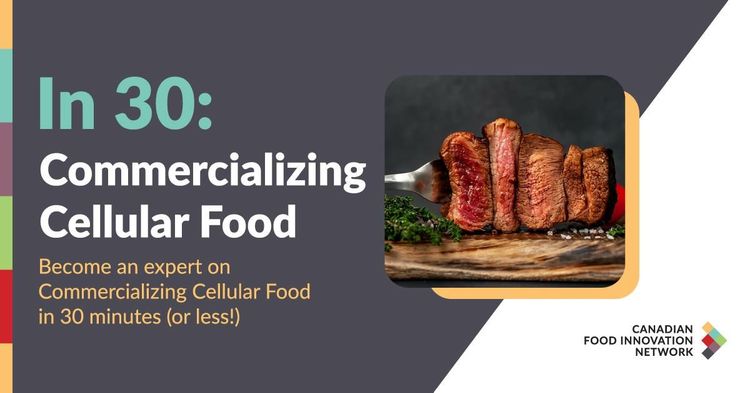
IN 30: Commercializing Cellular Food
Welcome to YODL! In addition to daily original content, YODL helps CFIN Members find new partners , resources , and funding opportunities to grow their food business. Learn more about this growing community and become a CFIN Member (for free!) today . Sometimes, all it takes is 30 minutes to learn the ins and outs of new food technologies and trends that are transforming the food and beverage industry. In this series, we’ll dig into a food innovation topic and link you to content and resources so you can become a master on the topic in 30 minutes (or less!). T his week, we’re looking at cellular food entering or currently on the market, and opportunities for commercialization in Canada and around the world. The Overview Forbes – Eat Just To Scale Up Cultured Meat Production On Gaining New Regulatory Approval In Singapore Eat Just Inc. is scaling up production of its cultivated chicken product in Singapore, and is set to reach price parity with conventional chicken by 2027. Foodnavigator – SCiFi Foods claims industry first for cultivated beef, says immediate future is hybrid for cell-cultured meat Sci-Fi Foods hopes to be the first company to launch cellular meat in the U.S. YODL – Funding for Cellular Food Research and Development There are several sourcing of funding for companies working to develop new products, technology, and services for the emerging cellular agriculture industry in Canada. The Canadian Connection YODL – One Year Check In: A Roundtable with CFIN and Ontario Genomics' AcCELLerate-ON Funding Recipients Last year CFIN and Ontario Genomics funded five companies working on cell food projects. We wanted to know how their projects were progressing one year later. YODL – Cultivating Success: Canada’s Big Biomanufacturing Opportunity On May 16, 2023 CFIN will host an immersive experience in the emerging world of cellular food. Sign up for the webinar here . Food in Canada – Cell-ag institute launching in Alberta university Canada will soon have its own cellular agriculture institute at the University of Alberta. Social Media Because Animals – (LinkedIn) Because Animals is commercializing cultured meat for pet food. @believermeats – (Twitter) Believer Meats is one of the first cultivated meat companies working to scale up production. @goodmeat – (Twitter) Good Meat, a division of Eat Just, Inc., produces cultivated chicken, and is currently for sale at select restaurants in Singapore. Overtime If you’ve got more than 30 minutes, these are for you: YouTube – Lab-grown meat moves closer to U.S. restaurants.