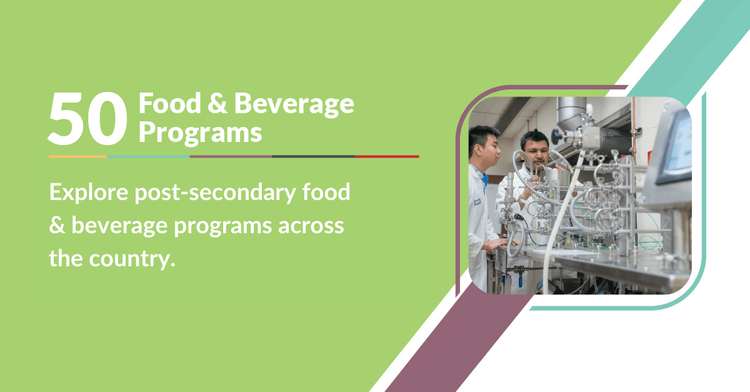
Canada is home to a diverse and dynamic food and beverage industry, supported by educational programs that train the next generation of chefs, brewers, entrepreneurs, and innovators. This roundup highlights 50 standout programs across the country, from top culinary schools and hospitality management courses to cutting-edge research initiatives and sustainability-focused training. Whether you're an aspiring professional, educator, or industry enthusiast, these programs provide valuable insights into the evolving world of food and drink in Canada. BC & Yukon Vancouver Community College UBC BCIT LaSalle College (Vancouver) UBC: Food, Nutrition, and Health Okanagan College Vancouver Island University University of Fraser Valley Northern Lights College North Island College Yukon University Selkirk College Thompson Rivers University Kwantlen Polytechnic University Prairies Saskatchewan Polytechnic University of Alberta University of Saskatchewan University of Manitoba SAIT NAIT Manitoba Institute of Trades & Technology International College of Manitoba Ontario Niagara College Humber College Le Cordon Bleu Ottawa George Brown College Fanshawe College Brock University University of Guelph Toronto Metropolitan University Loyalist College Georgian College Conestoga College Durham College Centennial College Canadore College Algonquin College Trent University St. Lawrence College St. Clair College Sault College Lambton College Confederation College Quebec McGill University LaSalle College Bishop's University Atlantic Canada University of PEI Memorial University Cape Breton University
Community Manager-
50 Food & Beverage Programs - Vancouver Island University
Crafting a Career in BC ’ s Wine Industry: VIU ’ s Wine Business Program The Wine Business program at Vancouver Island University is a comprehensive one-year certificate course designed for those passionate about pursuing a career in the BC wine industry. The program combines practical experience with academic learning in viticulture, wine business practices, marketing, and tourism. Program Highlights: As a student, you ’ ll have the chance to immerse yourself in hands-on experiences at local vineyards and wineries, gaining insights into the entire winemaking process. This practical foundation is then complemented by academic courses in viticulture, wine business practices, marketing, and tourism. A standout feature of this program is its flexibility. Whether you ’ re looking to study full-time for a year or prefer a part-time option spread over two years, VIU has you covered. Located in picturesque Nanaimo, BC, VIU provides an ideal setting for your wine education journey. With a curriculum designed to integrate viticulture essentials with business acumen, VIU ’ s Wine Business program offers a holistic understanding of the wine industry. Students can also earn credits that can be applied toward a Bachelor of Business or a Hospitality and Tourism Management program, opening doors to a wide range of future career prospects. The program includes seven courses and focuses on the broader aspects of the wine industry. In addition to viticulture and winemaking, students delve into wine marketing, exporting, and the vital role of wine tourism. C ourses cover a wide spectrum, from wine marketing and appreciation to beverage theory and the management of wine tourism. The program also offers elective courses in consumer behavio u r, entrepreneurship, and festival management . What You’ll Leave With: Upon graduation, a world of opportunities awaits you in BC ’ s wine industry. Whether you dream of managing a vineyard, excelling in wine s ales and marketing, or even opening your own restaurant, VIU ’ s Wine Business program provides the knowledge and skills to make your wine-related ambitions come true. Career options span winery/vineyard management, retail sales, wine marketing representation, hotel management, culinary arts, a gri - tourism development, and s pecial events coordination. V ideo/Social / Media : VIU YouTube Video
Community Manager-
Cellular Food in Canada
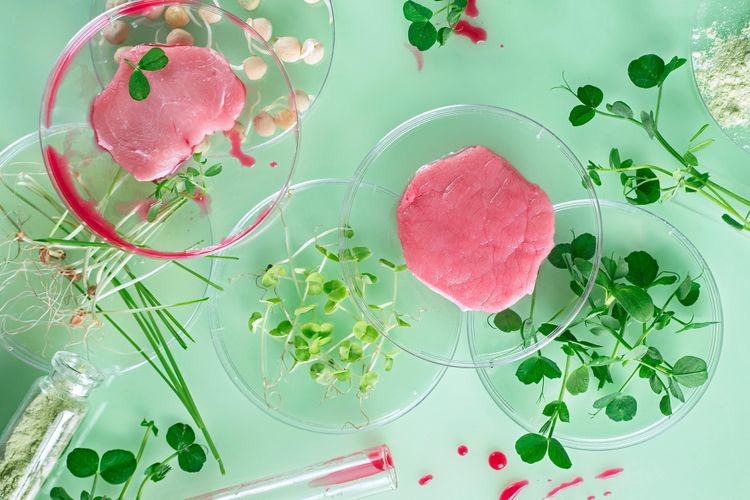
The past few years have proven how susceptible Canada’s food industry is to world events, supply chain disruptions and climate changes. New food production technology, such as cellular agriculture, has the potential to alleviate some of these challenges, while creating commercial opportunities and building a more sustainable, resilient food system. What is it? Cellular food – also known as engineering biology, synthetic biology or cell-cultivated products – is the production of food and textile products without using animals or land. Cell cultures harvested from animals, plants or micro-organisms are grown in the lab through tissue engineering or precision fermentation to produce: Cultivated proteins such as chicken, beef and seafood Fermented products like dairy, eggs, honey and chocolate Ingredients to add to products to create hybrid foods including proteins, enzymes, flavour molecules, vitamins, pigments and fats Textiles such as leather, silk and wool Why you should care As global population continues to grow, so does demand for protein, while access to land and other resource inputs become more scarce. Alternative agriculture could be an answer to food scarcity, concerns about animal and environmental welfare, cost inflation and resource challenges due to climate change. Compared to conventional agriculture, cellular agriculture production, is much less energy intensive, produces less greenhouse gas emissions, and has a much lower overall carbon footprint. With our strong food infrastructure, reputation for food safety, biotechnical expertise, and federal support for alternative protein production, Canada is well positioned to become a leader in cellular agriculture. The 2021 report Cellular Agriculture: Canada’s $12.5 Billion Opportunity in Food Innovation from Ontario Genomics and the Food and Agriculture Institute at the University of the Fraser Valley found that the international cellular agriculture market will reach US$100 billion by 2032. Canada’s food industry has the potential to take $12.5 billion that market, while creating up to 142,000 high-paying jobs. Opportunities in Canada Engineered plant proteins are already in the Canadian market, and by all estimates, precision fermented products are expected to appear before cultured meat products. Current Canadian regulations consider food produced through cellular agriculture as a novel food, and products are approved on a case-by-case basis. Here are a few Canadian start-ups making headlines: Because Animals – This Toronto-based pet food company uses cultured ingredients such as probiotics and nutritional yeast to create nutrient-rich cat and dog food designed to help digestive issues. Future Fields – Edmonton, AB-based Future Fields is a R&D producing growth media products that can be used to create commercialized cultivated proteins in a safe and sustainable manner. Cell-Ag Tech – Toronto’s Cell-Ag Tech is doing R&D on cell-cultured fish and seafood. New Harvest International non-profit research institute New Harvest , which promotes the science behind cultured meat through research, funding and a conference , now has a Canadian branch.
Community Manager-
Other Articles
Innovation and Digital Solutions are Future-proofing Canada’s Food and Beverage Industry
A s Canada’s second largest manufacturing sector, the food and beverage industry is a significant contributor to Canada’s GDP, labour and export market. Canada’s food industry includes a wide range of vibrant sectors and jobs, from agrifood production and food and beverage processing, to grocery/retail and foodservice, as well as associated sectors such as transportation, equipment manufacturing, biotechnology and software. Like many sectors of Canada’s economy, more than two-thirds of the food industry’s businesses are SMEs. With relatively low barriers to entry and unlimited growth potential, the food industry offers considerable opportunities for entrepreneurship, and is an important driver of innovation and prosperity in Canada. Yet to continue to grow and remain internationally competitive, the industry needs to become more efficient and sustainable, with an emphasis on smart processes and product development. Investing in automation, digitization, Industry 4.0 practices and IT adoption would boost production capacity for food businesses, while optimizing both startup and scale ups, and creating skilled, high-paying jobs across Canada’s manufacturing sector. It would also help produce stronger, more nimble and traceable supply chains able to respond quickly to changing consumer demands or safety concerns. These sorts of changes have had much slower adoption rates in the food industry, but have the potential to be just as transformative. Digitization has the capacity to strengthen our food supply chains and make them more resilient against ongoing and future challenges. Supply Chain 4.0 solutions as they relate to food businesses include digitizing and automating key elements of operations, and applying Internet of Things (IoT) and Industrial Internet of Things (IIoT) technology, artificial intelligence (AI), machine learning, robotics, blockchain and data analytics to supply chain management in order to improve efficiency, traceability, performance and customer satisfaction. The last few years have revealed just how vulnerable the Canadian food supply chain is to disruption, and the resulting challenge it creates for our food companies. With new tools to address the increasing volatility in customer requirements and supply availability, while addressing overall efficiency improvement expectations and food safety needs, Canadian food companies will be a position to move products faster, with more flexibility, granularity, accuracy and ultimately with less risk of disruptions. After several years of suffering from supply chain disruptions, food companies are now beginning to invest in Supply Chain 4.0 solutions. In coming years look for technology that provides operators with real-time data analytics to help manage supply chain and inventory, allowing them to optimize the use of raw materials and energy, reduce waste, and achieve higher margins. Other challenges shifting the food landscape include labour shortages, climate change, higher raw material costs and rapidly changing consumer demands around food safety, transparency and delivery. Much of these challenges can be addressed by digitizing and automating processes. Food companies are already making incremental investments in elements of Industry 4.0 in order to create more transparent, agile and competitive operations . In the future expect to see automation being added to food manufacturing and foodservice in areas with repetitive tasks or where consistency and food safety is crucial, such as in healthcare . At the same time, IoT and IIot technology embedded with AI and machine learning, including robots, will begin appearing in facilities and foodservice kitchens. Over the next decade costs of implementing automatic systems and robotics will continue to fall, while performance and consistency increases. These robotic systems will do tasks that are repetitive but necessary, or which can be dangerous or dirty. You’ll also see collaborative robotic systems which are designed to work side-by-side with workers, who are then free to perform more skilled duties. Canada’s food industry is also working to become greener, to reduce food and plastics waste, packaging, energy use and carbon emissions, and build more socially and environmentally responsible, sustainable supply chains. Further investing in digitization and automation will help close this circular economy, from packaging and production through to waste disposal, while removing costs and inefficiencies throughout the process. Technologies like machine vision, data, robotics and automation are changing all aspects of the food industry. There are so many entrepreneurs in Canada who have great ideas for improving the food business, but we also know that they often struggle to find the partners, resources and funds they need to bring those ideas to market. In 2023 CFIN will continue to help make those ideas a reality through innovation challenges, funding and mentorship opportunities. Watch YODL for more announcements in coming weeks. This article originally appeared in FoodBev's December 2022 issue under the title " Lessons Learned from Canada ."
Community Manager-
Introducing 50 Canadian FoodTech Resources
Canada has an extensive range of food technology research centres, incubators, accelerators, and labs supporting food and beverage innovation through the research they do and/or the services they offer. These organizations in every region of the country are a significant resource for food entrepreneurs and operators in all sectors of the industry. Whether you’re looking to launch a new product, scale up your operation, explore new distribution opportunities, or remove plastic waste from your packaging, there’s a resource out there that can help. Each week throughout 2023 we’ll be highlighting an organization working to advance innovation in the Canadian food industry. For a sneak peak of our first innovation resource, check out the INAF (Institute of Nutrition and Functional Foods) at Laval University in Quebec City, QC.
Community Manager-
CFIN at One Revisited
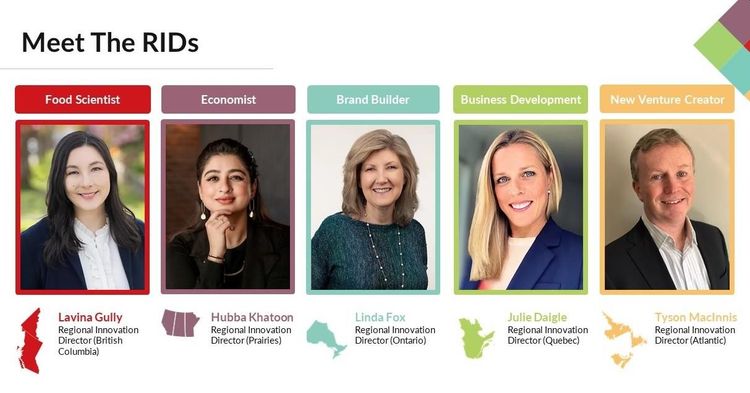
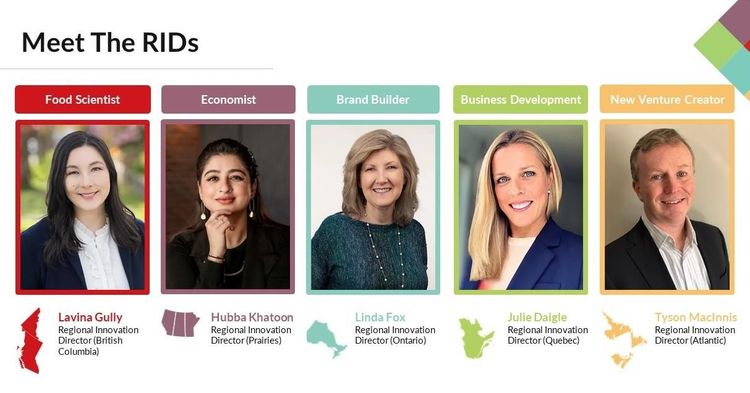
This article originally appeared on YODL as a three-part series beginning on October 12, 2022. Some numbers have been updated. After a full year of operations, CFIN has a lot to be proud of – from building a national organization in a virtual environment, to creating a community of food innovators, and funding innovative food projects across Canada. CEO @Joe Lake spoke with @CarolynCooper about some of CFIN’s accomplishments in 2022. Building an Organization CFIN was designed to operate as a virtual organization with national scope, with representatives spread across the country coming together online with one goal: to champion and catalyze food innovation across Canada. Differentiating CFIN from other funding organizations, which often focus on one region or sector, is the fact that CFIN has no limits. “Geographical or sectoral boundaries are usually irrelevant when it comes to innovation – innovation doesn’t know boundaries,” explains CEO Joe Lake. “Working virtually is a very different way of working that has become more normalized through COVID, but it goes back to about 2017, 2018, when the proposal for this organization was created. It’s by design” Lake says there are two key reasons CFIN was designed without a physical headquarters. “Brick and mortar in a particular location has the risk of signalling to that region that you have a kind of unconscious bias towards that area,” he says. “Plus the organization was always designed to be a blend of boots on the ground - people actually out there connecting – with technology used as a home base.” Building a team of full-time staff, including five regional innovation directors (RIDs), was CFIN’s first priority. Without the need to focus on a brick-and-mortar location, CFIN was able to hire 16 full-time employees with a rich variety of professional expertise and backgrounds, working virtually across every Canadian time zone. “What I’m most proud about is really getting this team together around the proverbial virtual table,” says Lake. “And even as a young group, the culture that we’re putting together, the ability for folks to contribute, and their passion being reflected back, is up there with some of the most exciting groups I’ve ever been part of in my working career. CFIN is a place where people feel like they can contribute and take part, and to me that’s just as important as what we’re doing as an organization. Because if an organization is not striving to be open and collaborative, it won’t be able to create an open and collaborative food innovation community. So that emphasis on bringing together the team for me is really exciting.” This culture extends to CFIN’s Executive Board and its subcommittee the Innovation Advisory Council (IAC). “They are responsible for the governance of developing and approving our program themes, and the program criteria, the way they’re assessed and how submissions are scored,” says Lake about the IAC. “This independent committee made up of experts advises CFIN to ensure that we are creating relevant programs and supporting the most impactful projects. And then in certain cases, such as for our Food Innovation Challenges, they are tied to the reviewing process as well. We’re hyper sensitive around issues like confidentiality and conflict of interest, like if you’ve golfed with this person at a charity event let’s be aware of that, did you work together in the same company 10 years ago? Because that’s not unusual in the food business, it’s not as big as you think.” When it came to hiring RIDs, Lake says the collective vision was for them “to be diverse in terms of geography, but also in terms of their experience in the food industry and also their personality types, their behaviour and skills. We thought of them almost like an ‘80s cartoon where they had their individual superpowers, but together they could rise up to form something greater,” laughs Lake. “You know, one’s got a business degree, one has entrepreneurial experience, one’s got marketing, one’s got an R&D technical, one’s got business development. So yes, the RIDs have regional representation, but the team is stronger together for that cross-sectional understanding. Collectively we are going to look at the whole industry and country. I think we achieved it fairly well.” Creating a Community There are now more than 2,300 CFIN members representing all regions of the country and every sector of the food and beverage industry. That number grew steadily throughout 2022, as the CFIN team connected with industry through social media, through articles in industry publications, attendance at countless industry events, and by presenting online experiences such as Robotics in Action and New Pathways to the Pantry. CFIN partnered with CIFST to present CIFST ALT, and the team participated in many in-person events this year that focus on innovation, including SIAL Canada, the Toronto Global Forum , the Advanced Design and Manufacturing Expo (ADM), and Protein Industry Canada’s Plant Forward event. In addition, RIDs are tasked with reaching out to the food industry to make connections, raise awareness of CFIN’s funding opportunities, and engaging in conversations with CFIN members. “We say boots on the ground a lot, which to me is more of a ranger mentality – you’re out there exploring and learning about the players, the influencers, but also what are the projects and priorities? What are the problems? What are the opportunities? And help bring all that information back into that national soup,” explains Lake. “And then we can help try and bridge and connect. Because we’re trying to create a community. To me, community is a little different than ecosystem, in the sense that you’re part of a community. You don’t have to necessarily be totally engaged all the time, but you’re still part of the community. And that’s the way we’re trying to design CFIN. We’re two-pronged: we fund and we build community. And we want people to come because they feel like they’re part of. We don’t want to just create a list of all these people that are accessible should you Google or phone them. That’s not quite the same to me.” A key part of creating a cross-country, cross-sector community has been YODL, an online platform designed exclusively for CFIN and designed to facilitate discussion and partnerships among members. With original daily content, collaboration opportunities, funding calls, and lively discussions, YODL is quickly becoming the place to look for potential business partners, network with other industry professionals, and learn about new innovations. “YODL was always designed as this digital hub, this centralized location that people could come to, but it was never designed or intended to be a database, just a listing of here’s the people who are members, browse this,” says Lake. “We always wanted it to be a place where there was a sense of members having control of their contributions, their engagement and activity.” The organization hired a third party to facilitate focus groups and needs assessment polling with industry stakeholders and put out a request for proposals from tech companies to design the platform. “And from there we ended up with the YODL platform that we have now. So, it’s one of those things where you kind of know where you’re going, but the path there is certainly windy. And the only thing that’s guaranteed is 12 months from now it’s going to be different. But we always wanted this to be a flexible kind of thing that even the community itself can help design and engage in.” Lake says the platform is also drawing companies on the periphery of food, which may have the technological solutions food operators are seeking. “We’re looking for innovation, and what’s cool and exciting from my perspective is it also expands beyond your typical players in food,” says Lake. “So, you can get companies who are doing data analytics and medicine, and they can pivot and turn their skill sets to food in a new way, or robotics from the automotive sector, or large manufacturing and apply it to food. There’s a lot of opportunity and ground to be gained in what I would say is collaboration. But we’re seeing it. And actually, it’s much easier and probably more efficient to get collaboration in the non-traditional manners, so a traditional food company with a non-traditional technology, because there’s no competition.” Funding Innovation One of CFIN’s mandates is to provide food and beverage companies access to funding for innovation. To date CFIN has invested more than $6.9 million through multiple funding calls under three programs: Innovation Booster, Food Innovation Challenge, and FoodTech Next. In total, CFIN has received more than 230 applications from across Canada. “What I’m quite proud of for the team, is the speed with which we were able to launch calls for proposals,” says Lake. “And again, we’re learning from those, we’ve got room to improve. I think one of the stories that articulates the spirit of the organization, the culture that we’re developing, was our Innovation Booster, which is inherently designed to be much more at the speed of business. They’re really quick, they’re fairly small. People still sort of dropped their jaw when we say we’re turning them around in 40 days – that’s unusual in most grant programs.” “But I’d say that’s probably a common theme for almost everything we’ve been moving forward, it’s pretty rapid,” adds Lake, “you know, more people, more attention, we’re growing quicker. And we’re getting that feedback. Generally, people don’t seek us out to tell us bad things. I’m sure there are people that don’t like what we’re doing, and I’d be curious to hear that and more importantly why? But the ones that are coming to us are generally celebrating going, ‘Hey, we didn’t quite have a home, or we didn’t know where to turn, or this is more of the kind of group that we’re looking for, or this is needed.’ So, it does seem like we’re hitting the right buttons for a lot of people.” Click here to see more about CFIN’s team, Board of Directors and Industry Advisory Council. Get in touch with one of CFIN’s RIDs in your region: @Lavina Gully (BC), @Hubba Khatoon (Prairies), @Linda Fox (Ontario), @Julie Daigle (Quebec), and @Tyson MacInnis (Atlantic).
Community Manager-
Happy New Year from the team at CFIN!
Happy New Year from the team at CFIN! Look for more original articles on funding, innovation and other issues affecting the food industry on YODL in January 2023! Happy YODLing in 2023!
Community Manager-
What YODLers are Saying – December 2022
It’s been cold outside, but YODL was hot in December! In case you missed them, here are the top five discussions taking place in the past month. Number 5 Co-Packing Opportunity | Open Forum (cfin-rcia.ca) Many YODLers are looking for co-packers, judging by the popularity of posts regarding new co-packing opportunities. Number 4 Beverage Co-Packing/Production - Partner with Us! Beer // Wine // Spirits // CFIA // SFCR | Open Forum (cfin-rcia.ca) Beverage companies are also seeking co-packers, especially when it comes to alcohol production. Number 3 2022 food industry problem and 2023 outlook? | Open Forum (cfin-rcia.ca) What’s in store for the new year? Add your comments here! Number 2 Brewery and solar power | Open Forum (cfin-rcia.ca) CFIN members are looking for innovative and cost-effective ways to add energy efficiency to their operations. Number 1 Canadian Collabs that Build Brands | Open Forum (cfin-rcia.ca) Connecting and collaborating with food industry partners continues to be a top priority for CFIN members. What’s been your favourite article or discussion post on YODL so far? And if you haven’t joined the discussion yet, why not? Happy YODLing!
Community Manager-
What YODLers are Saying – The Top YODL Posts of 2022
Since launching earlier this year, YODL has become the food industry’s virtual meeting place for lively and informative industry-related discussions. In case you missed them, here are the top five discussions taking place in 2022. Number 5 Food packaging/Co Packer | Open Forum (cfin-rcia.ca) CFIN members are looking for co-packing and other business opportunities on YODL. Number 4 Sustainable Market Share Index Report | Open Forum (cfin-rcia.ca) Food companies want to know more about how to meet consumer and environmental concerns surrounding sustainability. Number 3 Canadian Collabs that Build Brands | Open Forum (cfin-rcia.ca) The opportunity to connect and collaborate is one of the things CFIN members say they enjoy about YODL. Number 2 Nutritional Labelling Software/Translation Services - Reco's needed | Open Forum (cfin-rcia.ca) Many CFIN members are looking for help with labelling requirements due to changing on packaging regulations. Number 1 Extended shelf life for fresh produce | Open Forum (cfin-rcia.ca) CFIN members wanted to know more about BioShur’s alternative packaging material designed to extend the shelf life of fresh fruit and vegetables. What’s been your favourite article or discussion post on YODL so far? And if you haven’t joined the discussion yet, why not? Happy YODLing in 2023!
Community Manager-
What YODLers are Reading – The Most Viewed Articles of the Year
Did you know that there are more than 1,000 original articles on YODL covering issues affecting the food and beverage industry? Each day YODL is home to new content in the form of articles, surveys, virtual roundtables, infographics and more. In case you missed them, here are the most-read articles on YODL in 2022. Number 5 Robotics in Action Revisited (cfin-rcia.ca) On May 12, 2022 CFIN presented its second members-only event, Robotics in Action: Seeing is Believing . The event was sponsored by Farm Credit Canada and hosted by @Jim Beretta , president of Customer Attraction, a marketing consultancy which focuses on robotics, automation and applications. Number 4 Cybersecurity in the food sector – Top 3 Takeaways (cfin-rcia.ca) @Nestor Gomez , chief technology officer for CFIN, hosted a member-exclusive virtual event covering cybersecurity in the food and beverage industry, featuring Rozita Dara, principal investigator of data management and privacy governance research program at the University of Guelph, and David Shipley, CEO and co-founder of Beauceron Security. The discussion centred on why cybersecurity should be a priority for the industry, and how companies can protect their data. Number 3 CFIN Member Spotlight – Suppli (cfin-rcia.ca) Toronto, ON-based Suppli is making it easy for food vendors to swap in high-quality reusable food containers for their single-use containers in a way that drives additional revenue for those food vendors. Number 2 CFIN at One - Funding Innovation (cfin-rcia.ca) After a full year of operations, CFIN has a lot to be proud of – from building a national organization in a virtual environment, to creating a community of food innovators, and funding innovative food projects across Canada. Number 1 EXPLAINED: Compostable and Biodegradable Plastics (cfin-rcia.ca) When the federal government published the Single-use Plastics Prohibition Regulations in June 2022, some food retailers and producers were surprised to learn that the incoming ban on single-use plastic (SUP) products will extend to compostable plastic bags and those made with oxo-degradable plastic. Compostable and biodegradable plastic have been touted as an eco-friendly solution for food operators and grocers moving away from SUP bags and utensils. But there’s still confusion over the terms and how this type of plastic affects the environment. What’s been your favourite article or discussion post on YODL so far? And if you haven’t joined the discussion yet, why not? Happy YODLing in 2023!
Community Manager-
Happy Holidays from the Team at CFIN!
Happy holidays from the entire team at CFIN! Next week we’ll be counting down the top YODL articles and discussion posts of the year. Look for more original articles on innovation, funding and other issues affecting the food industry in January 2023!
Community Manager-
What’s on the Menu for the Holiday Season?
We asked our five Regional Innovation Directors (RIDs) what will be on their dinner menu for the holiday season. Here’s what they told us: Lavina Gully, BC and Yukon I’m late to the trend but I’m thinking of some themed grazing boards. Hubba Khatoon, Prairies In our home, we are die-hard fans of hot and sour soup. We have a family recipe that makes the most authentic hot and sour soup you’ve ever had, and yet…way better than a few take-out places combined. It’s definitely a staple item on our dinner menu during holiday season! Linda Fox, Ontario A crown roast of pork with two types of potatoes, red cabbage, pickled beets (all very traditional Danish fare) along with a special dessert flan that includes many tiny pieces of almonds, but only one whole one, which gets the lucky diner a prize at the end of the meal. Of course, no one ever lets on that they’ve found it until all the dessert is eaten! That’s Christmas Eve. On Christmas Day we nibble at all the sweets and savouries throughout the day then have a turkey dinner with all the trimmings. Always followed by starting up a big ol’ pot of turkey soup afterwards. Best of the season to everyone – however you celebrate it! Julie Daigle, Quebec A non-traditional dinner! Celebrating should be and can be healthy! No days off for taking care of my family’s health. There are so many creative and delicious recipes. I don’t yet know the menu, but it will surely include fish, seafood, lots of vegetables and decadent fruit desserts! Tyson MacInnis, Atlantic Canada Our Christmas eve tradition starts off with a family hockey game with lots of treats and banter to share after the game, from homemade almond bark and fudge to Jane & Sue’s Chocolates, and one year my cousin brought some of The Handpie Co.’s amazing hand pies. Later in the day, bacon-wrapped scallops with a glass of Nova 7 or a craft beer from Lone Oak or Bogside are usually part of the mix as the Santa tracker gets into full gear. On Christmas, we have a traditional turkey dinner at our house, followed by my father’s homemade ice cream, so many homemade dessert options, and PEI Preserve Co.’s famous Raspberry Cream Cheese Pie!
Community Manager-
RID Week: Regional Forecasts For 2023
We asked our five Regional Innovation Directors (RIDs) to reflect on what innovations from their regions they’re looking forward to the most in 2023. Here’s what they told us: Lavina Gully, BC and Yukon Growing our YODL community, launching new tools for our members and finding ways to engage with students across various disciplines – there are so many connections to food! Hubba Khatoon, Prairies Exploring new novel food innovations. Some that I am really excited about are air and CO 2 protein, adaptogens, personalized nutrition, and healthy non-alcoholic drinks! Fostering regional industry networks to understand food industry needs and supporting them through collective collaboration. Championing for high-growth food tech companies in Prairies and Canada. Linda Fox, Ontario Following up with some of CFIN’s grant recipients from this past year. The projects are so diverse, and touch so many different parts of the food business; I can’t wait to see the progress. And to see what’s next! We have the FoodTech Next pitch program coming up in February, which is a completely new type of program for us, so pretty excited to participate in that. I thoroughly enjoyed being involved in the robotics event we produced at CFIN and I’m looking forward to our next event. Julie Daigle, Quebec Meeting new companies, discovering and supporting awesome innovations through our funding programs awesome, bringing people from our industry together through YODL, and working with my team every day to make Canada a top leading country in food tech. Tyson MacInnis, Atlantic Canada Over the next year, I look forward to supporting innovative companies in Atlantic Canada to advance their solutions through CFIN and other funding streams, help companies find collaborators by working closely with our RID team across the country, and contribute to launching new initiatives that will help food innovators to grow and scale their businesses.
Community Manager-
RID Week: Regional Wrap-up 2022
We asked our five Regional Innovation Directors (RIDs) to reflect on highlights from their regions in 2022. Here’s what they told us. @Lavina Gully , BC and Yukon Q: What were the top highlights from your region this year? Seafood Innovation Center Urchin Tank Event and getting back to seeing people in real life. Q: What have you enjoyed the most about working with CFIN in the past year? Meeting food tech startups and seeing all the cool hardware being built, I love machinery and equipment! Q: Give a shoutout to a member in your region and tell us why we should know about them. Hard to pick just one, but I’d like to give a shoutout to the Northern Analytical Lab Service (NALS) at the University of Northern BC. NALS is an Environmental and Climate Solutions Innovation Hub, and supports the development of new, sustainable packaging for the food industry through accredited testing for compostable and biodegradable materials. Their passionate and knowledgeable team serves Northern BC but their services are available to anyone in Canada. @Hubba Khatoon , Prairies Q: What were the top highlights from your region this year? Recognizing the interconnectivity in Canada’s food innovation ecosystem, introducing the significant role of CFIN to the Prairies, and developing Regional Industry Networks and collaborations for collective food industry growth. Q: What have you enjoyed the most about working with CFIN in the past year? Collaboration. I thoroughly enjoyed working with other fellow food enthusiasts in Alberta, Manitoba and Saskatchewan to advance food tech innovations. It’s quite rewarding to provide food companies with local support – understanding their individual growth gaps and connecting them to national solutions that best fit their needs. Q: Give a shoutout to a member in your region and tell us why we should know about them. I want to give a shout out to @Chris Bunio , co-founder at TheoryMesh . His team is building a digital platform to track data and provide traceability in the food supply chain. That’s pretty cool on its own. What’s even cooler is that he ensures that through YODL, he is well connected to producers, food processors, and consumers who can utilize this technology for traceability and sustainability. @Linda Fox , Ontario Q: What were the top highlights from your region this year? Aside from getting a high-level education every day, it’s tough to pick. It has been very exciting to spend time at several of Ontario’s post-secondary institutions to see how they are approaching innovation in education. There are some truly extraordinary people and programs out there who will propel Canada forward. Spending time with and at some of CFIN’s members’ companies is another highlight. These are some of the hardest working – and busiest – people around and they are so generous with their time and their knowledge (see “every day high-level education” above). One of our biggest awards was given to Gastronomous , an Ontario member! Also, I’ve been at several events and conferences and haven’t spilt any food or beverage on anyone (did I just jinx myself?)! Q: What have you enjoyed the most about working with CFIN in the past year? I like to think of myself as a lifelong learner, and I hope that expression hasn’t become trite…but there is nothing like a new job to remind you of what you don’t know, and I feel like I’m getting a handle on a different part of the food business than I was previously familiar with. The number of possible programs that are out there, be they government funded/funding, mentorships, academia, or associations can be overwhelming. Putting that together with my past food and branding experience has been very satisfying when I’ve been able to help make those connections for our membership. Q: G ive a shoutout to a member in your region and tell us why we should know about them. I’ve met so many incredible people. The above mentioned Gastronomous , Vivid Machines , Food Cycle Sciences , Index Biosystems , Evolved , each of these members have amazing projects in food and beverage, each from a different part of the industry, but I find it’s their collaborative nature that truly sets them apart. Then there are the other types of members (academia, other funders, suppliers to the industry, and so on) – Niagara College , Fanshawe , George Brown , Giraffe , VentureLAB , VenturePark Labs , AGS , Bioenterprise , and GFIC . I’ve missed so many, but I hope they all know how important they’ve been to my first year with CFIN. @Julie Daigle , Quebec Q: What were the top highlights from your region this year? Besides shows we attempted, events we hosted, and exposure we gained throughout this year, many good things happened in Quebec in 2022. One that keeps fascinating me is seeing the reaction from new people I meet when they learn about CFIN’s mission and YODL. It is so refreshing and rewarding to support companies from Quebec to innovate and collaborate. Q: What have you enjoyed the most about working with CFIN in the past year? My teammates, the drive, and the pace that we have as a team towards reaching our common goals. We are building this incredible network that brings together food innovators across the country like never before. It is truly incredible to be part of. Q: Give a shoutout to a member in your region and tell us why we should know about them. This is a difficult question to answer with only one shoutout! I’ll give one shoutout to Lysanne Gingras , co-owner of Chickumi in Quebec City. Besides launching the world’s first yellow beet crusted hummus sticks this year, the products also won the 2021 Food Innovation Award from the Conseil de la transformation alimentation du Québec (CTAQ) in the “new or improved products” category. Lysanne is eager to implement automatization and AI in their manufacturing processes. I’ll give another shoutout to Graham Campbell from Relocalize , a Montreal-based company which won a top project award at the Clean50 awards for environmental innovation and accomplishments including making the world’s first autonomous micro-factory for food and beverage a reality. @Tyson MacInnis , Atlantic Q: What were the top highlights from your region this year? I was initially drawn towards joining CFIN based on its mission and its people. Looking at the past year, these themes continue to hold true. Highlights for me over the past year include: getting to work, learn, and share some laughs with the amazing team at CFIN; growing our membership to over 200 members in Atlantic Canada; and expanding my network to include a wider range of innovative food tech entrepreneurs and support agencies in our region and across the country. When you consider major challenges such as climate change, health and wellness, and workforce demographics it’s never been more important for our food and beverage sector to embrace new technologies that help address these issues and maintain competitiveness. Q: What have you enjoyed the most about working with CFIN in the past year? It’s hard to believe that we’re at the end of 2022. I started with CFIN in late March a couple days after testing positive for COVID. Not exactly the way anyone wants to start a new position, but it was a temporary set back and it’s been onward and upward since – except for losing power for two weeks during Hurricane Fiona, but that’s another story! Q: G ive a shoutout to a member in your region and tell us why we should know about them . We have so many innovative companies in Atlantic Canada achieving local, national, and international success. A few companies that come to mind include technology focused innovators such as Smartskin , SmallFood , Area 52 , and Milk Moovement ; upcycling innovators such as North Taste Flavourings , 3F Waste Recovery , and Outcast Foods ; and branded product innovators such as Millenia Tea , Made with Local , Upstreet , Sum Good Foods , and Honibe .
Community Manager-
The Tablesetter – December 19, 2022
Happy Monday CFIN members! Here’s your weekly heads up on what’s happening on YODL and around the food world this week. This week it’s RID week. Get to know our Regional Innovation Directors a little better as we ask them to name their highlights of 2022, what innovations they're looking forward to in 2023, and what's on their holiday menu! The YODL Menu! Monday: The Tablesetter – December 19, 2022, and it’s RID week! Tuesday: Regional Wrap Ups for 2022 Wednesday: Regional Forecasts for 2023 Thursday: Holiday Menus from CFIN’s Regional Innovation Directors Friday: News File Something to Celebrate December 21, 2022 is National Coquito Day! Coquito is a sweet Puerto Rican drink enjoyed and given as a gift during the holiday season. Sometimes compared to eggnog, coquito is made with milk, cream of coconut, cinnamon, cloves, nutmeg, and rum, and can be made and refrigerated before serving topped with ground cinnamon. Food Facts McCormick has launched its 2023 Flavor Forecast . The company is also sharing its first Flavor of the Year: Vietnamese x Cajun Style Seasoning. Here’s a few more highlights from the report: Full-flavoured fats are back. French cuisine outside of fine dining (McCormick refers to it as everyday French) will be big in 2023. Multi-sensorial, layered offerings of heat and flavour will continue to be popular. Other flavours that will combine heat with flavour in dishes next year include Yuzu Kosho, Chongqing Mala Seasoning, Seeni Sambol, Salsa Macha, and Tom Yum Soup Base. Happy YODLing!