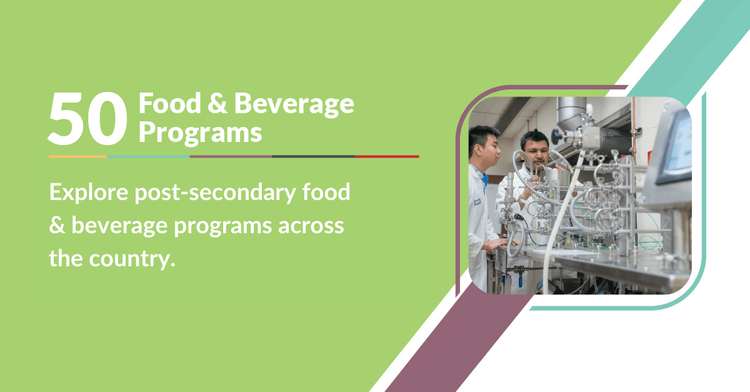
Canada is home to a diverse and dynamic food and beverage industry, supported by educational programs that train the next generation of chefs, brewers, entrepreneurs, and innovators. This roundup highlights 50 standout programs across the country, from top culinary schools and hospitality management courses to cutting-edge research initiatives and sustainability-focused training. Whether you're an aspiring professional, educator, or industry enthusiast, these programs provide valuable insights into the evolving world of food and drink in Canada. BC & Yukon Vancouver Community College UBC BCIT LaSalle College (Vancouver) UBC: Food, Nutrition, and Health Okanagan College Vancouver Island University University of Fraser Valley Northern Lights College North Island College Yukon University Selkirk College Thompson Rivers University Kwantlen Polytechnic University Prairies Saskatchewan Polytechnic University of Alberta University of Saskatchewan University of Manitoba SAIT NAIT Manitoba Institute of Trades & Technology International College of Manitoba Ontario Niagara College Humber College Le Cordon Bleu Ottawa George Brown College Fanshawe College Brock University University of Guelph Toronto Metropolitan University Loyalist College Georgian College Conestoga College Durham College Centennial College Canadore College Algonquin College Trent University St. Lawrence College St. Clair College Sault College Lambton College Confederation College Quebec McGill University LaSalle College Bishop's University Atlantic Canada University of PEI Memorial University Cape Breton University
Community Manager-
50 Food & Beverage Programs - Vancouver Island University
Crafting a Career in BC ’ s Wine Industry: VIU ’ s Wine Business Program The Wine Business program at Vancouver Island University is a comprehensive one-year certificate course designed for those passionate about pursuing a career in the BC wine industry. The program combines practical experience with academic learning in viticulture, wine business practices, marketing, and tourism. Program Highlights: As a student, you ’ ll have the chance to immerse yourself in hands-on experiences at local vineyards and wineries, gaining insights into the entire winemaking process. This practical foundation is then complemented by academic courses in viticulture, wine business practices, marketing, and tourism. A standout feature of this program is its flexibility. Whether you ’ re looking to study full-time for a year or prefer a part-time option spread over two years, VIU has you covered. Located in picturesque Nanaimo, BC, VIU provides an ideal setting for your wine education journey. With a curriculum designed to integrate viticulture essentials with business acumen, VIU ’ s Wine Business program offers a holistic understanding of the wine industry. Students can also earn credits that can be applied toward a Bachelor of Business or a Hospitality and Tourism Management program, opening doors to a wide range of future career prospects. The program includes seven courses and focuses on the broader aspects of the wine industry. In addition to viticulture and winemaking, students delve into wine marketing, exporting, and the vital role of wine tourism. C ourses cover a wide spectrum, from wine marketing and appreciation to beverage theory and the management of wine tourism. The program also offers elective courses in consumer behavio u r, entrepreneurship, and festival management . What You’ll Leave With: Upon graduation, a world of opportunities awaits you in BC ’ s wine industry. Whether you dream of managing a vineyard, excelling in wine s ales and marketing, or even opening your own restaurant, VIU ’ s Wine Business program provides the knowledge and skills to make your wine-related ambitions come true. Career options span winery/vineyard management, retail sales, wine marketing representation, hotel management, culinary arts, a gri - tourism development, and s pecial events coordination. V ideo/Social / Media : VIU YouTube Video
Community Manager-
Cellular Food in Canada
The past few years have proven how susceptible Canada’s food industry is to world events, supply chain disruptions and climate changes. New food production technology, such as cellular agriculture, has the potential to alleviate some of these challenges, while creating commercial opportunities and building a more sustainable, resilient food system. What is it? Cellular food – also known as engineering biology, synthetic biology or cell-cultivated products – is the production of food and textile products without using animals or land. Cell cultures harvested from animals, plants or micro-organisms are grown in the lab through tissue engineering or precision fermentation to produce: Cultivated proteins such as chicken, beef and seafood Fermented products like dairy, eggs, honey and chocolate Ingredients to add to products to create hybrid foods including proteins, enzymes, flavour molecules, vitamins, pigments and fats Textiles such as leather, silk and wool Why you should care As global population continues to grow, so does demand for protein, while access to land and other resource inputs become more scarce. Alternative agriculture could be an answer to food scarcity, concerns about animal and environmental welfare, cost inflation and resource challenges due to climate change. Compared to conventional agriculture, cellular agriculture production, is much less energy intensive, produces less greenhouse gas emissions, and has a much lower overall carbon footprint. With our strong food infrastructure, reputation for food safety, biotechnical expertise, and federal support for alternative protein production, Canada is well positioned to become a leader in cellular agriculture. The 2021 report Cellular Agriculture: Canada’s $12.5 Billion Opportunity in Food Innovation from Ontario Genomics and the Food and Agriculture Institute at the University of the Fraser Valley found that the international cellular agriculture market will reach US$100 billion by 2032. Canada’s food industry has the potential to take $12.5 billion that market, while creating up to 142,000 high-paying jobs. Opportunities in Canada Engineered plant proteins are already in the Canadian market, and by all estimates, precision fermented products are expected to appear before cultured meat products. Current Canadian regulations consider food produced through cellular agriculture as a novel food, and products are approved on a case-by-case basis. Here are a few Canadian start-ups making headlines: Because Animals – This Toronto-based pet food company uses cultured ingredients such as probiotics and nutritional yeast to create nutrient-rich cat and dog food designed to help digestive issues. Future Fields – Edmonton, AB-based Future Fields is a R&D producing growth media products that can be used to create commercialized cultivated proteins in a safe and sustainable manner. Cell-Ag Tech – Toronto’s Cell-Ag Tech is doing R&D on cell-cultured fish and seafood. New Harvest International non-profit research institute New Harvest , which promotes the science behind cultured meat through research, funding and a conference , now has a Canadian branch.
Community Manager-
Other Articles
Revisiting YODLs Top Explainer Articles
YODL regularly posts Explainer articles designed to help CFIN members better understand complex issues affecting the food and beverage industry in Canada. We've written about automation, robotics, packaging solutions, plastic waste and more. In case you've missed them, here are links to some of the most popular Explainers of 2022. 5G and the Food Industry Artificial Intelligence Blockchain Technology The Canada Plastics Pact Canada's Plastic Problem Compostable and Biodegradable Plastic Machine Learning Packaging and Extended Producer Responsibility QR Codes Is there something you'd like us to write about? Contact @JamilKarim to let us know!
Community Manager-
What YODLers are saying – November 2022
YODL was the place to be in November, and YODLers were posting up a snowstorm! In case you missed them, here are the top five discussions taking place in the past month. Number 5 Is honey plant based? | Open Forum (cfin-rcia.ca) YODLers continue to weigh in with their views on how honey should be classified. Number 4 Food safety innovation | Open Forum (cfin-rcia.ca) Food safety is always top of mind with CFIN members. Number 3 Access $12K in non-equity funding for your food sustainability startup! | Open Forum (cfin-rcia.ca) The Brampton Venture Zone is offering funding for sustainable start-up companies. Number 2 Are we ready for ROBOTS? | Open Forum (cfin-rcia.ca) Adding robotics and automation can be a complex issue. Find out if YODLers are really ready for robots! Number 1 Should plant-based products be sold alongside meat? | Open Forum (cfin-rcia.ca) The location of plant-based products in grocery stores is one of the most hotly debated discussions on YODL right now. What’s your opinion? What’s been your favourite article or discussion post on YODL so far? And if you haven’t joined the discussion yet, why not? Happy YODLing!
Community Manager-
The Tablesetter – November 28, 2022
Happy Monday CFIN members! Here’s your weekly heads up on what’s happening on YODL and around the food world this week. The YODL Menu Monday: The Tablesetter – November 28, 2022 Tuesday: Top YODL discussions from the past month Wednesday: Explainers revisited Thursday: Member profile – Radish Cooperative Friday: News File Something to Celebrate November 28 is National French Toast Day! French toast makes a cheap and delicious meal at any time of the day, and can be customized with an endless number of toppings. Best of all, making French toast helps divert stale bread from becoming food waste. The recipe isn’t French, however, and instead dates as far back as the 5 th century BCE. Since then, unique versions of the egg and milk-based treat have continued to appear around the world. Food Facts Egg production in Canada has been rising steadily since 2004, sitting at 848.2 million dozen eggs produced in 2021 for a value of $1.8 billion. Per capita egg consumption in Canada hit a high of 15.5 kg in 2019, and has increased by a whopping 30% over the past 10 years. According to a poll on rvtravel.com , the top three most popular ways to eat eggs are: fried, scrambled, and in an omelette. Happy YODLing!
Community Manager-
News File – November 25, 2022
Each Friday we’ll bring you a roundup of news from CFIN, YODL and around the food world. As seen on YODL Check out this week’s most viewed discussions: Dynamic pricing for gourmet products | Open Forum (cfin-rcia.ca) Food truck's little sibling | Open Forum (cfin-rcia.ca) Precision Fermentation Capacity Increases in Canada with Cultivated B Launch | Open Forum (cfin-rcia.ca) Around the Food World Researchers at the University of Johannesburg reveal that passion fruit peel has the potential to preserve fruit and help eliminate food waste. Upside Foods has received a “No Questions” letter from the US FDA for cultivated meat, poultry or seafood. A report from Vineland Research and Innovation Centre offers potential solutions to food waste in the greenhouse sector through new practices and value-added by-products. Did you Know? The quick-service food sector took a hit like all sectors of the food world during the pandemic, but things are already starting to improve. According to Statistics Canada’s latest figures , there were 39,470 limited-service food business locations in Canada in June 2022, up from 38,823 in June 2020. The sector also recorded more than $3.1 billion in sales on a seasonally adjusted basis in August 2022, 10.4% higher than in August 2021. The limited-service sector has outperformed the general foodservice and accommodation sector, which in July 2022 had 62,361 business locations, compared to 62,865 locations in February 2020.
Community Manager-
CFIN Member Spotlight – Suppli
This is one of a series of profiles of CFIN members that have successfully applied for and received funding through CFIN’s Innovation Booster program . Toronto, ON-based Suppli is making it easy for food vendors to swap in high-quality reusable food containers for their single-use containers in a way that drives additional revenue for those food vendors. Suppli leverages technology to offer its reusable takeout container service across online food channels, currently in takeout and corporate catering, but with applicability across groceries, meal kits, and beyond. Suppli’s unique end-to-end solution allows consumers to order through order.mysuppli.ca, and for restaurants to receive and process the order in the same way they’re used to with other ordering platforms. Once used containers are returned to any of Suppli’s drop-off bins (located in restaurants, in mission-aligned grocers and coffee shops, and outdoor on private properties for 24/7 access), Suppli runs a daily route to restock restaurants with clean containers and pick up used containers to be centrally cleaned through a commercial dishwashing facility. Supply received $100,000 in funding to build circularity into food packaging through an innovative technology platform. CFIN sat down with Suppli founder and CEO Megan Takeda-Tully to talk about the company. Q: What is your company’s mission? A: Suppli’s mission is to create the tech-powered backbone for reusable packaging solutions that facilitates the transition to a circular economy worldwide. Q: Why did you apply for this funding and how will you use it? A: Suppli will be building out the technology needed to streamline management of circular (reusable) food packaging so that our platform is scalable to other geographies, and across other packaging verticals. In order to effectively operate a reusable packaging program at scale – and with little behaviour change required by consumers and vendors – technology is needed to deliver real-time data across the user journey. This means information is passed from an ordering site to a paired inventory management system that uses this information to: account for a consumer’s container balance; account for a vendor’s container balance; and power supply chain logistics to ensure vendors are re-stocked and used containers are collected when certain thresholds are met. During the project period, Suppli will be building out the inventory management system, and integrating two pre-built food ordering sites. Q: What excites you most about working in this area of the food industry? A: We can make a real change in the footprint of the industry by leveraging business model innovation and building in the partnerships to grow out a solution that’s truly scalable. We’re empowering businesses and consumers to make individual changes that align with their values, and that contribute to a substantial, tangible impact. That’s very exciting for us! Q: Please comment on the importance of public funding to help companies clear innovation hurdles and access leveraged funds. A: Suppli is building out a completely new way of implementing a circular packaging solution, one that ditches the old deposit model and splits costs between the customer and food vendor. Developing a new market and building the technology to support our solution is one that takes time for private sector funders to get up to speed on and, most importantly, get comfortable funding. Public funding allows Suppli to de-risk our solution for private investors and demonstrate the scalability of Suppli’s offering for future support through private investment. Q: Looking ahead, what’s on the horizon for your company? A: We’re excited to be expanding across Toronto over the next year, growing our team on the sales, customer success and technical sides, and to get our platform (both technical and operational) in great shape with our partners to be able to expand into other Canadian cities! Q: What are your passions or hobbies outside of work? A: Building a start-up doesn’t afford a ton of extra time, so I try to spend most of it with my family (I have two young kids), and friends that make me smile. I’m also a big foodie and sports fan, so love anything I can do in those two realms as well. Q: If you had to pick one person to make you a meal, who would you choose? A) Guy Fieri B) Martha Stewart C) Gordon Ramsey D) Dana McCauley E) Your Mom F) Other (if it’s other, tell us who it is!) A: My grandmother – she was an incredible cook! Ready to access funding for your innovative initiative? Click here to find out more about CFIN’s funding programs.
Community Manager-
Cybersecurity in the food sector – Top 3 Takeaways
@Nestor Gomez , chief technology officer for CFIN, recently hosted a member-exclusive virtual event covering cybersecurity in the food and beverage industry, and featuring Rozita Dara, principal investigator of data management and privacy governance research program at the University of Guelph, and David Shipley, CEO and co-founder of Beauceron Security. The discussion covered why cybersecurity should be a priority for the industry, and how companies can protect their data. Here are the top three takeaways from the event: Cyber threats are real risks As recent events with Maple Leaf Foods and Empire Co. have shown, online attacks such as phishing and ransomware can have a significant impact on a company’s supply chain, operations, products, artificial intelligence (AI) and distribution system. The attacks can happen anywhere in the food supply chain, from farms to consumers, and can even impact the region. Unfortunately, many food and beverage companies have not invested in solutions to protect themselves from cyberattacks. Have a cybersecurity plan Analyze where your company has vulnerabilities, and then implement a plan for protecting your data. Follow critical control checks, and cybersecurity best practices such as multifactor authentication for employee sign-in to any connected system. Conduct a tabletop exercise with management so everyone understands what to do when facing a cybersecurity threat. Get staff involvement Properly training employees, including management, on cybersecurity risks and solutions is crucial. Staff need to comprehend the threats and how to report and/or handle them, and management needs to ensure all staff buys into the plan. Follow up with quizzes and continual training. Want to view the entire webinar? Click here ! Watch for part 2 of CFIN’s series on cybersecurity, appearing on YODL on December 14, 2022.
Community Manager-
Robotics in Action Revisited
On May 12, 2022 CFIN presented its second members-only event, Robotics in Action: Seeing is Believing . The virtual event was sponsored by Farm Credit Canada and hosted by @Jim Beretta , president of Customer Attraction, a marketing consultancy which focuses on robotics, automation and applications. Beretta spoke with several Canadian entrepreneurs whose companies are leading technological change in the food industry, and demonstrated cutting-edge automation solutions at Western University, Mycionics , Ghost Kitchen Brands and 168 Sushi , and robotic systems from SJW Robotics , Anubis 3D , Gastronomous Technologies , JMP Solutions , Armo Tool and Tiny Mile Robotics . Here are the top five takeaways from the session: 1. Automation and robots don’t reduce jobs Robots and automatic systems are designed to do the tasks that are dangerous, dirty or repetitive and are a solution to current labour shortages in the industry. While robots perform tasks such as picking and packing, employees are freed up to complete more value-added and skilled duties. Collaborative robotic systems are designed with added safeguards so that they work side-by-side with their human counterparts. 2. Automation is becoming more efficient and less costly In the last decade, costs of implementing automatic systems or robotics have fallen, while performance and consistency have increased dramatically. There are also many new advancements in gripping technology, resolving older robotic challenges such as distinguishing between different sized and shaped products or boxes. Automation systems and robotics are now easier to integrate into food operations, and are often designed so that companies can add one piece of technology at a time to ensure success and worker comfort. Working together with technology companies, food businesses can integrate plug-and-play components or create unique, custom-designed system featuring different technology modified to fit their needs. 4. Automation can lead to lower energy and input costs, while boosting food safety and capacity Technology that provides food producers with real-time data analytics enables them to optimize the use of energy and raw materials, reduce food and energy waste, and achieve higher production capacities. Data analytics can also be used to predict preventative maintenance in the system and prevent drops in throughput. Many companies rely on robotics that target sanitary compliance to safely and reliably assemble foods such as protein and uncooked ready-to-eat meals for retail or healthcare, where safe food handling is crucial. 5. Automated foodservice offerings go far beyond vending Quick-service kiosks that offer a wide range of hot and cold food choices like salad, pizza and cooked noodles are appearing on campuses, in malls and in other public spaces. Far beyond vending machines, the kiosks offer made-to-order meals prepared while you watch in just minutes, with a variety of customizations and payment options available. With a low carbon footprint and minimal labour needs, the kiosks have the potential of replacing QSR units in some locations. Robotics in Action – Seeing is Believing generated lots of questions from CFIN Members who were eager to learn more about the innovative companies that were featured during the event. So, to help answer these questions, we thought we’d tap into the founders and executives at the companies to get the answers to your most pressing questions. Stefan Glibetic, lead engineer and CTO, Mycionics Inc. Q: Are there any processing effects of robots and scanning on mushrooms? A: Since the mushrooms are very fragile, one of the biggest challenges in the mushroom harvesting industry is picking mushrooms without damage. Our system was designed from the ground up with this in mind, hence why we developed custom soft gripping technology instead of using commonly seen end-effectors on the market. Our system is able to pick and process mushrooms with damage rates equal to skilled human harvesters. Additionally, our scanning technology is very low-powered, safe, and doesn’t affect the mushrooms. Q: How can this technology be commercialized in other fruit and vegetable picking environments? A: Our systems are highly modular, and structured in a way that can be easily applied to other crops and industries, especially those with tight space restrictions. Right now, we are focusing our efforts on mushrooms, but the same technology and principles can be applied to new applications in the future. Q: Are the mushroom robotics currently using AI? A: Yes, our machine vision system applies a combination of algorithms, including AI, to process the vision data in order to determine mushroom properties, and how to pick those mushrooms effectively and without damage. We also capture environmental microclimate data, such us temperature, humidity and CO 2 , which helps the farmer visualize their growing environment and grow higher-quality mushrooms. Q: With an increase in consistent delivery of mushrooms, will we see more umami products on shelves? A: Although it's no a current goal of ours, we do hope that through the use of our technology, the mushroom quality will increase over time as farmers will be able to focus more of their efforts on growing, rather than on harvesting logistics. Kristian Tazbazian, co-founder and COO Gastronomous Technologies Q: Which parts of Gastronomous robots use AI ? A: The AI side of food automation lies in software and the way that data is analyzed in order to improve both operational as well as user efficiency. Nipun Sharma, CEO, SJW Robotics Q: How do you monitor inventory levels/replenishments? A: The system has full traceability and product data recorded at the point of refill via bar scan. Along with temperature controls, volume/weight dispensing sensors and recipe metrics, we can accurately measure inventory levels and shelf-life to allow us to trigger timely refills. Q: How is nutritional quality maintained in these systems? A: The nutritional quality will be determined by selection of input ingredients, and our temperature controls will measure shelf-life pertaining to that ingredient. Q: How do you keep the machine clean? A: The machine has scheduled self-cleaning mechanism utilizing high pressure hot water and steam, and our equipment certification conforms to the highest food safety standards. Q: How adaptable is this technology? Can you switch out the wok for a cold application? A: Yes. The wok is the replacement module, and can be switched by a grill, deep fryer or conveyor oven for all hot food alternatives. While the hot area can be bypassed for all cold bowls such as salads and yogurt. The current version can do any variation of starches that include noodles, pasta and rice. Tharwat Fouad, founder and president, Anubis 3D Q: Can Anubis print EOAT for direct contact with food that is FDA approved? A: Yes, the Nylon 12 (PA2200) we use to build most of our EOAT is FDA approved for food contact. When we build tools for food contact, we do not stain them with any colour, we keep them at their original white colour. We also add a finishing process called vapour finish that closes the porosities and makes the tool easy to clean.
Community Manager-
The Tablesetter – November 21, 2022
Happy Monday CFIN members! Here’s your weekly heads up on what’s happening on YODL and around the food world this week. The YODL Menu Monday: The Tablesetter – November 21 Tuesday: Robotics in Action Revisited – Top 5 takeaways and Q&A Wednesday: Cybersecurity Webinar - Top 3 takeaways Thursday: Member profile – Suppli Friday: News File Something to Celebrate November 21 is National Gingerbread Cookie Day! Gingerbread is a holiday season favourite, whether in cookie, figure or house form. Made with ginger, cinnamon, nutmeg and cloves, one reason we eat gingerbread during the winter is because of the idea that spices warm us up. Food Facts According to Technomic, menus are making a comeback, and say that menus have officially recovered from the drop in menu incidence experienced during the pandemic. Item counts have risen 0.9% in the past year, and 2.2% over the past three years. The fastest-growing ingredients and dishes are non-meat and premium proteins, including plant-based fish (37.5%), and imitation meat sandwiches (16%), as well as grains like couscous (25%) and quinoa (22.1%), and premium options such as Kobe beef (16.1%) and caviar (14.1%). Fastest declining dishes include retail items such as fruits and vegetables (-48.1%), packaged coffee (-33.3%), take-and-bake items (-46.7%) and meal kits (-35.5%). Here are Technomic’s the top menu items by per cent change over the past year: Appetizers 1.2% Add-ons 1.1% Sides 1% Entrées 0.9% Desserts 0.3% Non-alcoholic beverages 0.2% Kids menus -0.9% Senior menus -12.3% Happy YODLing!
Community Manager-
News File – November 18, 2022
Each Friday we’ll bring you a roundup of news from CFIN, YODL and around the food world. As seen on YODL Check out this week’s most viewed discussions: Should plant-based products be sold alongside meat? | Open Forum (cfin-rcia.ca) Are we ready for ROBOTS? | Open Forum (cfin-rcia.ca) Reusable Packaging and Foodservice Containers Examples | Open Forum (cfin-rcia.ca) Around the Food World A Spanish company has developed Naturpod , a solution that absorbs ethylene to keep fruit and vegetables fresh longer. Vertical farming company Infarm has successfully grown wheat indoors without soil or chemical pesticides, and using much less water than open field farming. Starbucks unveils its holiday beverage menu, including a new hot drink available only in Canada. Did you Know? ADM’s new report, Global Consumer Trends Driving Market Growth , reveals what consumers are prioritizing in their lifestyle and consumption choices. The company identifies eight market growth drivers of consumer trends: Balanced wellness – Consumers are increasingly connecting eating well with mental and physical wellbeing, and are becoming more accepting of functional and sustainably sourced ingredients. Proactive personalization – Consumers will prioritize individual differences and “better for me” solutions, as well as eating approaches that align with their personal lifestyle. This will lead to tech-enabled recommendations for specific health needs, and personalized nutrition tracking and solutions. Experiential eating – People are looking for new experiences in flavours, textures, colours, spices and botanicals, while looking for comfort and pleasure through nostalgic or indulgent foods but with a healthier twist. Expanded protein choices – More consumers are taking a flexitarian approach to eating that allows them to choose food options that align with their values and nutrition needs. That means they’re looking for choice in plant-based foods, responsibly fed animal-based products, and affordable alternative proteins. Trust & traceability – Consumers are increasingly looking for a connection to their food and the producer community, and continue to expect transparency around production, food safety, and supply chain. Technology such as blockchain and QR codes, and increased digitization will help in this area. Earth-friendly production – Consumers are demanding innovative technology and technology-driven solutions from companies related to environmental issues like climate change, pollution, food waste, and plastic and packaging waste. Social impact – Consumers also expect businesses to take social responsibility seriously, throughout their supply chain and including accessibility of the product for the end user. They expect companies to support positive change for workers, farmers, and communities. 8. Modern pet parenting – Pets are part of the family for consumers today, leading to demand for lifestyle products for their pets that match their own, as well as the idea that mental and emotional health is connected to exercise and food.
Community Manager-
CFIN Member Spotlight - Escarpment Laboratories
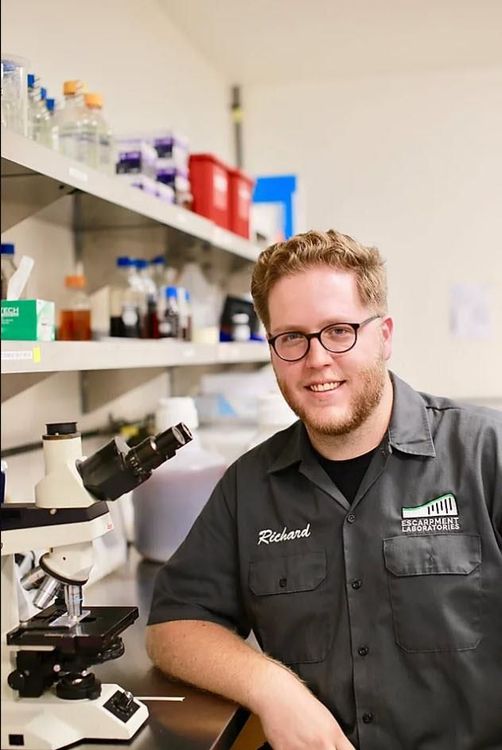
This is one of a series of profiles of CFIN members that have successfully applied for and received funding through CFIN’s Innovation Booster program . Guelph, ON-based Escarpment Laboratories supports the beer and fermentation industry through excellent yeast cultures, knowledge and education resources. The company enables brewers and fermentation businesses to unlock efficiencies and launch new products using our microbial strains and know-how. Escarpment Labs focuses on sustainability and circularity and use these as guiding principles for future decision-making. The company received $63,262 to produce Canada’s first commercial tempeh and koji cultures. CFIN sat down with Escarpment Labs co-founder Richard Preiss to talk about the company. Q: What is your company’s mission? A: Our purpose is to make fermentation easy for everyone. We do this by focusing on knowledge, trust, and community. The future of the planet depends on efficient fermentation processes for foods and fuels. While our focus right now is on the beer industry, we think a lot of what we’ve learned will be translatable to bigger problems in the future. Q: Why did you apply for this funding and how will you use it? A: We have had a lot of success with our craft beer yeast business, but see an opportunity to offer value to other fermentation industries, especially food fermentation. We applied for this funding so that we can accelerate the development of high-quality tempeh and koji starter cultures to support the growing plant-based protein and industry in North America. Q: What excites you most about working in this area of the food industry? A: I am excited about the idea of being able to walk into a grocery store and see the real-world impact of our company on the shelves, like we already can do in beer/alcohol stores. I am also excited about food fermentation especially alternative proteins which will play a role in reducing global carbon emissions. Q: Please comment on the importance of public funding to help companies clear innovation hurdles and access leveraged funds. A: Put simply, we would not have been able to invest in this project at this scale without public funding. As a result, it would be several years longer until Canadian food companies got access to high-quality specialized fungal starter cultures. Q: Looking ahead, what’s on the horizon for your company? A: We are primarily focused on supporting Canadian craft brewers, especially through the ongoing COVID-19 recovery. This year has been the hardest one yet for craft brewers, so it's critical for us to offer solutions that help improve the profitability and sustainability of craft breweries. Moving forward, we are excited to extend our skill sets to new ventures such as food fermentation starter cultures. We are also testing the idea of becoming a scale-up partner for food tech startups that need fermentor and processing capacity to test their ideas. Q: What are your passions or hobbies outside of work? A: My hobbies are pretty consistent with my work – I love cooking for friends and family, homebrewing, gardening, and music. Q: If you had to pick one person to make you a meal, who would you choose? A) Guy Fieri B) Martha Stewart C) Gordon Ramsey D) Dana McCauley E) Your Mom F) Other (if it’s other, tell us who it is!) A: Apologies to my mom but I think I've got to go with the mayor of Flavortown, Guy Fieri. Ready to access funding for your innovative initiative? Click here to find out more about CFIN’s funding programs.
Community Manager-
Revisited: Roundtable Discussions
One of the hardest parts of finding alternatives to plastic packaging is financing. Innovations that replace plastic are often more costly in the short term, or may need expensive adjustments to fit exact product requirements. But there are options available to food and beverage operators looking for funding. We asked for input from professionals helping food and beverage operators access funding. Participants Bonnie Bain, senior relationship manager, Corporate & Commercial Financing (Manitoba), Farm Credit Canada Alex Barlow , director of programs, CFIN Kyle Burak, senior economist, Farm Credit Canada Nathan Chick, marketing specialist, Mentor Works, a Ryan Company Alex Lau, senior relationship manager, Corporate & Commercial Financing (BC), Farm Credit Canada Graham Legge, senior relationship manager, Corporate & Commercial Financing (Ontario), Farm Credit Canada Q: Many food and beverage operators say lack of financing and time to research alternatives are the key reasons they haven’t removed plastic from their operations. Where should they start in their search to access funds and research their options? Alex Barlow: This is definitely a tough challenge, with upcoming regulations on Single-Use Plastics many businesses will be scrambling to address plastics, especially in food service. I think we can expect to see some new federal funding be released to help develop new solutions in this space, or to help operators trial new solutions as these new regulations roll out. In terms of resources, the first one I would point out is the Canadian Plastics Pact, which has a number of resources and tools for food and beverage operators to consult and consider integrating to address this issue. There are a lot of simple solutions that can take place at the design level to help improve recyclability and recovery of plastics, and lots of non-plastic solutions out on the market already (paper straws, bioplastic take-out materials, and more). Secondly, not to toot our own horn, but I would encourage operators to sign up for CFIN’s digital member platform, where we have a lot of upcoming content and discussions about plastics. It’s a good spot to potentially find a supplier, hear from other operators, and members can also connect with their local Regional Innovation Director to hopefully facilitate some meaningful connections. We’ve also developed a call under our Food Innovation Challenge, opening September 1, 2022 for collaborative research, development, and demonstration projects titled Plastics Solutions for Foods: Reduction, Replacement, and Recyclability. We’re looking for projects that either improve the recovery/recyclability of plastics, reduce their use, or replace them with bioplastics or bio-based solutions that meet industrial composting certifications. Funding is 50 per cent up to $2 million per project in grant funding from CFIN. There are lots of new and scaling firms in Canada offering solutions, so I encourage operators to get connected with CFIN, their local innovation hubs, Natural Products Canada, Ignite Atlantic, etc. to tap into these up-and-coming firms and evaluate their solution. Nathan Chick: The government funding landscape is complex and changes often. That’s why many Canadian businesses use the Government Funding Directory to easily filter through the top Canadian programs available today. This free directory allows filtering by region and business activity. If your business is trying to search for programs by industry, please visit the Government Funding Programs by Industry Directory for more specific opportunities. For businesses that are looking to get started with government funding, it is always important to establish what your business is trying to achieve, as well as what resources and capital will be required to achieve your desired outcome. Once you have determined your desired outcome, we encourage businesses to learn how to create a smart funding plan by using our free Build a Government Funding Plan slide deck. It’s crucial that you contact a government funding professional prior to beginning the application process to receive industry expertise on the current funding landscape and key application support to ensure the best chance of success. If your business is a startup, there are certain criteria that you must meet to apply for many government funding programs. To see if you qualify, please use our free Startup Funding Checklist . We also recommend that readers visit our article on How to Stack Canadian Government Grants, Tax Credits, and Loans to learn how some programs can be used collectively to maximize funding potential. Alex Lau: At Farm Credit Canada we can provide support. We have a team specialized in supporting food and beverage companies across Canada. We have customers who are already making changes and moving to alternatives to plastic, using other recyclable, recycled, and compostable packaging materials. We also have connections we can support you with. We work closely with other associations. We can share our knowledge and connect you to those who have walked in your shoes or have the expertise that can help you. Q: Are alternatives to plastic as expensive as operators believe? Alex Barlow: That is a good question. In terms of strategies to make plastics more recyclable, I believe there are some cost-effective design strategies that can be implemented, and the Canada Plastics Pact has released its Golden Design Rules for Plastics Packaging which is an excellent place to start. When it comes to bioplastics, my experience is that producers of these products have yet to reach that critical scale point where they achieve economies to their pricing. This is one of the reasons CFIN is funding our plastics themed call, to support the demonstration of these technologies, reduce the financial pain of pilots of demonstrations, and support scalability of sustainable national solutions that meet consumer, operator, and retailer expectations of safety, aesthetics, and performance. This issue is messy; there are inconsistent recycling and composting practices across the country, and a lack of consumer knowledge about recycling and industrial composting generally. There is a lot of work to do, but as prohibition and a cost model comes into place, and funding is available to help make the transition, hopefully there will be enough carrots and sticks to motivate change on all levels. Kyle Burak: For most, alternative packaging remains more expensive, but this is expected to change over time and consumers appear willing to pay an additional cost for sustainably packaged items. Businesses need to also take into account related costs. Does it require a change to production? Will it change transportation costs? For example, plastic is durable, light and often compact, but some alternatives could offer savings. Another thing to consider is whether product shelf life will change. If so, what are the potential impacts of additional shrink? There is more to consider than the cost of the new packaging itself and some may require changes to pricing. Nathan Chick: Finding new and innovative ways to improve a product, such as with alternative packaging, can pose challenges that may increase costs, resources, and more. However, there are often ways to reduce these costs for businesses that strategically implement government funding strategies. Alex Lau: I recently worked with a vegetable production company which packed in plastic clamshells. Because of a drive towards sustainability and environmentalism, they decided to make a change to use less hard plastics. They are now packaging in soft plastic bags that use four times less plastic and a cardboard shell on the outside for durability. There was cost to that. They needed new equipment for the new packaging system. Ultimately, they have reduced their environmental impact (less plastic used), they did pay for equipment, but the cost of alternative packaging materials was comparable. In addition, they can market their products and business in a way that aligns with consumer preferences. Q: Can operators access funding for retooling equipment to new packaging specifications? Bonnie Bain: For retooling equipment or specialized equipment needs, FCC can provide standard term financing for equipment (terms depend on the type of equipment and its useful life). We can offer an interest-only period during the installation and commissioning stage. We can offer fixed interest terms and flexibility to repay the loan at any time without penalty. And for those companies who have long-term annual needs for financing cap ex, we have a solution for that too. Alex Barlow: There are certainly several funds targeting the manufacturing sector, either for food and beverage manufacturers, or for those who make plastics and packaging alternatives. I would encourage operators to look at their local Regional Development Agencies and contact their provincial government economic development folks to chat about their project. Some of the groups who tend to be left behind by these funds are the foodservice and retail players, but I do feel these groups are further along in the availability of plastics replacements. We’ve seen some good progress made in single use plastics and circular economy practices in food take out. Nathan Chick: There are government funding programs available to assist in innovation for food and equipment costs, such as: FedDev Ontario Business Scale-up and Productivity (BSP) Program ; Eastern Ontario Development Fund (EODF ) / Southwestern Ontario Development Fund (SWODF); Bioenterprise FoodShift Program ; and Scientific Research and Experimental Development (SR&ED) . Lastly, the Canadian government has recently announced a new agreement to replace the current Canadian Agricultural Partnership (CAP) program, which will be called the Sustainable Canadian Agricultural Partnership (SCAP). SCAP will start its five-year initiative in April 2023 with $500 million in new funding designed specifically for addressing sustainability in agriculture and food. Therefore, there are likely to be many more future government funding opportunities available to address sustainable packaging challenges in the new year. To learn more about SCAP, review our recent SCAP blog today. Alex Lau: 100 per cent! FCC is a financial institution 100 per cent committed to supporting Canadian food and beverage. We can absolutely support these types of requests. We are here to support Canadian food processors, agriculture producers and agribusinesses. In addition, we are here to help the industry meet the federal government’s goal to reduce plastic waste and transition to a national circular plastics economy. Graham Legge: We have flexibility in what we offer. Whether that means tradition capex, or solutions that are tied to R&D or sustainability. Q: Anything else you need operators to know about accessing funds? Bonnie Bain: Stay in touch with your local food and beverage associations, industry publications and events to stay on top of the latest developments. Talk to your customers to see what they want. Use social media to learn how important it is for your customers to eliminate plastic. Alex Barlow: The best strategy is to have one – think about what your pain points are, look at the existing resources, get connected with your peers in industry to understand best practices, even engage a consultant if you feel that will help you take charge in this area. Industry associations and groups such as CFIN can help you understand your options, and potentially connect you with partners. This pre-funding work is critical to success; government grants and their applications need to be approached with a clear plan and identified solutions. Have your numbers ready – how much plastic do you use, and what would be the impact post-project? Nathan Chick: There are two main approaches to government funding, a proactive approach, and a retroactive approach. Proactive government funding programs include grants, loans, and more to plan projects in the future by applying for programs that fit your business activity. Retroactive government funding programs often include tax incentives that allow businesses to claim tax credits on projects that they have already completed, as long as the business followed proper protocol. Most government funding programs, retroactive and proactive, will focus on four major funding activities with varying criteria that businesses must meet to be successful. The four funding activities are: Hiring & Training ; Research & Development ; Business Expansion ; and Capital & Technology Adoption . Watch our educational video to learn more about the four funding activities today. Alex Lau: Start asking questions now instead of waiting. It takes time to research, implement and put changes like this into action. Don’t wait. Start today. I encourage you to leverage FCC and your own financial institution in discussions for supporting this green initiative. This article originally appeared on YODL on July 6, 2022. CFIN’s first Executive Roundtable looks at consumer demands and changing access to food, with input from Ken Keelor, CEO of Calgary Co-op , and Arjan Stephens, president of Que Pasa Mexican Foods and executive vice-president of Nature’s Path Foods . Q: How has technology such as ecommerce, QR codes and mobile apps changed how consumers access your products? Ken Keelor: Technology has greatly improved the customer experience and allowed for two-way communication with our members, so we immediately know what our members are looking for and how we can help them with their day-to-day shopping decisions. For example: Digital communication was used by us throughout the pandemic for health and safety, as well as to share value/couponing/information/inspiration through regular communication such as social media channels, our flyer, website and member emails. Apps: Our Calgary Co-op app allows members to stay in touch, update their own personal information, receive valuable offers exclusive to them through our Mewards program and access to exclusive member pricing on tickets including the Calgary Flames and Hitmen. E-commerce makes it easy for our members to shop remotely and have their items delivered or picked up at a time and location that is convenient for them. Our shop online programs continue to evolve to offer even more convenience and choice on our Food, Wine Spirits Beer and Cannabis sites. Arjan Stephens: Ecommerce has allowed consumers to access our products through several channels including online marketplaces, grocery delivery apps like Instacart and our website. This has shifted the way we think about user experience. We are focusing on content creation and search optimization to ensure we’re giving the customer a robust user experience, which includes easily searching and accessing our products. QR codes on products and packaging create an easy, rapid and touch-free transaction for consumers. There are about twice as many scans of barcodes at points of sale each day as there are Google searches. Our customers currently use them to purchase our products through Amazon Fresh stores in the U.S., and we are currently looking at how implementing QR codes on our packaging could provide more product and brand information, ultimately building another channel for connecting directly with our consumers. Additionally, the sunset of Google’s third-party cookie in 2023 makes analytics less accessible. QR codes can significantly help our business identify important customer data to inform our overall business. Q: What new experiences are consumers looking for when they shop or dine in person? Keelor: Convenience, choice and freshness, along with local and healthy options. We are pleased to be re-opening our salad bars, curry and olive bars and self-serve kombucha stations. In many of our locations we have seating areas where members can enjoy a light lunch, coffee with friends, or a few moments to themselves. We are also pleased to see in-person events coming back, including our famous pancake breakfasts in the summer, our Grape Escape event in 2023, in-person tastings at our Wine Spirits Beer locations, and partnering with our vendors to offer unique sampling opportunities for our members. We are proud to offer a unique experience to members when they come into our stores and know that they are looking for more from us than just a simple shopping trip! Stephens: When it comes to dining, consumers are looking for elements that support the storytelling aspect of a dining experience. This creates a unique, memorable experience that is shareable with their friends and on social media. These elements could be part of the food itself, the restaurant space, the customer service or other methods. Examples include unique food creations, robot-waiters, personalized chef cooking-at-table and more. Q: What will grocery stores look like in 2035? Keelor: It’s hard to say exactly what stores will look like that far down the road but we certainly expect multi-channel shopping to continue to evolve with more choice, convenience, delivery options and support to help meal plan and budget accordingly. We have also seen a number of recent trends emerge from the pandemic that we expect will continue including: Bigger baskets, but less trips to the stores Less families shopping, more single-person trips for the household More focus on health and wellness More focus on value, budgets and “what do I need to prepare meals” Even more focus on locally sourced products Reduced assortment in some categories because suppliers have narrowed the number of lines they are manufacturing ie: paper category Stephens: The future of grocery stores will be focused on providing experiences versus things. It will be a seamless online/offline mobile enabled, high tech, high convenience food shopping experience. Touch-free transactions will become commonplace and Augmented Reality (AR) and Artificial Intelligence (AI) will be indispensable. The grocery store of the future will enable customers to use apps to input dietary needs and taste profiles to be connected to products through advanced AR features providing audible information about the products selected, almost like having a personal assistance accompanying you to the store. There will be a large influx of plant-based alternatives to animal products created through 3D printing and AI technologies. Grocery stores like Alibaba’s Hema and Amazon Fresh are really just the beginning of the grocery store revolution. This article originally appeared on YODL on July 12 2022. Topic: Should Start-ups treat their companies like products? Dana McCauley recently began a lively discussion on YODL about merger and acquisition activity in the food industry, noting that for some time now larger food companies have chosen to expand into new categories and markets through acquisitions of innovative start ups and SMEs rather than through internal investment. As a result, some entrepreneurs are adopting an exit-strategy mindset as part of their initial start-up plans. If the trend continues, Dana believes it will result in great branding and marketing expertise being required to create new categories; and that more co-packers will be needed to provide plants and equipment for exit-minded entrepreneurs looking to keep their operations as simple as possible to make acquisition attractive. We wanted to know more about what YODLers thought about the topic, and how it will affect your businesses and the food industry in Canada. Here’s what some of you had to say. Participants: Gunjan Syal , founder and chief strategy officer, GoEmerald , ON Marc Wandler , co-founder/CEO, Susgrainable , Vancouver, BC Q: Does having an exit-strategy mindset limit the company’s potential in terms of innovation and growth? @Gunjan : I do not believe having an exit strategy mindset always limits the innovation or growth. It is practical for companies to have the worst-case options identified, including practical exit strategies to ensure the business can survive. On the other hand, it is important to note where the connections are between the firm’s overall growth strategy, the leadership, values and the skillset on the team. These are ingredients to create a culture of innovation. Circularity ensures the innovation culture can be resilient during the desperate times. Some businesses may create products or services with the intent of exiting from the start; others may be committed to drive long-term growth by investing in, what I call a culture of circular innovation. @Marc : I would argue it often has the opposite effect. Having an exit-strategy makes you focus on creating something valuable enough for someone else to want to purchase what you have created. This ensures you constantly have an end customer in mind. Having an exit-strategy can also indicate that your company has thought of innovation and growth up to a certain point and through the exit, the mission could potential be advanced even further with the resources from the acquirer. Q: Do difficult economic times push companies to become more efficient and innovative, or do they push more entrepreneurs to exit the industry? @Gunjan : T he uncertainty during difficult economic times may propel companies to reflect back on their underlying values and mission. When resources are dwindling, companies will need to strategically choose where to focus for the greatest impact and alignment towards the right consumers – these are the consumers who will benefit from the services/ products. The difference in the post-pandemic world is that the rapid changes in consumer behaviours are creating a new layer of uncertainty. Inflation is also impacting drastic changes in supply chain operations. This will propel companies to invest in innovation, when resources are available and investments appear to drive long-term value. At the same time, innovation will suffer because ROI cannot always be calculated in advance – it requires trial-and-error to some degree. Novel partnerships, simplifying business models and solutions that can be pivoted quickly, will thrive in the difficult economic times. @Marc : It does both in my opinion. Difficult economic times push customers to really evaluate where their dollars will go. For those companies who don’t panic and focus on their core offerings it will push them to become more focused and efficient. Any company that becomes spread too thin is at risk during these difficult times. At the same time, other entrepreneurs may get pushed out for several reasons – sometimes for the better and sometimes for the worse. For those entrepreneurs whose mission or vision is completely wiped out, exit may be the best strategy. Q: Are M&As beneficial in the long run for the industry, or do they impede innovation? @Gunjan : M&As can be beneficial when there is alignment in product strategy as well as the end user impact among the firms. However, M&A strategy may also severely limit a company’s ability to innovate as the culture of circular innovation may dwindle over time, if not deliberately harnessed after M&A. It will be key to ensure special attention is allocated to developing and aligning a culture of circularity, human capital and profit along with the customer needs. @Marc : Again, it could be either. If the acquisition is between two values-aligned companies focused on growing the mission together, and they can leverage the skills and resources that each brings, then it will foster innovation. In other cases, it may be a strategic acquisition made by a bigger entity acquiring a smaller company that could be a threat in the future but isn’t quite there yet. Depending on how this acquisition is managed, especially when there are big differences in culture, this type of acquisition can impede innovation.