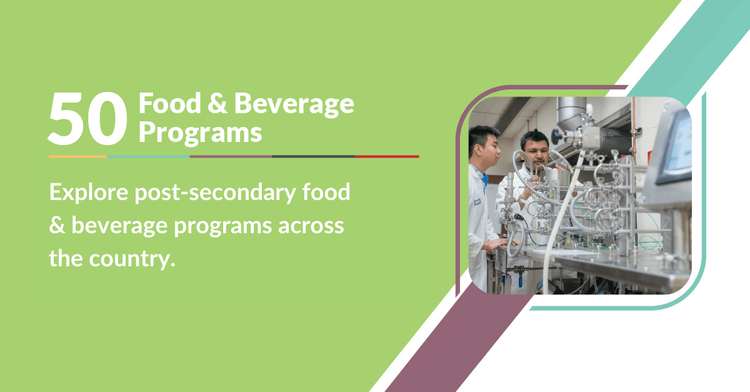
Canada is home to a diverse and dynamic food and beverage industry, supported by educational programs that train the next generation of chefs, brewers, entrepreneurs, and innovators. This roundup highlights 50 standout programs across the country, from top culinary schools and hospitality management courses to cutting-edge research initiatives and sustainability-focused training. Whether you're an aspiring professional, educator, or industry enthusiast, these programs provide valuable insights into the evolving world of food and drink in Canada. BC & Yukon Vancouver Community College UBC BCIT LaSalle College (Vancouver) UBC: Food, Nutrition, and Health Okanagan College Vancouver Island University University of Fraser Valley Northern Lights College North Island College Yukon University Selkirk College Thompson Rivers University Kwantlen Polytechnic University Prairies Saskatchewan Polytechnic University of Alberta University of Saskatchewan University of Manitoba SAIT NAIT Manitoba Institute of Trades & Technology International College of Manitoba Ontario Niagara College Humber College Le Cordon Bleu Ottawa George Brown College Fanshawe College Brock University University of Guelph Toronto Metropolitan University Loyalist College Georgian College Conestoga College Durham College Centennial College Canadore College Algonquin College Trent University St. Lawrence College St. Clair College Sault College Lambton College Confederation College Quebec McGill University LaSalle College Bishop's University Atlantic Canada University of PEI Memorial University Cape Breton University
Community Manager-
50 Food & Beverage Programs - Vancouver Island University
Crafting a Career in BC ’ s Wine Industry: VIU ’ s Wine Business Program The Wine Business program at Vancouver Island University is a comprehensive one-year certificate course designed for those passionate about pursuing a career in the BC wine industry. The program combines practical experience with academic learning in viticulture, wine business practices, marketing, and tourism. Program Highlights: As a student, you ’ ll have the chance to immerse yourself in hands-on experiences at local vineyards and wineries, gaining insights into the entire winemaking process. This practical foundation is then complemented by academic courses in viticulture, wine business practices, marketing, and tourism. A standout feature of this program is its flexibility. Whether you ’ re looking to study full-time for a year or prefer a part-time option spread over two years, VIU has you covered. Located in picturesque Nanaimo, BC, VIU provides an ideal setting for your wine education journey. With a curriculum designed to integrate viticulture essentials with business acumen, VIU ’ s Wine Business program offers a holistic understanding of the wine industry. Students can also earn credits that can be applied toward a Bachelor of Business or a Hospitality and Tourism Management program, opening doors to a wide range of future career prospects. The program includes seven courses and focuses on the broader aspects of the wine industry. In addition to viticulture and winemaking, students delve into wine marketing, exporting, and the vital role of wine tourism. C ourses cover a wide spectrum, from wine marketing and appreciation to beverage theory and the management of wine tourism. The program also offers elective courses in consumer behavio u r, entrepreneurship, and festival management . What You’ll Leave With: Upon graduation, a world of opportunities awaits you in BC ’ s wine industry. Whether you dream of managing a vineyard, excelling in wine s ales and marketing, or even opening your own restaurant, VIU ’ s Wine Business program provides the knowledge and skills to make your wine-related ambitions come true. Career options span winery/vineyard management, retail sales, wine marketing representation, hotel management, culinary arts, a gri - tourism development, and s pecial events coordination. V ideo/Social / Media : VIU YouTube Video
Community Manager-
Cellular Food in Canada
The past few years have proven how susceptible Canada’s food industry is to world events, supply chain disruptions and climate changes. New food production technology, such as cellular agriculture, has the potential to alleviate some of these challenges, while creating commercial opportunities and building a more sustainable, resilient food system. What is it? Cellular food – also known as engineering biology, synthetic biology or cell-cultivated products – is the production of food and textile products without using animals or land. Cell cultures harvested from animals, plants or micro-organisms are grown in the lab through tissue engineering or precision fermentation to produce: Cultivated proteins such as chicken, beef and seafood Fermented products like dairy, eggs, honey and chocolate Ingredients to add to products to create hybrid foods including proteins, enzymes, flavour molecules, vitamins, pigments and fats Textiles such as leather, silk and wool Why you should care As global population continues to grow, so does demand for protein, while access to land and other resource inputs become more scarce. Alternative agriculture could be an answer to food scarcity, concerns about animal and environmental welfare, cost inflation and resource challenges due to climate change. Compared to conventional agriculture, cellular agriculture production, is much less energy intensive, produces less greenhouse gas emissions, and has a much lower overall carbon footprint. With our strong food infrastructure, reputation for food safety, biotechnical expertise, and federal support for alternative protein production, Canada is well positioned to become a leader in cellular agriculture. The 2021 report Cellular Agriculture: Canada’s $12.5 Billion Opportunity in Food Innovation from Ontario Genomics and the Food and Agriculture Institute at the University of the Fraser Valley found that the international cellular agriculture market will reach US$100 billion by 2032. Canada’s food industry has the potential to take $12.5 billion that market, while creating up to 142,000 high-paying jobs. Opportunities in Canada Engineered plant proteins are already in the Canadian market, and by all estimates, precision fermented products are expected to appear before cultured meat products. Current Canadian regulations consider food produced through cellular agriculture as a novel food, and products are approved on a case-by-case basis. Here are a few Canadian start-ups making headlines: Because Animals – This Toronto-based pet food company uses cultured ingredients such as probiotics and nutritional yeast to create nutrient-rich cat and dog food designed to help digestive issues. Future Fields – Edmonton, AB-based Future Fields is a R&D producing growth media products that can be used to create commercialized cultivated proteins in a safe and sustainable manner. Cell-Ag Tech – Toronto’s Cell-Ag Tech is doing R&D on cell-cultured fish and seafood. New Harvest International non-profit research institute New Harvest , which promotes the science behind cultured meat through research, funding and a conference , now has a Canadian branch.
Community Manager-
Other Articles
Women in Food Series - The Power of Mentorship: How It Shaped My Career and Why It Matters for Yours
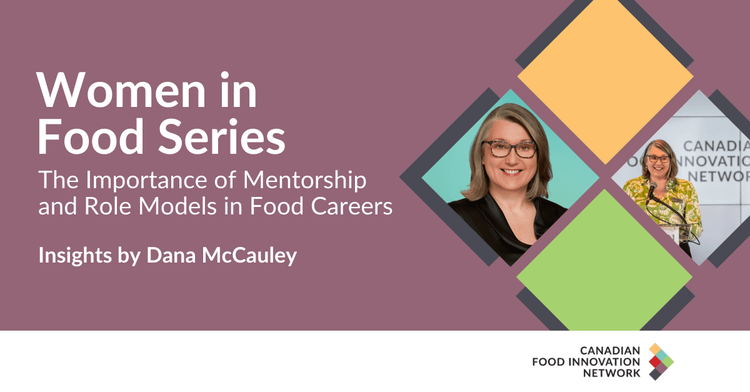
I’d love to tell you that I was born ready to be a food sector leade r but that would be untrue. The truth is, I started my career with a degree in English literature and chef’s training . I had no business degree and neither of my parents, although successful entrepreneurs, had corporate backgrounds. So, I had a lot to learn when I started working with and for big food companies. Early in my career , I sought out mentors who were fierce, formidable, and clad in sleek power suits and stilettos. The successful women revered in pop culture of the time had conquered boardrooms with the tactica l finesse of seasoned warriors, leaving no doubt in anyone's mind about who was in charge . The goal for me in my early career was to emulate others, not necessarily, refine my own style and approach. Over time, I’ve come to see mentorship differently and more broadly . Instead of the traditional model where mentorship is confined to formal programs or work relationships , the most effective mentorship seems to be more organic, flowing just as often from informal or unexpected source s . F rom peers who challenged my thinking, or team members who taught me to see problems differently to the peers I often reach out to for their perspective, mentorship takes ma ny forms . Fairly early on, I also realized that just because I was a woman , it didn’t mean that I couldn’t be mentored by and learn from men. In fact, some of my greatest supporters have been male executives who sha red opportunities and advice with me. At its core, mentorship is about connections and integration. How will you learn from those in your sphere and incorporate elements of their style and approach into your own unique workplace offering ? Countless mentors have deeply influenced my food career. It is something that all young professionals — every professional, for that matter — should strive to prioritize both as one seeking professional development and as one who has lessons to share that will leave the sector better than you left it. It's been more than 5 minutes since I started my career, and I’ve learned a lot about mentorship. Here are a few recommendations on how you can harness its power to fuel your own journey. Breaking Down Barriers I must start with the obvious: the food industry still has a serious gender gap problem. Women often have to prove themselves twice over, getting promoted based on what they've already done rather than what they could do. This is where mentorship becomes crucial for individual careers and for changing the industry itself. Leading Food Starter —a food business hub initiated by the City of Toronto— taught me this firsthand. I watched women entrepreneurs transform from hesitant innovators to confident business strategists . Each success story helped crack the ceiling a little more. Besides the peer mentorship that took place at Food Starter, we had a constant flow of industry veterans in and out of our doors and often, the women who were moving forward most successfully had found among those visitors, a mentor who helped to mak e that happen. Finding Your People Any productive mentorship demands getting clear on what drives you. What problems keep you up at night? What skills do you wish you had? What kind of career excites you? Pay attention to all the small things that resonate with you. Write them down. This will help you better understand the specifics of exactly what you are looking to get out of your career. Then you can identify mentors who are following a similar path—in both vocation and their overall approach to work and li f e. Want to meet potential mentors? T h e best way to do that is to get involved wherever possible . Join industry groups like Canadian Women in Food or Females in Food . Engage in discussions happening on YODL . Attend industry events . Reach out to people whose path inspires you for an informational interview. If you come to them with a clear sense of what they do—and why it inspires you— you’ll find that nearly everyone will be more than happy to chat for 20 minutes or even longer . Starting from a foundation of shared interests and genuine connection is the key to strong mentoring relationships. Beyond the Basics One mentor gave me advice I'll never forget: "Your network is like a garden ; it needs regular attention, not just crisis care." She was right. The strongest professional relationships come from genuine interest and consistent engagement, not just reaching out when you need something. As your career progresses and you move across different workplaces, it’s worth developing a habit of checking in with old mentors —of both the formal and informal variety— even if it is just a quick email or text or a thoughtful referral or int roduction . But , i n a world where our professional relationships are increasingly mediated by screens and email, taking the occasional analog approach, via a thank you card or handwritten letter, can wield surprising power in cultivating and sustaining a genuine network of mentors . With some care , you will ensure that your network is still there when the times of crisis do inevitably come . Leverage CFIN’s Network Effect Every major milestone in my career has been shaped by mentors who believed in me, challenged me, and showed me possibilities I couldn't see on my own. One of my mentors once told me, “Success isn’t a solo act.” That advice has stayed with me. It ’s something I think about particularly often now, as CFIN works to build a food innovation network built on the core values of connection and collaboration . The food industry needs fresh thinking and diverse perspectives now more than ever. So r each out to other YODLers whose work inspires you. Share your experiences with someone who is just starting out. If you're looking to connect with other innovators, CFIN hosts regular networking events and webinars , which are wonderful opportunities to connect with and learn from industry veterans and ne wbies with fresh perspectives. These are the connections that future generations of innovators need. The greatest mentorships can even spark unexpected collaborations and breakthrough ideas — exactly what our industry needs to successfully tackle tomorrow's challenges. Have any food career mentors played a role in shaping your path? Share your experiences in the comments below. And be sure to join for CFIN’s upcoming webinar on empowering women in the food industry , hosted by yours truly , for more career insights and to continue building those essential connections.
Community Manager-
The Network Effect: Creating a Greener Future for Atlantic Canada’s Food Sector
What you can't measure, you can't improve—that principle is transforming operations at Tony's Meats . With the installation of a new real-time monitoring system to its Nova Scotia processing facility, the family-owned meat processor and fixture in Atlantic Canada's food sector for over 50 years, can now track water use and emissions sources throughout their facility, helping identify and address inefficiencies that were previously invisible. For Atlantic Canada's food sector, sustainability initiatives like these go beyond business, it's personal, inspired by the region's deep connection to land and sea. Here, the connection between food systems and environmental vulnerability is not an abstraction, but part of daily life. As fishing communities adapt to warming ocean temperatures and farmers navigate unpredictable growing seasons, manufacturers across the region like Tony's Meats are reimagining established processes to support the landscapes and producers that their businesses depend on. Among the sector leaders driving this transformation is PEI-native Tyson MacInnis, Regional Innovation Director for Atlantic Canada at the Canadian Food Innovation Network (CFIN). Drawing on decades of experience as both an entrepreneur and advisor, Tyson is helping local food businesses convert their environmental aspirations into actionable change. Identifying the Need for Sustainable Practices Despite mounting consumer demand for environmentally friendly products, increasing pressure from regulators, federal commitments to net-zero emissions, and an internal desire to make improvements, many companies struggle to take meaningful steps toward sustainability. Tyson has seen these challenges firsthand: smaller businesses (which constitute 98% of Canada’s food sector ) often lack in-house expertise or dedicated sustainability teams, while others face financial constraints that limit their ability to invest in new technologies or conduct comprehensive environmental audits. For many, resource inefficiencies and waste streams remain invisible, making it difficult to identify the best starting point. “What stands out to me is how committed these businesses are to improving. They’re ready to innovate but often lack the resources or the roadmap to begin,” Tyson explains. “My role is to help them find that starting point, whether it’s connecting them to funding opportunities or facilitating partnerships that give them the tools to move forward." Planning Foodtech Atlantic: A Platform for Collaboration Eager to harness a growing enthusiasm for sustainable innovation, Tyson spearheaded Foodtech Atlantic, an event designed to unite food innovators, sustainability experts, and industry leaders under one roof. Collaborating with partners like Ignite Atlantic, F&B Atlantic, NS Department of Fisheries, and the Atlantic Canada Opportunities Agency (ACOA), Tyson and the group created a program that offered practical insights and actionable advice for businesses eager to embrace new innovations and processes in areas like emissions reduction, sustainable packaging, and upcycling. “We didn’t just want to put on a conference. The goal with Foodtech Atlantic was to create something that gave businesses clear takeaways and new connections they could act on immediately,” Tyson says. “That’s where the real impact happens.” The event was a showcase of regional success stories like RFINE Biomass Solutions and Smallfood , startups at the bleeding edge of food innovation. Foodtech Atlantic also aspired to connect Atlantic Canada businesses to sustainability experts and service providers, enabling attendees to forge partnerships that extended far beyond the regional business ecosystem. Join the Community! Facilitating Cross-Regional Partnerships In the months following Foodtech Atlantic, CFIN announced a new funding program for Atlantic Canada. Unpuzzling: Greening Your Food Manufacturing Operation Program , with support from ACOA, helped companies in Atlantic Canada pursue projects alongside sustainability experts from throughout Canada specializing in energy efficiency and waste management. “Our goal is open up new possibilities for change,” Tyson says. “When we connect businesses in the Maritimes with local and national expertise, we’re helping them solve their specific business problems while simultaneously building a stronger, more innovative national food sector” These partnerships have already yielded measurable results. For instance, through Unpuzzling funding and connections made via CFIN, Benjamin Bridge Winery is working with consultants to create a sustainable operations plan focused on aligning the winery with its newly minted status as a certified B Corp. "Tyson supported our goal to audit and analyze our business' energy and emissions through the Unpuzzling funding,” says Keltie MacNeill, Benjamin Bridge’s Director of Sustainability & Community Engagement. “We were able to hire a local engineering firm specializing in sustainability ( EastPoint ) to help understand our emissions and bring clarity to what initiatives would be most impactful, including our new bag-in-box wines that are 60-90% more eco-friendly than traditional glass bottles. We now have a tool to track our own data and a better understanding of what is truly sustainable.” Driving Long-Term Change Tyson views Foodtech Atlantic and the Unpuzzling program as more than one-off initiatives, but rather part of a broader effort to embed sustainability into the fabric of the Atlantic Canadian food sector. By connecting businesses with the right partners and resources, Tyson is helping them achieve both environmental and economic goals. “Every company we support becomes part of a larger movement,” he says. “When businesses prioritize more sustainable practices, it strengthens not just their bottom line but also pushes the industry as a whole to iterate and improve.” Looking ahead, Tyson plans to build on this momentum with future events and initiatives that deepen collaboration and expand access to sustainability expertise. His vision is clear: a thriving, interconnected food innovation ecosystem that benefits all of Canada. “There’s an eagerness in the food sector to rethink how things are done,” Tyson says. “The drive to innovate and build more sustainable practices is inspiring, and it’s rewarding to help turn that energy into real progress.” Join the Community!
Community Manager-
In 30: Machine Learning
Sometimes, all it takes is 30 minutes to learn the ins and outs of new food technologies and trends that are transforming the food and beverage industry. In this series, we’ll dig into a food innovation topic and link you to content and resources so you can become a master on the topic in 30 minutes (or less!). This week, we’re looking at the use of machine learning in the food and beverage industry. The Overview YODL - EXPLAINED: Machine Learning Computer sciences are responsible for revolutionary process changes in many sectors, including the food industry. Every year, new innovative solutions emerge that can improve the efficiency and profitability of companies, and machine learning is a prime example. SPD Group - Machine Learning and AI in Food Industry: Solutions and Potential Artificial Intelligence and Machine Learning solutions offer many possibilities to optimize and automate processes, save money, and reduce human error for many industries. Softwaretestinghelp.com - Top 13 BEST Machine Learning Companies An in-depth look at how machine learning is used, and how to select the best machine learning company to meet your company’s needs. The Canadian Connection Canadian Grocer - What ChatGPT and AI could do for the food industry Sylvain Charlebois discusses C hatGPT, machine learning and AI, and it’s potential impact on how the food industry embraces new technologies in the future. YODL - 50 Canadian FoodTech Resources – EMILI Manitoba’s Enterprise Machine Intelligence and Learning Initiative (EMILI) works with industry organizations and academic institutions from across the technology sector to increase integration of intelligent technologies, empower people with digital skills, support scale-ups to grow in the Prairies, and accelerate Canada’s growth as a leader in digital agriculture. Social Media @ vividmachines (Instagram) Toronto-based Vivid Machines has developed a multispectral computer vision platform to digitize fruit production. TheoryMesh (LinkedIn) Winnipeg-based TheoryMesh is working through the entire supply chain from growers to consumers to revolutionize traceability through application. @InData Labs (Facebook) InData Labs is one of the world’s top machine learning companies. Overtime If you’ve got more than 30 minutes, these are for you: YODL - Interview with Nestor Gomez on Algorithms YouTube - Six AI in Food Tech Examples
Community Manager-
50 Canadian FoodTech Resources – INNOV
Canada has an extensive range of research centres, food incubators, accelerators and labs supporting food and beverage innovation through the research they do and/or the services they offer. This week, we’re featuring INNOV , an applied research division of the Collège communautaire du Nouveau-Brunswick (CCNB), which has been at the forefront of innovation for Atlantic Canada and beyond. Name: INNOV Location: New Brunswick Mission: To be a top partner for companies and organizations in their innovation and applied research projects. Focus: INNOV supports the private sector through applied research and technology integration. The organization’s key areas of expertise include agri food , bioprocessing, beverages, robotics, artificial intelligence, advanced manufacturing, and advanced materials. It aims to provid e businesses with solutions to key innovation challenges and pathways to economic growth. Services: INNOV operates three specialized divisions: Advanced Manufacturing in Bathurst, focused on robotics and automation; Bioeconomy in Grand Falls, supporting agri-food processing and bioproducts; and Advanced Materials in Caraquet , specializing in composite materials for the marine and industrial sectors. Each division offers diverse services for private sector innovators, including : Diagnosis and Support : Comprehensive evaluations of processes, operations, and technologies, followed by tailored recommendations to improve productivity and quality. Applied Research and Experimental Development : Assisting businesses in designing, prototyping, and testing new products and technologies, including market research and data analysis. Technology Transfer and Technical Assistance : Helping businesses adopt cutting-edge technologies to improve performance without large capital expenditures . Design and Prototyping : Expertise in creating and validating functional prototypes to test new concepts. Analytical Services : Advanced analysis of bioproducts, materials, and processes for quality improvement and regulatory compliance. What you need to know: INNOV ’s Advanced Manufacturing Division serves as New Brunswick's only Technology Access Centre (TAC) . The organization executes over 60 private-sector contracts annually and has become a key innovation catalyst for foodtech companies throughout Atlantic Canada. Notable News: In 2023, INNOV embraced a new brand identity after 17 years . This included changing the centre’s name from "CCNB-INNOV" to "INNOV" to better reflect its evolving mandate o f applied research and innovation support for the private sector . Get Involved: Contact INNOV at innov@ccnb.ca or (506) 253-5319 , or reach out to our Regional Innovation Director for Atlantic Canada, Tyson MacInn i s .
Community Manager-
Meet the CFIN Innovators Revolutionizing Waste and Upcycling
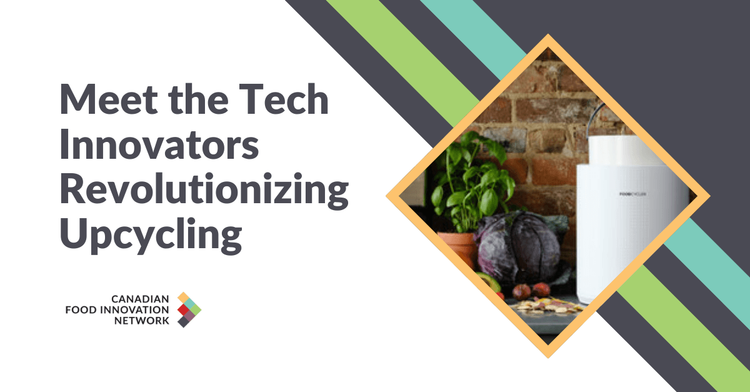
Food waste pervades every level of the food value chain . It is a complex problem that requires diverse , multifaceted , and innovative solutions. Fortunately, many CFIN member companies are building those solutions t hrough cutting-edg e biotech, decentralized composting systems , precision fermentation, custom software applications , and beyond . T o highlight the exceptional diversity of Canadian-made food waste and upcycling solutions, here are some of the innovators that are h elping other food businesses find operational efficiencies , discover new revenue streams , and develop healthier and more sustainable products — all while making food waste a thing of the past . Knead Tech Knead Tech has developed a comprehensive digital platform that revolutionizes food rescue operations. Their software optimizes surplus food redistribution, making it easier for organizations to repurpose excess inventory from restaurants and retailers to help feed people rather than landfills . Key Food Waste Solutions : Automated surplus food management system maximizes the efficiency of food rescue organizations Real-time tracking and impact reporting Streamlined compliance with food safety regulations Scalable platform that grows with organizational needs Learn more about Knead Tech . Liven Proteins Liven Proteins is transforming agricultural side streams into high-performance protein ingredients through synthetic biology and precision fermentation. Their technology creates customized proteins that solve specific functionality challenges in plant-based foods. Key Food Waste Solutions : Custom protein ingredients that enhance texture and flavour Clean-label solutions for plant-based products Creating new revenue streams for farmers and manufacturers by upcycling of agricultural byproducts into valuable ingredients Learn more about Liven Proteins . RFINE Biomass Solutions RFINE has revolutionized the coffee industry's approach to waste management with their on-site processing technology. Their patented system transforms spent coffee grounds into valuable food-grade ingredients, creating new revenue streams for foodservice operators while eliminating waste disposal costs. Key Food Waste Solution s : On-site waste processing technology that integrates seamlessly with existing cafe or restaurant operations Production of shelf-stable, nutrient-dense upcycled ingredients for food products Reduction in waste management costs and GHG emissions Learn more about RFINE . Tait Laboratories Tait Laboratories converts citrus peel waste into powerful prebiotics via its groundbreaking extraction technology . Their scientifically validated process helps juice manufacturers and food processors turn a disposal expense into a high-value health ingredient. Key Food Wa s te Solutions : Upcycling premium citrus processing byproducts into scientifically validated prebiotic ingredients Sustainable, c lean-label ingredient for functional food product developers W aste reduction option for juice and canning operations Tait Labs has even launched a calculator that businesses can use to estimate the potential upcycled value of plant-based food byproducts. Learn more about Tait Laboratories . Food Cycle Science Food Cycle Science has developed a suite of food waste processing systems that help municipalities, businesses, and households easily and sustainably manage organic waste efficiently while creating valuable soil amendments. Key Food Waste Solutions : Compact, on-site waste processing equipment Reduction in waste collection frequency and costs Rapid conversion of food waste into nutrient-rich soil amendment Odorless, space-efficient food waste management solution Learn more about Food Cycle Science here and in the video below.
Community Manager-
The Network Effect: Foodtech in the Prairies
How CFIN and Hubba Khatoon are Cultivating a Thriving Foo d t ech Ec osystem in Canada’s Breadbasket When most Canadians think of the Prairies, farming is often the first thing that comes to mind. Va st ranchland vistas and shimmering fields of grain defin e much of the landscape in Alberta, Saskatchewan, and Manitoba, and agriculture has long been a pillar of the Prairies’ economy . But the story of food on t he Prairies is becoming as much about what happens after that food leaves the farm . In recent years, Canada’s breadbasket has begun to evolve into a thriving hub of foodtech . At the forefront of this transformation is Hubba Khatoon, CFIN’s Regional Innovation Director (RID) for the Prairies, who is leading efforts to build a vibrant food business ecosystem throughout the prairie provinces . The Challenge: Connecting the Dots for Foodtech Innovators Historically, the Prairies' focus on a grifood innovation has leaned toward on- farm technologies—think soil moisture sensors, automated tractors , and advanced crop breeding. Post-farmgate innovation — concerning everything that happens after the food leaves the farm— rarely r eceived the same kind of attention from government or investors . “There are so many entrepreneurs and innovators in the Prairies,” Hubba says. “But the food business ecosystem was fragmented. The talent, vision, and economic potential were here, but the connections between capital, research institutes, and government support weren’t in place. A lot of opportunities were being left on the table . ” Since joining CFIN shortly after its inception in 2021, Hubba has been a driving force in building those missing connections between entrepreneurs, researchers, investors, and government agencies. With her experience at Calgary Economic Development and Prairies Economic Development, she has a keen understanding of where the region has potential to grow. Foodtech tops that list. Building a Robust Foodtech Ecosystem Hubba’s work with CFIN has been crucial in building a regional support network that would allow the Prairies to fulfill its food tech potential . “We’re witnessing a real shift in how investors view food innovation here ,” she says. “With initiatives like Plug and Play’s food and beverage innovation platform and new foodtech -focused investment funds , cities like Calgary, Saskatoon, and Winnipeg are transforming into ag and food innovation hotspots . ” CFIN’s own growth in the region speaks to the maturating foodtech ecosystem here . With over 1,000 members from across the three provinces , CFIN has cultivated a robust network of innovators . Examples include BetterCart Analytics, a Saskatoon-based startup using AI to create actionable industry insights for retailers and manufacturers , and Calgary 's Earthware Reusables and Nutrimeals , which are building innovative solutions to food and packaging waste and subscription service for healthy, customizable ready-to-eat meals, while and Edmonton’s GreenC o Robots , is building a lin e of autonomous robots that can tackl e an array of food sector tasks, efficiently and sustainably . Hubba has supported countless more members across the Prairies who are similarly leveraging technology to address real-world challenges in the food system. Another standout success is Calgary-based Knead Technologies , a software application that helps food waste be redistributed to community partner associations . Knead’s co-founder Lourdes Juan counts the support from Hubba and the CFIN community as key to the company’s success. “The connections we’ve made and the insights we’ve gained through CFIN have been critical in helping us scale our platform, find new clients, and get food to those who need it rather than it be needlessly wasted” she says. Join the Community! Putting the Spotlight on Prairies Food Innovation While fostering direct connections has been a cornerstone of Hubba’s role with CFIN , she also play s a key role in driving regional and global attention to Prairie-based food innovation. Hubba’s efforts to establish a strong food innovation support system are helping to attract internationally recognized programs like the Terroir Sympos i um, a Calgary-based event that gathers some of the food sector’s brightest minds . These efforts are helping to anchor the Prairies on the global food innovation map , and creat ing vital opportunities for thought leaders, chefs, entrepreneurs, and investors to gather, collaborate, and spark new ideas . "Hubba has been instrumental in broadening the conversation and fostering dialogue between food innovators and the wider culinary landscape," says Arlene Stein , Founder and Executive Director of Terroir Talks, the organization behind Calgary’s Terroir Symposium . " She 's injected excitement and an appetite for innovation throughout Alberta’s food space, which is helping create new opportunities that simply didn’t exist in the region until recently . ” A Thriving Future for Foodtech in the Prairies Hubba expect s this momentum to only continue growing and sees the region as an emerging leader in innovative foodtech solutions that are responsive to the challenges and opportunities that tomorrow’s food systems will present. “We’re at the beginning of something huge ,” she says. “ As the ecosystem mature s , I believe the Prairies can evolve into being a truly global food innovation hub . ” The Prairies are undergoing a transformation, expanding on their time-tested reputation as an agricultural powerhouse to become a leader in diverse foodtech domains including funct ional foods, robotics and hardware, supply chain monitoring and traceability, food waste mitigation , and much more . As CFIN and Hubba Khatoon continue to cultivate a vib rant and connected innovation community , food tech may soon be as synonymous with the Prairies as farming itself. Join the Community!
Community Manager-
CFIN Friday Food Innovation Roundup – January 10, 2025
It felt like 2025 truly kicked into full gear this week , giving us a whole lot of exciting news, events, jobs, and discussions to share with you in today's Food Innovation Roundup . H ighlights from this edition include: 💡 Is Atlantic Canada the country’s next big tech hub? 🛠️ A cool new Food Innovation Manager job opening 🌟 The top conferences and event recommendations for food innovators 🧠 How to boost creativity and innovative thinking in your everyday work Let’s dive in ! 💡 Food Innovation News Deep Tech is Thriving in the Maritimes – Betakit A look at Atlantic Canada’s burgeoning reputation as a global hub for hardware innovation in foodtech , oceantech , life sciences, and beyond. Top Innovation Trends Shaping Future of Food and Beverage – Food Navigator A new report analyz es keyword data from hundreds of thousands of academic articles published in 2024 to identify the top 20 research themes shaping the future of food innovation. FDA Issues Draft Guidance on Labeling Plant-Based Foods: What Brands Need to Know – Vegconomist New FDA guidance says brand s should replace ambiguous terms like “ meatless ” and “ plant-based " with more ingredient-specific labelling that includes the predominant plant source. Industry a dvocates worry th at future regulatory changes would be unnecessarily burdensome and anticompetitive for plant-based brands selling in the U.S . 📅 Upcoming Events Webinar: The Future of Food Safety Is Natural: Controlling Listeria with Inneo Tuesday, January 14, 12:00 PM EST Hear from Innodal CEO and Co-founder, Laurent Dallaire, to learn about the most efficient solution to protect consumers against Listeria and your company against recalls . CFIN Webinar: Intellectual Property (IP) Essentials for Food Innovators Thursday, January 23, 1:00 PM EST In CFIN’s inaugural Unpuzzling webinar session, you’ll get practical advice from leading IP experts on creating, protecting, and leveraging intellectual property as a food business asset. Discover all the F&B industry events on the horizon over on CFIN’s Events Page ! 🛠️ Job Openings Here’s a few cool new food innovation jobs that caught our eye: Innovation Manager – Arla Foods – Maple , ON Research Scientist - Product Development & Innovation – Chinova Bioworks – Fredericton, NB Sustainability Specialist – Nature’s Path Foods – Richmond, B.C. Manager, Marketing and Communications – Hunter Hub for Entrepreneurial Thinking – Calgary, AB Have an open position you’re looking to fill ? Be sure to post it on the Food Innovator Career Hub ! 🌟 Highlights from YODL Catch up on some of this week’s top YODL conversations … Conferences and Events Recommended for Food Innovators Co-manufacturer Allergen Vetting Process - How Much Information to Ask? How to Optimize Your YODL Profile (And Why It Really Matters!) 🧠 Brain Food If you’re hungry for some additional food for thought , here are the top articles, podcasts, and books that we've been enjo y ing lately . 📰 Beyond Meat Says Being Attacked Has Just Made It Stronger – Wired Magazine 🎙️ Navigating the Way Forward: Innovation in Food’s Future – FoodTech Jun k ies Podcast 📖 A Year of Creativity: 52 Smart Ideas for Boosting, Creativity, Innovation, and Inspiration at Work – by Kathryn Jacob & Sue Unerma n Do you h ave something worth including in our next Friday Food Innovation Roundup ? R eply to this post to let us know about your news, even ts, or job openings ! Thanks for reading!
Community Manager-
Women in Food Series - My Secret Recipe: What Women Need to Know to Succeed in the Food Business
The food industry has never been more dynamic or full of opportunity, especially for women ready to make their mark in technology, innovation, and leadership. As someone who has traversed nearly every corner of the industry—from fine dining kitchens to food manufacturing, and on to my current role as chief executive of CFIN— I'm often asked to share career advice with emerging professionals. While the landscape has evolved dramatically since I started my journey, many of the fundamental challenges and opportunities for women in food remain surprisingly consistent. Here are the biggest lessons that I've learned along the way. Embrace the Unexpected Path Looking back on my food industry journey, I'm struck by how little my path resembles anything I could have ever hoped to plan out in advance. When I received my English literature degree in 1989, I certainly was not expecting to embark on a career path that would eventually include job titles like chef, food writer, television commentator, director, and now CEO. But here I am, and the zigzagging route I took is precisely what made it all possible. That's lesson number one: your path is your own, one that will unfold unexpectedly. Many of us crave the certainty and safety that comes with having a well-defined career trajectory. But in my experience, the most fulfilling path is the one you blaze yourself, where you can never be quite sure what is coming around the next bend. Reliability Beats Raw Talent Here's a truth that took me years to learn: talent and intellect are nice to have, but enthusiasm and dependability are the real career accelerants. I am what I call "normal smart" and "medium talented" as both a writer and cook. What set me apart was consistently showing up, ready for whatever challenge came my way. That reliability meant I got called on again and again , building a reputation that opened doors I didn't even know existed. Forget the Illusion of Balance Another revelation: the mythical work-life balance doesn't exist. Not even close. What does exist is the opportunity to build support systems for yourself, and to support others by contributing to supportive workplace cultures that recognize and accommodate for the non-work demands we all struggle to balance. One small but powerful example of this fact that has stayed with me came when I was working at the University of Guelph, where a senior colleague normalized menopause by openly acknowledging her hot flashes during meetings. That simple act of authenticity did more for workplace culture than a dozen policy memos could have, and set an example of empathetic, supportive leadership that I try to follow as a leader myself. It also helps to remember that there are seasons to life. And in some seasons, going all-in on work might be what you want, or need, to do. In different seasons, family or other aspects of life might demand the overwhelming majority of your energy. Striving to be “healthfully unbalanced” is probably a more realistic goal for most of us than true work-life balance. One “all-seasons” necessity is to maintain strong social support systems, and that includes trying to cultivate at least one hobby or creative outlet that stands apart from your work identity, as both a stress reliever and a way to transition into new seasons of life when your balance inevitably shifts. Some of my greatest career accomplishments demanded carrying all my eggs in one basket. But I always made sure I had more than one basket. I was always more than just my career. Network with Purpose Networking gets a bad rap. But effective networking does not need to involve collecting business cards at schmoozy cocktail parties. It can instead involve building genuine relationships with people who can vouch for your capabilities. Research shows that women who succeed often focus on developing strong external networks rather than just trying to impress their senior managers. That's why I recommend joining and volunteering within professional organizations. My involvement with organizations like Women in Food Industry Management has provided platforms for building meaningful, authentic connections that lead to the formation of deep relationships that unlocked exciting opportunities. Challenge the Promotion Paradigm For those climbing the corporate ladder, be aware of an insidious bias: managers tend to promote men based on perceived potential, but women based on proven performance. Men get tapped for leadership because they "show promise," while equally capable women get passed over because they haven't already managed a team of 20. Here's how to combat this problem: When applying for roles, explicitly highlight your potential and future capabilities, not just your track record . Frame your achievements in terms of what they demonstrate about your leadership potential. For instance: “Managed the scale-up of our clean-label preservation system from bench to pilot plant, showing I can handle complex cross-functional innovation programs.” Build a strong case for your upward trajectory by highlighting instances where you've quickly mastered new skills or adapted to change, and back up your potential with specific examples of learning agility and adaptability. Don’t view your past achievements as just a list of accomplishments. They're also proof points of what you're capable of achieving next. Define Success on Your Own Terms Finally, resist the urge to define success through someone else's lens. Your path will look different from mine or anyone else's, and that's exactly as it should be. Success could mean launching your own CPG brand, leading a research team, or revolutionizing food safety processes. The beauty of the food industry is that there's room for multiple definitions of achievement, and a near infinite number of ways for any one food career to unfold. However it may unfold, the food industry needs your voice, your ideas, and your leadership. The challenges we face require diverse perspectives and innovative solutions. So, kick down the doors you want to open, but don't forget to hold them wide for those coming up behind you. I invite you to start by sharing your career insights on FICH for others to learn from as you forge your own path in this dynamic industry! If you enjoyed this post, I hope you’ll sign up for our upcoming International Women’s Day webinar . Richa Gupta and I will be chatting about lessons learned on our career paths and answering your questions. Sign up and more information can be found here .
Community Manager-
In 30: Robotics in the Food and Beverage Industry
Sometimes, all it takes is 30 minutes to learn the ins and outs of new food technologies and trends that are transforming the food and beverage industry. In this series, we’ll dig into a food innovation topic and link you to content and resources so you can become a master on the topic in 30 minutes (or less!). This week, we’re looking at the use of robotics in the food and beverage industry. The Overview YODL – Robotics in Action: Top 5 Takeaways The use of automation, robotics and data analytics has the potential to transform Canada’s food and beverage industry. Foodservice & Hospitality – Technology innovation fuels change for Canada’s foodservice industry Trends in robotics and automation in the foodservice industry. Canadian Food Business – Rise of the Robots Next-generation technology is tackling some of Canada’s greatest challenges in the agri-food sector. Food in Canada – Robotics Give Beverage Manufacturers a Competitive Edge From improved productivity to product diversification, many things are possible when applying robotics in beverage processing facilities The Canadian Connection Cyberworks Robotics Markham, ON-based Cyberworks Robotics provides autonomous self-driving technology for material handling forklifts and tow-tuggers as well as industrial floor scrubbers. Relocalize Relocalize Inc. is a Montreal, QC-based company that hyper-localizes packaged food manufacturing with autonomous factories that eliminate middle mile logistics (and CO2 emissions), reduce product costs and cut waste. SJW Robotics SToronto’s SJW Robotics is a food technology company developing autonomous kitchen robotic systems for the hospitality industry. Skygauge Robotics Hamilton, ON-based Skygauge Robotics is an innovative technology company specializing in drone solutions for industrial inspection and data collection in food manufacturing and beyond. Social Media @tiny_mile (X) Tiny Mile is a robot delivery service. @fanucamerica (Instagram) Fanuc is one of the world’s largest robotics manufacturers. KUKA (LinkedIn) KUKA is another giant in the world of automation and robotics. Overtime If you’ve got more than 30 minutes, these are for you : YouTube - Robotics in Action – Seeing is Believing
Community Manager-
The Network Effect: How Tait Labs is Upcycling Food Byproducts to Revolutionize Gut Health
With the guidance of CFIN Regional Innovation Director @Lavina Gully , a new functional ingredient makes its way from concept to market success. T o most people, a pile of mandarin orange scraps would be considered trash, or—at best— fodder for the compost pile . But when chemist-turned-entrepreneur @Andrew Tait looks upon that same pile of mandarin peels , he sees medicine. And opportunity. In 2015 , Andrew founded Tait Laboratories, a company that upcycles citrus scraps into functional ingredients. Their flagship ingredient, called Mandrimax ® , is a prebiotic derived from mandarin orange peels . The lab pioneered an innovative water-based extraction process to extract polyphenol s, soluble fibre , and other gut health-boosting compounds out of the peels . Like many entrepreneurs , Andrew enjoys the process of innovation—of discovering new ways to improve things and to solve problems. That much is clear in the approach taken at Tait Labs , where he and his team are developing new extraction processes, valorizing new products, and even building new supply chains , as “waste citrus peels” is not exactly a request most suppliers are able to fulfill. Join the Community! Finding Support from CFIN Andrew discovered CFIN’s Innovation Booster P rogram in 2023, while exploring funding and guidance opportunities to fuel the work of his company. He recognized the program as the perfect opportunity to fund a clinical trial —a critical and challenging step in the process of validating the health benefits of functional ingredients like Mandrimax ®. Wit h only a few days until the application deadline , he reached out to Lavina Gully, CFIN’s Regional Innovation Director for BC and Yukon. “Andrew was unsure if it was worth applying so soon before the deadline,” said Lavina. “ He had a well-considered project proposal already in mind around funding a clinical trial . I saw the potential of the proposal and the product, so I was eager to support him in iron ing out the details and getting an application in before the dea dline . ” Drawing from her own experience developing health food products in past R&D roles at companies like Vega , Lavina supported Andrew in assembling what was ultimately a successful application , s ecur ing funding for Tait Labs to undertake a clinical trial . This trial not only provided scientific backing but also increased the credibility and marketability of his product. With t he project now in its final stages, Tait Labs is close to bringing Mandrimax ® to market, and recently launched a pre-sale campaign . “ Lavina has been an incredible resource in our efforts to develop a new generation of prebiotic ingredients that go beyond our initial demonstration product,” said Andrew. “Creating innovative ingredients that mitigate food waste while benefiting human health is deeply rewarding, but navigating regulatory requirements, establishing R&D processes, and sourcing feedstock requires deep expertise in the industry. Lavina has not only offered her own expertise as a food scientist and R&D Manager but also connected us to new potential partners and clients . ” Through an introduction facilitated by Lavina, Andrew is now pursuing a project with fellow BC company Beach Labs, and Lavina continue s to help him understand how to successfully market functional ingredients to product teams throughout the supplement industry . Leveraging the Power of Connection With a knack for recognizing powerful , but unlikely connections , like the one between mandarin peel scraps and medicine, it is not surprising that Andrew is now an active user on YOD L —CFIN ’s online community and resource hub for food business professionals. “ YODL allows me to connect with a community of innovators solving similar problems,” he said. 'It offers not just technical expertise but also a diverse range of insights and resources that are crucial for navigating all aspects of the business.” Andrew also shares plenty of his own expertise i n upcycling, functional foods, and the supplement industry with fellow innovators s eeking guidance on YODL. He even built a free tool to help food processors and aspiring upcycling entrepreneurs calculate the nutrient content and potential upcycled economic value of food byproducts. With an engaged network of food industry professionals and a team of Regional Innovation Directors, CFIN provide s members with expert guidance, specialized resources, and a diverse community —everything that innovators like Andrew need to connect the dots and turn their ambitious ideas into reality. Join the Community!
Community Manager-
In 30: Cellular Food
Sometimes, all it takes is 30 minutes to learn the ins and outs of new food technologies and trends that are transforming the food and beverage industry. In this series, we’ll dig into a food innovation topic and link you to content and resources so you can become a master on the topic in 30 minutes (or less!). This week, we’re diving into cellular food and how it’s changing the way we produce, transport, and consume food . The Overview YODL - Introduction to Cellular Food INFOGRAPHIC: Introduction to Cellular Food (cfin-rcia.ca) YODL - A Timeline of Cellular Food Innovation INFOGRAPHIC: A Timeline of Cellular Food Innovation (cfin-rcia.ca) Forbes - Understanding the Cellular Agriculture Industry’s Impact and Growth Dr. Hamid Noori of Cultivated B describes the basics of cellular agriculture and its transformative potential. The Canadian Connection YODL - Explained: Cellular Food in Canada C ellular agriculture has the potential to alleviate ch allenges facing the Canadian food and beverage industry , while creating commercial opportunities and building a more sustainable, resilient food system. CFIN Report - Canadian Foodtech Trends: Interest and Curiosity in Cellular Food Continues to Grow CFIN and Fiddlehead Technologies published this first-of-its-kind report on the cellular food industry to serve our growing membership base who wanted to gain better insight into the potential adoption of cellular meat in Canada. Ontario Genomics - Cellular Agriculture: Canada’s $12.5 Billion Opportunity in Food Innovation Cellular agriculture presents a significant global opportunity to diversify food production in Canada, while complementing existing traditional production approaches. University of the Fraser Valley, Food and Agriculture Institute - Cellular Agriculture: What role will cellular agriculture play in the future of food for Canada? New technologies and techniques in cellular food mean these products will enter Canadian food markets and increase in prevalence over the next few years. Researchers New Harvest is a global non-profit research institute advancing the science of cellular agriculture. Genome Canada is an independent, federally funded not-for-profit organization that invests in and coordinates genomics research, innovation, data , and talent. Startups Biofect Innovations uses precision fermentation to produce animal-free analogs of animal proteins, creat ing plant-based products without compromise. Evolved Meats grows meat directly from animal cells. Harvest Moon is Canada's first microbial fermentation company working to produce next generation dairy. Liven Proteins makes animal-free, functional , and sustainable protein ingredients. Myopalate ’s mission is to produce real meat without raising whole animals and facilitate a new era of protein consumption. Funders CULT Food Science invests and commercializes cellular agriculture products. NSERC offers funding to entrepreneurs and innovators researching and developing scientific and technical breakthroughs that will benefit Canada. NRC IRAP offers small- and medium-sized Canadian businesses advice, access to connections, and funding to help them innovate and bring products to market. Social Media @CellBasedNews on Twitter showcases scientific breakthroughs in cellular food. Cellagcanada on Instagram supports cellular agriculture developments in Canada. The Good Food Institute on Linked I n is an excellent source of news and analysis on cellular meat Overtime If you got more than 30 minutes, these are for you: YODL – Regulating Cellular Food: A Discussion on the Regulations Governing Cultivated Food in Canada Regulating Cellular Food: A Discussion on the Regulations Governing Cultivated Food in Canada (cfin-rcia.ca) YODL – Visualizing Cellular Food: A Conversation with Yadira Tejeda Saldana of New Harvest Visualizing Cellular Food: A Conversation with Yadira Tejeda Saldana of New Harvest. (cfin-rcia.ca) YODL – Canada’s Import Replacement Opportunity Canada's Import Replacement Opportunity (cfin-rcia.ca) Happy YODLing !
Community Manager-
2024 Fall Economic Statement Explainer for Food Innovators
What Happened: This week, t he Liberal government tabled its 2024 Fall Economic Statement amidst significant political turmoil, marked by Finance Minister Chrystia Freeland’s sudden resignation . Why It Matters: T he statement includes over $20 billion in new spending and a renewed focus on supporting business investment and innovation, but the political uncertainty raises questions about the stability and implementation of these measures . However , i f implemented as planned, the statement brings critical changes for Canada’s innovation ecosystem. What Food Innovators Need to Know Capital Expenditure Eligibility Return s to SR& ED : The long-awaited restoration of capital expenditure eligibility under the Scientific Research and Experimental Development ( SR&ED ) tax incentive program allows businesses to claim machinery and lab equipment — a significant win for food innovators investing in R&D and scaling production. The government is also increasing the annual expenditure limit from $3 million to $4.5 million. SR&ED credits are now available to companies with taxable capital under $15 million ( up from $10 million) and can continue receiving them until a new phase-out threshold of $75 million (up from $50 million) . The increases should help incentivize work in to long-term, research-intensive innovation areas like cellular agriculture . New Venture Capital Funding : The government is launching a fourth round of the Venture Capital Catalyst Initiative (VCCI) with $1 billion in funding starting in 2025-26. This round includes more attractive terms to draw in private capital from pension funds and institutional investors , a critical opportunity for foodtech startups and scale-ups to secure growth funding. Building Access to Capital for Mid -Cap Companies : Up to $1 billion will be invested to support Canadian mid-cap companies in scaling for long-term growth. The government’s proposed concessional structure, matching 25% of net new private investments, will help unlock additional private capital and strengthen Canada’s innovation-driven sectors, including agrifood. Eliminating Regulatory Barriers to Innovation The government is launching a Red Tape Reduction Office with $27.8 million over five years to streamline outdated and burdensome regulations, reducing costs for businesses and accelerating innovation. The office will modernize regulations through targeted reviews and introduce novel tools like regulatory sandboxes to support emerging sectors and industry advancements. More Financing Options and Lower Costs for SMEs : The BDC Community Banking Initiative will improve access to financing for up to 100,000 small businesses, focusing on rural, young, and unconventional entrepreneurs. Financial Crown corporations, including BDC, EDC, and FCC, will take on greater risk appetite to provide targeted support for SMEs, exporters, and farmers, aligning capital with growth opportunities. The Canada Carbon Rebate for Small Businesses will deliver over $2.5 billion in tax-free rebates, with a new base payment for businesses with 1 to 20 employees. The Bottom Line for CFIN Members Despite the political uncertainty surrounding its release, the 2024 Fall Economic Statement offers significant opportunities for Canadian food innovators and small businesses. With restored SR&ED eligibility for capital expenditures, new venture capital funding, mid-cap growth investments, streamlined regulations, and targeted financing support for SMEs, the proposed changes would deliver much-needed tools to scale operations, drive innovation, and fuel the growth of Canada’s food sector .