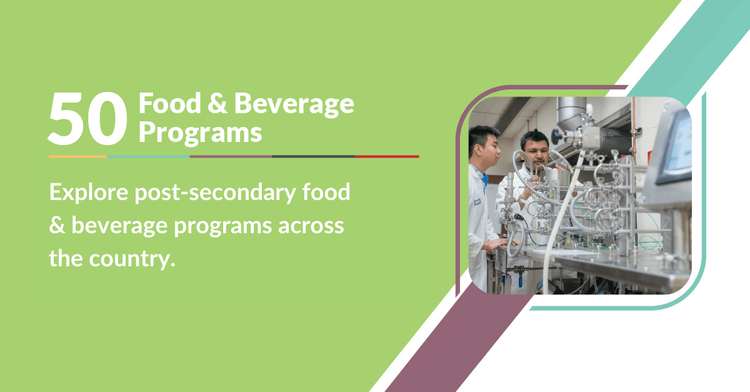
Canada is home to a diverse and dynamic food and beverage industry, supported by educational programs that train the next generation of chefs, brewers, entrepreneurs, and innovators. This roundup highlights 50 standout programs across the country, from top culinary schools and hospitality management courses to cutting-edge research initiatives and sustainability-focused training. Whether you're an aspiring professional, educator, or industry enthusiast, these programs provide valuable insights into the evolving world of food and drink in Canada. BC & Yukon Vancouver Community College UBC BCIT LaSalle College (Vancouver) UBC: Food, Nutrition, and Health Okanagan College Vancouver Island University University of Fraser Valley Northern Lights College North Island College Yukon University Selkirk College Thompson Rivers University Kwantlen Polytechnic University Prairies Saskatchewan Polytechnic University of Alberta University of Saskatchewan University of Manitoba SAIT NAIT Manitoba Institute of Trades & Technology International College of Manitoba Ontario Niagara College Humber College Le Cordon Bleu Ottawa George Brown College Fanshawe College Brock University University of Guelph Toronto Metropolitan University Loyalist College Georgian College Conestoga College Durham College Centennial College Canadore College Algonquin College Trent University St. Lawrence College St. Clair College Sault College Lambton College Confederation College Quebec McGill University LaSalle College Bishop's University Atlantic Canada University of PEI Memorial University Cape Breton University
Community Manager-
50 Food & Beverage Programs - Vancouver Island University
Crafting a Career in BC ’ s Wine Industry: VIU ’ s Wine Business Program The Wine Business program at Vancouver Island University is a comprehensive one-year certificate course designed for those passionate about pursuing a career in the BC wine industry. The program combines practical experience with academic learning in viticulture, wine business practices, marketing, and tourism. Program Highlights: As a student, you ’ ll have the chance to immerse yourself in hands-on experiences at local vineyards and wineries, gaining insights into the entire winemaking process. This practical foundation is then complemented by academic courses in viticulture, wine business practices, marketing, and tourism. A standout feature of this program is its flexibility. Whether you ’ re looking to study full-time for a year or prefer a part-time option spread over two years, VIU has you covered. Located in picturesque Nanaimo, BC, VIU provides an ideal setting for your wine education journey. With a curriculum designed to integrate viticulture essentials with business acumen, VIU ’ s Wine Business program offers a holistic understanding of the wine industry. Students can also earn credits that can be applied toward a Bachelor of Business or a Hospitality and Tourism Management program, opening doors to a wide range of future career prospects. The program includes seven courses and focuses on the broader aspects of the wine industry. In addition to viticulture and winemaking, students delve into wine marketing, exporting, and the vital role of wine tourism. C ourses cover a wide spectrum, from wine marketing and appreciation to beverage theory and the management of wine tourism. The program also offers elective courses in consumer behavio u r, entrepreneurship, and festival management . What You’ll Leave With: Upon graduation, a world of opportunities awaits you in BC ’ s wine industry. Whether you dream of managing a vineyard, excelling in wine s ales and marketing, or even opening your own restaurant, VIU ’ s Wine Business program provides the knowledge and skills to make your wine-related ambitions come true. Career options span winery/vineyard management, retail sales, wine marketing representation, hotel management, culinary arts, a gri - tourism development, and s pecial events coordination. V ideo/Social / Media : VIU YouTube Video
Community Manager-
Cellular Food in Canada
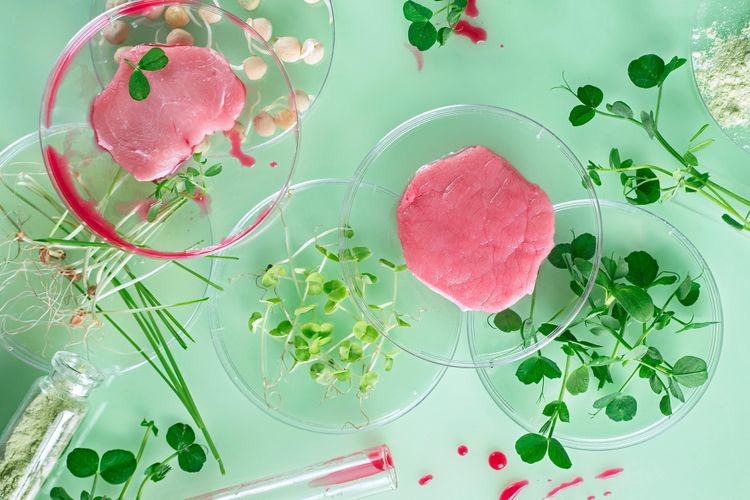
The past few years have proven how susceptible Canada’s food industry is to world events, supply chain disruptions and climate changes. New food production technology, such as cellular agriculture, has the potential to alleviate some of these challenges, while creating commercial opportunities and building a more sustainable, resilient food system. What is it? Cellular food – also known as engineering biology, synthetic biology or cell-cultivated products – is the production of food and textile products without using animals or land. Cell cultures harvested from animals, plants or micro-organisms are grown in the lab through tissue engineering or precision fermentation to produce: Cultivated proteins such as chicken, beef and seafood Fermented products like dairy, eggs, honey and chocolate Ingredients to add to products to create hybrid foods including proteins, enzymes, flavour molecules, vitamins, pigments and fats Textiles such as leather, silk and wool Why you should care As global population continues to grow, so does demand for protein, while access to land and other resource inputs become more scarce. Alternative agriculture could be an answer to food scarcity, concerns about animal and environmental welfare, cost inflation and resource challenges due to climate change. Compared to conventional agriculture, cellular agriculture production, is much less energy intensive, produces less greenhouse gas emissions, and has a much lower overall carbon footprint. With our strong food infrastructure, reputation for food safety, biotechnical expertise, and federal support for alternative protein production, Canada is well positioned to become a leader in cellular agriculture. The 2021 report Cellular Agriculture: Canada’s $12.5 Billion Opportunity in Food Innovation from Ontario Genomics and the Food and Agriculture Institute at the University of the Fraser Valley found that the international cellular agriculture market will reach US$100 billion by 2032. Canada’s food industry has the potential to take $12.5 billion that market, while creating up to 142,000 high-paying jobs. Opportunities in Canada Engineered plant proteins are already in the Canadian market, and by all estimates, precision fermented products are expected to appear before cultured meat products. Current Canadian regulations consider food produced through cellular agriculture as a novel food, and products are approved on a case-by-case basis. Here are a few Canadian start-ups making headlines: Because Animals – This Toronto-based pet food company uses cultured ingredients such as probiotics and nutritional yeast to create nutrient-rich cat and dog food designed to help digestive issues. Future Fields – Edmonton, AB-based Future Fields is a R&D producing growth media products that can be used to create commercialized cultivated proteins in a safe and sustainable manner. Cell-Ag Tech – Toronto’s Cell-Ag Tech is doing R&D on cell-cultured fish and seafood. New Harvest International non-profit research institute New Harvest , which promotes the science behind cultured meat through research, funding and a conference , now has a Canadian branch.
Community Manager-
Other Articles
50 Canadian FoodTech Resources – Richardson Centre for Food Technology and Research
Canada has an extensive range of research centres, food incubators, accelerators and labs supporting food and beverage innovation through the research they do and/or the services they offer. Name: Richardson Centre for Food Technology and Research , at the University of Manitoba . Location: Winnipeg, MB Mission: To advance food quality and human nutrition through traditional and innovative food processing techniques . Focus: The centre partners with the food and agri-food industries on collaborative research and pre-commercial development activities. Services: The Richardson Centre is housed in a 55,000-sq.-ft. building on the University of Manitoba Fort Garry campus. It connects researchers from the Faculty of Agricultural and Food Sciences with food and agriculture companies to conduct collaborative R&D. The centre offers: Human nutrition studies, with staff and equipment for controlled human studies looking at the effects of food products, extracts and specific nutrients on human nutrition and wellness. Food product development, from a 550-sq.-ft. provincially regulated commercial kitchen. The kitchen is also equipped to prepare fixed diets for nutritional trials. Milling and dry fractionation, with a HACCP-registered pilot-scale processing facility for debranning , milling and dry fractionation of grains. Analytical testing for ingredients, food products and grains. Tabletting and capsule filling equipment for pilot processing of dry ingredients or plant extracts for human nutrition. Lab-scale oil extraction. A dairy pilot plant, for the development and manufacture of dairy and plant-based food products. The centre leas es office, laboratory, test kitchen and pilot plant space to food research organizations . What you need to know: The centre collaborates with internationally-recognized researchers from the University of Manitoba ’s Department of Food and Human Nutritional Sciences . The department offers R&D services that include fully-equipped analytical, extraction, processing, cell and tissue culture and genomic laboratories. Notable News: The centre was formerly known as the Richardson Centre for Functional Foods and Nutraceuticals . The name was changed in July 2022 to reflect its focus on collaborating with the food and agri-food industry to advance food quality and human nutrition through research and pre-commercial product development. Get Involved: Contact Dr. Rotimi Aluko , director of the Richardson Centre, at ( 204 ) 474-8883 , or at rotimi.aluko@umanitoba.ca . Or reach out to our Regional Innovation Director for the Prairies, Hubba Khatoon.
Community Manager-
50 Food & Beverage Programs - Niagara College
Crafting Spirits with Expertise: Niagara College ’ s Artisan Distilling Program Niagara College , celebrated for its School of Wine, Beer, and Spirits, offers an exceptional Artisan Distilling program, distinguished by its comprehensive approach and practical orientation. Program Highlights: This program is designed to provide students with hands-on skills essential for mastering the entire production cycle of distilled spirits , covering everything f rom the intricacies of small batch fermentation to the complexities of distillation processes. The training takes place in a state-of-the-art teaching distillery, complemented by experiential learning in an onsite vineyard, orchard, hop yard, and apiary, offering a rare and comprehensive learning environment. But it ’ s not just about the distillation process. The program also delves into the business aspects of the distilling world, covering critical areas like the legal and regulatory frameworks, sensory analysis, and stringent quality control measures. A standout feature of the program is the Chef in Residence initiative, where students have the unique opportunity to learn from leading culinary experts, enhancing their understanding of flavo u r and quality. The curriculum spans two intensive terms, balancing practical skills with theoretical knowledge. Core courses include Distillery Operations, Distillation Science, Practical Distilling I & II, Sensory Analysis, Quality Control, a c apstone p roject focusing on real-world challenges, and Distillation Management. This blend of courses ensures that graduates are well-equipped with both the technical skills and theoretical knowledge needed in the distilling industry. What You’ll Leave With: Upon completion, graduates are poised to step into various roles within the distilling sector , including distillation manager or technician, operations manager, product developer, or quality control inspector. Graduates are skilled not only in crafting unique spirits but also in managing intricate production processes and navigating the legal and regulatory aspects of the distilling industry. Niagara College's Artisan Distilling program is more than just an educational journey; it's a pathway to becoming a distinguished professional in the dynamic world of artisanal spirits. Contact Information : Domestic Inquiries: 905-735-2211 International Inquiries: 905-735-2211 ext. 7151 Video/ Social / Media : Program Overview Niagara College YouTube Channel
Community Manager-
50 Food & Beverage Programs - Okanagan College
Okanagan College’s Food, Wine and Tourism diplomas and certificates. Okanagan College offers a variety of programs in Food, Wine and Tourism , including certificate , diploma and apprenticeship programs in Culinary and Pastry Arts, Viticulture and Wine Studies, and Tourism and Hospitality. Okanagan College is also home to the BC Beverage Technology Access Centre (BTAC), which supports the province’s beverage sector through research, innovation and training. Program Highlights: Culinary and pastry arts programs focus on a farm-to-table approach, exploring fresh local products. Commercial kitchen spaces allow students to learn the latest techniques from Red Seal-certified chef instructors, and students have the opportunity to work in restaurant co-op placements and in Infusions, Okanagan College’s on-campus restaurant. Programs include Professional Cook Apprenticeship; Baker Apprenticeship; Culinary Arts Certificate; Culinary Management Diploma; and Pastry Arts Certificate. Okanagan College Continuing Studies Viticulture and Wine Studies programming was developed in conjunction with wine industry experts and is specifically designed to serve the needs of the wine industry. Programs include Viticulture Certificate; Wine Sales Certificate; and Winery Assistant Certificate. A new Vineyard Establishment and Sustainability Micro-Credential is also available. Instructors are experienced and respected practitioners, and students learn in the heart of B C wine country with opportunities to gain hands-on skills at local vineyards and award-winning wineries throughout the region. What You’ll Leave With: C ulinary and pastry arts programs s tudents will graduate with the fundamental skills needed to work in the culinary industry . Graduates of viticulture and wine studies have the opportunity to work in all aspects of the wine industry, from grape growing and wi nemaking , to wine and winery sales and marketing. Key People & Contact Information Brian Alexander - Culinary Arts Email: balexander@okanagan.bc.ca Phone: 250-762-5445 ext. 4412 James Armstrong - Trades General Interest Email: jaarmstrong@okanagan.bc.ca Phone: 250-762-5445 e xt. 4591 Mike Barillaro - Culinary Arts Email: mbarillaro@okanagan.bc.ca Phone: 250-762-5445 ext. 4698 Daniel Capadouca – Chair, Culinary & Pastry Arts Email: dcapadouca@okanagan.bc.ca Phone: 250-762-5445 ext. 4248 Geoffrey Couper - Culinary and Pastry Arts Email: gcouper@okanagan.bc.ca Phone: 250-762-5445 ext. 4592 Reinhard Foerderer - Culinary and Pastry Arts Email: rfoerderer@okanagan.bc.ca Phone: 250-762-5445 ext. 4549 Christine Leroux - Winery Assistant Instructor Alison Moyes - Winery Assistant Instructor Mireille Sauve - Wine 21 Instructor Elaine Vickers - Winery Assistant Instructor Lucas Whittall - Wine Sales Instructor For Viticulture and Wine Studies inquiries Email icarter@okanagan.bc.ca , or phone 250-492-4305, ext. 3206 . Video/Social/Media: Okanagan College Instagram Okanagan College Facebook
Community Manager-
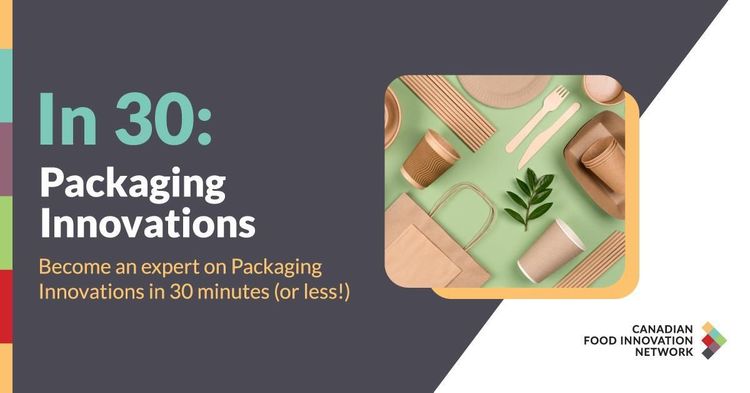
In 30: Packaging Innovations
Sometimes, all it takes is 30 minutes to learn the ins and outs of new food technologies and trends that are transforming the food and beverage industry. In this series, we’ll dig into a food innovation topic and link you to content and resources so you can become a master on the topic in 30 minutes (or less!). This week, we’re looking at packaging innovations designed to reduce plastic waste and extend shelf life. The Overview YODL - Innovation in the circular economy of plastic packaging I nnovative packaging solutions continue to be introduced as alternatives to trad itional plastics, to reduce landfill waste , and to lessen the impact on the environment. Mintel – Global Packaging Trends for 2023 The macro-environmental factors impacting the packaging industry in 2023 and beyond. YODL - From biowaste to sustainable packaging Lobster shells left over from processing are being used to create a biopolymer that can be incorporated into environmentally friendly packaging with antimicrobial properties. YODL - Plastics Packaging Innovation – Nine Strategies Transforming the Food Industry Today Design interventions and innovative approaches that are more in line with circular economy principles and evolving recycling systems. YODL - Packaging Misconceptions Unwrapped The consumer conscience is shifting in favour of sustainable packaging , affecting purchase decisions. The Canadian Connection YODL – The Canada Plastics Pact The Canada Plastics Pact (CPP) is an independent, not-for-profit organization working with Canadian businesses, policymakers, associations and NGOs to create a circular economy for plastic packaging by 2030. YODL – Copol International North Sydney, NS-based Copol International Ltd. manufactures cast polypropylene film for the flexible packaging industry, mostly for food packaging and often for high heat applications such as sterilizing. YODL – Rapid Aid Corp Rapid Aid's TempAid division specializes in design and manufacturing of highly engineered packaging solutions for shipping temperature-sensitive goods. Social Media Friendlier (Facebook) – Guelph, ON-based Friendlier offers low-cost reusable containers for foodservice in more than 200 locations across Ontario and Western Quebec. MySuppli (Instagram) Toronto, ON-based Suppli makes it easy for food vendors to swap in high-quality reusable food containers for their single-use containers in a way that drives additional revenue. Relocalize (LinkedIn) Montreal, QC’s Relocalize Inc. hyper-localizes packaged food manufacturing with autonomous factories that eliminate middle mile logistics and CO 2 emissions, while reducing product costs and cutting waste. Overtime If you’ve got more than 30 minutes, these are for you: YouTube - The future of plastic in food packaging CFIN’s Isabelle Marquis speaks with Isabelle Des Chênes , executive vice president of the Chemistry Industry Association of Canada, on the innovations being developed to make plastic packaging more efficient and eco-responsible.
Community Manager-
50 Food & Beverage Programs - NAIT
Culinary Mastery at NAIT: Blending Art with Skill in Edmonton ’ s Renowned Culinary Program Located in the he art of Edmonton, A B, the Northern Alberta Institute of Technology (NAIT) is renowned for its focus on hands-on training and the development of practical skills . NAIT is the perfect launchpad for those aspiring to make a mark in the culinary world. Program Highlights: The Culinary Arts program at NAIT is specifically designed for individuals who thrive in dynamic, creative environments and have a deep appreciation for the art of food creation. This two-year, full-time program, starting in January and September, is conducted at NAIT ’ s main campus. With a unique hybrid mode combining in-class instruction and practical experience, the program offers a comprehensive curriculum that caters to weekday daytime schedules. A standout feature of the program is the state-of-the-art Hokanson Centre for Culinary Arts, where students get to practice their culinary skills. The Chef in Residence program at NAIT is another highlight, offering students the opportunity to learn directly from world-renowned chefs. This exposure ensures that students not only learn the kitchen fundamentals , but also gain insights into advanced culinary theory and management techniques, keeping the course content relevant to the ever-evolving culinary industry. Admission into this program requires at least English 10-1 or English 10-2, Math 10C or Math 10-3, or their equivalents. For those with a background in the culinary arts, five credits of Advanced Level Food courses from the Career and Technology Studies program are also considered. Additionally, proof of English Language Proficiency is a prerequisite for non-native speakers. The first year of the program delves into kitchen fundamentals, culinary theory, nutrition, sanitation, and trade math. In the second year, students hone their culinary finesse and explore international and contemporary cuisines, along with menu management. The state-of-the-art labs, equipped with motion sensor cameras and plasma screens, and featuring top-of-the-line equipment such as programmable ovens, provide an ideal learning environment. Ernest ’ s Dining Room, NAIT ’ s practical learning environment, allows students to showcase their culinary skills and finesse to real customers, further enhancing their learning experience. What You’ll Leave With: Upon graduation, students find themselves in high demand across various sectors of the culinary industry. Employment opportunities abound in hotels, restaurants, and catering facilities. Graduates also explore roles in culinary publishing, food styling, and product research, reflecting the diverse skill set acquired through the program. NAIT ’ s Culinary Arts program is more than just a learning journey; it ’ s an opportunity to master the art and science of cooking, paving the way for a successful and fulfilling career in the culinary arts. V ideo/Social/Media : Student Experience at NAIT Culinary Arts Instagram Facebook Twitter LinkedIn
Community Manager-
AI + Food – ThisFish Inc.
Editor's Note: This article was originally published on 11-07-2023. Canadian food, beverage and foodtech companies are using AI to solve a wide variety of industry challenges, including improving efficiency, pricing analysis, inventory management, quality control, food safety assurance and more. In this installment, we’re looking at ThisFish Inc. What They Do Vancouver, BC-based ThisFish Inc. provides TallyVision , an AI solution for seafood traceability and production workflows designed to boost business efficiency, transparency and compliance in seafood supply chains. How They’re Using AI The TallyVision software, combined with sensors and industrial hardware such as scanners, digital scales and computer vision technology, help s seafood processing plants automate data collection and digitize information systems to produce real-time insights that can be used to improve traceability and quality control, while reducing waste. The software also provides for the use of QR code labels, allowing customers to track seafood through retailing and processing back to the farm or fishing vessel that harvested it. In the Media Government of BC - ThisFish Tracks BC Seafood The B.C. government supports traceability as a public health measure and to help businesses run efficiently. Global Seafood Alliance – ThisFish Launches Seafood Sector Software Directory ThisFish has launched an online directory of software, artificial intelligence (AI) and blockchain technologies for the seafood sector.
Community Manager-
50 Food & Beverage Programs - Loyalist College
Culinary Dreams Take Flight at Loyalist College Nestled in Belleville, ON , Loyalist College is a hub of culinary excellence, offering programs that perfectly blend theoretical knowledge with hands-on training. This college is an ideal destination for those who are passionate about food and aspire to blend culinary artistry with essential management skills. Program Highlights: At Loyalist College, the culinary programs are created to meet the diverse needs of the culinary industry. The college offers a one-year Ontario College Certificate in Culinary Skills and a two-year Ontario College Diploma in Culinary Management, catering to both foundational and advanced aspects of culinary education. A unique feature of these programs is the experiential learning component , where students gain real-world experience in kitchen and dining room operations at Resto 213, the college’s training restaurant. This practical approach prepares them for the multifaceted world of culinary management. Beyond the kitchen, students engage in field trips to local farms, wineries, and restaurants, building connections and gaining insights into the local food and beverage industry. These experiences are further enriched by opportunities for international trips, offering a glimpse into global food cultures and practices. The curriculum is led by expert faculty, including licensed chefs and Red Seal pastry chefs, who provide guidance in small class settings for personalized learning. In the first semester of the Culinary Skills program, students dive into courses like Career Preparation; Culinary Math; and Culinary Techniques 1 and Food Theory 1, where they get hands-on foundational culinary skills and understand the science behind food preparation. Techniques of Baking 1 rounds out the semester by mastering the art of baking and pastry. What You’ll Leave With: Graduates from Loyalist College’s culinary programs are well-equipped for positions in culinary establishments such as restaurants, hotels, and gourmet kitchens. They have the potential to become executive chefs, sous chefs, or to embark on their own culinary business ventures. Additionally, graduates are eligible to write the exam for the Interprovincial Red Seal Certification, a testament to their skills and professionalism. Employers like Chef Jason McColl of Blümen Garden Bistro have lauded Loyalist students for their exceptional work ethic and professionalism, especially a t events like the Canadian National Chef’s Congress. Loyalist College ’ s Culinary Management and Culinary Skills programs are not just about learning how to cook; they are about crafting a career in the culinary arts, underpinned by a deep understanding of the industry and its global connections. C ontact Information: General Inquiries : 613-969-1913, ext. 2100 | info@loyalistcollege.com Admissions : Domestic: admissions@loyalistcollege.com International: internationaladmissions@loyalistcollege.com V ideo/Social/Media : Culinary Program Overview Instagram
Community Manager-
50 Food & Beverage Programs - BCIT
The Food Technology Program at the BC Institute of Technology (BCIT) trains students in the basics of food technology, including food processing, quality control, food testing and analysis . Program Highlights: The two-year, full-time diploma program includes on-campus lectures and labs (at the Burnaby Campus) to provide students with both theory and practical experience. An industry-sponsored project gives students applied learning opportunities. Students will interact with industry sponsors who mentor and support students in learning food technology skills. This program is for students who enjoy working individually and in a team environment, have a passion for food and the food industry, and are interested in developing their critical thinking skills . Student must have a high school diploma or higher level of education. What You’ll Leave With: Diploma program students graduate with all the practical skills necessary to work in the food production industry. Most graduates are hired within two months of graduating . Graduates can choose to apply to other bachelor’s degree programs, including Environmental Public Health. Key People: Erin Friesen, PhD - Program Head Rebecca Robertson, MSc – Instructor Ken Keilbart , Dipl - Assistant Instructor Melinda Lee , Dipl III - Technical Staff Contact Information: bcit.ca Telephone: 604-434-5734 Toll-free : 1-866-434-1610 Video/Social/Media: BCIT Food Technology on Instagram BCIT Food Technology Online Info Session on YouTube
Community Manager-
50 Food & Beverage Programs - Le Cordon Bleu Ottawa
Le Cordon Bleu Ottawa: Mastering the Art of Bakery and Artisan Breads In the heart of Ottawa, Le Cordon Bleu is renowned for shaping the skills of culinary enthusiasts and professionals around the world . For those with a fervent passion for baking, Le Cordon Bleu Ottawa’s Bakery, Danish Pastries and Artisan Breads program is an unparalleled opportunity to delve into the world of traditional French bakery over an intensive three-month course. This program is for aspiring artisanal bakers, professional chefs, entrepreneurs, or anyone passionate about the art of bread baking. Program Highlights: The program offers an immersive experience in the multifaceted world of baking. Students engage in hands-on classes in state-of-the-art kitchens, equipped with specialized amenities like a custom-built Bongard boulangerie oven. This practical approach is underpinned by a low student-to-teacher ratio, ensuring personalized guidance from experienced Chef Instructors. The curriculum covers the breadth of bakery theory, from the fundamentals of yeast doughs and fermentation processes to techniques for making regional specialties and diverse laminated and rich doughs. Students are led through an explorative journey of bakery theory and food hygiene, focusing on core baking principles, ingredient selection, and food safety. Key practical sessions include mastering yeast growth factors to perfect various types of bread, creating breakfast and specialty breads like croissants and brioche, and the art of international viennoiseries . A significant part of the program is dedicated to artisan breads, where students develop starters like Poolish and Sourdough, leading to unique bread varieties. What You’ll Leave With: Upon completion, students receive the Boulangerie de Base Certificate, marking their mastery in bakery and pastry arts. This program is ideal for high school graduates seeking a career in bakery and pastry arts, culinary enthusiasts wanting to open their own bakery or expand their culinary repertoire, and those passionate about both traditional and contemporary baking techniques. Le Cordon Bleu Ottawa ’ s Bakery, Danish Pastries and Artisan Breads program is more than just a course – it’s a transformative journey into the heart of bakery art, blending time-hono u red traditions with modern innovation, and opening doors to a world of opportunities in the culinary industry. C ontact Information : Phone: 613 - 236 - 2433, Toll-Free: 1-888-289-6302 WhatsApp: 855 - 214 - 9817 Address: 453 Laurier Avenue East, Ottawa, Ontario, K1N 6R4, Canada V ideo/Social/Media: Bakery Program Overview Instagram Facebook
Community Manager-
#Ask Lavina – Communicating Complex Food Science Concepts and AI in F&B Manufacturing (September 2024)
In addition to being CFIN’s Regional Innovation Director for BC and Yukon, Lavina Gully is a food scientist and product developer with almost two decades of experience helping food and beverage companies innovate. In this series, Lavina answers questions from CFIN members on everything from product development, R&D, food industry careers, manufacturing best practices, and co-packing — just to name a few! If you have questions for Lavina, you can reach out to her directly and we can answer your question in next month’s mailbag. This month, Lavina answers your questions about communicating complex scientific concepts to non-technical audiences and where AI is actually being implemented in food development and manufacturing. Q: Our team deals with highly technical processes, and when talking to customers or investo rs, I often struggle to explain our work in a way that’s easy to understand . Any advice on communicating complex food science concepts clearly to a non-technical audience ? This is a common challenge for many food science professionals , especially for researchers, entrepreneurs, and business leaders developing cutting-edge technologies or innovative processes looking to demonstrate the value of their work to critical stakeholders who do not share their subject matter expertise . It’s not an easy skill to learn, but here are a few principles I f ind helpful when c ommunicat ing food science and technology concepts to a non-technical audience. Focus on the benefits : Foodtech founders a nd business leaders with technical backgrounds can often default to lead ing with the science — or the “how” — when communicating the impact or value of their team’s work. As a food scientist myself, I understand this i mpulse , because I find the science behind new products and technologies fascinating and compelling. But many of your audiences, including investors, cross functional colleagues, customers, and board members , will not share this admiration , at least to the same degree. Instead of explaining the science upfront, emphasize what benefits your innovation provide s them . By making this connection, your “how” become s more compelling and understandable . Stick to the e ssentials : When it comes to explaining the sc ientific concepts core to your work, keep the details as broad and digestible as possible . What this looks like in practice will vary depending on your specific audience . For a fantastic example of how it’s possible to simplify a technical concept for different audiences without misrepresenting it, check out t his video series from WIRED , in which experts communicate their work at five levels of complexity : for a child, a teen, a college student, a grad student, and a fellow expert. Studying how experts in different fields refine their messaging for non-experts will help you do the same. Build a n arrative : People remember stories, not facts and data. Indeed, storytelling has been shown to increase an audience’s engagement and willingness to act upon scientific information. Look for ways to present technical concepts as part of a larger narrative invo lv ing how your product or process solves a problem or improves and outcome. The more relatable the story is for your target audience , the better. Here’s some more great tips for finding and crafting effective stories. Ultimately, t he goal is to leave your audience with a clear understanding of the value and impact of your work . Focusing on the benefits, striving for simplicity, and s eek ing out the larger narratives behind your work will help you do that effectively . Q: It seems like nearly every product and service now boast s about some AI feature, and it’s hard to tell what’s hype and what’s real. Where is AI actually being implemented in food manufacturing to streamline processes or enhance product innovation? Like every industry these days, AI is definitely creating a lot of excitement in the food sector , but it can be difficult to separate genuine breakthroughs from marketing buzz . However, t h ere certainly are real-world examples where AI solution s are already being deployed and have the potential to make a genuine impact for food manufacturers , including : Quality control and defect detection : AI-driven visual inspection systems can spot defects or inconsistencies in food products , often with greater accuracy than human inspectors. For example, Vancouver-based company Fabri S ight is developing Large Vision Models (LVMs) — advanced AI systems that can analyze and interpret visual data to quickly detect issues in packaging, ensure uniformity in baked goods, or identify contamination on production lines. Demand forecasting and supply chain optimization : AI can analyze historical sales data and external factors (like weather or economic trends) to predict supply and demand trends more accurately. This can help manufacturers plan production schedules, reduce waste, and optimize inventory management. Predictive maintenance and equipment monitoring : AI is being used to predict when machinery is likely to fail, allowing manufacturers to perform maintenance before issues occur. This can help minimize downtime and increases overall equipment efficiency. Product formulation and recipe optimization : AI can help optimize recipes and product formulations for taste, texture, nutritional content , and environmental impacts, but only huma ns can tell if those creations are actually tasty (for now...). AI is likely following the “ Gartner Hype Cycle ,” a graph that illustrates the maturity and adoption phases of new innovation s . Given the AI frenzy of the last few years, we’re probably solidly within the “Inflated Expectations” phase of the AI hype cycle , where excitement surrounding AI’s potential is soaring, but not always fully v alidate d by results. That said, whi le most AI solutions are still in their e arly stage s , the above areas of implementation have the potential to deliver tangible benefits for the food sector , and I ’ m excited to see how they continue to evolve.
Community Manager-
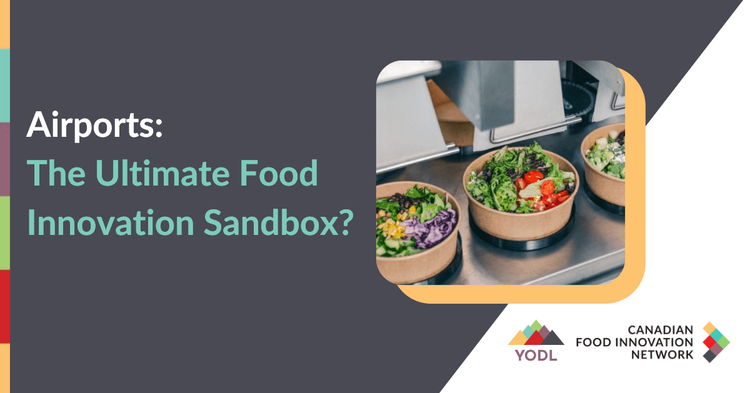
Airports: The Ultimate Food Innovation Sandbox?
Earlier this month , the CFIN team was privy to a behind-the-scenes tour of Toronto Pearson International Airport . With Suzanne Merrell , the Dining Development Manager for Greater Toronto Airports Authority (GTAA) , serving as our knowledgeable guide, our eyes were opened to the gargantuan feat of feeding the tens of thousands of traveller s who use North America’s second busiest airport every day . Layered on top of th is sheer volume of diners are additional complexities — the security measures, the scarcity of kitchen space, the logistics of distributing food , and the task of hauling of food waste out . Taken a ltogether, the challenges of airport food operations become truly daunting. However, t he se intense demands mean that airports are something of an innovation sandbox , as this compounding set of operational constraints encourage s technology adoption and experimentation that can create transferable learning for foodserv ice providers of all sizes and kinds . Here are a few of the challenges that were highlighted on our tour, plus a look at some of the opportunities for CFIN members developing potential solutions for these challenges. The Challenge: Food Waste On average, 140,000 to 160,000 travellers pass through Pearson International every day. F ood waste management for airports at this scale is on par with many small cities . T he challenge is not only the volume but also the logistics of managing that waste efficiently in a secure and compact environment. Transporting food waste off-site is costly and time-consuming, and with airport security measures, moving anything in and out of terminals requires extra steps. The Opportunity: Food Cycle Science makes it possible for airports to manage food waste on-site. Their compact, commercial-scale food waste processing units can reduce organic waste by up to 90% in volume, converting it into nutrient-rich compost. This could be a game-changer for airports, reducing the need for waste hauling and lowering environmental impact. The Challenge: Ventilation Cooking in airports is often limited by ventilation restrictions, particularly in older terminals. Traditional cooking methods, which produce heat or smoke , require extensive ventilation systems that many airports cannot easily accommodate. The re is a need for non -vented cooking technology, which allows for food preparation without complex venting infrastructure. The Opportunity : One company innovating in this space is KitchenMate , a Toronto-based startup developing vending technologies that can provide warm, prepared meals in small spaces without the need for full kitchen infrastructure . These systems are an ideal option for airports where installing new kitchen ventilation is a major infrastructural constraint. The Challenge: Inventory Management Despite featuring nearly 100 distinct restaurants and catering services , much of the food prep at Pearson International happens in c entralized commissary kitchens to save space and maximize efficiency . Managing inventory efficiently across such a large-scale operation is a challenge, especially when there is limited storage and fluctuating demand across very different food service operators . The Opportunity: Cheffer , a Toronto -based company, offers a platform that provides real-time data analytics for inventory management. They specialize in h elping companies like hotel s and retirement homes — operations with substantial dining services despite it not being their primary function . Cheffer's software helps these operators better manage inventory levels, reduc e food waste , and optimize scarce food service resources . This type of data-driven approach could further stre amline operations for airport commissaries, improving efficiency and reducing costs. The Challenge: Refrigeration Airport operations require vast amounts of refrigeration to store perishable items, but space is often limited, and energy efficiency is critical. Traditional refrigeration systems are not always well-suited to these high-demand environments. The Opportunity: One potential opportunity for airports is to reduce steps in the ir internal cold chain s . Relocalize could help do this via their decentralized, automated micro-factories for frozen food and beverage production. On-site production of certain products could cut down on the capacity demands for traditional commercial refrigeration and reduces the carbon footprint of transporting highly perishable goods. By bringing production closer to the poi nt of sale , Relocalize offer s a fresh approach to food refrigeration that aligns with the space and energy constraints of airports. The Challenge: Automation Staffing shortages are a constant concern in airports . Meanwhile, f ranchises at Pearson International are often the busiest in the country (or, in the case of A&W, the busiest in the world ) , so these food service operators are under constant pressure to deliver orders quickly and consistently. Automation can help fill gaps in the workforce while ensuring that operations run smoothly, particularly in high-volume settings where efficiency is critical. The Opportunity : Robotic makelines like Cibotica’s can significantly increase the speed and consistency of food preparation. Their fully automated systems handle everything from ingredient preparation to assembly, allowing restaurants to meet the demands of high-volume orders while maintaining quality and efficient service that travellers expect. By highlighting these Canadian innovators, we can see how technology can help us tackle some of the most pressing food sector challenges — in airports and beyond. What are some other innovative solutions you believe could be applied to the unique challenges of airport food operations ?
Community Manager-
50 Food & Beverage Programs - LaSalle College (Vancouver)
LaSalle College: A Gateway to Culinary Mastery and Restaurant Ownership Nestled in the heart of Vancouver, LaSalle College i s a pinnacle of culinary excellence. Celebrated for its progressive culinary arts programs, the college offers an Advanced Diploma program in Culinary Arts and Restaurant Ownership, designed to cultivate the culinary leaders and restaurateurs of tomorrow. This program extends over six quarters, offering a comprehensive blend of culinary education and restaurant management. Program Highlights: The journey at LaSalle College is marked by dynamic experiential learning within state-of-the-art facilities. Students engage in practical learning, refining their skills in modern and regional North American cuisine at the college ’ s student-run restaurant. The curriculum is rich and diverse, encompassing everything from the fundamentals of culinary techniques to the intricacies of financial management in the hospitality industry. The program's unique selling points include a combination of practical culinary training and essential managerial knowledge, setting students up for success in the complex culinary arts landscape. The learning experience is further enhanced by a lively, innovative environment equipped with the latest culinary tools and facilities. A key aspect of the program is the mandatory paid internship term, where students apply their skills in real-world settings, gaining invaluable industry experience. Additionally, the program offers global exposure through international study tours and semester abroad opportunities, broadening students ’ horizons. What You’ll Leave With: Upon completion of the program, students are awarded an Advanced Diploma, recognized by the Ministry of Post-Secondary Education and Future Skills. Graduates from this program are well-equipped to pursue a range of career paths within the culinary sector, including restaurant management and ownership. The program is ideal for high school graduates, individuals looking to transition into the culinary field, aspiring restaurant owners, culinary entrepreneurs, and anyone with a deep-seated passion for food and hospitality management. C ontact Information : Phone: 604 - 683-2006, Toll-free: 1- 877 - 847-7902 WhatsApp/SMS: 778 - 654-7262 Office Hours: Monday to Friday 8:30 AM to 5:00 PM, Saturdays by appointment V ideo/Social/Media : Culinary Arts Program Overview Faculty Insights Alumni Success Stories