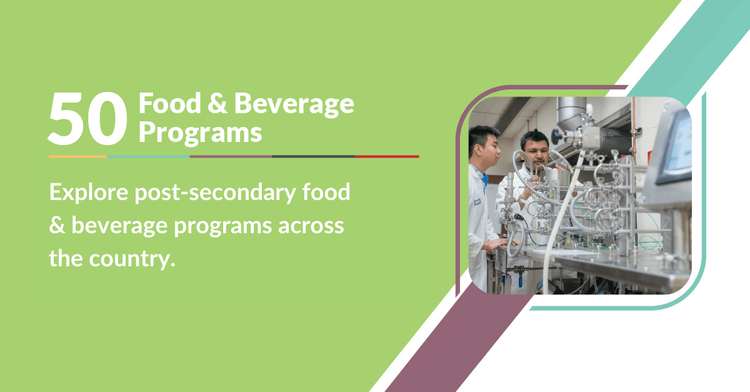
Canada is home to a diverse and dynamic food and beverage industry, supported by educational programs that train the next generation of chefs, brewers, entrepreneurs, and innovators. This roundup highlights 50 standout programs across the country, from top culinary schools and hospitality management courses to cutting-edge research initiatives and sustainability-focused training. Whether you're an aspiring professional, educator, or industry enthusiast, these programs provide valuable insights into the evolving world of food and drink in Canada. BC & Yukon Vancouver Community College UBC BCIT LaSalle College (Vancouver) UBC: Food, Nutrition, and Health Okanagan College Vancouver Island University University of Fraser Valley Northern Lights College North Island College Yukon University Selkirk College Thompson Rivers University Kwantlen Polytechnic University Prairies Saskatchewan Polytechnic University of Alberta University of Saskatchewan University of Manitoba SAIT NAIT Manitoba Institute of Trades & Technology International College of Manitoba Ontario Niagara College Humber College Le Cordon Bleu Ottawa George Brown College Fanshawe College Brock University University of Guelph Toronto Metropolitan University Loyalist College Georgian College Conestoga College Durham College Centennial College Canadore College Algonquin College Trent University St. Lawrence College St. Clair College Sault College Lambton College Confederation College Quebec McGill University LaSalle College Bishop's University Atlantic Canada University of PEI Memorial University Cape Breton University
Community Manager-
50 Food & Beverage Programs - Vancouver Island University
Crafting a Career in BC ’ s Wine Industry: VIU ’ s Wine Business Program The Wine Business program at Vancouver Island University is a comprehensive one-year certificate course designed for those passionate about pursuing a career in the BC wine industry. The program combines practical experience with academic learning in viticulture, wine business practices, marketing, and tourism. Program Highlights: As a student, you ’ ll have the chance to immerse yourself in hands-on experiences at local vineyards and wineries, gaining insights into the entire winemaking process. This practical foundation is then complemented by academic courses in viticulture, wine business practices, marketing, and tourism. A standout feature of this program is its flexibility. Whether you ’ re looking to study full-time for a year or prefer a part-time option spread over two years, VIU has you covered. Located in picturesque Nanaimo, BC, VIU provides an ideal setting for your wine education journey. With a curriculum designed to integrate viticulture essentials with business acumen, VIU ’ s Wine Business program offers a holistic understanding of the wine industry. Students can also earn credits that can be applied toward a Bachelor of Business or a Hospitality and Tourism Management program, opening doors to a wide range of future career prospects. The program includes seven courses and focuses on the broader aspects of the wine industry. In addition to viticulture and winemaking, students delve into wine marketing, exporting, and the vital role of wine tourism. C ourses cover a wide spectrum, from wine marketing and appreciation to beverage theory and the management of wine tourism. The program also offers elective courses in consumer behavio u r, entrepreneurship, and festival management . What You’ll Leave With: Upon graduation, a world of opportunities awaits you in BC ’ s wine industry. Whether you dream of managing a vineyard, excelling in wine s ales and marketing, or even opening your own restaurant, VIU ’ s Wine Business program provides the knowledge and skills to make your wine-related ambitions come true. Career options span winery/vineyard management, retail sales, wine marketing representation, hotel management, culinary arts, a gri - tourism development, and s pecial events coordination. V ideo/Social / Media : VIU YouTube Video
Community Manager-
Cellular Food in Canada
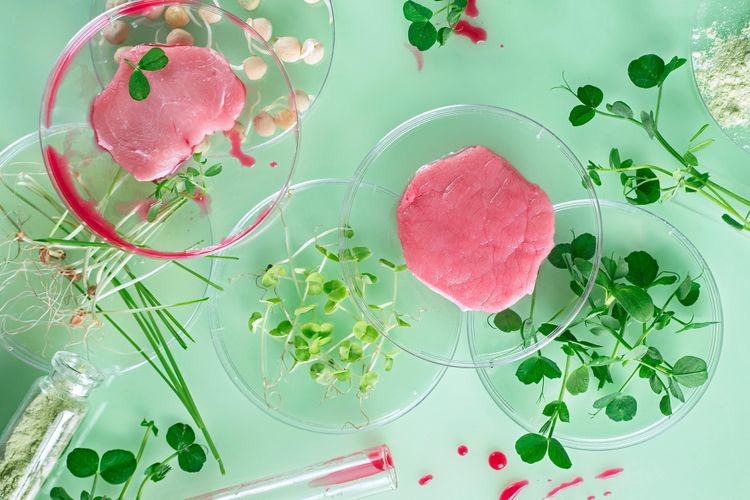
The past few years have proven how susceptible Canada’s food industry is to world events, supply chain disruptions and climate changes. New food production technology, such as cellular agriculture, has the potential to alleviate some of these challenges, while creating commercial opportunities and building a more sustainable, resilient food system. What is it? Cellular food – also known as engineering biology, synthetic biology or cell-cultivated products – is the production of food and textile products without using animals or land. Cell cultures harvested from animals, plants or micro-organisms are grown in the lab through tissue engineering or precision fermentation to produce: Cultivated proteins such as chicken, beef and seafood Fermented products like dairy, eggs, honey and chocolate Ingredients to add to products to create hybrid foods including proteins, enzymes, flavour molecules, vitamins, pigments and fats Textiles such as leather, silk and wool Why you should care As global population continues to grow, so does demand for protein, while access to land and other resource inputs become more scarce. Alternative agriculture could be an answer to food scarcity, concerns about animal and environmental welfare, cost inflation and resource challenges due to climate change. Compared to conventional agriculture, cellular agriculture production, is much less energy intensive, produces less greenhouse gas emissions, and has a much lower overall carbon footprint. With our strong food infrastructure, reputation for food safety, biotechnical expertise, and federal support for alternative protein production, Canada is well positioned to become a leader in cellular agriculture. The 2021 report Cellular Agriculture: Canada’s $12.5 Billion Opportunity in Food Innovation from Ontario Genomics and the Food and Agriculture Institute at the University of the Fraser Valley found that the international cellular agriculture market will reach US$100 billion by 2032. Canada’s food industry has the potential to take $12.5 billion that market, while creating up to 142,000 high-paying jobs. Opportunities in Canada Engineered plant proteins are already in the Canadian market, and by all estimates, precision fermented products are expected to appear before cultured meat products. Current Canadian regulations consider food produced through cellular agriculture as a novel food, and products are approved on a case-by-case basis. Here are a few Canadian start-ups making headlines: Because Animals – This Toronto-based pet food company uses cultured ingredients such as probiotics and nutritional yeast to create nutrient-rich cat and dog food designed to help digestive issues. Future Fields – Edmonton, AB-based Future Fields is a R&D producing growth media products that can be used to create commercialized cultivated proteins in a safe and sustainable manner. Cell-Ag Tech – Toronto’s Cell-Ag Tech is doing R&D on cell-cultured fish and seafood. New Harvest International non-profit research institute New Harvest , which promotes the science behind cultured meat through research, funding and a conference , now has a Canadian branch.
Community Manager-
Other Articles
CFIN at One - Building an Organization
After a full year of operations, CFIN has a lot to be proud of – from building a national organization in a virtual environment, to creating a community of food innovators, and funding innovative food projects across Canada. CEO @Joe Lake spoke with @CarolynCooper about some of CFIN’s accomplishments over the past 12 months. Here’s part one of the three-part series. In part two we’ll discuss how CFIN has created a community in the past year, and in p art three we'll look at how CFIN has funded innovation. Building an Organization CFIN was designed to operate as a virtual organization with national scope, with representatives spread across the country coming together online with one goal: to champion and catalyze food innovation across Canada. Differentiating CFIN from other funding organizations, which often focus on one region or sector, is the fact that CFIN has no limits. “Geographical or sectoral boundaries are usually irrelevant when it comes to innovation – innovation doesn’t know boundaries,” explains CEO Joe Lake. “Working virtually is a very different way of working that has become more normalized through COVID, but it goes back to about 2017, 2018, when the proposal for this organization was created. It’s by design” Lake says there are two key reasons CFIN was designed without a physical headquarters. “Brick and mortar in a particular location has the risk of signalling to that region that you have a kind of unconscious bias towards that area,” he says. “Plus the organization was always designed to be a blend of boots on the ground - people actually out there connecting – with technology used as a home base.” Building a team of full-time staff, including five regional innovation directors (RIDs), was CFIN’s first priority. Without the need to focus on a brick-and-mortar location, CFIN was able to hire 16 full-time employees with a rich variety of professional expertise and backgrounds, working virtually across every Canadian time zone. “What I’m most proud about is really getting this team together around the proverbial virtual table,” says Lake. “And even as a young group, the culture that we’re putting together, the ability for folks to contribute, and their passion being reflected back, is up there with some of the most exciting groups I’ve ever been part of in my working career. CFIN is a place where people feel like they can contribute and take part, and to me that’s just as important as what we’re doing as an organization. Because if an organization is not striving to be open and collaborative, it won’t be able to create an open and collaborative food innovation community. So that emphasis on bringing together the team for me is really exciting.” This culture extends to CFIN’s Executive Board and its subcommittee the Innovation Advisory Council (IAC). “They are responsible for the governance of developing and approving our program themes, and the program criteria, the way they’re assessed and how submissions are scored,” says Lake about the IAC. “This independent committee made up of experts advises CFIN to ensure that we are creating relevant programs and supporting the most impactful projects. And then in certain cases, such as for our Food Innovation Challenges, they are tied to the reviewing process as well. We’re hyper sensitive around issues like confidentiality and conflict of interest, like if you’ve golfed with this person at a charity event let’s be aware of that, did you work together in the same company 10 years ago? Because that’s not unusual in the food business, it’s not as big as you think.” When it came to hiring RIDs, Lake says the collective vision was for them “to be diverse in terms of geography, but also in terms of their experience in the food industry and also their personality types, their behaviour and skills. We thought of them almost like an ‘80s cartoon where they had their individual superpowers, but together they could rise up to form something greater,” laughs Lake. “You know, one’s got a business degree, one has entrepreneurial experience, one’s got marketing, one’s got an R&D technical, one’s got business development. So yes, the RIDs have regional representation, but the team is stronger together for that cross-sectional understanding. Collectively we are going to look at the whole industry and country. I think we achieved it fairly well.” Click here to see more about CFIN’s team, Board of Directors and Industry Advisory Council. Get in touch with one of CFIN’s RIDs in your region: @Lavina Gully (BC), @Hubba Khatoon (Prairies), @Linda Fox (Ontario), @Julie Daigle (Quebec), and @Tyson MacInnis (Atlantic).
Community Manager-
Explained - Upcycling
Are you familiar with upcycling? We are hearing more and more about it, and this is only the beginning of a major new area of innovation in food, as in many other sectors. Here is a brief overview of what you need to know. What it is Upcycling involves using products or materials that are no longer of use to their original user, transforming them and giving them a new purpose whose value is equal to or greater than that of the original product. In food, upcycling mainly applies to raw materials that a processor uses only in part (e.g. broccoli where only the florets are used) or to a processing by-product (e.g. nut pulp, or oilcake, left after the oil has been extracted). Unlike recycling, whose purpose is essentially environmental, upcycling offers both economic and environmental benefits. Why this matters to you Food waste is a major issue: one-third of the world’s food is believed to be thrown away each year. Estimated potential annual economic value of food upcycling, according to the Ellen MacArthur Foundation: 700 billion dollars In Canada alone, food waste results in estimated losses of 31 billion dollars each year. More than half of this waste is thought to be attributable to industry (food processing, retail, agriculture, food service and hospitality, transport and storage). A large share of the food waste generated by industry is thought to consist of processing by-products that can be upcycled. As you can see, food upcycling is a real and concrete opportunity to generate new revenue and innovate. You will also have understood that upcycling begins with a matchmaking stage between companies that wish to offer their “waste” or take that of others. Many initiatives are being introduced across the country to enable and facilitate this matchmaking. For example, Université Laval in Quebec and the University of Guelph in Ontario have both launched pilot projects to bring companies in their regions together and support them in finding economically viable outlets for their by-products. Would you like to explore this topic further or find out about initiatives in place in your region? Contact your regional director today!
Community Manager-
News File – October 7
Each Friday we’ll bring you a roundup of news from CFIN, YODL and around the food world. As seen on YODL Check out this week’s most viewed discussions: Governor General's Innovation Awards | Open Forum (cfin-rcia.ca) Retail Insider Magazine: Creating a network of innovation and inspiration | Open Forum (cfin-rcia.ca) Food packaging/Co Packer | Open Forum (cfin-rcia.ca) Around the Food World The S.Pellegrino Young Chef Academy has announced Canada’s top 10 2022/23 regional finalists. The new report GAME CHANGERS: Canadian Opportunities In Alternative Protein reveals that alternative proteins in Canada could be a $290 billion industry by 2035. The 2022 World Steak Challenge declares Wagyu steak from Japan's Starzen Co. as the winner. Did you Know? Hellmann’s and WRAP, a climate action NGO, recently released a report on food waste and consumer behaviour. Here are a few of the findings: 45% of people polled say they’re throwing away the same amount of food or more per week than this time last year. 29% of Canadians report throwing away the equivalent to one shopping bag of food per week. Food waste costs families approximately $1,352 per year. One in two respondents underestimating the cost savings of reducing their waste. To minimize food waste, 74% of respondents say they’re using a shopping list; 61% are planning meals in advance; and 58% are freezing fresh food and leftover food. 39% of people don't know where to find helpful information when it comes to reducing food waste. When asked, 60% of Canadians said they would like brands to help them be more resourceful with food.
Community Manager-
What if we gave plastic a second chance? Part 1
We have talked a lot about this on YODL in recent weeks: plastic packaging is a major environmental issue, particularly because it is almost everlasting. While many companies are working hard to find alternatives to this near-perfect material for food, others are instead looking for ways to make it more sustainable. When recently asked about the future of plastic in food packaging, Simon Chrétien, General Manager of Alliance Polymères Québec, is clear: Plastic is an essential material for the food industry and provides, and will continue to provide, major benefits to it in the future. The challenge is to ensure intelligent sourcing based on an eco-design approach, combined with an effective recovery stream and therefore sound end-of-life management of products. And this recovery and revalorisation stream is precisely beginning to take shape. The best-known example is undoubtedly Loop Industries ,a company founded in Quebec in 2014 with the mission of accelerating the transition towards a circular plastics economy. Loop Industries’ experts have developed an innovative technology that breaks down PET plastic and polyester fibres into their base components, before recreating virgin-quality material with no loss of quality. In September 2021, Evian announced the launch of a prototype plastic bottle made using Loop Industries’ technology, and more recently Loop announced a commercial supply agreement with Danone and the construction of a plant in Europe. We can therefore expect to see plastic packaging identified as “Loop” appearing soon! Another area of research that is bubbling with innovation is making plastic packaging easier to recycle. From creating resins to designing packaging, and from label management to sorting used materials, every aspect of plastic packaging is being studied and is the subject of research projects around the world. In Canada alone, the plastics industry is a major contributor to the local economy, with annual revenues of nearly $29 billion. The Plastics Division of the Chemistry Industry Association of Canada is particularly active in research and development for innovations that make plastic packaging sustainable. We will be speaking with its Executive Vice-President, Ms Isabelle Des Chênes, next week. Join us to learn more about the future of plastic in food packaging!
Community Manager-
EXPLAINED: Compostable and Biodegradable Plastics
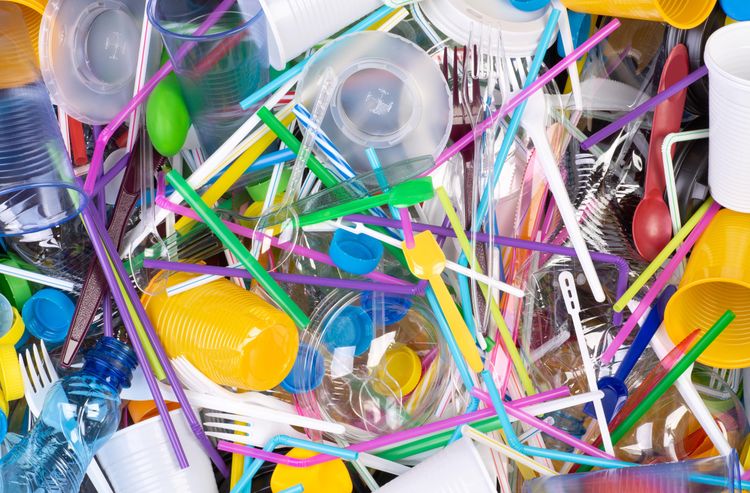
When the federal government published the Single-use Plastics Prohibition Regulations in June 2022, some food retailers and producers were surprised to learn that the incoming ban on single-use plastic (SUP) products will extend to compostable plastic bags and those made with oxo-degradable plastic. Compostable and biodegradable plastic have been touted as an eco-friendly solution for food operators and grocers moving away from SUP bags and utensils. But there’s still confusion over the terms and how this type of plastic affects the environment. What is it? The terms compostable, oxo-biodegradable (which break down in the air) and biodegradable plastic refer to plastic products formed by combining bio-additives such as plant starch with polyethylene, so that it “breaks down.” While most are bio-based, some are still fossil-fuel based, for example oxo-biodegradable plastics are made from oil refining waste. Biodegradable products should eventually break down into their natural state, while products labelled as compostable should completely degrade in compost in a reasonable amount of time. However, the terms are misleading as these plastic products do not degrade the same way as natural materials. Instead, says Michelle Saunders, vice president of Sustainability for Food, Health & Consumer Products of Canada, these products are designed to degrade to a set standard or speed, and they still leach chemicals into the environment. Bio-based products made from plants should also be accredited through third-party field tests showing that the product breaks down in the earth. Why you should care The Single-use Plastics Prohibition Regulations are intended to divert plastic waste from becoming pollution by banning the manufacture, import and sale of six types of SUPs. That includes checkout bags “made entirely or in part from plastic, that is formed in the shape of a bag that is designed to carry purchased goods from a business,” and whose fabric will break or tear if used to carry 10 kg over a distance of 53 m 100 times, or washed in accordance with the washing procedures specified for a single domestic wash in the International Organization for Standardization standard ISO 6330.” The Regulations also include single-use plastic cutlery made entirely or in part from plastic, that is formed in the shape of a fork, knife, spoon, spork or chopstick.” Utensils that “change their physical properties after being run through an electrically operated household dishwasher 100 times” will also be banned. The regulations banning SUP checkout bags, cutlery, foodservice ware, stir sticks, and straws come into effect over the next three years: for manufacture and import on December 20, 2022, for sale on December 20, 2023, and for export on December 20, 2025. Click here for more about the technical requirements under the Regulations.
Community Manager-
Guest Blog: Plastics Packaging Innovation – Nine Strategies Transforming the Food Industry Today
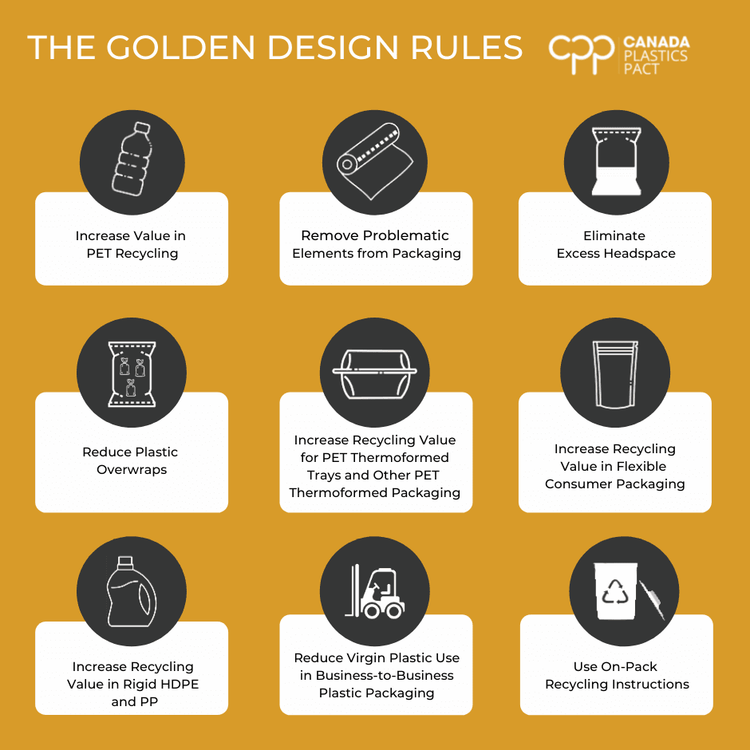
The demand to improve logistics, reduce costs, improve food safety, and maintain food freshness with less food spoilage are some of the top reasons fuelling the demand for single-use and, too often than not, hard-to-recycle packaging. However, this linear approach to packaging is contributing to the millions of tonnes of plastic waste ending up in our landfills and the environment each year. Poor packaging design, problematic materials, and excess packaging are disrupting the plastics recycling industry – but it doesn’t have to be this way. On a global scale, we’ve identified design interventions and innovative approaches that are more in line with circular economy principles and evolving recycling systems. How is the Canada Plastics Pact (CPP) leading food and beverage companies towards innovation? The Golden Design Rules (GDR) for Plastics Packaging , launched by the Consumer Goods Forum Coalition of Action on Plastic Waste, were developed collaboratively with 41 global companies in response to the New Plastics Economy Global Commitment led by the Ellen MacArthur Foundation and the UN Environment Programme. Since April 2022, the CPP with the support of its Redesign Working Group has been leading the consultation and implementation of these nine packaging rules in Canada, following the development of some Canadian-specific guidance. Key actors across the plastics value chain are working collaboratively to drive innovation and scale action to ensure problematic or unnecessary plastics are eliminated by 2025, while also improving the way packaging is designed for recyclability. CPP partners within the food and beverage sector that have innovated their product designs to become more sustainable have noticed how big of an impact a small change can have to reduce plastic waste and pollution. For example, Club Coffee, one of the largest coffee roasters and sustainable packaging innovators in North America, has set new benchmarks for coffee packaging by implementing the GDRs. Design changes to its R&G coffee packaging have reduced plastic use by 48 per cent compared to a similar foil quad seal bag, 83 per cent compared to a similar plastic canister, and reduced carbon emissions by 78 per cent compared to plastic canisters. Similarly, Bimbo Canada, the nation’s leading bakery, has also reduced its use of single-use plastic by approximately 200 metric tonnes annually when it transitioned to compostable cardboard bread tag clips. In addition to the GDRs, a number of strategies are being adopted within the food and beverage industry, including: Design for recyclability , such as replacing multi-resin laminates in flexible packaging with mono-resin packaging such as polyethylene; Lightweighting , with a focus on reducing the volume of plastic per unit sold; Elimination and alternatives , such as edible or dissolvable packaging; Inclusion of post-consumer recycled (PCR) content in produce packaging where safe (particularly in beverage containers); and Reuse models , which provide customers with the opportunity to buy bulk items in reusable and refillable containers. All in all, moving the entire system – from large to small food manufacturers – forward within a collaborative ecosystem will be essential to ensuring success. Learn more or join the Canada Plastics Pact The CPP is a unique, multi-stakeholder, industry-led, cross-value chain collaboration platform which aims to create a circular economy for plastic packaging in Canada by bringing businesses, government, non-governmental organizations, and other key actors across the value chain. CPP partners are united and working together on achieving clear, actionable targets as part of its Roadmap to 2025 . The CPP supports member and non-member companies to address and/or amplify their progress to circular packaging solutions. The CPP encourages companies looking to adjust their packaging design to join the CPP and sign on to the Golden Design Rules . Reach out to info@plasticspact.ca for more information and visit CPP’s website to sign up to receive monthly newsletters, or follow @CanadaPact on Instagram for the latest updates on the Canadian plastics industry. Paul Shorthouse is interim managing director of CPP.
Community Manager-
The Tablesetter – October 3
Happy Monday CFIN members! Here's your weekly heads up on what’s happening on YODL and around the food world this week. The YODL Menu Did you notice we added a YODL Menu widget to our homepage? Now you can easily access all of our articles and keep track of what’s coming up. Monday: The Tablesetter – October 3 Tuesday: Guest Blog: Plastics Packaging Innovation – Nine Strategies Transforming the Food Industry Today Wednesday: Explained: Biodegradable vs. compostable Thursday: When Plastics are the Best Solution Friday: News File Something to Celebrate October 4 is National Taco Day! Tacos are believed to have originated among workers in Mexico’s silver mines during the 1800s, then boomed in popularity as taquerias began appearing to sell the inexpensive but filling meals. According to a National Today survey on taco-eating habits, 95% of consumers love tacos. Of those respondents, 26% said steak is their favourite taco filling, followed by lamb, beef or goat (24%), chicken (18%), other (8%), pork (7%), pork sausage/chorizo (4%), vegetables (4%), beef tongue/lengua (4%), adobo pork (2%), and fish (2%). Food Facts DoorDash’s top 10 most ordered take-out foods as of 2020 are: Burritos Butter chicken Chicken tenders/nuggets Poutine Onion rings Miso soup Chicken lettuce wraps California roll Burger Tuna poke bowl Happy YODLing!
Community Manager-
News File – September 30
Each Friday we’ll bring you a roundup of news from CFIN, YODL and around the food world. As seen on YODL Check out this week’s most viewed discussions: MRO Magazine / Robotics and the Food Industry | Open Forum (cfin-rcia.ca) FoodTech Next - A NEW CFIN Funding Program | Open Forum (cfin-rcia.ca) Life in Bio Plastic - It's Fantastic article | Open Forum (cfin-rcia.ca) Around the Food World A new report from Value Chain Management International reveals the true benefits and cost of decarbonizing the food industry. Hint: it’s not as expensive as you think. Our diets are only slightly healthier than they were 30 years ago. That’s the surprising conclusion of a global study from Tufts University. Grocers are grappling with the fact that compostable plastic bags will be included in Canada’s single-use plastics ban. Did you Know? A new study from the Agri-Food Analytics Lab at Dalhousie University found that Canadians have already made changes to their shopping habits due to food inflation over the past year. Key findings include: 33.7% of respondents have used loyalty program points to pay for groceries in the past year. 32.1% say they read grocery flyers more often. Almost 24% say they are using more coupons at the grocery store. 15.5% have begun growing their own food in the past year. 4.5% of respondents say they now have livestock at home. 8% of consumers have changed their primary grocery store in order to save money – 12.9% say they now visit more than one grocery store. 19% of respondents use discount stores, 11.5% have used dollar stores more often to buy food, 8% visit farmer’s markets more often, and 7.1% have bought direct from farmers over the past year. 40.6% say they are trying to waste less food. Nearly 24% are cutting back on the amount of food they buy. 7.1% of respondents say they are now skipping meals. 6.6% of consumers are paying for groceries on credit, without knowing how or when they will eventually pay for them.
Community Manager-
Guest Blog: The Ban of Plastics in Canada – What it Means for Food Value Chain Manufacturers
This article originally appeared on the G.S. Jameson & Company blog . In June 2022, the Minister of Environment released the long-anticipated Single-use Plastics Prohibition Regulations : SOR/2022-138 pursuant to subsection 93(1) of the Canadian Environmental Protection Act, 1999. These regulations prohibit the manufacture, import, and sale of certain single-use plastics in Canada: straws (with some exceptions), checkout bags, ring carriers, certain foodservice ware, cutlery, and stir sticks. As of this December, the manufacturing and importation of single-use plastics will be prohibited, and in December of 2023, the sale of single-use plastics will be prohibited. This will affect manufacturers in the food value chain, who currently manufacture single-use plastic products, import single-use plastic products, or use single-use plastic products in the sale of goods. Single-use plastic items not listed in the six categories identified above are exempt from the regulations; this would include garbage bags and containers used to import food. Various exceptions also exist for plastic straws; for example, flexible straws packaged with juice boxes can be sold until 2024 and other flexible and bendable straws will be restricted, rather than banned, because of their use in healthcare settings. Items that are in transit through Canada from a place outside of Canada are also exempt from the regulations. Manufacturers hoping to import their products into Canada may be wondering whether, and how, the regulations apply to them. If you manufacture pre-packaged food, or utilize food packaging for transportation, the regulations will not apply unless you use one of the prohibited single-use plastics. Further, if you plan to use Canada as a transit route for your plastic products, the regulations will not apply. However, if you manufacture, import, or sell any of the six prohibited items, the regulations should be reviewed carefully, as they may apply. For stakeholders that wholesale foodservice packaging to restaurants, the prohibited category of “foodservice ware” may warrant review. This category includes clamshell containers, lidded containers, cartons, cups, plates, and bowls for serving or transporting prepared food or beverages ready for consumption. These single-use plastic products will be prohibited for sale as of December, 2023. Most food manufacturers will not be impacted by the narrow list of prohibited single-use plastics currently included in the regulations. Despite this, if you are a manufacturer who uses single-use plastics in any capacity (even if they will not be prohibited) it may be wise to turn your attention to non-plastic alternatives. This forward-looking approach could be beneficial if other plastics are eventually added to the regulations. For American manufacturers, the importation of certain items into Canada may require a change in processes. This can be an expensive and time-consuming undertaking. Yet it may also be a welcome step for a corporation’s long-term success. As jurisdictions across the world move towards reducing plastic and enacting plastic bans, those in the Canadian food value chain would be wise to implement measures now, which align with green consumerism, to engage a competitive advantage. Although the Canadian regulations are the first federal prohibition of their kind in North America, the United States currently has a patchwork of single-use plastic regulations. In June, the US Interior Department announced a plan to phase out single-use plastic products in national parks and other public lands in the next decade. And despite the lack of a federal regulation, various states and municipalities have passed similar single-use prohibitions across the US. California recently passed a sweeping law to reduce single-use plastic by 2032 and nine states, including New York, New Jersey, and Washington, have already enacted prohibitions on single-use plastic grocery bags. Some of these states have also created bans on cutlery and foodservice ware, and several municipalities have restricted the use of grocery bags and straws. Financially, it may also benefit manufacturers, as consumers increasingly value corporations interested in decreasing our carbon footprint, engaging in sustainability, and attempting to reduce plastic waste by meeting or surpassing existing standards. Green consumerism is growing in popularity. Ultimately, these new regulations will not affect the majority of business practices for most manufacturers in the food value chain, but they do signal a greater shift towards single-use plastic reduction, which should encourage all businesses to consider plastic alternatives for their products. For more information on the Single-use Plastics Prohibition Regulations , visit the Government of Canada’s Fact Sheet here . Contact G.S. Jameson & Company at info@gsjameson.com .
Community Manager-
What YOLDers are saying – YODL’s Top 5 Discussions, September 2022
YODLers had a lot to say in September! In case you’ve missed them, here are the top five discussions taking place in the past month. Number 5 YODL 2.0 We’ve updated the look and feel of YODL to make it easier to navigate through articles and discussions. What’s your opinion of the changes? Number 4 Michelin Stars Awarded to Toronto Restaurants Michelin Guide recently recognized 13 Toronto restaurants with one and two stars, but not everyone is onboard with the choices. Number 3 Robotics and the Food Industry Many YODLers read @Dana McCauley ’s article on Robotics and the Food Industry in MRO Magazine . The article covers the declining costs of automation, the creation of new jobs, and different applications for robotics in the food sector. Number 2 FoodTech Next YODLers have responded to CFIN’s latest call for proposals for its FoodTech Next funding program! The new program is designed to showcase Canadian innovation and generate first demonstration opportunities that enable advancements and commercialization. Number 1 Determining the health benefits of your products The functionality and health benefits of products is a hot topic, judging by how many YODLers viewed this discussion. What’s been your favourite article or discussion post on YODL so far? And if you haven’t joined the discussion yet, why not? Happy YODLing!
Community Manager-
Guest Blog: Unique challenges of packaging design
This article originally appeared on Birgit Blain & Associates' Food Biz Blog . By @BirgitBlain When surveying food stores I often see packaging graphic design that misses the mark. Packaging is more than a pretty face. As the primary communication vehicle for brands at point of purchase it must clearly convey key information and have visual impact. Do you assume every graphic designer has the knowhow to design a food package? Here’s why that is not the case. Graphic design is a profession with many disciplines and food packaging is one area that demands special expertise. Numerous factors unique to packaging put graphic designers to the test. Regulations Health Canada regulations dictate mandatory information, placement and formatting for food labels. A designer with knowledge of the requirements for presentation of information can prevent costly mistakes. A regulatory specialist should still be consulted to ensure packaging is compliant with regulations. Space constraints Real estate on packaging is very limited, yet marketers love to cram in as much information as possible. Regulatory requirements and Canada’s bilingual labelling further complicate the process. The challenge is how to fit in a plethora of text and graphic elements, and clearly present dual language information, to end up with a legible, impactful package that doesn’t look cluttered. Experienced package designers have the talent and skills to manipulate numerous visual elements and fonts to accommodate an inordinate amount of information without overcrowding. 3D nature of packaging Graphic designers typically work in two dimensions but packaging has a third dimension that must be designed around. Hiring an experienced package designer can optimize the quality of packaging and save rework, time and money. Merchandisability Brands have no control over instore merchandising, shelf placement and number of facings. Food retailers use various merchandising strategies in planograms that impact how brands present on shelf. An inexperienced designer may assume brands are blocked within the set. More commonly a product range is split up and merchandised according to category, segment, flavour or size. And with prime eye-level slots typically allocated to store brands and multinationals, other brands can end up on the top or bottom shelf. Stores use a variety of fixtures – shelving, wire racks, pegboard, bins, bunkers, coolers with glass doors – that affect how products are displayed. Shelf dimensions and spacing, and lighting also play a part in product visibility. It’s important to understand instore merchandising and how a product stacks up on shelf. Effective package design takes these variables into consideration. Variety differentiation Deciphering a category set can be mind-boggling for shoppers. How do you differentiate multiple SKUs in a way that consumers will grasp quickly? Making it easy for them to find the brand and flavour they want in a sea of competitors will capture sales. Technical aspects Packaging requires a variety of substrates and printing processes, each with their own tolerances. Depending on the colour specifications, printing process, equipment, press speed, ink, coatings, laminations and other variables it can lead to undesirable results. This includes poor resolution, inaccurate colour reproduction and registration, inadequate legibility and an inferior end product. Colour selection can drive up the cost of packaging. A designer who knows how to work with colour and printing systems can specify colours to keep packaging costs in line. Understanding the limitations of print processes and building artwork accordingly, within dieline limitations and printer specifications, can help to mitigate quality issues and manage costs. Brand owners don’t always hire the right pro for the job. Perhaps it’s to save money or because they don’t understand the complexities of the work. Hiring an experienced package designer can optimize the quality of packaging and save rework, time and money. In short, it’s a good spend. As CPG food consultants, Birgit Blain and her team transform food into retail-ready products. Birgit’s experience includes 17 years with Loblaw Brands and President’s Choice®. Contact her at Birgit@BBandAssoc.com or learn more at www.BBandAssoc.com
Community Manager-
The Tablesetter – September 26
Happy Monday CFIN members! Here's your weekly heads up on what’s happening on YODL and around the food world this week. The YODL Menu Did you notice we added a YODL Menu widget to our homepage? Now you can easily access all of our articles and keep track of what’s coming up. Monday: The Tablesetter – September 26 Tuesday: Guest Blog: Unique Challenges of Packaging Design Wednesday: Top YODL Discussions from the Past Month Thursday: When Plastics are the Best Solution – Part 1 Friday: News File Something to Celebrate September 29 is National Coffee Day! Canadians love coffee, but the amount we’re drinking is declining. It’s estimated that Canadians will consume more than five million 60-kg bags of coffee this year, or 2.7 cups of coffee per day each. That compares to about 3.6 cups per day in 2008. The hot coffee market in Canada is a US$18-billion business, according to a 2022 Statista report, with the single-cup pod market comprising 31 per cent. Most of our coffee is imported from Columbia and Brazil. Food Facts A cup of coffee and your favourite chocolates – what could be better? A recent Prodege survey asked consumers their opinion of popular chocolate brands. Here are the brands which rated “excellent” or “very good” with respondents. Hershey’s – 86% M&M’s – 84% Reese’s – 81% KitKat – 79% Snickers – 74% Nestle – 73% Lindt – 71% Butterfinger – 59% Cadbury – 58% Ferrero Rocher – 57% Happy YODLing!